Mow

March 30, 2021

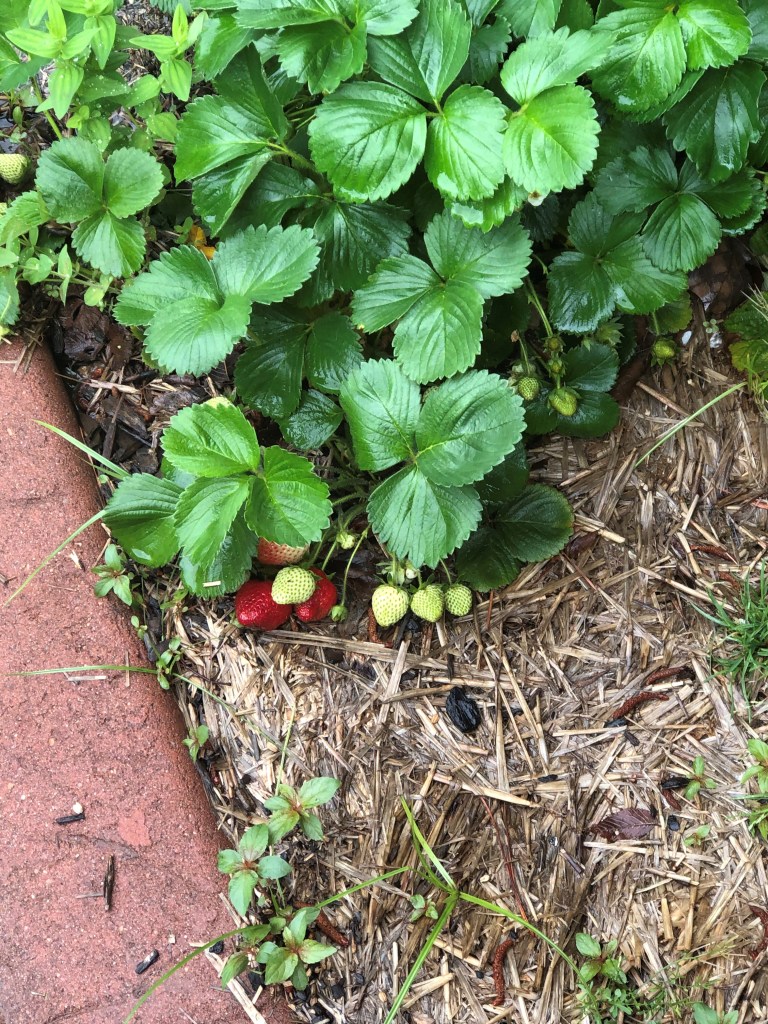
I held off long as I could but finally broke down and mowed today.  There are several reasons why I am the last yard in the cul-de-sac to mow.  First, I need to finish weeding the other beds out front.  Melissa has decided to keep the garden cloth on the big front bed because there is one more night predicted to drop into the low 30F’s this week.  Once I get the cloth off, I will need to weed.  I also have the two beds under the bushes and the long flower bed that need to be weeded out front.  That does not even address the side bed and the garden/flower beds in the back.  When I weed, I always toss the clippings in the yard and mow over them.  This saves me from having to pick them up.  I finally admitted I needed to mow and then re-mow once I get the beds weeded.

The other reason I have not mowed is because I need to get my mower checked before I mow too much.  I like to have the blades sharpened and the belt guards have shaken loose again.  I do not know if this is just a bad design or if the blades are out of balance, but the bolts keep coming loose.  When it was repaired last year, the man drilled in a second set of bolts for both guards.  He commented about the quality of the design, as at that time the bolts had sheared off rather than just come loose.  I should have done this last year, but like so many things, I blamed not calling him on “the covid.”  Rather than being lax, I was protecting us both from possible spread (ha ha).

I set the blades high for my first mow knowing I will have to mow again as soon as I finish weeding.  If I mow the grass short, I am not able to tell where I have been.  That is a frustration I can do without.  This first mow knocks down the weeds but does not give the clean appearance I get with a shorter cut.  This does allow me to see the general shape of my lawn after the cold and freeze of the winter.  I was happy to hear my mole guards buss when I checked them.  I was afraid the batteries had either died or been ruined by the cold.  I should have taken them out but forgot and then put the garden cloth over the top.  I guess the cloth saved them as well.

Thoughts:  Now that the grass is mowed, I need to get to the store to pick up the “weed and feed” to spread over the yard.  Like so many things, everything is contingent on something else.  I need to get the weed killer spread on the yard but needed to mow before I did.  I need to mow but needed to weed the succulent beds before I did.  I need to remove the ground cloth to weed the bed, but Melissa needed me to wait before I did.  Biden told us we could have small gathering and neighborhood picnics for Fourth of July, but we needed to continue to follow guidelines and wear masks before we did.  Most states have responded by lifting protocols and Spring Break was celebrated by crowds of unmasked revelers.  When you are almost to the corner you have two choices.  We have chosen to turn around before we got there.  Follow the science.  Change is coming and it starts with you.
Space

March 29, 2021

Opening arguments began this morning in the trial of Derek Chauvin, the Minneapolis police officer accused of murdering George Floyd.  Chauvin is white and Floyd was black.  Floyd’s death sparked a summer of global protests.  Chauvin has been charged with second-degree murder, third-degree murder, and second-degree manslaughter.  The most serious charge of second-degree murder has sentencing guidelines that call for 11 to 15 years in prison.  The maximum penalty is up to 40 years.  Chauvin agreed to plead guilty to third-degree murder before he was even arrested last fall.  The plea bargain fell apart when attorney general William Barr and the Department of Justice rejected the deal.

The encounter began on May 25, 2020 around 8 pm when an employee at the Cup Foods convenience store called police to say that a customer later identified as George Floyd had tried to use a counterfeit $20 bill to buy cigarettes.  According to video evidence, Floyd was questioned and handcuffed and taken across the street and sat on the curb.  While the cause of what happened next is on trial, video evidence from several sources show Chauvin knelt on Floyd’s neck for 9 minutes and 28 seconds.  According to firsthand accounts, this was not the first time Chauvin had used similar tactics.  During Chauvin’s 19 years on the force, he had shot one suspect, been involved with the fatal shooting of another, and received 17 complaints, 16 had been closed without disciplinary action.  Chauvin and Floyd had both worked security at El Nuevo Rodeo, a Latin night club, until Chauvin was hired by the police in 2001.

Much has happened in the 10 months since George Floyd’s death.  Floyd’s family recently settled a lawsuit against Minneapolis over his death for $27 million.  The Justice Department has revived its civil rights investigation into Floyd’s killing with a new grand jury.  Minneapolis residents remain at war over policing and allegations of excessive force.   The site of Floyd’s death has been transformed into a community gathering space where the authorities are not welcome.  The intersection has been the location of many protest, rallies, and demonstrations.  It also served as a backdrop to media coverage on the protest movement sparked by Floyd’s death and prompted multi-part series on PBS News Hour (“George Floyd Square:”) Minnesota Public Radio (“Making George Floyd’s Square:”).   The square has been declared by the people to be the “THE FREE STATE OF GEORGE FLOYD”.  

Thoughts:  I encountered another “free space” when I lived in Berkeley, California.  Sitting on the Quad in front of Sproul Hall is a round cement stone set flat into the walkway in 1989.  Another statement is carved around its perimeter, “This soil and the air space extending above it shall not be a part of any nation and shall not be subject to any entity’s jurisdiction.”  In the center of the stone disc is a small hole that holds a patch of soil about the size of a half-dollar.  It is the invisible space directly above the hole that is the actual monument.  This tiny tube of unregulated space is meant to be a place where protesters and free thinkers can say whatever they like, without regulation.  While individual events can be discarded or forgotten, the symbolism represented by free spaces help keep the focus on the lessons of the past.  We need to pay attention.  Do the work.  Change is coming and it starts with you.
Eggs

March 27, 2021

With all the crazy weather we have had this year we decided to hold our annual Easter Egg Hunt a week early.  The thought was that if it rained or was too cold, we could postpone and still hold the egg hunt next weekend.  When I checked the forecast earlier in the week it said it was supposed to be nice, but the rain would start moving in by 3:00 pm.  Of course, the event was scheduled for three.  When I woke up this morning, I checked the Facebook page I found a post declaring the weather was great and the hunt was on!  I hoped this was not just wishful thinking. 

I took my son Alex to his first city-wide Egg Hunt when he was five years old.  The eggs were all spread in the open outfield of a city baseball diamond.  We arrived early and Alex joined the hoard of children lining the right field line.  While he was intent on the hunt, he made the mistake of turning around to wave at me, just as the gun went off.  The children took off across the field like a vacuum cleaner, sucking up everything in their path.  Even though he took off atter the others, the eggs were gone before he had a chance.  I felt so bad for Alex that I took him to another egg hunt in the next town.  While he did get some eggs there, it did not diminish the previous defeat.  It was not his hometown.

I showed up early to see if I could be of help with today’s egg hunt, but it was well in control.  There were three areas where the eggs were hiding.  The fenced playground was reserved for the youngest children to insure they got some eggs.  The field behind the building was recently mowed and the eggs here were spaced out but still visible.  The grass in the back half of the field was left higher and the eggs were only visible when you got close enough to look down on them.  After the children listened to a story about Easter, they walked in an orderly fashion to the field and began to spread out scanning for eggs.  I could not help but think of the difference between this egg hunt and the one Alex attended.

Thoughts:  As bad as I felt that first year, Alex’s second attempt was worse.  This time he was determined and fully concentrated on the job at hand.  As the gun sounded, he sprinted to the head of the group, scooping up eggs like a madman.  Then it happened, he tripped.  The eggs in his basket went flying and were scooped up by the same vacuum cleaner that got them the year before.  By the time he got up the eggs were all gone.  Once more we ended up at the secondary egg hunt.  I have watched as similar approaches have been taken to receive the vaccine.  Some states initially opened the shots first-come, first-served.  This caused long lines and survival of the fittest vaccine sessions.  Other states only allowed on-line registration knowing there were segments of society who did not have access.  As doses have increased, so have shots, and now more of these are being distributed to underserved populations.  We had a plan to distribute the vaccine to the states, just not a plan to provide the shot.  Do the work.  Follow the science.  Change is coming and it starts with you.
Stuck

March 26, 2021

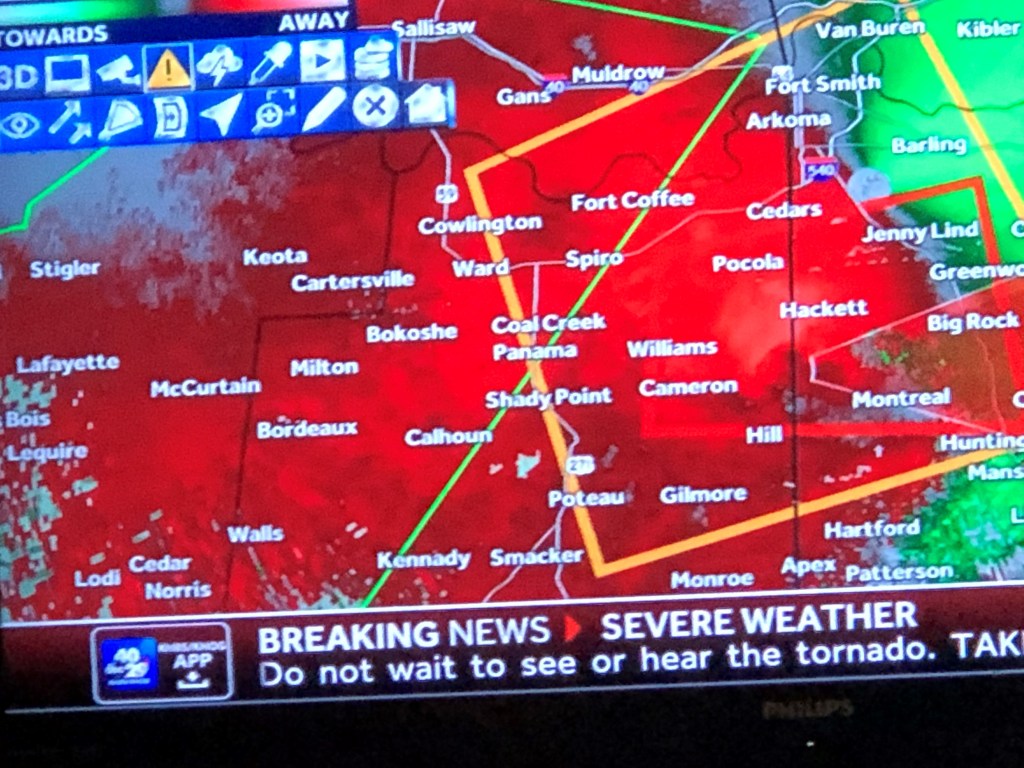
One of the news stories that has filled the airwaves concerns the massive container ship that ran aground in the Suez Canal two days ago.  The canal is one of the world’s busiest waterways, with nearly 19,000 ships passing through the canal during 2020, for an average of 51.5 per day, according to the Suez Canal Authority.  The ship, called the Ever Given, became horizontally wedged in the waterway following heavy winds.  Multiple tugboats were sent to the scene to assist in the re-float operation and a team of experts from Smit Salvage have been called in to assist with the operation.  Peter Berdowski, CEO of Dutch company Boskalis who is helping in the efforts said, “We can’t exclude it might take weeks, depending on the situation.”

The Suez Canal is an artificial sea-level waterway in Egypt that connects the Mediterranean Sea to the Red Sea through the Isthmus of Suez and dividing Africa and Asia.  Original construction began in 1859 by the Suez Canal Company and officially opened on 17 November 1869.  Going through the isthmus can reduce the distance between the North Atlantic and northern Indian Ocean by approximately 5,500 miles (8,900 km).   The canal extends from the northern terminus of Port Said to the southern terminus of Port Tewfik at the city of Suez for a length of just over 120 miles (193.30 km).  In the summer of 2014, Egyptian President Abdel Fattah el-Sisi ordered the expansion of the Ballah Bypass from 200 feet (61 meters) to 1,024 feet (312 meters) wide for 22 miles (35 km) of the canal.  This allows ships to transit the canal in both directions simultaneously.  The one-year project cost more than US$9bn.

The cargo ship that is lodged in the canal is more than 1,300 feet long and 193 feet wide, weighing more than 200,000 tons.  One end of the ship is wedged into one side of the canal and the other stretches horizontally to nearly the other bank.  So far crews have tried moving the ship sideways using tugboats and dredging around the bow which is stuck in the bank, but to no avail.  There were no injuries to the 25 crew members and no cargo has been damaged.  It is still unclear what caused the ship to move drastically off course in the high winds.  This might be one of those incidents where someone gets fired.

Thoughts:  As several companies and countries try desperately to fee the ship and get traffic moving it reminded me of a story I heard long ago.  An oversized semi-trailer truck had attempted to navigate an underpass and became hopelessly stuck in the bridge.  The police brought in tow trucks to pull the trailer out, but it would not move.  Next, they brought in engineers who made calculations and discussed the dilemma.  No one had an answer.  Finally, a young boy who had been suggested, “Why don’t you let the air out of the tires.”  They did, and the truck drove itself out.  There are times when we try to find complex answers to simple problems.  One definition of genius is the ability to see a problem from a different perspective.  What we need now is the willingness to look at our problems from a new perspective, and then be willing to act.  Do the work.  Change is coming and it starts with you.
Bias

March 25, 2021

When we turned on the local news last night the first segment rolled through five straight stories of two murders, a kidnapping, a high-speed chase that ended in mistreatment of the driver, and a house explosion.  That was when Melissa turned to me and said, “Isn’t there any good news anymore.”  Granted, the national outlets have been trying to focus a one-minute positive response to the pandemic at the end of the broadcast, but I need to sit through 29 minutes (interspersed with five commercial breaks) to get there.  This is shared by the print media and the commentators on the “24-hour News” channels.  This seems true regardless of the political bias of the station.

When I looked online, I found Marc Trussler and Stuart Soroka set up an experiment at McGill University in Canada.  They examined how people relate to the news and found humans have a “negativity bias,” because of how we evolved to react to threats.  Negativity bias is the tendency to give far more attention to negative details than positive ones.  The associated “confirmation bias” then, is our tendency to selectively look at or see information that confirms our preexisting ideas.  The news is presented negatively by the media because negativity bias is leveraged to increase profits.  Bad news gets more attention, or more clicks, and leads to more revenue for the publication or news agency.  That means we get more bad news.  

There is also evidence that people respond quicker to negative words.  Lab experiments indicate we can recognize negative words faster than positive words and can even tell a word is going to be unpleasant before we can tell exactly what the word is.  There is another interpretation Trussler and Soroka put on their evidence: we pay attention to bad news, because of our bias to think the world is rosier than it is.  We subconsciously believe our own lives are better than most and expect things will be all right in the end.  This view of the world makes the bad news we hear and see more surprising and salient, and we watch.  Our bias makes the ratings go up and the ad times increase.

Thoughts:  I came across another phenomenon for online news called clickbait.  These are headlines that are psychologically geared to make people click on them.  They offer unanswered questions, shock, or “must know” information in the headline to get you to click.  I do not know how many times I have fallen through the 30 click tell-all that never answers the question that caused me to click in the first place.  I have done it enough to realize what is happening and now rarely make it more than 3-4 clicks into the expose.   The headline that took me down the rabbit hole is rarely something I care about, but my bias and my inquiring mind just needs to know.  Do the work.  Follow the science.  Change is coming and it starts with you.
Revealed

March 24, 2021

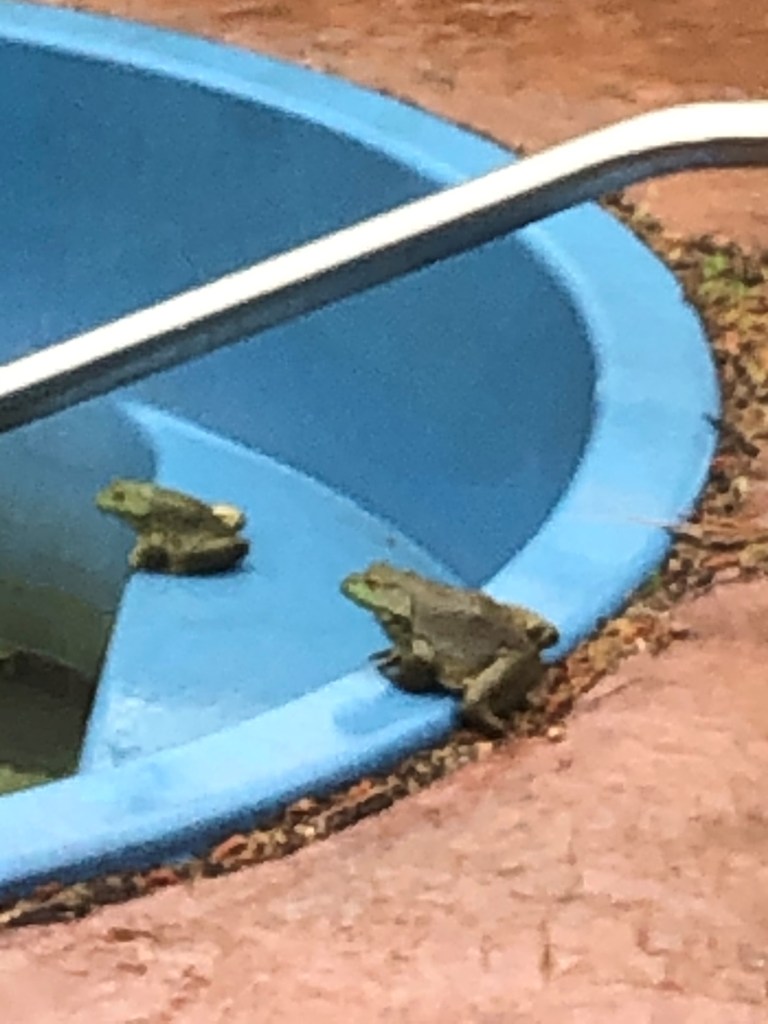
I have been itching to get under the garden mesh and reveal what has happened to the succulents we planted in the front beds.  While I did not have a lot of time last night, I was able to clear the mesh off the driveway beds.  We had a wicked cold winter that included a night drop to -20F.  Since they had been covered, I hoped the mesh (and often blankets) we had placed over the beds had protected the succulents.  I mentioned previously that I had laid back a portion of the mess in the front house bed to allow the daffodils to bask in the sun.  We ended up with three sets of 2-3 plants that came up along the sidewalk.  They flourished for several days and the leaves are still healthy, but the flowers have all faded.  Soon they will also die back and give way to whatever succulents survived.

Removing the rest of the mesh from the front bed would have taken more time than I was willing to spend last night.  I decided instead to take on the smaller beds on either side of the garage and the bed under the front pear tree.  When I removed the mesh the first thing it revealed was the weeds that were flourishing in their protected environment.  As I weeded all three beds the same pattern was reveled in each.  All the small ground hugging varieties had not only survived but sprouted shoots with new babies on the ends.  The Agave had not fared so well.  These were taller to begin with and generally had the mesh resting on the plant.  Most had succumbed to the cold and the plants had turned mushy.  When Melissa saw them, she removed them immediately so they would not attract disease and infect the other plants.

When I looked online, I found all 120 species of Agave are cold tolerant and can survive temperatures down to 30F.  Thirteen can survive temperatures down to 0F and six of these will survive below 0F (-5F to -10F).  However, only one can take the plant freezing blast of -20F we experienced, the Parry’s agave (Agave parryi) or mescal agave.  This slow-growing perennial succulent is native to Arizona, New Mexico, and northern Mexico.  It is hardy to roughly −5F, though there are reports of specimens surviving temperatures at −20.  Cold hardiness depends on more than just temperature.  The most crucial factor is how wet or dry the soil is during the cold spell.  Completely dry soil allows agaves to withstand colder temperatures than they would be able to tolerate if the soil is wet. The worst-case scenario would be a deep freeze following rain.  Guess what we had.

Thoughts:  While most of the Agave succumbed, examination revealed the “Hens and chicks” varieties all survived and even flourished.  Hens and chicks are the common name for a group of small succulents belonging to the family Crassulaceae and include the ground hugging Sempervivum species.  These grow close to the ground and the leaves form a tight rosette.  The “chicks” start as tiny buds on the main plant and then sprout their own roots, taking up residence close to the mother plant.  Just as the harsh winter effected Melissa’s succulents differently, the last year had different effects on our country.  Some businesses adapted to online access and provided drive through pickup.  Some jobs lost will never be replaced as business finds different ways to provide goods and services.  As we begin to reopen, the “new normal” is new and will eventually become normal.  We need to learn from the errors that resulted in the unrest and loss of life of the last year.  We do not have the luxury to just wait and see what is revealed.  Do the work.  Follow the science.  Change is coming and it starts with you.
Broken

March 23, 2021

The first weekend of the NCAA Men’s and first round of the Women’s Basketball Tournaments are over.  I always fill out a Men’s bracket and check the results hoping that my picks are better than my basketball knowledge.   Even though I suffered some hits in the Round of 64 I was confident my selections would come through during the Round of 32.  Now that we are down to the last 16 teams I must admit, my bracket is broken.  Even in my broken state (read not going to win any prizes for best selections), I am not yet ready to concede that it has been busted.  As it stands, I still have 9 teams in the Sweet 16, 3 teams picked for the final four, and the potential overall winner in my broken bracket.  On a better side note, the Razorbacks are moving on to the next weekend.

While I fill out a bracket every year, I have not done it online until this year.  I like to be able to write the names in the brackets and then mark them off when my predictions are wrong.  Rather then following the updated pairings that come out prior to weekend two, I also hold onto my original bracket.  What changed this year was the boy next door.  He came to our house last week offering a chance to enter a bracket in the local football team’s ESPN group.  Half of the $20 entry would be split by the top three brackets, and the remainder went to support the team.  We supported the team the four years my nephew played for them.  That meant buying pounds of sausage the first three years and T-shirts the last year.  I got a better return on the sausage than my bracket.

The Razorback men were in a 25 year Sweet 16 drought prior to Sunday.  After winning the national championship in 1994 and finishing runner-up in 1995, Arkansas snuck into the NCAA Tournament in 1996 and reached the Sweet 16.  In the 25 years since the Razorbacks have been to the tournament eight times, winning the opening game four times but always failing to advance beyond the first weekend.  During those 25 years 95 different teams reached the Sweet 16.  Some of them have been Cinderellas, while others are college basketball blue-bloods.  That is true again this year.  While the other 14 teams may not be true blue-bloods, they have been there many times before.  There are only two real Cinderellas, Oral Roberts and Layola.  Sadly, the No. 4 seeded Razorback women dropped their opening round to the 13th seeded Wright State.  This was a disappointment for the women and the first time since 2012 that a No. 4 lost to a No. 13.

Thoughts:  When I was in High School the league had banned fundraising for individual sports teams.  The thought was they were a public service, and fundraising would give certain teams an advantage over others.  Things have changed dramatically since those days.  Most of the larger schools in our state boast artificial turf, jumbotrons, and indoor practice facilities to go along with state-of-the-art weight rooms.  Donors are a large part of how these facilities are funded, but coaches try to put responsibility on the players.  I noticed there were 250 participants in our group bracket.  That comes out to $2,500.   That might cover the cost of the name changes on the back of new jerseys.  The head football coach for our local district was paid $106,000 in 2019, while the base teacher’s salary was just over $24,000.  They say you put money where your priorities are.  Perhaps our priorities are broken.  Do the work.  Change is coming and it starts with you.
Coconut

March 22, 2021

I have fond memories of the local drug store where I grew up.  I worked as a paper boy when I lived in this small Kansas town.  My two brothers and I delivered all the papers for the whole town (75?).  I believe officially the route belonged to my older brother, but he gave parts of the route he did not like to Danny and me.  The papers came from a larger town forty miles away and were delivered to the local drug store. The store was one of the classic old stores with a counter for the soda fountain and a rack of penny candy off to one side.  Although I occasionally bought some of the penny candy, I usually spent my money on baseball cards.  Still, there were times I would sit at the counter or stand and stare at the racks of candy and wonder.

When I was growing up there were not a lot of sweets in our household.  It was not that we did not have sugar, it was just the candy that is so prevalent today was not readily available.  The big treat came every year when my grandfather would bring two pockets full of ribbon candy when they visited for Christmas.  We would clamor around as he would dole the candy out to his doting grandchildren.  Instead of regular candy, my mother would make taffy.  Fudge and divinity also became a tradition for Sunday night, and mixed with popcorn, it became the staple meal.  Mom still practices the popcorn part of this habit (and fudge when she can get it) today at 92 years old.

The other thing I recall were the special cakes we had for our birthdays.  While I do not remember all the favorites, I do recall the German Chocolate (with pecans and coconut in the frosting) that was my dad’s favorite.  I also know the Angel food cake we had on Christmas Eve.  What else would you serve for Jesus’ birthday?  Mine was always Elephant Cake.  I am not sure where the recipe came from, but mom would use one cake pan for the body and cut the other pan into the head (center circle) and the outer ring into the four legs and trunk.  This was a white cake decorated with licorice for the tail, toenails, and tusks, and the white frosting was covered in coconut.  Mom continued to make elephant cake until I graduated High School.  Coconut cake is still one of the few sweets I crave.

Thoughts:  In the movie “It’s a Wonderful Life”, George asks Mary if she wants coconut on her ice cream.  When she hesitates, he retorts, “Hey, brainless, don’t you know where coconut comes from?  The Fiji Islands, . . .”  How could she not like coconut and its connection to far away?  When I was at the grocery today, I came across a small coconut cake.  The Box store in town makes a great coconut cake.  It is 16” in diameter and three layers high.  There were times when I would buy one and split it with my parents.  I now live in another town and Melissa does not like coconut.  This cake was only six inches and two layers high.  I cut it into four pieces to enjoy over time.  There are times when traditions help keep us going.  That is true with mom and popcorn, and that is true for me and coconut cake.  There are other times when we rely on hope and expectation to help us through a rough patch.  That was the expectation of George. That is also our expectation of the vaccine.  While the virus will not “magically disappear,” there is hope for a return to something closer to normal.  Even with the vaccine, we still need to adhere to proper protocol.  Follow the science.  Change is coming and it starts with you.

Equality

March 20, 2021

Even though we are in the middle of Women’s history Month, EQUAL PAY DAY does not happen until April 2nd.  It is interesting to note that this recognition is not a demand for women to be paid the same wage for the same work.  Rather, April 2 is the day in the US when women try to catch up to what men typically earned the previous year.  The date varies in other countries.  Women make about 80 cents for every dollar a man makes in the US, according to Census data crunched by the American Association of University Women (AAUW).  While the wage gap is slowly closing, women, even those with university and professional degrees, face wage discrimination and other obstacles to achieving pay equity.

When I looked up the gender difference online, I found that many say the gender pay gap has been attributed to women’s own choices.  Women tend to select lower-paid, female-dominant professions, or they decide to take time off to care for children.   However, those factors do not account for the disparity says Kim Churches, AAUW’s chief executive officer.  Women are paid less than men even a year out of college.  Female business majors earned $38,000 a year after graduation, compared to $45,000 for men.  And while it is often assumed that education is the best way to close the gap, that is not a guarantee of equality based on gender.

The pay gap tends to be narrower for minimum-wage and service jobs, such as food service.   For accountants, auditors, physicians and surgeons, women experience the biggest pay gap.  The gap also varies from state to state because individual states’ economies and the laws are applied differently as states discourage and punish wage discrimination.  States whose primary industries tend to be male dominated have even wider pay gaps.  Churches says, “We also see that there is a clear distinction between states that have put equal pay legislation and other policies that are supportive of women into place and those that have not.”  It appears white males’ practice equal opportunity discrimination.

Thoughts:  Experts tell us the remedy is only partly in laws and regulations.  Federal law bans wage discrimination based on sex (as do many states).  Both the federal government and states need to go further.  One way is to ban questions about salary history so prospective employers will not base wages on previous jobs.  The Paycheck Fairness Act was presented in 2019 and approved by the House of Representatives.  The Republican controlled Senate at the time did not see the need to take the legislation up.  Laws and workplace policies need to reflect the new changing labor market, and women need to be included.  A Pew Research Center study from 2013 found that a record 40 percent of households with children under 18 had women as the primary breadwinners.  These same households comprise most children living in poverty.  Do the work.  Change is coming and it starts with you.

Crappie

March 19, 2021

I got a picture from my son Alex that showed a crappie that was believed to be a record for the state of California.  The picture showed the fish being held out in front to the angler and appeared to dwarf him with its size.  Being an angler myself, I know how the picture angle can change the appearance of a fish.  That is especially true if you hold it nearer the camera and away from your body (not that I would ever do that!).  I found the picture online and it had another picture from a different angle that better depicted its size.  While it was not the monster of the first picture, it was a huge fish.

A Black Crappie (Pomoxis nigromaculatus) is a freshwater fish found in North America and is one of two species of crappie.  It is similar to the White Crappie (Pomoxis annularis) in size, shape, and habits, except that it is darker, with a pattern of black spots.  The black crappie’s range is uncertain as it has been widely transplanted and easily adapts to many types of water.  It is assumed to have a similar range to the white crappie’s, whose native range is suspected to be in the eastern US and Canada.  As of 2005, populations existed in all 48 contiguous US states and introduced populations exist in Mexico and Panama.  The firm flesh and abundance of fish make these a staple for the weekend fish fry throughout the Midwest.

David Burruss of Clear Lake Outdoors in Lakeport, California, made the catch in mid-February.  Burruss was fishing at Clear Lake, which is known as a premier bass lake.   When Burruss located the crappie, he thought from their size they must be a school of bass on his fish finder.  He is said to have gotten the surprise of his life when he hooked one of the fish and it was instead a record-size crappie.  The crappie weighed 4.33 pounds (4 pounds, 5.3 ounces), breaking a 46-year-old California record of 4.1 pounds.  The crappie measured 17.71 inches.  The fish I caught in Minnesota pictured was the biggest crappie I ever caught.  It would be dwarfed by the California crappie.  As I said, it was a huge fish. 

Thoughts:  One of the unique things about crappie is they run in schools that remain together.  That means if you get a big fish, there are plenty of others in the same spot.  I went to High School near one of the premier crappie lakes in Kansas.  I heard stories of anglers renting U-Haul trailers to load with the schools of fish.  Those were stories of the good ol’ days, and I never encountered that kind of catch.  The problem when I fished the lake was twofold.  One was degradation of the habitat as the Lake silted in and the other was overfishing.  Both are a response to human activity.  If we do not take responsibility for our natural resources, they will not be available for the next generation.  Or even for us.  Follow the science.  Change is coming and it starts with you.