Count

November 4, 2020

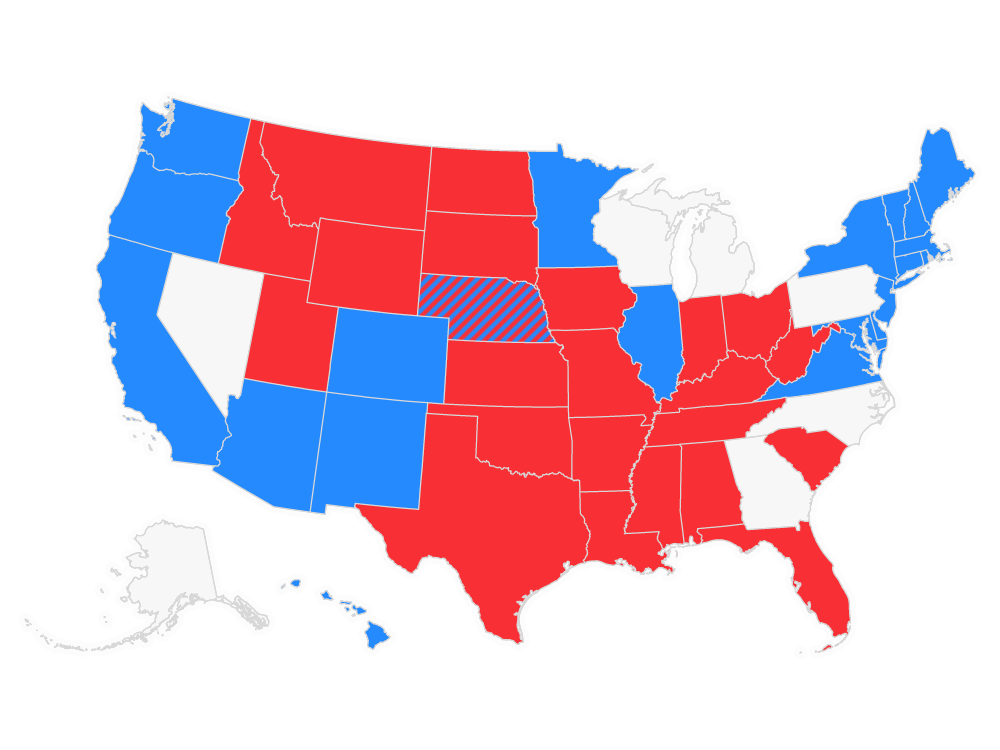
Just as predicted by many state officials, the vote was not decided on November 3rd.  What was not predicted was the crazy nature of the count.  Some voters heeded the warning of gathering in tight crowds and decided to mail in votes or vote early.  Others instead chose to brave the crowds and voted in person on the 3rd.  This creates confusion as states counted votes in a variety of ways.  Some started counting the early votes as they came in (although not releasing the numbers until yesterday) which resulted in early leads that began to dwindle as in-person voting numbers arrived.  Others took a different approach and even choose to not start counting until this morning.  This made early predictions impossible for nine states.

When I asked Melissa what to have for dinner last night, she said she would like Hors d’oeuvres.  This is our tradition for Super Bowl night.  Rather than having an entrée, we make a variety of side dishes and appetizers.  We then lay these out on either the kitchen peninsula or on the coffee table in the living room.  Last night we choose the living room so we could watch the election returns.  This also lets us “graze” throughout the night rather than having a specific mealtime.  As the night wore on, we either finished dishes or put them in the refrigerator.  Just like the count, it must end sometime.

One thing is clear.  The voting is over.  It ended as the last poll closed on the 3rd.  What is not clear is when the votes already cast will be counted.  It is not the case that more votes will be miraculously found to swing the election one way or the other.  The difficulty comes as the various states apply different laws to govern what counts.  Some provide that ballots need to be in the election office by poll closing while others specify, they need to be postmarked by election day and delivered by Friday.  Normally this would not create a problem.  This year is different due to the large number of absentee ballots sent to registered voters.  Every vote counts.  

Thoughts:  Regardless of who wins, the fact remains the pollsters got it wrong for the second presidential election in a row.  Four years ago, Clinton held a strong five-point lead according to the polls.  While she won the popular vote by around 3,000,000 votes, she lost the election.  This year the pollsters showed a stronger ten-point lead.  While Biden is leading by several million popular votes, the election is too close to call.  The purpose for the electoral College was because the Founders of our country did not trust the common person to make such an important decision.  We tell people their vote counts.  Maybe it really should.  Do the work.  Follow the science.  Change is coming and it starts with you.

Grizzly

November 3, 2020

I think it is appropriate with Halloween barely in the taillights to talk about scary movies.  As Melissa and I recounted some of our own movies it was interesting to see how different we were.  For me it has always been science fiction movies.  This stems from a movie I watched when I was in grade school (by myself on a Saturday afternoon) about a race of aliens that used robots to invade the earth.  The bots would sneak up behind the humans and zap them with gamma rays, causing them to disintegrate.  Our house had a secondary entrance that was at the base of the stairs leading to the second-floor bedrooms.  For three years I ran up the stairs just in case there was a robot at the door waiting to zap me.

When I looked online about movies it said the scariest of all time was The Shinning.  Even if you have not watched Stanley Kubrick’s masterpiece, you probably know about The Shinning by Jack Nicholson’s (apparently ad-libbed) “Heeeeeeeere’s Johnny.”  Given that this is a Stephen King adaptation the winter months do not go well. The Overlook Hotel, it turns out, does not like people.  The reason this is the top is because The Shining “just feels evil.”  From Jack Nicholson’s deranged performance as a man descending into murderous insanity to Kubrick’s relentless direction as we hypnotically follow Danny navigating the hotel corridors on his trike, this is a movie that never lets you feel safe.  While I liked the movie, it did not have any robots, so I was not scared.

Melissa said her nemesis was a movie about a grizzly bear that had developed a taste for human flesh.  This was a 1976 thriller about a park ranger’s attempts to halt the wild rampage of an 18 ft tall, 2,000-pound man-eating grizzly that terrorizes a National Forest.  While this is widely considered a Jaws rip-off, Grizzly scared Melissa to death.  This was not helped by the fact that she saw it as part of a slumber party when she was twelve.  The father of the girl she stayed with dressed up in a bear outfit and broke in on the girls at one in the morning.  Melissa had nightmares for three months.

Thoughts:  I previously mentioned Halloween is based on the idea of the proximity of the world of the living and the world of the dead.  As we transitioned from summer into winter, we faced the fear that the sun would never return.  Even though this was irrational, it was not more so than the thought that alien robots would zap us, or grizzlies would maul us.  Most scary movies prey on our primal fears.  My fear of robots as a child stems from an innate fear of the unknown.  Melissa’s fear of a grizzly steams of an innate fear of the predators that stalked us when we were undeveloped primates.  Both are scary.  We are amid a scary time as a nation and world as well.  We need look beyond the surface to embrace the underlying fear.  That is the only way to make it better.  Do the work.  Follow the science.  Change is coming and it starts with you.
Festival

November 2, 2020

I have lived through three different generations of celebrations around the day called Halloween (mom has me beat with four).  I lived in a small town when young and we used to roam all over the north side of the one square mile town limits (split by the main street highway).  We knew all the best houses and made sure to visit them.  We received, full sized candy bars, caramel apples, and popcorn bars, along with penny candy. When I took my son Alex treating, we went to specific houses we knew we could trust.  There were stories of people putting things in the treats and I removed anything that was not wrapped.  That morphed into the trunk-or-treat locations at churches and malls.   

Halloween literally means “hallowed evening,” and was previously known to early European celebrators as All Hallows’ Eve.  The name was eventually shortened to “Halloween,” which we know today.  Halloween falls on October 31 because the ancient Gaelic festival of Samhain, considered the earliest known root of Halloween, occurred on this day.  It marked a pivotal time of year when seasons changed.  More importantly, it was believed the boundary between this world and the next became especially thin at this time, enabling you to connect with the dead.  This is also where Halloween gains its “haunted” connotations.

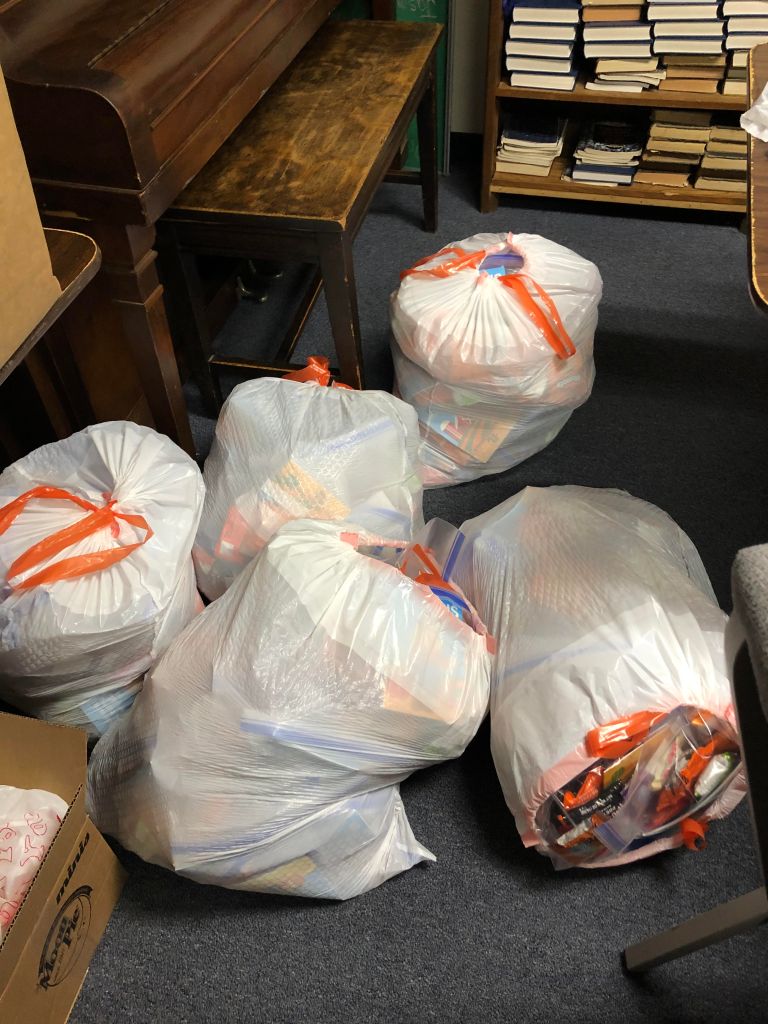
Treating morphed again with the coming of covid-19.  Our local church stagged a modified version of trunk-or-treat.  It is no longer safe to stand costumed and hand out individual candy from the trunk of a decorated car.  Instead the candy and treats were placed in individual bags the week before (stored in the picture above).  Cars then drove through the portico at the front door and each child was given a separate bag by a masked volunteer.  I heard there were 175 bags of treats handed out.  While this was different than the popcorn balls and caramel apples of my day, I am sure it was appreciated as much.  Free candy is still a good thing.

Thoughts:  Halloween began as the ancient Gaelic festival of Samhain by at least the 4th century BCE.  It has been morphing ever since.  Over the last decades, there has been another change as churches have replaced Halloween parties with Harvest Festivals.  The idea was to not deprive the children of the fun of games and treats yet remove the “haunted connotations.”  This is not surprising.  We often reinvent older traditions into modern concepts (such as Christmas?).  While the festivals may continue unchanged, the meanings alter why we are doing them.  Whether we gather in large groups or small families, it is the time together that is important.  This holiday season we need to follow the science.  Change is coming and it starts with you.
Ripe

October 31, 2020

My watermelon is the last of my vegetables to provide hope.  I planted it along with the first attempt at cantaloupes back in April.  The vine has done well, and the flowers have been prolific.  Few of the flowers ever set, however.  I did have five small melons start at various times during the season.  They suffered from the same blossom rot that got many of my tomatoes.  I got so I would check the vines to see if I could find a new melon and when I did I was quick to try and rub the blossom off the end of the tiny melon to try and save it.  I even harvested one of the melons with the rot to see if I could save it.  Alas, poor Yorick, it was to no avail.

I am always at a loss to pick out a good melon in the grocery store.  If it is a cantaloupe, I push on the stem end to see how much give it has.  The problem is I do not know what it is supposed to feel like.  I push anyway, and then hope for the best.  With watermelons I thump the melon to see if it is ripe.  Again, the problem is I do not know what a ripe melon sounds like. I thump anyway, and then hope for the best.  I have been pushing and thumping for the last forty years.  You would think I would quit, but doing something makes me feel like I am still in charge. 

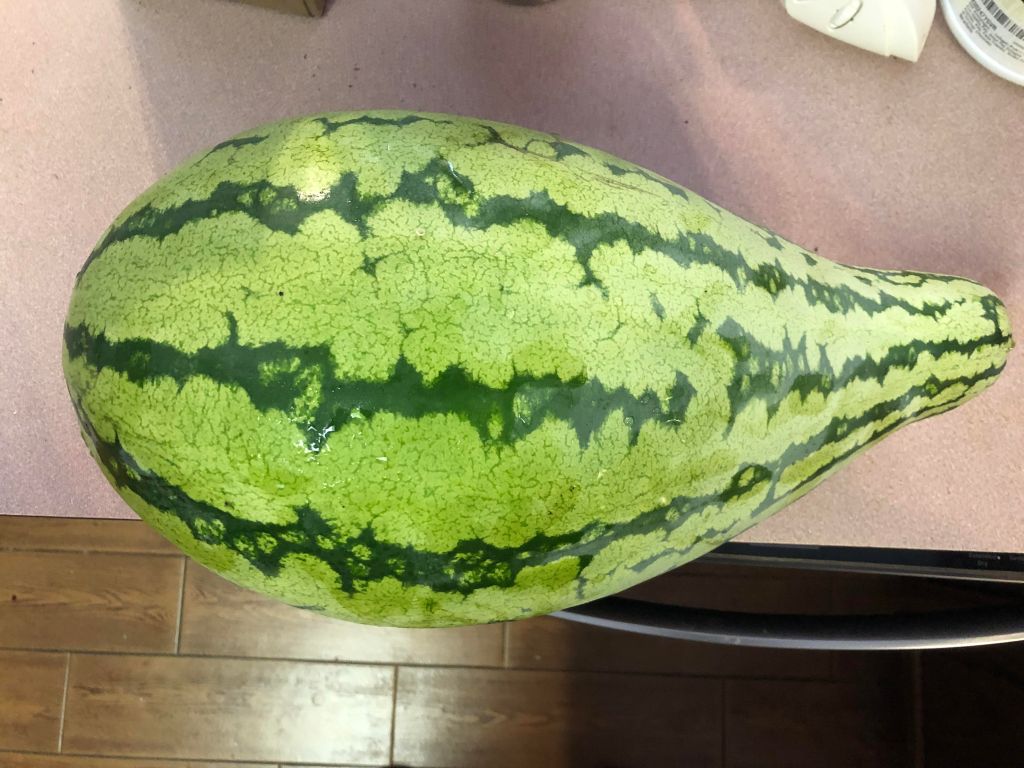
I did have one melon that set and grew throughout the summer.  It was oddly formed and rather than a normal watermelon it looked more like a gourd.  When it got the right size, I kept it on the vine hoping it would flesh out the neck area, but it never did.  It has not been growing (or changing) for some time now.  I knew it was well beyond the time it was supposed to grow to be ripe, but I was reluctant to pick an unripe melon and lose the only one it produced.  After our frost this week, I reluctantly decided it was time to “harvest my crop.”  I brought it inside and had ice cold watermelon (from the frost).  Although the neck never matured, the rest of the melon was delicious.  

Thoughts:  I saw another small melon growing on the vine this week.  It is about three inches long.  I caught it in time and rubbed off the blossom, so it has a chance.  With the cold weather the vine is likely to die before the fruit ever ripens.  I guess I will just wait and hope for the best.  Much of the rest of 2020 has taken the same fate as my melon crop.  We have weathered the weeds and tried to salvage as much fruit as possible.  We have seen bubbles and bobbles in the sports world.  We have seen protests and activism against racism and masks.  We have been told to try anything and just hope for the best.  I still have hope for my small melon.  We need to have the same hope for our country.  Do the work.  Follow the science.  Change is coming and it starts with you.
Success

October 30, 2020

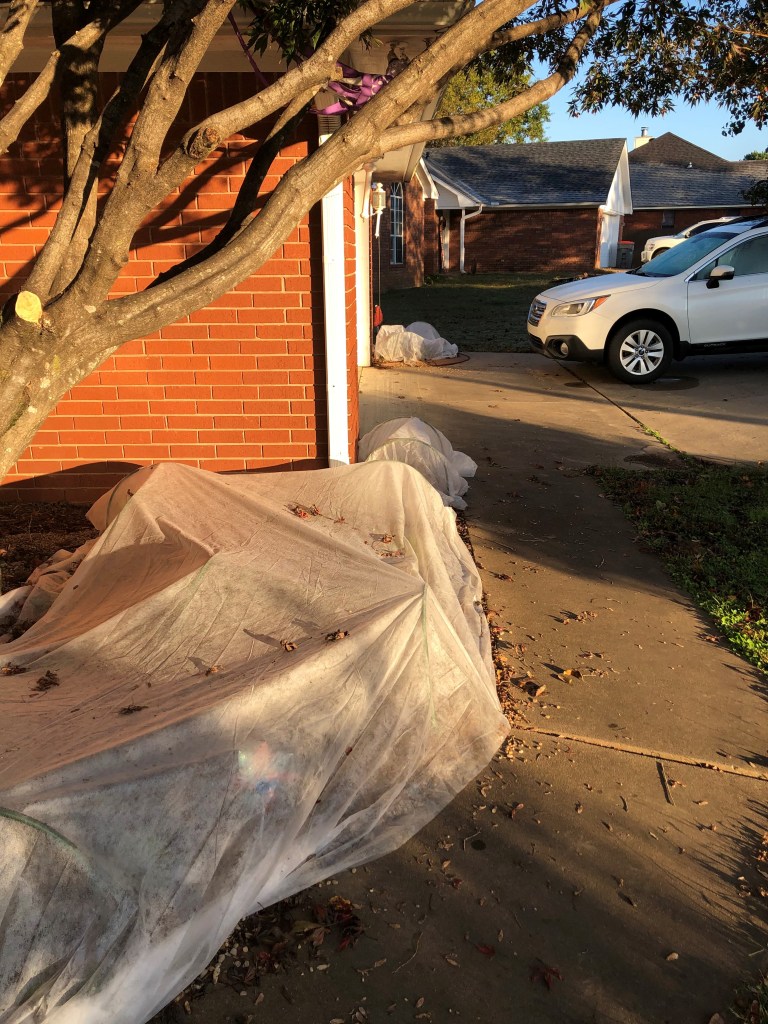
The moment we had been preparing for finally arrive last night.  We had our first freeze.  We finalized the plastic over the porch door and restored the greenhouse cloth over the outside beds yesterday afternoon.  When Melissa got up this morning it was 32F according to the weather app on her phone.  When she went onto the porch the thermometer said it was a toasty 40F in our converted greenhouse.  I checked the plants outside, and they were all still covered.  I guess we will never really know about them until later in the year.

Melissa had reached out to a grower friend in Little Rock to see what he did with his plants over the winter.  His advice was to keep them in a temperature range of 40-50F in bright light conditions.  They need to be properly hardened off by no fertilizer after August and no water after October.  Most can ride through the winter in a desiccated dormant state until March.  He said the problem with this advice is having the capability of keeping them in the 40-50F range.  Even with a greenhouse, the sunshine is going to drive daytime temps up in the 80’sF or even higher without adequate ventilation on cool days to bring it back down.

Melissa’s fear with the porch greenhouse is not letting the temperature go too low, but instead having it too high.  At least on the porch we have the advantage of being out of the direct sun which should help.  Using the Velcro should also let her take down parts of the sheeting on warmer days and the ceiling fan will provide ventilation.  If it does get warmer it does not hurt the plants, they will just not get the dormancy they need to flourish.  My biggest fear for the outside plants is wind and freezing rain.  They are hardy but a sleet might weigh down the netting or freeze the plants.  I am still counting last night as a success.

Thoughts:  Keeping the indoor plants at the optimal 40-50F range is a bit problematic (read: not going to happen).  I used to keep the summer cool (when I was single) set at 80F until I found the humidity caused mold, so now we keep it at 78F.  We have ceiling fans throughout the house and that generally keeps Melissa happy.  During the winter I have always kept the heat at 68F.  I can always put on more clothes if needed and it saves energy.  With the succulents, we made the decision to drop it to 65F.  It is not as low as they would like but is more tolerable for the humans.  One of the adaptations humans made early on was the ability to control the environment.  Like the porch, we can take things off or on and even use fans to get the temperature we want.  We made a conscious decision to do what is right for the survival of the plants, as much as we are able.  We need to make a similar decision with the world.  Without the plants, we will also die.  Follow the science.  Change is coming and it starts with you.
Cheese

October 29, 2020

We moved after my Freshman year to a town that had a nearby cheese factory.  For the next three years my brother and I inhaled dairy products.  Mom would buy Longhorn Cheese (by the twenty-pound horn) at least once a month.  She also bought milk in a two-and-a-half-gallon carton that slide into the refrigerator with its own pull spout.  We went through two of those a week.  It was not that mom did not fix other things for breakfast and supper, but we chose to snack on the cheese.

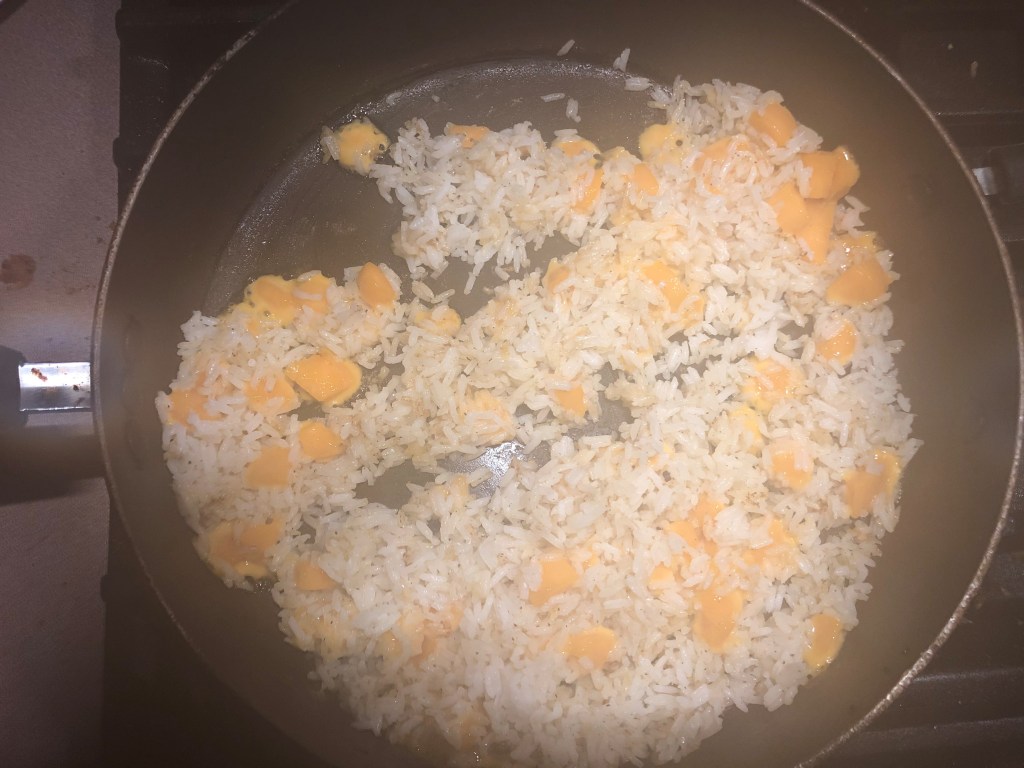
While we were fortunate to have food at home, we always ate lunch in the school cafeteria.  We lived in a small town when I was in Grade School.  The school lunches were amazing.  Not only was it all you can eat, it was good.  My favorite was pizza day.  This was more like a hamburger pie, with a thin crust, an inch-and-a-half of hamburger mixture and topped off with cheese.   My Senior year in a different High School I generally left without breakfast and rarely ate much in the cafeteria.  We received a ton (literally) of black-eyed peas from the government for a dollar and had some sort of concoction using them for a solid week.  I drew the line at black-eyed pizza.  What I did instead was come home at night, fry up some rice, and mixed in some cheese.  That is still my go to meal today.

I came across a story online about a piece of cheese.  Author Sebastian Junger was hitchhiking through Wyoming when a disheveled man carrying a lunch box asked if Junger had food. Junger assumed they man was asking if he could spare some of what he had.  Reluctantly he admitted, he had some cheese.  The homeless man said he would never make it with just a little cheese, and gave him a sandwich, an apple, and a bag of chips. Junger said he learned a lot about “true generosity” from this homeless man.

Thoughts:  I have worked with and supported homeless shelters in each of the cities and towns where I lived.  I have been awed by the generosity displayed by the men and women who frequent them.  I have learned this is also a trait of those caught amid poverty.  They know the others are their lifeline in times of need and are quick to help when they are able.  I was retweeted a quote from Dr. Anthony Fauci yesterday that read, “I don’t know how to explain to you that you should care for other people.”  Maybe we should all decide it is time to share the cheese.  Do the work.  Change is coming and it starts with you.

Winner!

October 28, 2020

Melissa and I are great followers of baseball, and particularly the Kansas City Royals.  We waited for the season to begin with expectation as the virus shut everything down.  When it was finally decided to restart the baseball season, they limited it to 60 games.  These games were played without fans in attendance, instead using pipped in crowd noise.  Once the season ended (and the Royals were not included), they placed all the playoff teams in two separate bubbles.  The American League played games in San Diego and the National League played their games in Arlington.  These “bubbles” continued until the World Series, which was held in Arlington, Texas.  Now the fans are limited to 11,000.  I wondered how to get a ticket, and who would go?

I had never heard the phrase, “Winner, winner, chicken dinner,” until I came to Arkansas.  Down here it seems to be a popular response anytime something beneficial happens.  The exact origin of the phrase is disputed, but it may have come from gamblers.  The most popular origin story is that a chicken dinner at a Las Vegas casino used to cost $2, the same amount as a standard bet. So, if you won a bet, you won a chicken dinner.  The last time I was in Vegas, a buffet breakfast at some of the Casinos was only $1.99.  Maybe now we should say “Winner, Winner, breakfast.”  The bets are more expensive.

Tonight, we watched Game Six of the seven game series.  While Melissa found the 1-0 Score for most of the game boring, I am still a purist and like to see a pitcher battle. Dodgers third baseman Justin Turner was removed from the game during the eighth inning on Tuesday night. After the game, it was announced that Turner had tested positive for COVID-19.  It was MLB’s first positive test of the playoffs, and Turner was immediately removed from the game once the positive test result was known.  The Dodgers won 3-1 and Turner returned to the field to celebrate.  He proudly sat in the front row next to the trophy without his mask for the team picture.  He claimed to be asymptomatic.

𝗧𝗛𝗢𝗨𝗚𝗛𝗧𝗦:  It continues to amaze me how people refuse to do the little things needed to halt the spread of the virus.  The Big Ten is one game into the season and Wisconsin’s coach and 15 players tested positive, cancelling their next game.  It is believed most new cases are caused by people who are asymptomatic.  We have known since (at least) March that the virus was air borne and the best way to counter it was staying distanced and wearing a mask.  While at first wearing a mask was altruistic, we have later learned this protects you, as well as others.  There will be no Winner until we all decide to work together.  Follow the science.  Change is coming and it starts with you.
Backpack

October 27, 2020

The Arkansas Foodbank released Map the Meal Gap in 2018.  This was just the latest report by Feeding America on food insecurity throughout the state.  The “Map” revealed food insecurity exists in every county in Foodbank’s service area and that food insecurity affects the most vulnerable populations in central and southern Arkansas.  This includes 78,000 children (23.2%).  Overall food insecurity in Arkansas is 515,000 people (17.2%), or second worst in the country, while overall child food insecurity is 164,000 children (23.2%) or third worst in the country.  The study went on to find, on average, the food insecure are needing $43 more per month to buy just enough food to meet their needs.

For some students, whose families experience food insecurity or hunger the only consistent meals they receive may be the breakfast and lunch served at school.  As a result, many students experience hunger during school breaks, closures, and weekends (or pandemics).   Every weekend, the Feeding America BackPack Program works with over 160 local food banks to provide bags of food to more than 450,000 children.  These bags contain nutritious and easy to prepare foods and ensure that children have enough to eat when they do not have access to free or reduced-price meals at school.

According to the non-profit Hunger Free Colorado, the first backpack program started in 1995 in Little Rock, Arkansas.  A school nurse observed that many of the students who came to her were feeling sick or tired because they were hungry and did not have enough to eat at home.  She joined forces with her local food bank to launch a program that provided bags with food for children to take home for over the weekend.  Since then, food pantries and food banks across the country have begun their own backpack programs to feed hungry children.  Many Arkansas school districts are now participating in weekend backpack programs.

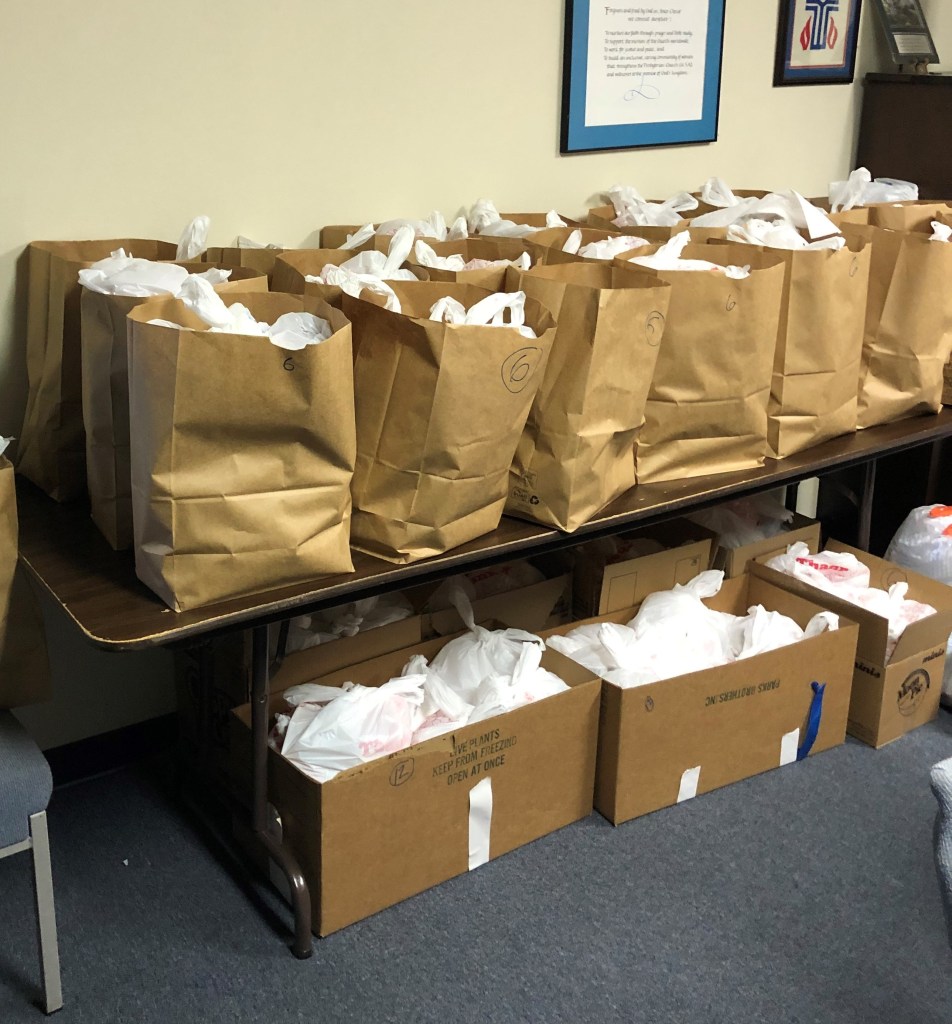
𝗧𝗛𝗢𝗨𝗚𝗛𝗧𝗦:  Several studies have found the BackPack programs result in an ability for food insecure families to become food secure.  They also found improved academic performance for students enrolled, improved attendance (particularly on Friday’s when food is distributed), and a raise in self-esteem.  The picture represents the 60+ backpack fills for our community for one weekend, while the Arkansas Foodbank augments families.  The Meal Gap statistics quoted above are two years old, and prior to the pandemic.  The situation has gotten worse rather than better as people across America struggle to find “nutritious” food with dwindling resources.  There are more than 200,000 food insecure children in Arkansas and over 14,000,000 across America.  Do the work.  Change is coming and it starts with you.
Weight

October 26, 2020

I Like to watch the show Real Sports on cable.  The stories are insightful and always interesting.  The format is to feature some of the lesser known aspects of the sporting world.  These range from everything from Eagle hunting competitions by a girl in Mongolia to brain injuries in football (from High School to Pro).  This past month there was a feature on using dehydration to make weight in mixed martial arts matches.  The people interviewed were both men and women.  What they had in common was they were lower tier fighters.  The dehydration employed was severe, sometimes as much as 15 pounds over the course of three or four days.  If they refused, they would not get to fight.

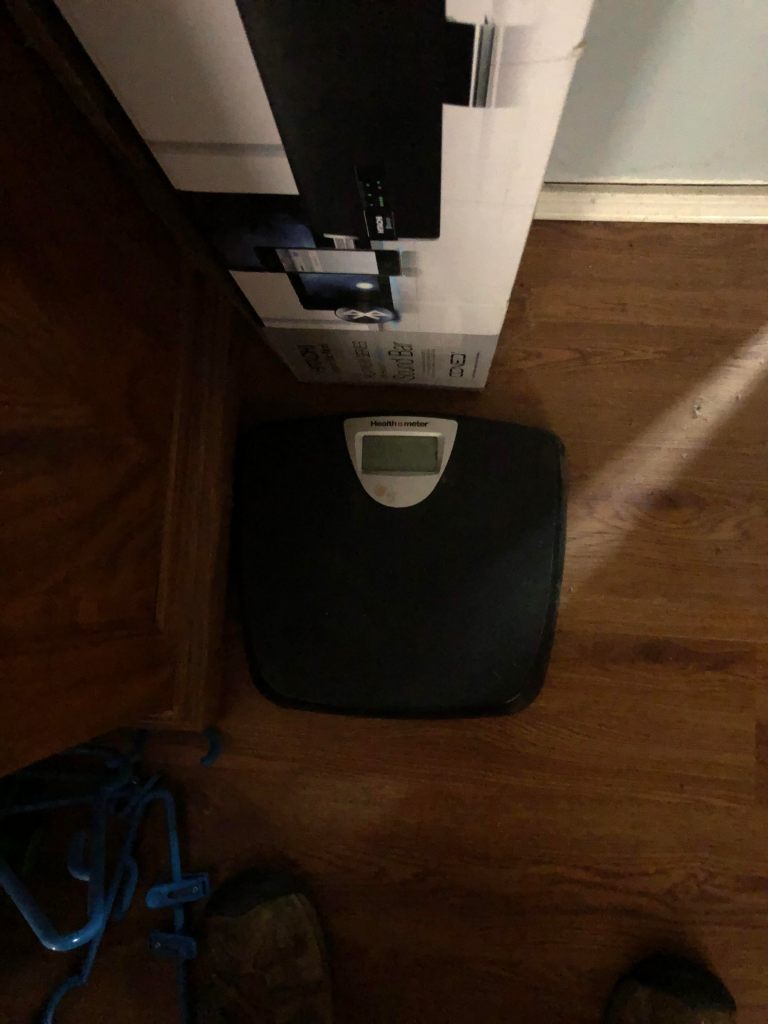
Hearing about the lengths these fighters went in order to make weight reminded me of my wrestling days in high School.  The wrestler in my weight class was not only good, he was also a senior.  We had another ok wrestler in the class above him who was also a Senior.  My coach suggested I should drop ten pounds in order to wrestle at the lower weight where we did not have an accomplished wrestler.  I was a team player who thought the coaches were looking out for my best interest, so I dropped the weight.  I found this to be a constant battle as I tried to meet a weight below my class.   I generally found myself not eating the night and day before weigh in.  If I were still heavy, I would have to put on sweats and a rubber suit and run laps most of the afternoon until I lost the weight.

The point made by the sports show was the toll it took on the fighters.  After losing 15 pounds in three days they were often unable to stand on their own.  They would make weight and then have a single day to rehydrate.  For many, this meant they were in no shape to fight the next day.  Sometimes they had to forfeit and sometimes they went into the hospital as their kidneys or other organs had shut down.  The real tragedy was that those were the lucky one.  Some were able to go into the octagon.  Often these fighters were defeated early in the match.  While our bodies can tolerate incredible stress, there is a limit.  Some never came out alive.

𝗧𝗛𝗢𝗨𝗚𝗛𝗧𝗦:  I think my brother had the best attitude about weight when he went out for the wrestling team his Junior year.  Once more the coach was trying to fill a weight class.  My brother was not a wrestler but was willing to help.  Rather than losing weight he filled the open weight class, heavy weight.  This was reserved for wrestlers over 210 pounds and he weighed about 185.  At least he never had to cut weight.  While I understand the allure of extreme sports and testing yourself, there is a limit.  I have experienced the “runners high,” but also witnessed the complete collapse of the body.  We are finding the virus effects people differently.  Some have few immediate symptoms or even be asymptomatic.  Others rapidly progress from “fine” to a ventilator in a matter of days.  There are some risks that ought not be taken.  Follow the science.  Change is coming and it starts with you.
Sprall

October 24, 2020

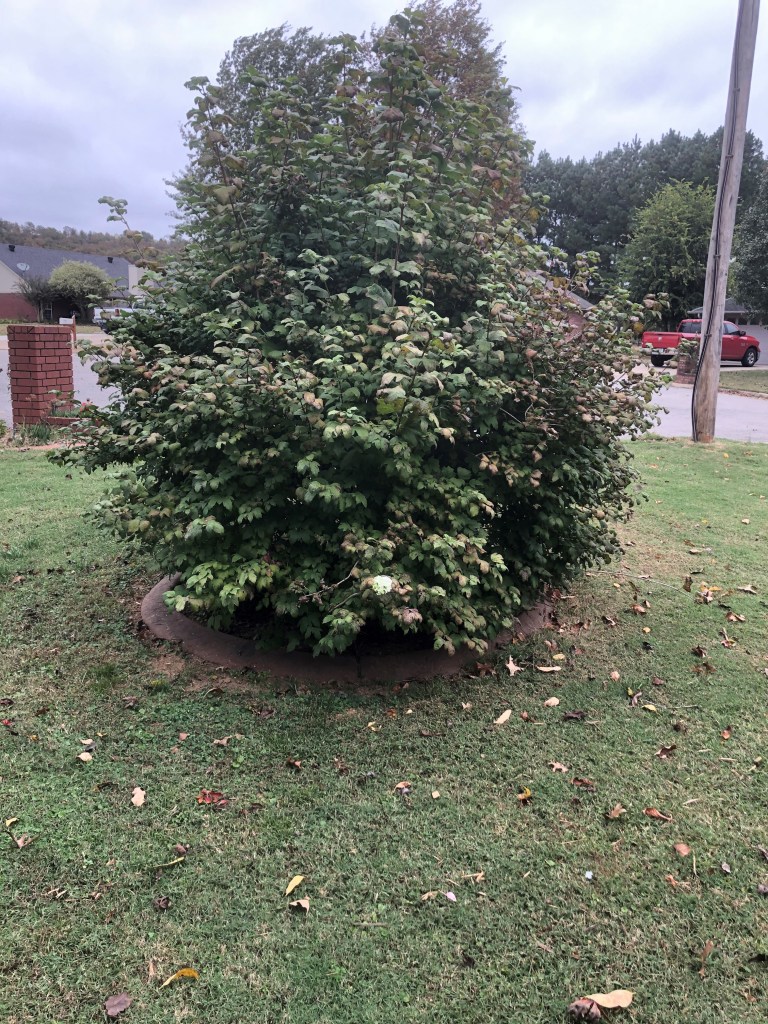
Our yard plants have been going crazy trying to figure out what time of year we are in.  After it had been cooler for two weeks, we had three straight days of 85+ degrees this week.  Our Snowball bush decided it must be spring and flowered.  I did not notice this yesterday but today the cluster is green at the base and the tops are already in a mature white stage.  Oddly, there is only one cluster on the entire bush.  I have noticed similar confusion with the flowers in the mailbox planter.  While it did not surprise me when the mums started to bloom, our Naked Ladies have resprouted and the Hyacinth and African Daisy are in full bloom.  Clearly, there is mass confusion whether it is Spring or Fall (i.e., Sprall).

While scientists attach Latin names to plants, most people refer to them by their common name.  This can create confusion as similar looking plants can be given similar names.  The name “snowball bush” can refer to a viburnum or a hydrangea.  The old-fashioned snowball bush (Hydrangea arborescens), also called Anabelle hydrangea, produces large clusters of flowers that start out pale green and turn white as they mature. The Chinese snowball viburnum bush (Viburnum macrocephalum) is similar in appearance and also produces flowers that start pale green and turn white as they mature.  While similar, the two plants are not related.  The difference comes in height, bloom size, and hardiness.  We have the Hydrangea.

After reading about the two plants and their differences I noticed a paragraph at the bottom of the article that talked about pruning.  Apparently the two bushes are quite different when it comes to pruning.  Hydrangeas should be cut back hard in late winter. This encourages them to come back lush and leafy in spring.  Viburnums instead need pruning right after the flowers fade.  If you wait too long, you could lose next year’s beautiful flush of flowers.  While I do not know what went on with the bush prior to our return, I doubt if much thought ever went into pruning.  I am sure that in the three years we have been back it has never been pruned.  Somehow it has survived.

𝗧𝗛𝗢𝗨𝗚𝗛𝗧𝗦:  I have spent a lot of time this year researching how to keep my yard plants and vegetable garden in shape.  It was not that I did not care before, it was instead that I had not made it a priority.  I have been surprised by the shear amount of information available.  I usually start with an online query and that takes me to YouTube videos and other formats.  That does not even address the more than 1.6 million books published every year (surely some are about gardening?).  One of the anti-racist authors I read told of how a friend had mentioned how many books and social media sources were available on the subject.  She told him they had always been there; he had just not bothered to look.  We seem to be in our own Sprall moment in 2020.  Rather than panic, we need to look for how we can create change.  The information is out there once we make it a priority.  Do the work.  Change is coming and it starts with you.