Native

December 14, 2021

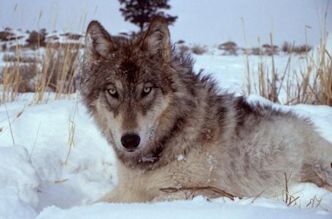
The front-page lead in my local newspaper today addressed “what I needed to know about native plants and pollinators in Arkansas.”  It began stressing the advantage of growing native plants as they have already adapted to the local climate and soil.  That means they tend to take less care and maintenance than non-native plants.  Another advantage is native pollinators are already familiar with these species and are often specifically attracted to them.  While bees are the most prolific pollinator, they are not the only ones.  Pollen is spread by butterflies, moths, beetles, and birds.  While some pollinators move indiscriminately from flower to flower, others will only feed on a specific species, and all will spread the pollen of a species in return for a meal.  The interdependence of flora (plants) and fauna (animals) create the local ecosystem.

When I looked online, I found an ecosystem is a community of living and non-living things that work together, and includes both abiotic (soil, water, air) and biotic parts (flora, fauna).  The major parts of an ecosystem are water, water temperature, plants, animals, air, light, and soil.  A native ecosystem is all the naturally occurring living things, which includes plants and animals that are living within a certain area, but also includes how these plants and animals interact with each other and the world around them (climate).  Healthy ecosystems have an energy source, usually the sun, and decomposers which break down dead plants and animals, returning vital nutrients to the soil.  A healthy ecosystem consists of native plant and animal populations interacting in balance with each other and nonliving things (i.e., water, soil, and minerals).  An unhealthy ecosystem is the result of an imbalance.

The news article went on to say native plants and grasses provide natural food and shelter for native fauna, which in turn helps with pollination and growth.  Native areas do not need to be created in specific ways, but the key to success is diversity.  Diversity can provide pollinators with a constant supply of nectar and pollen throughout the growing season.  Different sizes, shapes, and structures of blooms occurring throughout the spring, summer, and fall will accommodate the specialist pollinator species.  Leslie Cooper, a biologist preserving the monarch butterflies (Danaus plexippus) in the state, said “Restoring Arkansas’ native plant communities is the single most important thing we can do for pollinator conservation in the natural State.” Native insects are required for pollination of 85% of Arkansas’ native plants.

Thoughts:  When I was director of a conference center in Kansas, we restored 10 acres of our land to native Tall Grass Prairie but continued to mow the 50 acres around our activities.  One year I started mowing later in the season and noticed the weeds I was cutting down were varieties of milk weed.  Milkweed is labeled “noxious” in the wheat fields around me, but we were on the migration route of the Monarch Butterfly.  I dug up over a dozen milk weed plants and transplanted them into an area where I had seen the butterflies congregate.  When the native ecosystem is unhealthy, it breaks down until health can be restored.  Invasive species (plant and animal) create an imbalance that results in habitat destruction.  Transplanting a “pretty” species generally meets with disaster for native species.  Follow the science.  Change is coming and it starts with you.
Lacrosse

December 13, 2021

The Iroquois Nationals Men’s Lacrosse Team represents the Iroquois Confederacy in international field lacrosse competition.  They are currently ranked third in the world after winning Bronze at the 2018 World Lacrosse Championship.  Eight teams were selected to participate in the 2022 championship based on where the team finished in the 2018 Federation of International World Championship.  The Iroquois finished third and Ireland finished 12th, but the Nationals were deemed ineligible to compete by the International World Games Association (IWGA) because the team does not represent a sovereign nation and do not have an Olympic Committee.  In August, the IWGA said it was willing to reverse course if a place could be found for the Iroquois team.  In a remarkable show of sportsmanship, Ireland’s lacrosse team is withdrawing from the tournament to allow the Native American team to play instead.

When I looked online, I found lacrosse is a team sport played with a lacrosse stick and a lacrosse ball.  It is the oldest organized sport in North America, and according to the Iroquois Nationals, was created by Native Americans as early as the 12th century.  The game was extensively modified by European colonists to reduce the violence and to create its current collegiate and professional form.  Players use the head of the lacrosse stick to carry, pass, catch, and shoot the ball into the goal.  The modern sport is governed by World Lacrosse and is the only international sport organization to (now) recognize First Nations bands and Native American tribes as sovereign nations.  Lacrosse has been contested at two editions of the Summer Olympic Games, 1904 and 1908.  It was also held as a demonstration event at the 1928, 1932, and 1948 Summer Olympics.  There are plans to return lacrosse to the Olympics in 2028.

The connection between the Choctaw people and the Irish has existed for nearly 175 years.  The ties began in 1847, when the Choctaws took up a collection and donated over $5,000 (today’s money) to support the Irish during the Potato Famine which ravaged Ireland during the 1840’s.  The Choctaw had faced their own hardship and starvation along the “trail of tears and death” on their way to Indian Territory (Oklahoma) in 1831.  The Choctaw donation was sent to the town of Midleton in County Cork, south of Dublin.  It was not until many decades later, the townspeople realized their aid had come from a people who were themselves reestablishing their society and their government after the long and painful migration.  Since that time, both their ancient tongues almost became extinct, and have been rescued and made into working languages again through concerted effort and sophisticated approaches.  Both peoples continue to successfully preserve their cultures and traditions.

Thoughts:  The relationship between the Choctaw and Irish has rekindled over the last 25 years.  In 1995 the Irish President visited the Choctaw Nation to reestablish the friendship and thank Choctaws for their aid.  In 2017 Midleton dedicated a commemorative sculpture in the local park called “Kindred Spirits.”  In 2020 the story took a new twist with the covid death toll in the Navajo Nation and Hopi Reservation. The Irish sent aid with the Choctaws in mind to assist the Navajo and Hopi.  According to Chief Gary Batton, “Adversity often brings out the best in people . . . We have become kindred spirits with the Irish in the years since the Irish Potato Famine . . . Sharing our cultures makes the world grow smaller.”  This is a lesson for us all to learn.  Do the work.  Change is coming and it starts with you.
Falcon

December 11, 2021

My Cornell Lab of Ornithology feed sent a post yesterday about the return of the Peregrine Falcon to the Finger Lakes region of New York.  The last peregrine nest was seen in 1946 and by the mid-1960’s the species no longer bred in the US east of the Mississippi.  In 1970 the species was listed as Endangered.  By 1975 only 324 nesting pairs remained in North America.  A nationwide recovery effort, centered at the Cornell Lab, ensued to deliver the peregrine back to the wild.  The falcon had a remarkable rebound in North America and the peregrines were delisted from the Endangered Species Act in 1999 after more than 6000 captive-raised young falcons were released in all.  However, they were still missing from Taughannock.  That changed in March 2020, when the Peregrine Falcons were again seen at the falls.

When I looked online, I found the Peregrine Falcon (Falco peregrinus), also known historically as the duck hawk in North America, is a cosmopolitan bird of prey (raptor) in the family Falconidae.  A large, crow-sized falcon, it has a blue-grey back, barred white underparts, and a black head.  The peregrine is renowned for its speed, reaching over 200 mph (320 km/h) during its high-speed dive while hunting.  This makes it the fastest bird in the world and the fastest member of the animal kingdom.  Typical for bird-eating raptors, peregrine falcons are sexually dimorphic, with females being considerably larger than males.  The peregrine’s breeding range includes land regions from the Arctic tundra to the tropics, making it the world’s most widespread raptor.  The only bird species with a wider range is the Rock Pigeon (Columba livia), which is the peregrine’s favorite prey.

In the late 1940’s, postwar America and agriculture was booming, and dichloro-diphenyl-trichloroethane (DDT) fueled that boom.  DDT was used to protect troops from mosquito-borne illness during World War II and flourished commercially in the United States as a pesticide.  The insect killer was canonized as a technological marvel and earned its discoverer the 1948 Nobel Prize in medicine.  The side effect was the poison entered the soil, leached into water­ways, and climbed up the food chain.  When the DDT reached the tissues of apex birds of prey (mostly Peregrine Falcons and Bald Eagles) it thinned the shells of their eggs.  Nests consistently failed and populations fell precipitously.  Rachel Carson spoke out about the dangers of DDT in her book, Silent Spring.   In an interview Carson said, “We have now acquired a fateful power to alter and destroy nature.  But man is a part of nature, and his war against nature is inevitably a war against himself.”  Senate hearings on pesticides began within a year of the book’s publication.  The Endangered Species Conservation Act of 1969 set the stage for listing the Falcon endangered in 1970, and the Environmental Protection Agency banned DDT in 1972.

Thoughts:  The peregrine reaches sexual maturity at one year and mates for life, nesting in a scrape on cliff edges.  Now this includes tall human-made structures.  Since the ban on DDT, populations have recovered, supported by large-scale protection of nesting places and releases to the wild.  In 1999, a US Fish and Wildlife Service press release heralded landmark news: “Today, the world’s fastest bird soars off of the Endangered Species list.”  As one of the list’s inaugural members, the Falcon’s removal was an acknowledgment of an unprecedented recovery, and a culmination of the act’s grand experiment.  Conservationists rang in the new millennium on a high note.  We can use as many high notes as we can get.  Follow the science.  Change is coming and it starts with you.

Regulations

December 10, 2021

I have been a fisherperson for as long as I can remember.  Whenever I fish in my own or other states I always try and follow the regulations.  I know these are in place to protect the waterway habitat and to provide the best return on the fishery populations.  While I love to catch fish, I am not big on keeping what I catch.  I have on occasions kept the fish, but mostly I return them immediately to the water.  My thought is this way they are there for the next angler to enjoy, or even better, for me to catch again after they have gotten bigger.  One of the difficulties I have with hunting is it tends to nullify any form of catch and release.  Once you shoot something you cannot immediately release it back into the habitat.

Lately, Melissa and I have begun to explore more possibilities of subsistence living.  We are among the growing number of people who would like to have less of a carbon footprint through a subsistence lifestyle.  While this may eventually mean living off the grid, there are certain things we would like to retain.  We would like some form of electricity (sun, wind, water, and geothermal could work).  We would need a reliable water source for drinking and watering the vegetables we would need to grow.  Our container garden is one of my efforts to become familiar with plants and how to make them thrive (still a work in progress).  We are not at a point where we are willing to give up eating meat.  That means I would need to keep fish and hunt what is available from the land.  As I have begun to research how to accomplish these goals, I am constantly met with regulations. 

Years ago, I contemplated getting a compound bow for hunting.  Last week I had a conversation with several friends who I knew hunted to gain more knowledge on the subject.  One of the comments was how much practice it took to become proficient with a bow, and they suggested I try a crossbow.  Later in the week one of them brought a bow by my office for me to test.  All I needed to do was buy some bolts (arrows) and find a place to shoot.  No problem.  I looked online and found the closest ranges to me were over an hour away.  That is when the regulations kicked in.  I bought a target and thought I could shoot against the shed behind our house.  I checked the Game and Fish regulations and it said you could practice on private land, but you should check local regulations.  When I called the local PD, I was told it was illegal to shoot an arrow within the city limits.  I thought was set.  I had the bow, the bolts, and the target, but the regulations meant there was nowhere for me to practice.

Thoughts:  Since I work in a small town, I decided to check their archery regulations.  I called the mayors office and found I could shoot within the city limits if I did not cross anyone else’s property line.  That means I need to get permission from my work to set up the target on the land, but then I will be abiding by the regulations.  Living within the regulations set by others can often run contrary to the goals we are trying to achieve.  Like my fishing, they are in place to meet what someone decided to be the better good for all.  When we live together in communities, we are bound to live by the regulations those communities have adopted.  That is true for fishing and archery, and it is true for vaccines and masks.  Do the work.  Follow the science.  Change is coming and it starts with you.
Delays

December 09, 2021

Now that we are in the Christmas season, I have noticed the usual traffic delays are back again. I did not get out as much last year to experience the delays that normally come with the season.  It was reported on the newscasts that there were fewer people out last year, and the normal road delays were not as acute.  There are several streets in the city near us that Melissa does not like to travel in normal traffic, and she refuses to drive them during the holidays.  I noticed the city has placed electronic traffic billboards along these routes encouraging people to “put it down and drive,” and to “pay attention to the road.”  The roads are still bottlenecks and delays as people jockey for position between the traffic lights and trying to enter and exit the stores and restaurants that line both sides of the streets.

Traffic management is a key branch of logistics, and concerns “the planning, control, and purchasing of transport services needed to physically move vehicles and freight as smoothly as possible without delays.”  Cities use traffic management concepts on the streets and roads to organize, arrange, guide, and control both stationary (parked) and moving traffic.  This includes pedestrians, bicyclists, and all types of vehicles.  The aim is to provide the safe, orderly, and efficient movement of persons and goods, and where possible to protect and enhance the quality of the local environment on and adjacent to traffic.  When I checked online, I found our city’s traffic control department is comprised of seven different programs.  In general, the department is responsible for repairing and maintaining City streets and drainage system, is responsible for the repair and construction of sidewalks, and maintenance of traffic signals and street signs.  That is a large task even in small cities.  It is no wonder delays occur.

As I sat in line last week at the drive through to our local pharmacy I met with delays.  It is usually a quick wait and the young girls who usually people the window will ask cars to pull around if there are going to be any delays in getting the prescription filled.  That day there appeared to be supply chain problems.  I pulled around the corner to find I was the fourth car in line.  I waited nearly ten minutes for each car to pull away in front of me.  By the time I got to the window there were three cars behind me, and that did not count the three cars that chose to squeak by rather than wait in the delays caused by the line.  When I got to the window, I noticed they had a new, older person working.  I gave her my information and then waited nearly ten minutes as she walked the 20 steps back to the pharmacy and retrieved my prescription.  I assumed they must be having logistics problems.  Or maybe it is just the Christmas delays.

Thoughts:  When I worked for the State of Utah, I took a trip to Denver with a group of Department of Transportation (DOT) engineers to discuss a statewide project with the USDOT office located there.  Riding in from the airport I was admiring all the different types of houses located along the route.  My colleagues were instead marveling at the overpasses and cloverleafs we passed along the way.  People really do get excited about different things.  Listening to the engineers talk provided insights that I later used to improve relations with them on other projects.  When we listen and then use the knowledge gain to build connections with others cooperation becomes easier.  Do the work.  Follow the science.  Change is coming and it starts with you.
Classic

December 08, 2021

One of the guilty pleasures I look forward to at Christmas is watching classic Christmas movies.  When we were scrolling through the guide waiting for the Cats Basketball game tonight, I noticed Christmas Vacation (1989) was playing on the American Classic Movies (AMC).  Most people I know have their favorite movie they look forward to seeing and Christmas Vacation is Melissa’s.  Her favorite part comes where Clark is trying to get the 25,000 lights he put on his house to light (drumroll please!).  For my brother it is A Christmas Story (1983) and Ralphie crawling back up the chute to Santa to tell him he wants a Red Rider BB Gun (you’ll put your eye out).  I have two favorites I look forward to.  These are It’s A Wonderful Life (1947) and the varieties of A Christmas Carol, especially Alister Simms (1951).

When I looked online, I found Dickens’ innocuous 1843 anti-capitalist Christian novella wound up being so good it revived an entire holiday.  The over-worked middle-class and displaced poor of the Victorian era could not afford nor care about recognizing the holiday, and virtually nobody celebrated Christmas.  With A Christmas Carol, Dickens emphasized feasting, snowfall, and charity, and he even coined the term “merry Christmas.”  The book proved to be such a smash hit that nearly overnight, London embraced the holiday.  A Christmas Carol stands among the most frequently adapted stories in the history of film and television.  It is probably the most adapted story in the English language, except for perhaps the Bible.  There have been at least 272 adaptations, including films, television specials, one recent FX miniseries, one opera, and even an adult version (1975).  In addition, nearly every TV program between 1960 and 1990 seems to have produced a Christmas Carol episode.

Not only has the A Christmas Carol movie been reproduced in many adaptations, but I also own it in different formats.  My first copy was on VHS and then when the CD came out, I bought the CD.  I have watched many of the movie adaptations but admit I have not been as persistent is watching the TV show versions.  I will also admit I am highly critical of the different versions of the movie.  I even struggle with the colorized version of the Simms classic.  At one time I had the entire Simms version memorized and would drive melissa crazy as I would repeat classic lines a moment before they were said by the characters.  Melissa did not think this was a wonderful life.

Thoughts:  I first remember watching It’s a Wonderful Life while I was in the middle of writing my MA Thesis on the transformation for workers during the early 20th Century.  While I had no doubt seen the movie before, I never paid it much attention.  As I watched this time, I saw all the classic depictions of industrial change.  This included Old Man Potter, Ma Bailey’s boarding house, Bailey Park’s five room houses (bungalow) for the poor, factories shutting down in outer suburban areas, and especially the changes wrought as World War II brought the country out of the depression.  From that year on these two movies have become a must see.  Without them, it just would not be Christmas.  The traditions of Christmas were missed by many last year.  We can restart those traditions this year if we do so safely.  Follow the science.  Change is coming and it starts with you.

Radio

December 07, 2021

When I came into the kitchen for my morning coffee, I heard a Christmas song playing on Melissa’s radio station.  I always struggle with deciding when to start preparing for Christmas.  The stores and merchandizers all started advertising their expanded Black Friday sales that ran through the month of November.  That seemed too early for me.  TV’s Hallmark Channel starts their Countdown to Christmas on December 1st and then continues through the 30th.  That still seems a bit early and runs a week past Christmas Day.  I am never surprised though, as they also have Christmas in July and air a variety of Christmas movies throughout the year.  When I asked Melissa why she decided to listen to Christmas songs she told me she had not.  The Classic Rock channel on her radio had just started intermixing a few Christmas songs sung by rock groups.  As I drove to work, I noticed my channel had also made its annual shift to Country Christmas Radio.

When I looked online, I confirmed something I have always thought.  Most well-known artists at some point in their career will decide to record a Christmas song.  There are others who go all out and release a Christmas album.  Some record classic songs done with a new twist, while others create new songs that they hope with be played for Christmases to come.  A few even record the song the way it was written.  There have been a few stinkers recorded, but there have also been songs that themselves became classics.  An example would be Nat King Cole’s “The Christmas Album.”  Cole is considered by some to be one of the best singers of all time, and possibly the greatest when it comes to singing soothing Christmas tunes.  Cole’s album contains 20 classic carols and festive songs, including his iconic ballad “The Christmas Song (Chestnuts Roasting on an Open Fire)”.  These are the songs that mostly fill the radio air on an annual basis.

On the other end of the spectrum are the stinkers.  RuPaul’s “With Bells On” was offered as an example.  This was part of a 1997 Christmas album “Ho Ho Ho” and showed what happens when camp goes bad.  The reviewer commented, “You might think Dolly Parton and Kenny Rogers’ “With Bells On” would be a natural fit for the supermodel of the world, but just about everything that can go wrong with this does. Ru is flat, Michelle Visage seems to be trying to do vocals for a different song entirely, and worst of all, neither of them are having any fun with it at all.”  This overview of Christmas tunes did not even brush the surface of the novelty songs and soundtracks for animated movies.  On the flip side (sic), all these songs and albums made money for the artists and are occasionally slipped radio airtime. 

Thoughts:  “Grandma Got Run Over by a Reindeer” is a novelty Christmas song written by Randy Brooks.  The song was originally performed by the husband-and-wife duo of Elmo Shropshire and Patsy Trigg in 1979 and is one I hear on the radio at least once around Christmas.  The songs popularity sparked a 2000 Canadian American animated Christmas TV special of the same name, directed by Phil Roman.  The special was first released on home video in October, and then aired on The WB network (later CW) on December 21, 2000.  The plot of the video follows the theme of the song, with a caution to beware of too much eggnog.  There are many like me who struggle with when to start listening to Christmas songs.  Luckily, by Christmas Eve at least, our radio switches for us.  Do the work.  Follow the science.  Change is coming and it starts with you.
Ozone

December 06, 2021

While I have heard about the depletion of the ozone layer many times, it still shocks me when it is presented on my news feeds.  This morning I received notification the hole in the Arctic layer was being explored to gain better understanding on the phenomena and what might be done to reverse the trend.  Scientists have been tracking depletion of the ozone layer over the last fifty years and have known of the holes that open above the stratosphere (upper layer of the atmosphere).  When I looked online, I found there was not just one hole but two.  Both the Arctic and Antarctic have holes that appear during their respective winters and then slowly close as spring and summer arrive.  The problem was that these holes seem to be getting bigger and lasting longer.

My feed spoke of the Arctic hole in the ozone because this was a relatively new phenomenon.  The unusually large hole that opened in the ozone layer over the Arctic in 2020 seems to have been triggered by record-breaking winter temperatures in the North Pacific Ocean.  The hole encompassed nearly the entire ozone layer overhead but closed in early spring.  Scientists say there is a chance the hole in the ozone could form a lot more frequently in the future.  Plugging satellite data into a series of simulations, researchers have found high sea surface temperatures in the North Pacific have the power to lower the temperature of the Arctic’s westerly winds.  These high winds blow through winter into spring, and if they grow cold enough for long enough, they can trigger the formation of polar clouds in the stratosphere.  These clouds are a key ingredient in the ozone depletion process.

The “normal” ozone hole is a thinning of the ozone layer in the stratosphere above Antarctica that happens every September.  Chemically active forms of chlorine and bromine derived from human-produced compounds are released during reactions on high-altitude polar clouds.  The reactive chlorine and bromine then initiate ozone-destroying reactions as the sun rises in the Antarctic at the end of winter.  The 2021 Antarctic ozone hole reached its maximum on October 7 and ranks as the 13th-largest hole since 1979.  This year’s ozone hole developed as a colder than usual Southern Hemisphere winter led to a deep and larger-than-average ozone hole.  This will likely last into November or early December.  “Without a Montreal Protocol, it would have been much larger,” said Paul Newman, chief scientist for Earth sciences at NASA’s Goddard Space Flight Center in Greenbelt, Maryland. 

Thoughts:  The Montreal Protocol is an international treaty designed to protect the ozone layer by phasing out production of substances responsible for ozone depletion.  The Protocol was agreed to on 16 September 1987 and entered into force on 1 January 1989.  The Protocol has undergone nine revisions since being enacted.  As a result of the international agreement, the ozone hole in Antarctica is slowly recovering, and projections indicate the ozone layer will return to 1980 levels between 2050 and 2070.  The widespread adoption and implementation has been hailed as an example of international co-operation.  Global cooperation is possible once the public is convinced of the imminent risks.  A global pandemic is apparently not risky enough.  Follow the science.  Change is coming and it starts with you.
Championship

December 04, 2021

The season began with high hopes for all 130 Football Bowl Series (FBS) teams when 0 Week opened on Saturday, August 28, 2021.  The earliest confirmed game involving FBS teams was Nebraska-Illinois in Champaign, Illinois, with a 1 pm EST kick off (an Illinois upset).  The usual questions are always the same.  Who will win the conference championship?  Who will make the College Football Playoff?  Who will win the Heisman Trophy?  Who will win the national championship?  Now after 12 games per team over 13 weeks the Power Five and the other six FBS leagues are holding championship games this weekend.  Sunday’s College Football Playoff Selection Show will determine the four teams vying for the national championship.

While the focus may be on the four teams vying for the national championship, there is plenty of hope for non-championship teams.  There are a total of 35 Bowl games for 70 teams who are not in the championship series.  To be eligible for a Bowl a team is required to win at least 6 games to become Bowl eligible, although during the shortened 2020 season Arkansas was invited to a bowl with a record of 3-7.  That Bowl did not happen due to covid protocols.  While expectations are high for the upper echelon teams, others set their hope at a lower bar.  Arkansas went two years without winning a conference game (2018 and 2019) and was not hopeful for the “conference only” season during 2020, then went 8-4 during 2021.  Hope springs eternal for programs with inconsistent records, but the firings by winning coaches this year indicate for some, good is not enough.

Prior to Sunday’s College Football Playoff Selection Show, the rankings show featured four straight Tuesday releases, all at 7 pm EST following the conference championship weekend games.  This year the final rankings break from that schedule and air at noon EST the day after the conference championship games are played.  The New Year’s Six games (December 30 through January 1) are chosen by the bowl selection committee.  These are the Cotton Bowl Classic, the Fiesta Bowl, the Orange Bowl, the Peach Bowl, the Rose Bowl, and the Sugar Bowl.  Every three years, two of these bowls serve as national semifinal games for the College Football Playoff.  Three of these bowls also have Power Five conference tie-ins.  Every year since 1998, a non-Power Five team is guaranteed one bid to the New Year’s Six bowls.  So far, no additional bids beyond the one has been granted.  We will see if that trend continues.

Thoughts:  While some teams are jockeying for the College Football Playoff Championship, there are other teams at the opposite end of the spectrum.  Every year there are teams trying to build a program who are starting at the bottom.  The only thing America seems to love more than hating a continual winner, is making fun of a perennial loser.  When I went online, I found predictions for the 15 worst teams in the FBS.  While they were not ranked in order of malfunction, it did predict the worst Power Five team in the nation.  These teams do not receive trophies or the accolades of fans, but loyalty goes beyond the won-loss record.  We need to show the same loyalty to our group, humans.  Despite our on-loss record we can work together to resolve the issues of climate, pollution, and racism.  We are in it for the championship.  Do the work.  Follow the science.  Change is coming and it starts with you.

Progressive

December 03, 2021

With another nice day outside Melissa tempted me with the idea of going fishing again.  While I had considered the idea, I also knew I needed to take care of my yard.  It would be a lot nicer at 75F (24C) than the expected 50’sF (10C) predicted for this weekend and following.  I was the only one on the cul-de-sac who had not mulched their leaves yet (none of us rake).  The problem was, to mulch the leaves I really needed to prune the Bradford Pear and the Snowball bush.  I had pruned the pear this spring, but it was again brushing Melissa’s car turning into the driveway.  I mentioned previously, the bush had not been pruned in at least six years.  I decided I would take a progressive approach to the tasks.

One of the trending ways to hold dinner parties during the 1970’s and 1980’s was called a Progressive Party.  When I looked online, I found that even during pandemic, these parties are still trending.  The concept behind the Progressive is rather than one person hosting the party, or even guests bringing different courses to the hosts house, the guest themselves move from house to house for each course.  This means appetizers at one house, soup or salad at the next, entrée at a third, and end with desert at the last house.  The courses can be mixed or added to, but the point is to keep the party moving.  This moving feast was said to result in hours of entertainment with a limited amount of prep work for each host and spreads the cost of a multi-course dinner between the friends.  The progressive party can be simple or elaborate, inexpensive or pricey, it depends on what the guests agree before the menu is set.

I decided the best way to complete my yard work was to look at it as a progressive party (woohoo!).  Pruning the pear was my first course appetizer to protect Melissa’s roof.  Next, I decided to tackle pruning the Snowball Bush.  I had previously checked online for how to prune the bush, but it still took most of the time, so this became my entrée.  For my third course I blew the leaves out of the succulent beds and off the walks and driveway.  I have an electric (cord) blower and was unable to reach the leaves that had fallen in the street.  No problem.  I decided my desert would be the mulching mower and mulched over the street leaves as well.  There were so many leaves that I needed to make several passes over both the yard and the street.  After a very long afternoon I was able to finish as the sun was going down.  I think next time I will try Progressive Fishing.

Thoughts:  The writer of the article offered several tips and warnings concerning the progressive party.  This suggested having the party on the weekend to allow enough time.  I think Friday counts.  They suggest you needed to take time to allow people to move the next course.  I took time to sit in a chair and drink water.  The third tip was to have the locations close together to avoid spending the evening driving.  These were all in my yard.  The final suggestion was to have designated drivers if wine was being served with the meal.  My water did not need one a driver.  Even though the article was written in February 2021, there was no mention of wearing masks, social distancing, or vaccinations.  Perhaps they needed another tip.  Follow the science.  Change is coming and it starts with you.