Melons

Melons (2)

April 27, 2020

Our family moved for dad’s job after my final year in Jr. High.  That first summer was particularly rough.  I was not old enough to drive and I did not know where to find friends.  The town did have a city pool, so I got the habit of walking the half mile to the park and then hanging around the pool area all afternoon.  One afternoon I was approached by a man in an old pickup truck who asked if I wanted to make some money picking watermelons.  I told him I would have to ask, so he drove me to my parents’ house and then out to the melon fields.

When we arrived, the field was huge!  He apparently supplied melons to all the local markets.  He introduced me to the crew and took off.  The crew consisted of the foreman and his wife, and two other young males like me.  I recall the wife drove the truck, the foreman stacked the melons in the bed and the three of us walked behind cutting the ripe melons off the vine.  Since I had never worked in the melon fields I was told how to tell if they were ripe, how to cut them and how to carefully move them to the truck.  I also learned another important piece of information.  The owner left strict instructions that we were not to eat the melons.  The exception was if one fell off the truck and broke open.  During the three days I worked the field it amazed me how a melon would fall off the truck right about break time.

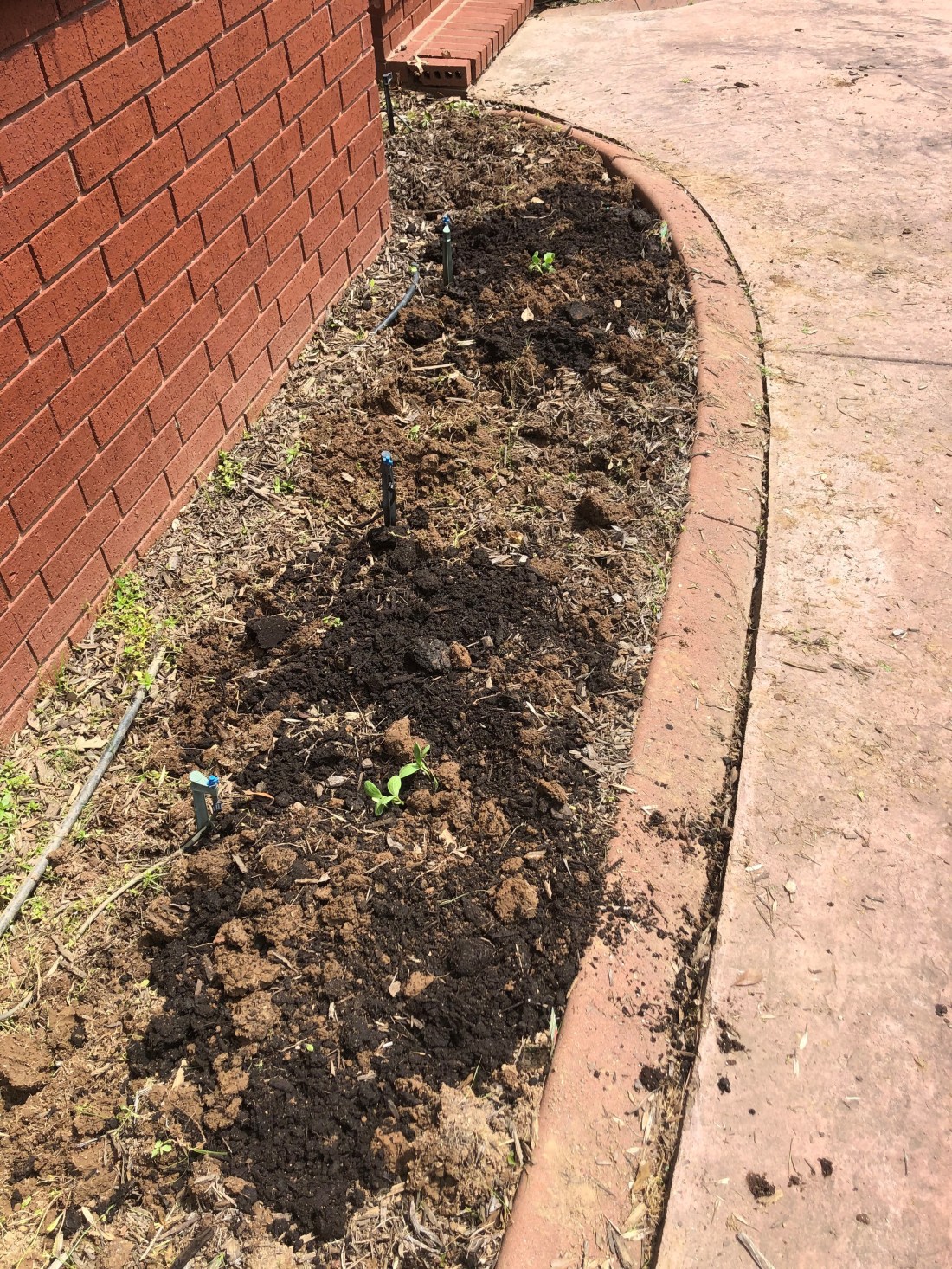
I tried growing melons in my back yard in Kansas but had no success.  I am sure one of the problems was the ground I chose was a patch of yard along the fence that I dug up.  I did mix peat in the soil, but the melons never grew.  The plants grew very well, they just never produced fruit.  I finally stopped weeding (does this story sound familiar?) and the grass again took over my small patch.  Imagine my surprise when I looked at the patch later in the summer.  I had four or five small melons on the vine.  They never grew big enough to eat but their presence was encouraging.  I planted a watermelon and cantaloupe today.  I hope they grow.

THOUGHTS:  For the man who found me at the pool, getting the crops in was more important than where I came from.  The movie “McFarland” is based around the farm workers living in a small California town and depicts the harsh working conditions faced daily in the fields.  While the workers were not migrants, others harvesting crops in the San Joaquin Valley are.  While many of the migrant workers are American citizens or have “green cards” allowing them to work, others are not documented.   This is true for much of the lower level agricultural jobs.  During this pandemic we have found these harvesters and meat processors to be essential workers.  I hope we still feel that way once we move through the crisis.  If it is possible, Stay home. Stay safe.


Bunnies

Strawberries

April 27, 2020

In Charles Schultz’ comic strip Peanuts, the character Snoopy has an on and off attempt to write the great American novel entitled “The Little Bunnies.”  Bunnies are always depicted as cute cuddly fur balls.  A bunny trainer was hired by my son for his daughter Lauren’s second birthday.  He brought ten bunnies ranging in size from exceedingly small to one that had to weigh at least fifteen pounds.  Most of the children invited latched onto the cute little bunnies, but not Lauren.  She immediately took to the large bunny.  She would pick it up and hold it in her lap.  When the bunny squirmed away, she trailed off after it trying to give it more love.

There is a more sinister side to bunnies, however.  That is when they become rabbits.  Rabbits are voracious rodents that will eat anything they can get those long sharp front incisors into.  I had an experience with rabbits when we grew our urban container display garden in Wichita.  I had built an arched trellis between two of the containers and planted beans.  I hoped to train the vines so they would grow up and over the trellis, creating a wonderful cascading bean array.  As the season began my beans were looking great.  Then one night it happened.  Apparently, there was a clutch of rabbits living in the empty lot across the street.  When I came to water the rabbits scattered.  All my beans had been eaten.  I put chicken wire around the containers but never got much of a restart.

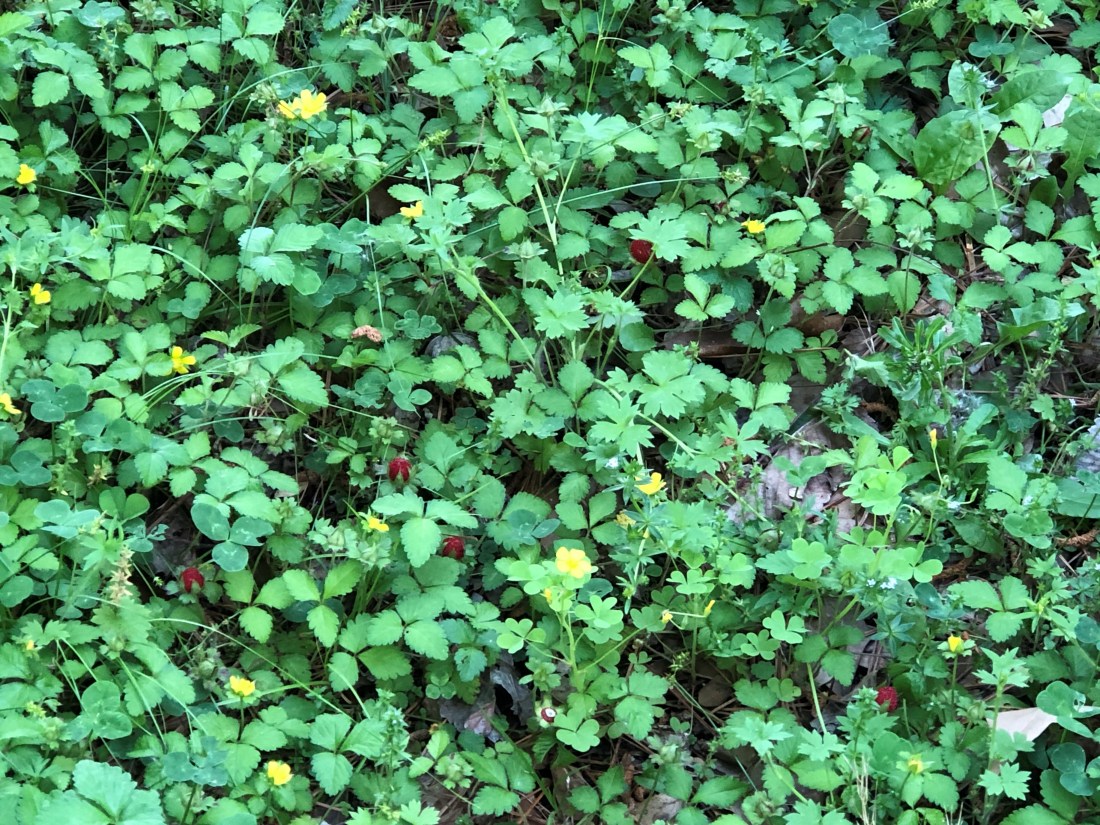
What got me thinking about the rabbits is the discovery I made mowing my back yard.  It has been raining lately and it makes the back yard impassible.  When I went to check if I could mow, I noticed a few Blue Coral Bells had sprung up.  I also noticed dozens of red dots on some of the thriving ground cover.   When I examined them closer I realized they were strawberries.  I have lived at the house for two summers and never noticed them as I had been able to mow.  When I asked Melissa about them, she confirmed my find.  Apparently, her mom had tried to grow strawberries for several years.  Every time they got to the pink stage the rabbits came and ate the entire crop.  I am going to put up some chicken wire and hope for the best.

THOUGHTS:  Most things in nature have two sides.  The cute bunnies are also the voracious rabbits.  The difference is the context and our expectations.  One trait of humans is our willingness and ability to change the surrounding environment.  The rabbits at my house were living in a dilapidated building in an overgrown field.  The building has been torn down and the field kept mown by the new owners.   One thing the pandemic has shown is how resilient animals can be.  Without the constant press of people, the animals have been allowed to thrive even in urban areas.  Perhaps the lesson should be to find ways amid this new normal to allow both to coexist.  If it is possible, Stay home. Stay safe.


Tomatoes

Tomatoes

April 25, 2020

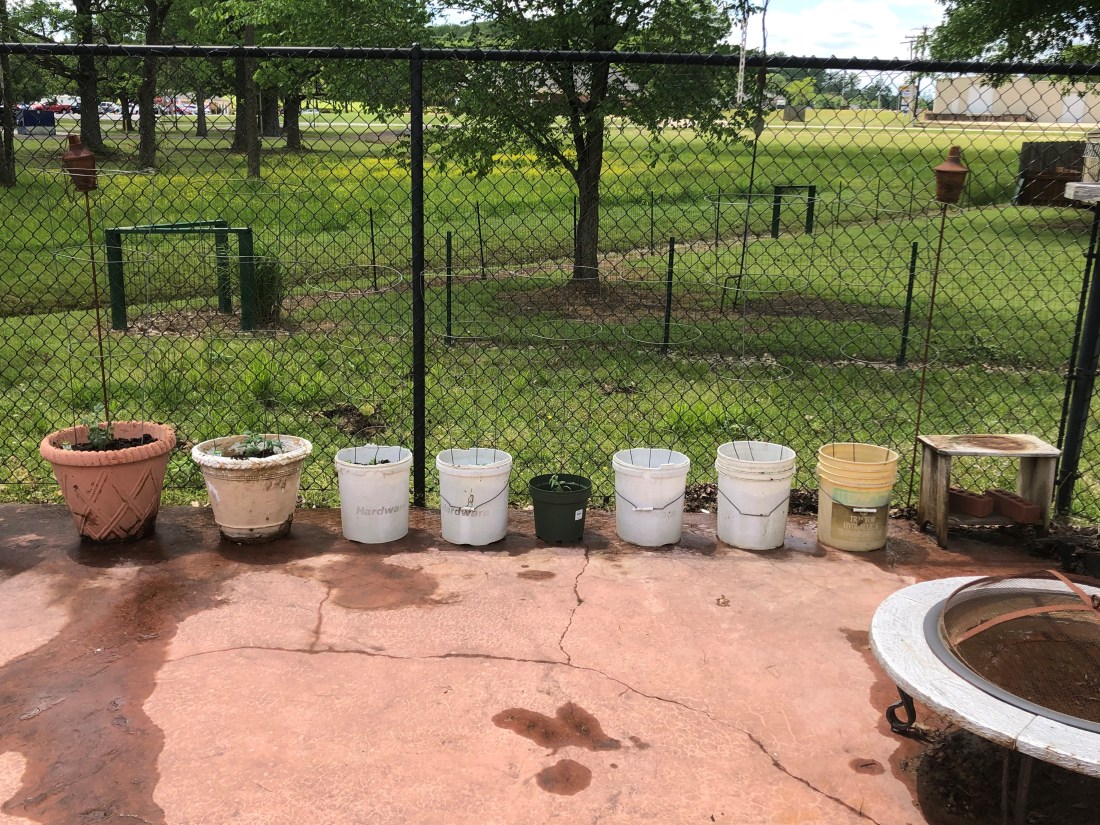
I In the midst of Melissa’s succulent craze she has inspired me to plant a few more vegetables in my own container garden.  Melissa told me she has never had much luck with containers on her back area because of the full sun they receive most of the day.  Her mom used these containers and had excellent results, but her mom could grow anything.  I am determined to try so we went to the Coop to get some plants.  The plants were outside, so we put on our masks and kept our distance and after selecting what I wanted to buy I sat in the car while Melissa went inside to pay.  We unloaded the plants and extra potting soil and I went to work.

I remember my first experience planting tomatoes when I was a boy.  I was working for my Webelo badge in Cub Scouts and one of the projects was to grow a vegetable garden.  My dad had turned a large plot of ground in our yard into garden space so I asked if I could grow the tomatoes.  He agreed and asked how many I wanted to plant.  Without hesitation I said, “Twelve!” Dad did not bat an eye and told me he would buy the plants, but I had to agree to water and care for them all summer.  I promised and shortly the plants were in the ground.   I was good at caring for the plants and they quickly began to produce.  As my dad knew, 12 plants produce a lot of tomatoes.  I not only picked the tomatoes, I also had to figure out what to do with them.  As the summer went on, I quit caring for the plants hoping they would stop producing.  They never did.

When we went to the Coop, I intended to only buy two tomato plants.  I wanted a Beef Steak and a Roma.  Melissa likes the big tomatoes and I wanted to try my hand at salsa.  Salsa meant we also got a couple of types of jalapenos and cilantro.  I have already planted the onions, so I was set.  Then Melissa saw a Yellow Boy and wanted to try it.  The other difficulty was the Roma’s were not sold as a single plant, so I had to buy a flat of six.  All told I ended up with eight containers of tomatoes.  That should make quite a lot of Salsa.  By the way, I hope you like tomatoes.

THOUGHTS:  I am amazed by the number of people who are planting gardens this year.  On the few occasions I get out the nursery’s and plant stores have full parking lots and just like today, only a limited number of plants.  Part of the supply problem is because it is getting later in the planting season, but we had frost warnings last week.  A comedian we watch on Friday’s mentioned that part of the problem with the pandemic comes from poor health and the types of food we eat.  Perhaps with all the gardens being planted we will focus more on fruits and vegetables.  That is my intent.  I hope it is yours as well.  If it is possible, Stay home. Stay safe.


Batteries

Batteries

April 24, 2020

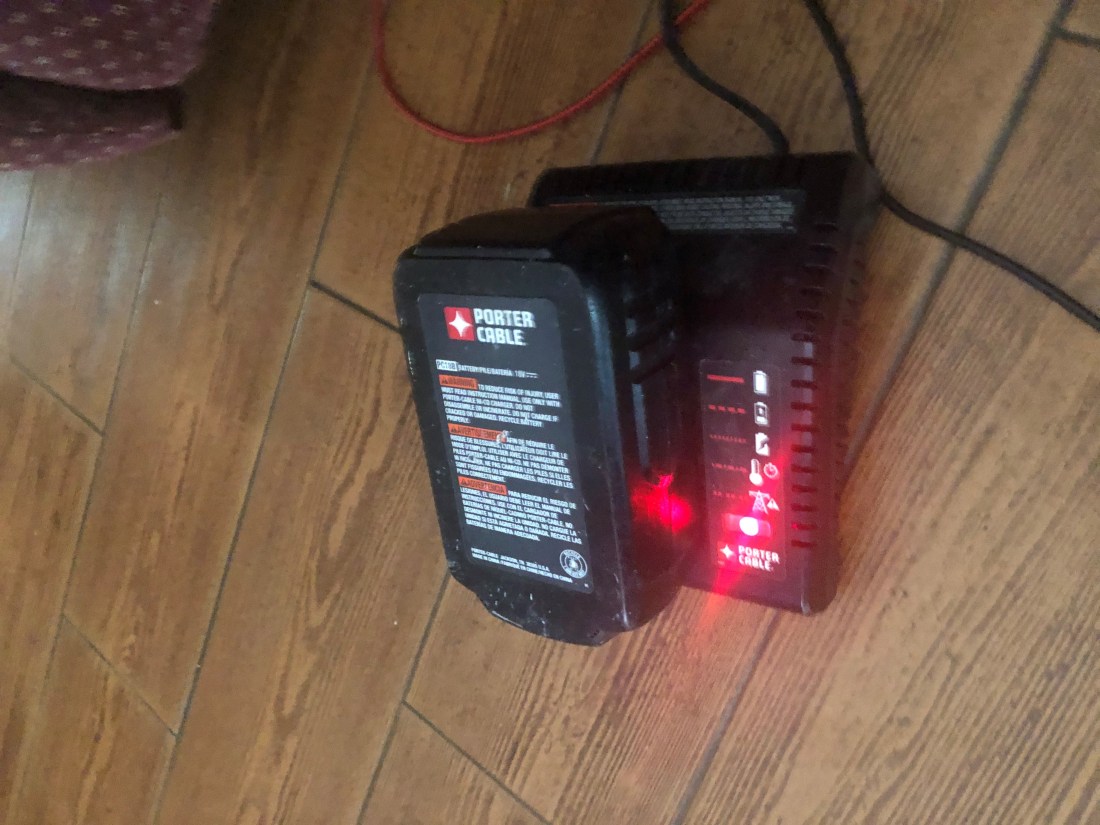
I purchased a cordless drill several years ago to help in the small construction projects I do around the house.  It came with a backup battery, so I have been careful to plug this in to charge while I use the other attached to the drill.  This has worked well and been a time saver on bigger projects as I have had to switch batteries.  Lately I have been using my drill for small jobs, things like drilling one or two screws in or out.  Since I am using the drill for such a short time, I have not been plugging the extra battery into the charger.

Melissa has been gathering pots to plant the new succulent garden.  One aspect of succulents is they need to be potted in well-drained soil.   The best way to assure draining is to drill holes in the bottom of our pots.  Melissa had been asking me to do this for several days and I finally got around to it.  I used my masonry bit and it was easy to punch holes in the plastic pots.  It also worked well on the small terra cotta pots, although I ran into a problem with the larger terra cottas.  I needed to apply pressure to drill through the pots and as the bit broke through the drill dropped onto the pot and broke the bottom out of one.

My negligence finally caught up with me.  I was trying to drill though a high-fired ceramic pot and was not having much luck.  I assumed my bit was dull, but I kept trying.  Then my drill ran out of juice.  No problem, I got my backup and plugged it into the drill.  Nothing.  Over the course of the last months this battery had gone dead as well.  I set up the charger and plugged in the battery.  When I checked several hours later the charge was complete.  I tried a couple of terra cottas and it worked well.  Then I tried the high fired pot again.  I could not drill through.  I guess this pot will not make the garden.

THOUGHTS:  My experience with drilling the pots reminded me of two good life lessons.  The first is that we need to take care of ourselves so we do not run out of juice.   This may be something you do regularly but in times of stress we need to remember to recharge.  The second is that no matter how hard we try; we cannot be all things for all people.   I have not mastered the technology or even social skills to stay ahead of the curve in the middle of the pandemic.  What I can do is my best and then not beat myself up because one of the pots will not make the garden.  If it is possible, Stay home. Stay safe.


Commentaries

Commentaries (2)

April 23, 2020

Ever since I retired, I try to start my day with a routine.  I used to get up and have breakfast, but Melissa and I have been practicing a daily sixteen hour fast since last October.  I’m not sure if it has done anything for my diet but it is a good mental discipline.  Instead of eating I get up, go outside, and retrieve the newspaper and the mail.  Then I go through the mail (mostly junk and bills) and sit down to read my paper.  Actually, reading the paper is just a prelude to what I really want to do.  The last pages of the paper contain the comics and Dear Abby and then finally the crossword puzzle.  I have become good at doing the crossword.  I started completing crosswords to keep my mind sharp.  At first, I prided myself on how fast I could complete a puzzle.  Then I realized I was not getting smarter; I was just learning how to do crosswords.

As I read the comic pages today one of the strips, “Grand Ave”, hit a note.  Today’s strip is about a conversation between the boy and his mother.  “Check out these cool books I found in the basement.  They’re called ‘Encyclopedias.’  You can search them for all sorts of useful information.  So a book publisher has started copying internet search engines?  Something like that.”  This strip brought back memories of the encyclopedias we had when I was a child.   I am sure they were not cheap, and money was not something to spend frivolously in my family, but they were an essential item for us kids.  I recall many hours poring over the information these books contained.  Maybe we just had them so dad did not have to answer questions.  After all, whenever I asked, his first response was, “Look it up.”  This was a parenting skill I passed on to my own son.

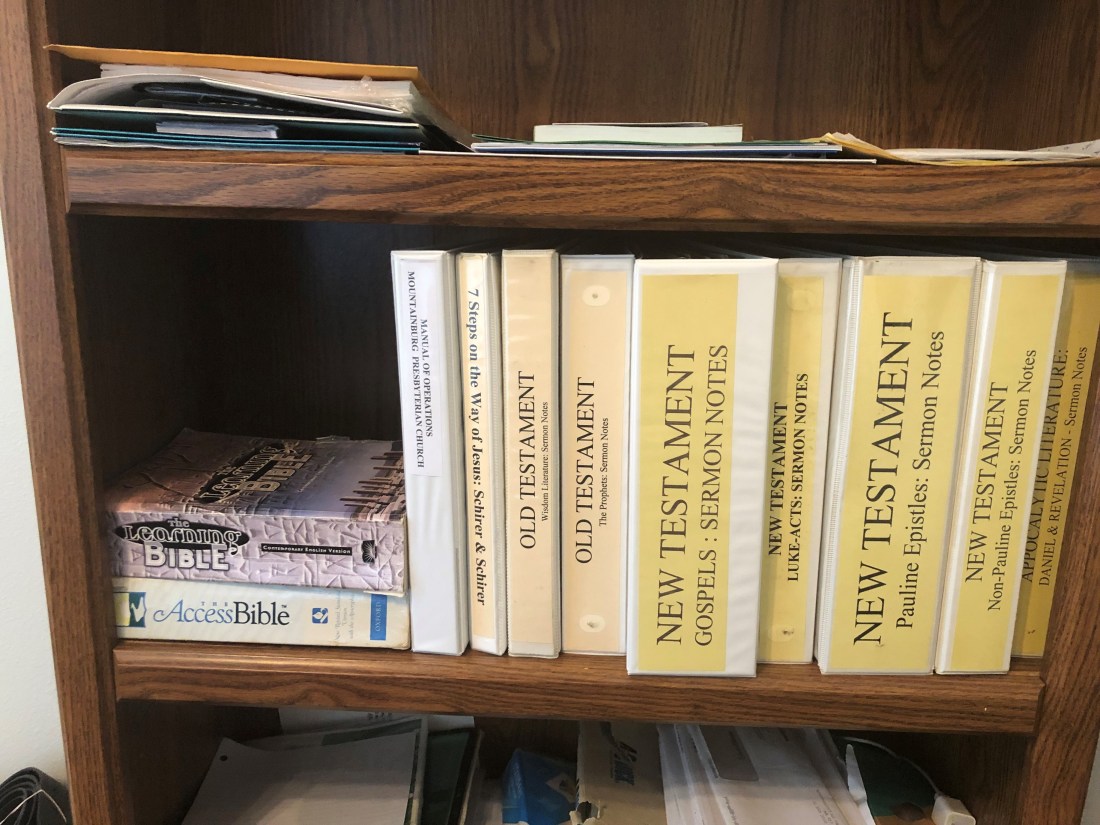
When I started preaching in the 1970’s a retired friend of mine gave me her set of Interpreter’s Bible commentaries.  I took notes from these books and used them every Sunday to prepare my sermons.  After I graduated from seminary, I started using study bibles to do the same thing.  Taking notes is second nature for me after having spent so many years in school.  I find it helps me remember.  Once I had the notes, I did not want to throw them away, so I put them in a notebook.  Over the years this notebook became the eight volumes that now sit on my shelf.  They are my go-to when I prepare on Sunday night for next week’s sermon.  If I am preaching on a new text, I again go to my commentaries and take new notes.  I do admit, now I also go to the internet search engines for additional information.

THOUGHTS:  During the course of this pandemic I have been forced to develop new routines.  I spend a lot more time on the computer than I used to and not as much time playing games on my phone.  I hunger for the contact provided by Zoom calls where before I never knew they existed.  I have become purposeful in staying connected with family and friends.  Now that this is my new routine, I am hopeful it will continue when I am again able to go outside.  If it is possible, Stay home. Stay safe.


Wildflowers

Flowers

April 22, 2020

One of the tasks I had as director of Cross Wind Camp and Conference Center was oversight of the grounds.  The center was located on 61 acres on the outskirts of a rural Kansas town.  Prior to my arrival the camp had kept the grounds as lawn, a job that took all week and then began again the next.  I figured there had to be a better way.  While I was doing other on-line research, I came across an article on the Tall Grass Prairie.  Until the invention of the steel plow in 1837 the root systems of the grasses made plowing impossible.  The wooden plows broke, and the new iron plows caked up with the clumpy soil.  Deere’s steel plow sliced right through and the Great Plains were open for cultivation.

Over the next century the prairies rapidly disappeared and were replaced by fields of wheat.  In areas where rainfall or irrigation made wheat growing impractical, the natural grasses were replaced by hay.  The band of native grass that once stretched from Kansas to Colorado and from Canada to Texas was now the fastest disappearing ecosystem in the world.  Hoping to do my small part in preserving these prairies, and not wanting to spend days on a mower, I let the grass grow that first summer.  Then we inspected the growth and decided on three areas with about 12 acres where we could recreate the prairie.  This provided lawn for camp activities and nature trails for eco-visitors.

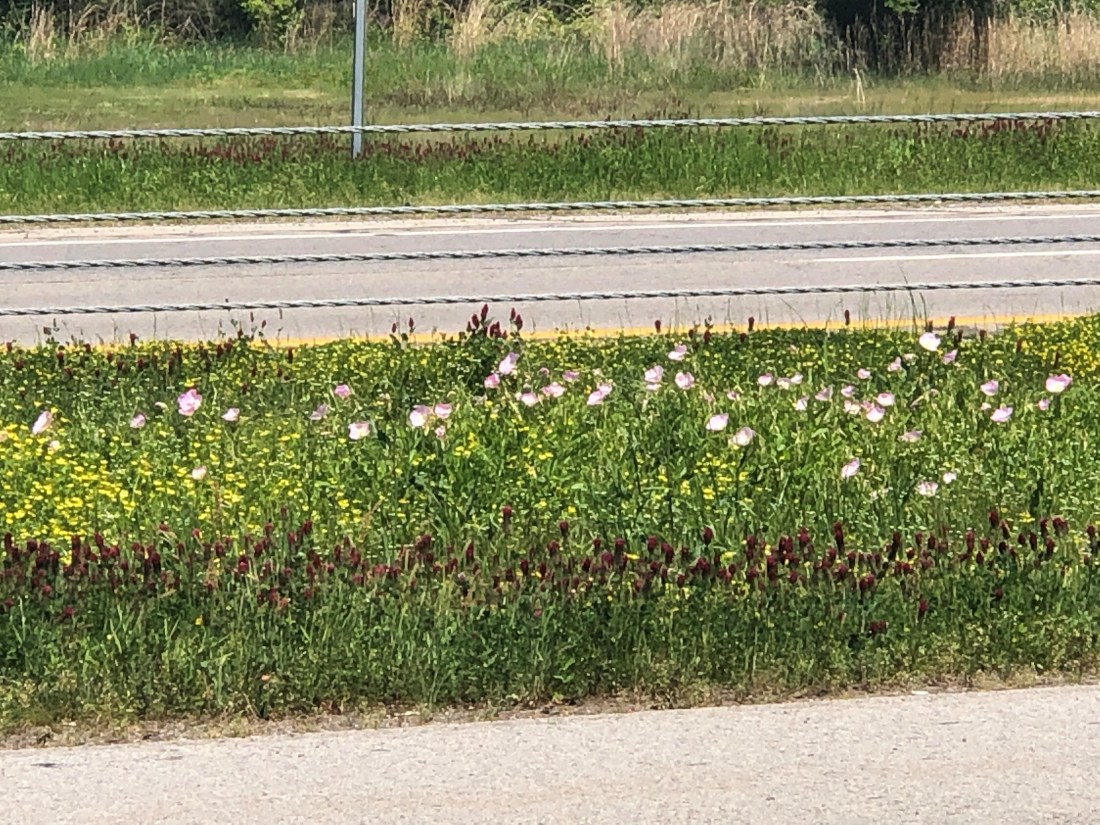
Prairie ecosystems are not just the big five grasses, they are also the abundant wildflowers.  Many states have begun to scatter native wildflower seeds along with native grasses in the medians after new road construction projects.  This means they are also following my lead and not mowing these areas, at least until after the spring bloom.  What I did not know was how hard it was to grow native grass and flowers.  I assumed you just throw out the seed and let nature take its course.  Native plants thrive because they spend a lot of early energy building a deep root system.  That is what allows these plants to survive in the dry summer months.  The existing grasses flourished the second season, but it took two years for the flowers to gain a foothold.  I guess I do like some flowers.

THOUGHTS:  There are many reasons to preserve the endangered ecosystems of the world.  One is like my unwillingness to mow; another is to preserve the natural beauty of our world.  Perhaps the best is the fact that these ecosystems are what allow humans to survive.  When we cut down the jungles of the Amazon or the old growth forests of the Northwest, we are depleting natures natural ability to remove carbon dioxide from the air.  One outcome of the pandemic has been a slowing of industry and fewer cars on the road.  Earlier this month satellite images from space revealed the lights of cities in central China, something pollution had blocked for decades.  The earth is good at repairing itself, we just need to give it a hand up.  If it is possible, Stay home. Stay safe.


Front Lines

Vet

April 21, 2020

Part of the new normal is cleaning out the garage.  I’ve got unopened boxes I unloaded from the trailer two years ago and haven’t touched since. I have sacks of recycling that have been piling up since the recycling center closed a month ago.  I also had cans of dog food and a variety of dried food we had tried to entice Bella to eat.  Even though the recycling could wait, I didn’t want to waste food.  Melissa called the vet to see if we could donate the opened food.  Even though they could not use it or enter it for resale, they knew of a nearby shelter that always needed food.  I pulled up to the side door and called to let them know I was outside.  As I waited several cars pulled up and called to have their pets examined.   The aides came out wearing masks to either take or return these loving animals.

Waiting got me again thinking about those who are on the front line of the pandemic.   We have three nieces and nephews who are nurses attending to patients in hospitals and another who serves his community as a veterinarian.   The come and go I saw is common for all health care workers.  Sometimes those they see wear masks.  Sometimes they don’t.   What the science tells us is even if you do wear a mask, the virus can live on other clothes and surfaces and it can survive longer and travel farther than first expected.   That means these workers are literally on the Front Lines.

It appears the number of new corona virus cases is declining across America.  What isn’t clear is whether this is a result of social distancing or due to the low percentage of people who are getting tested.   What I am hearing from Dr. Fauci is it’s probably a combination of both.  We have seen other countries who decided to reopen at the first signs of a decrease.  The result has been a spike of increased cases.  Nobody wants to stay home.  Everyone wants to see the economy booming again.  Then I think about my nieces and nephews.

THOUGHTS:  The health care workers around the world have voluntarily put themselves in precarious situations.  This was true before the pandemic but is now even more so.  Many hospitals are struggling to get protective gear and ventilators to stay ahead of the demand.   Others are scrambling to test and produce new vaccines or find new uses for existing ones.  Even knowing the statistics for the Flu, we are finding this new threat harder to gauge or even know how to treat.  What we do know is the best way to move forward is with everyone working together.  If it is possible, Stay home. Stay safe.
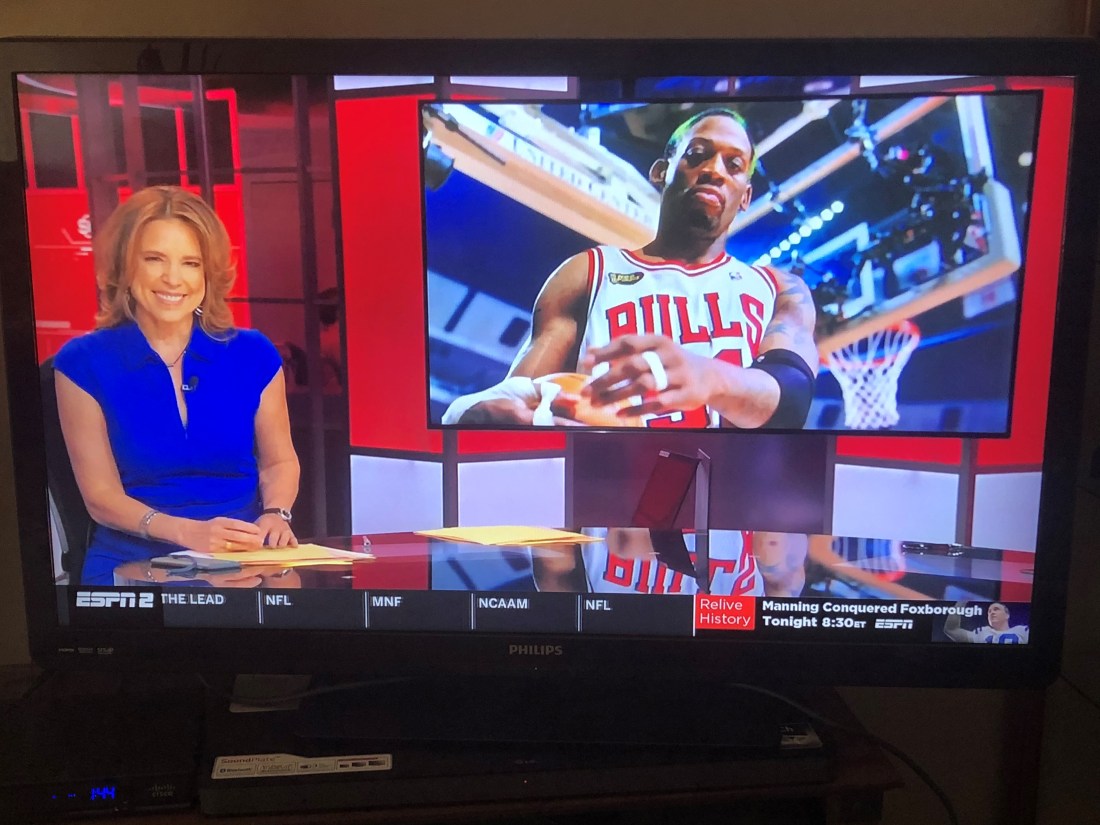


Sport-less in Arkansas

ESPN

April 20, 2020

I miss watching sporting events on TV.  Most years I would have been glued to the TV during March watching college basketball.  Melissa is an avid Kansas fan (I graduated from K-State) and they ended the season as the overall number one seed.  April was time to begin watching Major League Baseball.  We are huge Royals fans and you never know, with Perez back in the lineup this could have been our year.  June features the College World Series.  The Razorbacks came within one dropped ball of winning it all last year and had gotten off to another good start this year.  This means a lot of potential sports that I’m leaving on the table.

ESPN is a station that exclusively features sporting events and talk shows about sports.  In the past I watched this channel to keep up on the breaking news around the world of sports.  They have been hit hard by the lack of events.  It’s not that they don’t try.  NASCAR has been running virtual races where actual drivers control the video game cars.  The NFL Draft is set for Thursday night through Saturday and will be covered live virtually.  The station has been airing greatest games from various sports. Rather than current baseball, football or basketball, they will play a close contest between teams from five to ten years ago.  The idea is I won’t remember the game even if I do remember the outcome.  I don’t watch much anymore.

The various leagues are scrambling to salvage any sort of gaming for public view.  They have talked of playing events before empty stadiums or quarantining the teems and support people so they could still hold the event.  This is a possibility for professional sports as their revenues are driven by TV contracts.  Most college programs don’t have this luxury.  Local communities are kept thriving by the fans who flock to town to see the teams play.  The fans support restaurants, stores, hotels, and even the vendors at the stadium.  For most athletic programs the revenues and the donor dollars are generated by the fall football programs.  Without football, most of the Title IX funded sports could not survive.  Maybe I’ll go watch the 2008 World Curling Championship.

THOUGHTS:  Times and circumstances dictate much of how I allot my time and it seems I am not the only one.  Television viewing across America has skyrocketed over the last six weeks.  Psychologists say it isn’t healthy to take in a steady diet of corona virus news, but the news channels seem to report nothing else.  Even the uplifting reports aired are related to the pandemic.  Watching sports used to be my get away from having to think about life.  When I talk with older people many say they haven’t seen much of a difference in their life.  They were confined even prior to the crisis, so this isn’t a big change.  Maybe I should take my lead from them and rather than surfing TV for something to do I could read a book, complete a puzzle or write a story.  What a novel idea.  If it is possible, Stay home. Stay safe.


Succulents

April 18, 2020

I like cacti more than I ever liked flowers.  That hasn’t always been the case.  When I was growing up in Kansas the only cactus around was the prickly pear.  These hardy little plants were found mostly in the more arid parts of the state.  They had lobe like pads that kept low to the ground and spread out in patches.  I’d often come upon them while walking and if they were present, invariably step on or brush against one and get their spinney little thorns in me.  It seemed to take days before you could get them out of your skin.

When I moved to Utah, I encountered an entirely different set of Cacti.  The Sonoran Desert had many different varieties, and some like the saguaro cactus rose majestically into the air.  My little prickly pears were there as well yet transformed into large masses that lifted five or six feet above the ground.  The early missions of California gave me another perspective on cacti.  These groupings had been planted to keep livestock from roaming and had been growing in place for over 400 years.  It was in California that I began to cultivate my own cactus garden.  Since I was renting, I planted them in increasingly larger clay pots.  I brought six of my favorite pots with me when I moved to Kansas, including one I’d grown from about four inches to nearly two and a half feet tall (I annually decorated this as my Christmas tree).  Sadly, Kansas winters are much different than California.  They all died the first year.

Melissa knows of my love of cacti and their cousins the succulents.  She has heard stories of especially my Christmas tree cactus since we first met.  We have tried growing real Christmas cactus indoors several times but with little luck.  They all died.  Imagine my surprise when Melissa came home from a food run with a dozen small succulents.  Several days later more boxes of succulent starts showed up on the front porch.  Melissa surprised me by determining to create our own succulent garden in both clay pots (able to bring inside in the winter) and plantings in the ground.  I admit, I like succulents as much as I do cacti, and they don’t have thorns.

THOUGHTS:  There are many times in life where I find myself getting too close and end up catching the thorns.  This causes me to back away and I spend weeks trying to get the hurt out.  Other times I find exactly what I want and nurture it.  Then for some reason the circumstances change, and my joy is lost.  I can try and rebuild what I once had but that generally hasn’t worked well for me.  An alternative is move in a new direction.  Instead of recapturing the past I can create something entirely different.  That’s been my experience with cacti and now succulents.  It has also been true with experiences in life.  If it is possible, Stay home. Stay safe.


Going Old School

Computer

April 17, 2020

I have written several times over the last weeks how amazed I am by the new technology (at least to me!) we now use as common place to keep in touch.  We get together via Zoom or Skype to conduct our face-to-face meetings.  We gather to worship on-line in Zoom, Facebook and YouTube.   We hold studies, book clubs and small group socials on-line.  I have even heard of several conferences and teen weekends that are being held in a virtual format, including chat rooms and breakout groups within the same call.

I’ve also found the distancing we have undergone is resulting in an increased desire for contact.  I’ve found myself reaching out to my family through several different formats.  I’ve been part of a “cousins” group on Facebook and a “siblings’” group on Instagram for the last several years, but neither was greatly used until the last several months.   Now they are both in regular use.  Our siblings’ group has had several running dialogues lasting for longer periods of time, and with most of the families involved.  Even when I don’t comment I scroll through the comments by others and laugh.  It makes me wonder if our virtual connections are the new normal when we come out of the immediate crisis.

That’s when reality sets in.  As amazing as this is, even in America it’s not available for everyone.  There are still areas where internet access is either unavailable, unreliable, or band width is so weak it’s frustrating to try and use the technology.  I recall my first attempts at on-line streaming living in the Bay Area of San Francisco.  This was the birthplace of the internet, but my 300 baud modem meant it took 30 minutes to receive only a few minutes of content.  Even where access is available there are those unable to connect.   Someone needs to host the on-line formats and we need computers or smart phones for viewing.  These are high ticket items not everyone has or can afford, even if they know how to use them. Staying in touch is too critical to leave a large portion of the population behind.  I think I’ll make a phone call.

THOUGHTS:   It is increasingly clear moving forward needs to happen in a both/and fashion.  I am hopeful our technology formats will continue to keep us connected and even increase in the future.  Rather than putting all our efforts into new tech, we also need to remember those unwilling or unable to join the revolution.  A century ago, the Old School formats were the budding technology that brought our nation closer together.  Automobiles, mail, phone calls (and eventually visits), are still needed to embrace those isolated by distance.  These are not as convenient as sending a text, but they can be just as effective and for many just as needed.  If it is possible, Stay home. Stay safe.