Recapture

December 23, 2024

Ariana Gomez for The New York Times

Back in 2022 I blogged on growing battle surrounding carbon recapture in the US’s Mississippi River Chemical Corridor, commonly known as Cancer Alley. While critics acknowledged the process worked, they objected to the pollution caused by the facility itself, and the energy required to power the equipment. Today, my NY Times feed reported that more than 2 years later over 1,000 big companies have pledged to eliminate their carbon emissions over the next few decades, and part of those efforts came from paying for carbon dioxide removal. During 2024, Microsoft, Google, and British Airways were among the companies that committed a total of US$1.6 billion to purchase carbon removal credits. This is up from less than US$1 million in 2019, and it is believed this will grow to US$10 billion during 2025, and reach US$1.2 trillion by 2050. While huge sums of money are being dedicated to the emerging field, these projects will not have a meaningful effect on global temperatures anytime soon. There are only a few dozen operational facilities today that capture only a trace of carbon emissions. It is estimated that if 100’s of more such plants were built it would only recapture about 1% of the worlds annual carbon dioxide emissions.

When I looked online, I found that while there are several ideas for geoengineering plans and technologies designed to cool the planet, carbon dioxide recapture is attracting the big money. Investors believe while this will have a negligible short term impact on temperatures, it will begin to make a difference as emissions fall and the technology becomes more powerful. While some carbon polluters have committed to reducing carbon emissions, more are opting to continue to pollute and instead paying for carbon recapture credits. The US government is supporting the recapture movement through the Inflation Reduction Act that has tripled tax credits for capture and storage of carbon directly from the atmosphere. This 2021 bipartisan bill included US$3.5 billion to build four demonstration projects.

Pulling greenhouse gases out of the air is expensive and currently costs as much as US$1,000 per ton to capture and sequester carbon dioxide. Analysts say the price would need to drop to US$100 a ton for the industry to be viable. Damien Steel, chief executive of the carbon recapture firm Deep Sky, says, “This isn’t a market. A market means liquidity, repeatability, standards. We have none of that here.” As the NY Times reported, the industry is still creating a form of gold rush as investors readily fund new companies hoping that some of their bets will pay off. Many scientists and activists say the most effective way to combat global warming is to rapidly phase out oil, gas, and coal, as it is the burning of these fossil fuels which heat the planet. Former Vice President Al Gore, co-founder of Climate Trace, said, “We need to obey the first law of holes. When you’re in one, stop digging.”

THOUGHTS: Carbon recapture is only the latest technological innovation humans employed to try and resolve a problem of our own making. As an archaeologist the irony was not lost on me that I was digging through the trash dumps that the next culture had buried as they created a new living space on the remains of the past. When the pollution became too great, people would move to the next pristine site and begin again. The problem now is the pristine places are diminishing, and the polluted locations are broadening. This is particularly evident as our land, water, sea, and air are polluted on a globalized scale. If we do not “stop digging” our holes, the earth will be left for the next interplanetary archaeologists to dig. Act for all. Change is coming and it starts with you.

Chipmunk

December 20, 2024

One of the casualties of building my raised beds was the wood pile located along the back fence. This wood had been stacked when Melissa and her parents used the raised fire pit that sits adjacent. We have not used the fire pit (or wood) in the six years we have been back, and it was beginning to deteriorate. This was the perfect wood for the bottom layer of the raised beds. As I transferred the wood to the beds I encountered a variety of critters. There was a small Texas Brown Snake (Storeria dekayi texana) hiding in the pile and toward the bottom I encountered several of the invasive earth worms (Lumbricus terrestris) that repopulated North America along with the European colonists. As I continued to work a small furry critter darted out of the wood pile and into the refuge in the next yard. had noticed the chipmunk on several previous occasions as it foraged beneath the bird feeders.

When I looked online, I found the eastern chipmunk (Tamias striatus) is a species endemic to eastern North America and the only living member of the genus Tamias. The name probably comes from the Ojibwe word “ajidamoo”, translating as “one who descends trees headlong.” The species was first described by Mark Catesby in 1743 and was eventually classified as Sciurus striatus by Linnaeus (Latin, “striped squirrel”). The scientific name was changed to Tamias striatus (“striped steward”) by Johann Illiger in 1811. The chipmunk reaches about 12 inches (30 cm) long including its tail and weighs 2.3 to 5.3 ounces (66 to 150g). It has reddish-brown fur on its upper body and five dark brown stripes contrasting with light brown stripes along its back. The fur of its lower body is lighter with a tawny stripe running from its whiskers to below its ears and light stripes over its eyes. The eastern chipmunk has two fewer teeth than other chipmunks, four toes on each front leg, and five toes on the hind legs. There is no external difference in appearance between the sexes except for genitalia. The eastern chipmunk lives in deciduous wooded areas and urban parks throughout the eastern US and southern Canada, preferring rocky areas, brush, log piles, and shrubs for cover.

I had not seen the chipmunk since removing the wood pile and forgot about it. Over the last month Loki has been going crazy every time we have let him out back. From the frantic way he was acting I figured there was some critter living under the ramp off our back door. When I mentioned this to Melissa, she said she thought she had seen a rat (Rattus norvegicus) scurry under the porch when she let the kids out in the morning. I poked around with a stick to see if I could scare the rat out, but it never budged. Last week the mystery was solved. I was up early and let the kids out and saw a flash as something tried to speed from beneath the feeder back under the ramp. I recognized the animal as a chipmunk and tried to keep Loke from grabbing it. It finally reached safety as Loki scratched, sniffed, and whined around the ramp. Melissa now makes a point of making noise before she lets the kids into the yard, giving the chipmunk time to scurry back to safety.

THOUGHTS: I was relieved when I found out we had a chipmunk rather than a rat. I have liked chipmunks since I encountered them as a boy around the picnic sites in the Rocky Mountains. Even though rats and chipmunks are both rodents, these smaller cousins seem cute and innocuous while rats seem menacing. Perhaps it is a throwback to the Black Plague that ravaged Europe and was blamed on the fleas carried by rats. I read an article last week suggesting it was more likely it was the human fleas that spread the disease rather than the rats (Europe was not very sanitary). Humans tend to have similar reactions when encountering other cultures. If they are welcoming or meek they are deemed ok, even if often taken advantage of. If they stand up or hold their ground, they are deemed a threat and often eliminated. Whether it is rats, chipmunks, or other humans, perspective changes how we treat them. Act for all. Change is coming and it starts with you.

Capybara

December 19, 2024

As the year ends, yet another baby animal is going viral on social media. Tupi was born at the San Antonio Zoo on December 3rd and the zoo has been sharing pictures and videos of him, his mother, (Luna), and other animals in his enclosure. As the largest rodent in the world, most capybaras spend their days munching on grass and water plants in dense vegetation around bodies of water. Tupi is the first of his species to be born at the facility in 25 years, according to a statement from the zoo.
Jacob Downing, a spokesman for the zoo, said, “Their births are not super rare. At the end of the day, they are still rodents.” There has not been any capybara at the zoo since 2018 and no babies since 2000. The zoo announced Tupi’s birth on its social media accounts late last week, getting an outpouring of internet love as Tupi was embraced on social media. An hour later the zoo distanced itself from a memecoin ($TUPI) named after the new capybara.

When I looked online, I found the capybara or greater capybara (Hydrochoerus hydrochaeris) is the largest living rodent and is native to South America. The genus Hydrochoerus has only two member species, the greater capybara and the lesser capybara (Hydrochoerus isthmius). Close relatives of the capybara are the domestic guinea pig (Cavia porcellus) and rock cavy (Kerodon rupestris) both endemic to the Andes. The capybara is distantly related to the agouti (genus Dasyprocta), the two species of chinchilla (Chinchilla chinchilla and Chinchilla lanigera), and the semiaquatic nutria (Myocastor coypus), all from South America. Adult capybaras grow to 3.5 to 4.5 feet (106 to 134 cm) in length, stand 20 to 24 inches tall (50 to 62 cm) at the withers, and typically weigh 77 to 146 pounds (35 to 66 kg). Females are slightly heavier than males. Capybaras have slightly webbed feet and vestigial tails. Their hind legs are slightly longer than their forelegs, with three toes on their rear feet and four toes on their front feet. Their muzzles are blunt, with nostrils, eyes, and ears near the top of their heads. The capybara inhabits savannas and dense forests near bodies of water. The species is highly social and can be found in groups (herds) as large as 100 individuals, but usually closer to 10 to 20. The capybara is hunted for its meat, hide, and the grease from its thick fatty skin.

The San Antonio Zoo quickly posted on X that the facility was not associated with or benefiting from the Cryptocurrency named after Tupi, the new baby capybara born at the zoo. Memecoins are a form of cryptocurrency which are named after memes, characters, animals and other things related to the internet in hopes of drawing interest. The pygmy hippopotamus (Choeropsis liberiensis) born in Thailand in July 2024 also has a memcoin named after it. As the crypto market experienced a revival this year, memecoins also surged, even as some, like the $HAWK coin created by Haliey Welch, appeared to exist solely to benefit the group of people behind the coin. The zoo is providing plenty of footage of the nearly 3-week-old capybara. Tupi is still nursing but has already begun eating solids. In one of the videos shared Tupi climbed entirely into a bowl of food in order to feast. 2024 has been a good year to be a cute baby animal at a zoo as social media users have personified them with popular internet lingo. The zoo gave Tupi a mantra for the new year:
“Unbothered. Moisturized. Happy. In My Lane. Focused. Flourishing.”

THOUGHTS: My first encounter with a capybara happened as a young boy at a small town fair in Kansas. The side show included a number of exotic animals. I paid my hard earned US50 cents to wonder at the bearded lady, sword swallower, and what had really caught my eye, a “Paris Sewer Rat”. The small town fairs have passed and have been replaced by the wonders of social media. The scam (and wonder) is still available to intrigue a young boy’s mind. “If its online, it must be true. Right?” Act for all. Change is coming and it starts with you.
Island

December 12, 2024

On the daily scroll through my browser, I came across an article on the conservation efforts taking place on Lord Howe Island. About 10% of the island’s forests were cut and cleared for agriculture and another 20% were disturbed by the domestic cattle and feral sheep, goats, and pigs that were brought to the island as a marine supply stop. The remaining 70% of the island remains relatively untouched and contains a variety of plants and animals, many of which are endemic, and some of which are rare or threatened. In July 2012, Australian Environment Minister Tony Burke and the New South Wales Environment Minister Robyn Parker announced that the Australian and New South Wales governments would each contribute 50% of the estimated A$9 million cost of implementing a rodent eradication plan for the island, using an aerial deployment of poison baits. Around 230 Lord Howe woodhens (Hypotaenidia sylvestris) were captured before the rodent eradication commenced in early 2019. Following the successful eradication of the rodents, all woodhens and Lord Howe currawongs (Strepera graculina crissalis) were released across the island in late 2019 and early 2020. The recovery program has restored the woodhen’s numbers from only 20 (1970) to about 200 (2000), which is close to carrying capacity for the island

When I looked online, I found Lord Howe Island, formerly Lord Howe’s Island, is an irregularly crescent-shaped volcanic remnant in the Tasman Sea between Australia and New Zealand that is part of the Australian state of New South Wales. The island is named after the 1st Earl Howe, Richard Howe. The island is about 6.2 miles (10 km) long and between 0.19 and 1.24 miles (0.3 and 2.0 km) wide with an area of 3,600 acres (14.55 km2). Offshore environmental assets are protected by the Lord Howe Island Marine Park which extends out to three nautical miles (5.5 km) around the island and includes Ball’s Pyramid. The Commonwealth Marine Park extends from 3 to 12 nautical miles (5.5 to 22.2 km) and covers about 1,160 miles2 (3,005 km2). A 1970 environmental survey of the island reported on the island’s environmental degradation and the Lord Howe Island Board instigated an extensive biological and environmental survey in 1974 which now guides the island conservation program. The Lord Howe Island Amendment Act of 1981 proclaimed a “Permanent Park Preserve” over the north and south ends of Lord Howe Island and the island was cited under the UNESCO World Heritage List in 1982.

Pigs (Sus domesticus) and goats (Capra hircus) were released on the island in the early 1800’s. The goats destroyed shrubs and grasses used as nesting sites and the pigs ate eggs and chicks and disturbed the land by rooting for food, both causing several birds to become extinct. Black rats (Rattus rattus) were released from provisioning whaling ships in the 1840’s and mice from Norfolk Island in 1860, triggering a second wave of extinction as well as the destruction of the native phasmid and the decimation of palm fruits. Bounties were offered for rats and pig tails, and later poisoning programs have kept populations low. Stray dogs are also a threat, as they harm native birds. Introduced species that harmed Lord Howe’s native flora and fauna (i.e., feral pigs, cats, and goats) were eradicated by the early 2000’s and the restoration of the island is an ongoing process.

THOUGHTS: The exploration of the islands of the Pacific saw the introduction of domesticated animals (like pigs -) as a food source for the mariners. The feral offspring then overran indigenous species (especially birds) and threatened existing plant species. This was compounded by the unintentional spread of the black rat. The Edens found on the islands proved to be fragile ecosystems easily disturbed by human invasion. This should serve as a lesson as we venture into the fragile ecosystems we will find in the stars. Act for all. Change is coming and it starts with you.
Cabbage Roll

December 04, 2024

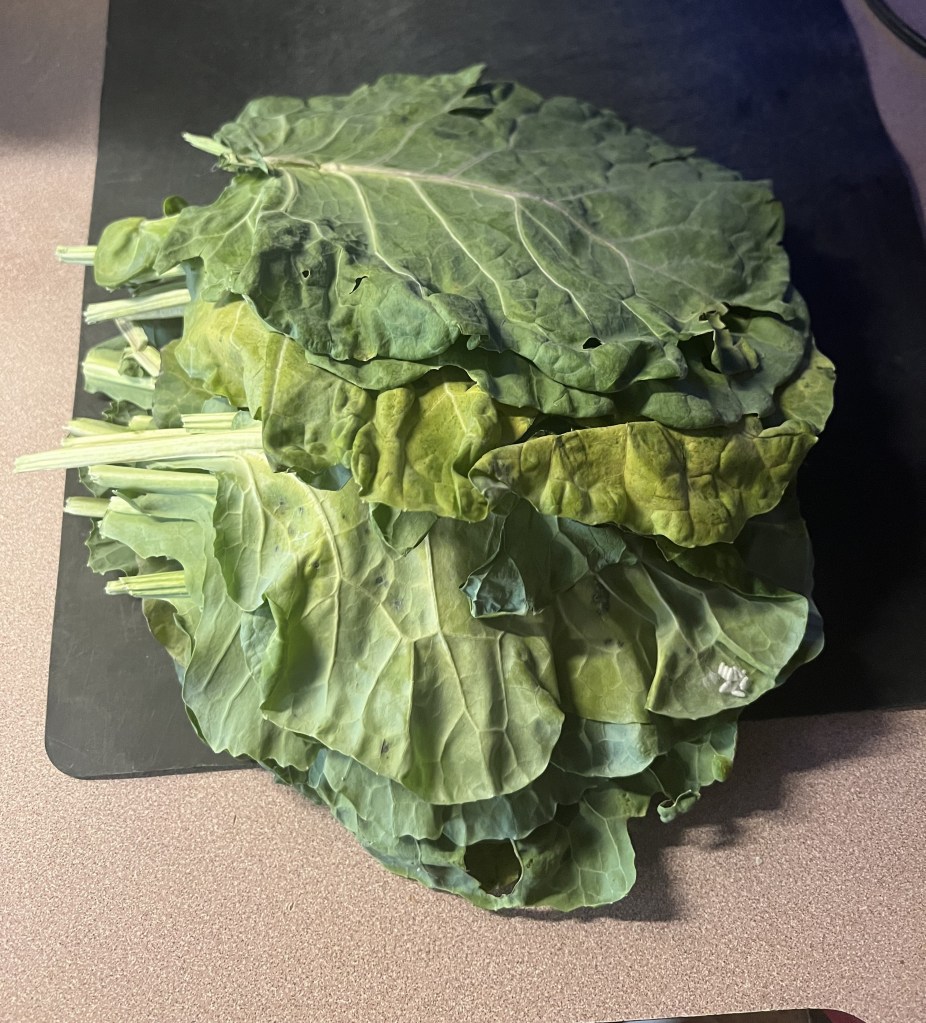
Last week I gave in and disbanded the remaining sections of my garden. That meant picking (hardly enough to qualify as a harvest) the last green tomatoes (Solanum lycopersicum) and removing the vines from their containers. I am looking for a green tomato recipe (other than fried) as Melissa said she will not allow the last of the lot to go into more salsa/Pico. I picked the remaining pole beans (Phaseolus vulgaris) and removed the final hill of plants. The beans had been bitten by the mornings of frost and had gone mushy and I ended up throwing them away. The only thing left was the three cabbage (Brassica oleracea) plants that had not matured enough to form a head. After I pulled them from the ground, I wondered what I could do with the leaves, as it seemed a waste to just throw them away. I made sauerkraut and Cole slaw from the four cabbages I harvested several weeks ago but wanted to do something different with this batch. That is when I hit on the idea of a cabbage roll.

When I looked online, I found a cabbage roll is a dish consisting of cooked cabbage leaves wrapped around a variety of fillings. This dish is common to the cuisines of Central, Northern, Eastern, and Southeastern Europe, as well as much of Western Asia, Northern China, and parts of North Africa (i.e., most anywhere except the Americas). Meat fillings are traditional in Europe, and include beef, lamb, or pork seasoned with garlic, onion, and spices. Grains such as rice and barley, mushrooms, and vegetables are often included in the roll. Fermented cabbage leaves are often used for wrapping in southeastern Europe. In Asia, seafoods, tofu, and shiitake mushrooms may be used, and Chinese cabbage (Brassica rapa) is often used as the wrapping. The cabbage leaves are stuffed with the filling and then baked, simmered, or steamed in a covered pot and generally eaten warm, often accompanied with a sauce. The cabbage roll can serve as the main course (often with mashed potatoes in Europe) or as a side dish. The recipe varies depending on the region.

I found a recipe on the Pioneer Woman website for cabbage rolls that said to start by boiling a large head of cabbage to remove the outer leaves. The small print indicated you could also use the large leaves that flaked off of the cabbage during preparation by boiling them in water for 2 minutes to soften. Since I only had leaves, I thought this might be worth a try. I made the stuffing combining hamburger, sausage, rice, and spices. Next, I boiled the leaves and laid them out on a towel to dry. A 1/3 cup of stuffing was placed in the leaf and tightly wrapped. The sauce consisted of crushed tomatoes, juice, garlic, and Italian spices. The recipe made enough (32) rolls for two batches for Melissa and me. I followed the advice and froze half prior to cooking and baked the rest (with all the sauce) at 350 F (176.6 C) for 90 minutes. I was unsure how the leaves were going to turn out (bitter) since they had not matured into a head. It made a delicious meal, even without the mash potatoes.

THOUGHTS: While I have tried my hand with stuffed grape leaves on several occasions, I have never made cabbage rolls. The cabbage leaves were actually easier to handle as they were stiffer than the grape leaves. Now that my garden is gone, I have reflected on the different ways I processed the fruits of my labor. This includes canning, freezing, and fresh produce in a variety of dishes. I would have never tried many of these dishes if I had not already grown the vegetables. I was pleasantly surprised how they all turned out. This reminded me to keep trying something new rather than being locked into what is known and comfortable. The same is true regarding the cultures and traditions different to your own. Until you participate, you will never know what you might be missing. Act for all. Change is coming and it starts with you.
TREES

December 02, 2024

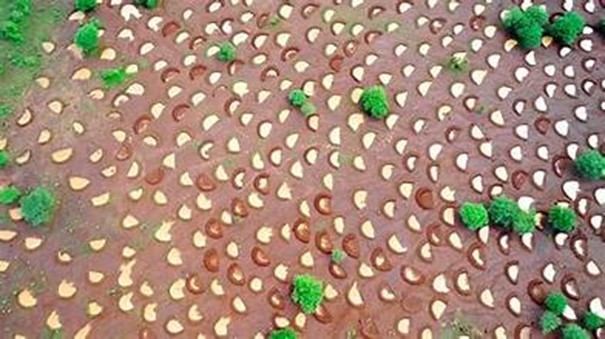
Last week my browser featured an effort sponsored by the UN that received designation as a Flagship project. The Flagship award is part of an effort by the UN Decade on Ecosystem Restoration to ensure that measurable progress is made on the UN’s environmental goals by 2030. When Africa’s fertile terrains become drylands, farmers are thrown into poverty and biodiversity shrinks. Trees for the Future (TREES) is successfully reversing this trend by assisting hundreds of thousands of smallholder farmers in several African countries to fight soil degradation, biodiversity loss, and climate change. TREES has restored 102,165.72 acres (41,345 ha) since 2014. The restoration supports over 50,000 households and captures 382.5 tons (347 metric tons) of CO2 per hectare through its model, the equivalent of emissions from over 26,420 gallons (100,000 liters) of diesel fuel. Restoration of the drylands helps increase the income and improve the health of farmers and their families. TREES is expecting to create 230,000 jobs by 2030 in Kenya, Mali, Senegal, Tanzania, and Uganda, and is recognized as one of the best large-scale ecosystem restoration efforts on the planet. Central to the TREES model is the creation of a series of structures known as a bund.

When I looked online, I found a bund, also known as a demi-lune or half-moon, is a rainwater harvesting technique consisting in digging semi-lunar holes in the ground with the opening perpendicular to the flow of water. The holes are oriented against the slope of the ground which generates a small dike in the curved area with the soil from the hole itself. The dikes capture the rainwater as it runs downhill, allows the water to seep into the subsoil, and prevents the loss of fertile soil by erosion. Semi-circular bunds are used to reforest arid zones with irregular rain patterns and allow the growth of plants and trees. The TREES initiative works closely with tens of thousands of farmers living in poverty on degraded lands following decades of unsustainable agriculture practices, deforestation, pollution, and climate change by providing training in a regenerative agroforestry technique called the Forest Garden Approach. In this four-year program, farmers receive training, seeds, and other resources, while planting thousands of trees and dozens of food and resource crops on their property. The small farmers typically own less than 2.5 acres (1 ha) of land.

TREES projects in Senegal and Mali are a part of the African Union’s initiative as part of the Great Green Wall. Elvis Tangem, Great Green Wall Initiative Coordinator, says, “Once it’s completed, the Great Green Wall will be the largest natural structure on the planet. It’s a massive undertaking, but the dedication and teamwork of organizations like TREES will ultimately make it a reality.” The Great Green Wall project was adopted by the African Union in 2007 to combat desertification in the Sahel region and hold back expansion of the Sahara Desert. The original dimensions of the “wall” were to be 9 miles (15 km) wide and 4,831 miles (7,775 km) long. The program has evolved to encompass nations in both northern and western Africa and promotes water harvesting techniques, greenery protection, and improving indigenous land use techniques, aimed at creating a mosaic of green and productive landscapes across North Africa.

THOUGHTS: TREES is recognized as one of the best examples of large-scale and long-term ecosystem restoration in any country or region, embodying the 10 Restoration Principles of the UN Decade on Ecosystem Restoration. The announcement was made ahead of the 6th UN Environment Assembly, held from February 26 to March 1, 2024. The Assembly convenes to address the triple planetary crisis of climate change, nature and biodiversity loss, and pollution and waste. This should represent an ongoing emphasis not just for the developing countries of Africa, but for the world. Act for all. Change is coming and it starts with you.
Decorations

November 29, 2024

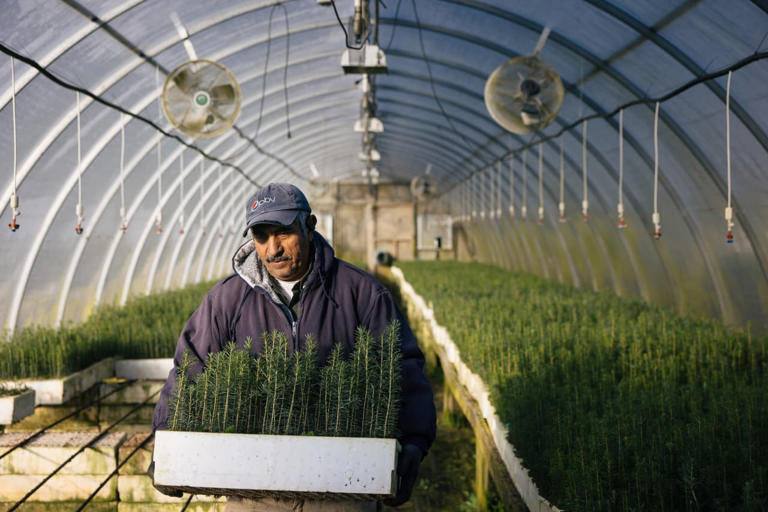
Inside today’s Black Friday edition of my local newspaper was an article on another aspect of the US’s busiest time of the year. Millions of Americans will venture out to buy a live Christmas tree this weekend. This year tree growers were particularly hard hit. Growers faced the usual challenges of root rot, a lack of labor, and foreign competition, and inflation hit hard on everything from seeds to tractors. That was before Hurricane Helene left a path of destruction. The western part of North Carolina produces more Christmas trees than any US state except Oregon. Roughly 21.6 million live Christmas trees were purchased in the US last year at a median price of US$75, according to the National Christmas Tree Association. The day after Thanksgiving is the peak sales day for live trees, but Thanksgiving comes late this year, making for an unusually short selling season, another pressure on growers. Once the tree is purchased, you still need to add the decorations.

When I looked online, I found setting up and taking down Christmas decorations are associated with specific dates. Many Christian churches begin (liturgically) with a “hanging of the greens”. It is customary to set up the Christmas tree on Advent Sunday, the first day of the Advent season but many churches set the decorations after service on the last Sunday before Thanksgiving. More traditionally, a Christmas tree was not brought in and decorated until Christmas Eve (24 December). This marks the end of the Advent season and the start of the twelve days of Christmastide. Christians in many localities remove their Christmas decorations on Epiphany Eve (January 5th), the last day of the twelve days of Christmastide. Other Christian countries remove their decorations on Candlemas, the conclusion of the extended Christmas-Epiphany season (Epiphanytide). English tradition says it is acceptable (desirable) to leave your tree and decorations up until February 1st. In reality (except churches), decorations tend to go up and down depending on the weather and mood of the residents.

A growing trend in Christmas decorations is to leave your lights up year round. There are two problems with this. The lights can look unsightly, and they will also wear out quickly. While Christmas lights are weather-resistant they are not intended to be left on your home for years at a time. Permanent Christmas lights are a kind of residential architectural lighting you install once and use at Christmas, other holidays throughout the year, and even as day-to-day lighting. The lights are made up of a series of LED modules affixed along the soffit, trim work, or both, and concealed in specialty plastic or aluminum channels designed to blend in with your home’s color. If you look closely when the lights are turned off, you can see them, but they blend in well enough to look like part of the home, not strings of wires everywhere. Then you need to choose if you want to buy commercial lights, pay a professional to put them up, or just go with an off the shelf product. Who knew that Christmas decorations could be so complicated.

THOUGHTS: Scant labor is a problem for both the Christmas tree growers and the installation of outside decorations. North Carolina is one of the biggest users of the H-2A visa program for agricultural workers. The regulations around hiring foreign workers have become increasingly cumbersome, hourly rates are increasing to more than $16 next year, and the incoming administration has pledged to crack down on illegal immigration. Some are also nervous about the rhetoric around clamping down on legal immigration. The trees will not get harvested or the decorations put up without this outside labor force. German pastor Martin Niemöller is quoted saying, “First they came for the Socialists . . .” Act for all. Change is coming and it starts with you.

Beards

November 27, 2024

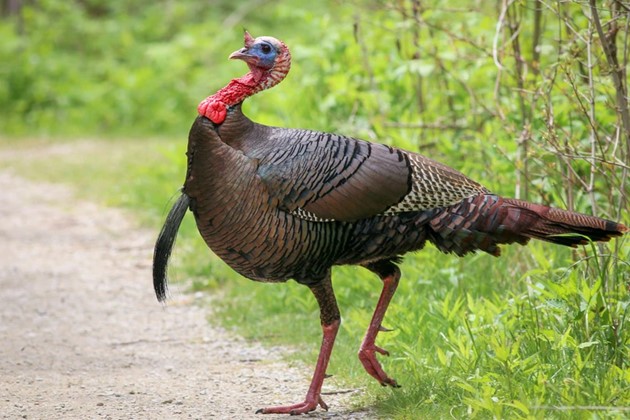
As we approach Turkey Day, also known as Thanksgiving in the US, there have been a rash of stories on my browser about these interesting birds. These include the recent tradition of the Presidential Pardon. The first official presidential turkey pardon was given by George H.W. Bush in 1989, but reports credit many presidents with the tradition. Abraham Lincoln’s son took a liking to the turkey destined for Christmas dinner and the bird was spared. Harry Truman liked his bird so much he had the first presidential photo op, but that bird was not so lucky and was later served as a meal. Two days ago, President Biden pardoned Peach and Blossom. These domesticated turkeys weighed an impressive 40 and 41 pounds (18.1 and 18.6 kg) respectively. Another story was offered by the National Audubon Society and provided 10 Fun Facts About the Wild Turkey. The most interesting of these facts concerned the bundle of feathers sprouting from their chest is known as turkey beards, and it gets longer as the bird ages.

When I looked online, Audubon also offered an in-depth discussion on turkey beards. Turkey beards are plumes of dark brown or black feathers, more hair-like than a typical feather, that protrude from the bird’s chest. “If you had it in your hand, it has the consistency of a miniature horsetail,” says Gary Norman, a retired gamebird biologist at Virginia Department of Game and Inland Fisheries. While all adult male turkeys (toms) have beards, nearly 10% of hens also have one, although it is a smaller and wispier version. Male turkey beards are thought to be used as another tool for mate selection, but it is unknown why some female birds have them. Kelsey Sullivan, a gamebird specialist with the Maine Department of Inland Fisheries and Wildlife, says the beards can “indicate dominance and health”. Turkey beards start sprouting when youngsters are around five months old and continue to grow at a rate of nearly 5 inches (12.7 cm) a year throughout a bird’s life allowing the biologists a rough estimation of the bird’s age. While a one-year-old beards may measure only a few inches older males can have beards over 10 inches (25 cm). The longest beard length recorded on the National Turkey Wildlife Federation website is 11.75 inches (29.2 cm). Some toms even grow 2 or 3 (and even up to 13) separate beards. In the rare occasion where multiple beards are grown most are just short, wispy feathers with a single dominant cluster.

Turkeys can lose their beards several ways. Turkey beard rot is caused by vitamin deficiency and may result in the beards shearing off. Longer beards can snap from the heavy weight of snow and ice that collects on them during winter. Fraying from being dragged on the ground is also an issue. Terrain is another factor that influences beard length, and turkeys inhabiting rocky terrain may have shorter beards than those foraging across flat, sandy ground. The abundance of bearded hens varies by region and is perhaps affected by previous conservation efforts to recover Wild Turkeys. In the mid-1900’s, wildlife biologists trapped turkeys and moved them across state boundaries to restore severely depleted turkey populations due to hunting and habitat loss. Wild Turkeys have sharply rebounded and now inhabit every US state except Alaska. Wild turkey populations peaked at 7 million birds by the early 2000’s.

THOUGHTS: There are only two species of Wild Turkey; the North American (Meleagris gallopavo) and the Ocellated Turkey (Meleagris ocellata) in Central America. The domestic turkey (Meleagris gallopavo domesticus) shares their cousin’s trait by having beards, neither sex of the ocellated turkey have beards. As for the two pardoned turkeys, they will live out the remainder of their life at Farmamerica, a 360-acre agricultural interpretive center in Waseca, Minnesota. Act for all. Change is coming and it starts with you.
Mexican Wolf

November 20, 2024

Toward the back of the front section of my local newspaper was a USA Today article on a reward being offered for information on a dead wolf. The female is protected under the Endangered Species Act and was found northwest of Flagstaff, Arizona, on November 7th. The US Fish and Wildlife Service did not provide a cause of death, but the “mortality was not attributed to agency management actions”. Officials are offering a reward of US$103,500 for information that leads to “the successful prosecution” of the case. The wolf, known officially as F2979 and colloquially as “Hope”, was first GPS collared back in July. The Western Watersheds Project, a non-profit dedicated to protecting western watersheds and wildlife, shared a photo of the wolf in July during a wellness check clearly showing the collar. Cyndi Tuell, director of the project, said,” the shooter had to know she wasn’t a coyote.” The Mexican wolf is one of the most endangered mammals in North America, being driven almost to extinction in the mid-1980’s by hunting, trapping, and poisoning practices.

When I looked online, the Mexican wolf (Canis lupus baileyi), also known as the lobo mexicano or lobo, is a subspecies of gray wolf (Canis lupus) native to eastern and southeastern Arizona and western and southern New Mexico in the US and in fragmented areas of northern Mexico. The wolf originally ranged from eastern Southern California south into Baja California, east through the Sonora and Chihuahua Deserts, and into West Texas. The Mexican wolf is the smallest of North America’s gray wolf subspecies, weighing 50 to 80 pounds (23 to 36 kg) with an average height of 28 to 32 inches (71 to 81 cm) and an average length of 5.5 feet (1.7 m). It is similar to the Great Plains wolf (Canis lupus nubilus), but with a smaller, narrower skull and darker, more variable fur (pelage), which ranges from sandy to yellowish gray with black, brown, and some white highlights. The snout, inner legs, neck and undersides are white, while golden-yellow and beige hues dominate the top of the head and much of the rest of the body. The fur around the chest and neck forms a grayish black collar which flows onto the back where it is generally black all the way to the tail tip. As of 2024, there are at least 257 wild Mexican wolves in the US and 45 in Mexico. Another 380 wolves are in captive breeding programs.

There have been 92 Mexican wolf deaths recorded since 1998. Four occurred in 2012 as a result of illegal shootings. In 2015, a court ordered the US Fish and Wildlife revise the management rules after a survey done on the wolf population of the Mexican wolf in Alpine, Arizona, indicated the recovery of the species is being negatively impacted by poaching. Poaching accounted for 50% of all Mexican wolf mortalities from 2008 to 2019. In an effort to fight the slow recovery, GPS monitoring devices are being used to monitor the wolves. In 2016, 14 Mexican wolves were killed, making it the highest death count of any year since they were reintroduced into the wild in 1998. While two of the deaths were caused by officials trying to collar the animals the rest of the deaths remain under investigation.

THOUGHTS: The Mexican wolf was held in high regard in Pre-Columbian Mexico, considered a symbol of war and the Sun and referred to as Cuetzlachcojotl. The Apache call the Mexican wolf “ba’cho” or “ma’cho”, and there is a “wolf song” passed through oral tradition where the tribe used to summon the wolf’s power before battle. It is estimated up to 16% of the Mexican wolf diet may now include domestic cattle (Bos taurus), especially in locations where the cattle graze and calve year-round as opposed to seasonally. Studies suggest reports of wolf depredation on livestock are sometimes exaggerated or fabricated. That reflects the contrasting attitude as an invasive species (cattle) was introduced by Europeans. Act for all. Change is coming and it starts with you.

Yellow-legged

November 19, 2024

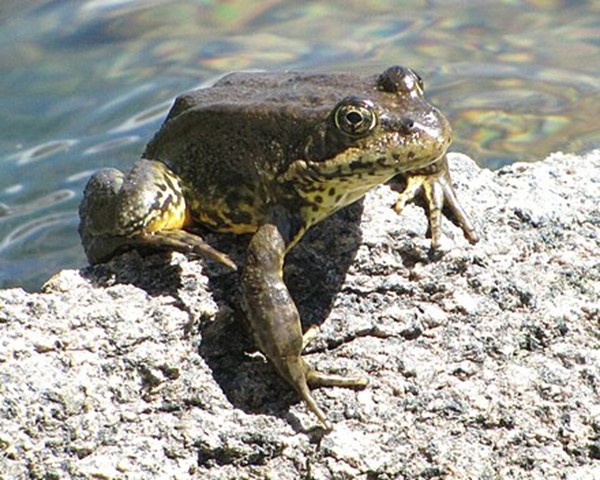
Inside the front section of my local newspaper was a USA Today article on the recovery efforts for a nearly extinct frog. The High Sierra lakes in Yosemite National Park have been biologically upset for over 100 years by the stocking of non-native fish. The rainbow, golden, brown, brook, and cutthroat trout, along with Atlantic salmon and grayling, were originally carried in buckets to these fishless lakes. After World War II, a generation of pilots who were adept in aerial bombing sped up the process in all but 20% of the smallest mountain lakes. While these lakes contained no fish, they were bursting with life. Within a few years of stocking the frog populations that had flourished were gone. The National Park Service ended fish stocking in the 1990’s out of concern for the native species. In 1992, Roland Knapp, a research biologist from the University of California, Santa Barbara, got permission to use gill nets to remove the fish from a small number of lakes. The frogs began to make a comeback, but in the early 2000’s research showed the arrival of amphibian chytrid fungus. The Sierra Nevada yellow-legged frog was added to the endangered species list in 2014.

When I looked online, the Sierra Nevada yellow-legged frog (Rana sierrae), also known as the Sierra Nevada Mountain yellow-legged frog, is a true frog endemic to the Sierra Nevada of California and Nevada in the US. The yellow-legged was formerly considered the southern mountain yellow-legged frog (Rana muscosa) until a 2007 study elevated the more central and northern populations to full species status and restricting the latter to the southern Sierra Nevada and southern California. Both mountain frogs are similar in appearance but are separated by differences in mitochondrial DNA. The yellow-legged grow up to 1.5 to 3.5 inches (3.8 to 8.9 cm) long and females tend to be larger than males. The frogs have brown backs, often with dark spots or bands, and yellow legs and underbellies. Considerable variance exists in species coloration and yellow-legged frogs can also be grey, red, or greenish brown with dark splotches. Tadpoles appear black or brown and require one to four years to fully develop. These frogs hibernate during the winter, staying submerged in the mud and may only be active around three months a year depending on the weather. Studies showed 92.5% of the yellow-legged populations have gone extinct and are estimated to have declined by over 90% over their range. They are considered an endangered and vulnerable species by the IUCN.

In 2006, Yosemite National Park and the Yosemite Conservancy began a project to introduce frogs into lakes without fish. In 2007, a project was started to restore frog habitat by removing non-native fish from remote sites. Once the site is fishless, lakes are inhabited by native species, including the yellow-legged frog. The ecological effects of their loss have been significant as the yellow-legged were a keystone species and important for nutrient and energy cycling in the aquatic and terrestrial ecosystems. A 2016 survey in Yosemite indicated a sevenfold increase in their numbers reported, but recent studies discovered amphibian chytrid fungus is contributing to the decline of the Sierra yellow-legged frog. Chytrid fungus leads to a usually fatal disease (Chytridiomycosis). Chytrid fungus lives on keratin which is found on the external mouthparts of tad poles and the outer skin layer of adults. Fungus growth on adults disrupts the ability to breathe through skin (osmoregulate). The species also suffers from habitat fragmentation as populations have become separated.

THOUGHTS: Stocking fish in the High Sierra’s began as early as the California Gold Rush in 1849. The fishless lakes seemed like a waste to the miners hiking into the backwoods. Stocking fish did provide food, but it nearly destroyed the delicate habitat of the high mountains. While introducing an invasive species may seem like a good idea, it is rarely the case. Life in fragile environments is especially vulnerable. Act for all. Change is coming and it starts with you.