Brumation

January 25, 2024

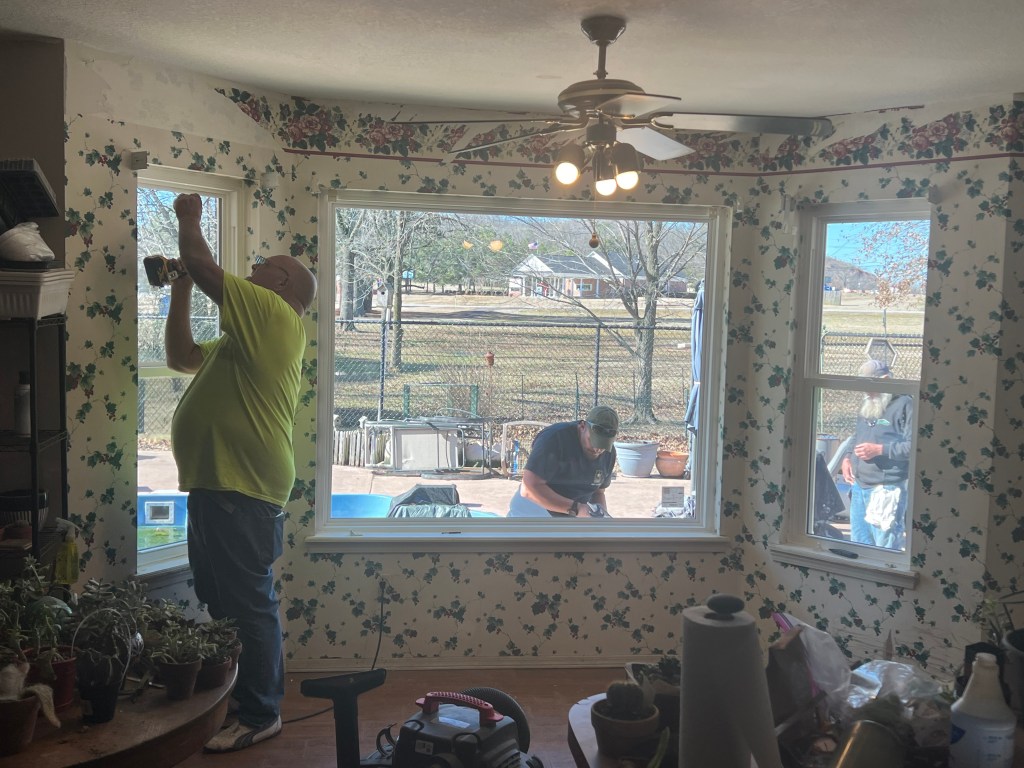
Hidden inside the back section of my local newspaper was a USA Today article about alligators found frozen in the ice.  The photos and videos of frozen alligators are coming from North Carolina and Texas and are going viral on social media.  The images show the frozen alligators with their snouts and mouths sticking out of the ice.  While this may seem alarming, the reptiles are not dead but are instead practicing a survival instinct.  As temperatures in the South have dropped over the last few days, the alligators rely on this adaptation.  Since the temperatures rarely drop below freezing (32F/0C) long enough to freeze the lakes and ponds where the alligators live, the sight of frozen alligators is rarely seen.  The astonishing image of the frozen alligators is thanks to an adaptation technique known as brumation.

When I went online, I found that while mammals go into hibernation, reptiles go into brumation.  Both are a type of dormancy or a period in an organism’s life cycle when growth, development, and (in animals) physical activity are temporarily stopped.  While warm-blooded animals (endotherms) and animals that vary between self-regulating body temperature and allowing the surrounding environment to affect it (heterotherms) are described scientifically as hibernating, the way cold-blooded animals (ectotherms) like alligators (Alligator mississippiensis) become dormant is different.  The word brumation was coined in the 1920’s to explain this as a very different metabolic process than hibernation.  In colder climes reptiles generally begin brumation in late autumn (times depend on the species).  They wake up to drink water and then return to their dormant state and can go without food for months.  Reptiles may eat more than usual before the brumation time but eat less or refuse food as the temperature drops.  The brumation period is anywhere from one to eight months depending on the air temperature and the size, age, and health of the reptile.  Like hibernation, brumation is triggered by a lack of heat and a decrease in the hours of daylight in winter. 

The alligators in North Carolina and Texas are entering brumation to survive the cold snap.  They suspend their bodies in pond water and let it freeze solid around them.  Their snouts and front teeth poke through the ice and allow the alligators to breathe while they wait for the water to thaw.  The frozen alligators were found suspended in ice at Swamp Park, a tourist attraction and alligator sanctuary near Ocean Isle Beach, North Carolina.  Another alligator was spotted suspended in an icy pond at the Gator Country rescue center in Beaumont, Texas.  An employee of the Swamp Park & Outdoor Center, located about 45 miles south of Wilmington, North Carolina, explained that when it gets too cold, alligators “will instinctively tilt their nose up, to the point where it’s out of the water, so they don’t just suffocate.  We literally have ‘gatorcicles’ right now.” 

THOUGHTS:  When Melissa and I attended the final week of Mardis Gras (a bucket-list) several years ago we were tempted to take one of the Airboat Swamp Tours that are popular around New Orleans.  While it was not freezing, the temperatures were cold and there was intermittent rain for our whole trip.  We decided not to get on the water.  Instead, we went to Avery Island which is known as the source of Tabasco sauce (another bucket-list).  The island is also home to a salt mine, a vast collection of exotic plants, and a bird sanctuary.  Several locations along the tour route were ponds containing alligators, but they were apparently in brumation, and we never saw one.  We did meet a lady who had just taken a Swamp Tour, and she said they never saw alligators either.  The gardens and sanctuary were amazing, but the cold made me wonder if the alligators in brumation may have had the right idea.  Act for all.  Change is coming and it starts with you.

Dolia

January 24, 2024

© Antiquity Journal

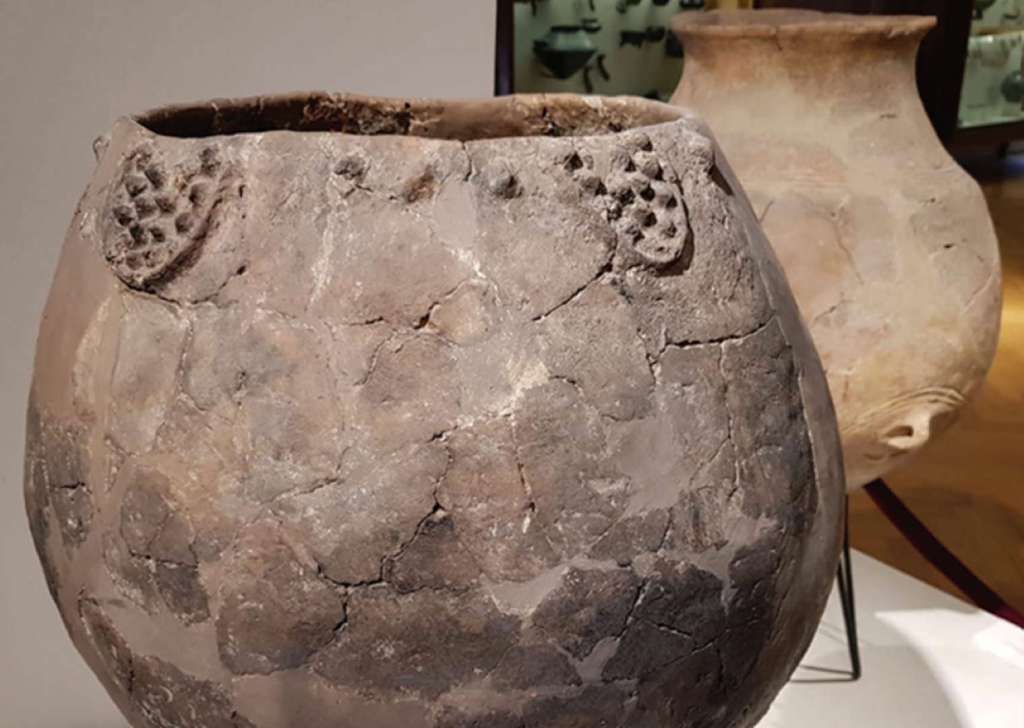
Scrolling through my Microsoft browser I found a Newsweek article saying that archeologists have “revealed how Roman wine would have looked, smelled and tasted around 2,000 years ago.”  While Roman wine consumption is depicted in ancient texts and drawings, how it was produced has been a mystery.  Researchers Dimitri Van Limbergen, Ghent University, and Paulina Komar, University of Warsaw, compared ancient wine vessels used to make and store wine with containers used in making wine today.  Their published findings in the journal Antiquity said Roman wine likely tasted slightly spicy and had aromas like toasted bread and walnuts.  Van Limbergen told Newsweek, “By using the techniques we describe in our paper, the Romans were able to make much better, more tasty and much more stable wines than is commonly assumed.”  This is the first time the role of vessels in Roman winemaking has been examined.  Today most wine is made in large metal vats which allows the wine to be mass produced.  The Roman dolia are comparable to qvevri, which are pots used to create wine in Georgia, and the two processes would likely have been similar.

When I went online, I found a dolium (plural: dolia) is a large, fired clay vase or vessel used in ancient Rome for storage or transportation of goods.  The dolium was oval, with a wide mouth and rim, and was much larger than the similar pottery amphora.  The dolium had no neck or handles and could measure up to six feet (1.8 m) in height.  Some dolia have a rounded body tapering into a flat bottom, but more frequently, dolia have a rounded bottom.  There was no standard size for dolia, and some sources mention dolia holding up to 50 quadrantals, equivalent to 346.5 US gallons (1,311.6 liters).  The dolia were either buried halfway in the ground or left standing under a roof.  Unlike amphora, the dolium was not regarded as an accessory and sold along with the wine that it contained but were fixed facilities whose purpose was the permanent storage of goods.

According to the study, the narrow base of the dolia used in the fermentation process allows solids from the grapes to separate from the wine.  Unlike the red and white wine consumed today, this fermentation process gave the liquid an amber or orange color.  The spicy flavor was created by burying the dolia into the ground allowing the pH and temperature to be controlled as the wine aged and giving the yeasts the opportunity to produce an extremely powerful aroma compound known as sotolon.  Big wine cellars filled with dolia were large investments and their presence attests to the economic prosperity in the Roman world.  Individual households could afford one dolium and winemaking was probably part of daily life in those families, much like in Georgia today where many households make their own wine and keep it next to the kitchen or in a cellar inside a qvevri.  The research gives archeologists new details about how Romans lived.  It is clear the Romans knew different techniques for creating wine and could vary how it tasted and smelled by altering the shape of the dolia and how they were stored.

THOUGHTS:  I had a friend in High School whose parents made wine and that gave me the idea to make my own.  I decided to make dandelion wine.  The recipe starts with a quart of yellow dandelion blossoms plucked from the green portions of the flower.  I spent weeks harvesting dandelions to get enough flowers.  I placed the flowers in boiling water for 4 minutes and then discarded the blossoms.  Next came the sugar, orange, lemon, and yeast.  I did not have a fermentor (big problem) but placed the liquid in a glass jar that I placed under the kitchen sink.  In three weeks, I had my wine.  Unlike the Romans, it tasted really bad.  That was the last time I have made wine.  Maybe if I tried again with dolia . . . Having the right equipment and following directions is often the key to success.  Act for all.  Change is coming and it starts with you.

Tardigrades

January 23, 2024

© Deposit Photos

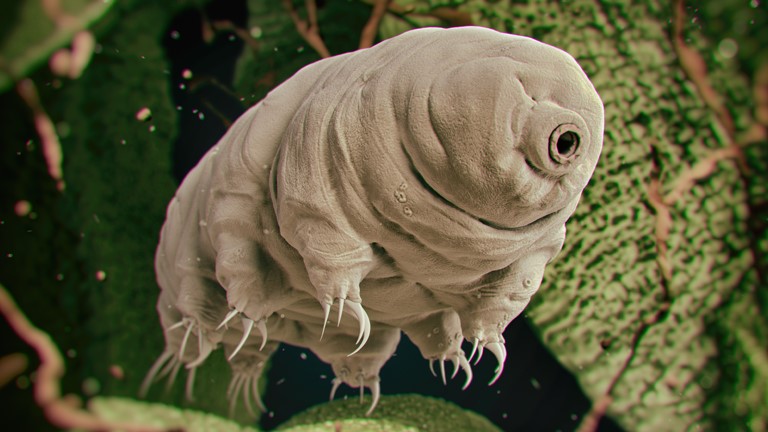
A Popular Science article found on my Microsoft browser referenced the findings of a study published January 17 in the open-access journal PLOS ONE.  The study examined tardigrades, some of the toughest animals on the planet.  These microscopic creatures can survive in environments with extreme temperatures, without water, or oxygen.  Previously, scientists were not sure what signals tardigrades to enter or leave their death-like state.  This new study exposed the tardigrades to temperatures of -112F (-80C) or high levels of hydrogen peroxide, salt, or sugar to trigger dormancy in a lab.  The tardigrades cells responded by producing damaging oxygen free radicals which oxidize an amino acid called cysteine, causing the animal to go into a dormant state.  When conditions improve and the free radicals are gone, the sensor is no longer oxidized, and the tardigrades remerge from dormancy.  The team also applied chemicals that block cysteine to their environment and found the tardigrades could not detect the free radicals and did not go dormant.  The results show cysteine is a key sensor for switching dormancy on and off in response to multiple stressors and that cysteine oxidation is a vital mechanism that helps tardigrades survive in constantly changing environments.

When I went online, I found that Tardigrades (Phylum, tardigrada), also known as water bears or moss piglets, are a phylum of eight-legged segmented micro-animals.  They were first described in 1773 by German zoologist Johann August Ephraim Goeze, who called them Kleiner Wasserbär (“little water bear”).  In 1777, Italian biologist Lazzaro Spallanzani named them Tardigrada which means “slow steppers”.  There are more than 1,300 known species of Tardigrades.  Tardigrades are about 0.02 inches (0.5 mm) long when fully grown.  They are short and plump, with four pairs of legs, each ending in claws (usually four to eight) or suction disks.  Tardigrades are highly resilient, and individuals can survive extreme conditions of temperatures, pressures (high and low), air deprivation, radiation, dehydration, starvation, and even exposure to outer space.  They live in a variety of habitats and are found in mountaintops, deep sea, tropical rainforests, and the Antarctic.  The plant-eating species pierce individual plant cells with their stylets and suck out the cell’s contents for food, while other species are predatory carnivores that eat other small invertebrates.  The earliest Tardigrades are known from Cretaceous (145 to 66 million years ago) amber from North America, but their origin is likely as far back as the Cambrian over 500 million years ago. 

When faced with dry, barren, or other inhospitable environments, tardigrades go dormant and go into suspended animation (“tun” state) where the body dries out and appears as a lifeless ball.  Their eight legs retract, their bodies become dehydrated, and their metabolism slows down so much that it is almost undetectable.  They can remain in this state for years.  Future studies into this mechanism could determine if this happens across all tardigrade species.  Since free radicals may be linked to age-related ailments, more studies of tardigrades could help scientists better understand human aging.  Tardigrades are prevalent in mosses and lichens and when collected may be viewed under a low-power microscope, making them accessible to students and amateur scientists as well as researchers. 

THOUGHTS:  The study’s co-author Leslie Hicks, University of North Carolina at Chapel Hill, said, “Whether this is a universally conserved protection mechanism and whether this is conserved across tardigrade species are really important questions.”  The answers may help us better understand the aging process and even how to achieve long-term space travel.  We often find we do not know what we do not know, and therefore we do not know how to ask the right questions.  Losing species to extinction from human activity has direct and indirect effect on the future of humanity.  Act for all.  Change is coming and it starts with you.
Treat Man 2

January 22, 2024

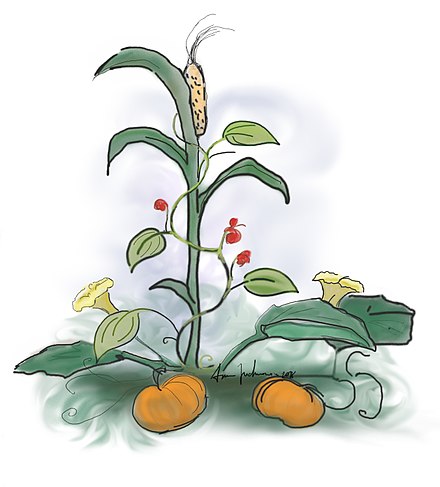
It was just over a year ago that we took Zena to a local dog trainer.  This was an extended six week session to provide the basics and begin to work through more advanced activities like walking on a leash.  This January we decided to take Loki for his own series of training sessions with the same trainer.  We decided to forgo the extended series as I had learned the basic commands for Zena and Loki had learned them as well.  What Loki (read “I”) needed was advice on jumping and leash work.  When Zena was training, we had dubbed the trainer the “treat man” because she got copious amounts of treats as rewards for doing what she is supposed to do.  Loki is food motivated as Zena is and I am sure the treat man will not disappoint our little man.

Loki spent most of the first session getting adjusted to the surroundings and the new person vying for his attention.  The treat man had sold his house and construction was not completed on his new one, so we met at his office in a nearby town.  I do not know if it was the small area or the smells, but Loki was reluctant to enter the office.  I finally got him to go through the door and we sat down across the room from the trainer.  Loki was still unsure and sat on my foot crushed against my leg.  The treat man was standing and coaxing Loki with the small treats, but Loki would have none of it.  The man finally sat down (less intimidating) and tossed the treat in the middle of the room.  He finally got Loki to come away and get the treat, but he would rush back to sit on my foot.  It probably took half an hour of coaxing and cajoling before Loki was comfortable enough to begin working on his commands.  This time was not lost.  As Loki was becoming comfortable the trainer was going over my responses and what I should do regarding jumping and curtailing the excitement our 75 pound (34 kg) puppy displays when we first come home.  Loki was still wary of the treat man by the end of the hour, but the lure of food and his eagerness to please won out.        

The second session with the treat man went much better.  Loki went right through the door and was expecting to receive the treats that were going to be showered on him.  Over the week we had worked on my going down to Loki’s level when I arrive home and ignoring him if he tries to jump.  My niece even dropped by, so we were able to work on proper behavior with guests.  Loki was doing well, and the trainer decided to take us outside to work on leash behavior.  Here again, the leash problem is caused by excitement and lunging to reach the best smells faster.  All was going well until a man drove into the parking lot to see the lawyer located in another office.  The lawyer was closed but we were in the parking lot, so we became the focus of his attention.  The treat man listened patiently as the man describe his dismay over getting a notice from the post office requesting him to pick up a package that would be available on Monday.  As the man became comfortable with talking to us, he began to explain his problem and why he was seeing the lawyer for his son.  The trainer listened politely and finally said he needed to go as he was working with Loki.  By that time Loki was more interested in the parking lot smells than the treats that had initially kept his interest.

THOUGHTS:  As the treat man worked with Loki, he commented on how smart Golden Retriever’s are and how willing they are to perform tasks.  Loki was uncomfortable when we first arrived as this was a strange place with new expectations.  Now that Loki has grown accustomed to the trainer, he is willing to perform.  The man who met us in the parking lot was in a new place and finding it filled with new expectations.  He haltingly approached until he found we were willing to listen.  Finding someone to listen to him, he gladly began to share.  When Melissa and I were in Europe we had a similar problem.  Luckily, we were able to find someone willing to listen and try to help.  Strive to be the helper when others are uncertain.  Act for all.  Change is coming and it starts with you.
Pumpkin Spice

January 19, 2024

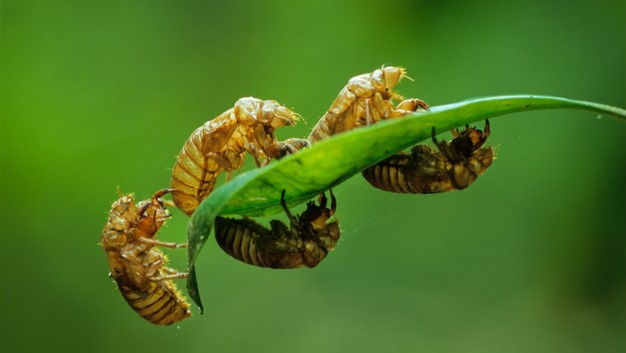
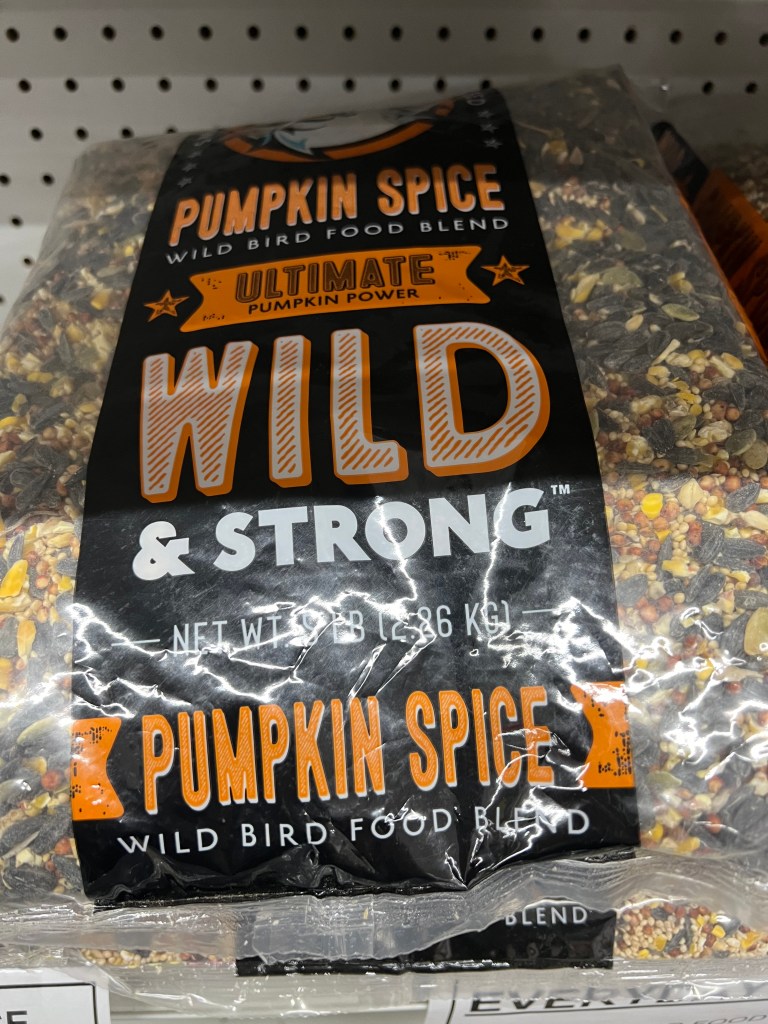
I have mentioned how I tend to practice daily intermittent fasting by skipping breakfast and refraining from eating until after noon, but that does not include coffee.  I like to have two cups of coffee (black) when I wake up.  My preference is to buy Lanna Fair Trade whole bean coffee.  This is ethically sourced from a hill tribe in Thailand that my parents worked with on two separate occasions over nearly 1-1/2 years.  I also prefer the robust flavor of a dark roast over the flavored coffees that are popular.  One of the popular flavored coffees is the Pumpkin Spice Latte offered by a national chain on a limited basis for two months in the fall.  The drink’s popularity gave rise to an entire market of pumpkin spice products and today you can find pumpkin spice versions from hummus to hard seltzer, to marshmallows, to mac and cheese.  When I was in the hardware store yesterday, I even found a fall version of pumpkin spice wild bird food blend with “ultimate pumpkin powder”.  I wonder if this was marketed toward the birds or the birders. 

When I looked online, I found the pumpkin spice craze can be divided into two eras, or before and after the introduction of the Pumpkin Spice Latte (PSL).  Before the PSL, pumpkin spice referred to a blend of spices that was used to flavor pumpkin pie, often combining cinnamon, nutmeg, ginger, allspice, and cloves.  This has long been part of the American baking tradition and Amelia Simmons’ 1798 reprint of her cookbook American Cookery lists two different recipes for “pompkin” pie, one with nutmeg and ginger and the other with allspice and ginger.  In the 1930’s, companies like Thompson & Taylor Spice Co and McCormick & Company came out with a revolutionary pre-blended mix that meant bakers could buy one spice (container) instead of several.  Thompson & Taylor’s version (1933) included nine spices.  McCormick’s blend was originally launched in 1934 and includes four spices: cinnamon, ginger, nutmeg, and allspice.  Starbucks launched the original PSL in October of 2003.  It is now available around the world and is Starbucks’ most popular seasonal beverage, having sold over 424 million PSL’s in the US alone.

The pumpkin spice phenomenon is an intriguing psychological occurrence in the US.  Many argue the pumpkin spice flavor itself is delicious.  Ironically, pumpkin spice rarely has any pumpkin in them and are instead the toppings added to a pumpkin pie.  Cinnamon is a natural aphrodisiac and is known to relax muscles and increase sexual desire.  Nutmeg has aphrodisiac properties and a study on rats found extracts of nutmeg and clove stimulated the mounting behavior of male mice and significantly increase their mating performance.  Nutmeg also acts with an antidepressant-like effect involving various aspects of the human nervous system.  The strongest pull other than taste may be the pumpkin spice desirability due to its scarcity.  Social psychology tells us that once something is “limited supply”, “seasonal”, or “for a short time only”, its desirability increases.  This can lead to a bandwagon effect as people want to feel involved and part of the conversation.  We may feel we belong when sharing our seasonal pumpkin spice.

THOUGHTS:  Pumpkin spice is reminiscent of fall and is associated with coziness, with flannel, warm, fuzzy socks, and comfort.  Fall is also a time of greater stability and predictability in schedules after the vacations of summer.  Fall brings structure.  Fall is expectation of Halloween, Thanksgiving, and the December holidays.  As such, pumpkin spice speaks to us on a conscious and subconscious level.  The use of persuasion to influence people and their response is as old as humankind.  In today’s digital age this is no longer an art, but a science carefully tailored to individual preferences. Since I do not drink PSL, I did not buy the pumpkin spice bird seed.  Your understanding of, “if Jimmy jumped off a bridge . . .” is insightful.  Act for all.  Change is coming and it starts with you.
Clog

January 18, 2024

Our toilet stopped up last night.  This does not happen often, and I consider unstopping a toilet one of the few handyman activities I am capable of.  The last time it happened I tried everything.  I tried heavy plunging, used drain cleaner (yes, the package says not to), and even tried a coat hanger (scratched the porcelain), but to no avail.  Of course, this was over a holiday weekend, so I told the plumber not to bother until after the holiday was over (avoiding overtime rates).  He sent his drain clearing person to resolve the issue the following Tuesday.  The man stuck a plunging snake into the bowl and the clog was gone three minutes after his arrival.  I think it took longer for me to get the bill and write the check than for him to clear the clog.  This time I was determined to resolve the clog on my own and save the money.    

When I looked online, I found a survey by American toilet manufacturer Kohler Co. in July of 2004 found 27% of 1,000 adults claim to experience a toilet clog each month, and sometimes up to three times.  That translates to an estimated 28 million clogged American toilets per month.  The study also found that 57% of the respondents said their fixtures were more than 10 years old.  The 1994 Energy Policy Act brought the flush rate down to 1.6 gallons-per-flush (6.0 lpf).  Kohler suggested since there have been so many new developments in toilet design homeowners may want to consider upgrading their toilets every five to 10 years to keep up with new technology and low-flow water regulations (and sell more toilets?).  The survey also found the Northeast boasts America’s oldest toilets (23% older than 20 years) while the newest toilets are found in the West (56% less than 10 years old).  That probably relates to older established housing in the Northeast and new construction in the West.  Drought-suffering states in the West are more likely to provide incentives to install water-conserving fixtures.  In households with children, 34% had replaced their toilets within the past five years and nearly 20% of Americans had attempted to install a toilet by themselves.  I think the key word is attempted.

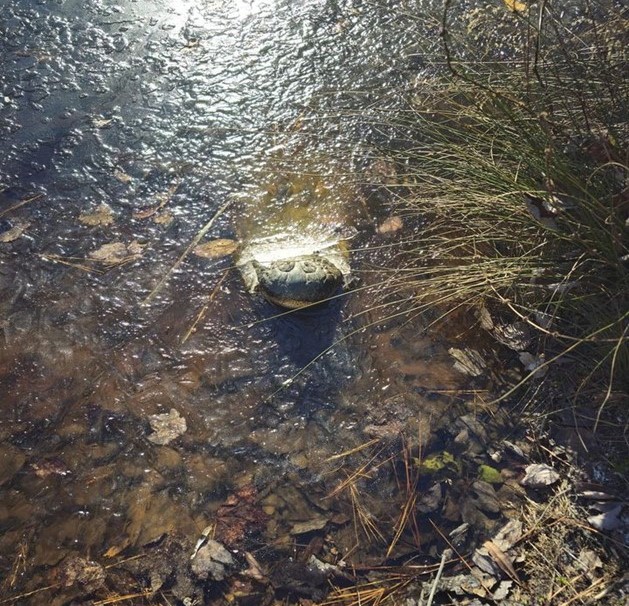
When the last clog happened, Melissa suggested her dad had purchased a drain snake and it may still be in the garage.  If it is, I could not find it.  We have needed a snake on other occasions for different projects (drains and dryer vents).  The dryer vent especially requires a much longer auger than a sink or toilet often do.  I got bound up in manual verses power (drill) driven, toilet verses water line, 25 foot (7.6 m) verses 6 foot (1.8 m), and just called the plumber.  While I started down that rabbit hole again this time, I also came across Bob Villa’s “7 ways to unclog a toilet without a plunger”.  I tried several suggestions, baking soda and vinegar and then hot water and soap, but neither worked.  I finally went to the hardware store to purchase a snake.  The one good thing is all my activity buffed out the scratches from the coat hanger I used the last time we had a clog.

THOUGHTS:  I found two disclaimers on the clog removal I used.  You should not use drain clog products in toilets because they contain chemicals that damage the porcelain, your pipes, or disrupt the chemical balance of your septic system.  There are products for toilet clogs.  The other was to use hot (not boiling) water along with soap.  Boiling water may melt the wax ring that seals your toilet, and if it melts it will need to be replaced.  All may result in significant repair costs.  It seems every time I get involved in DIY, I learn why I am not qualified.  That means I either need training, or I go to those who have been trained.  Measles is highly contagious and considered the “canary” when herd immunity is compromised.  There are 54 confirmed cases in Washington state alone and five outbreaks across the US this year.  That is in addition to the rising numbers of covid and flu cases.  Our herd is going the wrong way.  Act for all.  Change is coming and it starts with you.
Cabbage

January 16, 2024

Located inside the back section of my local newspaper was an article on a Louisiana woman who set the record for growing the state’s largest cabbage.  Jenny Bourg lives about an hour southwest of New Orleans and grew the giant Sapporo cabbage in her backyard.  The record was verified by the Louisiana Department of Agriculture and Forestry (LDAF).  Bourg has been a gardener all her life and said she could not remember a time when she was not planting fruits and vegetables.  “My mother lived to the age of 90 and I was very fortunate to be able (to) get her wise gardening advice for many, many years.”  The giant cabbage had grown from a seed Bourg planted in July and when it was harvested on December 21st, the LDAF measured it.  The vegetable had a circumference of 7 feet 2 inches (2.18 m) and weighed 44.115 pounds (20.0 kg).  The previous Louisiana state record was held by a New Orleans third grader, Macyn Bertucci, who won the competition with a 28 pound (12.7kg) cabbage in 2018.  Bertucci won a US$1,000 savings bond from Bonnie Plant, a greenhouse facility that sells fresh fruits, vegetables, and succulents.  Bourg got to eat lots of cabbage.

When I looked online, I found cabbage (Brassica oleracea) is a leafy green, red (purple), or white (pale green) biennial plant grown as an annual vegetable crop for its dense-leaved heads.  The vegetable is descended from the wild cabbage (Brassica oleracea var. oleracea) and belongs to the “cole crops” (brassicas).  Cabbage is closely related to broccoli and cauliflower (var. botrytis), Brussels sprouts (var. gemmifera), and Savoy cabbage (var. sabauda).  A cabbage generally weighs between 1 and 2 pounds (500 and 1,000 g).  Green cabbage is the most common while purple cabbages and crinkle-leafed savoy cabbages of both colors are rarer.  Cabbage was domesticated somewhere in Europe before 1000 BCE.  Cabbage was described as a table luxury in the Roman Empire and by the Middle Ages had become a prominent part of European cuisine.  By the 17th and 18th centuries cabbage was a staple food in central, northern, and Eastern Europe, and used by European sailors to prevent scurvy during long ship voyages at sea.  Cabbage was exported to the Americas, Asia, and around the world early in the modern era.

As big as the Louisiana cabbage was, it is dwarfed by the world record cabbage.  The long summer days of the northern latitudes allow the cabbage to grow quite large.  The Guinness World Record for the heaviest cabbage was 138 pounds 4 ounces (62.71 kg) grown by Scott Robb of Palmer, Alaska, 40 miles (64.4 km) northeast of Anchorage in 2012.  Cabbage heads are generally picked during the first year of the plant’s life cycle, but plants intended for seed are allowed to grow a second year and must be kept separate from other cole crops to prevent cross-pollination.  Cabbage is prone to several nutrient deficiencies, multiple pests, and bacterial and fungal diseases.  To honor her win, Bourg turned her record-setting cabbage into casseroles and served it with ham.  Even after sharing the dish with her neighbor, she is officially “tired of eating cabbage”.

THOUGHTS:  Growing up my mom kept a 5 gallon (18.9 liter) crock in the basement to ferment our garden cabbage into sauerkraut.  While I do not recall eating the cabbage at a meal, I do recall sneaking into the basement and stealing “tastes” of the mixture from the jar.  Now that I have my raised garden beds I may need to try and grow cabbage for myself.  I already have a crock.  There are several Guinness Book of World Records entries related to cabbage.  These include the heaviest cabbage (above), heaviest red cabbage (69 pounds 11 ounces/31.6 kg), longest cabbage roll (64 feet 1 + 1/2 inches/19.54 m), and largest cabbage dish (6,526 pounds/2,960 kg.  I am sure all these records required “sharing with a neighbor”.  Act for all.  Change is coming and it starts with you.
Helmet

January 14, 2024

Last night the Chiefs and Dolphins squared off in a Wildcard playoff game that ranked as the fourth coldest NFL game on record.  Arrowhead Stadium has a seating capacity of 76,416, making it the 25th-largest stadium in the United States and the fourth-largest NFL stadium.  It was reported the sellout crowd braved the weather as an estimated 76,000 showed up to brave the -24F (-31C) windchill temperature.  Tailgaters arrived outside the stadium with heaters and hot drinks trying to stay warm.  They brought multiple layers of clothing, heated gloves and socks, thermal underwear, and long johns.  The game cameras again and again focused on Chief’s head coach Andy Reid’s frozen mustache.  According to one fan, “You’ve got to enjoy it while you have it.  This is the golden era.  I’m not going to miss it because it’s a little cold.”  The sub-zero game in Kansas City was everything that fans expected from the fourth-coldest game in NFL history, but Patrick Mahomes’ broken helmet was not expected.

When I looked online, I found the coldest game in NFL history was the 1967 NFL Championship between the Dallas Cowboys and the Green Bay Packers.  The gametime temperatures for “The Ice Bowl” was -13F (-25C).  The game was attended by 50,861 people, selling out Lambeau Field.  While Green Bay won the game 21-17, both teams finished with less than 200 total yards (Green Bay–195 yards; Dallas–192 yards).  The wind chill was even colder at -48F (-44.5C).  A layer of condensation had formed between the tarp and the field and once the tarp was removed the field froze.  Green Bay has been home to several of the coldest games in NFL history.  According to Stathead, the average temperature for playoff games at Lambeau Field is 21.8F (5.7C), and the warmest playoff hosted at Lambeau was 35F (1.7C) when the Packers hosted the Los Angeles Rams on January 16, 2021.  It is one of only two playoff games played at the stadium where temperatures were above freezing.  Four of the games played there have either been in the single digits or in the negatives.  Despite the cold, last night was the first time a helmet broke.

The broken helmet occurred when Mahomes took a helmet-to-helmet hit from Miami’s DeShon Elliot in the third quarter.  While Mahomes shrugged off the hit, his helmet was not so lucky.  The plastic headgear cracked, and a large piece was broken off.  The image of Mahomes’ helmet cracking captured the attention of NFL fans, and the replays showed the three inch (7.5 cm) long piece of plastic flying through the air after the hit.  Mahomes played several downs before the referee stopped the action and allowed Mahomes to switch out his helmet.  The drive ended with a field goal.  Maholmes worked on the new helmet while Miami had the ball, trying to stuff the old padding into the new one (it did not work) and trying to change out the face mask.  Despite the irritation, Mahomes led the Chiefs to their second touchdown of the night on the next drive.  The Chiefs won the game 26-7.

THOUGHTS:  Melissa’s question was after hearing about the cold was, “Why are they playing?”  Buffalo did postpone their game, but because of snow and not from the cold.  Mahomes’ broken helmet worked out and he was not injured.  The companies that manufacture the helmets are required to put them through safety tests to be approved for use in the NFL, but it is unclear whether testing is done under the extreme temperatures that Kansas City experienced.  Pro Football Talk said both the NFL and the NFL Players Association should insist on testing helmets in subzero temperatures and if there is a temperature where it is too cold for helmets to perform reliably, it should be too cold to play.  Short of a lightning strike, little gets in the way of football.  Act for all.  Change is coming and it starts with you.

Improvement

January 12, 2024

Last fall we decided it was time to take on construction projects on our house and two immediately came to mind.  We have struggled with keeping the succulents alive and happy over the last three winters (the cacti seem fine with most anything).  The 10 mil plastic we placed over the porch screens kept out the bitter cold, but it filtered the sunlight and was difficult to allow air flow on nice winter days.  Last October we decided to bite the bullet and install a window system in the sunroom.  The other project was for our dogs.  We have felt bad about the kids being confined in the fenced area of our pool/patio and decided it was time to extend the fence around a larger portion of our yard.  We were taken back by the cost and delayed the project, but again bit the bullet in December.  This will also help keep Loki out of the new raised garden beds Melissa surprised me with for Christmas.  Both the fence and windows were installed this week.  This will make it easier for the succulents, the dogs, the vegetables, and Melissa and me.  This was a true home improvement.

When I looked online, I found the concept of home improvement or remodeling is the process of renovating or making additions to your home.  Home improvement can consist of projects that upgrade an existing home interior (kitchen, bath, electrical, and plumbing), exterior (masonry, concrete, siding, roofing, or windows), or other improvements to the property (lawn, garden, and fence work).  Home improvement projects can be carried out for a variety of reasons but are often completed for repair, energy savings, or to enlarge or improve the living space.  Home improvement often refers to building projects that alter the structure of an existing home, but can include lawns, gardens, and outdoor structures like gazebos, garages, and sheds.  Home or residential renovation is an almost US$300 billion industry in the US and a $48 billion industry in Canada.  The average cost per project in the US is US$3,000 and $11,000 to $15,000 in Canada.  This is a booming business.

During the pandemic home improvement was (reportedly) delayed by “supply chain issues”.  Melissa and I were wary about delays in our windows because winter was rapidly approaching.  We were assured in October the new system would arrive “within four weeks”, so I delayed installing the plastic and ordered the windows.  The system did not arrive until the 18th of December and then installation was delayed by the holidays and weather.  Ten weeks later we have the porch installed.  It looks nice and while it has gotten well below freezing for the high, the unheated porch has stayed above 55F (12.7C).  The succulents will be happy to get out of the house.  Our fence was instead delayed by code regulations.  We intended to fence the side yard and shed to the south but were told a drainage easement (effective November 2023) prevented construction.  We switched gears, had the plans redrawn and re-estimated, and had the fence installed on the north.  The kids enjoyed running in the new play area last night and have already “christened” the space.  This is something else I will need to keep tabs on.

THOUGHTS:  Professional home improvement goes back to the beginning of recorded civilization.  Sergius Orata is said to have invented the hypocaust in the 1st century BCE according to Vitruvius in his famous book De architectura.  The hypocaust is an underfloor heating system used throughout the Roman Empire in villas of the wealthy.  Orata became wealthy buying villas at a low price, adding spas and his hypocaust, and reselling them at higher prices.  On average, home improvement projects provide a 70% return on investment (ROI).  Home improvement with the best ROI are projects that add functional space and square footage.  Our porch (with HVAC) provides another room and an additional 200 square feet (18.5 m2).  This should please future buyers (and us now).  Act for all.  Change is coming and it starts with you.
Springtails

January 11, 2024

Hidden deep down in my browser I came across a story about a class of tiny creatures that survived the transition that occurred at the end of the Ordovician period around 450 million years ago.  The hot and humid environment that had allowed life to flourish changed as the land masses began to freeze and a vast ice cap expanded across the surface.  Over a brief span the Earth saw its second-worst mass extinction event as half of all known species perished.  However, the springtails survived.  Over 9,000 species of springtails have been identified, and their habitats range from the soils of backyards to the foliage of dense forests.  The class gets their name from a forked tail (furcula) located on the fourth abdominal segment and folded beneath the body.  When released, the tail snaps against the substrate in as little as 18 milliseconds and allows them to jump (spring) up to 4 inches (10 cm) high when threatened, allowing for rapid evasion and travel. 

When I looked online, I found Springtails (Collembola) form the largest of the three lineages of modern hexapods no longer considered insects (the other two are the Protura and Diplura).  The three orders are sometimes grouped together in class Entognatha as all have internal mouthparts, but they are no more closely related to each other than they are to their previous class Insecta, which have external mouthparts.  The word Collembola is from the ancient Greek kólla (glue) and émbolos (peg).  Springtails are normally less than 0.24 inches (6 mm) long, have six or fewer abdominal segments, and possess a tubular appendage (collophore) with reversible, sticky vesicles, projecting ventrally from the first abdominal segment.  The appendage is the reason for the common name and was previously thought to stick to surfaces to stabilize the creature.  Current scientific consensus is that this structure plays a role in water intake and excretion (osmoregulation).  Springtails are omnivorous (eat animal and vegetable mater), free-living organisms that prefer moist conditions. 

Springtails have another impressive adaptation.  Researchers from Aarhus University and Queen’s University in Canada suggests that the springtails may have been the first animal to ever produce antifreeze proteins.  Prior to this discovery, the scientific consensus was that animals did not develop this ability until much later.  “We knew that antifreeze proteins had developed independently of each other several times during evolutionary history.  Fish have them.  Insects have them.  Some spiders have them.  But until we saw these results, we didn’t know that they’d developed so early in the animal world,” says Martin Holmstrup of the Department of Ecoscience at Aarhus University.  The gene mutation leading to antifreeze protein genesis for the springtails occurred during the Ordovician period.  Another survival adaptation is that springtails protect their cells from freezing by drying out completely, much like a freeze-dried raisin, and their metabolism drops to near-undetectable levels.  In spring they absorb water and swell back to normal size, good as new.

THOUGHTS:  The springtails were not the only species to emerge during this period, which spanned from 485 to 443 million years ago.  The Ordovician experienced an explosion in marine life as trilobites, brachiopods, graptolites, and nautiloids dominated the oceans.  This period also gave rise to the first fish and corals begin constructing the first reef systems that laid the foundation for today’s marine ecosystem.  The world’s continents also transformed during the Ordovician and by the end of the period evidence of life on land began to emerge with non-vascular plants (bryophytes) taking root on shore.  The antifreeze proteins of springtails continue to be researched and reaches beyond our understanding of evolutionary survival.  The food industry (particularly the frozen sector) has taken a keen interest.  Humans still have much to learn from the myriad of tiny creatures that thrive around us.  Act for all.  Change is coming and it starts with you.