Seeds

April 18, 2024

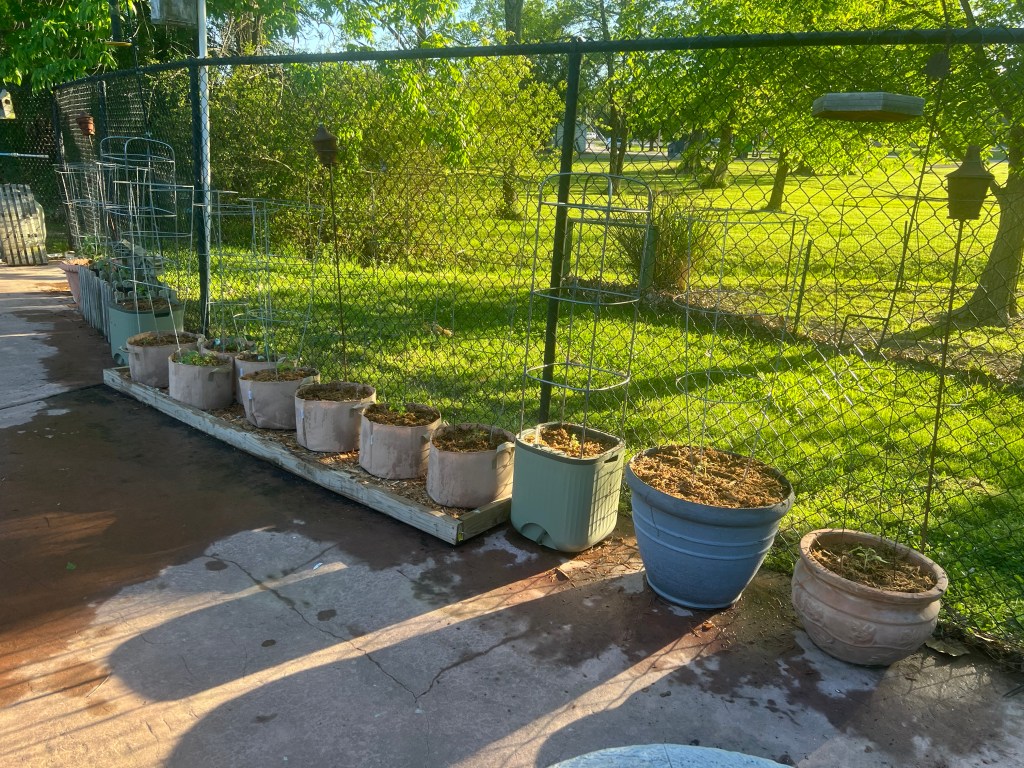
I have been mulling over a planting arraignment for my vegetable beds since the beginning of the year.  I settled on the grow mediums early and have them prepared.  My potatoes will go into the ground beds on either side of the back door.  The tomatoes and peppers will go in the grow bags and containers along the back fence.  The three sisters (corn/beans/squash) are set for the bed along the back of the house.  That still leaves my four hügelkultur beds on the south side of the house.  I have narrowed these beds down.  I have struggled with an opossum (Didelphis virginiana) that devoured past crops of melons so they will go in the tall (32 in/81 cm) bed.  One of the shorter (17 in/43 cm) long beds is reserved for roots crops while the other is for leafy vegetables.  The shorter u-shaped bed is for a combination of peas, beans, and squashes on trellises.  Now it is a matter of getting the different seeds in the ground.

When I looked online, I found Amy Andrychowicz’ website presented a five step approach for what seeds and plants to grow.  Step 1 is, what does your family like to eat?  Growing exotic vegetables will do no good if no one eats them.  Step 2 is to determine why you want to grow vegetables.  If the goal is saving money, grow vegetables that are expensive to buy.  If you want organic crops plant low-maintenance vegetables.   If you want consistent harvest grow vegetables that produce continuously, rather than the one large crop.  If you want the fun of watching things grow plant varieties that are fast growing, low-maintenance, or easy to grow from seed.  Even if they do not produce much, you will have fun watching them grow.  If you are into canning and preservation, choose vegetables suited for this.  Step 3 is asking what you have had success growing before.  If a vegetable did not grow well for you try a different variety, or just skip it.  Step 4 concerns what grows best in your area or growth zone.  If others have success growing these vegetables, there is a good chance you will too.  Step 5 is the garden space available.  The size of your garden will determine what and how many plants you can grow.  Limit yourself to space and what you are willing to care for. 

I was able to get the root crops in to fill one of the beds yesterday.  Most seeds were planted directly into the ground.  The exception was my onions, which I am still struggling to make produce.  Out of the forty seedlings I started (two varieties) only six remained as sets I could plant in the bed.  The choices I made for which vegetables to grow came from a combination of what I like to eat and what will provide a constant supply.  This year’s garden is my next step in creating a sustainable food source that includes fresh as well as canned/preserved food stuffs.  My foray into canning last year made me a little more comfortable but I know there will still be a huge learning curve with the variety of vegetables I am growing.  What to preserve, what to freeze, what to dehydrate, what to eat fresh, and what to give to friends or the foodbank.  This is rapidly becoming a full-time job.

THOUGHTS:  I was overwhelmed by the 100’s of seed packets Melissa gave me as it created too many choices for what to grow.  This was compounded by the need to get the seeds into starter sets by January or March.  All of the vegetables are heirloom varieties which will allow me to save seeds for future planting (something else to learn).  There is something about just using the Admiral Farragut approach in the War of 1812 (“damn the torpedoes, full speed ahead”).  My garden will either grow or not (or a combination of both) and hopefully I will learn from the experience and be better suited for producing a sustainable crop next year.  The willingness to try new things is a human trait that has served the species well, even if individuals were lost.  Thankfully, my garden is not of that caliber of learning.  Act for all.  Change is coming and it starts with you.
Texas Brown

April 17, 2024

Over the weekend Melissa and I finally got around to weeding the front bed under the Japanese Maple (Acer palmatum).  The tree has needed pruning for several years and this year it supplied part of the branches and limbs that made up my hügelkultur beds.  The bed originally held a variety of flowers with a ground cover of creeping phlox (Phlox subulata).  Over the last three years we had tried to transform the bed into an outdoor succulent garden.  I removed the mulch and replaced it with river pebbles.  Melissa planted Hen and chicks (Sempervivum globiferum) along with Agave (Agave americana) and sedum (Sedum acre) the first year.  It all died over the first winter except for some of the sedum.  Melissa tried again the next year and again almost everything died.  Last year I essentially abandoned the bed and stopped weeding by mid-summer, allowing it to be overgrown by grass.  While we still do not know what will ultimately fill the bed, I am not willing to allow it to be an eyesore again this year.  We went out to weed and remove last year’s leaf fall.  In the course of weeding, we came across two small snakes.  I ID’ed them as Texas brown snake.    

When I looked online, I found the Texas brown snake (Storeria dekayi texana), a subspecies of Storeria dekayi, is a nonvenomous snake in the family Colubridae endemic to North America.  The Texas brown ranges from southern Minnesota to eastern Texas and northeastern Mexico.  Both adults and young have reddish brown colored bodies with dark brown spots around the eyes.  These occipital blotches are wider than in other subspecies of Storeria dekayi, the fourth upper labial is usually darkened to a greater extent, and they do not have the anterior temporal shield marked with a black vertical bar or horizontal stripe like the other subspecies.  Adults average 12 inches (30.5 cm) in length but may reach as much as 19 inches (48.3 cm).  In the wild the Texas brown is found in moist woodlands under logs and bark and in urban areas they are often in gardens and flower beds (like mine).  They feed primarily on slugs and earthworms, but also eat insects, spiders, and cricket frogs (genus Acris).  The brood size for the subspecies varies from 3 to 15 snake babies and each of the newborn’s measure from 3-1/2 to 4-1/2 inches (9 to 11.5 cm) in length.

An interesting note about the Texas brown is they are ovoviviparous.  This term describes a type of reproduction that “bridges” egg-laying (oviparous) and live-bearing (viviparous) reproduction.  Ovoviviparous animals possess embryos that develop inside eggs that remain in the mother’s body until they are ready to hatch.  The females bear live young in August and early September.  Each of the young emerges in a fine tissue sac, which after bursting remains attached to the abdomen or belly (ventrum) but is quickly shed.  For live-bearing snakes, the term ‘pups’ is occasionally used to describe their offspring.  However, this term is more commonly used for mammals, and the correct term for live-born snake offspring is ‘juveniles.’  It is important to note that not all live-bearing animals have ‘pups’ as their offspring.  The correct term varies depending on the species.

THOUGHTS:  I am wary when I come across snakes in my garden or flower beds.  I am not a herpetologist (study of amphibians and reptiles) and tend to rely on the rounded head of non-venomous snakes verses the triangular head of venomous snakes.  However, some non-venomous snakes mimic the triangular shape of venomous snakes by flattening their heads to appear more dangerous.  You can also identify venomous snakes by the thin, black, vertical pupils surrounded by a yellow-green eyeball.  This requires you to be in close range and can be a dangerous identification method.  I moved my two Texas brown snakes out of the bed and onto the lawn.  Humans use visual clues to identify potential threats from others as well.  While this may help keep you safe, it may also exclude getting to understand our diversity.  Act for all.  Change is coming and it starts with you.

Deadnettle

April 16, 2024

Since the kids have been using the fenced yard, I had not gotten out to weed-eat or mow the area.  The scurrying they do while they play has kept the grass and weeds down, even to the point of making bald patches.  The exception was around the gate in the original pool fence where the weeds thrived.  The first thing I had to do was to put the kids inside.  The electric weed-eater does not make much noise, but the activity drives them both crazy.  I whacked the weeds along the beds inside the pool fence and blew the debris out into the fenced yard.  Then I took on the inside of the yard fence (my neighbor had already whacked the outside).  As I began to whack next to the gate, I noticed the large patch of taller weeds had spots all over the leaves and were producing pink flowers.  My ID app told me these were red deadnettle plants. 

When I looked online, I found the red deadnettle (Lamium purpureum), also known as purple deadnettle, or purple archangel, is an annual herbaceous flowering plant native to Europe and Asia.  Deadnettle has square stems growing 2 to 8 inches (5 to 20 cm) in height.  The leaves have fine hairs, are green at the bottom and shade to purplish at the top; they are 3/4 to 1-1/2 inches (2 to 4 cm) long and broad, with wavy to serrated margins.  The mirror-image (zygomorphic) flowers are bright red to purple, with a top hood-like petal, two lower lip petal lobes, and minute fang-like lobes between.  The petals (corolla) show a line of hairs near the base of the tube.  Flowers may be produced throughout the year, including in mild weather during winter allowing bees to gather nectar when few other nectar sources are available.  The deadnettle is also a prominent source of pollen for bees in March and April when bees need the pollen as protein to build up their nest.  It is often found alongside Henbit Deadnettle (Lamium amplexicaule) and is easily mistaken as they both have similar looking leaves and bright purple flowers.  Though superficially similar to species of true nettles (Urtica) it is not related and does not sting.  Hence the name “deadnettle”.

Despite belonging to the mint family, the leaves of the deadnettle taste nothing like mint and have a mildly sweet taste, while young deadnettle leaves have a mild, lightly peppered taste.  The leaves are used as a substitute for more common greens (spinach, kale, and lettuce).  You can blend them with other greens and lemon juice to make a green smoothie.  The leaves are great stir-fried and make a great addition to soups and stews.  Regardless of how they are eaten, the leaves are highly nutritious.  They are a great source of vitamin C, A, and K, as well as iron, fiber, and bioflavonoids.  Deadnettle serves medicinal purposes as well, with anti-inflammatory, antibacterial, and antifungal properties along with diuretic, astringent, diaphoretic, and purgative effects.  You can steep the leaves to make a healthy herbal tea which has been used as a remedy for kidney disease, seasonal allergies, chills, and common colds.  Consuming the leaves can boost the immune system and fight bacterial infections.  Lastly, the leaves can be used externally to stem bleeding and to create a poultice to heal cuts, burns, and bruises.  Obviously, deadnettle is more than just a weed.

THOUGHTS:  As a wild edible and an invasive species, foraging for the species is encouraged.  In your garden it is an attractive plant that brings bright pink to purple blooms in early spring and green and purple leaves for ornamental foliage all year long.  Deadnettle is nutritional for humans and is a vital source of year round nectar for honeybees.  With all that going, deadnettle is not cultivated and is considered an invasive weed.  There is more to it than what meets the untrained eye.  The same can be said for most humans we do not know.  Act for all.  Change is coming and it starts with you.

Patriots’

April 15, 2024

OLYMPUS DIGITAL CAMERA

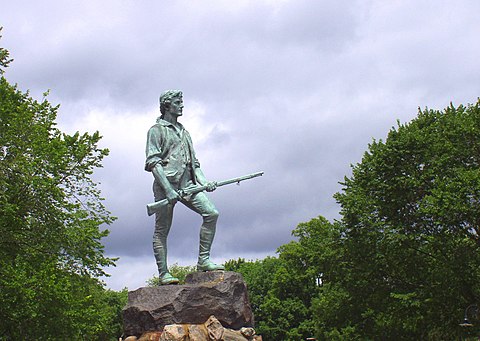
On the back page of the front section of my local newspaper I came across a USA Today article on the significance today holds in American history.  While many in the US know today is famous as Tax Filing Day, that is not what the article highlighted.  Instead, it addressed an event which allowed for the later creation of the IRS and the annual filing.  While the third Monday of April is now recognized as the official date, this was first celebrated in Massachusetts on April 19, 1894.  The celebration commemorates the battles of Lexington and Concord, as well as the aftermath of the “shot heard ‘round the world”.  While this is not a federal holiday and is mostly associated with Massachusetts, it is also celebrated in five other states.

When I looked online, I found Patriots’ Day (Patriot’s Day in Maine) is an annual event that has been formalized as a legal holiday or special observance day in six US states.  The day has been set aside to commemorate the battles of Lexington, Concord, and Menotomy, some of the first battles of the American Revolutionary War.  The holiday occurs on the third Monday of April each year, with celebrations including battle reenactments and the Boston Marathon.  In 1894, The Lexington Historical Society petitioned the Massachusetts General Court to proclaim April 19 as “Lexington Day” in 1894 and the city of Concord countered with “Concord Day”.  The biggest battle fought on this day was in the town of Menotomy (Arlington) on the Concord Road between Lexington and Boston.  Governor Frederic T. Greenhalge opted for a compromise, Patriots’ Day.  This included the larger Battle of Menotomy and consolidated the long held city observance of Lexington Day and Concord Day.  It is likely the battles that took place in Menotomy are less known than the battles in Lexington and Concord because the town has changed names several names since 1775.

When Governor Greenhalge proclaimed Patriots’ Day in Massachusetts in 1894 it also marked the first bloodshed of the American Civil War in the Baltimore riot of 1861.  Greenhalge explained this dual commemoration celebrated “the anniversary of the birth of liberty and union”, commemorating the opening events of the American Revolution and replacing Fast Day with Patriots’ Day.  Maine followed in 1907 and replaced its Fast Day with Patriot’s Day.  Governor Dannel Malloy of Connecticut signed a bill June 10, 2017, to establish Patriots’ Day as a statewide unpaid holiday, and became the fifth state to recognize the holiday.  Governor Doug Burgum signed a bill recognizing Patriots’ Day in the state of North Dakota on March 19, 2019.  The Boston Marathon has been run on Patriots’ Day every year since its inception in 1897, even during the World War years.  The only exception was 2020 and 2021 due to the covid pandemic.  The holiday is sometimes referred to as “Marathon Monday”.  The Boston Red Sox have been scheduled to play at home in Fenway Park on Patriots’ Day every year since 1959, although events have caused the game to be canceled.

THOUGHTS:  It is interesting to note that Patriots’ Day was created to diffuse a rivalry between the cities of Lexington and Concord which had held dueling celebrations to mark the beginning of the American Revolution.  The events of the day were first enlarged to include other battles, and then subsumed by sporting furor for the Marathon and Red Sox.  The holiday replaced the Catholic focus (Fast) with a Revolutionary focus (battles) and finally a sports focus.  Perhaps all the workers really wanted was another day off.  As focus changes, we adapt old ways for the new (like Christmas?).  While this is not a bad thing, it does tell us where priorities lie.  Act for all.  Change is coming and it starts with you.
Invasive Species

April 13, 2024

I came across an article in my Edge browser on invasive species by Bryan Walsh that had first been published seven months ago in the Future Perfect newsletter.  The Florida Everglades is ground zero for invasive species in the US due to its climate and proximity to the vast international trade of Miami.  Many of these invasive species arrived as exotic pets before escaping or being released into the Everglades where they have established in large numbers.  While efforts to repel invasive species are underway around the US and the world it is an uphill battle according to a new report from the Intergovernmental Science-Policy Platform on Biodiversity and Ecosystem Services (IPBES).  The IPBES is over 140 countries that provides scientific assessments about biodiversity and reports more than 3,500 harmful invasive plants and animals cost the global economy more than US$423 billion a year.  Those costs have at least quadrupled each decade since 1970 and are projected to continue to grow as globalization and climate change explode the spread of invasive species.

When I looked online, I found an invasive species is an introduced species that overpopulates and adversely affects habitats and bioregions by causing ecological, environmental, and/or economic damage.  Since the 20th century, invasive species have become a serious threat worldwide.  Invasion of long-established ecosystems by organisms is a natural phenomenon, but human transmitted spread has greatly increased the rate, scale, and range of invasion.  Humans have always been accidental and deliberate dispersal agents, but this accelerated in the Age of Discovery (15th to 17th century) and again with the rise of international trade during the modern era.  US$1.4 trillion is spent annually to manage and control invasive species globally.  The resulting ecological degradation by invasive species can alter resources the ecosystems provide.  Additional costs incur to control the spread of biological invasion, to mitigate further impacts, and to restore the existing ecosystems.  The damage caused by 79 invasive species in the US between 1906 and 1991 is estimated at US$120 billion.

The IPBES report states the effects of invasive species include native extinctions, and invasive species were a major factor in 60% of recorded plant and animal extinctions, and the sole reason in 16%.  While invasive species damage humans and our environment, most are the result of human involvement.  Species have always moved to new habitats, but global trade and travel have given them the ability to move farther and faster.  The report advocates an aggressive approach to invasive species prevention and control, including border biosecurity and strictly enforced import controls.  Governments are also spending millions to try to control and eradicate invasive species.  However, in our globalized world we may need to rethink our concept of “invasive species.”  The idea of invasive species has a nativist bias that is more grounded in economic concerns than ecological ones, and the effort to “eradicate” them is unrealistic.  The idea that there should be a proper place for every species is one that has not made sense for a long time, and simply dividing every species into “native” and “alien” is a false dichotomy in the geological epoch dating from the commencement of significant human impact (Anthropocene). 

THOUGHTS:  There’s another invasive species that has spread to nearly every corner of the world.  As its numbers grew from thousands to millions to billions it altered the environment along the way, literally remaking the world in its own image.  Research has shown a correlation between the arrival of humans and the mass extinction of other species.  Ecosystems are interconnected and need to be protected in their entirety.  As the Alpha species humans have both rewards and responsibilities.  If we ignore the responsibilities it may result in the Anthropocene as the end of the human species.  Act for all.  Change is coming and it starts with you.

Walk

April 12, 2024

The weather is warming, my hügelkultur beds are installed, and the 50 seedlings that survived are anxious to get into the ground.  Between the rain and my focus on preparing my beds for planting I have been neglecting taking the kids for a walk.  I justified this thinking the side yard provides running room (which it does), but I also know how much they enjoy these ventures so yesterday we went outside for a walk.  Last March I blogged about the coming of spring and the explosion of flowers that accompany this transitional time of year.  When we were walking, I was reminded that animals also become active as the temperatures rise and spring approaches.  On the way to the park, we passed an alligator snapping turtle (Macrochelys temminckii) scurrying across the road from one side ditch to the other.  He was not the monster from the camp in Kansas but was still over 1 foot (30.5 cm) in length.  Then on the walk along the park route, we passed an eastern tent caterpillar (Malacosoma americanum) crawling along the road on its way to some unknown destination.  It seemed like we were not the only ones to be happy to be taking a walk.

When I looked online, I found Eastern tent caterpillars are among the earliest caterpillars to appear in the spring.  Because the early spring weather is often cold, the caterpillars rely on the heat of the sun to elevate their body temperatures to levels that allow them to digest their food.  Studies show these caterpillars are unable to process the food in their guts when temperatures are below 59F (15C).   The early stages (instars) are black, and their bodies readily absorb heat.  When basking, they typically pack together tightly, reducing heat loss due to convective currents.  The caterpillars may aggregate on the surface of the tent or within it, which acts as a miniature greenhouse and traps the heat of the morning sun.  An aggregation of basking caterpillars can easily overheat, so the aggregation splits up when they reach a satisfactory temperature.  The one we spotted had clearly gone off for a walk on its own as it continued its journey to maturity as a moth.

The alligator snapper will often walk from water source to water source to find a mate.  The snapper reaches maturity around 12 years of age and mating takes place yearly, in early spring in the southern part of its geographic range (Arkansas), and in later spring in the northern part.  About two months later, the female builds a nest and lays a clutch of 10–50 eggs.  Some females lay eggs every year and some females lay eggs every other year.  As with all turtles, the sex of the young depends on the temperature at which the eggs are incubated (temperature dependent sex determination).  For the alligator snapper, higher temperatures produce more males while lower temperatures produce more females in the clutch.  Nests are typically excavated at least 50 yards from the water’s edge to prevent them from being flooded and drowned.  Incubation takes from 100 to 140 days, and hatchlings emerge in the early fall.  The snapper’s potential lifespan in the wild is unknown but it is believed to be capable of living to 200 years of age, but 80 to 120 is more likely.  In captivity, it typically lives between 20 and 70 years.  The snapper relies on its walk to find the best mate to continue its species.

THOUGHTS:  Many will walk for exercise (including me) but there are many other reasons to walk.  The caterpillar was out for a walk to find a new place to build a cocoon.  The turtle was out for a walk to find a mate.  The kids were out for a walk to encounter the new smells along the trail.  When humans go outside for a walk it can bring us closer to nature.  When we view nature’s diversity and embrace its beauty, we realize how amazing our world is.  We are the world’s stewards, not its overlord.  Act for all.  Change is coming and it starts with you.

Manatees

April 10, 2024

Several weeks ago, the inside of the front section of my local newspaper carried a USA Today article on the continued threat to Manatees in the wild.  These gentle giants have no known natural predators but are still considered at risk.  US Fish and Wildlife Service (FWS) estimates the global population of manatees is at least 13,000 and the Florida population is estimated at 8,350 to 11,730 based on an assessment from 2021 to 2022.  The FWS no longer considers the West Indian manatee “endangered” and downgraded its status to “threatened” in March of 2017.  The World Wildlife Fund says the manatee’s status is “under debate”.  The reclassification was met with controversy, with Florida congressman Vern Buchanan and groups such as the Save the Manatee Club and the Center for Biological Diversity expressing concerns that the change would have a detrimental effect on conservation efforts.  The International Union for Conservation of Nature and the WorldWide Fund for Nature both classify manatees as “vulnerable”.   

When I looked online, I found Manatees (genus, Trichechus) are a large, fully aquatic, mostly herbivorous marine mammal also known as sea cows.  There are three accepted living species, the Amazonian manatee (Trichechus inunguis), the West Indian manatee (Trichechus manatus), and the West African manatee (Trichechus senegalensis).  Adults weigh from 880 to 1,210 pounds (400 to 550 kg) and average 9 feet 2 inches to 9 feet 10 inches (2.8 to 3.0 m) in length, but some may grow up to 15 feet (4.6 m) and weigh 3.913 pounds (1,775 kg).  The females tend to be larger and heavier than males.  At birth baby manatees weigh about 66 pounds (30 kg).  Manatees eat over 60 different freshwater and saltwater plants.  The species inhabit the shallow, marshy coastal areas and rivers of the Caribbean Sea, the Gulf of Mexico, the Amazon basin, and West Africa.  The main cause of death for manatees are human-related, such as habitat destruction and human objects.  Manatees are slow-moving, curious creatures which have led to violent collisions with propeller-driven boats and ships.  Some manatees have been found with over 50 scars from propeller strikes.  Others die of starvation as pollution-fueled algae blooms kill the sea grass they rely on for food.  Natural deaths include adverse temperatures, predation by crocodiles on young, and disease.

Manatee deaths in the state of Florida nearly doubled from 637 (2020) to 1100 (2021).   Although this number decreased in 2022 (800), it is likely the current rate of development in Florida, climate change, and decreasing water quality, habitat range, and genetic diversity among the population may lead to reconsideration of the West Indian Manatee as endangered.  The Georgia coast is usually the northernmost range of the West Indian manatees as their low metabolic rate does not protect them in cold water.  Prolonged exposure to water below 68F (20C) can cause “cold stress syndrome” and death.  West Indian manatees can move freely between fresh water and salt water, but studies suggest that they are susceptible to dehydration if freshwater is not available for an extended period of time.  Manatees are protected by the Marine Mammal Protection Act of 1972, the Endangered Species Act of 1973, and the Florida Manatee Sanctuary Act of 1978.

THOUGHTS:  When I moved to Kansas I was asked if my home in California was any different.  I responded, “Well, I have not been awoken by the seals in the cove next to my house since I moved back.”  Last week I received a video from my brother showing a manatee swimming (floating?) in the canal behind his condo in Florida.  This is something else that does not occur in Kansas.  Each part of the world is unique to the ecosystem it supports.  This diversity is what inspires the wonder of the world where we live.  Act for all.  Change is coming and it starts with you.

G.O.A.T.

April 09, 2024

Morry Gash / AP

Both the Women’s and Men’s NCAA Basketball Championships concluded this week and the winners crowned.  South Carolina beat Iowa (87-75) on Sunday to win its third NCAA women’s championship.  Iowa beat South Carolina in last year’s semi-final game but the Gamecocks dominated this year (38-0), including the final with Iowa.  UConn took back-to-back tournament titles defeating Purdue (75-60) on Monday to give its men’s basketball program their sixth national championship, a feat accomplished by only two other schools (Kentucky and UCLA).  UConn’s win meant they were the first team since Florida (2006-07) to repeat as national champions.  The Huskies tournament run included six double-digit wins.  Two of the brightest stars played for the losing teams.  Purdue’s Zach Edey was the Big Ten Player of the Year and consensus National Player of the Year in 2023 before losing in the first round last year and repeated as Big Ten Player of the Year in 2024.  Edey’s 31 points Monday gave him 171 points in tournament play this year, for the third-best single tournament points of all time, behind Princeton’s Bill Bradley in 1965 (177 points) and Michigan’s Glen Rice in 1989 (184).   Iowa’s Caitlin Clark led the Hawkeyes to back-to-back finals (lost both), broke the Division I scoring record for both women and men, won all major national player of the year awards for 2024, and had 30 points in her final game.  Both are expected to be the No. 1 pick in their respective drafts and are in conversations around whether they are the G.O.A.T.

When I looked online, I found the term G.O.A.T. (Greatest Of All Time), or GOAT, refers to someone at the top of their field.  The acronym is used to praise exceptional athletes but may refer to musicians and public figures.  The term is attributed the boxer Muhammad Ali who called himself “The Greatest”.  Ali’s wife, Lonnie Ali, incorporated a company called “G.O.A.T. Inc” in 1992 that held all assets related to her husband’s image.  This was the first notable instance of GOAT used to refer to “greatest of all time”.  The term gained wider popularity in 2000 with the release of the LL Cool J’s studio album “G.O.A.T.”, which went platinum and reached #1 in the US, solidifying the place of the term in pop culture.  Other examples of athletes referred to as the G.O.A.T. of their sports include Tom Brady (American Football), Serena Williams (Tennis), Michael Phelps (Swimming), and Tiger Woods (Golf).  The two features of any GOAT are to be at the top of and dominate their game and to win championships.

While Clark and Edey dominated their sport the last two years, neither won a Championship.  That can be said of other GREAT basketball players who have dominated the league with their skill and leadership but never won an NBA championship.  I cheered as John Stockton and Karl Malone went to the finals in 1996-97 and 1997-98, losing both series to Jordan’s Chicago Bulls.  Stockton started for the Jazz for 16 years until he retired at 41 years old and still holds career steals (3,265) and assist records (15,806).  Jason Kidd is second behind Stockton in assists with 3,705.  Malone is considered one of the Top 3 power forwards in NBA history.  During his 19-year career he averaged 25.0 points, 10.1 rebounds and 3.6 assists, career marks that can only be equaled by two other players (Elgin Baylor and Wilt Chamberlain).  Malone’s 36,928 career points rank second all-time while his 14,968 career rebounds rank seventh.  Neither is in the conversation for the G.O.A.T.

THOUGHTS:  The problem when ranking the G.O.A.T. is that there can be only one (per field) so to be one is rare.  That is why most ranking lists prefer to speak in terms of Top 10 and may even hedge and dispute their own rankings.  The rest of us can still excel and strive to be the B.T.W.C. (Best That We Can).  Frankly, that is the same goal of those we now consider the G.O.A.T.  Act for all.  Change is coming and it starts with you.
Eclipse

April 08, 2024

I have got to jump on the hype for the eclipse that passed through Arkansas this afternoon.  Areas in totality have been preparing for this event for a year, and hype ramped up over the last weeks as several million people are predicted to visit the state over the weekend.  I beat the rush in preparing for today’s eclipse.  We were part of the partial eclipse in Kansas during 2017.  I purchased a pair of eclipse glasses for that event and saved them as a memento.  I kept these on my office desks as a memento.  Several weeks before today’s event I bought another pair of glasses (US$1) so Melissa and I could watch the eclipse together.  We purchased sandwiches and were ready to sit on the back patio and watch the sun go away.  Melissa called me outside about an hour before the scheduled time and I reached for my glasses.  They were not there.  My desk is always filled with piles of paper, so I thought they were just covered.  I moved everything on my desk and searched the surroundings several times.  They were not there.  I reluctantly went outside to watch without my pair of glasses.  Luckily, I had bought Melissa another pair.  They were the only ones we had.   

When I looked online, I found today’s total solar eclipse will be visible to 32 million people in its path of totality.  A solar eclipse occurs when the Moon passes between Earth and the Sun and obscures the image of the Sun on Earth.  A total solar eclipse occurs when the Moon’s apparent diameter is larger than the Sun’s, blocking all direct sunlight and essentially turning the day into darkness.  Totality only occurs in a narrow path across Earth’s surface, while the partial solar eclipse is visible over thousands of miles (km).  Today’s eclipse occurs one day after the Moon’s nearest point (perigee) of orbit around the Earth (April 7, 2024), making the Moon’s diameter appear 5.5% larger than average.  The magnitude of an eclipse is a fraction of the angular diameter of a celestial body being eclipsed and applies to all celestial eclipses.  The magnitude of a total solar eclipse is always greater than or equal to 1.0 and has a theoretical maximum value of around 1.12.  With a magnitude of 1.0566, today’s eclipse’s longest duration of totality will be of 4 minutes and 28.13 seconds about 4 miles (6 km) north of Nazas, Durango, Mexico.  It will take 1 hour and 8 minutes for the Moon’s shadow to traverse the US from Texas to Maine, crossing parts of 15 states.

A lot of the hype surrounding the eclipse focused on what effect this would have on animals.  My birder sites suggested I observe bird behavior and report back.  The main effect seemed to be confusion about the time of day.  As the eclipse began swarms of European starlings (Sturnus vulgaris) took to the air and as totality approached roosted in the nearby trees.  A pair of Eurasian collared doves (Streptopelia decaocto) roosted in a nearby tree and proceeded to mate.  The Eastern bluebirds (Sialia sialis) returned to their birdhouse nest on our deck.  The other passerine birds that had been at the feeders earlier had vanished, presumably roosting as well.  The only apparent effect on Zena and Loki was from the sandwiches that sparked their interest.  This seemed to be a bigger event for humans (and Melissa and me) than for any of the fauna we observed. 

THOUGHTS:  Tok Thompson, professor of anthropology at the USC Dornsife College of Letters, Arts and Sciences, says the impulse to treat the eclipse as a special occasion goes beyond its rarity and is grounded in the profound meaning humans ascribe to the sun and the moon.  The 2017 eclipse in the US was the first in 99 years and for some a herald of declining American power after 99 years of ascendancy.  The April 8 eclipse inspired civic predictions, conspiracy theories, and prophetic forecasts.  Thompson believes drawing meaning from an eclipse stem from our human desire to understand our place in the cosmos.  While this is a valid question, the eclipse’s answers may be closer to Zena wanting part of my sandwich.  Act for all.  Change is coming and it starts with you.
Odor

April 03, 2024

I mentioned how I had purchased 6 scoops of compost on Monday.  I loaded four scoops (2 yards3 or 1.5 m3) on the trailer and a mere 5 hours later had three of the four raised beds filled to about 7 inches (17-3/4 cm) and the fourth to about 1 foot (30.5 cm) from the top.  The big storm we were promised (threatened) never arrived but I had watered the compost down to try and help it settle.  I picked up the last two scoops (1 yard3 or .75 m3) on Tuesday and was able to finish most of the fourth bed.  By that time, I was exhausted and decided to call it a day.  I was revived today and determined to get the base for my three sisters (corn, beans, squash) beds on the ground.  That meant I had to clear the weeds out of the long patio bed and fill it with about 5 inches (12.7 cm) of compost.  The kids had a great time while I was weeding.  I was down on my knees and both dogs decided they needed to sniff my face to see what I was up to.  Loki was also interested in the weeds and roots I was removing and started a pile of the “best pieces” off to the side.  I put fencing around the bed to deter Loki from digging, but Loki was not deterred.  Instead decided to lick the wet compost.  All I could think of was the odor of the mixture.

When I looked online, I found an odor (American English) or odour (Commonwealth English) is caused by one or more volatilized chemical compounds that are found in low concentrations that humans and many animals can perceive via their sense of smell.  An odor is also called a “smell” or a “scent” and can refer to both a pleasant and unpleasant odor.  The compost odor was unpleasant, which makes sense as it is composed of plant and food waste, recycling organic materials, and manure.  The perception of an odor, or sense of smell, is mediated by the olfactory nerve.  The olfactory receptor cells are neurons present in the olfactory epithelium, which is a small patch of tissue at the back of the nasal cavity.  There are millions of olfactory receptor neurons that act as sensory signaling cells and each neuron has cilia in direct contact with the air.  The odor is sensed by odorous molecules which bind to receptor proteins extending from cilia and act as a chemical stimulus, initiating electric signals that travel along the olfactory nerve’s axons to the brain.

After I finished building the base for the sister beds, I had enough compost to complete the last tall, raised bed.  After I finished, I fed the dogs and decided they could use some play time.  While I was petting Zena, Loki pushed in to get attention.  He jumped up on my chair (as usual) and tried to lick my face.  That was when I noticed the horrendous odor coming from his mouth.  Loki had been busy licking the compost and now his breath had the same smell.  I mentioned this to Melissa, and she let my know that while I may not have gotten sweaty working with the compost today, I had gotten remnants of the mixture all over my clothes and face.  That was a polite way of saying I also retained the manure smell of the compost.  I took a shower and changed clothes and when I came out, I mentioned that I now had a different odor, one of soap and deodorant.  Melissa preferred the new odor over the last one.  I need to get the container soil down to keep Loki from licking the compost.

THOUGHTS:  Humans are good at detecting odor considering they only have 350 olfactory receptor genes compared to 1,300 in mice.  The human sense of smell can distinguish around one trillion unique aromas.  Acceptable body odor is often dictated by cultural norms and can refer to personal hygiene or maintaining the body’s cleanliness.  Levels of acceptable odor can also vary given available cleansing resources and participation in active activities.  The World Health Organization recommends washing hands for 20 seconds (ABC’s x 2?) before or after using the toilet, changing diapers, feeding a child, eating, and or preparing food.  Act for all.  Change is coming and it starts with you.