Sriracha

May 07, 2024

I found a USA Today article in the Business Section of today’s local newspaper on a possible supply shortage for chili sauce.  Huy Fong Foods said it halted production of the sauce until Labor Day.  The jalapeno chilies are not red enough and it is affecting the color of the sauce.  Harvesting the jalapenos too soon not only affects the color, but the quality and flavor of the sauce as well.  The riper red chilies are sweeter and have a more complex flavor.  Huy Fong’s processing plant rejects shipments of red jalapenos that are more than 5% green fruit.  Huy Fong Foods said, “all orders that have been scheduled beginning on May 6, 2024, will be canceled and the status changed to pending.”  Huy Fong Foods goes through 50,000 tons (45.4 mt) of chili peppers making their hot sauces and they are only in season four months out of the year.  The factory mixes the chiles with salt and preservatives and seals them in barrels for later distribution.  What makes Sriracha different from other hot sauces is its thick consistency, much like America’s ketchup.  Other Sriracha makers have not reported a lack of red jalapenos or production issues. 

When I looked online, I found Sriracha is a chili sauce that originated in Thailand.  The original sauce (Sriraja Panich) was made by Thanom Chakkapak of Si Racha, Thailand in the 1930’s.   David Tran began making chili sauces in 1975 in his native Vietnam, where his brother grew chili peppers on a farm north of Saigon.  In 1978, the new Communist Vietnamese government began to persecute ethnic Chinese in south Vietnam and Tran and three thousand other refugees crowded onto the Taiwanese freighter Huey Fong heading for Hong Kong.  After a month-long standoff with British authorities, its passengers disembarked on January 19, 1979.  Tran was granted asylum in the US, where he started Huy Fong Foods in 1980, naming the company after the refugee ship that brought him out of Vietnam.  The sauce gets its heat from red jalapeno peppers, but it’s only moderately spicy.  Sriracha measures 2,200 on the Scoville scale, developed to measure the level of heat in chiles, while Tabasco sauce measures 3,750 and cayenne pepper measures 50,000.  Huy Fong makes the most popular version of Sriracha, but several versions can be found at any supermarket.  Huy Fong Sriracha is sweet and tangy with a garlicky taste.  The flavor can vary depending on the brand.

The Huy Fong Foods factory produces 3,000 bottles every hour, 24 hours a day, six days a week, or about 20 million bottles a year.  Problems with Sriracha supply began in 2017.  Underwood Ranch in California had been the sole supplier since 1988, but the alliance fell apart.  After a two year court battle a jury found Huy Fong in breach of contract and Underwood was awarded US$23.3 million.  Underwood now produces their own brand of Sriracha.  Stephanie Walker, professor and vegetable specialist at New Mexico State University, said Huy Fong has been sourcing chili peppers in Mexico and has yet to established solid relationships with dependable growers.  The long shortages that have plagued Huy Fong Sriracha in recent years have frustrated fans, causing them to beg for bottles on social media, pilfer them from restaurants, or pay high prices to spice up their bowls of pho, ramen, or sushi rolls.  As bottles reappeared on grocery shelves, restaurant tables, and households stocked up, the grumbling eased.  Some Sriracha fans say they still feel scared.  Old hoarding habits die hard.

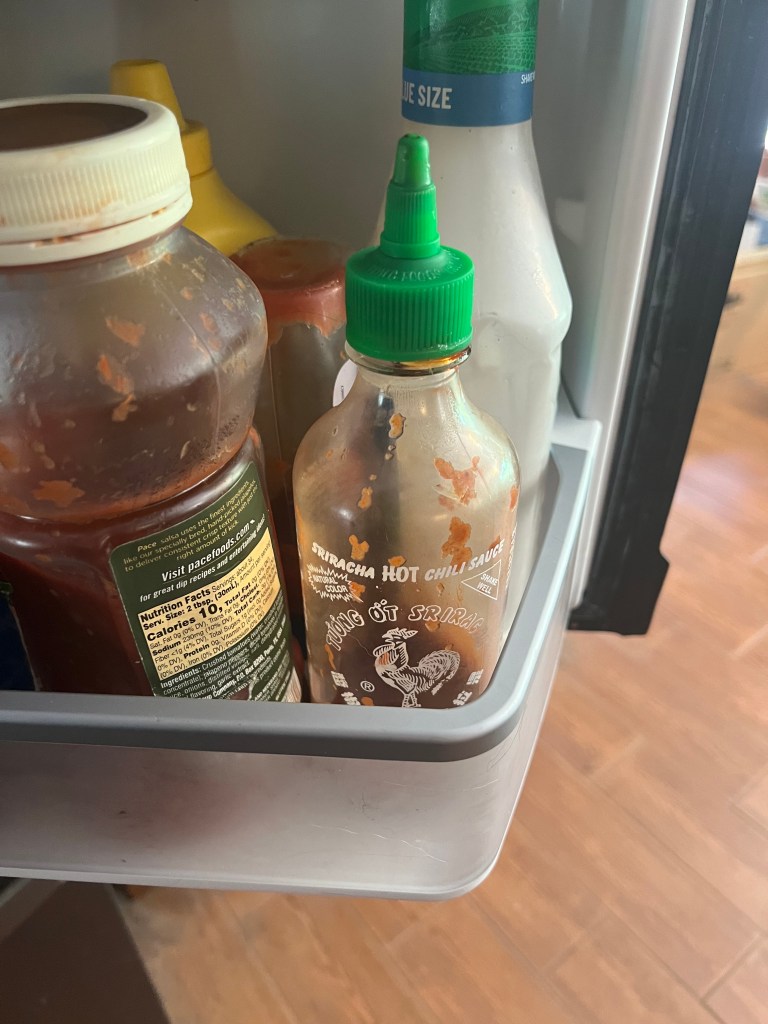
THOUGHTS:  One Sriracha fan recently posted on X, “How many bottles of hot sauce in the kitchen cabinet are too many?” Another responded, “My boyfriend is Vietnamese.  I just counted 16 in the pantry, two in the fridge, and one on the lazy Susan.  He’s still not over the Huy Fong Sriracha shortage.”  I like Sriracha along when I eat in Asian restaurants and have long kept a bottle in the cupboard.  I finally read the label and now it is in the fridge (as recommended).  Maybe I should stock up and get another bottle.  Act for all.  Change is coming and it starts with you.
Yukon Gold

May 06, 2024

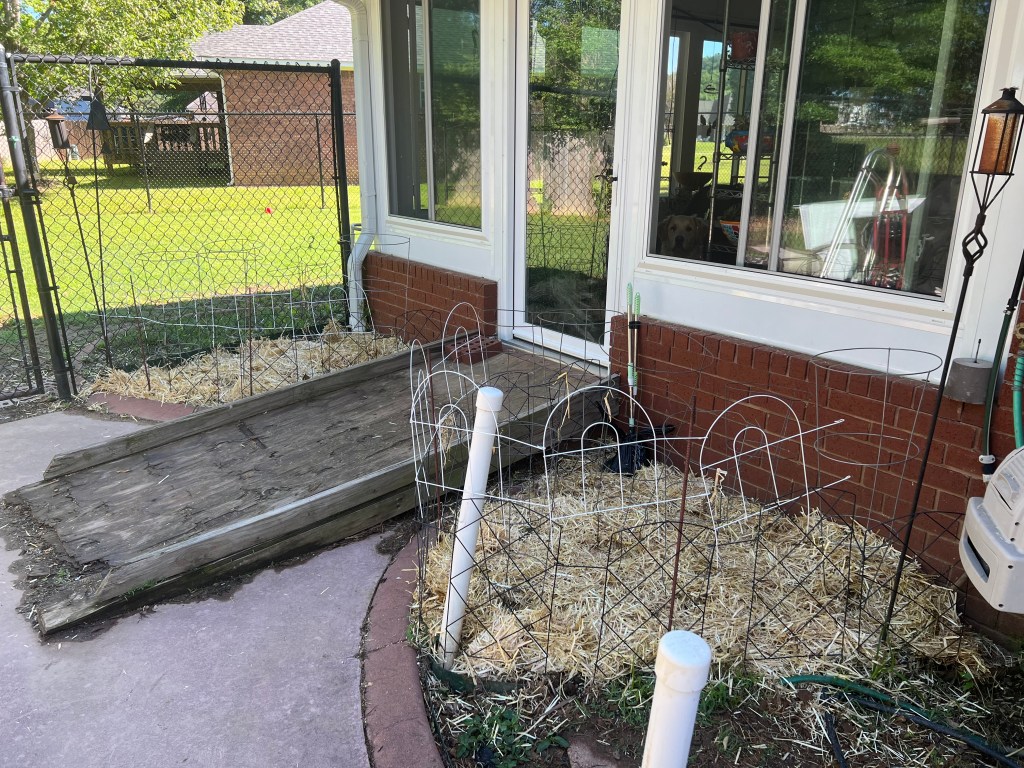
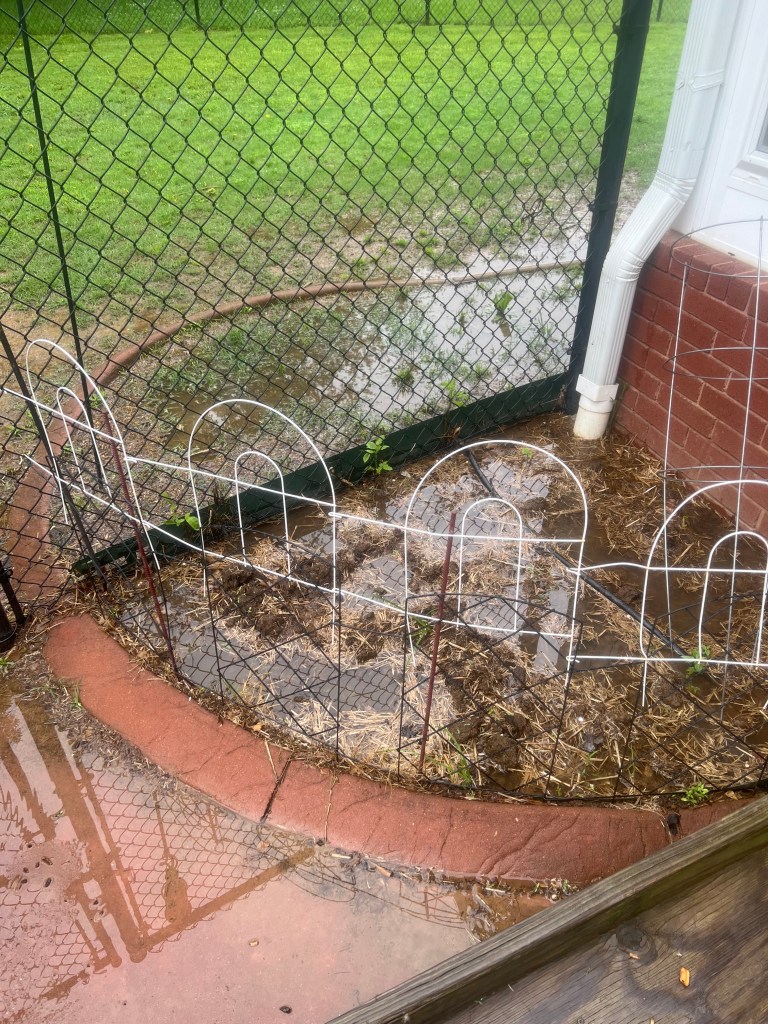
I have grown potatoes for the last two years.  The first year I only had one bed (five plants) but still harvested around 40 potatoes of various sizes.  Last year I put in the second bed with five more plants (10 total) with great expectations.  I also added Yukon Gold to the Russet I grew the first year.  I had cleaned out a spot on each side of our patio door and had caged and mulched them with straw.  For whatever reason, they all grew great tops, but the potatoes were either mushy or nonexistent.  I was determined to have a good potato crop this year and prepared my beds yearly.  I weeded the beds, turned over the top 6 inches (15 cm) of soil, and mixed a bag of compost and manure in each of the beds.  Loki had been getting into the beds, so I fenced them (and then added a higher fence) to try and keep him out.  The problem was, I could not find any seed potatoes even though I had been looking at outlets near me for several months.  This might have turned out to be a good thing as the weekend rain completely submerged both beds in water.  Today I was determined to find enough seed potatoes to plant 10 hills in those (now) drained beds.  My preference is the yellow flesh, taste, and mash-ability of the Yukon Gold.

When I looked online, I found the Yukon Gold (Solanum tuberosumis) a large cultivar of potato most distinctly characterized by its thin, smooth, eye-free skin and yellow-tinged flesh. This potato was developed in the 1960’s by Garnet Johnston in Guelph, Ontario, Canada, with the help of Geoff Rowberry at the University of Guelph.  The official cross bred strain was made in 1966 and ‘Yukon Gold’ was released onto the market in 1980.  The early name for the new cultivar was “Yukon”, for the Yukon River involved in the Klondike Gold Rush in Northern Canada.  “Gold” was later added to describe the potatoes’ color and appearance.  Johnston developed and brought 15 other potato varieties to market while at the Ontario Agriculture College lab.  A University publication states that “Yukon Gold was the first Canadian-bred potato variety to be promoted, packaged and marketed with its name right on the pack”.  The cultivar is resistant to bruising and does not sprout a lot, so it has good dormancy.  If potatoes are stored correctly, they will not lose a lot of moisture compared to other cultivars.  This seems like a good selection for my sustainable garden.

I checked online one last time and was again stymied in my potato quest.  There were several locations that had potatoes in a town 25 miles (40 km) away, but all the local outlets listed them “sold out”.  I decided to make one last try at the co-op before I drove into town.  That’s when I saw two bushel baskets with signs saying, “Close Out”.  One was an unidentified cultivar, and the other was the Yukon Gold I was seeking.  I selected ten of the smaller potatoes with prominent budding eyes and took the bag inside to the register.  I mentioned how I had been looking for seed potatoes and was not finding any.  The man told me they had gotten 2 tons (0.002 kt) in January, and these were the last of them.  When he saw how few potatoes were in my sack, he gave them to me for free and even told me to get more if I wanted.  I went back to the basket and picked out a couple more.

THOUGHTS:  While Yukon Gold are good storage potatoes, I also found they are susceptible to seed decay, blackleg, early blight, late blight, early dying, potato virus (PVY), soft rot, dry rot, leak, pink rot, silver scurf, and black scurf.  I will have to see if they were a good choice for sustainability.  While most plant seed potatoes in late winter (I could not find them), they can also be grown from seeds harvested from the potato flowers.  If you use seeds you need to start them indoors and then transplant them once the temps warm up.  If you use potatoes, you cannot eat all of last years’ crop.  I am not sure I would be good at either.  I am still on that learning curve.  Act for all.  Change is coming and it starts with you.
Earwig

May 03, 2024

On rare occasions I have found a small bug called an earwig crawling on the wall in our house.  I say this as while scrolling my Edge start page I saw a segment that asked if earwigs are dangerous to humans.  I was intrigued (which is why the article was there) and clicked to find out.  The site said the earwig gets its name from an old European myth that says that the bugs crawl into people’s ears and tunnel into their brains while they sleep, causing fever and insanity.  Other versions of the myth say they crawl into human ears to lay their eggs, and the hatchlings then tunnel their way into the brain.  The term earwig is derived from Old English word “ēare,” which means ear, and “wicga,” which means insect.  There is no scientific basis for claims about an earwig seeking out human ears and causing insanity or other damage.  However, emergency rooms do see patients with a bug in their ear, so the presence of any small bug in the ear canal is not unique to the earwig.  When an earwig is found in a person’s ear, it is likely it has wandered there by chance.  While it does not bite, the earwig can use its pincers to pinch if it is picked up and disturbed.  The earwig is mostly harmless to people.

When I looked online, I found the European earwig (Forficula auricularia) or common earwig is an omnivorous (eats plants and animals) insect belonging to the family Forficulidae.  The common name (actually) comes from the look of the hindwings which resemble a human ear when unfolded.  The species name (auricularia) is a specific reference to this feature.  The earwig is a pincher bug that ranges in size from one-fourth to 1 inch (0.6 to 2.5 cm).  It has six legs and an antenna that measures about half its size.  The earwig is reddish-brown in color with a flattened elongated body and slender beaded antennae with a pair of pincers (forceps) at the tip of the flexible abdomen.  While both sexes have pincers, in males they are large and curved, while in females they are straight.  Nymphs are similar to adults in appearance, though their wings are either absent or small.  The European earwig, which is the most common variety, was brought to North America from Europe around 1907 and rapidly spread across the US.  The insect survives in a variety of environments and is a common household pest because they tend to invade homes and consume pantry foods.

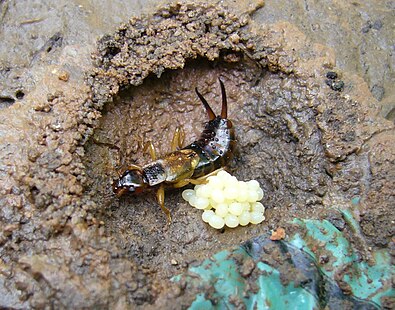
Common earwig females typically show maternal care through guarding and tending to their eggs and nymphs.  The female cares for her young by shifting the eggs and continuously cleaning them with her mouth and forceps to avoid fungal growth and pathogens.  She protects the eggs by staying close to the nest, fiercely defending against predators, applying chemical protection against drying (desiccation) through egg grooming, and relocating the entire clutch under stress.  After the eggs hatch the mother continues to care for the nymphs and provides food and protection until they reach maturity (one month).  In many species, kin bias prevents parents from investing care and energy for foreign offspring to allow them to invest in their own offspring and ensuring their own genes are passed on.  Common earwig mothers will not eliminate foreign eggs and treat them as her own.  This is thought to be a result of the family specific bouquet of cuticular hydrocarbons she applies to the surface of the eggs.  If it smells like me, it must be cared for like mine.

THOUGHTS:  While maternal care dramatically increases the survival and development of the young earwig, it can be costly.  The relationship between parents and offspring is shaped by an intersection of selfish and altruistic tendencies that reflect a compromise of evolutionary interests.  Researchers have found that in groups, selfish individuals beat altruistic individuals, but groups of altruistic individuals beat groups of selfish individuals.  That means we are stronger when we work together to support others than when we try to only take care of ourselves.  Act for all.  Change is coming and it starts with you.
Zakāh

May 02, 2024

On the back side of the front section of today’s local newspaper was an article on Islamic charity used to address climate concerns.  The charity comes from Zakāh, or the third of the five pillars of Islam.  Zakāh means “to purify”, “to develop”, and “cause to grow”, and is the amount of money every adult Muslim (male or female) who is “mentally stable, free, and financially able”, has to pay to support the destitute, the working poor, those unable to pay off debts, stranded travelers, and others in need.  Religious leaders in Bangladesh are trying to harness the generosity of Muslims around the world to help fight climate change.  Bangladesh alone has the potential to raise close to US$9.8 billion.  The country needs about US$9 billion a year to support climate adaptation.  Most provide zakāh by handing out clothes to family members or the neighborhood poor which has limited long-term impact on their lives.  Zakir H Khan, chief executive of Change Initiative, has studied the potential for Islamic charity to pool resources in order “to transform the lives of climate survivors.”

When I looked online, I found zakāh (also alms) is a religious form to donate money, food, or other material goods to people living in poverty and is often considered an act of charity.  In Buddhism, this is called “dāna” and it is one of the three elements of the path of practice formulated by Buddha for laypeople.  The giving of alms is the beginning of one’s journey to Nirvana.  In Judaism, tzedakah (literally “righteousness” but commonly “charity”), refers to the religious obligation to do what is right and just.  Tzedakah, prayer, and repentance, are regarded as ameliorating bad acts.  Christianity says giving alms is viewed as an act of charity and an expression of love and care for the poor and was understood as an act of love for God.  Nearly all Christian denominations have money donated to support financial needs and ministry to the less fortunate.  In Hinduism, dāna is an ancient concept of alms dating to the Vedic period (oldest) of Hinduism.  Dāna is defined as any act of giving what is yours to a recipient without expecting any return.  While dāna is typically given to one person or family, Hinduism also considers charity or giving aimed at public benefit, which is called utsarga.  This giving aims at larger projects such as building a rest house, school, investing in drinking water or an irrigation well, planting trees, and building care facilities, among others.

The article identified Wateraid as an international nongovernmental organization which uses the latter concept for zakāh to focus on water, sanitation, and hygiene and uses Islamic charitable donations to help salinity-affected communities in the Global South that have large Muslim populations such as Bangladesh, Pakistan, and Mali.  Wateraid focuses on girls and young women whose needs are often neglected.  Religious scholars agree on the use of zakāh to combat climate change.  This year Indonesia’s council of religious scholars issued rulings on how to use these funds to build water facilities or endow trusts with land or money to plant forests.  While there have been debates on the legitimacy of its use, scholars and financial experts are joining on the acceptability of the practice.  Zakāh can only be used to help poor Muslims, but other forms of voluntary alms (sadaqua) can support people of any faith.  Technology is going to be the key for every stage of faith-based financing and organizations are raising donations online. 

THOUGHTS:  All of the world’s major religions extoll the need to provide aid to the poor and the underserved.  Whether it is called zakāh, dāna, tzedakah, alms, or utsarga, faith-based giving has the potential to make a huge difference in fighting the effects of climate change.  Those at the lower end of the economic spectrum do not have the capacity to mitigate these effects on their own.  Call it what you will, donations are needed to affect change.  Act for all.  Change is coming and it starts with you.

Saddlebags

April 29, 2024

We had off and on again rain yesterday that was heavy at times, so I decided to check the vegetables that are now in the ground.  I was surprised as I approached my raised beds to see all three of my melons (a Citrullus lanatus watermelon and two Cucumis melo cantaloupe) had sprouted and were about 1 inch (2.5 cm) above the ground.  I have not had good luck growing these in the past and had hoped the beds would make a difference.  My seeded tomatoes are still struggling for the most part and I will need to replace one of my Cherokee purples and another red beefsteak (both Solanum lycopersicum varieties).  On my way past the pool, I noticed what I thought was another dragonfly molt (exuviae).  After checking on my vegetables, I came back and gave the motionless blob a closer inspection.  Rather than being a discarded exoskeleton it was a live dragonfly trying to dry out after the rain.  Now I believe I can discern the species of the molts I saw last week.  This adult dragonfly is a black saddlebags.      

When I looked online, I found the black saddlebags (Tramea lacerata) is a species of skimmer dragonfly found throughout North America.  The skimmers or perchers and their relatives form the Libellulidae, the largest dragonfly family in the world.  Their common classification as skimmers comes as they tend to fly low over the water, and perchers comes as they spend most of their time perched above the water and only fly to get to the next spot, to catch food, or to defend territory.  The saddlebags have distinctive wings with characteristic black blotches at their proximal (toward the body) ends which make the dragonfly look as though it is wearing saddlebags.  The species is a relatively large dragonfly at about 2 inches (5 cm) in length.  The body is thin and black, and the female may have lighter spotting or mottling dorsally.  The head is much wider than the rest of the body and is dark brown in color.  The insect can be found near bodies of stagnant water, such as ponds and ditches (or my pool/pond).  The larvae hatch and eat anything they can catch that is smaller than themselves.  Adults of the species (especially males) congregate in swarms and some populations undertake migrations.

There are over 60 species of mosquitoes in Arkansas, even though not all of them transmit diseases.  The species commonly associated with disease transmission in Arkansas include the Southern house mosquito (Culex quinquefasciatus), the Asian tiger mosquito (Aedes albopictus), and the Yellow fever mosquito (Aedes aegypti).  Mosquitoes breed in standing water, and they can lay their eggs in as little as a teaspoon of water.  Common breeding sites include stagnant ponds, bird baths, and gutters.  Female mosquitoes lay their eggs on the surface of the water, the larvae hatch within a few days, and the entire mosquito life cycle can be as short as 7-10 days.  I try to be cautious about leaving standing water on the patio or in my garden but have never worried about my pool/pond. 

Both the larvae and adult forms of the saddlebags are efficient mosquito predators and are helpful insects to control my water.  I also noticed this morning the gray tree frogs (Hyla versicolor) eggs have hatched, and the water is teaming with tadpoles.  Mama’s got to eat.

THOUGHTS:  I identified the black saddlebags using my google app.  While this app is generally effective, it also provides some off the wall identifications.  The pictures under the identification showed sets of black motorcycle saddlebags.  I ran the ID again and returned the same result.  Then I scrolled down and saw it included pictures and explanation for the dragonfly as well.  There are times when we “know” the experts are wrong and dismiss their advice.  While mistakes occur, often we just need to dig deeper into what is said or meant.  An educated opinion is more reliable than a best guess.  Act for all.  Change is coming and it starts with you.
Behavior

April 27, 2024

One of the things I enjoy about being outside in my garden is watching the antics of the animals I encounter.  As I walked out my front door to check my hügelkultur beds I noticed an American Robin (Turdus migratorius) pull a six inch (15 cm) earthworm (Lumbricus terrestris) from the front lawn.  It had just rained, and the robin was taking advantage of the worms coming to the surface.  I startled the bird, and he flew off, dropping the worm in the mulch around the beds used to keep the weeds out.  The bird tried to regrip the worm but flew off in frustration as I approached.  After I passed the worm, the robin landed a little way off and began to walk sideways toward the worm, always keeping one eye on me.  I stood still and waited to see how far he would come.  Over the next minute the bird went back and forth, always advancing.  I stood still as I continued to watch to see how close he would come.  He seemed to reach his limit at about 15 feet (4.5 m) away and still 5 feet (1.5) m) from the worm and flew away to another part of the yard.  His behavior seemed to say it was easier to get a new worm than to risk the unknown behavior of the human watching him. 

When I looked online, I found animal behavior is the way animals interact with other members of their species, with organisms of other species, and with their environment.  Behavior can also be narrowly defined as a change in the activity of an organism in response to a stimulus, an external or internal cue, or a combination of cues.  Both external and internal stimuli can cause animal behavior.  External information could be threats from other animals, sounds, smells, or weather, and internal information could be hunger or fear.  An understanding of how genes and the environment come together to shape animal behavior is also an important basis for the field.  While genes capture the evolutionary responses of prior populations to selection on behavior, environmental flexibility gives animals the opportunity to adjust to changes during their own lifetime.  Scientists are drawn to the study of animal behavior for a variety of reasons ranging from how it sheds light on human behavior to environmental concerns.  Understanding why some animals help others at the potential cost of their own survival and reproduction gives us insight into their behavior but could potentially help us understand the human ideas of altruism and sacrifice.

Another observation is how the gray tree frogs (Hyla versicolor) have been performing their mating calls in the trees around our pool/pond every night.  One of frogs came down from the trees and has taken up residence under the patio chair cushions.  I lifted the pad on one of the chairs and was surprised to see the frog motionless on the seat.  I do not know how to differentiate between a male and female frog but assumed this was a female who came from the trees to lay her eggs in the water.  I left her there but was curious to see if she would still be there the next day.  She was not but moved to the next chair.  I again covered her with the pad but set it on its side to drain the rain.  When I came out later the frog had moved up inside the pad and was crouching on the back of the chair.  I suppose she felt this was better protection.  Regardless, she is not getting any closer to the trees.

THOUGHTS:  I was always told earthworms escape to the surface to keep from drowning.  Then I learned they can breathe underwater and will survive being submerged for over two weeks.  Since drowning is a myth, why do they surface?  The most likely explanation is that it is easier to travel across the surface to find food or a mate.  They need to stay moist, so this is their best opportunity on the surface.  Birds exploit this behavior by mimicking rain by hitting the ground with their feet to encourage earthworms to rise and be eaten.  Behavior can be inherited or learned by animals.  Humans are not confined by the behavior of our culture or even families.  We can choose to change for the good of our species and environment.  Act for all.  Change is coming and it starts with you.
Germination

April 24, 2024

It has been an up and down week as far as my garden is concerned.  I was overjoyed to finally get the tomatoes and peppers into the ground on Sunday.  I spent the entire afternoon working on the project.  I had four varieties of peppers (Capsicum annuum) with 2 jalapenos along with one each of green, yellow, and red bell peppers.  There were four varieties of tomato (Solanum lycopersicum) with 4 San Marzano (for sauce), 4 beefsteak (for Pico), 2 Cherokee purple (for eating), and 2 Juliet grape (for salad) tomatoes.  I also used a variety of planting methods.  The tomatoes were planted in growbags (5), new self-watering containers (2), my old containers (4).  The peppers were in two formats, with growbags (2) and old containers (4).  Lastly, I added cilantro in a growbag (1) to use in my various tomato concoctions.  I hoped these different varieties and techniques would help me decide what to plant next year.  I was feeling pretty good about my work and mulched and watered all the plants in for the night.  When I got up the next morning, I noticed Loki had gotten into the containers and destroyed four of the tomatoes.  I had grown most of the plants through germination.

When I looked online, I found Germination usually refers to the growth of a plant contained within a seed resulting in the formation of the seedling.  The seed of a vascular plant (land plants that have lignified tissues (xylem) for conducting water and minerals throughout the plant) is a small package produced in a fruit or cone after the union of male and female reproductive cells.  All fully developed seeds contain an embryo and, in most plant species some store of food reserves, wrapped in a seed coat.  Dormant seeds are viable seeds that require specific internal or environmental stimuli to germinate and resume growth.  Seed germination depends on both internal and external conditions. The most important external factors for any germination are the right temperature, water, air, and sometimes light or darkness.  Different plants require different variables for germination, and these are often closely linked to the ecological conditions of a plant’s natural habitat.

I had spent time and energy bringing my plants to germination, so I felt it was worth the time to spend half a day researching how to Loki-proof my tomatoes and peppers.  It turned out there are two ways the pundits said work best.  One is to put a fence around the plants and the second is to use smells (like cayenne pepper and vinegar) to keep him away.  I put up a fence to keep Loki bask from the plants and then sprayed vinegar in the soil around the small plants.  I decided to wait on the cayenne as it was forecast to rain and that would dilute the effect.  The next morning Melissa watched as Loki again got into the containers.  She also noticed he was not attracted by the plants themselves.  It was the small white tags I used to mark what was being grown (Loki is a chewer).  Melissa moved the tags to the rear of the containers and beyond his reach through the fence.  This will no doubt become a constant vigil.      

THOUGHTS:  After redoing the tomatoes and peppers I got the rest of my plants in the hügelkultur beds yesterday.  These were a mixture of plants grown from germination and other seeds planted directly into the soil.  While I have planted most of my beds, I need to soak the corn seed overnight to help germination of the “three sisters”.  I have checked all of the nurseries in my area, and none are yet selling potatoes.  I made a big commitment this year in preparing the beds, readying the seed for germination, and planning placement in the beds.  There is still the watering and weeding, but I am again hopeful for significant crops.  The more time I spend the more I realize how much I still need to learn.  Like most things we do, to do it well takes a lifetime of learning.  Act for all.  Change is coming and it starts with you.
Earth Day

April 22, 2024

I have been waiting to plant the rest of my garden as there were still some cold nights forecast after the April 15 “final frost”.  While none of these nights have produced frost here in the Valley, temperatures have gotten down to the mid 30’sF (1 to 2C).  I did not want to risk the fragile seed starters growing on the greenhouse porch and the packets of the squash, beans, peas, and leafy vegetables all suggested planting them after the ground temperatures reached 65 to 70F (18 to 21C).  I had also purchased several plants that were not included in the 100 pack of survival vegetables Melissa had given me.  While the packets did include a variety of heirloom peppers and tomatoes, there were no cherry varieties (Solanum lycopersicumor) or jalapenos (Capsicum annuum).  I also added cilantro (Coriandrum sativumto) to make sure I was ready for Pico and guacamole season.  I thought it appropriate that the ground and air temps were finally cooperating on Earth Day.

When I looked online, I found Earth Day is an annual event on April 22 to demonstrate support for environmental protection.  I mentioned in a blog several years ago that the first Earth Day was held on April 22, 1970.  It now embraces a range of global events coordinated by EARTHDAY.ORG (formerly Earth Day Network) that includes 1 billion people in more than 193 countries.  The event was first conceived as an environmental “teach-in”, in homage to the debates being held on college campuses to discuss the war in Vietnam.  When Madison Avenue advertising giant Julien Koenig stopped by the national offices to volunteer to help, Executive Director Denis Hayes confided to him that the “teach-in” moniker was not working and asked whether Koenig had any ideas.  The result was Earth Day, and the date was changed from the first day of Spring (March 21) to April 22 (Koenig’s birthday).  Earth Day 2020 marked the event’s 50th anniversary with over 100 million people around the world in what is referred to as the largest online mass mobilization in history.  The official theme for 2024 is “Planet vs. Plastics”.

While it was not planted in honor of Earth Day, I planted an avocado (Persea americana) tree yesterday to replace the one which died.  This is part of my dwarf 3-tree orchard.  The lime (Citrus aurantiifolia) tree is doing well and sprouting new growth.  The lemon (Citrus limon) tree has flowered and what appear to be tiny lemons are beginning to form.  The avocado formed one tiny avocado and then immediately lost all of its leaves and the branches began to die.  I sent a picture of the tree to the website, and they shipped me a new tree almost immediately.  I removed the dead tree and placed the new one in the container.  While it is wilting from the transplanting process I am hoping for the best.  Most events around Earth Day focus on planting trees and removing plastic waste from local ecosystems, but it seems like planting sustainable vegetables to lower my own carbon footprint coincides with that effort.  Now I need to get on with planting my garden.    

THOUGHTS:  My sister and brother-in-law took a trip to New Zealand last year and sent back some amazing photos of culture and scenery.  She also sent back a museum display that showed all of the plastics that had been found in the stomach of a dead albatross.  It had starved to death.  This is a fitting “poster child” for the 2024 theme of Earth Day, “Planet vs. Plastics”.  While micro-plastics are ingested by many fish and their predators, birds can be particularly vulnerable as the brightly colored larger pieces appear to be edible.  They do not digest or pass through.  Earth Day is not restricted to April 22nd.  Care for our environment needs to happen every day of the year.  Reduce, Reuse, Recycle.

Dragonfly

April 20, 2024

There has been a lot of chatter about the double cicada hatch that begins this month.  The 17-year “Northern Illinois Brood” (Brood XIII) and the 13-year “Great Southern Brood” (Brood XIX) are emerging during the same year for the first time in 221 years.  The hatch will span as far east as North Carolina and as far west as Missouri, as far south as Louisiana and as far north as Wisconsin, although Michigan will not be as buggy as other states.  The cicada larva constructs an exit tunnel out of the ground and crawls up the sides of buildings and trees to gain height for their flight.  They then molt (shed their skins) on a nearby plant for the last time and emerge as adults. The abandoned exoskeletons (exuviae) remain, still clinging to the bark of the tree.  While I have seen several exoskeletons the full hatch has yet to occur.  When I went out to my pool/pond yesterday I was surprised to find three exuviae clinging to the tarp covering the water that were obviously not cicada.  These were instead the molt of a species of dragonfly.

When I looked online, I found a dragonfly is a flying insect belonging to the infraorder Anisoptera below the order Odonata.  The infraorder Anisoptera comes from Greek anisos (“unequal”) and pteron (“wing”) because the hindwings of a dragonfly are broader than their forewings.  Of the 3,000 known living species most are tropical, with fewer species in temperate regions.  An adult dragonfly is characterized by a pair of large, multifaceted, compound eyes, two pairs of strong, transparent wings, and an elongated body.  Many have brilliant iridescent or metallic colors produced by structural coloration, making them conspicuous in flight.  A dragonfly is a predatory insect, both in their aquatic nymphal stage (called “naiads”) and as adults.  Although some species live up to five years as nymphs, most have an adult lifespan in the order of five weeks or less, and some survive for only a few days.  They are fast, agile fliers capable of highly accurate aerial ambush, sometimes migrating across oceans, and often live near water.  The loss of wetland habitat threatens dragonfly populations around the world.  My three individuals had completed their larval stage in my pool, then crawled out of the water to molt and dry in the sun.  Only their exuviae remained clinging to the tarp.

The adult dragonfly hunts on the wing using their exceptionally eyesight and strong, agile flight.  They are almost exclusively carnivorous, eating a wide variety of insects ranging from small midges and mosquitoes to butterflies, moths, damselflies, and smaller dragonflies.  A large prey is subdued by a bite to the head and then carried to a perch.  The wings are discarded, and the prey is usually eaten headfirst.  A dragonfly may consume as much as a fifth of its body weight per day.  The nymphs are also voracious predators, eating most living things smaller than themselves.  Their staple diet is bloodworms and other insect larvae, but they also feed on tadpoles and small fish.  A few species, especially those that live in temporary waters, leave the water to feed on small arthropods at night.  Some species in the Anax genus have even been observed leaping out of the water to attack and kill full-grown tree frogs.  My 2 inch (5 cm) long individuals had been hidden in the pond.  The only way I discovered them was the exuviae left behind as they began their adult life.

THOUGHTS:  A dragonfly has been genetically modified with light-sensitive “steering neurons” in its nerve cord to create a cyborg-like “DragonflEye”.  The neurons contain genes like those in the eye to make them sensitive to light. Miniature sensors, a computer chip and a solar panel were fitted in a “backpack” over the insect’s thorax in front of its wings.  Light is sent down flexible light-pipes (optrodes) from the backpack into the nerve cord to give steering commands to the insect.  The result is a “micro-aerial vehicle that’s smaller, lighter and stealthier than anything else that’s manmade”.  And you thought AI was going to be a problem.  Act for all.  Change is coming and it starts with you.

Pikeminnow

April 19, 2024

My Edge browser page highlighted a story on a fisherman who earned a six-figure income for removing a problematic species of fish from the state’s waters.  Officials confirmed an Oregon angler taking part in the 2023 Northern Pikeminnow Sport-Reward Program, caught 10,755 pikeminnow during the five-month season and earned a total of US$107,800, the second highest in the programs history.  The top prize was recorded in 2016 in the amount of US$119,341, as reported by Field & Stream.  Northern pikeminnows are native to the region but can eat millions of young salmon and steelhead, according to the Oregon Department of Fish and Wildlife.  The bounty is administered by the Pacific States Marine Fisheries Commission (PSMFC) to help reduce the predator’s average size and limit the number of bigger and mature fish, allowing more juvenile salmon and steelhead to migrate to the ocean.

When I looked online, I found the northern pikeminnow (Ptychocheilus oregonensis), also known as the Columbia River dace, is a large member of the minnow family (Leuciscidae).  This freshwater fish is native to northwestern North America, ranging from the Nass River basin to the Columbia River basin.  Pikeminnows can live at least 11 years and grow to 35 inches (89 cm) and 15 pounds (6.8 kg).  The current International Game Fish Association all tackle world record for northern pikeminnow is 7 pounds 14 ounces (3.6 kg) from the Snake River near Almota, Washington.  While males reach sexual maturity in 3 to 5 years, the female matures at about six years.  A mature female can lay 30,000 eggs annually.  The pikeminnow diet consists of terrestrial insects, bottom (benthic) invertebrates, other fish, aquatic insects, and plant matter.  Pikeminnow are adept predators, and salmon smolts comprise a large part of their diets in the Columbia and Snake Rivers.  Pikeminnow populations flourished with the Columbia River hydropower system as reservoirs provide excellent habitat and give them an advantage over salmon and steelhead populations.  Data suggests the pikeminnow can eat up to 650,000 salmon fry annually.

Northern pikeminnow were of no interest commercially or to sport anglers until Washington and Oregon state fisheries agencies and the Bonneville Power Administration placed a bounty on them to reduce predation on scarce salmon stocks.  Now, pikeminnow season runs from May 1 through September 30 annually.  Fisher people are encouraged to catch larger pikeminnow from the Columbia and Snake rivers to turn in for rewards.  Anglers earn US$6 per fish for the first 25 caught, US$8 apiece for 26 to 200 fish caught, and US$10 per fish over 200.  Specific fish were even worth between $200 and $500 apiece, if they had ingested Passive Integrated Transponder (PIT) tags that researchers had implanted in the juvenile salmon population, the PSMFC explained.  The second- and third-place anglers in the 2023 program earned US$99,110 and US$62,530, respectively.  Officials with the Oregon Department of Fish and Wildlife estimate around 5.3 million northern pikeminnow have been removed from the Columbia and Snake Rivers since the program started in 1990.  Washington and Idaho operate similar programs.

THOUGHTS:  The Northern Pikeminnow is a frequent target among bounty fishers, but you can also eat them.  They contain healthy fats and nutrients and taste similar to cod, catfish, or whitefish.  Some anglers complain about its slightly unpleasant smell, oily texture, and the tinier bones that are time-consuming to remove.  While they are not a delicacy or a popular fish for anglers, they are edible and tend to take on whatever seasoning you add.  The fish is best while still fresh, without refrigeration or freezing.  If you cook it well and take time to remove the bones, you will have a more pleasant experience.  Bon Appetit!  Act for all.  Change is coming and it starts with you.