
Naloxone

January 10, 2024

We were driving through Oklahoma last week on the way to Wichita and stopped at one of the many rest areas along the interstate highway.  This was the kind that has a fast food restaurant on one side, a convenience market on the other, and shared restrooms in the middle.  I decided to stretch my legs and went inside to browse the snacks and odd state themed collectables these stops are known for.  The typical travel brochures were prominently placed just outside the restroom entrances, and next to them was a brightly colored vending machine.  At first, I could not figure out what was dispensed in the rows of boxes on display, but it was clear the product was the same for each box.  When I took a closer look I read, “Naloxone and Fentanyl test strips” and in larger letters, “SAVE LIVES”.   

When I looked online, I found the Centers for Disease Control and Prevention (CDC) estimated that more than 107,000 Americans died of drug overdoses in 2021, or a 15% increase from the previous record set in 2020.  This amounts to roughly one overdose death every 5 minutes.  In Oklahoma, the CDC’s estimates show the state saw an even greater rise in overdose deaths, or a 22% increase compared to the previous year.  The provisional count for overdose deaths in Oklahoma for the year ending December 2021 is predicted to be 923, compared with 755 the previous year.  Unintentional fentanyl overdose deaths in Oklahoma have also skyrocketed and reached almost 700 from April 2022 to April 2023.  The life-saving naloxone nasal spray is available over the counter at local pharmacies, but a package of two doses can cost almost US$45 causing many to wonder if the product can make it into the hands of those who need it.  As fentanyl overdose deaths rise, Oklahoma began a campaign to get free Narcan (naloxone) to anyone who needs it.  “Mothers and fathers are losing their children.  Children are losing their brothers and sisters,” said Dr. George Monks, former President of the Oklahoma State Medical Association. “So, we’ve got to get control of this situation.”

Six months after placing Naloxone vending machines across Oklahoma the state has dispensed more than 26,000 doses (13,000 boxes) and boosted awareness of fentanyl overdose.  Naloxone is an anti-overdose medication also known by the brand name Narcan.  Heath Hayes, communications chief for the Oklahoma Department of Mental Health and Substance Abuse Services (ODMHSAS), said only half of the state’s available vending machines have been placed so far.  Motorists will have access to free naloxone and fentanyl test strips at vending machines at seven of Oklahoma’s busiest turnpike travel centers under a partnership between the ODMHSAS and the Oklahoma Turnpike Authority OTA).  In addition to offering the machines at public locations on turnpikes, OTA also added Narcan and fentanyl test strips to the first aid kit of more than 350 agency maintenance and construction vehicles due to the potential for workers to possibly be exposed to these substances when working crash sites.  The department will place 40 vending machines in zip code locations where overdose prevalence in Oklahoma is high.  This the largest scale overdose initiative in the US. 

THOUGHTS:  Overdoses can be accidental or intentional.  An accidental overdose is the result of mistiming doses of medication, overconsumption of medication without knowing the danger, or using multiple substances at once.  Intentional overdoses are attempts at ending one’s life through the overuse of a substance.  More than four times as many people died from drug overdose in the US than from homicide, and 72% of those deaths are related to fentanyl and the majority of those are unintentional.  ODMHSAS has provided 213,528 Fentanyl test kits and 427,056 Naloxone doses to Oklahomans since 2021 in addition to the 13,067 boxes and 7,025 test strips in the vending machines.  During fiscal year 2022 Oklahoma’s overdose prevention funding was US$2,481,405.  This is a societal problem, not a legislative one.  Act for all.  Change is coming and it starts with you.

Dairy

January 09, 2024

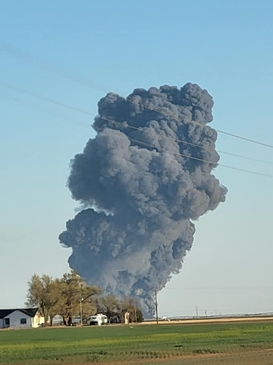
The front page of Sunday’s local newspaper ran a follow-up USA Today article about a disaster that happened on April 10, 2023.  The fire took place at the South Fork Dairy Farm about 10 miles south of Dimmitt, Texas.  The dairy was started by Eltje Frans Brand who immigrated from Netherlands in 1984.  He started a small dairy of 40 cows that grew to several dairies with over 1000 cows each.  Brand purchased the land for the Castro dairy in 2019 with a total of 640 acres (258 ha).  South Fork Dairy started with 8,000 cows in 2020 and then added 9,500 more the following year, bringing the total to 17,500 mostly Holstein and Jersey cows.  The fire killed all the approximately 17,500 cows at the dairy and injured one person.  The fire was ruled to have started in a vacuum truck used to suck up the manure and water waste in the cattle barn.  This was one of the deadliest fires involving animals, and the deadliest fire involving cattle in at least a decade.  The fire wiped out 3% of all dairy cattle in the state of Texas.

When I looked online, I found the South Fork Dairy Farm is a dairy production facility located in Castro County, Texas.  According to the 2021 Texas Annual Dairy Review, the county houses 30,000 cattle and is the second largest dairy-producer in the US, with more than 147,000,000 pounds (67,000,000 kg) of dairy produced in February 2023.  The South Fork facility was an area of more than 2,100,000 square feet (200,000 m2).  The Texas Commission on Environmental Quality (TCEQ) in 2019 had authorized the South Fork Dairy Farm to double the amount of cattle present at their facility (from 11,500 to 23,000), and to allow the dairy to increase manure production by 50%.  South Fork Dairy was investing in the latest technology and was operating at a scale that dwarfed the area’s other large dairies.  The dairy was in the process of building a biogas digester to process the cow manure currently being stored in outdoor lagoons.

The biogas digester proposed for the South Fork Dairy is touted as a win for the environment.  The methane gases produced by the waste lagoons are captured and converted into a renewable source of energy for truck engines and power plants.  The EPA listed 343 digestors across the US as of January 2023, another 86 in construction, and 290 are located on dairy farms.  The digesters cost from US$20 million to US$70 million to build and incentivize large farms to increase their herd size to sell the waste byproduct.  While a dairy will not get rich off the digestor projects, it provides a stable income stream to offset the volatile milk prices.  Oil and gas energy giants are pouring billions of dollars into these new plants in return for a percentage of the profits.  Shortly after the fire, TCEQ granted South Fork approval to install the digester.  Another state agency allowed the dairy to expand the herd to 32,000 cows, making it one of the largest dairies in Texas.  Hopefully, there will not be another fire.

THOUGHTS:  I visited a friend in high school whose dad operated a 100 cow dairy in Wisconsin.  The cows spent most of the winter inside the barn due to the extreme cold.  I had worked on a smaller dairy with a parlor (four cows milked at a time) and was interested to see the difference milking in a barn.  The barn had a trough with a conveyor system that moved the solid and liquid waste outside to a holding bin which was later spread across the field that grew feed for the cows.  My job was to stand outside and make sure the conveyor was working correctly.  I still remember the horrific stench as the waste slopped into the bin.  I cannot image how much waste (and the smell) goes into the lagoons.  The digestor uses a sustainable source (cows) to produce energy and cuts down on the smell.  This is a win for the environment and people living on surrounding farms.  Act for all.  Change is coming and it starts with you.
Perspective

January 08, 2024

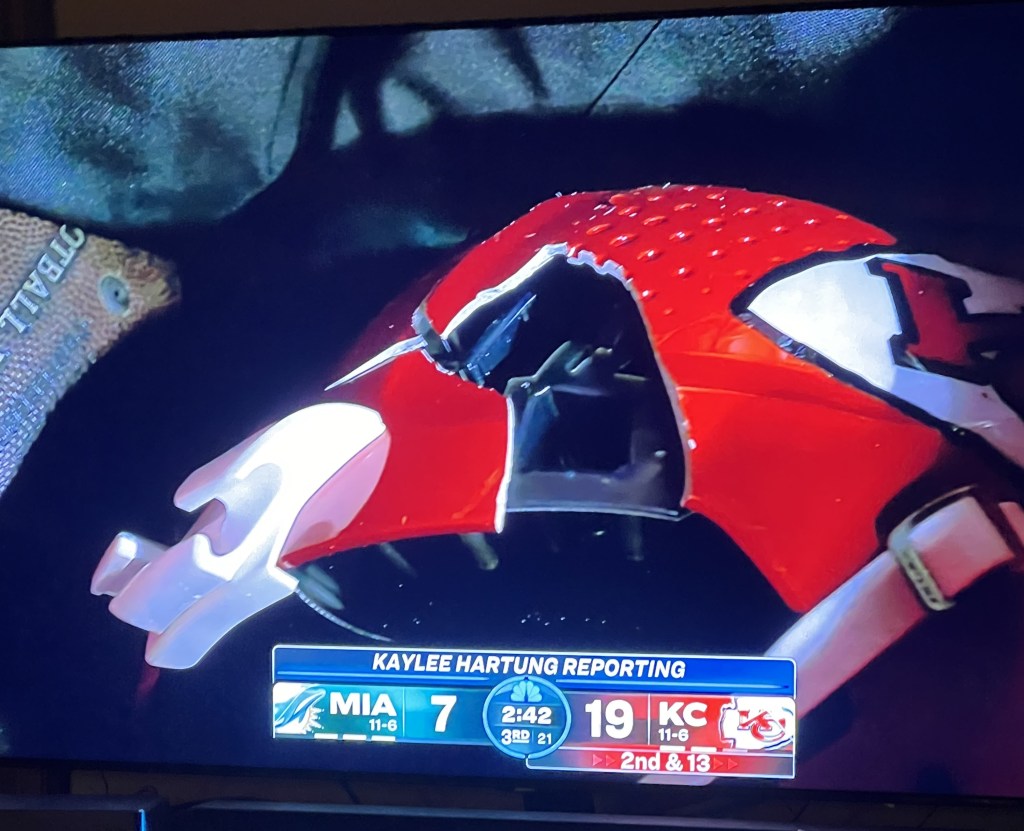
My family gathered at the home of my brother this weekend to celebrate one of the life changes (birth, marriage, death) that bring families together.  After a meal of homemade pizza (my brother’s specialty) we retired to the living room to watch the end of Saturday night’s NFL game.  As the conversation came up the volume on the TV came down.  Our talk began casually enough (life and what was going on with family) and then moved to memories of growing up.  The way my family participates in these conversations is by sharing personal stories of the past.  For me, this tradition began as I sat around the table at my grandparents’ house and listened to my aunts and uncles tell their stories of growing up.  After my grandparents, the venue often shifted to my parent’s house as my sibs would sit and tell stories.  Both parents are now gone, but we continue the tradition at some point when we all come together at other locations.  What I like about these conversations is the back and forth as each remembers the story in different ways.  This will result in additions and different understandings (but never corrections) to the stories that have been told for decades.  As we talked, I realized the additions often came from the perspective held by each participant in the same event.

When I looked online, I found the Britannica Dictionary definition of perspective has four parts.  If we start at the last (least to most common understanding), the fourth definition of perspective refers to its understanding in the world of art as “a way of showing depth or distance in a painting or drawing by making the objects that are far away smaller and making the objects that are closer to the viewer larger”.  The third was similar, with perspective as, “the angle or direction that a person uses to look at an object”.  Second was understanding how perspective is, “a condition in which a person knows which things are important and does not worry or think about unimportant things”.  The first definition is how most English language users understand the word.  Perspective is “a way of thinking about and understanding something” and can refer to “a particular issue or life in general”.   The example Britanica used to illustrate this definition was, “The story is told from the perspective of a teenage boy in the 1940s.”  While all four definitions provided nuanced understandings of the word, understanding perspective as a “way of thinking” is what resonates with me.

The different perspective my family brought to our stories comes from our memory, or the brain’s ability to acquire, store, and recover information from various experiences.  These memories change over time as the information may not be stored properly, or we may forget the details.  What we remember is generally associated with the happy times in our life rather than negative experiences.  Those who suffer from anxiety or post-traumatic stress disorder find it difficult to overcome bad memories no matter how hard they try.  Researchers believe the key to knowing how we remember starts with pinpointing what we remember and why.  Understanding our memories and why we recall some events over others can help us better understand ourselves and the world.  The positive events and how they are stored as memories are directly tied to our perspective.

THOUGHTS:  It is interesting to listen to a story about yourself told by another and hear how different their perspective is on what occurred.  I have also listened to old stories and noticed they change over time.  These changes may be from loss of memory, or from an unconscious (conscious?) desire to tell a better story.  I rarely make corrections and the new perspective may become how the event is remembered by others.  Commentators now “fact check” after a political speech to determine the accuracy of any statements.  Many statements often contain a basis in fact but are out of context.  An unknown author said, “Statistics can be made to prove anything – even the truth.”  The “truth” depends on your perspective.  Act for all.  Change is coming and it starts with you.
Kimberlite

January 06, 2024

Trending news on Microsoft Bing this week reported how diamonds fall from the sky during volcanic eruptions.  These “fountains of diamonds” could be sent shooting up to the surface of the Earth as part of a major geological event.  The breakup of supercontinents brings the diamonds up from deep in the earth’s core according to research by Thomas Gernon, professor of Earth and climate science at the University of Southampton, UK.  The pulling apart of the tectonic plates leads to rock from the upper mantle and lower crust to mix and flow against each other, causing instability and leading to eruptions.  The plate activity also leads to rock, water, and carbon dioxide combining with minerals (diamonds) which all mix together to create explosive rushes towards the Earth’s surface.  Gernon hopes the work could help in the search for unexplored diamond deposits.  These fountains of diamonds can erupt from the Earth’s center in explosive eruptions called kimberlites.

When I looked online, I found kimberlite is an igneous rock and a rare variant of peridotite that is commonly known to be the main host matrix for diamonds.  The rock is named after the town of Kimberley, South Africa.  The discovery of an 83.5 carat (16.70 g) diamond called the Star of South Africa in 1869 spawned a diamond rush and the digging of the open pit mine called the Big Hole.  Kimberlite occurs in the Earth’s crust in vertical structures known as kimberlite pipes, in igneous dikes, and as horizontal sills.  Kimberlite pipes are the most important source of mined diamonds today.  The consensus about kimberlites is they are formed deep within the mantle at depths between 93 to 280 miles (150 to 450 km), potentially from anomalously enriched exotic mantle compositions.  They erupt rapidly and violently and are often accompanied with considerable carbon dioxide and other volatile components.  It is this depth of melting and generation that makes kimberlites prone to hosting diamond crystals.

Despite their relative rarity, kimberlites have attracted attention because they serve as a carrier of diamonds and garnet peridotite mantle rock fragments (country rock) that become enveloped in a larger rock during the latter’s development and solidification (xenoliths) to the Earth’s surface.  Diamonds form at around 93 miles (150 kilometers) down in the Earth’s crust and are brought up to the surface very quickly in these eruptions.  Kimberlite eruptions can travel up to 82.6 miles (133 km) per hour and create enormous explosions on the surface, according to research published in Nature.  Gernon and his team looked at these kimberlites and their research found that eruptions regularly take place around 22 million to 30 million years after the plates begin to pull apart.  One of the cases pointed to in their research came around 25 million years after the supercontinent Gondwana began breaking up in what is now Africa and South America.  According to Gernon, “The diamonds have been sat at the base of the continents for hundreds of millions or even billions of years.  There must be some stimulus that just drives them suddenly because these eruptions . . . are powerful”.

THOUGHTS:  Gernon likened the kimberlite eruptions to shaking up a soda bottle.  For some kids (not me, of course) it was a funny joke to shake up a bottle of soda and leave it for an unsuspecting person.  Carbonated drinks are made by forcing carbon gas (CO2) into a beverage under pressure.  Opening the bottle results in fizzing as the pressure that has kept the carbon dissolved is released.  The pressure found deep beneath the earth results in the formation of diamonds and the kimberlite eruptions.  I would rather find diamonds than be sprayed by soda.  Act for all.  Change is coming and it starts with you.

Centepede

January 05, 2024

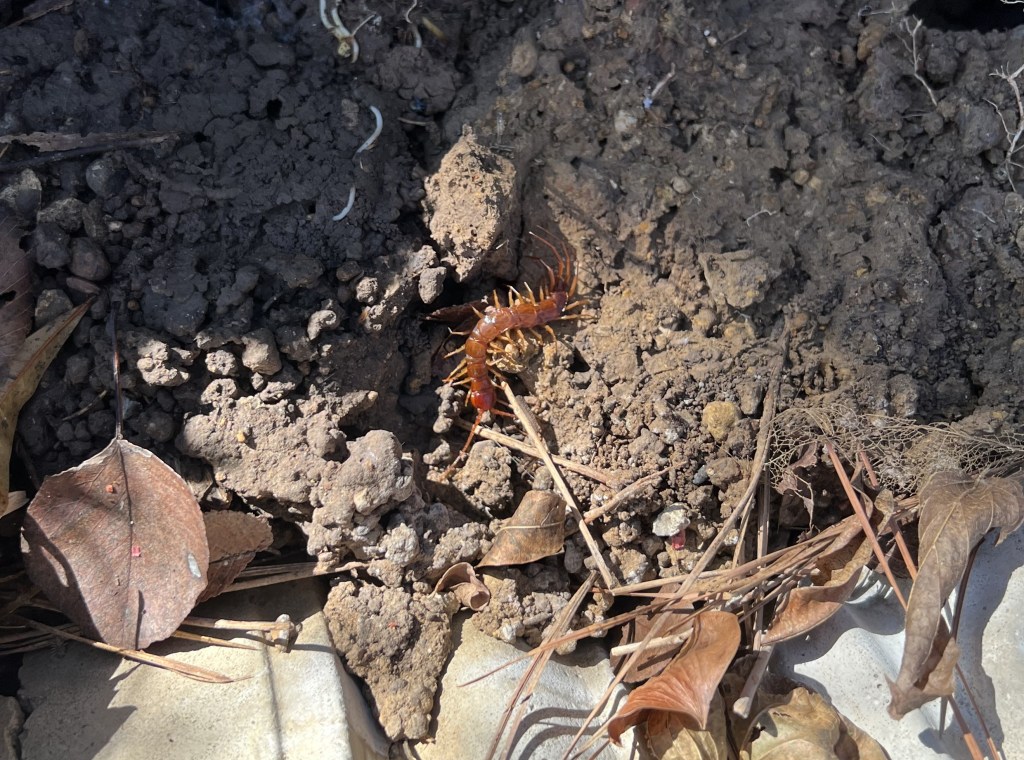
Melissa and I have been talking about installing a chain link fence along our back property line to provide more room for the dogs to play.  Melissa prefers a chain link fence over cedar slats as they are open and allow her to watch traffic around the neighborhood while she works.  We hired a contractor, and they came out this week to start the project.  The first step was to trim the brush back from along the back fence.  As the brush was being cleared, I noticed a broken bird bath that had been disposed of in the tree line.  While the pedestal was clearly broken, I thought I might be able to salvage the basin.  When I tried to move the basin, I was surprised at how heavy it was.  Using all my effort I was able to dislodge the basin from the soil and lift it to its side.  As I lifted the basin, a reddish-orange centipede scattered across the exposed ground to escape exposure to the sun.

When I went online, I found a centipede is an order of predatory arthropods belonging to the class Chilopoda.  The name comes from the Neo-Latin “centi” (hundred), and Latin “pes or pedis” (foot).  They are from the subphylum Myriapoda, an arthropod group which includes millipedes and other multi-legged animals.  Centipedes are elongated segmented (metameric) creatures with one pair of legs per body segment.  All centipedes are venomous and can inflict painful stings, injecting their venom through pincer-like appendages known as forcipules (toxicognaths), which are modified legs rather than fangs.  No centipede has exactly 100 pairs of legs.  Instead, the pairs range from 15 to 191 pairs, and there is always an odd number (mine had 17 pairs).  Centipedes are generalist carnivores and hunt any prey that can be overpowered and eaten.  They have a wide geographical range and can be found in terrestrial habitats from tropical rainforests to deserts.  Whatever habitat, they require a microhabitat that is moist as they lack the waxy cuticle of other insects and arachnids and will rapidly lose water.  Centipedes avoid direct sunlight by staying under cover or by being active at night.

The first year we moved back to Arkansas I decided to trim several of the tree branches that were scraping the car as I pulled into our drive.  After pruning the small limbs, I asked Melissa what I should do with them, and she told me they had always put these trimmings in the tree row along the back fence line.  I continued this practice for the next three years as the trimmings piled up.  Last year my neighbor cut down several wind damaged trees and severely pruned back three others.  I noticed he cut the limbs into 4-foot (1.2 m) lengths and then piled them up along the curb, but out of the gutter.  When I asked him about this, he informed me the city trash picked the limbs up on the first Monday of the month.  Melissa, her dad, and now I had been needlessly hauling the debris to the back of the yard.  I am now hauling my limb trimmings and yards debris out to the curb, and the contractor removed what had accumulated over the last 25 years.  We had created the perfect hideout for a centipede.

THOUGHTS:   I found out while I was writing my blog that Melissa had known about the city trash pickup all along.  Even knowing, she was trying to create a compost pile.  Limbs, leaves, old bulbs, and grass clippings had all been dumped in the tree line.  Had I known this, I would have been using the tree lines in a different manner.  There was never enough debris (or purposeful care) to create any compost, but there was enough to create a moist hideout for the centipede.  By avoiding sunlight and injecting their victims through their fang like legs, centipedes remind me of the tales of Dracula.  Our care for the earth cannot be haphazard.  A centipede may be able to survive on a decimated earth, humans not so much.  Act for all.  Change is coming and it starts with you.

Praetorius

January 04, 2024

Just after Christmas my local newspaper carried a USA Today article on the arrival of the first humans in North America.  Archaeologists have traditionally argued that people walked through an ice-free corridor that briefly opened between ice sheets an estimated 13,000 years ago (BP).  Human arrival was a hotly debated topic when I studied archeology at the University of Utah 40 years ago, but a growing number of archeological and genetic finds suggests people made their way onto the continent much earlier.  These early Americans likely traveled along the Pacific coastline from Beringia, the land bridge between Asia and North America that emerged during the last glacial maximum when ice sheets bound up large amounts of water causing sea levels to fall.  Research presented by Summer Praetorius at the American Geophysical Union Annual Meeting (AGU23) in San Franciso on December 15th said paleoclimate reconstructions of the Pacific Northwest hint that sea ice may have been one way for people to move south. 

The idea that early Americans may have traveled along the Pacific Coast is not new.  People were likely south of the massive ice sheets that covered much of the continent by at least 16,000 years ago, and then there are the human footprints in New Mexico dated to around 23,000 BP.  Since the ice-free corridor would not be open for another thousands of years for these arrivals, scientists proposed people may have moved along a “kelp highway”.  This theory holds early Americans slowly traveled down into North America in boats while following the bountiful goods found in coastal waters. This theory is supported by archeological evidence of coastal settlements in western Canada dating from as early as 14,000 BP.  However, in 2020 researchers noted that freshwater from melting glaciers may have created a strong current that would have made it difficult for people to travel along the coast.  Praetorius and her colleagues looked at tiny, fossilized plankton in ocean sediment from the coast to determine ocean conditions.  The abundance and chemistry of these organisms help reconstruct ocean temperatures, salinity, and sea ice cover. 

Praetorious and her team also used climate models and found that ocean currents were more than twice the strength they are today during the height of the last glacial maximum (20,000 BP) due to glacial winds and lower sea levels.  Paddling a boat against these currents would have been very difficult.  The records also showed that much of the area was home to winter sea ice until around 15,000 BP.  As a cold-adapted people, “rather than having to paddle against this horrible glacial current, maybe they were using the sea ice as a platform”.  The climate data suggests conditions along the coastal route may have been conducive to migration between 24,500 BP to 22,000 BP and 16,400 BP to 14,800 BP, possibly aided by the winter sea ice.  Most of the archeological sites associated with this migration are underwater, but the theory provides a new framework for understanding how humans may have arrived in North America.  This theory is not exclusive to other means of human migration.  Praetorious said, “We will always be surprised by ancient human ingenuity.”

THOUGHTS:  The surprise in ancient human ingenuity by Praetorious can only be matched by that of humans in general.  Humans as a collective consider, invent, and test innovative ideas to solve challenges and answer questions.  It is how we both create and transform society.  Human ingenuity also considers the consequences of our collective actions and how our decisions today will impact future generations.  This worked to get around/through the glacial ice.  This could also work to get around/through the issues of climate change.  Act for all.  Change is coming and it starts with you.
Winter Moth

January 03, 2024

Yesterday’s local newspaper carried a USA Today article on how the state of Rhode Island is dealing with unwanted visitors.  An invasive moth from Europe is causing widespread damage to hardwood trees and blueberry (section Cyanococcus within the genus Vaccinium) crops.  According to Alana Russell with the Department of Environments Management (DEM), infestations in Rhode Island were knocked down in coastal communities by introduction of a parasitic fly (Cyzenis albicans) that feeds solely on the moths and is not seen as a threat to other insects or vegetation.  Between 2011 and 2017 scientists from the University of Rhode Island and the DEM released 2000 flies into eight Rhode Island communities.  Testing for the presence of the winter moth is done by placing traps in trees with the pheromone of the female moth in order to attract and trap the males.

When I looked online, I found the winter moth (Operophtera brumata) is a moth of the family Geometridae.  The moth is an abundant species in Europe and the Near East and is a famous study organism for evaluating insect population dynamics.  It is one of the few lepidopterans (moths and butterflies) of temperate regions in which adults are active in late autumn and early winter.  The adults use internally generated heat (endothermy) for movement in cold temperatures.  The forewing color of the winged males varies from greyish yellow to beige-brown or a slightly reddish-tint.  The patterns are often band-shaped dark brownish, with a yellowish fringe.  The hindwings are pale grey or yellow grey.  The antennae are short and finely hairy.  The female winter moth has greatly reduced wings and are flightless.  Body length for adults of both sexes is around 0.4 inches (1 cm).  The larvae are 0.1 inches (2.5 mm) in length after hatching and grow to 0.75 inches (19 mm) over a six-week period.  After the first frost in late fall the females emerge from their pupae and move up the trees where they emit pheromones in the evening to attract males.  After fertilization, they move higher to lay an average of 100 eggs each.  The larger the female moth is the more eggs laid.  In North America, the winter moth can be confused with a related native species, the Bruce spanworm (Operophtera bruceata), and the two species have hybridized.

The winter moth is native to Northern and Central Europe and genetic populations in Europe are a result of recolonization following the last glacial period (12,000 BP).  The winter moth is considered an invasive species in North America with the first confirmed infestations in Nova Scotia, Canada, in the 1930’s.  It was later accidentally introduced to Oregon (1950’s) and Vancouver Island, British Columbia around 1970.  Defoliation by the moth was first noted in the US in eastern seaboard states in the late 1990’s.  The moth is now well established in Massachusetts, Rhode Island, Maine, and New Hampshire.  Expansion inland and north in New England appears to be curtailed by cold winter temperatures and the species is found along the coast but not far inland.  Milder winters from global climate change may be allowing local expansion of the moth’s territory.  A study conducted in Massachusetts documented that winter moth defoliation reduced the annual trunk diameter growth rate of oak trees by an average of 47% while not significantly impacting growth rates of the less defoliated maple trees.  Efforts at biological control are underway.

THOUGHTS:  The winter moth is believed to have arrived in North America from Europe along with infected nursery stock.  An article published in Molecular Ecology in 2021 suggested there were four successive invasions that account for the spread along the northern Atlantic and Pacific coasts of the continent.  That would imply negligence in shipping procedures throughout the 20th century.  What is the adage, “fool me once . . .”  Act for all.  Change is coming and it starts with you.

Pressure

January 02, 2024

The Southern food tradition of inviting prosperity in the new year by serving black-eyed peas dates to the Civil War.  Stacey Lynn, of the website Southern Plate, explained that during the war Union troops confiscated crops and livestock and little was left except peas and greens.  “These dishes became cherished and appreciated as what saved many a family from starvation during those times and the tradition of celebrating these dishes on the new year was born.”  While I am not a fan of black-eyed peas, I do enjoy an occasional pot of pinto beans.  I had frozen the ham hock (with plenty of meat on the bone) from our Thanksgiving ham and thought New Year’s Day would be the perfect time to enjoy this dish.  While the beans may not “ensure” the prosperity of the peas, they could not hurt.  Melissa’s dad had made a pot of beans for most holiday meals the traditional way of soaking and slowly cooking the beans on the stove for 2 1/2 hours.  Melissa said she preferred the faster method of cooking the beans for 20 minutes in a pressure cooker.

When I looked online, I found pressure cooking is the process of cooking food under high pressure steam and water or a water-based cooking liquid, in a sealed pressure cooker.  High pressure limits boiling and creates higher cooking temperatures which cook food quicker than at normal pressure.  The concept for the pressure cooker was invented by the French physicist Denis Papin in 1681 and called the steam digester.  His airtight cooker used steam pressure to raise the water’s boiling point to cook food faster.  The manufacture of pressure cookers did not occur until 1864 when Georg Gutbrod of Stuttgart, Germany, began manufacturing pressure cookers made of tinned cast iron.  The pressure cooker works by expelling air and trapping steam produced from the boiling liquid.  This raises the internal pressure up to one atmosphere above ambient and gives cooking temperatures between 212F to 250F (100C to 121C).  Together with high thermal heat transfer from steam it permits cooking in between a half and a quarter the time of conventional boiling and saves considerable energy. 

When I canned my pasta sauce last fall, I opted for the water-bath method.  After I purchased the necessary equipment Melissa told me she thought we had a pressure cooker that I had given her in Kansas.  I later found the pressure cooker still in its original box.  We must have used it (once) as the instruction manual was missing.  This was one of the newer electric cookers with digital readouts and safety features to prevent the device from holding too much pressure.  According to the New York Times Magazine, 37% of households in the US owned at least one pressure cooker in 1950, but that rate dropped to only 20% by 2011.  Part of the decline is attributed to a fear of explosion (extremely rare with modern pressure cookers) along with competition from other fast cooking devices such as the microwave oven.  Newer pressure cookers have more safety features, digital temperature control, do not vent steam during cooking, and are quieter and more efficient.  These conveniences helped make pressure cooking more popular.

THOUGHTS:  Melissa and I both have memories of the pressure cookers used by our moms.  These cast iron behemoths were primarily used for canning.  I recall the cooker sitting on the stove with the “jiggler” valve hopping as the steam escaped.  While I am not sure what happened to our family cooker, Melissa said her mom finally threw hers away.  It was dangerous and blew up on several occasions.  These first generation pressure cookers were replaced by cookers with a spring loaded valve and safety features to keep you from opening the pot until the pressure is released.  The third generation electric pressure cookers added more safety features and now have digital controls.  It was easy to use our pressure cooker.  The hardest part was being unfamiliar with how it worked.  I would have never known without trying.  Act for all.  Change is coming and it starts with you.

Birds 2023

January 01, 2024

It a new year and time to recap my annual birder list.  While I saw quite a few raptors on the power lines going to and from town, many were color variations of the red-tailed hawk (Buteo jamaicensis).  As I was mostly unable to get a photo and therefore lack true identification, I have not included what appeared to be a falcon in my count.  I was able to take one trip to the wildlife area this year and while it was not as dismal as one of last year’s trips, nothing has yet to compare to Melissa and my first trip with 1000’s of birds.  The end of year presence on my feeders is also down.  The Northern cardinals (Cardinalis cardinalis) have not returned, and the multitude of small passerine species are mostly absent.  I was able to clean out the nesting house for the Eastern bluebirds (Sialia sialis) before they took over this year.  It was much needed housekeeping as I had neglected to do so the year before and the deteriorating nests were nasty.  The bluebirds held court for two extended periods, interspersed with a long stint by a pair of house sparrows (Passer domesticus).  Bluebirds were the favorite bird for Melissa’s mom, and the reason for the bird house.

When I looked online, I found bluebirds (genus, Sialia) are a North American group of medium-sized, mostly insectivorous, or omnivorous birds in the order of Passerines in the genus Sialia of the thrush family (Turdidae).  Bluebirds are one of the few thrush genera in the Americas.  The genus Sialia was introduced by the English naturalist William John Swainson in 1827 with the eastern bluebird (Sialia sialis) as the type species.  The other two North American species of bluebird are the Mountain bluebird (Sialia currucoides) and the Western bluebird (Sialia Mexicana).  A molecular phylogenetic study using mitochondrial sequences published in 2005 found that Sialia, Myadestes (solitaires) and Neocossyphus (African ant-thrushes) formed a basal clade in the family Turdidae.  Within Sialia the mountain bluebird was sister to the eastern bluebird.  Bluebirds lay an average of 4 to 6 eggs per clutch and will usually brood two or three times in a year.  Bluebirds nest from March all the way through August.  Bluebirds have blue, or blue and rose beige, plumage.  The females are less brightly colored than males, but color patterns are similar and there is no size difference.

All that said has been leading up to the “great reveal” concerning my birder totals for 2023.  I recorded 26 species in my first year (2020).  I got off to a great start in 2021 with 29 species by the end of January and a total of 52 species for the year.  During 2022 the sightings were slower, with 44 different species, not counting the six European sightings (50 total?).  During 2023 I recorded my lowest number of sightings since my first year, with only 30 species.  Part of the problem comes with the presence of the dogs in the backyard which keep the birds away.  Another is much of the feeding that happens comes early in the morning while I am still putzing in the house.  I filled my feeders this morning and plan on being more diligent (again) this year but have yet to record any birds. 

THOUGHTS:  It is time to get back onboard and once again get prepared for the Great Backyard Bird Count 2023 (February 16, 2024 – February 19, 2024).  This annual event brings families and bird lovers together to count the birds.  Last year (2023), bird watchers from more than 100 countries reported a record 6,456 species, or more than half of the known bird species in the world.  This “snapshot” is used to check on the general health of the world’s birds and to direct conservation efforts to save threatened and endangered species.  Birds are the literal canary in the mine shaft (earth) when it comes to gauging the health of our ecosystems.  Act for all.  Change is coming and it starts with you.
Numerology

December 31, 2023

Inside the Nation & World section of today’s newspaper was a USA Today article on the significance of the date of this New Year’s Eve.  This number pattern suggests the coming year will be filled with blessings.  Repeating number sequences are often used to indicate a time for deeper spiritual exploration.  These numerical sequences can range anywhere from 000 to 999, and each number is associated with a distinct meaning and energy.  A closer look at the written date (12/31/23, or 123123) indicates this is also an angel number.  Angel numbers are sequential numbers, like 111 or 222, and are thought to be messages from guardian angels or spirit guides.  Some consider the numbers to be signs from angels that you are on the right path, or that you are not alone on your journey.  This once-in-a-century date, which won’t be seen again on our calendars until December 31, 2123, and is said to mark a new beginning.  According to the Old Farmer’s Almanac website it asks us to, “transform and evolve with the times and in the right place to embrace what is coming to us”.  The use of numbers to guide the future is part of the study of numerology.

When I checked online, I found Numerology (known prior to the 20th century as arithmancy) is the belief in an occult, divine, or mystical relationship between a number and one or more coinciding events.  The term arithmancy is derived from the two Greek words arithmos (number) and manteia (divination), and together means the study of divination through numbers.  While “arithmancy” dates to the 1570’s, “numerology” is not recorded in English before around 1907.  Numerology also refers to the

the numerical value of the letters in words and names when applying them to an alphanumeric system. When numerology is applied to a person’s name (onomancy) it is used for fortune telling.  The term numerologist can be used for those who place faith in numerical patterns and draw inferences from them, even if those people do not practice traditional numerology.

Numerology and astrology are often associated with the paranormal and are like other divinatory arts.  Both practices function on the plane of the personal and the collective.  In numerology, people have personal life path numbers that are derived by reducing a person’s birth date and birth year.  The coming year of 2024 will be an “eight year”, since the digits add up to the number eight.  Eight is a powerful number within numerology and is associated with building, doing, and creating.  That suggests whatever you start on the last day of 2023 will continue to grow heading into 2024.  The date has also sparked an online trend, with TikTok users creating videos on the significance of the number and selling merchandise commemorating the date on online platforms.  Apparently, some are finding growth and wealth as they build into the new year while others just spend money.  

Thoughts:  While many do not practice or believe in numerology, today’s date has sparked the marriage industry in the US.  Pastors perform marriage ceremonies today in churches across the land.  Las Vegas’s already flourishing wedding industry has been forced to set up a temporary license office to handle the requests.  The idea comes from what you build (marriage) will continue to thrive in the years ahead.  I had to laugh when I found one ad saying if you book your wedding package in Vegas you could cancel 24 hours prior and still receive a full refund.  It seems marriage may take more than good luck to last.  Act for all.  Change is coming and it starts with you.