Fukushima

November 07, 2023

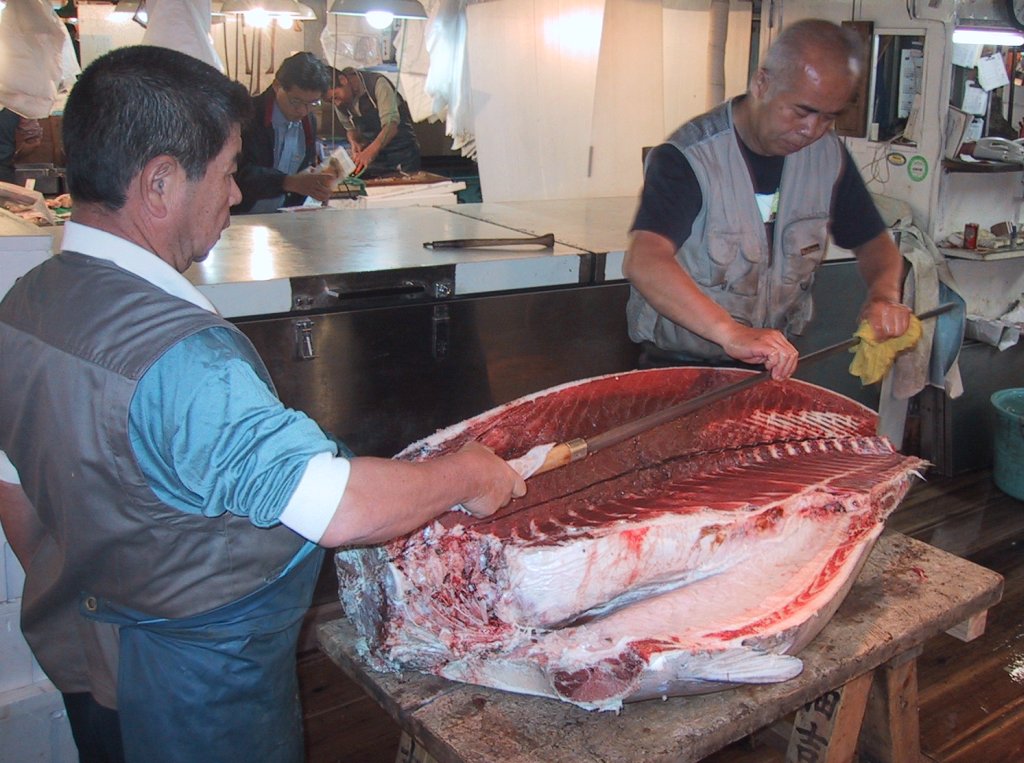
I came across an AP article in the business section of today’s local newspaper that reported Japanese consumers are eating more fish from local markets.  The fishing communities in Fukushima had feared the discharge of treated radioactive wastewater from the nuclear power plant damage by the tsunami, coupled with the China’s ban on Japanese seafood, would have a devastating effect on the area’s economy.  Consumers have instead supported the region by eating more fish.  Customers nationwide are placing orders, with many asking for “Joban-mono,” or fish from the waters off Fukushima and its southern neighbor Ibaraki that includes regional favorites Olive flounder (Paralichthys olivaceus) and Shortnose greeneye (Chlorophthalmus agassizi).  Almost all the fresh local catch sells out.  One customer said it was less about supporting local businesses than the Joban-mono tasting good.  “I’m not worried about the treated water discharge.  I’ve been checking sampling results and I trust them.”

When I looked online, I found the disabled Fukushima Daiichi Nuclear Power Plant is located on an 860 acre (3.5 km2) site in the towns of Ōkuma and Futaba in Fukushima Prefecture, Japan.  The plant suffered major damage from the magnitude 9.1 earthquake and tsunami that hit Japan on March 11, 2011.  The chain of events caused radiation leaks and permanent damage to several of its reactors, making them impossible to restart.  The Fukushima plant started releasing treated and diluted radioactive wastewater into the sea on August 24th.  Officials said the release was necessary because more than 1.3 million tons of radioactive wastewater has accumulated in the 1,000 tanks at the plant since its cooling system was destroyed.  Even with the wastewater release the tanks are estimated to reach capacity in the first half of 2024.  Prior to release the water is treated to reduce radioactive materials to safe levels and is then diluted with massive amounts of seawater to make it safer than international standards.  The release is expected to continue for decades and was strongly opposed by fishing groups and neighboring countries. 

The Fukushima wastewater release resulted in the immediate ban of all imports of Japanese seafood by Beijing and caused a major hit to Japanese seafood producers, processors, and exporters.  Thae ban was especially hard for those in northern Japan who specialize in scallops and sea cucumbers, a delicacy in China.  China’s seafood ban and reports of its impact on the fishing industry may have tempered Japanese criticism of the water release and encouraged people to eat more seafood from the region.  Futoshi Kinoshita, executive of Foodison which operates the Sakana Bacca chain, said, “After China’s ban on Japanese seafood, we are seeing more customers buying not only Fukushima fish but also Japanese seafood in general to support the industry.”  Fish testing data are key to consumer confidence in the seafood’s safety, but the data alone is not enough.  Officials are hoping those concerned about Fukushima fish will develop confidence by seeing their friends or relatives eating it without worry.

Thoughts:  The International Atomic Energy Agency concluded in a July report that the Fukushima discharge, if carried out exactly as planned, would cause negligible impact on the environment and human health.  Japan’s government set up a relief fund to help find new markets and the US Embassy in Tokyo has also helped, including sourcing its military bases in Japan.  Fukushima’s fisheries community, tourism, and economy were badly hit by the tsunami and are still recovering.  Local fishing was beginning to return to normal in 2021 when the government announced the water release plan.  The local catch is still about one-fifth of its pre-disaster levels due to a decline in the fishing population and smaller catch sizes.  While nuclear power may be a promising alternative fuel, accidents at Three Mile Island (1979), Chernobyl (1986), and Fukushima (2011) have yet to be mitigated.  Act for all.  Change is coming and it starts with you.

Gladys

November 06, 2023

© slowmotiongli/Getty

A Newsweek article appeared on my browser today concerning a group of orcas who attacked and sank a 40 foot (12.2 m) yacht in the Strait of Gibraltar.  The pod of orcas surrounded the yacht and proceeded to ram into the steering fin of the boat for 45 minutes, “causing major damage and leakage”.  The crew was aided by the Moroccan Navy and attempted to steer the vessel away from the animals and bring it into port, but the boat sank near the entrance of Tanger Med, in Morocco.  The crew were unharmed in the incident, but the tour company expressed sadness at the loss of the boat.  This is not an isolated event as orcas have been interfering with boats in this stretch of ocean for years.  The interactions have been an issue since 2020 in waters off Spain, Portugal, and Morocco and vary from orcas merely inspecting boats to attacking them.  Orcas are incredibly intelligent, socially complex animals, and display evidence of adopting learned behaviors from senior members of a pod.  Some theories for this behavior surround one specific orca who lives in the Strait known as White Gladys.

When I looked online, I found the name Gladys has been given to more than one of the orcas living in the area, and there are 15 whales with this name.  The orca whale (Orcinus orca) who has recently become famous on the internet for causing damage and sinking yachts is the one scientist’s call white Gladys, the oldest (and only adult) of the group (pod).  There are also juvenile’s such as grey Gladys, black Gladys, and small Gladys.  For the last three years these animals have engaged in very unusual behavior with boats, which has resulted in significant damage.  Scientists point to different hypotheses to explain why these killer whales are ramming boats.  Some believe white Gladys is teaching the younger whales to hit the boats because of an alleged trauma stemming from a past collision, but that cannot be verified.  While researchers do not know how to explain the attitude of these orcas, they believe their actions are a learned behavior through their curiosity and playfulness.  That is the extent of what science knows about this peculiar group of cetaceans.  White Gladys and her pod are going viral on social media.

White Gladys and her pod have been ramming boats in the area for the past few years.  In 2020, researchers with the Coordinator for the Study of Marine Mammals said they were behind 61% of the attacks and there are indications that orca are learning this behavior and passing it down to one another.  David Lusseau, professor of marine sustainability at the Technical University of Denmark, previously told Newsweek that he does not believe the attacks result from aggression.  “It is my opinion that this is not aggressive behavior, and definitely not planned behavior with more complex motivations, such as revenge.  Vessels are objects in the environment of these killer whales.”  Memes posted on social media have amplified the image of white Gladys as a murderous and vengeful whale that intentionally attacks boats to cause harm, but experts say this interpretation is far from reality.  

Thoughts:  The history of white Gladys and the killer whale attacks was first documented in the Strait of Gibraltar in May 2020.  It was two months before another attack in July of that year on the coast of Portugal.  In mid-August, the attacks moved to the Galician coast in northern Spain.  The whales move as they follow the trail of tuna, their main food source.  Since then, the whales have continued encounters with boats.  In 2023, the Orca Atlántica [Atlantic Orca] organization has identified up to 43 interactions around the Strait of Gibraltar, with 12 encounters damaging boats while 31 were sightings.  These figures are higher than in previous years at this point.  In Melville’s story the adversary was not an orca but a sperm whale (Physeter macrocephalus), but Gladys and Moby both resound with the human anxiety of the unknown associated with the sea.  Act for all.  Change is coming and it starts with you.
Masting

November 05, 2023

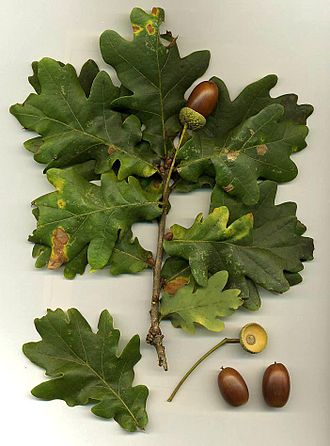
Now that the weather has turned colder, I have been surprised by the lack of birds frequenting my feeders.  Although I have had a pair of Eurasian Collared-Doves (Streptopelia decaocto), the only other visitors have been the gray squirrels (Sciurus carolinensis) that are stocking up seeds for the winter.  I have read that this may be a good fall for the squirrels and others who rely on the seeds and nuts to get through the harsh times of winter.  The oak (genus: Quercus), beech (genus: Fagus) and walnut (genus: Juglans) trees across large swaths of the US are unleashing a tremendous crop of acorns, hickory nuts and other hard seeds.  During these boom times a single oak tree can shed more than a thousand acorns, despite producing few seeds in previous years.  This coordinated overproduction of seeds across species is called masting.

When I looked online, I found masting refers to the synchronized and highly variable production of seeds.  Dozens of tree species participate in masting, but how and why thousands of individual plants across thousands of square miles seem to coordinate their reproduction has stumped scientists and nature observers for centuries.  The strategy has a few clear benefits, including overwhelming predators who eat seeds.  While this might explain why masting evolved, how trees are able to coordinate this event remains a mystery.  Weather conditions likely play a role in triggering masting, but different species exhibit different masting cycles and put out seeds based on differing conditions.  The association between weather and masting has sparked folklore, including that a big acorn crop means a harsh winter, although there is no clear correlation.  Why so many trees are masting this year is also not clear.

Trees have evolved with the ability to turn sunlight, water, soil, and air into seeds and nuts to propagate their genes into the next generation.  Conversely, squirrels, birds, and other animals impede this goal by eating the seeds.  While trees cannot physically fight back, they do have other ways of overcoming these predators.  By releasing seeds in boom-or-bust cycles, trees can overwhelm predators through sheer numbers, pumping out more seeds than squirrels and others could possibly eat to ensure that some will eventually sprout.  The intervening years without masting then tend to starve the trees’ enemies by producing few or no seeds.  The down years also allow the tree to build up the resources needed for another round of masting.  Masting may also help trees with mating, especially species that just depend on wind to carry pollen.  Species that flower all at once saturate the air with pollen, and months later the resulting seeds all get shed at once.

Thoughts:  Understanding how trees coordinate masting is an enigma.  One idea is the trees are all “listening” for the same environmental cues and when a given area experiences the right conditions, all the individual trees experience roughly the same conditions.  Another intriguing idea is that the trees are talking to each other.  Research has shown trees can signal each other when there are predators around, but there is not much evidence this also occurs with reproduction.  The modern scientific era taught us that humans use of tools and communication were what differentiated us from other species.  Later research has shown many animal species use tools and both animals and plants communicate.  The problem was our feeling of superiority and needing to be set apart from the greater world, and a lack of comprehension of how it worked.  Not knowing how masting works does not mean it does not happen.  The intricacies of life and the lessons we can learn from nature are lost when humans destroy the natural environment in the name of “progress”.  Act for all.  Change is coming and it starts with you.
All Saints’

November 01, 2023

Last night was Halloween, or the day American’s traditionally put out candy and expect small, costumed visitors eager to accept their gifts.  I have had varying approaches to this day of celebration.  There were years, especially when my son Alex was small, where I would go all out.  I would dress in costume, roam the streets with him, and then have a bowl full of candy ready for fellow trick-or-treaters when we got home.  I continued to provide candy later but found it made a difference where you live on how much candy you could be expected to provide.  For several years I lived in areas where there were no small children and I found myself forced to eat the leftover candy myself (a sacrifice I woefully undertook).  Eventually, I got to where I no longer participated in the house to house festival and instead participated in Trunk-or-treat events (cars gathered in a parking lot).  Now I am more likely to take the third option of turning off my lights, closing the blinds, and hoping the doorbell does not ring.  I do keep “some” candy on hand “just in case”.  My focus has shifted from All Saint’s Eve (Halloween) to All Saint’s Day and even Allhallowtide.

When I looked online, I found All Saints’ Day (also known as All Hallows’ Day, the Feast of All Saints, the Feast of All Hallows, the Solemnity of All Saints, and Hallowmas) is a Christian solemnity celebrated in honor of all saints of the Church, whether they are known or unknown.  A solemnity is a feast day of the highest rank celebrating a mystery of faith such as the Trinity, an event in the life of Jesus, his mother Mary, his earthly father Joseph, or another important saint.  The word comes from postclassical Latin sollemnitas, meaning a solemnity, festival, celebration of a day.  The observance begins with the vigil on the evening before the actual date of the feast.  This vigil has morphed into what we now celebrate as Halloween.  Unlike feast days of the rank of feast (other than feasts of the Lord) or those of the rank of memorial, solemnities replace the celebration of Sundays outside of Advent (4 weeks before Christmas), Lent (7 weeks before Easter), and Easter.

From the 4th century CE, feasts commemorating all Christian martyrs were held in various places and on various dates around Easter and Pentecost.  In the 9th century, some churches in the British Isles began holding the commemoration of all saints on November 1st and the celebration was later extended to the whole Catholic Church by Pope Gregory IV (9th century).  In Western Christianity All Saint’s Day is still celebrated on November 1st by the Roman Catholic Church and many Protestant churches like Lutheran, Anglican, and Methodist traditions.  The Eastern Orthodox Church and associated Eastern Catholic and Eastern Lutheran churches celebrate the day on the first Sunday after Pentecost.  The Syro-Malabar Church and the Chaldean Catholic Church (both in communion with Rome) as well as the Church of the East, celebrate All Saints’ Day on the first Friday after Easter Sunday.  The Coptic Orthodox tradition celebrates All Saints’ Day with the Feast of the Martyrs (Nayrouz) on September 11th.  This day is the start of the Coptic new year, and the first month (Thout) of the Coptic calendar year. 

Thoughts:  All Saint’ Day is part of a liturgical celebration called Allhallowtide which includes the three days from October 31st through November 2nd.   Allhallowtide is a “time to remember the dead, including martyrs, saints, and all faithful departed Christians.”  Christianity is not the only faith system that remembers martyrs, saints, and all ancestors.  Neither is remembrance of the people and events of the past confined to faith traditions.  Atheist philosopher George Santayana is quoted, “Those who cannot remember the past are condemned to repeat it.”  This day (and time) is about more than just costumes and candy.  It is a reflection on our past as an instruction for our future.  Act for all.  Change is coming and it starts with you.
Stopgap

October 30, 2023

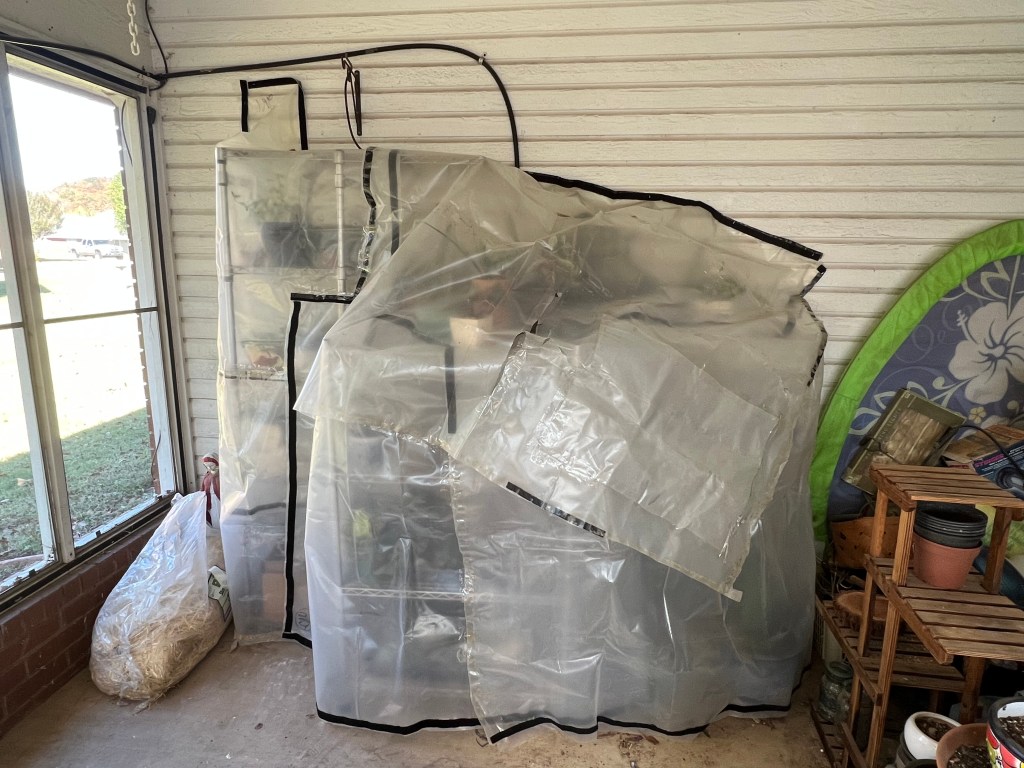
As we approached the first winter after Melissa started her succulent business (Uliyesdi Succulent Design) we faced a problem.  The cacti and succulents she grew and propagated had taken over the house and moved onto the covered front entry and back screen porch.  Both areas provided indirect light along with a cool breeze to help the plants flourish as many of the plants originated in tropical climates.  While they were innately attuned to warm and even arid conditions, many were not able to withstand freezing (32F/0C), and especially temperatures below 28F (-2.2C) for extended periods of time (hard freeze).  We checked several window dealers and were told the porch required custom windows that were well above our price range.  We came up with a solution of attaching heavy mil plastic to the screens with Velcro.  This allowed an insulation buffer to keep out the cold and Melissa could open the wrap for ventilation on warmer days.  This stopgap measure has worked well for the last two winters.

When I looked online, I found stopgap (or stop-gap) applies to something used temporarily as an emergency measure.  According to dictionary.com, stopgap is an adjective used for the verb phrase “stop a gap” (i.e., to plug a hole) and emerged around 1525-1535.  Merriam-Webster has the first known use in 1684.  Google Ngrams indicates “stopgap” appeared briefly in the 1700’s then disappeared until the middle of the 1800’s.  After its reappearance, the word took off dramatically although it has begun to wane slightly in the last 60 years.  Use of the word originated where there is a gap somewhere (or in something).  As a temporary fix you just jamb something into the gap to close it.  This emergency repair is a “stopgap”.  This temporary fix could be given to a leaky boat, a hole in the wall of a house, or to fix a hole in a bucket.  The word also implies there will be a more permanent solution in the future.  The metaphor is now used in many diverse situations.

While our stopgap porch greenhouse has been effective over the last two years, we always knew it was a temporary solution.  The plastic is still pliable and has only suffered a few tears during its use.  The bigger problem has been the Velcro.  The glue that adheres to the back of the plastic degrades.  This worked well the first year, but there were places where it would come loose.  Last year we ended up replacing around 25% of the Velcro as it would no longer adhere.  When I removed the screens last spring, I noticed there was more Velcro that would need to be replaced.  I asked Melissa to order several more rolls of the double-backed system and had them ready to go.  Then Melissa told me about a friend from college who had a construction business that specialized in building sunrooms and porches.  We called him and he came over to give us an estimate.  Rather than install 15 individual custom windows, he suggested replacing the old wooden frames with the window systems sponsored by his supplier.  Now we are scheduled to have five 60 inch (1.5m) sliding windows and exterior door.  The plants will love it.

Thoughts:   We ordered the window system and were assured it would be here in 3 to 4 weeks and would be installed in 1 to 2 days.  That places the completed order well before the intense cold that usually arrives in December and January.  The problem is we are predicted to have two nights this week that fall into the hard freeze range before warming back up to our normal night temperatures in the 40’s and 50’sF (4.5’s and 10’sC).  Rather than replacing the Velcro and plastic system we are again applying a stopgap.  We need to move the plants and shelving to install the windows anyway, so Melissa decided to bring several shelves inside along with the more vulnerable plants and then group the remaining shelves and plants along the interior wall where I can cover them with last year’s plastic.  I am seeing stopgap to also mean ingenuity.  Perhaps we should all be more willing to innovate with stopgap measures.  Act for all.  Change is coming and it starts with you.
Greenbrier

October 23, 2023

As I have been mowing along the back tree line of our yard, I have been running into a prickly vine that has slowly been taking over the overhanging limbs.  I usually just ignore both the limbs and vines and mow around them.  Occasionally I will plow the mower through the overhanging limbs and invariably the vines will catch on the noise reducing earmuffs I wear while mowing and pull them off.  I had already cut back the limbs hanging down from the American elm (Ulmus americana) that sits near the outbuilding along with the Loblolly Pine (Pinus taeda).  I had begun to cut back the limbs along the tree line at the same time but managed to break one handle off the lopping shears (I did not know you could break forged steel).  Since I am in a fall cleanup mode (sorta) I decided it was time to take the garden pruners and get rid of the smaller diameter overhanging limbs along with the vines.  When I examined the vines and the blackish berries that have ripened, I recognized it as greenbrier.

When I looked online, I found roundleaf greenbrier (Smilax rotundifolia), also known as common greenbrier, is a woody vine native to the southeastern and eastern US and eastern Canada.  As its common names suggest, greenbrier is a green vine with thorns.  Greenbrier is a crawling vine that can tangle itself within other plants and climb with small tendrils.  The plant can grow up to 20 feet (6 m) long by climbing objects and vegetation, but if there is nothing to climb on it will grow along the ground.  The woody stems are pale green in color and are glabrous (technical term for a lack of hair, down, setae, trichomes, or other covering), the youngest of which are often square-shaped.  As the vine dies the stem turns to a dark brown color.  The leaves are glossy green and are generally 2 to 5 inches (5 to 13 cm) long.  The black-tipped thorns found along the stem are about 1/3 inch (.8 cm) long.  Small sheaths with terminal tendrils are present at the base of each petiole (stem attaching the leaf).  Greenbrier is a common and conspicuous part of the natural forest ecosystems in much of its native range. 

Common greenbrier has male and female flowers that are produced on different plants (dioecious) that are both are about the same size at 1/4 inch (.6 cm) long.  The flowers bloom for about two weeks in late spring and early summer and then the female flowers are replaced by a bluish-black berry that ripens in September.  Common greenbrier can be found in almost all habitat types, including wetlands, and grows along roadsides, landscapes, woods, and clearings.  In clearings the vines will often form dense and impassable thickets.  The berries and leaves often persist into late winter and are an important food plant at a time when there are more limited food choices.  Wildlife that will eat the berries and leaves in the late winter and early spring are the Northern Cardinal (Cardinalis cardinalis), white throated sparrow (Zonotrichia albicollis), white tailed deer (Odocoileus virginianus), and various species of rabbits (family Leporidae).  Since my patch of greenbrier has grown to an impassible tangle, I need to remove it from the yard, but I will let it grow in the tree line as it forms an effective barrier for larger critters.

Thoughts:   Common greenbrier grows from modified subterranean plant stems (rhizomes) which allow the plant to resist fire by resprouting, and fires that open the canopies of dense forests encourage the vines.  A New Hampshire analysis found greenbrier responds to fire with rapid growth.  Two years after a prescribed burn the amount of greenbrier was back to its original density, and different frequencies and intensities of fire made no difference.  The findings suggest my task with the greenbrier will be ongoing, especially as I encourage the plant in some areas to feed wildlife and deter trespassers.  Melissa’s mom kept beautiful flower beds and hanging flowerpots.  I asked Melissa how she did it and was told, “by constant work”.  Being a steward of the land is a never ending task but the cost to the environment by ignoring the land is greater than we can bear.  Act for all.  Change is coming and it starts with you.

Mushroom

October 21, 2023

I do not always go behind our outbuilding when I mow.  The view of the area is blocked by the building and the trees that are on either side.  The area of only about 600 feet2 (56 m2) and much of it is covered with the dead needles of the large Loblolly Pine (Pinus taeda) on one side of the building.  When I do go back to mow, I often find interesting things happening.  Several years ago, I wrote about how a large portion of the area was covered with mock strawberries (Duchesnea indica).  While the mock fruit is similar in appearance to wild strawberry (Fragaria vesca) it is not edible, although the plant itself has been used medicinally as an antiseptic, an anticoagulant, and in a poultice for boils and burns.  The next year the gardener from the church that abuts our yard knocked on our door to say the large American elm (Ulmus americana) had blown down in the wind and was lying on their property.  He asked if I would allow his friend to cut it up for firewood.  I did allow it, or else I would have had to pay to have it removed.  Last week when I went back to mow the area was covered with honey mushroom clusters.

When I looked online, I found the Ringless Honey Mushroom (Armillaria tabescens) is a species of fungus in the family Physalacriaceae.  The mushroom is an infectious organism (pathogen) that is found in warm and dry regions, so it tends to be in southern areas.  It has been found in altitudes ranging from sea level to 4,300 feet (1,300 m).  the mushroom clusters frow quickly at 82 to 86F (28 to 30C) and more slowly at 41F (5C).  The species has a golden, honey-colored cap, white spores, narrow to broad pinkish/brown gills, and thick, cluster stalks.  This type of mushroom grows from late summer to early winter throughout the United States, including Arkansas.  You can often find the Ringless Honey Mushrooms in Oak Tree Stumps and Trunks in local parks.

The honey mushroom is a plant pathogen and is often found to attack trees that are already stressed or have a wound (like what is left of my elm).  The mushroom can spread its mycelia and get into the trunk or root of a tree.  The fungus can spread its mycelia throughout the root and trunk system and form mycelial mats (the root-like structure of a fungus).  Mycelia is damaging to trees because they absorb the nutrients by secreting enzymes to breakdown the plant material.  It specifically breaks down the support tissue of the plant (lignin) because it is a white rot.  The root system of the downed elm was expansive, and that explains the number of mushroom clusters I found in the back area of our yard.  Another website stressed you should kill these mushrooms when you see them as they are considered a parasitic fungus that will attack and kill your trees by depleting them of water and nutrients.  

Thoughts:  One interesting fact is that the ringless honey mushroom grows underneath the ground, rather than on top of it.  The best way to get rid of the mushroom is to destroy its roots beneath the ground.  Since I had come back to the area to mow, I went ahead and mowed most of the mushroom clusters but did preserve one large cluster so I could examine it further.  I was surprised when I went back to the area to see all the mushroom clusters I mowed were gone.  The mower was set too high to cut them down and had only damaged the tops, but all that was left (except for the big one) was white patches on the ground.  I assume that is the remains of white rot.  Like most species in nature, even pathogens have purpose and worth.  The mushroom in my back yard was busy breaking down the remains of the tree roots I had left in the ground.  This will eventually allow another tree to grow in the same spot.  Each species has a unique place in the local ecosystem.  Nature will return systems disrupted by human activity back to balance, but it may take hundreds of years or more.  Humans may not have that much time to wait.  Act for all.  Change is coming and it starts with you.
Sunflower

October 20, 2023

I received several likes and comments from my “Last” blog, and I thought I would share what my sister in Maine said.  She had also brought in the last of her green heirloom tomatoes and hoped they would ripen on the counter.  When she had cleared away the foliage and ripped up the vines there were two ugly cucumbers (Cucumis sativus) hidden among the undergrowth.  Together the tomato and cucumber may provide toppings for a tasty salad.  The last item was a huge sunflower that had been growing in the garden.  I have occasionally grown sunflowers along the back fence (from spilled bird seed) and had intended to plant several rows of sunflowers in the front bed (maximum sunlight), but again this was one of the projects life had thwarted this year.  My sister’s sunflower had been grown purposefully and she was hoping to harvest and dry the seed.  Perhaps another tasty morsal for her growing salad.

When I looked online, I found the common sunflower (Helianthus annuus) is a species of large annual forb of the genus Helianthus that is commonly grown as a crop for its edible oily seeds.  Apart from cooking oil production, sunflower is also used as livestock forage (as a meal or a silage plant), as bird food, in some industrial applications, and as an ornamental flower in domestic gardens.  Wild sunflower is a widely branched annual plant with many flower heads, but the domestic sunflower often has only a single large flower head (inflorescence) atop an unbranched stem.  The plant has an erect rough-hairy stem that reaches a typical height of 10 feet (3 m), but the tallest sunflower on record reached 30 feet 1 inch (9.17 m).  Sunflower leaves are broad, coarsely toothed, rough, mostly alternate, and those nearest the bottom are largest and commonly heart shaped.  The plant was first domesticated in the Americas and seeds were brought to Europe in the 16th century.  The seeds and oil quickly became a widespread cooking ingredient.  The bulk of industrial-scale sunflower production has now shifted to Eastern Europe.  During 2020 Russia and Ukraine produce over half of worldwide seed production.

The common sunflower was one of several plants cultivated by the Indigenous peoples in prehistoric North America as part of the Eastern Agricultural Complex.  It was once thought the sunflower was first domesticated in the (now) southeastern US around 5,000 years ago.  Recent evidence indicates the species was instead domesticated in Mexico around 2600 BCE as the seeds were found in Tabasco, Mexico, at the San Andres dig site.  The earliest known US examples of a fully domesticated sunflower have been found in Tennessee, dating to around 2300 BCE.  Other early examples come from rock shelter sites in Eastern Kentucky.  Many of the Americas indigenous peoples used the sunflower as the symbol of their solar deity, including the Aztecs and Otomi of Mexico and the Incas in South America.   Of the four plants known to have been domesticated in eastern North America that have become important agricultural commodities, the sunflower is currently the most economically important.

Thoughts:  During the 18th century, the use of sunflower oil became very popular in Russia, particularly with members of the Russian Orthodox Church, because fasting traditions only allowed plant-based fats during Lent.  The sunflower was commercialized in the early 19th century in the village of Alekseyeva by a merchant named Daniil Bokaryov, who developed a technology suitable for its large-scale extraction.  The town’s coat of arms has included an image of a sunflower ever since.  That makes the sunflower a mix of (indigenous) American discovery and Russian ingenuity.  To quote Rocky IV, “During this fight I’ve seen a lot of changing . . . if I can change, and you can change, everybody can change!”  That is wisdom to strive for.  Act for all.  Change is coming and it starts with you.

Last

October 19, 2023

As I have been harvesting the last of my vegetables this last week, I have been dislodging the baren plants and throwing them over the patio fence.  That allows me to come along later with my mower and mulch them into the ground.  I mentioned earlier how I had harvested my last batch of jalapeño peppers (Capsicum annuum) and four of my Arkansas Traveler (Solanum lycopersicum ‘Arkansas Traveler’) tomatoes.  I did leave two of the travelers with larger green tomatoes on the vine as there is a chance for weather in the mid-70’sF (23 C) this week.  Several have now started to turn red, so it is just a race to see if the weather can ripen the last few tomatoes on my two vines before the cold shuts them down.  I only grow a limited variety of vegetables, but I am considering increasing the types next year.  That made me wonder when produce ripens in Arkansas and what are the last crops available.  

When I looked online, I found there are several types of Arkansas crops that are harvested in October.  This marks the end of the season for fruit trees like apples and Asian pears.  Second crops of greens (generic for edible plant leaves), along with broccoli (Brassica oleracea var. italica) and cabbage (Brassica oleracea var. capitata) can last into November, weather permitting.  A variety of species of gourds (family Cucurbitaceae; pumpkins, squash, and watermelons), along with my tomatoes all tap out as the last of the warm days leave and the plants succumb to the cold.   I had mentioned how the various herbs can be grown and harvested from April through October, and if they are in a transportable container (and cared for) can be moved inside and last throughout the winter.

Thoughts:  I had started this year’s planting season with high hopes (again).  I planned to plant several new varieties of vegetables along with my usual tomatoes and potatoes.  Life got in the way at the beginning of planting season and my expectations fell short.  Now that I have harvested the last of my crops, I have reflected on the fact that if this was subsistence farming, I would be in for a bad winter.  My grandmother used to have a large vegetable garden (1/2 ac/0.2 ha) where she grew the vegetables to be canned and preserved for the winter.  I heard grandfather told her if she would allow him to grow wheat on the garden space, she could afford to buy what she needed from the produce store in town.  While I am not there yet (nor have the amount of land) it is not far from my own reality.  Still, I am committed to try and reduce my carbon footprint.  Act for all.  Change is coming and it starts with you.
Grupo

October 18, 2023

(AP Photo/El Imparcial, Julian Ortega, File)

I found a reprint of an AP article in the Business section of yesterday’s local newspaper that addressed a complaint filed against Mexico’s biggest copper producer.  The Grupo Mexico mining company was involved in the August 2014 mine spill which sent 10 million gallons (40 million liters) of acidified copper sulfate from a waste reservoir at Grupo Mexico’s Buenavista mine into the Sonora and Bacanuchi rivers.  Maria Luisa Albores González, head of Mexico’s Environment Department, said there are still “alarming levels of air, water and soil pollution across 94 square miles (250 square kilometers) to this day.”  The mining company closed its remediation fund in 2017, arguing that it had met its legal requirements.  The government contends the closing was premature and is asking the courts to order the establishment of a new fund.  In the original agreement Grupo Mexico had promised to establish 36 water treatment stations.  Only 10 were installed and only two of those were finished, and those two quickly ran out of funding.  Activists in the affected area were cautiously optimistic after the government’s legal action.

When I checked online, I found Grupo México is a Mexican conglomerate that operates through the divisions of transportation (GMxT), mining (Minera Mexico), and infrastructure (Fundacion Grupo Mexico).  Grupo’s transportation division operates the largest rail fleet in México, with 6,935 miles (11,000 km) of track, more than 800 engines, and 26,300 coaches.  The track interconnects five major inland Mexican cities, five cities along the border with the United States, and 13 seaports (5 on the Pacific Ocean, 8 on the Gulf of Mexico).  Mining is Grupo México’s largest division, operating 14 mines and 52 plants in Mexico, Peru, the US, Argentina, Chile, Ecuador, and Spain.  The division operates as Americas Mining Corporation, whose main subsidiaries are Southern Copper Corporation in México and Perú, American Smelting and Refining Company (ASARCO) in the United States, and Minera Los Frailes in Spain.  Grupo México is the largest mine operator in Mexico and Peru, as well as the third largest in the US.  The company is primarily focused on the extraction of copper and is the world’s fourth largest copper producer and controls the largest copper reserves in the world.

Grupo Mexico was founded by Raúl Antonio Escobedo and Larrea Mota Velasco in 1978 and purchased several of the countries key copper mines after the government of Carlos Salinas declared the state mining company bankrupt in the early 1980’s.  By 2000, Grupo México was responsible for 87.5 % of Mexico’s copper production.  Grupo holdings also have a history of pollution and mining disasters.  The Sea of Cortés acid spill (2019) leaked 792.5 gallons (3,000 liters) in northwestern Mexico.  The Rio Sonora spill (referenced above, 2014) sent 52,318 cubic yards (40,000 m3) of copper sulphate into the Sonora and Bacanuchi Rivers.  Grupo was also involved in the Pasta de Conchos mine disaster (2010) which gained worldwide attention for the 33 miners trapped in Copiapó, Chile.  In the US, the Environmental Protection Agency (EPA) has found Grupo’s ASARCO operation responsible for the environmental pollution at 20 Superfund sites across the country.

Thoughts:  When I was with the state of Utah in the late 1980’s I worked with the EPA and ASARCO on remediation of one of the superfund sites.  The lead and copper smelting industry had polluted the entire Salt Lake Valley at the turn of the 20th century, and litigation brought by the local farmers closed all but the ASARCO site.  ASARCO later purchased the lead smelter turned steel mill which the EPA was going after.  The settlement defined cleanup for the site and residences in the surrounding blocks.  The original lawsuit specified acidic rain killed everything in a swath 15 miles long.  Remediation is never sufficient to counter the havoc wrought.  Act for all.  Change is coming and it starts with you.