Oddbox

October 17, 2023

The weather is turning colder with nights down into the high 40’sF (4.5’sC) and days in the high 60’sF (15.5’sC).  Even though I have harvested the last batch of (nearly 20) jalapeño peppers (Capsicum annuum) I have allowed my six Arkansas Traveler tomato plants (Solanum lycopersicum ‘Arkansas Traveler’) to continue.  They are filled with dozens of small unripe green tomatoes.  Yesterday I decided there was not much hope for the fruit to ripen and thought I would harvest and then see what I could do with it.  Since Melissa is from the South, she had often spoken of the fried green tomatoes her family had eaten when the end of the season arrived.  We have recently purchased an air fryer to get away from the added fat that comes with fried foods.  Still, I am always looking for different types of uses for my produce.  That was when I found “10 ways you can use green tomatoes” on Oddbox.

When I checked online, I found the Oddbox story began in 2016 when the founders tasted a delicious but ever-so-slightly ugly tomato from a market in Portugal.  What struck Emilie and Deepak was they only saw identical-looking fruit and vegetables in their supermarkets.  When they began to dig, they found nearly 40% of food produced globally goes to waste because it was “too odd” or because growers have “too many”.  The Oddbox mission is to rescue those fruits and vegetables, at the same time making sure all the energy and water that went into growing it are put to good use.  The company (based in the UK) specializes in procuring odd and surplus fruits and vegetables from local producers and offers the products in home boxes to a community of food waste fighters, enabling customers to get a variety of fresh produce and contribute to a sustainable environment.  The company now works directly with growers to deliver thousands of boxes every week and is continuing to grow.

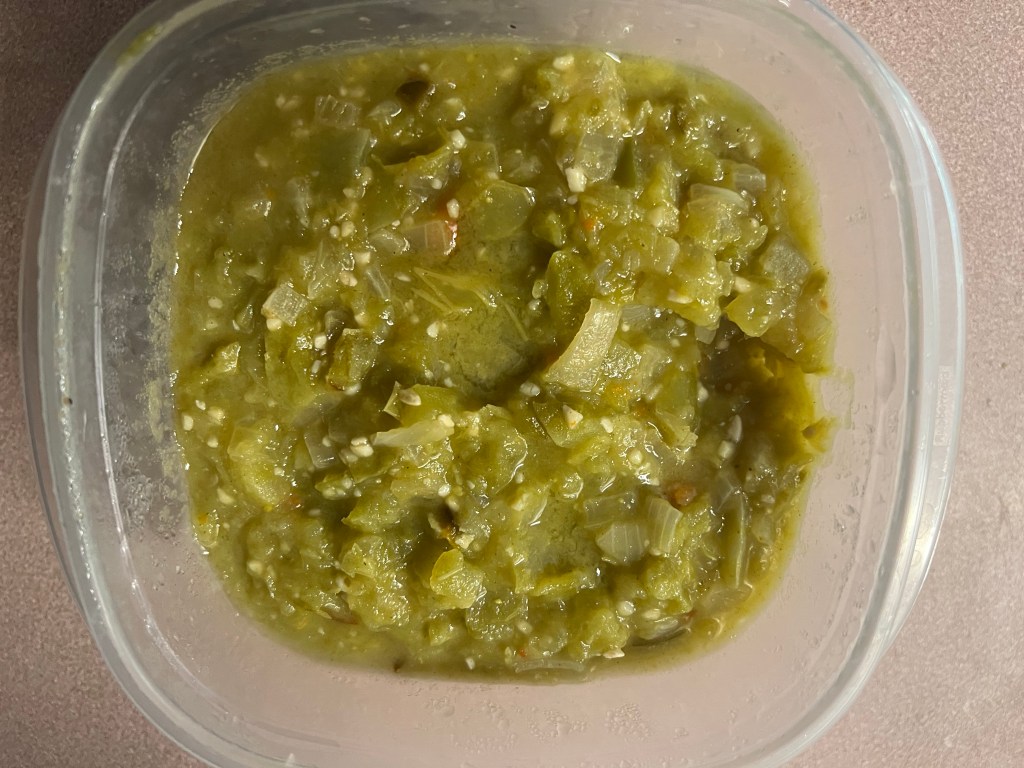
Oddbox not only delivers oddly shaped fruits and vegetables to consumers, but their website also offers recipes for using them.  There are two types of green tomatoes.  Sometimes, they are a separate variety of heirloom tomato that are still green when ripe.  Heirloom green tomatoes like Aunt Ruby’s German Green (Solanum lycopersicum ‘Aunt Ruby’s German Green’) is a beefsteak tomato that tastes like a typical red tomato.  More often, green tomatoes are just tomatoes that missed the chance to ripen (like mine) before the weather started to get colder.  These tomatoes are safe to consume either raw or in a cooked dish.  One of the recipes I found was for green tomato paste, or a variety of salsa verde.  The ingredients called for 2 pounds (900g) of green tomatoes, 4 mild chili peppers (1-1/2 of my hot jalapeños), one coarsely chopped onion, and 3 garlic cloves.  These are cooked for 10 minutes along with

1 teaspoon salt, 1/4 teaspoon ground cumin, 1 tablespoon olive oil, and 3 tablespoons water (I added a little more).  The mixture is brought to a boil and then simmered over medium-low heat for 10 minutes (stirring occasionally).  I added 2 tablespoons of fresh lemon juice and 1 tablespoon sugar and simmered for another 5 minutes.  Finally, I mixed the paste with a hand blender to get the consistency I wanted (btw: it tastes great). 

Thoughts:  The Oddbox mission is to ensure oddly shaped (but edible) food reaches the market.  Global food waste prior to reaching the consumer accounts for 2.5 billion tons each year and is responsible for 10% of all greenhouse gas emissions.  That means the environmental impact of wasting this food is about 248 times larger than plastic.  This is food that can be eaten, meaning it can also address world hunger.  I have begun to take a different attitude toward the vegetables I grow in the garden.  While they seldom look perfect, they are often tastier than what I buy at the store.  Oddbox knows that just because something looks different than we are used to does not mean it is worthless.  The same can be said about our encounters with other humans.  Act for all.  Change is coming and it starts with you.
Smartweed

October 15, 2023

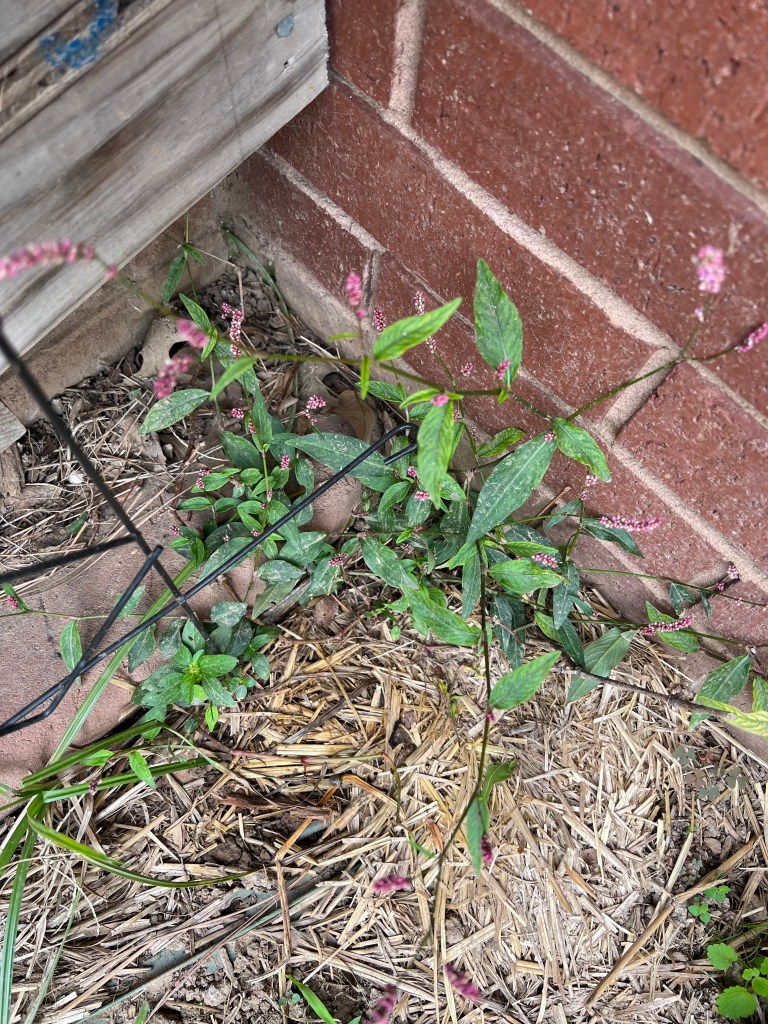
After removing the potato plants (not “harvest” because I grew so few) from one of the back beds there is not much that has taken hold.  That was in part due to the straw mulch, which was still over most of the area, but also because Loki kept digging holes in the bed.  While I still intend to amend the soil and mulch the bed before winter, I have not got that accomplished.  When I removed the potato plants and grass there were some weeds that had already established in the perimeter along the house.  Now that they have access to the sunshine they have begun to thrive.   When I checked the bed this morning the plants had pink flowers that were in full bloom. 

When I checked online, I found Pennsylvania Smartweed (Polygonum pensylvanicum), also known as pinkweed, is a species of flowering plant in the buckwheat family, Polygonaceae.  It is native to parts of North America and is widespread in Canada and the US and has been introduced in parts of Europe and South America.  Pennsylvania smartweed is a variable annual herb that grows from 4 inches (10 cm) to 6.5 feet (2 m) tall.  The upright, ribbed stems can be either branched or unbranched and the lance-shaped leaves have a short stalk that attaches the leaf blade to the stem (petiole) that is able to twist the leaf to face the sun.  This produces a characteristic foliage arrangement (spacing of blades).  The petiole and a blade are about 1.5 to 6.5 inches (4–17 cm) long but may grow up to 9 inches (23 cm).  The flowers have five pinkish or greenish tepals each a few millimeters long.  The seeds are black, shiny flattened, almost round.  The plant grows in moist, disturbed habitat types, such as ponds, reservoirs, riverbanks, irrigated fields, and ditches (as well as garden beds).

Pennsylvania smartweed is considered an important part of the habitat for waterfowl and other birds, which use it for food and cover.  At least 50 species of birds have been observed feeding on the seeds, including ducks, geese, rails, bobwhites, mourning dove, and ring-necked pheasant.  The seeds and other parts are eaten by mammals such as the white-footed mouse, muskrat, raccoon, and fox squirrel. 

The smartweed family (Polygonaceae) includes around 900 species that range from annual herbs to perennial trees, and includes buckwheat, dock, and rhubarb.  The genus Polygonum typically has simple leaves which often have dark blotches on them.  In some manuals, Pennsylvania smartweed is called Persicaria pensylvanica.  Native Americans have various uses for the plant.  The Chippewa use it for epilepsy and the Iroquois use it for horse colic.  The Menominee take a leaf infusion for hemorrhage of blood from the mouth and post-partum healing and the Meskwaki use it on bleeding hemorrhoids.

Thoughts:  I found it interesting that smartweed was listed as an invasive weed on agricultural sites even as it is sold on garden sites as wildflower.  Agricultural sites focused on the invasiveness in hay fields and cultivated lands.  Garden sites point to the different types of insects that seek out the plant in search of nectar (bees, butterflies, moths, wasps, flies, and beetles).  Bird sites say the plant and seeds are an important part of diet for various waterfowl and gamebirds.  The seeds eaten by birds are not fully digestible, so the partially digested seed is spread in bird droppings.  Yet another case of one person’s weed being a viable part of other bird and human ecosystems.  Act for all.  Change is coming and it starts with you.
Coastal

October 13, 2023

The lead story in October’s “Audubon Advisory” concerned a bipartisan bill in the US Senate that advanced out of the Senate Committee on Environment and Public Works on September 27, 2023.  The bill, Strengthening Coastal Communities (SCC) ACT of 2023, was jointly bill introduced by Senators Tom Carper (D-DE) and Lindsey Graham (R-SC).  The legislation will update and modernize the Coastal Barrier Resources Act, a law that for more than 40 years has protected undeveloped beaches, wetlands, and other coastal areas while saving taxpayers billions of dollars.  Portia Mastin, coastal conservation policy manager at National Audubon Society, said, “Birds and people urgently need more protection on our coasts from storms and flooding.  This bill meets that challenge by extending the benefits of the Coastal Barrier Resources Act to more areas along the coast and will also identify the areas where marshes and beaches can naturally migrate inland as sea levels rise.”  If this bill is not enacted the country will risk losing many of the wetlands for birds, and the storm buffers protecting development along the coast.

When I checked online, I found the Coastal Barrier Resources Act (CBRA) was established in 1982 and prevents most federal spending in flood-prone coastal areas.  The current CBRA system includes 3.5 million acres (1,416,399 ha) of undeveloped barrier islands, beaches, inlets, and wetlands along the Atlantic Ocean, Gulf of Mexico, Great Lakes, Puerto Rico, and the US Virgin Islands.  In 2022, the Department of the Interior recommended that Congress add over 277,000 acres (112,097 ha) to the CBRA system in the nine states hit hardest by Hurricane Sandy to save federal tax dollars offer and better protect the Atlantic Coast from New Hampshire to Virginia against future storms.  The SCC Act will implement those recommendations and add new protected areas to the system in other states that are vulnerable to storms and sea-level rise, including South Carolina, Florida, and Louisiana.  The Act will also authorize a pilot project to identify new upland areas where beaches and marshes can naturally migrate as sea levels rise, along with expanding the definition of coastal landforms included.

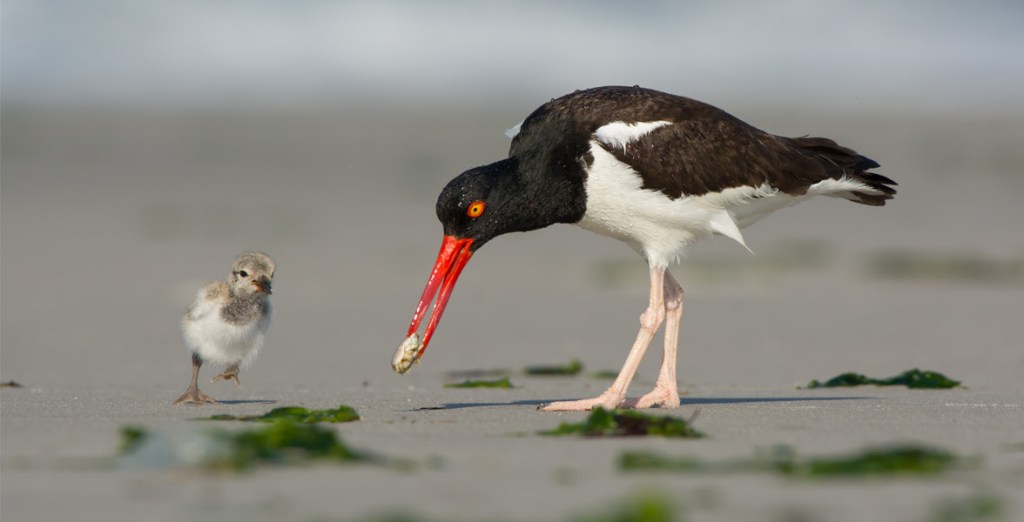
A recent study found that CBRA is highly effective at achieving its intended goals.  The 1980’s bill reduced coastal development by 85% in flood-prone areas, reduced flood damage in nearby human communities by 25%, and added an ecologically important layer of protection for these established human communities.  The protection also ensures threatened species of coastal birds like the American Oystercatcher (Haematopus palliatus) and Piping Plover (Charadrius melodus) that rely on these areas can nest, feed, and rest safely.  When environmentally healthy, the protected habitats act as nature’s speed bumps, buffering nearby communities from storms and floodwaters.  While neither act prohibits construction (and destruction of the natural buffers), they do remove taxpayer-funded subsidies for development in hazardous coastal areas.  The CBRA promotes public safety and has already saved federal taxpayers nearly US$10 billion over 25 years.  The SCC Act will extend protections further.

Thoughts:  Alongside the least tern (Sternula antillarum), piping plovers have an unusual relationship with coastal mining.  Where most species suffer habitat loss from mining activities, these birds are known to nest in the waste sand piles generated by nearby mines as the replacement for lost sand bars along coastal areas.  The sand piles remain topped-up and hostile to vegetation while the mining activity continues.  Modern mining practices now transport much of this waste sand to more remote areas or reuse it commercially, which limits colonization opportunities for these birds.  Abandoned mines often serve as construction sites for housing developments.  That means bird habitat and sand dune buffers are removed and the areas become vulnerable to storm surge and flooding.  Protecting coastal habitat is good for both humans and birds.  Act for all.  Change is coming and it starts with you.

Bear

October 12, 2023

I receive a free weekly town newspaper that provides the usual local sports, school, city hall, and local interest stories that were previously reported in nearly every small town in America.  One of the special interests stories this week was about the bear hunt season in Arkansas.   You may recall last summer I commented on the bear that showed up in a wooded area near our neighborhood in the Arkansas River Valley.  The Arkansas Game and Fish Commission (AGFC) reintroduced bears into the Ouachita and Ozark Mountains (to the north and south of us) during the late 1950’s and 1960’s.  Bear season opened for hunting in 1980 and this year most of the state is open.  It is estimated that 700 animals will be harvested.  Muron Means, Coordinator for the Large Carnivore Program with AGFC, said without the hunters, sales taxes collected, and the work of AGFC scientists, the revival of hunting black bear in Arkansas would not have happened.

When I checked online, I found the American black bear (Ursus americanus), or black bear, is a species of medium-sized bear endemic to North America.  The animal is the smallest and most widely distributed bear species on the continent.  The American black bear is an omnivore whose diet varies greatly depending on season and location.  It typically lives in largely forested areas, but will leave forests in search of food, and is sometimes attracted to human communities due to the availability of food.  The International Union for Conservation of Nature (IUCN) lists the American black bear as a least-concern species, due to its widespread distribution and a population estimated to be twice that of all other bear species combined.  Along with the brown bear (Ursus arctos), it is one of only two modern bear species not considered by the IUCN to be globally threatened with extinction.  Today, black bear fatalities are mainly attributed to humans (vehicle accidents and hunting). 

The black bear was nearly eradicated from Arkansas due to predation for bear fat, which was used to make oil for lamps in cities like New Orleans and Galveston.  The oil was cheap but would leave dark greasy stains on the street if it was spilled.  The only bear meat I have ever tasted was bear jerky bought from a big box hunting chain.  I had always heard bear meat was greasy, and the jerky (at least) affirmed this.  Still, meat was number one of the four reasons given for why people in the US hunt bears.  The next reason is conservation.  Bears cause huge amounts of damage to the moose (Alces alces), deer (Odocoileus virginianus), elk (Cervus canadensis), and caribou (Rangifer tarandus) populations in the US.  The biggest reasons the black bear is hunted is for trophies, although it was stated this also included eating bear meat.  The final reason is for management.  As people encroach on bear territory, they become familiar to humans as a source of food (garbage).  The bear is then either relocated or shot. 

Thoughts:  The bear season in Arkansas shows that 80% of the black bears are harvested with archery equipment, and that is not unique for other states.  The reason is most people bait and bear hunt early, usually as soon as the season opens.  Most of the damage in the bear harvest is within the first couple of weeks of archery season.  The normal reason for wildlife hunting to be illegal is managing population, and bear hunting is legal because there is a healthy population.  While that may be good for the hunters, it is not so much for the bear.  Act for all.  Change is coming and it starts with you.
Footprints

October 10, 2023

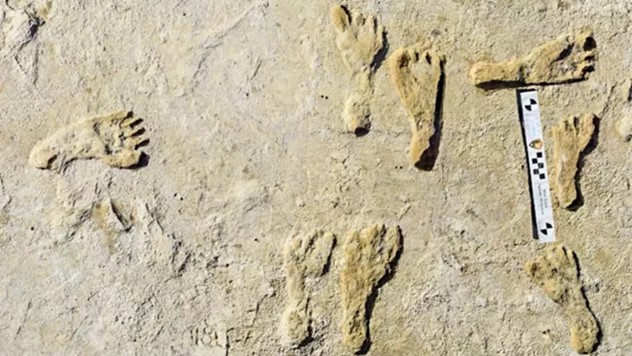
Photo: National Park Service

Buried inside of today’s front section of the local newspaper was a USA Today reprint on a new study on the footprints found in September 2021 in White Sands National Park, New Mexico.  Researchers from the US Geological Survey and an international team of scientists had announced the ancient human footprints were dated between 21,000 and 23,000 BP.  This discovery pushed the known date of human presence in North America back several thousand years (from 15,000 BP) and implied that early humans and megafauna co-existed for several millennia before the terminal Pleistocene extinction event (around 12,000 BP).  In a follow-up study, published October 5, 2023, in Science, researchers used two new independent approaches to date the footprints, both of which resulted in the same age range as the original estimate.  The 2021 results began a global conversation (and controversy) that sparked public imagination and commentary throughout the scientific community as to the accuracy of the ages.  The original ages were obtained by radiocarbon dating based on seeds of the common aquatic spiral ditchgrass (Ruppia cirrhosa) found in the fossilized impressions.  Aquatic plants can acquire carbon from dissolved carbon atoms in the water rather than ambient air, which can potentially cause the measured ages to be too old.   

When I looked online, I found seed and pollen dating is often used to establish relative chronologies when the material is stratified (layered) and can be securely dated.  All three pollen samples used for radiocarbon dating were found fossilized in the sedimentary rock that contained the human footprints.  Pollen dating can also complement other dating techniques, and pollen grains are “highly suitable” for radiocarbon dating.  Pollen grains have morphological characteristics that allow them to be identified into different taxonomic groups providing contextual information for dating the sample.  Combined with radiocarbon dates, pollen analysis can provide a more comprehensive understanding of the context of an archaeological site and help archaeologists construct a more accurate timeline of human activity.  In addition, pollen dating can provide “relative dates beyond the limits of radiocarbon (40,000 years)”.

The follow-up study focused on radiocarbon dating of conifer pollen which avoids potential issues when dating aquatic plants.  With three separate lines of evidence pointing to the same approximate age, it is highly unlikely that they are all incorrect or biased and together provide strong support for the 21,000 to 23,000-year age range for the footprints.  The researchers used painstaking procedures to isolate approximately 75,000 pollen grains for each sample they dated.  The pollen samples were collected from the exact same layers as the original seeds, so a direct comparison could be made.  In each case, the pollen age was statistically identical to the corresponding seed age.  In addition to the pollen samples, the team used a different type of dating called optically stimulated luminescence, which dates the last time quartz grains were exposed to sunlight.  This method found that quartz samples collected within the footprint-bearing layers had a minimum age of 21,500 years, providing further support to the radiocarbon results.

Thoughts:  Various theories have attributed the wave of megafauna (animals weighing over 100 lbs./46 kg) extinctions to human hunting, climate change, disease, or other causes.  The first humans in North America were thought to have arrived around 15,000 to 12,000 BP and coincided with extinction.  The footprints in New Mexico (23,000 BP) also supports the wide presence of humans across the Americas by 12,000 BP.  While human hunting alone may not have caused extinction, global extinctions are known to occur not long after the spread of humans into new areas.  This is a legacy we have the ability (if not the willingness) to change.  Act for all.  Change is coming and it starts with you.
Slug

October 09, 2023

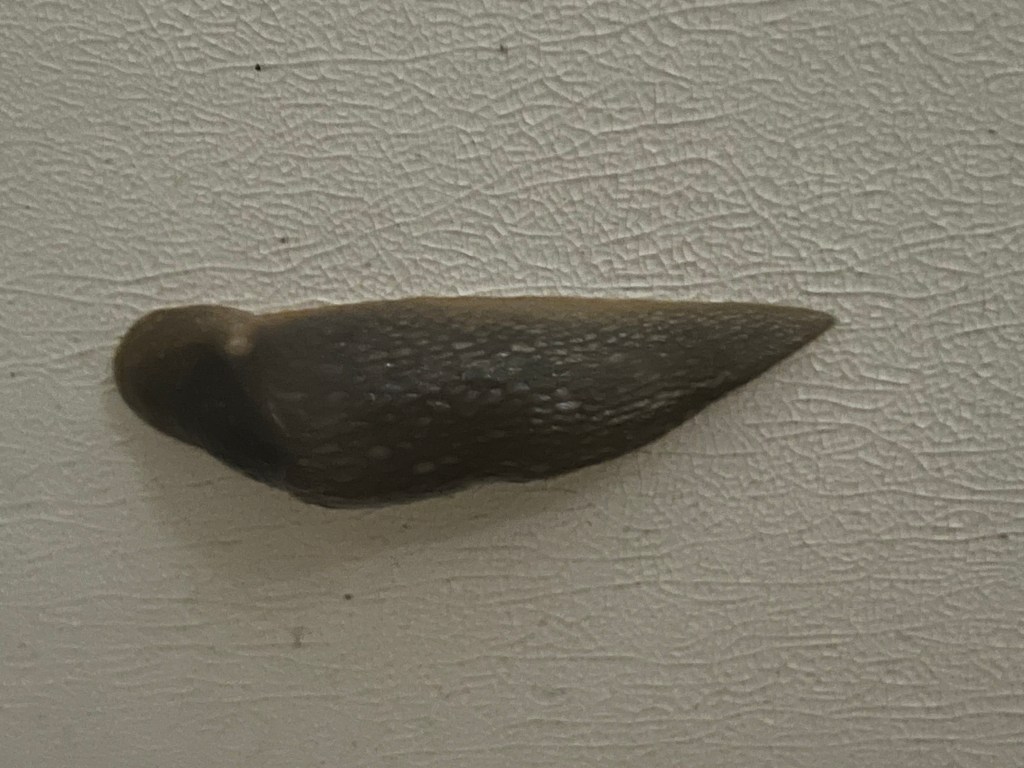
Our trash service happens early on Monday mornings and that means I need to get the trash before I go to bed on Sunday night.  I usually make a run through the house to collect all the trash and then take it to the waste bin we keep in the garage.   That means I need to open the garage door, guide the bin between the cars parked in the driveway, and then maneuver it out to the street for pickup.  After coming back inside I pushed the controller to bring the door down when I noticed something clinging to the bottom of the door.  I brought the door back up and saw whatever was still attached to the door.  When I went to see what was on my door, I saw a long black stationary object.  I touched it to see if I could discern what it was.  Even though the antennae were not extended, it was clear I had a large garden slug on my garage door.

When I looked online, I found the black slug (Arion ater), also known as black arion, European black slug, or large black slug, is a large terrestrial gastropod mollusk in the family Arionidae, the round back slugs.  The size of the black slug varies from 3.9 to 5.9 inches (10 to 15 cm), reaching maturity at about 1 inch (2.5 cm).  It moves at the blistering speed of 1.8 inches (4.5 cm) per minute.  The black slug is generally deep black, but some adults are brown or even white.  Their pigmentation is known to darken directly with increasing latitude.  Young specimens tend to be brown or ivory whitish, turning to grey before becoming characteristically black at maturity.  Rust-brown individuals are arguably classified as a separate species called the red slug (Arion rufus).  The two species of slug can only be distinguished by dissecting the reproductive anatomy.

Most slugs retain a vestigial remnant of their shell (underdeveloped) which is usually internalized, unlike other terrestrial mollusks (like snails) which have external shells.  Without external shells, terrestrial slugs produce two other forms of mucus that facilitate locomotion and prevent death from drying.  Slugs possess both male and female reproductive organs, structures, or tissue (hermaphroditic).  Slugs are often decomposers but are also omnivores.  The black slug is this type, decomposing organic matter, preying on other organisms, and consuming vegetative matter including agricultural crops.  The black slug is native to Europe and is an invasive species in Australia, Canada (British Columbia, Newfoundland, Quebec), and the US (Pacific Northwest). The black slug often appears chunkier and slightly less elongated.  These are not a full-proof distinction and dissection is often the only way to isolate the species.  I did not perform a dissection but threw it in the trash which was picked up this morning.

Thoughts:  Usually when I encounter a slug it is while I am digging in my garden, not hanging on my garage door.  The black slug is and invasive species that has been introduced to southeastern Australia and North America.  The black slug is a voracious seedling predator and endangers sensitive ecosystems, but it is not yet clear what affects the slug may have on plant community composition.  The slugs are of special concern in fragmented ecosystems and areas with high shrub and tree cover.  I am hesitant to destroy even a slug and was glad I sent it to the landfill where it will be happy decomposing local trash.  This environment will protect my garden and help rid the city of debris.  This slug is yet another example of human activity introducing invasive species into areas without historic predators or controls.  This is a lesson that needs to be learned and heeded as we prepare to move into space.  Act for all.  Change is coming and it starts with you.
Proso

October 06, 2023

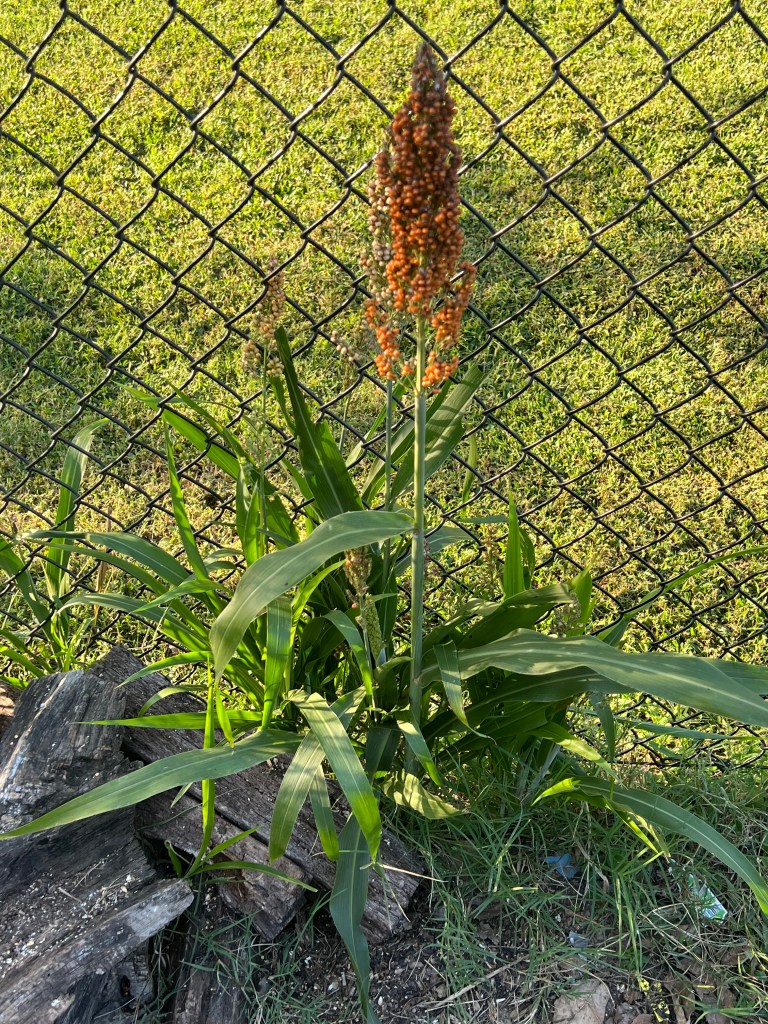
Several years ago, I spoke of the seeds that the birds throw out of my feeders.  Some are tossed when the birds get in a frenzy of competition.  Others are scattered because an individual bird does not like the seed and throws it out of the feeder as “unusable”.  To be honest, I think most of the smaller seeds that fall to the ground are the result of several small holes in the screen in the bottom of the feeder.  When I wrote, some of the scattered seed had taken root and sprouted just outside my patio fence.  After the wheat (Triticum turgidum subsp. durum) matured I bound it together as a sheaf (it did not work well) and kept it on the porch to dry.  Last year I was more consistent in my weed eating and the stalks were all cut down before they could develop.  This year I had one stalk which grew inside the fence and out of the weed eater’s range.  This has now matured as a large head of Proso millet.

When I looked online, I found Proso millet (Panicum miliaceum) is a grain crop also known as red millet, broomcorn millet, common millet, hog millet, Kashfi millet, and white millet.  Archaeobotanical evidence suggests millet was first domesticated about 10,000 BP in Northern China.  Now major cultivated areas include Northern China, Himachal Pradesh of India, Nepal, Russia, Ukraine, Belarus, the Middle East, Turkey, Romania, and the Great Plains states of the US.  About 500,000 acres (200,000 hectares) are grown each year.  Proso is noted for its extremely short lifecycle, with some varieties producing grain only 60 days after planting, and for its low water requirements, producing grain more efficiently per unit of moisture than any other grain species tested.  The name “Proso millet” comes from the pan-Slavic generic name for millet (i.e., Proso).  There are three types of millet used in bird seed: white Proso millet, golden millet, and red millet, but White Proso and red millet are the most common.

White Proso is a high-protein seed that is a favorite among ground-feeding birds.  Doves and pigeons (family: Columbidae), juncos (genus: Junco), towhees (genus: Pipilo), and sparrows (genus: Passer), and cardinals (genus: Cardinalis), are some of the common birds that prefer millet.  Larger ground birds like quails (order: Galliformes) or pheasants (family: Phasianidae) will also be interested in this seed.  Most birds typically prefer white Proso to red or golden millet, and some bird enthusiasts consider these to be less desirable filler ingredients.  Blackbirds (genus: Turdus) and starlings (Sturnus vulgaris) are often seen as undesirable visitors to feeders, and they will enjoy millet along with their other regular foods.  Birds that eat red millet are like those that eat white Proso millet, though they will likely prefer the latter if given the choice (or perhaps just throw it out of the feeder?).

Thoughts:  Most seed mixes not only tell you what seeds are included (like Proso), but also what birds the seeds tend to attract.  There are many types of seed available to feed your birds, but some seeds are included as filler meant to load a bag to be put on the market at a lower cost.  Cheap wild bird mixes will save you money upfront, but you might end up spending as much or even more in the long run since the filler ingredients may not be eaten.  I tend to buy mid cost range seed mixes that also attract a larger variety of birds.  When a flock of grackles (Quiscalus quiscula) descend they may quickly wipe out my feeders, but they are often gone as fast as they arrive.  I have grown to accept any bird (or squirrel) who comes to my feeder even as the seed I provide hopes to attract certain birds.  We need to see human migration and immigration in the same light.  People move to find a better life.  If we help migrants improve their homelands, they would be less likely to want to move.  Clean water, ample food, and personal safety need to be considered as a right, and not a privilege.  Act for all.  Change is coming and it starts with you.
Herbs

October 05, 2023

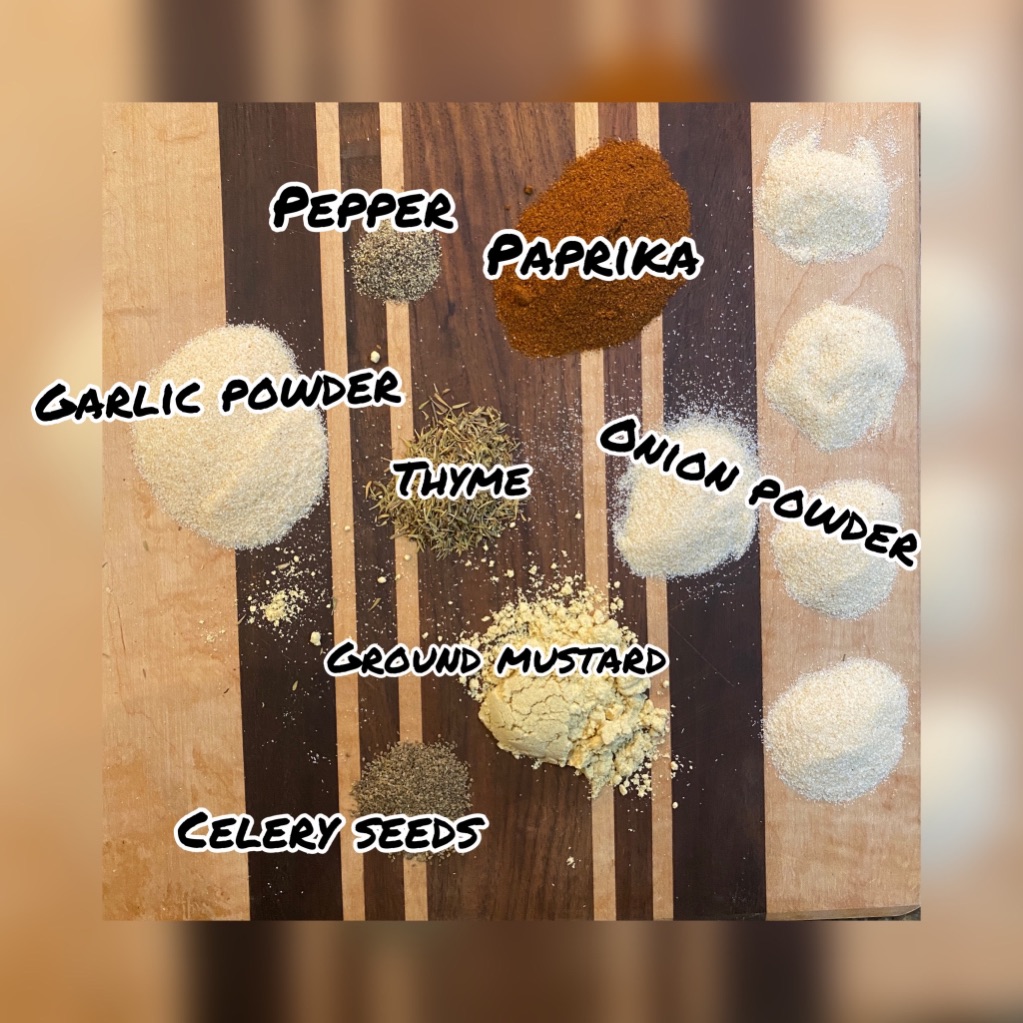
With the end of the growing season fast approaching it has me again thinking about what to plant in next year’s container garden.  When I looked on a harvest chart for Arkansas, I noticed herbs were one of the few types of plants that could be grown and harvested throughout the spring (April) to fall (October).  A large part of the logic for my garden is to become more self-sustainable.  I grew cilantro (Coriandrum sativum) for my Pico the first two years but did not get the plant in the ground this year.  My difficulty has been I did not cut back and use the cilantro on a regular basis, and it went to seed.  While the ground seeds (coriander) are used in cooking, the leaves (cilantro) are altered as the plant seeds and lose much of their taste.  I had dried the cilantro the first two years and was able to use it throughout the season.  Since I dabbled in preserving this year, I began to wonder what herbs I could grow and use in my cooking.  I could use them fresh and then dry the rest for use throughout the winter.

When I looked online, I found herbs are a great way to turn ordinary meals into extraordinary meals without adding extra salt, sugar, or fat.  Researchers believe many culinary herbs have antioxidants that may help protect against diseases such as heart disease and cancer.  The use of herbs and spices has a long culinary history that dates back more than 2,000 years.  They were known to be traded throughout the Mediterranean and Middle East and Oriental spices were the motivation for Columbus’ trips across the Atlantic Ocean.  While many use “spice” and “herb” interchangeably, there is a difference.  Spices come from the bark, buds, fruit, roots, seeds, or stems of plants and trees and are usually dried (except garlic and gingerroot) while herbs are the fragrant leaves of plants.  Plants like coriander provide both herbs and spices.  The seeds of the plant are combined with others to make curry powder, while the leaves of the same plant are called cilantro. 

If you want optimum flavor, ground spices should not be stored longer than 3 years, and seeds no longer than 4 years, although poppy seeds and sesame seeds only last 2 years.  Seasoning blends or mixes are good for 1 to 2 years.  Extracts are best used within 4 years, except vanilla extract which has unlimited shelf life.  The freshness of spices and herbs can be maintained longer if they are stored in airtight containers and kept away from heat, moisture, and direct sunlight.  Air and the elements hasten the loss of flavor and aroma of spices and herbs.  That means you should avoid storing herbs and spices over the stove (heat), dishwasher or sink (moisture), or near a window (light).  Each time you use the herbs, make sure the lid is tightly closed (air).  Spices should not be stored in the freezer as this does not extend the shelf life of regularly used dried spices and herbs.  If they are stored in the freezer, and repeatedly removed for use, condensation will form in the bottles and accelerate the loss of flavor and aroma.  I should clean out most of my spice rack and only keep (and grow?) the herbs and spices I intend to use.

Thoughts:  I have frequently been lured in by the low prices of large containers of herbs and spices at the big box store.  These 20+ ounce (5.7+ kg) plastic bottles of spices are usually not too much more expensive than the 2 ounce (.06 kg) bottles in the grocery store.  I have gotten so I refrain from buying large bottles of herbs I seldom use.  While big containers of black pepper, salt, and taco seasoning may be a good buy for me, there is not much else that I use consistently.  Just because something is a “good buy”, it defeats the purpose if the herb losses its flavor or you end up throwing most of it out.  The world wastes 2.5 billion tons of food each year, and the US leads the way at 60 billion tons or nearly US$218 billion.  This is the equivalent of 130 billion meals.  The adage is, “take what you want, eat what you take”.  It is still good advice.  Act for all.  Change is coming and it starts with you.
Jewel

October 04, 2023

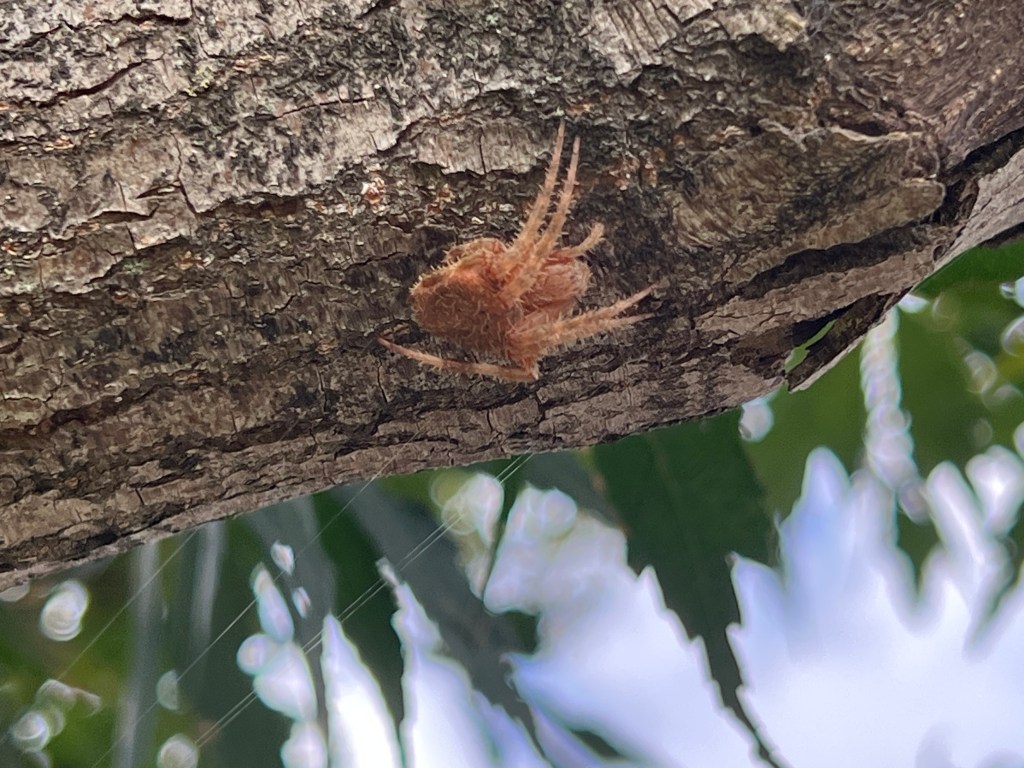
When my annual newspaper subscription expired in July, I switched to an online only subscription.  This was not only cheaper, but I hoped to save the mounds of newsprint I periodically place in city recycling.  My subscription was changed but the paper kept coming (obviously supply chain issues).  I tried to contact the newspaper office but could not get around the automated system that took me overseas to people who told me it had been changed.  I gave up, and now still go out each morning to pick up my paper (except Saturday and holidays when they do not deliver).  As I was coming back to the house, I noticed a large bug sitting on a branch of the Japanese maple (Acer palmatum) in our front flower bed.  At first, I thought it was one of the destructive aphids (superfamily Aphidoideas) that suck the sap out of trees.  As I looked closer, I realized it was an orb-weaver spider sitting on the beginning of its web.  It looked like a golden jewel as it sat motionless waiting for me to pass.

When I looked online, I found the Jewel spider (Araneus gemmoides), also known as the cat-faced spider, is a common outdoor, orb-weaver spider found in the US and Canada.  Both common names reflect the special traits of the body of the spider.  The abdomen is large and if seen from the front, resembles the face of a cat.  Others consider the shape of the spider’s body diamond- or jewel-shaped. Hence, its two common names.  The color of the spider can range from almost completely white to bright orange (like mine) and dark brown, and its color varies and changes from summer to winter.  The jewel usually grows between 0.2 and 1 inch long (5 to 25 mm), with comparably short legs and a large-sized abdomen.  The jewel usually makes its webs near lights, closed spaces, and on the sides of buildings, but can be found under wood, overhangs, or guarded places such as animal burrows (or perhaps in trees?).  The species is easily identified by the two horn-shaped growths on its relatively large abdomen.  Females have a larger abdomen and head, while males have much smaller abdomens and longer bodies.

The female dies within days of laying a single egg sac with hundreds of eggs.  The egg sacs can survive through the winter.  The emerging spiderlings eat their siblings, but the ones who get away ride strands of silk in warm air currents which can transport them miles away.  Like all orb-weavers, the jewel spider is considered harmless.  Jewel spiders are extremely timid and will always try to get away rather than fight.  The spider is clumsy moving outside their webs.  Even if they do bite, their venom has low toxicity and will only cause a small blemish that will fade.  At their worst, they may cause a slight welt.  The spider is a natural predator for insects and eat a variety of food, ranging from fish flies, house flies, and mosquitoes to other small spiders (including siblings).  I left my solitary female on her web, wishing her good hunting and a favorable mating outcome as the fall is here.

Thoughts:  I can tell fall is approaching as the spiders are on the move in my yard.  Various species have turned up sporting babies on their backs like the rabid wolf spider (Rabidosa rabida) or egg sacs in their web like the triangulate cobweb spider (Steatoda triangulosa).  The Jewel spider was just another spider species trying to prepare for winter.  Many species of insects lay eggs which can survive, even if the adult will die.  Many plants go dormant over the winter, and some have developed to need to become dormant to germinate as the weather warms.  Birds will fly south to warmer climes.  Mammals instead adapt.  While some hibernate, others use their warm blood and external hair for warmth.  Humans tend to alter nature (clothes and housing) to survive the cold.  While this is a preservation advantage, we can be more vulnerable to extreme changes in climate.  We need to accommodate nature to ensure the survival of the ecosystem, not just ourselves.  Act for all.  Change is coming and it starts with you.

Onondaga

October 02, 2023

Today’s local newspaper reposted an article from the AP addressing the case by the Onondaga Nation to reclaim a portion of the lands taken from them.  The Onondaga have protested these illegal land grabs for centuries.  The initial appeal was to President George Washington, then to Congress, and then to a US court.  All the appeals failed.  Onondaga territory once stretched nearly 4,000 square miles (10,000 square km).  Today, the federally recognized territory is 7,500 acres (3,000 hectares) with about 2,000 people living mainly in single-family homes on wooded lots.  A tax-free smoke shop sits just off the interstate and a wooden longhouse used for meetings sits deeper in the territory.  Now the Nation has taken their appeal to an international panel.  The Inter-American Commission on Human Rights recently allowed the Onondaga to pursue claims their land was taken unjustly by the state of New York.  This provides a unique venue for a land rights case against the US by a Native American nation.

When I looked online, I found the Onondaga people (“People of the Hills”) are one of the five original nations of the Haudenosaunee (Iroquois) Confederacy in the Northeastern Woodlands of the US.  Their historical homelands are in and around present-day Onondaga County, New York.  Oral tradition says the Great Peacemaker approached the Onondaga and other tribes to establish the Haudenosaunee.  The Seneca nation was debating joining the Haudenosaunee as a solar eclipse took place, most likely the eclipse in 1142 CE which was visible in the land of the Seneca.  It was seen as a sign from the Great Peacemaker, and they joined.  The Onondaga are centrally located among the Five Nations and are considered the “Keepers of the Fire” (Iroquoian language: Kayečisnakwe’nì·yu) which is housed in the figurative longhouse of the Five Nations.  The Cayuga and Seneca territory is to the west and the Oneida and Mohawk to the east.  The League of the Iroquois historically met at the Iroquois government’s capital at Onondaga, just as the traditional chiefs still do today.

The Onondaga Nation’s case centers on a roughly 40-mile-wide (65-kilometer-wide) strip of land running down the center of upstate New York from Canada to Pennsylvania.  Their claim is that ancestral land was appropriated over decades by the state of New York, starting in 1788, through deceit that violated treaties and federal law.  The Onondaga again filed a federal lawsuit in 2005 claiming the illegally acquired land was still theirs.  A judge dismissed the claim five years later, ruling it came too late and “would be disruptive to people settled on the land”.  After the court loss, the Onondaga and the Haudenosaunee petitioned the commission in 2014, alleging violations of provisions of the American Declaration of the Rights and Duties of Man and two claims were ruled admissible in May.  Now the commission can consider the merits of whether the nation’s rights to equality under the law and judicial protection were violated.  This is the first land rights case admitted by the commission from a Native American nation against the US, though it has heard other Indigenous cases against the United States.  The US government is not expected to abide by any opinion by the commission, which is part of the Organization of American States.

Thoughts:  The US has a long history of signing and breaking treaties with Native Americans.  There were 368 treaties signed from 1778 to 1871, acknowledging the tribes as independent, self-governing nations.  The Indian Appropriations Act of 1871 changed that and gutted previous treaties and eliminated Native tribes’ self-governance.  A July 2020 ruling by the US Supreme Court paves the way to address many of the points made by the Onondaga and other tribes: things like land reform and judicial treatment.  They are still waiting for the US to keep its word.  Act for all.  Change is coming and it starts with you.