
Park

June 22, 2023

Loki is finally old enough that I can start to train him to walk on a leash.  This was Zena’s favorite part of the day when we took our walks in the park.  She went into heat, and I stopped the walks to avoid other dogs.  I have tried to walk Loki several times, once with Zena and twice on his own, but he has not really been into the concept and tends to spend more time biting the leash than walking.  I ordered a new harness for Loki this week, so the leash does not pull on his collar.  It arrived yesterday and I was determined to take them both for a walk.  Zena knows the harness means getting outside and when I grab it, she will sit in front of my chair and even raise her paw to help me put it on.  I had to pull Loki to the chair and then fight to get the harness over his head.  At first the harness was too loose, and Loki was able to get his mouth under the front to try and bite it off.  I rearranged the harness, put on their leashes, and then we were off to the dog park so they could run and play in a larger space.

When I went online, I found the concept for the dog park started in Berkeley, California, in the 1970’s at a time when cities were making stricter leash laws.  In 1979, activists from People’s Park took over an empty lot in Berkeley that had been cleared for subway construction.  Along with the demonstrations and bail fund drives for arrested protesters common at People’s Park, the new space was frequently full of dogs playing and socializing.  Berkeley resident Doris Richards led much of the effort to circulate petitions in support of the dog park, organize residents, and deal with disputes around zoning and noise pollution.  The area eventually became the Ohlone Dog Park.  As interest in dog parks spread across the country and around the world, Richards became an important source of information and guidance for communities wanting to establish their own dog park.  Alissa Greenberg believes a dog park has had an impact on the urban landscape and development.  “Dog park proponents and designers are building on this private idea of a more-than-human family to envision a new kind of public city.  A family with children believes they deserve a playground; a family with dogs believes the same.”  There are three dog parks in our nearby city, but one park will soon be lost to airport expansion.

Zena has not yet taken to the idea of socializing with other dogs.  When we walked in our neighborhood she would lunge at the leash and bark whenever we encountered another dog.  As she got older, I began to take her to the city park to avoid these encounters.  Now she is good at seeing a dog from a distance, but still gets overly excited when the dog is close.  The dog park is a better way to initiate Zena to being with other dogs, but it is 20 minutes away.  Melissa got Loki to acclimate Zena to another animal, but Loki is a pup who likes to play fight as his form of socialization.  This week I began to take both to the dog park to let off steam and run free.  The wide space allows them room to explore and sniff all the different smells.  I have still separated them from other dogs, which is contrary to the notion of the park.  This is something both I and them will need to continue to work on.

Thoughts:  A dog park is designed to allow your dog to play and socialize with other dogs.  My son lives near Seattle, and they have a huge park where he takes his dogs.  They do play-fight with other dogs, but it is not real biting.  When I read up on how to get your dog to stop lunging and barking it suggested you distract your dog with treats.  Zena is a big foodie and that could help.  Ultimately, I know I need to let her go and work this out on her own.  My real concern may be that her behavior embarrasses me.  The same can be said about raising children.  We can train them to react properly and socialize with others but eventually you need to let them be on their own.  The child’s reactions may embarrass you at times, but you need to continue to love them and show them you care.  Act for all.  Change is coming and it starts with you.

Yellow

June 21, 2023

The kids (my dogs) like to go out with me when I water my garden.  Zena likes to grab a quick drink from the hose when she can get her mouth close enough and Loki goes crazy when I bring out the hose, hopping and spinning around.  Now he pushes Zena out of the way as he franticly tries to bite and lick the constant stream of water.  After I watered last night, I sat in one of our pool chairs for a moment to watch the dogs chase each other around the deck.  I looked at the other chair and noticed a 1 inch (2.5 cm) spider had built a web across the arm of the chair.  I am always intrigued by the spiders who thrive around my garden and decided to take a closer look.  It hung motionless in the center of its web and held its legs in four pairs of two.  The circular web had a thicker zig-zag thread that ran through the middle.  What really caught my eye was the striated markings on the spider’s leges, alternating black and yellow.  This appeared to be the yellow garden spider I had blogged about after my sister sent me a picture of one on its huge web at mom’s two years ago.

When I went online, I found the yellow garden spider (Argiope aurantia), also known as the black and yellow garden spider, is common to the contiguous US, Hawaii, southern Canada, Mexico, and Central America.  It has distinctive yellow and black markings (hence the name) on the abdomen and a mostly white cephalothorax.  Its scientific name translates to “gilded silver-face” (Argiope means “silver-face”, aurantia means “gilded”).  The body length of the male ranges from 0.20 to 0.35 inches (5 to 9 mm), while the larger females range from 0.75 to 1.10 inches (19–28 mm).  The spiders may bite if disturbed or harassed, but the venom is harmless to non-allergic humans, roughly equivalent to a bumblebee sting in intensity.  Yellow garden spiders are orb-weavers and prefer to build their webs in areas adjacent to open sunny fields where they stay concealed and protected from the wind.  They can also be found along the eaves of houses and outbuildings or in any tall vegetation where they can securely stretch a web.  Female yellow garden spiders tend to be somewhat local, often staying in one place throughout much of their lifetime.  The large size of my yellow spider indicated this must have been a female.

Females of the yellow garden spiders are the most common ones seen in gardens. Their webs are usually characterized by a zigzag shaped stabilimentum (an extra thick line of silk) in the middle extending vertically.  The spiders spend most of their time in their webs, waiting for prey to become ensnared.  When prey becomes caught in the web, the spider may undulate the web back and forth to further trap the insect.  When the prey is secure, the spider kills it by injecting its venom and then wraps the prey in a cocoon of silk for later consumption (typically 1 to 4 hours later).  Prey includes small vertebrates, such as geckos and green anoles, as well as insects.  Two years ago, my sister accidentally bumped into the web and this undulating and shaking of its web was what the spider had done.  Luckily my sister is bigger than a gecko and was able to get away. 

Thoughts:  While female yellow garden spiders grow and molt throughout the summer, the males die shortly after mating, even if they do not become the female’s tasty snack.  Offspring usually hatch in late summer or autumn.  In cold areas the young spiders may remain dormant in the egg sac during winter and emerge in the spring.  Females usually die in the first hard frost after mating but if the temperatures permit, females may live several years.  Nature has developed a delicate balance between male and female of a species, as well as between predator and prey, that ensure the best genes are passed to succeeding generations.  Humans have used intellect to overcome this balance.  We need to use our intellect to preserve the balance nature provides.  Act for all.  Change is coming and it starts with you.

Serpent

June 20, 2023

Last Saturday I found a link on Tiffy Taffy to the giant ‘serpent’ that emerges from the sea off the coast of France.  This is a 425-foot (129.5 m) sculpture that is repeatedly hidden and revealed by the tides every day in the Loire Estuary.  The serpent is located along the Loire estuary and is part of a permanent public art collection that spans the 37-mile-long shore.  Made of aluminum, the giant serpent emerges from the water when the tide rolls out as if the ocean is revealing an ancient fossil.  The piece was created in 2012 by the French-Chinese contemporary artist Huang Yong Ping and is called Serpent d’océan.  Huang created the giant serpent to mimic the nearby Saint Nazaire bridge to blend the piece with the rest of the landscape.

When I went online, I found that sea serpents have a prominent role in myths and legends of most seafaring cultures on Earth and with the reality of the oceans’ biodiversity and the dangers of the sea itself it is not difficult to see why.  A sea serpent or sea dragon is a type of sea monster described in various mythologies, including Mesopotamian (Tiamat), Judaeo-Christian (Leviathan), Greek (Cetus, Echidna, Hydra, Scylla), and Norse (Jörmungandr).  An apparent eye-witness account is given by Aristotle in his work Historia Animalium on natural history.  The Greek historian Strabo makes reference to an eyewitness account of a dead sea creature sighted by Poseidonius on the coast of the northern Levant, reporting, “As for the plains, the first, beginning at the sea, is called Macras, or Macra-Plain. Here, as reported by Poseidonius, was seen the fallen dragon, the corpse of which was about a plethrum [100 feet or 30 m) in length, and so bulky that horsemen standing by it on either side could not see one another, and its jaws were large enough to admit a man on horseback, and each flake of its horny scales exceeded an oblong shield in length.”  The creature was reported to have been seen sometime between 130 and 51 BCE.  Huang’s serpent mixes myth and reality as more sea giants (past and present) are discovered.

Huang is known for his various art installations that challenged tradition, brought various cultures together, and most prominently commented on humanity itself.  Huang created an even bigger serpent in 2016 for his Empires exhibition in the Grand Palais in Paris.  This even larger serpent was 787 feet (239.8 m) long and surrounded by 305 shipping containers.  Huang intended the piece to start a conversation around world trade.  Huang was one of the most well-known artists in China during their avant-garde movement in the 1980’s, and many of his pieces were banned by the Chinese government.  He moved to France in 1989 to have more freedom of expression.  Much of his work was based on politics and attempting to push them to higher moral ground.  He often used animals and insects to depict his views on aspects of human nature.  Huang liked to use art to address the topic of identity and cultural mixing and he did this using various animals and Chinese mythological creatures and adding them to the European art scene and landscape.  Huang died from a brain hemorrhage on October 19, 2019, at the age of 65.  As the giant serpent in the Loire estuary shows, the tide rolls in and out, long after your life is over.

Thoughts:  While I did not see the Serpent, when I visited the Musee d’Orsay in Paris with my sister and brother-in-law they were commenting on the beautiful paintings housed on the upper floor that were well known to them.  Frankly, I was not impressed.  However, the lower floors contained sculptures and paintings I did find impressive.  As Huang stressed, art not only imitates life, but it can also cause us to reflect on the past and strive for a better future.  Act for all.  Change is coming and it starts with you.

Superbloom

June 19, 2023

Hidden among the Father’s Day and Juneteenth information in Sunday’s newspaper was an article on the effect last winter’s rains had on the California hillsides.  This resulted in an explosion of wild black mustard (Brassica nigra) which now blanket the hills surrounding Los Angeles in bright yellow flowers.  As temperatures warm the mustard dies, leaving their dried stalks to act as a tinderbox for wildfires.  The invasive plant also crowds out native flowers and can be nearly 4 feet (1.2 m) tall, blocking the burgeoning wildflowers from the sun.  Clothing designer Max Kingery is among a growing group of artists, designers, and chefs who are harvesting the invasive plants and turning them into dyes for clothing, works of art, and even in salads and a form of pesto.  To get the right hues for the dyes requires a lot of mustard, but in this context that is a good thing.  Clearing the plots of the mustard restores the biodiversity while broadening the neighborhoods concept of land care and gets people into seeing themselves as environmentalists.  Removing the invaders allows the native wildflowers to enjoy the superbloom that is allowing the mustard to flourish.

When I went online, I found a superbloom is a rare desert botanical phenomenon in California and Arizona where an unusually high proportion of wildflowers blossom at roughly the same time.  The term seems to have appeared as a label in the 1990’s.  A rare chain of events must happen for a superbloom to occur.  The invasive grasses compete with native flowers for moisture so the desert must remain dry enough to keep the grasses from being established.  The autumn rain needs to be sufficient to penetrate deep into the soil to reach the dormant seeds of flowering plants.  Too much subsequent rain will wash away the young plants, and too little rain will kill them from lack of moisture.  The ground then needs to warm slowly over several months following the first soaking rain, and there must be enough cloud cover to shield the soil from the desert heat and insulate the soil from freezing temperatures at night.  When the plants reach the surface, the shoots cannot be disturbed or uprooted by strong winds.  This is a rare chain of events.  A California superbloom occurs about once every ten years, but the persistent drought which affected the state over the last decades has made them even rarer.

In the Mojave Desert of California, common plant species and their colors composing the superbloom are brittlebush (Encelia farinose – yellow), California poppies (Eschscholzia californica – bright orange), bluebells (Phacelia campanularia – deep purple), lupine (Lupinus albus – purple), sand verbena (Abronia villosa – yellow), desert sunflowers (Geraea canescens – bright yellow), evening primrose (Camissonia brevipes – mostly white but occasionally yellow), popcorn flowers (Plagiobothrys rufescens – white or yellow), and desert lily (Hesperocallis undulata – white).  Invasive plants also include the wild mustard, and particularly the black mustard that has invaded the hills around Los Angeles.  After a unique series of winter storms, outdoor enthusiasts are expecting an unprecedented abundance of flowers this year.  Daniel Winkler, a research ecologist with the US Geological Survey said there is no scientific definition for what constitutes a superbloom.  “The superbloom is really a cultural phenomenon, where people decide that there are enough flowers here, right now, that we’ll call it a superbloom.” Winkler said.

Thoughts:  The black mustard that is flourishing amid the current superbloom originated in North Africa, spread to Europe, and was introduced to the Pacific coast of North America in the 1700’s where it has been found in adobe bricks of the missions.  It is now classified as an invasive weed.  Invasive plants and animals can predominate as they have no natural predators or deterrents.  While the vast fields of yellow look pretty, they exist at the expense of the natural variety of colors they dominate.  Act for all.  Change is coming and it starts with you.
Zombie

June 17, 2023

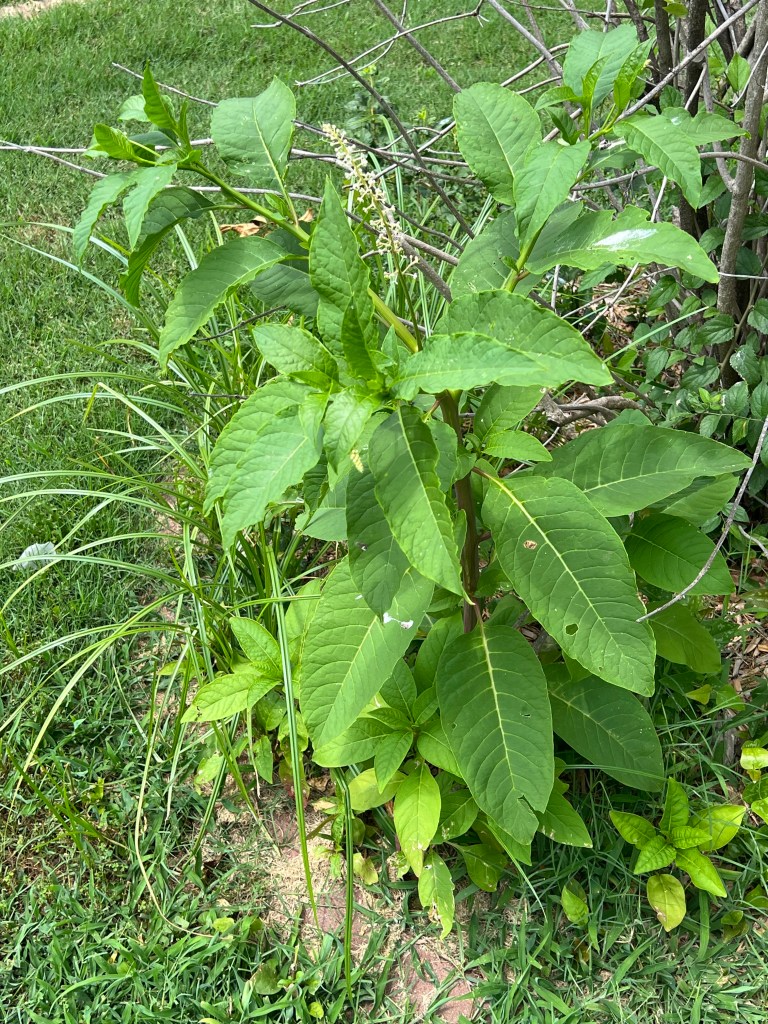
I received an email from the delivery service that the Father’s Day gift sent from my son and his family had been delivered.  During the pandemic the delivery people stopped ringing your doorbell and now just place the package in some (hopefully) unobvious place on your porch.  An e-mail is sent when the item is placed and hopefully you will be able to retrieve it before the porch pirates know it is there.  When I went out to retrieve my package, I noticed there were two deliveries rather than just one.  I decided to open the smaller package first.  It was the three pair of socks I had asked Melissa to order for me.  The second package was flat and about 2 1/2 feet (0.76 m) square.  I carefully slit the tape and emptied the contents onto the counter.  It turned out there were several different items in the box.  There was a low sling chair to sit on while I work my garden, a gardening bag along with several tools to help with the work, and an envelope containing two packets identified as zombie plant seeds.

When I went online, I found a zombie plant (Mimosa pudica), also called sensitive plant, sleepy plant, action plant, touch-me-not, or shameplant, is a creeping annual or perennial flowering plant of the pea/legume family Fabaceae.  The name is derived from the Latin pudica, meaning ‘shy, bashful, or shrinking’.  The species is native to the Caribbean and South and Central America but is now distributed as a weed throughout the tropics in the Southern US, South Asia, East Asia, Micronesia, Australia, and South and West Africa.  The Zombie is not shade-tolerant and is primarily found on soils with low nutrient concentrations.  Like several other plant species, pudica undergoes changes in leaf orientation termed nyctinastic movement (sleep).  The foliage closes during darkness and reopens in light.  This was first studied by French scientist Jean-Jacques d’Ortous de Mairan.  Because of the plants’ unique response to touch, it became an ideal plant for experiments regarding plant habituation and memory.  In the UK the zombie plant has gained the Royal Horticultural Society’s Award of Garden Merit.

Zombie plants produce pale pink or purple flower heads beginning in mid-summer with more flowers as the plant gets older. A single flower survives for less than a day, and usually dies completely by the next day.  The flowers are very brittle and soft.  The globose to ovoid heads are 0.3 to 0.4 inches (8 to 10 mm) in diameter.  The floret petals are red in their upper part and the filaments are pink to lavender.  The color and shape of the flowers have led many to call them the “brains” which are quickly consumed by the zombie.  The zombie is not a carnivorous plant like the Venus fly trap.  Carnivorous plants derive some or most of their nutrients from trapping and consuming insects, arthropods, or protozoans, and occasionally small mammals and birds.  The zombie plant is often grown by gardeners for its curiosity value.  The sensitive compound leaves quickly fold inward and droop when touched or shaken (die) and like a zombie, re-open (come back to life) a few minutes later.

Thoughts:  The reason two packets of zombie seeds and activity cards were sent was to encourage you to plant one and send the other to a friend.  This spreads the fun, along with advertising the company that cultivates them.  Humans often ask others for recommendations before making a purchase.  With the internet and smart phones many of our recommendations come online.  A 2019 report found 63% of consumers between 18 and 34 years said they “trust what influencers say about brands much more than what brands say about themselves.”  Academic research has found “seeded” marketing campaigns that leverage “seed agents or microinfluencers to discuss brands with friends and acquaintances” can increase total sales by up to 18% throughout a campaign.  We are all “microinfluencers” who pass information (good or bad) to those in your sphere of influence.  Make sure what you share is worth hearing.  Act for all.  Change is coming and it starts with you.
Access

June 16, 2023

Melissa called me over last week to see the new habit Loki has learned when he wants to get back inside the house.  When Melissa originally lived in the house, she shared it with four cats and a small dog (and parents).  The door leading outside from the kitchen had a small door with a vinal flap that allowed the cats to come in or go outside whenever they wanted.  The cats did not make the move with Melissa to Kansas and were gone by the time we returned 10 years later.  Our sheltie was too big for the door and Bella never tried to squeeze through the small hole.  When we acquired Zena, she was too large for the hole as a small puppy, and now at 80 pounds has never attempted to squeeze through.  Although Loki is also too big to use this as an access, that does not keep him from sticking his head and front paws through the door to make sure we know he wants inside.

When I went online, I found a pet door or pet flap (also referred to specifically as cat/kitty door/flap, dog/doggy door/flap) is a small opening to allow pets access in and out of a building without needing a human to open the door.  These entrances were originally simple holes, but the modern form is a hinged and often spring-loaded panel or flexible flap, and some are even electronically controlled.  The modern versions offer a degree of protection against wind, rain, and larger-bodied intruders from getting access to the dwelling.  A pet door is a convenience for owners of companion animals because it allows the pets to come and go as they please and reduces the need for pet-owners to manually let the pet in or take them outside.  This also curtails unwanted behavior like barking to be let in/out, scratching on doors or walls, and excreting in the house.  The door also helps ensure a pet left outdoors can safely get back into the house in case of bad weather.  Our access door is on the screened porch that leads to the kitchen, so Loki is already safe, he merely wants inside.

The Oxford English Dictionary records the first use of the phrase “cat flap” in 1957 and “cat door” in 1959, but the idea is much older.  In rural areas, cat doors (often simple holes) in the walls, doors, or even roofs of grain and flour storage spaces have long been used to allow feral cats to hunt rodents that feed on the grain.  Semi-domestication of wildcats by human’s dates to at least 7,500 BCE in Cyprus, and the domestic cat was a part of everyday life in ancient Egypt from 6,000 BCE on.  In modern times, the pest reduction function is mostly lost, but farm cat doors and holes are still common in rural areas like Valencia, Spain (called gateras), and Vaunage, France (called chatières).  In an example of early urban legend, the invention of the pet access door was attributed to Isaac Newton (1642–1727) in a story saying Newton made a large hole for his adult cat and a small one for her kittens, not realizing the kittens could use the large hole.  Newton biographers cite passages saying Newton never kept a dog or cat in his chambers, but over 60 years earlier this story was related by J. M. F. Wright in his 1827 memoir.  Wright adds “Whether this account be true or false . . . there are in the door to this day two plugged holes of the proper dimensions for the respective egresses of cat and kitten.”

Thoughts:  I have considered replacing our back door with one that has larger access and have found doors online that allow for dogs as big as Loki and Zena.  This would save Melissa from opening and closing the door dozens of times a day as she works in her kitchen office and the dogs want/need access in and out.  What stops me is knowing the large access would allow everything else (including a human) into our house.  Newton’s example suggests intelligence is not the same as common sense.  If Newton did make the access holes, I am sure teasing by his friends caused them to be plugged.  Having access to something does not mean it is ours to use without regard for others.   Act for all.  Change is coming and it starts with you.
Working

June 13, 2023

I was finishing going through the papers left at my door when I was gone in October and noticed an article on a memorial erected in Suippes, France.  This area in the northeast of France saw extensive fighting during World War I and the monument recognizes the role dogs played in the US and European armies.  France brought dogs into active duty to search for wounded soldiers, warn sentinels, and to carry messages, food, and ammunition.  While the memorial pays tribute to all “civilian and military hero dogs”, two working dogs were singled out.  Diesel was a police dog killed in a raid targeting the mastermind of the Paris attacks in 2015.  Leuk was an assault dog of the French military who was killed by extremists in Mali in 2009.  Suippes is also home to the largest military kennel in Europe and is used to train dogs for military duty in the French army’s 132nd canine infantry regiment.  This regiment currently consists of 650 army personnel and 550 dogs.  The memorial features a sculpture by French-Columbian artist Milthon and depicts a World War I soldier and his working dog huddled together.

When I went online, I found the American Kennel Club lists 31 breeds that are assigned to the working dogs group.  A working dog is different than a pet or companion dog as they were bred to perform a practical task.  Definitions of a working dog vary.  The term is sometimes used to describe any dog trained for and employed in meaningful work.  Other times it refers to any dog whose breed heritage or physical characteristics lend itself to working irrespective of an individual animal’s training or employment.  Finally, working dog is used as a synonym for herding dog.  When competing in shows, many kennel clubs classify various pedigree dog breeds into a “working group” or “working dogs group”, although those breeds vary between the different kennel clubs.  The Kennel Club classifies mastiff, pinscher, sled dog, select livestock guardian dog, and some other breeds in their working group.  The American Kennel Club’s working group and the Canadian Kennel Club’s working group are similar to The Kennel Club’s, except they include all livestock guardian dog breeds and all full sized spitz breeds (not just sled dogs) recognized by the clubs.

Military working dogs in the US have been honored by a monument unveiled October 28, 2013, at Joint Base San Antonio-Lackland in Texas.  JBSA-Lackland is the world’s largest training center for military dogs and home for the Department of Defense Military Working Dog program since 1958.  The DOD Military Working Dog Veterinary Service and the Holland Working Dog Hospital, the largest for military working dogs, are also located on.  The monument features the four main breeds of working dogs used since World War II: the Doberman pinscher, German shepherd, Labrador retriever, and Belgian Malinois.  A nine foot (2.7 m) tall bronze dog handler represents all US military dog handlers who served in World War II, the Korean War, the Vietnam War, the Gulf War, and the war on terrorism.  Another design feature is the “Not Forgotten Fountain,” a fully functional bronze dog and handler water fountain that epitomizes the bond between dog and handler.

Thoughts:  Over the years I have been associated with several working dogs.  When I lived in California, I worked with a group who acted as surrogates and trainers for seeing eye dogs and I arranged to provide indoor training in the large auditorium where I worked.  When I met Melissa, her Sheltie had been trained as a working dog to sit with grade school children and let them read to her.  Both training programs were long and rigorous and some of the young pups washed out of their training and were adopted by other owners.  If you see a working dog in a public space keep in mind, they are not to be approached and petted.  They are on duty providing for the needs of their owner and your interference distracts from their vigilance.  Act for all.  Change is coming and it starts with you.

Fruit

June 12, 2023

Last summer I blogged on the sparse fruit produced by the tomatoes and peppers in my container garden.  My only comfort was everyone in my Arkansas Gardeners group had the same complaint.  It was a bad year for gardens in Arkansas.  I ended up with several handfuls of garden fruits.  This year I added grow bags to my containers.  Despite getting the plants into the ground late and ignoring them for two weeks while I was in Kansas, the tomato plants have taken off and now I am having the opposite problem.  The foliage and green tomatoes are combining with the wind and rain (wet soil) to cause the plants to tip over in their cages.  I battled one of the cages earlier this week but this morning all nine of the cages were either tipping or toppled.  I attached the top of each cage to the chain link fence they sit in front of to give them more stability.  While I was at it, I harvested two jalapenos and a dozen super sweets.  The season is just starting, and I already have nearly as much fruit as last  year.

When I went online, I found the wild ancestor (Solanum pimpinellifolium) of the modern tomato is native to Mexico and western South America.  Modern tomatoes are all varieties of the cultivated plant (Solanum lycopersicum).  The name comes from the Nahuatl (Aztec) word “tomatl”, which gave rise to the Spanish word “tomate”, and in English became “tomato”.  Tomato plants typically grow anywhere from 3 to 10 feet (1 to 3 m) in height.  The plants are vines and typically have a weak stem that sprawls unless it is supported (like mine).  There are two types of tomatoes.  The indeterminate tomato plants are perennials in their native habitat and produce fruit throughout the growing season.  In cultivation they are treated as annuals and are replanted every year.  The other type of tomatoes are determinate (bush) plants that are true annuals.  They stop growing at a certain height and produce their crop all at once.  I have indeterminates and am hoping to have a lot of fruit throughout the summer. 

The oldest surviving depiction of tomato fruit and leaves (Solanum lycopersicum var. lycopersicum) comes from a page from the En Tibi Herbarium (1558).  En Tibi herbarium is short for En tibi perpetuis ridentem floribus hortum (Here for you a smiling garden of everlasting flowers) which is a 16th century herbarium.  This book contains 473 dried plant specimens, belonging to 455 species and subspecies and 97 families, and is one of the largest and oldest known of its kind.  An herbarium is a collection of preserved plant specimens and associated data used for scientific study.  The specimens may be whole plants or plant parts which are usually dried and mounted on a sheet of paper but may also be stored in boxes or kept in alcohol or other preservatives.  The specimens are often used as reference material in describing plant taxa.  The 16 3/4 by 11 1/2 inch (42 by 29 cm) En Tibi Herbarium features a fine leather binding, blind and gold embossed ornamentation, along with gilt and gauffered page edges and was owned by the Emperor of Habsburg, Rudolph II in the 1500’s.  The book is currently held in the treasure room of the Naturalis Biodiversity Center in Leiden.

Thoughts:  The Spanish saw the tomato used in cooking by the Aztecs and brought the plant to Europe.  Botanists in France, Italy, and northern Europe saw the tomato as a relative of the deadly belladonna nightshade (Atropa belladonna).  The tomato’s reputation got worse as its acidic juice interacted with the pewter plates.  The tomato was later deemed safe and during the 16th century went along with European colonization to other parts of the world.  The tomato met with suspicion for its looks and association, but when people got to know it, the fruit became a staple.  Humans often mistrust new or different things (and people) and make assumptions without taking the time to know them.  We need to treat people by their fruit rather than our impression.  Like the tomato, everyone deserves a chance.  Act for all.  Change is coming and it starts with you.
Neighbor

June 10, 2023

I received a post today on my local Nextdoor app that identified a new neighbor who had moved into our area.  Our subdivision abuts the hills and wooded area along the northeast side of town and is named for the small creek that winds throughout.  It is not uncommon to periodically receive posts as someone either joins the local app or moves into the neighborhood and wants to say “Hi!” to introduce themselves.  What made this post different was it was not posted by the neighbor, but instead by another who spotted them in the community.  This new neighbor did not stop to say “Hi!”, but instead was just going about their own business.  The post accompanying their photo said, “Shocked to see this!”  When I clicked on the small photo in the corner of the site, I saw the large American black bear (Ursus americanus) who had been identified in one of the trees near our house.  While I was not shocked by the appearance of this new neighbor, I was glad it was in someone else’s yard.       

When I checked online, I found that Nextdoor Holdings, Inc. is an American company which operates a hyperlocal social networking service to connect with your neighbor.  Nextdoor was founded in 2008 and is based in San Francisco, California.  The company launched throughout the US in October of 2011, in July of 2012 raised US$18.6 million in venture capital funding, and by February of 2014 had over 80 employees.  Users of the app are required to submit real names and addresses to the website, but these are not verified for accuracy.  Advertising was added to the platform, including real estate advertising, in 2017, and this includes posts inside users’ feeds about business services and products.  Nextdoor has acquired other social network services (Streetlife in the UK, and Hoodline in the US), and became a publicly traded company in November of 2021.  As of May of 2023, this neighbor connection service is available in 11 countries. 

Historically, it would have been the humans who spread as a new neighbor into the territory of the American black bear.  Historically the bear occupied most of North America’s forested regions, but now they are limited to sparsely settled, forested areas.  The current range of black bears in the US is constant throughout most of the Northeast and the Appalachian Mountains, in the northern Midwest, the Rocky Mountain region, the West Coast, and Alaska.  The bears are increasingly fragmented in other regions but seem to have expanded their range during the last decade.  Thousands of black bears are hunted legally across North America (200 per year in Arkansas), some poached illegally, and collisions with vehicles claim more lives annually.  California has an estimated 25,000-35,000 American black bears, making it the largest population of the species in the contiguous United States.  Mexico is the only country where the American black bear is classified as “endangered”.  Except for the rare confrontation with an adult brown bear (Ursus arctos) or a gray wolf (Canis lupus) pack, adult American black bears have little natural predation.  Today, black bear fatalities are mainly attributed to humans. 

Thoughts:  Black bears were eradicated from Arkansas early in the 20th century, but the Arkansas Game and Fish Commission reintroduced 254 black bears from Minnesota and Manitoba, Canada, into the Ouachita and Ozark Mountains between 1958 and 1968.  Now the number of black bears in the state is increasing.  The return of black bears to Arkansas is historically significant and symbolizes the revival of the wilderness, even as it provides increased recreational opportunities.  Some fear the return of black bears because of potential loss of livestock and pet depredation.  Black bears rarely attack humans.  Our neighbor bear is probably a young male searching for a safe home.  If so, he deserves to be left alone.  Act for all.  Change is coming and it starts with you.

Hydro-Quebec

June 09, 2023

As I perused today’s local paper, I came across an article on an attempt to make the US energy grid less reliant on fossil fuel by tapping into the abundant hydroelectric power generated in Canada.  As the New England states shift to green energy most is currently produced by hydroelectric plants in northern Quebec Provence and then sent south along huge transmission lines.  A new study by the Montreal Economic Institute published in May predicted that by the end of the decade these large hydroelectric systems will fall short of the generating capacity to meet the demand for power in Quebec Provence.  This is forcing some New England lawmakers to question plans to construct new transmission lines across their states, despite the Canadian energy giant Hydro-Quebec’s insistence it will still be able to meet its obligations.  Over the last decades Hydro-Quebec has built a series of electric generating facilities in northern Quebec and construction of the dams and the resulting flooding of lands behind them have drawn protests from indigenous and environmentalists on both sides of the boarder.  These dams now provide half of the renewable hydroelectric energy generated in North America.

When I checked online, I found Hydro-Québec is a public utility that manages the generation, transmission, and distribution of electricity in the Canadian province of Quebec, as well as the export of power to portions of the Northeast United States.  The energy giant was established by the Government of Quebec in 1944 from the exportation (i.e., taking by the state for public use) of private firms.  This was followed by massive investment in hydro-electric projects in northern Quebec resulting in 63 hydroelectric power stations having a combined output capacity of 37,370 megawatts.  Extra power is exported from the province and Hydro-Québec supplies 10% of New England’s power requirements.  Hydro-Québec is a Crown corporation (state-owned enterprise) based in Montreal. In 2018, it paid CAD$2.39 billion in dividends to its sole shareholder, the Government of Québec.  More than 40% of Canada’s water resources are in Québec and Hydro-Québec is the fourth largest hydropower producer in the world.  The company’s residential power rates are among the lowest in North America.

Connecticut’s Department of Energy and Environmental Protection Commission has stated hydroelectric power is only one part of the solution to achieve clean energy.  The New England states are working together to decarbonize the electric systems using other means, including offshore wind turbines.  Hydro-Quebec has expressed interest in transmission lines capable of moving power in both directions.  This would allow hydro to be transmitted from the north and wind generated in New England to be transmitted to Canada for storage later use, particularly during the winter when reliability is not always assured.  The 211 mile, 1,200 megawatt line is estimated to cost US$2 billion.  Investment in clean power is not cheap.  

Thoughts:  Hydro-Quebec invested US$4.3 billion in the construction and maintenance of their transmission system in 2022 alone.  In return they posted a net income of US$4,557 million.  While clean power may not be cheap, it appears to be profitable.  Moving to clean energy sources has always been met with pros and cons.  The projects can have impacts on the lands where they are built (dams flood land, turbines kill raptors, construction may impact critical environments.).  These are legitimate concerns and need to be considered when approving the projects.  Continuing to use fossil fuels does not appear to be an alternative that is sustainable in either the long (non-renewable) or short run (climate change).  The most cost effective and environmentally sound action would be for all of us to use less energy.  Act for all.  Change is coming and it starts with you.