Yerba

September 14, 2023

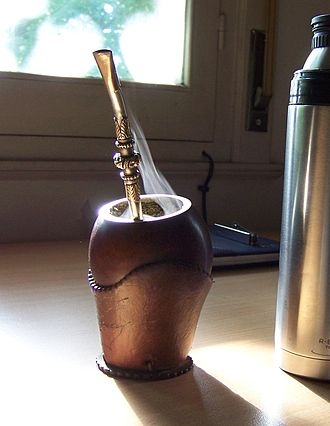
I flew into Seattle yesterday to visit the grand babies (and their parents).  This was an exciting time as we had not been able to get together for quite a while (covid and time constraints).  We spent last night catching up and enjoying the kids (not my dogs this time) talents for baseball and gymnastics that they have been honing.  After an early night and earlier wakeup (for me at least) I watched the orchestrated chaos as the kids ate breakfast and got ready for school.  After joining their dad to take them to school, we returned, and the parents went online for work.  I enjoyed a cup of coffee as Alex came into the kitchen to make himself a cup of Yerba Mate.  This became a new compassion for him, and he explained how the drink was made, where it came from, and the bioeconomic aspects of its production in the Amazon rain forest.  Since I had recently blogged on bioeconomy, I was intrigued to learn about Mate.

When I looked online, I found Mate or maté is a traditional South American caffeine-rich infused herbal drink also known as chimarrão or cimarrón.  The drink is made by soaking dried leaves of the yerba mate (Ilex paraguariensis) plant in hot water and is traditionally served with a metal straw (bombilla) in a container made from a calabash gourd (also called the mate).  In some areas the container can be made from a cattle horn (guampa).  A similar preparation (mate cocido) removes some of the plant material and sometimes comes in tea bags.  Yerba mate (ka’a in the Guarani language) contains the stimulant caffeine.  The leaves are dried and chopped or ground to make the coarse powdery preparation called yerba (‘herb’), which is then soaked in hot water.  Mate was traditionally consumed by the Guaraní and Tupí peoples and was exclusive to the natives of Paraguay.  It is now the national beverage of Argentina, Paraguay, and Uruguay.  It is also consumed in the Bolivian Chaco, Northern and Southern Chile, and southern Brazil.  It was brought to Syria (largest world importer) and Lebanon by immigrants from Paraguay and Argentina.  Today, mate is sold commercially as “yerba mate” in tea bags and as bottled iced tea.

Drinking mate is a common social practice in Paraguay, Uruguay, Argentina, and Southern Brazil among people of all ages, and is often a communal ritual following customary rules.  Friends and family share from the same mate container, and drink through the same wooden or metal straw.  The gourd is given by the brewer to each person in turns, and they often sit in a circle.  The recipient drinks the few mouthfuls in the container (denoted by the slurp as it is finished), and then returns the mate to the brewer where it is refilled and then passed to the next person in clockwise order.  The recipient is not supposed to say thanks until they have completed drinking the beverage.  If they do say thanks, they will not be served any more mates.  In warm weather the hot water may be replaced by lemonade.  Today the traditional gourds are also produced from a variety of other materials including wood, glass, bull horns, ceramic, and silicone.  Alex’s gourd is ceramic encased in leather. 

Thoughts:  Sitting and passing a cup is a traditional way to both acknowledge and build community.  Similar practice can be found with the shared pipe (Native American), hookah (India and the Middle East), or even the English practice of High Tea.  Community has not been lost, but we often bury its cohesion under a blanket of activity.  When we take time to step back from the orchestrated chaos that makes up so much of modern industrialized culture, we can reconnect with friends, family, or even any newcomers we welcome into our midst.  Act for all.  Change is coming and it starts with you.
Clear

September 12, 2023

I mentioned how I was wanting to clear the weeds from my three potato beds last weekend.  When I finally got around to removing the weeds, I found that while the vines still had some green, they had mostly withered and even become detached from the store of potatoes I anticipated underground.  I carefully removed the surface vegetation and then got my hand rake to scoop the potatoes out of the ground.  Last year’s potato harvest was not great, but each of the six hills yielded around 5 or 6 spuds of various sizes.  With 16 hills planted this year had high hopes, and this year’s harvest was disappointing.  The five hills in the first bed held very few potatoes, ranging from small to tiny.  The other two beds had no potatoes at all, although I did encounter several rotted tubers.  With the 100F (37.7C) temperatures we had just two weeks ago I was not sure I was ready to think about winter but since the weeds and potatoes were cleared out of the beds, I knew I needed to do something to keep the weeds from taking over again.  Once more (as I seem to do every year) I vowed that next year I would do better.   

When I looked online, I found several sites offering tips on how to clear your garden beds for the winter.  They spoke of the joy of a wonderful harvest (not so much) and the dying plants that come with the first frost of October.  Fall preparation begins with removal of the dead vegetation to keep pests from overwintering in the foliage and fruit left in the beds.  A light layer of compost and mulch will help keep down the weeds and protect the soil without insulating the beds (a ground freeze will kill most pests).  They recommend a soil test from your state extension office to see how much lime and fertilizer to add to the soil.  This is also the time to plan for what will be planted the following spring and to begin construction of any additional plots or beds.  The leaves that are about to fall are another good way to expand your compost pile.  This is the time to take notes as you prepare the beds for winter.  What did you grow, how did it fair, and what kind of pests did you face are good reminders for the coming planting season.  Your beds will soon be covered with snow or frozen until the coming spring.  Finally, take time to enjoy the fall. 

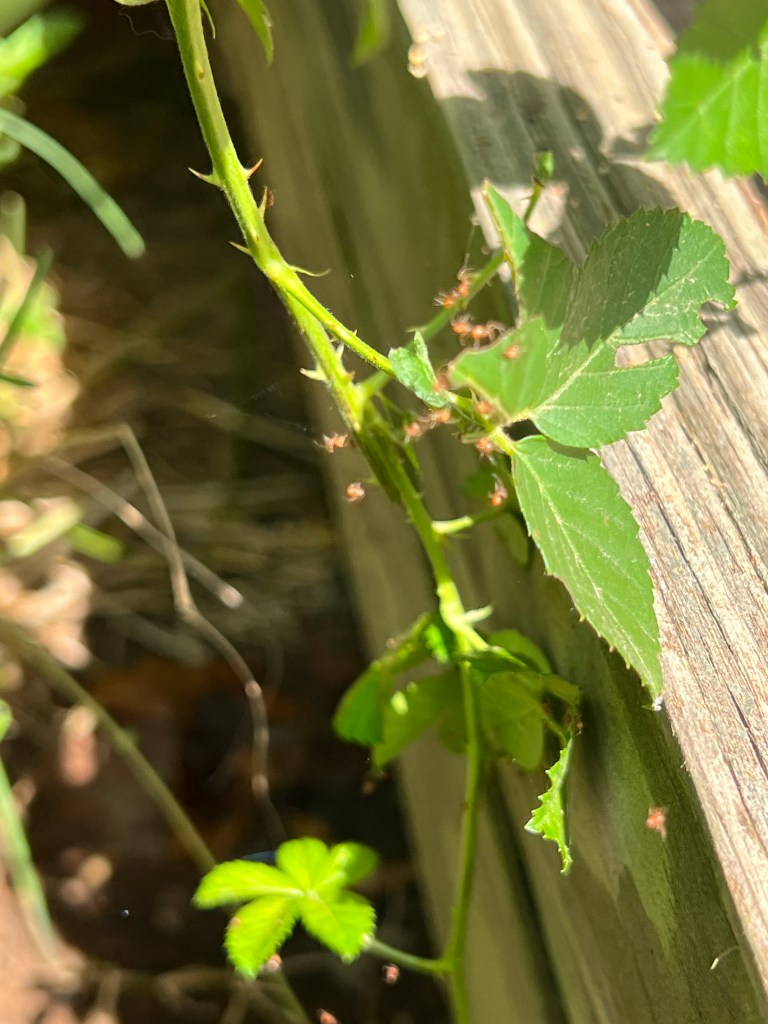
I mentioned I found a rabid wolf spider (Rabidosa rabida) in the third bed when I began to clear out the weeds and how the spider was carrying her young spiders on her back.  I also came across a cache of tiny baby spiders when I cleared the first bed.  I had not thought much about them at the time, and assumed they were the small red spider mites (Tetranychus urticae) that are known to attack potato plants.  After I researched the rabid wolf spider, I changed my mind.  The dozens of tiny critters had spider bodies and eight legs and were concentrated around a thin area of web.  While I do not know what species this was, I believe these were another form of wolf spider and that I had disturbed the nest that had been hidden by the debris.  If they are tiny spiders, they will clear out to find their own nesting and habitation.  If they are mites, the lack of cover and impending freeze will clear them for me.  Either way, I should be good by next year.

Thoughts:  While I was able to clear the potato beds, the tomatoes are again beginning to produce.  While now is the time for me to sit back and reap a second harvest I know I need to plan better for next year.  I ended up with lots of tomatoes and peppers, a few potatoes, and a single melon (two, but one was eaten by a critter).  Every year I learn a new skill and technique, but if I am going to rely on my garden, I need more diversity.  Diversity is essential for what we eat, but also adds to our quality of life.  Diverse ideas and perspectives can create a better outcome on any human project.  Act for all.  Change is coming and it starts with you.
Rabid

September 11, 2023

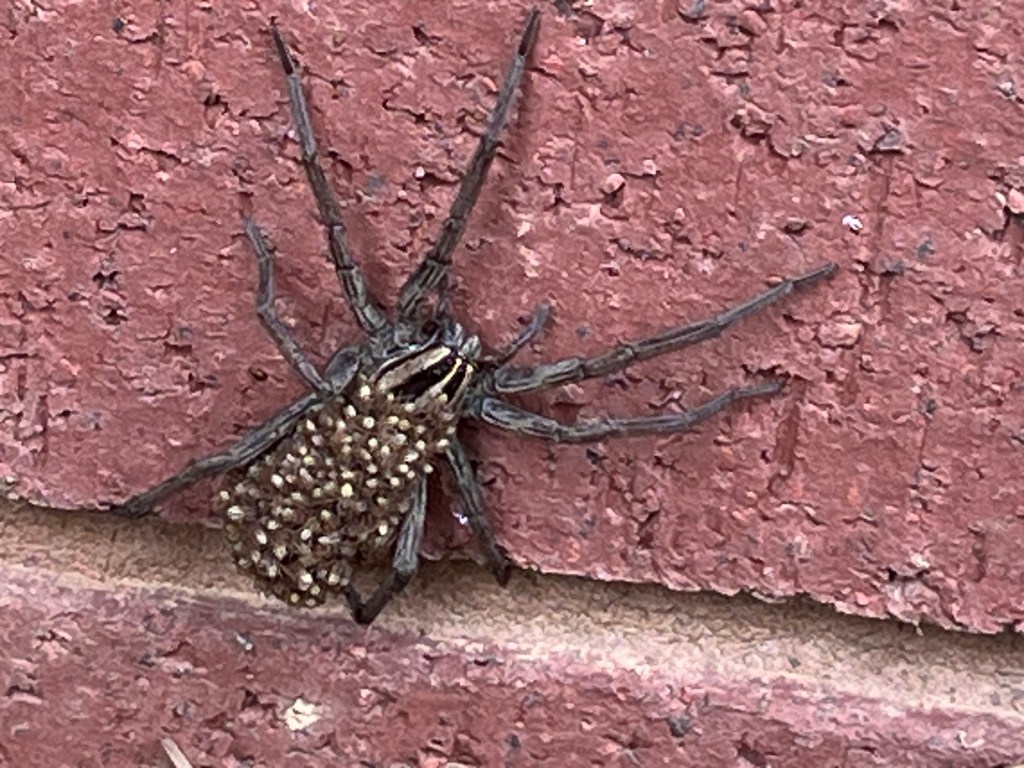
Over the weekend I decided I could no longer procrastinate and had to clear the weed out of the three beds where I was growing potatoes.  I cleared all three beds when I planted the 16 Yukon Gold (Solanum tuberosum) potato sets and placed cages on each mound to make sure I knew where they were.  I even took the step of placing a small (30 inch/.76 m) fence around the beds to keep Loki from trying to investigate.  The vines took off well and produced the flowers I had seen on my potatoes last year.  I had mulched the beds with straw to keep the weeds from growing, but apparently did not use enough mulch.  The weeds grew and the cages and fence did as much to discourage me from weeding as it did to keep Loki from investigating.  I removed the fencing (thinking I would put it back up after clearing the weeds) and began clearing the weeds.  When I got to the third bed, I noticed a large (3 inch/7.6 cm) spider crawl out of the weeds and onto the wall.  When I checked my identification app it said it was a rabid wolf spider.   

When I looked online, I found the rabid wolf spider (Rabidosa rabida) is a species of spider from the family Lycosidae.  The rabid is native to North America and can be found in the US from Maine to Florida and west to Texas.  The cephalothorax (head and the thorax fused together and distinct from the abdomen behind) has two dark stripes and the abdomen has one stripe of the same color.  The female rabid can grow to a body size of 1 inch (2.5 cm), while males measure slightly smaller around .5 inches (1.25 cm).  Their total leg span can take them to about 3 inches (7.5 cm).  The rabid has eight eyes (4 above and 4 below) which look like a spider’s moustache.  During the day, these spiders live in burrows or holes that they have created for themselves and cover it with debris or silk.  They do not create webs and instead come out at night to hunt where they use a combination of sheer speed, agility, and camouflage to hunt down or ambush their prey.  The common name (rabid wolf spider) is believed to derive from the erratic, rapid movement of this species.  The rabid will bite, if provoked, but it is not dangerous to humans and since spiders cannot contract rabies, they do not spread this disease to humans or other animals.

One of the things that threw me off in identifying the rabid spider was the large bumpy abdomen.  What I found was this was not the mother spider, but the large number of spiderlings she was carrying on her back.  During the spider’s mating ritual, the males perform a dance to seduce the female, along with creating sound through stridulation, or rubbing together their two stridulatory organs.  The female will create an egg sac around 1/3 inch (.84 cm) in diameter that is carried with them while they hunt.  As the eggs get ready to hatch, the egg sac turns from a bright white to a muddier brown color.  A single egg sac can produce between 150 and 350 spiderlings.  The newly hatched spiderlings stay with the female on her back until they are mature and strong enough to go off on their own.  I have often seen wolf spiders carrying their web sacs, but this is the first time I recall seeing the spiderlings on the mother.

Thoughts:  The rabid wolf spider is a frequent traveler and always on the move at night while they hunt.  They tend to stay in the brush and debris, which made my overgrown flower bed the ideal place to live.  Predators include cats, dogs, and snakes, as well as other wolf spiders.  The rabid I found likely crawled out of the weeds as I was removing them, and then stayed motionless on the wall above the bed.  Melissa did not want to hear about the rabid when I brought her the picture, saying she “did not like critters”.  While I do not like spiders crawling on me, I find their lives and nuances fascinating.  Humans struggle to take care of more than two offspring.  I cannot imagine living with 150 children riding on my back.  Act for all.  Change is coming and it starts with you.

Aluminum

September 08, 2023

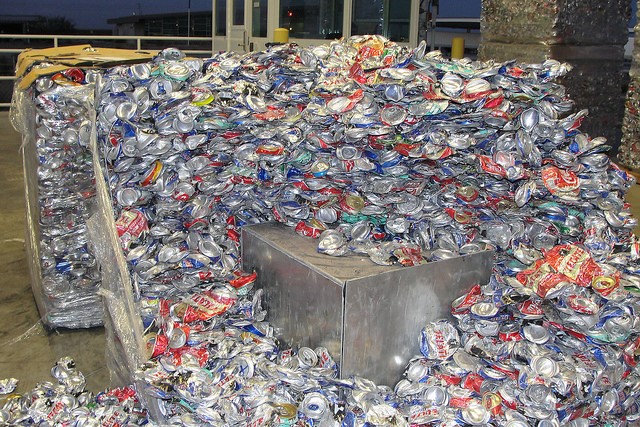
Today I did something I never thought I would do; I took my aluminum cans to the city recycling center rather than turning them into cash.  I had been in a conversation with my brother earlier this year and he told the story of saving his aluminum until he had several full bags and then taking them to the recycling center, only to be appalled by how little cash he received (US$.35 to .40 per pound).  Now he puts the aluminum cans in the city recycling and avoids the mess in his garage.  The last time I took my aluminum to recycling I had waited until I had collected eight 30 gallon (113.5 liter) trash bags.  They took up an entire side of my garage.  I received a higher price since my weight met the limit of 100 pounds (45 kg), for a total of US$40.  That covered my storage and 50 mile round trip to recycle my aluminum.  I still recycle my aluminum but have decided to let the city use the money to pay for their other recycling.

When I looked online, I found rumors that the pull tabs on cans are the only part of the can made from pure aluminum.  According to Alcoa, aluminum from recycled cans and tabs is identical to the aluminum smelted from ore, and the can is as valuable and recyclable as the tab.  One pound of aluminum equals 33 empty cans or 1,500 pull tabs.  Many national and local charities opt to only collect aluminum tabs, but the reason seems to be less storage and no messy beverage residue.  If you donate the aluminum tabs to a charity, you also need to recycle the rest of the can.  If you recycle for cash, you can donate what you are paid for recycling your aluminum cans.  According to the Environmental Protection Agency (EPA), making new aluminum cans from recycled ones saves 92 percent of the energy required when making cans from bauxite ore and recycling aluminum cans cuts down on the waste stream.

Aluminum is a pure or non-ferrous metal.  Non-ferrous metals are often flexible, do not contain iron, are resistant to corrosion and rust, and do not lose their chemical properties during the recycling process. There are seven different types of aluminum that are recycled.  Aluminum cans are the most common for recycling.  Aluminum is widely used in the manufacture of soda and food cans, but their high supply means a relatively low value.  Sheet aluminum includes things like lawn chairs, window frames, jacketing from MC cable, or light gauge pots or pans.  Cast aluminum has been poured into a mold and includes items like BBQ grills or larger light pole bases.  Aluminum wire is often mistaken for copper, but if the wires are silver and are not magnetic, they are likely aluminum.  Aluminum is not as valuable as copper wire but is still worth recycling.  Aluminum gutters or siding are common and are usually brought in by contractors or roofers.  Aluminum rims for automobiles and trucks are common, but be sure to remove rubber ties or lead wheel weights before bringing them in.  The last type of aluminum is called dirty aluminum and refers to any type of aluminum with steel, rubber, or plastic attached.  If there is any non-aluminum attached or mixed in with the “clean” aluminum, you will receive a reduced price as the aluminum must be cleaned by the scrapyard.  Aluminum recycling is more than cans.

Thoughts:  In 2018, the total recycling rate of aluminum containers and packaging was 34.9% with most recycled aluminum coming from beer and soft drink cans (50.4% or 0.67 million tons).  The landfills received another 2.7 million tons of aluminum, or 1.8% of total waste landfilled.  The total MSW in 2018 was 292.4 million US short tons, or 4.9 pounds (2.2 kg) per person per day.  Of that 69 million tons were recycled, and 25 million tons were composted.  Recycling aluminum could have reduced another two-thirds of aluminum produced and nearly 2% of excess landfill.  This would make a tremendous impact on the waste stream.  Act for all.  Change is coming and it starts with you.
Bridge

September 06, 2023

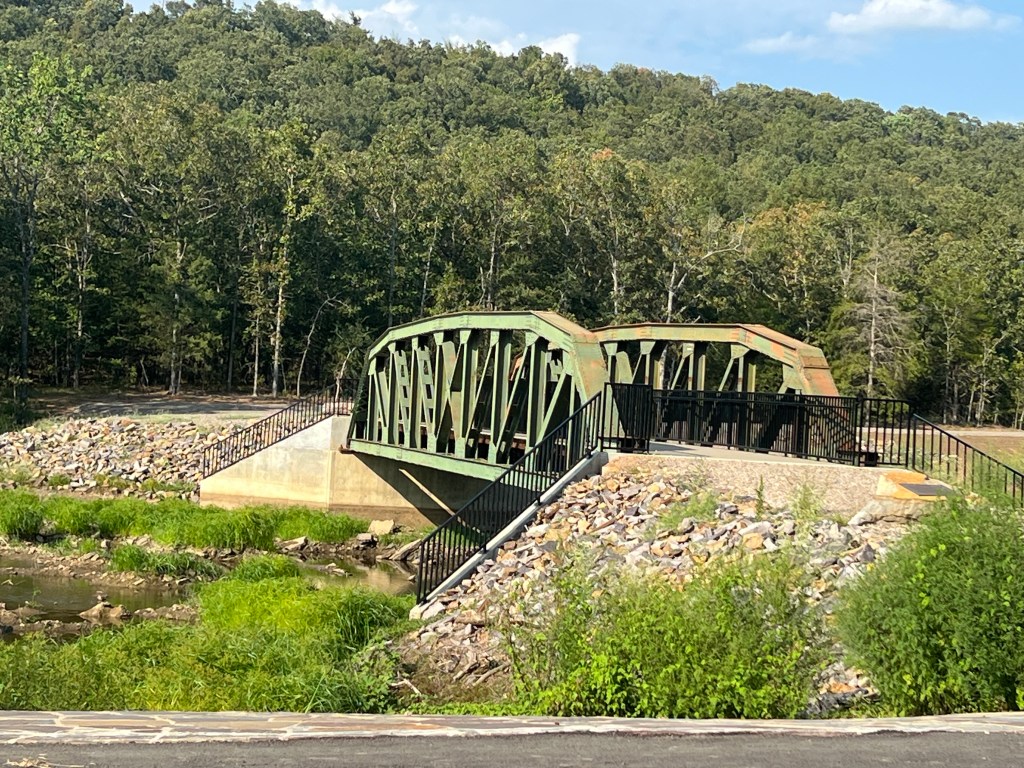
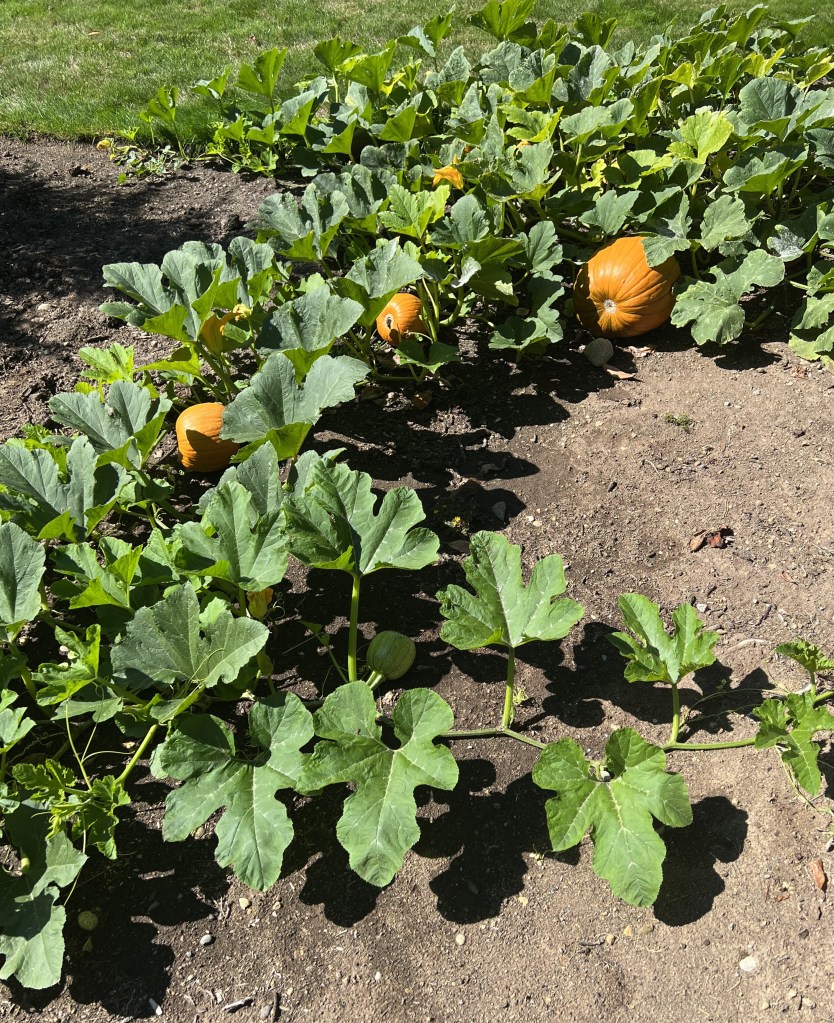
I fired up the battery and took the convertible out for a spin yesterday.  I have a bad habit of letting the car sit too long and the battery goes dead.  When the battery is completely gone it makes it impossible to turn the ignition key.  I called my mobile service the first two times this happened, but then learned what the issue was.  Now I know it is a matter of hooking up the jumper cables and allowing the battery to charge for a while.  Once it has enough juice the key will turn and (hopefully) the engine will fire up.  I let the car run for a bit longer and then persuaded Melissa to take a ride.  The first place we went was to the car wash and then decided to take a leisurely route back to our house.  We were almost home when Melissa said she wanted to see how much water was in the city reservoir.  As we neared the reservoir, we saw a sign specifying “local traffic only”.  I drove on wondering if we would get all the way to the water.  We did make it to the turnoff, but the road going beyond had another sign saying, “bridge out ahead”.  I also noticed a foot bridge had been installed across the inlet next to the dock.

When I looked online, I found the bridge had been dedicated June 10 in honor of Dr. Thomas R. Cuthbert Jr. and Ernestine Strang Cuthbert, who lived in lived in a home overlooking Greenwood Lake.  Cuthbert Bridge was built by the Virginia Bridge and Iron Co. in Roanoke, Virginia in 1931 to span across Terre Rouge Creek northeast of Hope, Arkansas.  The bridge was decommissioned in March 2009 and donated by the Arkansas Department of Transportation to the city of Greenwood.  The bridge was kept in storage, “awaiting a worthy cause and funding” until 2022, when a vision for its use was made possible by the dedication of donors.  The old car bridge is now used for foot or bicycle traffic by people who want to hike across or fish off it at the lake.  The bridge is open to the public.

The bridge was not the only new addition to the reservoir.  The trail that leads around the lake had been widened and a walkway built to traverse from the parking lot to the bridge.  The final addition was a large, elevated fishing pier that had been constructed next to the boat ramp.  I had noted two years ago how someone had purposefully rammed the stone wall/seating bench and broken off several pieces of stone.  Now there are three steel barriers set to keep people from “accidentally” running into the wall.  The city had cut through the wall and patio themselves to allow the access walkway to the bridge.  That meant the rock wall and patio that had been installed two summers ago was cut out to allow access. 

Thoughts:  The walkway leading to the bridge reminded me of how many times I have watched the construction/reconstruction that goes on with new streets in residential areas.  The crews never seem to be able to coordinate between the street and infrastructure.  The concrete will be poured, and the curbs formed, only to be torn out two weeks later when the storm drains and sidewalks are installed.  I understand how different contractors are on different schedules, but it seems like redundant work.  This is even worse when a highway is paved and then workers will cut out a section of the road to place new infrastructure, leaving a blemish in the newly paved highway.  Perhaps this is only my rant, but it speaks to a lack of communication in other areas of life as well.  If we do not talk to each other, there is no possibility for communication.  Act for all.  Change is coming and it starts with you.
Dakota

September 05, 2023

(AP Photo/Trisha Ahmed)

Inside the back section of my newspaper was a half-page AP article concerning the transfer of land back to the descendants of the Dakota Sioux tribe who once live (and secretly died) there.  Legislation adopted this year will lead to the transfer of Upper Sioux Agency State Park land to the Upper Sioux Community.  In three separate bills, the Minnesota Legislature approved around US$6.5 million to pay for the transfer of about 1,400 acres.  The last bill was adopted on August 28th, the final day of the 2023 session.  The transfer will not happen anytime soon, and Ann Pierce, Parks and Trails director for Minnesota Department of Natural Resources (DNR) said, “The park will be open this summer.”  More than 30,000 people visit the park each year.  The DNR will begin this year by reviewing any barriers to the land transfer and looking for areas to develop comparable recreational opportunities in the area.  Barriers could arise as state and federal funds were used to make improvements at the park, and these will need to either be repaid or forgiven.  Legislation requires state officials to identify the barriers and submit a report to legislative committee chairs by January 15, 2024.

When I looked online, I found the Upper Sioux Agency (or Yellow Medicine Agency), was a federal administrative center established in response to treaties with the Dakota people in what became Yellow Medicine County, Minnesota.  The government run campus located on the Minnesota River south of Granite Falls, Minnesota, included employee housing, warehouses, and a manual labor school which were destroyed in the Dakota War of 1862.  The grave of Chief Walking Iron Mazomani, a leader of the Wahpetonwan (Dwellers in the Leaves) Dakota tribes, who was killed during the 1862 Dakota War’s Battle of Wood Lake is buried here.  The site was established as a Minnesota state park during the 1960’s and listed on the National Register of Historic Places in 1970 for its significance under the themes of archaeology, architecture, education, and social history.  State Route 67 which traverses the park was closed after its collapse and the repairs to make it drivable would be expensive, as well as repairs to the bridge over the Yellow Medicine River that needs to be removed or replaced.

The US–Dakota War of 1862, also known as the Sioux Uprising or Little Crow’s War, was an armed conflict between the US and several bands of eastern Dakota.  It began on August 18, 1862, at the Lower Sioux Agency along the Minnesota River in southwest Minnesota.  The Dakota had been pressed into ceding large tracts of land in a series of treaties signed in 1837, 1851 and 1858 in return for cash annuities, debt payments, and other provisions.   All four bands of eastern Dakota were displaced and moved to a reservation 20 miles (32 km) wide, with 10 miles (16km) on each side of the Minnesota River where they were pushed to become farmers.  A crop failure in 1861, followed by a harsh winter and poor hunting due to depletion of game, led to starvation and severe hardship on the reservation.  Tension rose in the summer of 1862 when the US government annuity payments were late, and traders refused to extend credit for tribal members to buy food.  By the end of the war, 358 settlers, 77 soldiers, and 29 volunteer militia had been killed, along with an unknown number of Dakota casualties.  The Dakota released their 269 hostages on September 26, 1862, while around 2,000 Dakota surrendered or were taken into custody, including at least 1,658 non-combatants.  That included those who had opposed the war and helped free the hostages.

Thoughts:  One complaint voiced by the Dakota is they are forced to pay entrance fees to visit the graves of their loved one on land taken by force.  While the return falls short of reparations, it begins to acknowledge the government’s complicity in the past.  It is opposed to the residents around the park that profit from the tourists.  Act for all.  Change is coming and it starts with you.

Bioeconomy

September 04, 2023

Image © Ricardo Stuckert/PR/Planalto Palace.

The front of the Business Section of Sunday’s newspaper ran an article on the growing trend in the Amazon called Bioeconomy.  Bioeconomy became the new buzzword at the Amazon Summit held in Belem, Brazil in early August.  The concept offers a way to protect the rainforests while providing a livelihood for tens of thousands of Amazon residents.  Small to medium sized examples of this approach already exist throughout the Amazon Basin.  This includes the Brazil nuts, acai harvesters, chocolate makers, freshwater fish, and rubber tappers.  Para state Governor Helder Barbalho said, “the challenge is scale.”  One of the problems yet to be resolved is what exactly a bioeconomy should look like.  There are few success stories for sustainable enterprises on a large scale, except for the cosmetic company Nutura.  Residents were cutting the ucuuba (Virola sebifera) trees to make brooms, but now selling the seeds to Nutura has tripled residents’ income while leaving the trees standing. 

When I looked online, I found Bioeconomy (BE), Biobased economy (BBE), or biotechonomy is economic activity which involves the use of biotechnology and biomass in the production of goods, services, or energy.  All three terms are widely used by regional development agencies, national and international organizations, and biotechnology companies.  The terms are closely linked to the evolution of the biotechnology industry and the capacity to study, understand, and manipulate genetic material that has been possible due to scientific research and technological development.  This includes the application of scientific and technological developments to agriculture, health, chemical, and energy industries.  While the terms bioeconomy and biobased economy are sometimes used interchangeably there is value in distinguishing them.  The BBE economy takes into consideration the production of non-food goods, while BE covers both bio-based economy and the production and use of food and feed.  More than 60 countries and regions have bioeconomy or bioscience-related strategies, of which 20 have published dedicated bioeconomy strategies in Africa, Asia, Europe, Oceania, and the Americas.

A forest bioeconomy is based on forests and their natural resources and covers a variety of different industries and production processes.  Examples of forest bioeconomy include processing of forest biomass to provide products relating to energy, chemistry, or the food industry.  Forest bioeconomy covers a variety of different manufacturing processes based on wood material and the range of end products is wide.  Along with the different wood-based products, recreation, nature tourism, and wild game are a crucial part of forest bioeconomy.  Carbon sequestration and ecosystem services are also included in the concept.  Some argue public investment would be the tool governments should use to regulate and license cellular agriculture, but private firms and venture capital tend to try and maximize investor profit rather than social welfare, and radical innovation is considered risky.  The leaders and senior representatives of the strengthened Amazon Cooperation Treaty Organization who signed the Belém Declaration on August 8 took a first step.

Thoughts:  When governments establish supporting infrastructure for entrepreneurial ecosystems, they can create an environment beneficial to innovative bioeconomy startups.  Enabling these bioeconomy startups to act on the opportunities provided further contributes to their success.  A conservative estimate put US direct subsidies to the fossil fuel industry at roughly US$20 billion for 2019.  Twenty percent is allocated to coal and 80 percent to natural gas and crude oil.  European Union subsidies are estimated to total 55 billion euros annually.  We are subsidizing fossil fuel knowing it is destroying the planet.  We should be able to subsidize bioeconomy intended to save the planet.  Act for all.  Change is coming and it starts with you.
Mammillaria

September 01, 2023

While I might not like the hot weather we have been having lately, several of the cacti Melissa has placed outside at the entrance area of our home do.  These are Melissa’s summer growing cacti that she migrates from the porch greenhouse to the front walkway to allow them to get more sunshine and a fresh breeze (when available).  Melissa was performing their monthly watering this last week and called me over to show me how they were doing.  One of the small cacti looked like a furry little pin cushion, with its numerous white spines.  The reason I had been called over was to see the beginning of a halo of flowers that had formed around the top of the plant.  Melissa mentioned this was of the Mammillaria genus of cacti.

When I looked online, I found Mammillaria bocasana is a species of cactus in the subfamily Cactoideae.  The cactus is often sold as a “powder puff” cactus, or as a “Powder Puff Pincushion.”  In its natural habitat of Northern central Mexico, it is found between 5,413 to 7,550 feet (1650 to 2300 m) above sea level.  The powder puff grows on canyon walls, in volcanic rock, and in semi-desert localities, and is often found under bushes of other native plants.  Bocasana is hemispherical in shape and has white, hair-like spines that cover its radial and hooked central spines.  During the spring and summer, the plant bears several cream-colored flowers, followed by a red cylindrical fruit that contains reddish-brown seeds which display partially lateral markings from where they attached to the seed pod (hilum).  Its form can be variable, with many different varieties or subspecies.  Although the powder puff has been listed as “Least Concern” on the IUCN Red List of Threatened Species since 2009, it is still protected from collecting in the wild in Mexico.  Luckily for growers, Mammillaria can be easily propagated from seed.

The Mammilloid clade (an organism and all its descendants) is one of many that have undergone reclassification as a result of recent analysis of the genetic and hereditary molecular differences (mainly DNA sequences) to gain information on the organism’s evolutionary relationships.  A 2021 study restructured the seven genera previously comprising the clade into four monophyletic groups.  Monophyletic groups are typically characterized by shared derived characteristics (synapomorphies), which distinguish organisms in the clade from other organisms.  The name of the genus comes from the Latin word ‘Mammilla’ which means ‘teat’ or ‘nipple’ and refers to the numerous, nipple-shaped tubercles of the stem that are the distinctive feature of the genus.  In 2021, Breslin, Wojciechowski and Majure placed the following species in the genus, some already placed there, and some moved from Mammillaria, Neolloydia, Neomammillaria and Ortegocactus.  As of December 2022, Plants of the World Online accepted in the genus the species moved by Breslin et al.  “Looks like” is not a valid criterion.

Thoughts:  The gene mapping that took place for Mammillaria had previously been done on humans.  Genetic studies in the late 20th century refuted the existence of biogenetically distinct races, and scholars now argue that “races” are cultural interventions reflecting specific attitudes and beliefs that were imposed on different populations in the wake of western European conquests beginning in the 15th century.  Race has been applied to linguistic groups (“Arab race” or “Latin race”), to religious groups (“Jewish race”), and even to political, national, or ethnic groups with little or no physical traits that distinguish them from their neighbors (“Irish race”, “Slavic race”, “Chinese race”, etc.).  As with plants, “looks like” is not a valid criterion to separate the human species.  Act for all.  Change is coming and it starts with you.
Abbreviations

August 31, 2023

I was working in my office yesterday when I felt Zena stick her head under my arm.  Zena is generally patient when she wants something, but there are definite signs that let me know she wants something.  When Zena wants to go outside, she will stand in front of the door and stare at me.  When I am in my chair watching the nightly news and it nears supper time, Zena will come and lay her chin on my knee while looking up at me.  If I am back in my office where I cannot see her food bowl or the door, she will stick her head under my arm and snuggle close to my chest, all the while looking up at me with those sad eyes.  This gets my attention, but I usually put her off until I finish the immediate task I am working on.  When I get up Zena will prance toward the hall and look back to make sure I am going to follow.  When I do follow, Zena will take me wherever she wants me to go and shows me what she wants.  I have learned that sticking her head under my arm is Zena’s way of giving me the equivalent of the STAT abbreviations used in a hospital.

When I looked online, I found “stat” originated in pharmacology where the word would be written on a prescription to mean “immediately”.  Abbreviations are frequently used in medicine and can boost efficiency if they are used intelligently.  The advantage of brevity should be weighed against the possibility of making the communication harder for others to understand (obfuscation) and having more than one possible interpretation (ambiguity).  Certain medical abbreviations are avoided to prevent mistakes, according to best practices and in some cases regulatory requirements.  Examples of this avoidance are abbreviations for names of drugs, using apothecary’s units, and using trailing zeros or not using a leading zero.  Stat is part of a larger list of abbreviations used in medical prescriptions.  The Oxford English Dictionary gives two citations for this.  The first dates to 1875 where W. H. Griffith’s Lessons on Prescriptions (iv. 18) cites “Stat., immediately.”  The second comes from 1971 where Lancet 25 Sept. 700/2 cites “Stat., to be given at once.”  The word stat is an abbreviation of the Latin word statim, which means “instantly or immediately”.  This usage has generalized beyond the domain of prescriptions to refer to any medical action that needs to be taken immediately. 

The word abbreviation comes from the Latin brevis, meaning “short”, and refers to a shortened form of a word or phrase.  This may consist of a group of letters or words taken from the full version of the word or phrase, and an example would be for the word abbreviation itself, represented by the abbreviations abbr., abbrv., or abbrev.  NPO is another medical abbreviation for nil (or nothing) per (by) os (mouth) in medical instructions.  Abbreviations may also consist of just initials, a mixture of initials and words, or words or letters representing words in another language (for example, e.g., i.e., or RSVP).  Sometimes abbreviations are an acronym (some pronounceable, some initialisms), or grammatical contractions, or a contraction in which two vowels or diphthongs merge into one new vowel or diphthong, making one word out of two (crasis).  This paragraph is an example for why we will use abbreviations.

Thoughts:  Most have been caught in a situation listening to a conversation between specialists in a field where they reel off a series of acronyms and abbreviations as they discuss some issue.  The conversation makes it easier for the practitioners who know exactly what they are talking about, but the technical terms, acronyms, and abbreviations can exclude others who do not know the language.  This is another reason learning a different language can be difficult as this same type of word usage is embedded in our speech.  Language fluency can be used to differentiate between us and them, or we can take the time to explain what we mean in ways all will understand.  Act for all.  Change is coming and it starts with you.
Grasslands

August 30, 2023

Photograph: Education Images/Universal Images Group/Getty Images

A side front page AP article in today’s newspaper noted the plight of birds in the North American grasslands.  Now 50 years after adoption of the Endangered Species Act numbers of North America’s grassland birds are plunging due to habitat loss, land degradation, and climate change.  Over half the grassland bird population has been lost since 1970, which is more than any other type of bird.  Some species have declined 75% or more, and a quarter are in extreme peril.  This comes as the 38% (293,000 miles2 or 760,000 km2) of historic North American grasslands that remain are threatened by intensive farming and urbanization, and as trees once held at bay by periodic fires spread rapidly.  Both are consuming vital rangeland and grassland bird habitat.  This has prompted a coalition of biologists, conservation groups, government agencies, along with farmers and ranchers, to work together to stem or reverse losses.  Scientists are intensifying efforts to tag birds and install radio telemetry towers to track the birds, and they are working with farmers and ranchers to implement best practices that ensure survival of their livelihoods and native birds.  Both are dependent on a healthy ecosystem.

When I looked online, I found grasslands used to cover a large swath of North America before European settlement.  When Europeans arrived, they plowed up about half of the grasslands on the continent and converted them to agricultural use, growing corn, soybeans, and wheat.  For a few years in the 2010’s the rate of grassland loss was decreasing but in 2018 and 2019, the number started to rise again.  A report in 2021 estimated that from 2018 to 2019 at least 2.6 million acres of grassland were plowed up, primarily to make way for row crop agriculture.  While there are many reasons grasslands are turned into croplands, farmers and ranchers make decisions based on global commodity prices, and there is an increased crop demand for human consumption, livestock feed, and biofuels.  Urban sprawl also plays a part as croplands are being turned into housing and crop production is being pushed into grasslands.  These marginal, less productive grasslands contain some of the highest-quality habitats for nesting birds and monarch butterflies.

As the vast grasslands of central North America were explored after acquisition by the US via the Louisiana Purchase (1803), they were referred to as the Great American Desert.  The term can be traced to Stephen H. Long’s 1820 scientific expedition which put the name Great American Desert on the map.  The grasslands are now usually referred to as the High Plains, and the original term is used to describe the arid regions of northwestern Mexico and the American southwest.  In the past, the term “desert” had two conflicting meanings.  Dessert was used to describe any uninhabited or treeless land whether it was arid or not, and dessert also referred specifically to hot and arid lands, or wastelands.  It was long thought that treeless lands were not good for agriculture, so the term “desert” held the idea of “unfit for farming”.  The High Plains are not a desert in the modern sense but were a dessert in the older sense of the word as the region is mostly semi-arid grasslands and steppe.  Today much of the region supports agriculture (crops and grazing) using aquifer water irrigation.

Thoughts:  People often think of forests as natural ecosystems that store huge amounts of carbon, but grasslands also store immense amounts of carbon underground.  Patrick Lendrum, of the World Wildlife Fund’s northern Great Plains program, says “When we plow ancient grasslands that storage capacity is lost, and it can take decades or centuries to restore the grasslands.”  Everyone knows about the destruction of the Amazon, but grasslands in the “flyover country” are off their radar.  It is just an open expanse.  The world’s ecosystems work in cooperation and support each other.  They all need to be saved and cared for.  Act for all.  Change is coming and it starts with you.