Dove

August 29, 2023

I have mentioned Melissa’s home office in the kitchen nook has a bay window looking onto the back patio/pool.  She usually has the blinds up to allow her to watch the bird and squirrel activity, but with the warm weather she has been keeping the blinds down to stave off the heating rays of the sun.  Since it has cooled the last few days, she has again opened the blinds.  While the pool is not usable, it still holds water that seeps through the tarp cover and creates a shallow pool.  During our long dry heat, one of the squirrels discovered this oasis and has taken to crawling down the sloping sides of the tarp to get a drink of water.  The squirrel drops down from an overhanging tree branch. Scurries along the top and then down the side of the fence, over the deck and then down the tarp for a drink.  The squirrel then reverses this same route to get back into his tree.  Yesterday, however, a collared dove perched on the fence blocking the squirrels return path and creating a standoff.  I watched as the squirrel and dove both stood their ground and refused to move.

When I looked online, I found the Eurasian collared dove (Streptopelia decaocto) is a species native to Europe and Asia, but that has been introduced to Japan, North America, and islands in the Caribbean.  The generic name is from the Ancient Greek streptos meaning “collar” and peleia meaning “dove”, and the epithet decaoct is Greek for “eighteen”.  The Eurasian collared dove is a medium-sized dove, is smaller than the wood pigeon (Columba palumbus), is similar in length to a rock or common pigeon (Columba liviabut) but slimmer and longer-tailed, and is slightly larger than the related European turtle dove (Streptopelia turtur).  The collared dove has an average length of 13 inches (32 cm) from tip of beak to tip of tail, a wingspan of 19 to 22 inches (47 to 55 cm), and a weight of 4.4 to 8.5 ounces (125–240 g).  This dove is grey-buff to pinkish grey in overall color, a little darker above than below, and with a blue-grey underwing patch.   The marking on its nape is the black half-collar edged with white which gives the dove its name.  The two sexes are virtually indistinguishable.

The Eurasian collared dove was introduced to the wild in North America when fewer than 50 birds escaped captivity in the Bahamas.  The species then spread to Florida and is now found in nearly every state in the US, as well as Mexico.  The dove was first sighted in my state of Arkansas in 1989, and its numbers have grown until it is now present in 42 of 75 of the state’s counties.  The dove spread from the southeastern corner of the state in 1997 to the northwestern corner in five years, covering 310 miles (500 km) at a rate of 62 miles (100 km) per year.  This is more than double the rate of 28 miles (45 km) per year observed in Europe.  Few negative impacts have been demonstrated in Florida, where the species is most prolific, but the species is known as an aggressive competitor and there is concern that as populations continue to grow, native birds will be outcompeted by the invaders.  At least one study found the Eurasian doves are no more aggressive or competitive than native mourning doves.

Thoughts:  The number in the species name of the dove comes from a Greek myth about a maid who worked hard and was unhappy she was only paid 18 coins a year.  She begged the gods to let the world know how little she was rewarded by her mistress causing Zeus to create this dove that calls out “Deca-octo”.  The dove is not wary and often feeds very close to human habitation, including visiting the bird feeders in my yard.  I watched as the dove stood its ground until joined by two blue jays (Cyanocitta cristata).  Together they proved too much for the squirrel and he scampered down the fence and back along the ground to his tree.  Like the girl in the myth and the birds on my fence, the vulnerable can beat great odds when we band together.  Act for all.  Change is coming and it starts with you.

Nokota

August 28, 2023

AP PHOTO/JACK DURA

Inside the back section of my newspaper, I found an AP article on the potential removal of wild horses from the Badlands of North Dakota.   The wild horses roam freely in North Dakota’s Theodore Roosevelt National Park (TRNP) but could be removed under a National Park Service (NPS) proposal.  Advocates say the horses are a cultural link to the past and visitors who drive the scenic park road are often delighted to see the bands of horses, a symbol of the West.  While advocates want the horses to continue to roam the Badlands, park officials brand the horses “livestock.”  The NPS is revising its livestock plans and writing an environmental assessment on the impact of taking no action or removing the horses.  The horses have allies in government leaders and advocacy groups.  One advocate says the horses’ popularity will not stop park officials from removing them from North Dakota’s top tourist attraction.  “At the end of the day, that’s our national park paid for by our tax dollars, and those are our horses.  We have a right to say what happens in our park and to the animals that live there,” Chasing Horses Wild Horse Advocates President Chris Kman told The Associated Press.  The breed is registered as the Nokota horse.

When I looked online, I found Nokota is a feral and semi-feral horse breed located in the badlands of southwest North Dakota.  The breed developed in the 19th century from stock consisting of ranch-bred horses produced from the horses of local Native Americans and a mixture of Spanish, Thoroughbreds, harness horses, and related breeds. The Nokota was almost wiped out during the early 20th century when ranchers, along with state and federal agencies, worked to reduce competition with livestock.  When TRNP was created in the 1940’s, a few bands were inadvertently trapped inside, and the breed was preserved.  The Nokota has an angular frame, is commonly blue roan in color, and often exhibits an ambling gait called the “Indian shuffle”.  The breed is generally separated into two sections, traditional and ranch type, which differ slightly in shape and height.  The Nokota are used in many events, including endurance riding, western riding, and English disciplines.

In 1986, the park sold off many of these horses, including stallions, and released new stallions with outside bloodlines into the herds.  That prompted brothers Leo and Frank Kuntz to begin buying the horses to preserve the breed.  The TRNP continued thinning the herd, with roundups conducted during the 1990’s and 2000’s.  The Kuntz’ founded the Nokota Horse Conservancy in 1999, and later began a breed registry through the same organization.  In 2000, the last horses considered “traditional” Nokota were removed from the wild, with some purchased by supporters of the Nokota Horse Conservancy.  In 2009, the North Dakota Badlands Horse Registry was created, which registers the slightly different horses now being removed from the park.  The TRNP still conducts regular thinning of the herd to keep numbers between 70 and 110 individuals.  Excess horses are “sold off”. 

Thoughts:  Republican Governor Doug Burgum (presidential candidate) has offered the state to work with the Park Service to manage the horses, and North Dakota’s Republican-controlled Legislature passed a resolution to support preserving the Nokota.  North Dakota’s Republican US Senator John Hoeven included legislation in the US Interior Department’s appropriations bill that “would direct them (TRNP) to keep horses in the park in line with what was there at the time that Teddy Roosevelt was out in Medora.”  Hoeven is pressing the park to keep more than 35-60 horses for genetics reasons.  The final decision is unclear.  The Nokota represent a link between the Spanish conquistadors, Indigenous tribes, and cowboys which shaped the badlands over the last 500 years.  The Nokota are a link to our historic past, and not “livestock”.  Act for all.  Change is coming and it starts with you.

Glory

August 27, 2023

The excessive heat has dissipated, and I thought today might be a good day to get Zena back to the park for a walk.  I completed my watering early and then grabbed Zena’s harness.  Zena knows this means she is going for a ride and more importantly a walk.  When I sit in my chair Zena sits in front of me with lowered head to allow me to slip the harness on, then raises her left leg to go through the strap.  After I snap on the leash a Zena will run and sit in front of the door to wait.  She knows I will not open the door until she has settled down, so she sits until I get there.  When we get to the truck she eagerly jumps into the back seat, and we are off for the 5-minute ride to the park.  One of the reasons Zena likes the park is because she gets to explore all the smells.  This morning was no different, and as we made our rounds, Zena encountered a new patch of morning glory sprawled across the rock.

When I looked online, I found Morning glory is a common name that refers to over 1,000 species of flowering plants in the family Convolvulaceae.  The name comes from how most morning glory flowers unfurl into full bloom in the early morning.  The flowers usually start to fade a few hours before the corolla begins to display visible curling.  The plants prefer full solar exposure throughout the day, and a well-balanced supply of moisture throughout the growing season (mesic soil).  A few morning glory species are instead night-blooming flowers.  Species such as hedge bindweed (Calystegia sepium), common morning glory (Ipomoea purpurea), and blue morning glory (Ipomoea indica) are considered invasive in parts of the US.  As of 2021, most non-native species of Ipomoea are illegal to cultivate, possess, and sell in the US state of Arizona.  Before January 4, 2020, this ban applied to all native species as well.  The ban is in response to some species of Convolvulaceae causing problems in crops, especially cotton.  Ipomoea aquatica is considered a federal noxious weed, although Texas has acknowledged its status as a vegetable and allow it to be grown.

The species of Morning glory Zena encountered at the park appears to be Heavenly Blue (Ipomoea tricolor).  This is an herbaceous annual or perennial twining vine that uses trees to reach the sun (liana) that is native to Mexico and Central America.  The plant flourishes in full sun and grows to 7 to 13 feet (2 to 4 m) tall.  The Heavenly Blue flowers are trumpet-shaped, 2 to 4 inches (4 to 9 cm) in diameter and are a vivid sky blue with a white and yellow throat.  The heart shaped leaves are spirally arranged, and 1 to 3 inches (3 to 7 cm) long.  This is a fast-growing, self-seeding variety that blooms from early summer into fall in temperate zones.  The variety thrives best in warmer climates, but any location with full sun will allow the plant to reach its full potential.  The species is deer-resistant variety as well as pest and disease-resistant.  Along with the brightly colored flowers, this makes the low-maintenance perfect for “plant and forget” use at the park.  Heavenly blue, and many other species of morning glory, contain d-lysergic acid amide (LSA), also known as ergine.

Thoughts:  I was surprised to find the presence of ergine in morning glory can be toxic to dogs, cats, and humans.  This is a psycho active substance and the seeds of Heavenly blue and Christmas vine (Turbina corymbosa) are used as psychedelics, producing an effect like LSD when taken in large doses (100’s of seeds).  Though the chemical LSA is illegal in some countries, the seeds are found in gardening stores.  Some claim seeds from commercial sources can be coated in methylmercury (illegal in the US and UK) or a pesticide to keep humans from ingesting them for the high.  While this is sometimes considered an urban myth, I would not want to test that theory.  It may end up like the Candy Man legend.  Act for all.  Change is coming and it starts with you.

Bills

August 26, 2023

I have (once more) been cleaning my closet to downsize the stuff we boxed up and carried from one house to the next.  I had already cleared out all the clothes that no longer fit.  This purge was to get rid of (donate) office supplies we have accumulated from work and home offices over the last decade.  I dutifully began with boxes from my last home office as well as the keepsakes I used to decorate my work office.  I was amazed how many writing pads I accumulated, especially since I bought a new bundle for my home office recently thinking I was out.  After working through my boxes (and tossing most as trash), I tentatively began to go through Melissa’s work boxes.  Even as I consolidated the pens, pads, envelopes, and miscellaneous supplies I was smart enough to ask before I threw anything out.  One item I came across was a small red envelope.  I nearly threw it in the trash but decided to see if it contained anything.  It was lucky I checked as there was a US$2 bill inside.

When I looked online, I found a red envelope or red packet is a gift of bills given during holidays or for special occasions such as a wedding, graduation, or birth of a baby.  Although the red envelope is from Chinese traditions, other cultures share similar traditional customs.  The red packet is also called “money warding off old age” (yāsuì qián) for Chinese New Year.  The custom has been adopted across parts of Southeast Asia, and other countries that have a sizable ethnic Chinese population.  In the mid-2010’s, a digital equivalent to the practice emerged within messaging apps with mobile wallet systems localized for the Chinese New Year.  It is traditional to put brand-new bills inside the red envelopes and to avoid opening the envelopes in front of the relatives who provide them out of courtesy.  However, to get the money, the younger generation needs to show respect by prostration (kowtow) or kneeling and bowing so low as to have one’s head touching the ground.  In Eastern Asian (Sinospheric) culture, the kowtow is the highest sign of reverence.  This act has been reduced in modern times, but it had been widely used to show reverence for one’s elders, superiors, and especially the Emperor of China, as well as religious and cultural objects of worship.  The red envelope had been given to Melissa by a friend over ten years ago and saved as an office memento of their friendship, and my finding it proved it to be lucky.

While the US$2 bills Melissa’s friend had placed inside are a past and current denomination of US currency they have fallen into disuse.  The bills feature a portrait of Thomas Jefferson (1801–1809), the third US president, on the obverse and an engraving of John Trumbull’s painting (circa 1818) Declaration of Independence on the reverse.  Pre-1929 the larger sized bills were issued as a US Note, National Bank Note, Silver Certificate, Treasury or “Coin” Note, and Federal Reserve Bank Note.  When currency was changed to a standardized size in 1928, US$2 bills were redesigned and only issued as US Notes.  The production of these bills was phased out in 1966 but reissued in 1976 as a Federal Reserve Note with a new reverse design.  As a result of banking policies with businesses two-dollar bills do not circulate as widely as other US currency bills.  

Thoughts:  The comparative scarcity in circulation and a lack of public knowledge that the bills are still being printed has inspired several urban legends about its authenticity, rarity, and value, and can create problems for those trying to use the bills to make a purchase.  Scarcity also indicates significant numbers of the bills are removed from circulation and collected by people who believe the bill to be rarer and more valuable than it is.  Or perhaps being given on special occasions it is cherished and eventually lost.  Working as a cashier, I could never figure out where to put the bills in the change drawer.  The two-dollar bills are different and do not fit naturally into cash registers but that does not make them less valuable.  The same is idea true with people.  Act for all.  Change is coming and it starts with you.

Costume

August 24, 2023

I was (only) mildly surprised when I went to the big box store in town yesterday.  I needed to get smoked salmon for my version of the “tiny sandwiches” my sister-in-law makes for Christmas Eve.  I really like smoked salmon, so we tend to have this treat whenever they take my fancy.  Mine are not nearly as elaborate as the traditional ones her Danish mother taught her to make, but I still count them as an homage to the many times we have enjoyed the delicacies at her house.  As I wound my way through the snack aisles, I came across an endcap that had a large display of Halloween treats.  These snacks were on display with Halloween still two and a half months away.  Still, it was only tubs of individually wrapped cheese balls and pretzels.  When I came out on the main aisle, I was surprised by large racks of Halloween costumes and Halloween yard displays hanging from the ceiling.  This was a full scale rush that skipped right over Labor Day and into Halloween.  I guess Labor Day costumes are not a big sales item.

When I looked online, I found the site Emily Post Etiquette that addressed the summer traditions in the early 20th century.  While there are no official costumes, Labor Day did mark the end of wearing white clothing.  During the first three decades in the US northeast seaboard the summer season was bracketed by Memorial Day and Labor Day.  Society families left their city town house to a seaside “cottage” or mountain “cabin” to escape the heat.  City clothes were left behind in exchange for lighter, whiter, summer outfits.  With their return to the city after Labor Day, summer clothes were put away and replaced by formal city clothes.  This was an age when society had a dress code for practically every occasion, and the signal to mark the change between summer resort clothes and clothing worn for the rest of the year was encapsulated in the dictum, “No white after Labor Day.”  Today’s styles are more about fabric choice than color.  Etiquette says, “the true interpretation is ‘wear what’s appropriate—for the weather, the season, or the occasion.”

Wearing costumes is a big part of attending one of the many Comic-Con events, where it is called cosplay.  When you observe the variety of costumes it reveals the consideration, time, and toil that went into their creation.  That includes the accompanying props, makeup, headgear, and more.  For those wearing the costumes and playing the characters they often view their toil as the labor of love.  They know the “cultural capital” of a completed costume will be judged by overall quality and the amount of time and labor invested in their creation.  Some cosplayers enjoy the attention received while walking around in full costumes.  Others are uncomfortable with the attention, particularly when they are wearing revealing costumes which can prompt inappropriate behavior.  Some cons display signs warning that, “cosplay is not consent,” reminding attendees to ask permission before taking pictures, and to avoid unwanted touching.

Thoughts:  Living in California attended the annual Renaissance Faire with friends.  The Faire was in a large, wooded area which provided enough room for permanent enclaves for fantasy (elves and fairies), pirates, royalty (Queens and peasants), along with knights and ladies.  Each enclave featured the appropriate food and drink.  We would prepare our costumes for the event months in advance by searching the used clothing stores and specialty shops of the Bay Area.  Unlike the comic-cons there were no preset characters, and the costumes could reflect almost anything or one.  My character was usually built around whatever purchases I had made in the previous months.  Costumes are a good way to take on another role or persona for a little while.  In life we need to understand who we are, even as we grow into who we would like to be.  Act for all.  Change is coming and it starts with you.
League

August 23, 2023

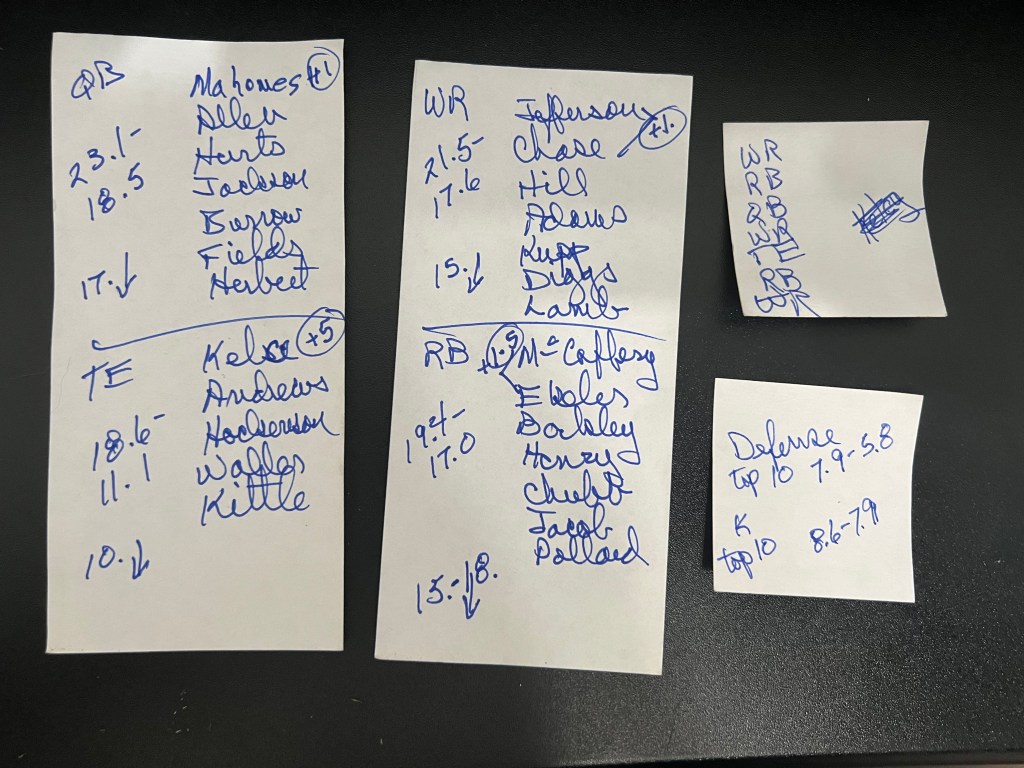
Last night was our league fantasy football draft.  I mentioned before our 10 team league is centered around relationships with my son Alex, who is also the commissioner.  Several days before the draft I went out to the website and broke down the standings for players last year and the predictions for this year.  I came up with an elaborate plan to determine the position order that I would draft and the top players (and by how much) in each position.  This year’s draft had another nuisance as Alex was joined in selecting the players for his team by his son.  Brooks had assured his dad they would draft all the good players and then win the championship.  Just like the 32 teams that play in the NFL, we all start on an even playing field (0 – 0) and know there is a chance we can win it all.

When I looked online, I found dozens of Fantasy Football draft sites offering to give you the best information to make your picks.  I play in an ESPN Fantasy League which offers free advice (as well as in-depth advice for a price) which is much like the other draft information sites.  Another example is the 2023 Yahoo Fantasy Football Draft Kit which touts “being updated daily and we’ll continue to add new content here all the way up until the season kicks off.”  The kit provides the rankings, sleepers, busts, position previews, and the expert analysis you need to become the league champion.  You can try mock drafts to help hone your drafting skills.  You can subscribe (for a price) to the Yahoo Fantasy Football Show and receive up to the minute advice five times a week.  After the season begins the site offers Yahoo Fantasy Plus to keep you up to date during the season and to give you “an exclusive edge on the competition”.  With all that advice you are sure to win, right?

The order of league draft picks can be determined randomly or by the previous year’s league standings, where the team with the worst record picks first, followed by the team with the second-worst record, and so on.  In some leagues owners retain the same draft position in each round, but our league uses a “serpentine” or “snake” draft.  In the snake draft, the owner who picks first in the odd rounds picks last in the even rounds, while the owner who picks second in the odd rounds picks second to last in the even rounds, and so on.  League drafts can be conducted in “live” or “auto” formats.  Live drafts involve team owners selecting players in real time, while auto drafts are those in which selections are made by the computer based on pre-draft rankings set by the owner.  Owners who are not present at the time of the draft will often “auto-draft” while the rest of the league makes live selections.  Leagues where the owners live near to each other can hold the draft at a single location with a draft party.  Sinc e my league is scattered across the country, we all draft from home, and many use the auto draft format.  

Thoughts:  Last night I drafted in the middle of the pack in our league.  That meant I was alternately the fifth and sixth pick in the 16 rounds of the snake draft.  For all my planning, I did not get any of the top two players at their position, only two others were in the top three, and my tight end fell completely off the chart.  My hope is for one of the undrafted rookies to have a breakout season and I can pick him up early.  You never know.  So far, I am still tied for first (0 – 0) for the season.  While nature seems to use an opportunistic approach for survival, humans often take an optimistic approach.  We hope for the best even as we try to create a better outcome.  Try to treat life like my fantasy draft knowing there will be opportunities for the future.  Act for all.  Change is coming and it starts with you.
Tarantula

August 22, 2023

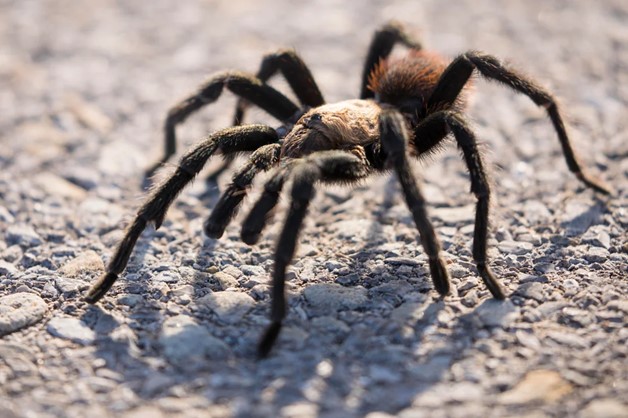
The top story in today’s Daily Briefing from my local online newspaper led with an article (jokingly) warning people scared of spiders (arachnophobia) to be on the lookout for a tarantula.  As the weather cools the mating season begins for the brown tarantula.  Mating season runs from late August through October, as the arachnids leave their burrows and hideouts in dry, arid areas to roam across the land in search of mates.  Unlike web-spinning spiders, tarantulas often take over old burrows dug by other animals or dig their own, lining the holes with webbing to trap their prey and foil predators.  The species is nocturnal and hunts at night.  When the males begin their mating migration, they can often be seen close to houses or crossing roadways.  The males do not have any time to waste, as their lifespan in the wild is only up to one year.  Females can live up to three decades.

When I looked online, I found the Texas brown tarantula (Aphonopelma hentzi), also known as Oklahoma brown tarantula or Missouri tarantula, is one of the most common species of tarantula living in the Southern US.  The large brown spider can be found in parts of Mexico, along with six US states (Texas, Missouri, Oklahoma, Kansas, Arkansas, and Louisiana).  The stocky arachnids can grow to be four to five inches (10 to 12.5 cm) long and weigh between 1 to 3 ounces (28 to 85 grams).  Coloration ranges from light brown to black and may vary between individuals.  The generally docile tarantula is often kept as a pet.  The brown tarantula has venom that is toxic to very small animals but not humans.  If incited, they may stand on their back legs to show their fangs to intimidate a potential threat but will not strike unprovoked.  The dense hairs on their body are also used to fling at the eyes of a predator when they are threatened.  Though they look scary, the tarantula is generally shy and avoids human contact.  During mating season, however, they are more on the move.

Arachnophobia is a 1990 American horror comedy film directed by Frank Marshall in his directorial debut and starring Jeff Daniels and John Goodman.  The film follows a small California town that is invaded by an aggressive and dangerous spider species.  The film used over 300 Avondale spiders (Delena cancerides) from New Zealand.  Although not a tarantula, the spider was chosen for its large size, unusual social lifestyle, and harmlessness to humans.  The spiders did not like Lemon Pledge furniture wax or hot blowing air.  To make the spiders hit their “marks” during filming, a pathway was created using Lemon Pledge as the boundaries and hair blow dryers were used to get the spiders to move.  The spiders avoided the Lemon Pledge and moved following the non-Pledged pathways created when the hot blow dryer air was aimed at them, hitting their marks precisely.  Cast members were not afraid of the spiders and even adopted a few of them.  After each “cut” was yelled, the cast would stop screaming and say “Oh, be careful, don’t step on that one” and “don’t forget that one over there”, while laughing the whole time.

Thoughts:  While you may be scared or tempted to stomp on a tarantula when sighted, the old adage is true, “they are more afraid of you than you are of them”.  The story goes that when the spider jumps on Becky Beechwood’s face in arachnophobia it was a “happy accident”.   The spider was following the Pledge pathway and was supposed to jump onto her neck when the blow dryers were turned on, but the spider landed on her face.  Actress Cori Wellins had her eyes closed relishing her hot shower and realized what had happened, thinking ” this is PERFECT!”  She continued as the spider crawled down onto her upper chest before she opened her eyes and “screamed”.  Now that is acting.  Act for all.  Change is coming and it starts with you.
Productivity

August 21, 2023

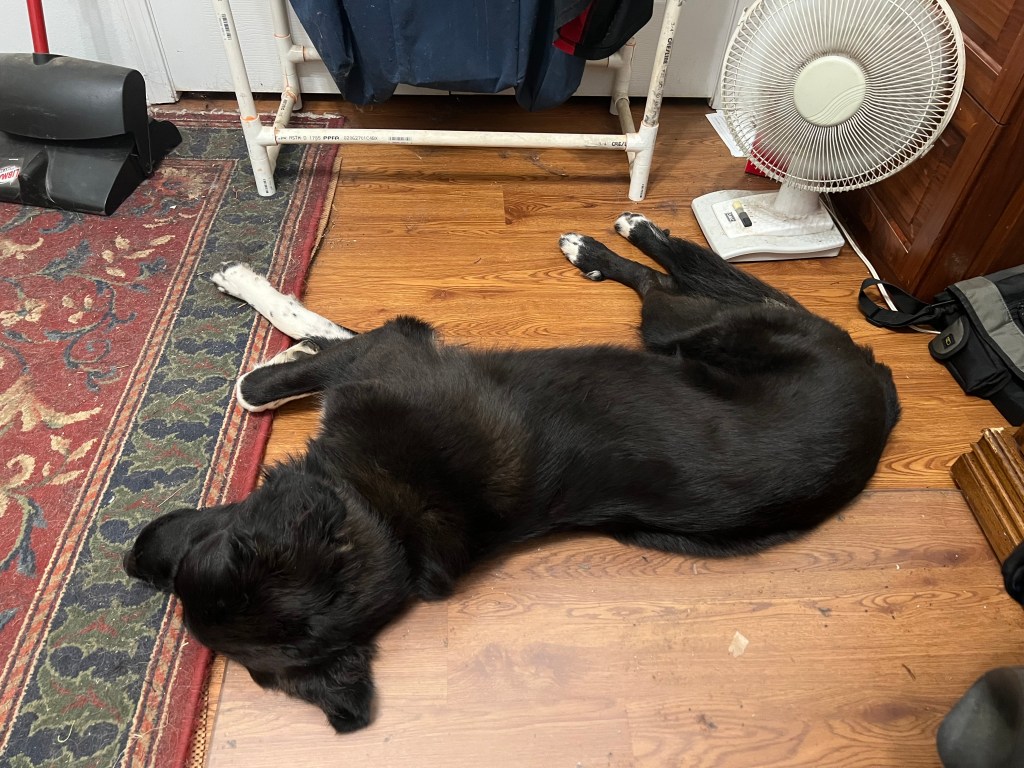
It has been brutally hot across the US southern states this summer.  Temperatures in Arkansas this week have (and will) hover over 100F (37.8C) with feels like temperatures (factoring humidity) of over 115F (46C).  That has made it hard for me to want to go outside to care for my containers or my yard.  The kids still want to go outside and eagerly rush the door when it is opened, but it is not long before they are ready to come back inside, and they always take a long drink before laying down exhausted.  Even inside the air conditioned house (kept at 80F/26.6C) I find it hard to get motivated to do much of anything.  I try and force myself to water in the evening and occasionally get to the store during the afternoon.  Beyond that I sit in front of the fan in my office and work crossword puzzles.  I wondered if my lack of productivity was due to the heat or just the general malaise of dog days of summer.

When I looked online, I found studies consistently confirm that room temperature and work productivity are directly related.  Research suggests a direct link between hot temperatures and lower productivity, but also that the correlation is more prominent in men.  Women were found to be more productive in warmer temperatures, especially when tackling verbal and mathematical tasks.  The results showed that women performed better in warmer temperatures, whereas men performed better in cooler temps.  The researchers noted the increase in women’s productivity at higher temperatures was much larger than the subsequent decrease in male productivity at the same temperature.  This suggests the best case scenario for a workplace is to err on the side of warm versus cool, as the decrease in the men’s productivity is canceled out by the increase in women’s productivity.  That assumes the genders are evenly distributed in terms of roles and responsibilities.  In the US, the Occupational Safety and Health Administration’s recommended indoor temperature as a range of 68F to 76F (20C to 24.5C).  

Overexertion in the heat can lead to heat exhaustion or heat stroke which can be fatal, and it is important for employees to take frequent breaks and stay hydrated on hot days.  This suggests employees would be less productive on a hot day compared to a day with pleasant weather.  The Becker Friedman Institute at the University of Chicago tested this idea by studying companies in India.  The researchers found that productivity declined at a rate of 2 to 4 percent for every 1.8 degree Fahrenheit (1C) after temperatures rose above 80F (27C). Workers were also more likely to take off work or call in sick during hot weather.  The study notes every time the average annual temperature in India rose by 1 degree Celsius, the country’s overall productivity declined by 3 percent.  Since global temperatures are set to rise over the next decades, this means we will all experience less productivity.

Thoughts:  Lack of productivity is often associated with the dog days of summer, or the hot, sultry days of summer.  While this is generally associated with the lazy dog sleeping in front of a fan, historically it referred to the period following the heliacal rising of the star system Sirius (the “Dog Star”), which Hellenistic astrology connected with heat, drought, sudden thunderstorms, lethargy, fever, mad dogs, and bad luck.  They are now taken to be the hottest and most uncomfortable part of summer in the Northern Hemisphere.  Productivity in the office, and the field, is a result of compromise.  That is true for the sexes as well as acclimatization.  Act for all.  Change is coming and it starts with you.
Ötzi

August 18, 2023

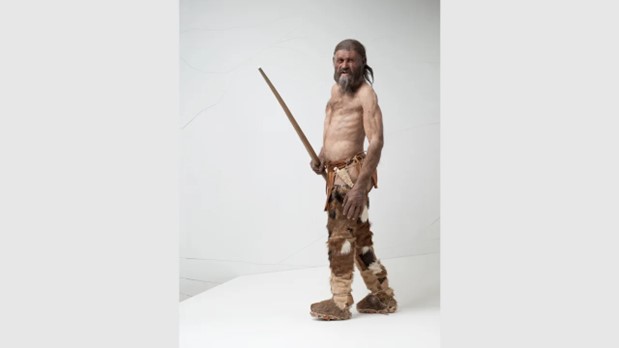
Today’s newspaper reveled new discoveries have given a different insight to the mummified remains of a man found by hikers in a glacier in the Italian Alps in 1991.  The man had been killed by an arrow shot into his back and had then frozen into the ice.  The mummy was found along with his clothing and gear, including a copper axe, a longbow, and a bearskin cap.  The mummy is Europe’s oldest known natural human mummy, offering an unprecedented view of Copper Age (Chalcolithic) Europeans.  The nature of his life and the circumstances of his death have been the subject of much investigation and speculation.  An earlier draft of the mummy’s genome was published in 2012 but with the advances in genome studies a new examination was conducted in 2023.  As the mummy was discovered in Ötztal Alps, it has been given the nickname “Ötzi”.

When I looked online, I found a new study of ancient DNA extracted from Ötzi’s pelvis revealed the 5,300-year-old mummy had dark skin and dark eyes and was probably bald.  This contrasts with the original reconstruction of Ötzi that depicts a pale-skinned man with a full head of hair and a beard.  It was originally believed the skin was discolored and the hair lost through the frozen mumification process.  Albert Zink, coauthor of the research published Wednesday in the scientific journal Cell Genomics, said “the dark skin color of the mummy is quite close to the Iceman’s skin color during (his) lifetime.”  Zink noted this is not surprising as many Europeans at that time likely had darker skin coloring than many present-day Europeans.  Lighter skin was an adaptation to changes in climate and diet, as farmers have less vitamin D in their diet than hunter-gatherers.  The iceman consumed a lot of meat, which was confirmed by the analysis of his stomach showing the presence of ibex and deer meat.

According to the study, the genome sequenced from DNA taken from Ötzi’s pelvis was more complete than a previous genome that was pieced together in 2012 when the field of ancient DNA was still in its infancy.  The latest research helps clear up a puzzle in Ötzi’s ancestry.  The 2012 study revealed that he had traces in his genome from the steppe people, sometimes known as Yamnaya, who only arrived in Europe centuries after his death.  The new study shows that this early result was probably the result of contamination by modern human DNA.  The 2023 study on Ötzi’s genome evidenced a high proportion (90%) of Anatolian-farmer-related ancestry with a lesser contribution from European hunter-gatherer-related ancestry.  The genome also appeared to rule out a previously proposed genetic affinity between Ötzi and present-day Sardinians.  When researchers compared Ötzi’s genome with those of other ancient humans, they found he had more in common with early Anatolian (Turkey) farmers who did not have much interaction with his European hunter-gatherer contemporaries.  The iceman most likely lived in a relatively isolated area with only limited contact to other populations and low gene flow from hunter-gatherer-ancestry-related populations.  When he did have contact, it may have been his last.

Thoughts:  This is not the first time the story of Ötzi has been rewritten.  It was originally thought that Ötzi froze to death, but a 2001 X-ray revealed an arrowhead in his shoulder, which would have been fatal.  The mummy also had a head injury, possibly sustained at the same time, and his right hand shows a defense wound.  “The whole story of the Iceman is intriguing, including the mystery of his violent death . . .  and the question why he was up there in the high mountains when he was killed,” Zink said.  Ötzi appears to represent the long standing conflict between different groups and lifeways.  The farmers of the valley did not associate with the hunter-gatherers of the mountain and likely did not understand (or respect) the differences.  In our globalized world we cannot afford to make the same mistake.  Act for all.  Change is coming and it starts with you.

Child

August 17, 2023

(Terrence Collingsworth / Associated Press)

Inside the front section of yesterday’s newspaper was an article on a lawsuit asking the US government to enforce the 1930’s era law that requires the government to ban products created by child labor from entering the US.  The nonprofit group International Rights Advocates filed the suit as Customs and Border Patrol and the Department of Homeland Security were ignoring the extensive documented evidence of child labor in cultivation of cocoa headed for major US based chocolate companies.  These companies had already agreed in 2001 to stop using the child sourced cocoa by 2005 (they did not) and now say they will eliminate the worst forms of child labor in their supply chains by 2025.  A 2019 study found 790,000 children, as young as 5 years, were working the Ivory Coast cocoa plantations.  Ivory Coast officials have said they are taking steps to eradicate child labor, but blocking the imports to US companies would devastate the nation’s economy.

When I looked online, I found the Fair Labor Standards Act of 1938 (FLSA) was signed into law by President Franklin D. Roosevelt on June 25, 1938.  This was among 121 bills signed by the president 9 days after Congress had retired from session to avoid pocket vetoes.  The law had faced corporate and judicial opposition and had been altered and rewritten by Congress for the last year.  The final form of the act applied to industries whose combined employment represented only about one-fifth of the labor force.  FLSA banned oppressive child labor and set the minimum hourly wage at US$.25, and the maximum workweek at 44 hours.  The act became effective on October 24, 1938, effectively banning the use of child labor under the age of 16 years.

Child labor violations have been on the rise in the US since 2015 after steadily declining for years.  In 2015 the federal Wage and Hour Division found 1,012 minors employed in violation of child labor laws, with an average of 1.9 violations per case.  That number grew more than triple to 3,876 in 1922 and averaged 4.6 violations per case.  Most violations occur in places where it is appropriate for minors to work.  That means teenagers are working too many hours at a grocery store or operating a fryer and staying too late at a fast-food chain.  The US generally has good child labor laws, except for agriculture where minors as young as 12 can work long hours and agriculture’s hazardous-occupation orders are not as strict.  While child labor violations can affect minors of all backgrounds, Reid Maki, director of child labor advocacy for the National Consumers League, says “a lot of the kids we see working in exploitative situations tend to be from immigrant families. . . and Latino,” often harvesting fruits and vegetables.

Thoughts:  One of the central allegations of the lawsuit is that while the chocolate company defendants did not own the cocoa farms, they “knowingly profited” from the illegal child labor.  According to the submissions, the defendants’ contracted suppliers were able to provide lower prices than if they had employed adult workers with proper protective equipment.  Saving a few pennies on your favorite bar of chocolate should not come at the cost of exploiting a child and destroying any possible future they may have.  That is true in the US, and for US company’s supply chains abroad.  Act for all.  Change is coming and it starts with you.