
April 04, 2023
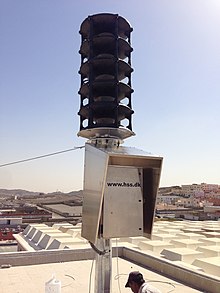
When Zena and I were walking in the park last month we saw a crew putting a large telephone-type pole along the road at one of the highest spots. As they worked on setting the pole in, they seemed to be having difficulty straightening the 50 foot (15.25 m) long piece of wood. When we came up the hill to the park the next day, they were attaching a large metal object to the top to the pole. At first, I thought it was a cell tower, but those usually mount on metal towers. Then I realized this was the newest siren for our town’s tornado alert system. When we walked the next week I noticed the pole was beginning to lean, and like the tower of Pisa, the lean gradually got worse. The next week the pole had been taken down (since it was not smashed) and was lying on the ground. They removed the alert siren and have yet to reinstall another siren at that location.
When I looked online, I found a civil defense siren, or tornado siren, is a siren used to provide an emergency alert to the general population of approaching danger. It is sometimes sounded again to indicate the danger has passed. Sirens in small municipalities can also be used to alert the fire department when they are needed. These sirens were originally designed to warn city dwellers of air raids during World War II, were later used to warn of a nuclear attack, and are now primarily used for natural disasters, like a tornado. Modern sirens can develop sound levels up to 135 decibels at 100 feet (30 m) and by varying tones or binary patterns of sound, different alert conditions can be called. The generalized nature of sirens led to many of them being replaced with more specific warnings, such as the TV and radio broadcast-based Emergency Alert System and the Cell broadcast-based Wireless Emergency Alerts and EU-Alert mobile technologies.
Where we live in Sebastian County, they have long used traditional tornado sirens as their primary source to alert residents of severe weather, but their time may be limited. Sebastian recently purchased a mass messaging system, and the alert sirens may soon become a thing of the past. As technology advances and cell phone use continues to rise the alert sirens are gradually being phased out. That may be a good thing, as Melissa received an alert on her cell phone saying the alert sirens are down all across the county and to use alternative forms of alert (TV, cell phone, weather channel) to stay alert for a tornado. I did not receive an alert.
THOUGHTS: When I was growing up the small town where I lived would test their alert siren during the spring on every Monday at noon. This served as a good way to make sure the alert still worked, and it helped me track the time on a lazy Monday morning. I always wondered what would happen if we had a tornado at the time of the test. I later found out the alert siren was not set to go off if the weather looked like there may be a tornado. Apparently, this was “need to know info” that all the adults were aware of, and it was only the children who were kept in the dark. This was also a time when we had a practice alert for “duck and cover”. When the alert sounded we would all duck under our school desk to prepare for a nuclear attack. While this may have been “need to know”, even as a child I knew my desk was no match for a nuclear attack. Staying alert and practicing facing possible danger is just as important now as it has been in the past. Sadly, that is true for schools, homes, and municipalities. Act for all. Change is coming and it starts with you.






 A travelers odyssey