Amputated

September 15, 2022

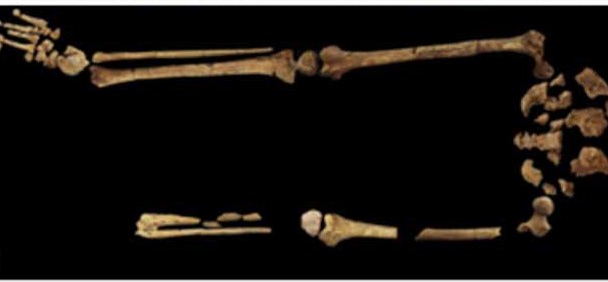
Located toward the back of the front section of Sunday’s newspaper was a story about an archeological excavation that was changing the way we interpret history.  A team of Indonesian and Australian researchers were working in the Liang Tebo cave in eastern Kalimantan province in Borneo when they found the bones of a young individual buried in a shallow grave.  Scientists used radiocarbon dating to estimate the date of burial at 31,000 years ago.  The most striking aspect of the discovery was that the young person was missing their lower left leg.  Signs indicated it had been carefully amputated as a pre-teen or early teen before their death from unknown causes between 19 and 21.  The otherwise remarkably intact skeleton was found in 2020 by the archaeologists, who say the amputated limb indicates considerable surgical skill.  This is the earliest example of such surgery in the archeological record and shakes our understanding of the sophistication of Stone Age humans. 

When I looked online, I found the archaeologists who uncovered the burial indicated the surgeon or surgeons who performed the operation (with stone knives and scalpels) must have had a detailed knowledge of anatomy and muscular and vascular systems to negotiate the veins, vessels, and nerves, and to prevent fatal blood loss and infection.  Experts had thought humans lacked the expertise to perform procedures like amputation until the emergence of agriculture and permanent settlements transformed human society within the last 10,000 years (Neolithic).  Prior to this discovery, the oldest known amputee was an elderly farmer whose left forearm had been removed just above the elbow 7,000 years ago in what is now France.  It was only 100 years ago that surgical amputation became a norm in Western medicine, and before the development of antibiotics most people would have died at the time of amputation from blood loss, shock, or subsequent infection.  There was no trace of infection and new bone growth had formed over the amputated area.

While the rest of the skeleton was adult sized, the amputated bones stopped growing and retained their child size.  The child had survived six to nine years after the surgery.  After the amputation, intensive nursing and care would have been vital, and the wound would have had to have been regularly cleaned and disinfected.  To live for years with an amputated leg in mountainous terrain, the individual would have needed a lot of ongoing help and care from the community.  The burial was also the oldest known deliberate burial in the islands of Southeast Asia, with limestone markers placed on top of the burial, the body placed in a flexed, fetal position, and a large ball of mineral pigment used in Stone Age cave art (ocher) as a grave good.  Liang Tebo cave also has human hand stencils on the walls. 

THOUGHTS:  The world’s oldest rock art figures (not just handprints) have been found in caves elsewhere in Indonesia.  This is the area that humans departed by boat to cross Island South Asia to reach the mainland of Papua and Australia, making the first successful major maritime voyage.  The amputated limb was only one of the advanced discoveries made by the peoples of Borneo.  They were advanced artists, had advanced medical knowledge, and navigated the ocean, all at a time when humans in Europe were struggling to survive the ice age.  It was not until 30,000 years later that Europeans “discovered” their descendants and provided civilization.  Act for all. Change is coming and it starts with you.
Hibiscus

September 14, 2022

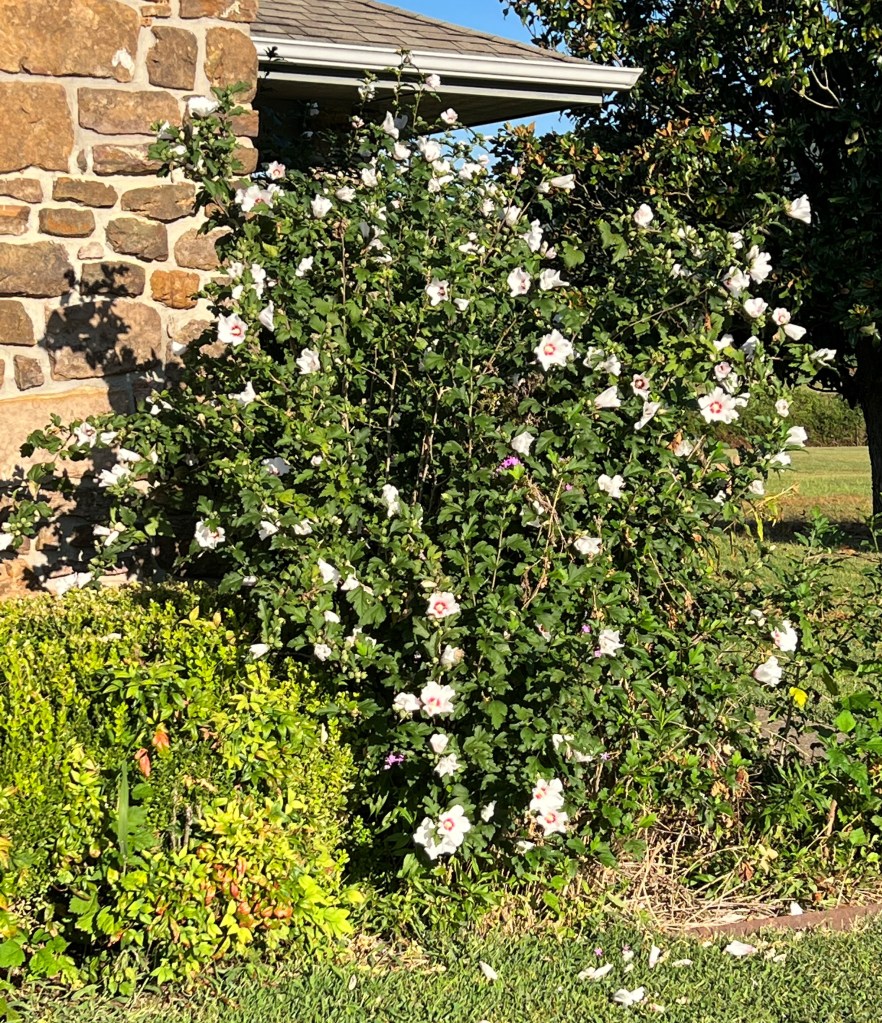
Located on the northern corner of the building where I work are two large plants that are now in full flower.  I began noticing them last week and have been amazed that the flowers have continued in full bloom and in such large numbers.  Since they were placed on the corner, the flowers provide a stark contrast to the plant’s own dark green leaves, the light olive hedge below, and with the dark stonework and white mortar of the building providing a backdrop.  When I pointed the bushes out to Melissa, she told me this was a hibiscus, and probably the Rose of Sharon variety.

When I looked online, I found the Rose of Sharon (Hibiscus syriacus) is a species of flowering plant in the mallow family (Malvaceae).  While it is native to Korea, and south-central and southeast China, it is widely introduced elsewhere, including much of Asia.  The name syriacus is given as it was originally collected by Western botanists from gardens in Syria.  Common names include the Rose of Sharon, (especially North America) and rose mallow (United Kingdom).  The name Rose of Sharon for Hibiscus syriacus is derived from the Bible (Song of Solomon 2:1) as these are among the beautiful flowers brought by the groom for his bride, but scholars are unsure which plant the name identifies as other species are called Rose of Sharon.  Hibiscus syriacus is a hardy deciduous shrub reaching 7 to 13 feet (2 to 4 m) in height, bearing large trumpet-shaped flowers with prominent, yellow-tipped white stamens.  The flowers are often pink in color but can range from almost purple to white.  The individual flowers last only a day but the numerous buds produced provide prolific flowers from July through September, usually blooming at night.  As the plant matures the flexible stems are weighted by the abundant flowers and can bend halfway to the ground.

Hibiscus syriacus was indigenous to China and was brought to Japan in the 8th century, then introduced to the Korean Peninsula around the 15th or 16th century. The species was introduced for horticulture as its leaves were brewed for an herbal tea and its flowers eaten.  It was first grown in European gardens as early as the 16th century.  Initially the species was thought to be tender, and care was taken to shelter it during the winter, but by the end of the 17th century it was labeled hardy.  By the 18th century the shrub was common in English gardens and the North American colonies.  Hibiscus syriacus is also known as the Korean rose and is the national flower of South Korea.  The flower’s name in Korean is mugunghwa and its symbolic significance stems from the Korean word mugung, meaning “eternity” or “inexhaustible abundance”.  Korea is poetically compared to the flower in the South Korean national anthem, it appears in national emblems, and is generally considered by South Koreans to be a traditional symbol of the Korean people and culture.

THOUGHTS:  Hibiscus syriacus is highly tolerant of air pollution, heat, humidity, poor soil, and drought which has allowed the shrub to become naturalized in suburban areas of the US.  Some call it slightly invasive as it readily self-seeds and you will need to remove the seedlings if you do not want additional hibiscus in your landscape.  Like many immigrants (my German ancestors included), the hibiscus has flourished on arrival to America.  Harsh conditions (smog and drought vs. poverty and intolerance) were overcome, and they spread throughout the land.  Immigrants are not an invasion but a strengthening of our national spirit.  Act for all. Change is coming and it starts with you.
Vampire

September 13, 2022

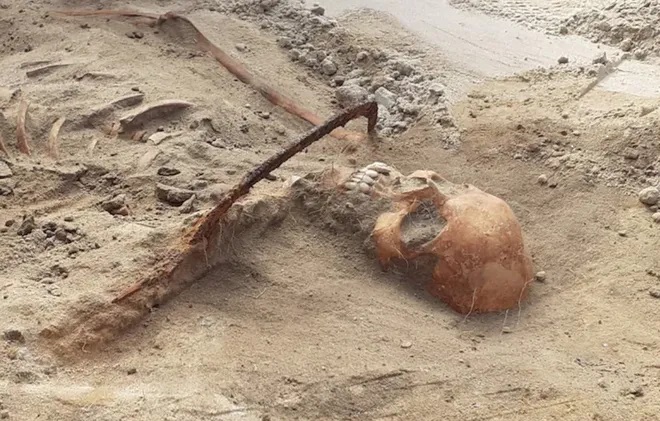
The top story of the inside News page of today’s local paper described a “vampire” unearthed in Poland.  Vampires were feared and loathed throughout Central and Eastern Europe during the Middle Ages and apparently by the residents of a small Polish village of Pień.  The burial was found by archaeologists from Nicholas Copernicus University in Torun, Poland, during recent excavations near Pień as they unearthed the skeletal remains of a 17th century woman who was evidently thought to be a vampire.  The woman’s burial was consistent with ancient vampire lore as well as other medieval vampire burials in Polish territory.  The female had a padlock attached to the big toe of her left foot and a sickle placed across her throat to prevent her from returning from the dead.  One of the burial’s physical features was protruding front teeth that stuck out enough to have been quite noticeable.  This may have been interpreted as evidence of her vampire tendencies.

When I looked online, I found a vampire is a creature from folklore that subsists by feeding on the vital essence (generally blood) of the living.  Vampire tales are normally linked with Transylvania, the Romanian home of the mythical Count Dracula and actual home of the 15th century prince Vlad Dracul or Vlad the Impaler, the inspiration for the Dracula legend.  In European folklore, vampires are undead that visited loved ones and caused mischief or deaths in the neighborhoods they used to inhabit.  They wore shrouds and were often described as bloated and of ruddy or dark appearance.  This is markedly different from today’s image of a gaunt, pale vampire which dates from the early 19th century.  Stories of vampires have been recorded in cultures around the world, but the term vampire was spread in Western Europe after reports of an 18th century mass hysteria around a pre-existing folk belief in the Balkans and Eastern Europe that in some cases resulted in corpses being staked and people being accused as a vampire.  Local variants were known by different names, such as shtriga in Albania, vrykolakas in Greece and strigoi in Romania.

While the vampire burial was unusual it is far from unprecedented as hundreds of vampire burials have been discovered throughout Eastern Europe.  In 2015, archaeologists digging in the Polish village of Drawsko found five skeletons that had been pinned to the ground in a similar or identical manner.  Four of the skeletons, two women in their thirties, a man in his thirties or forties, and an adolescent girl, were buried with sickles tightly anchored across their throats.  An older woman of at least 50 was pinned by a sickle placed across her hips.  She also had a stone lain over her throat and a coin inside her mouth.  Each action was presumably deemed necessary to prevent the burial from returning as a vampire.  As for the latest vampire burial discovered on Polish soil, her remains will be taken to Nicholas Copernicus University in Torun, where archaeologists and technicians will subject them to a more thorough examination.

𝗧𝗛𝗢𝗨𝗚𝗛𝗧𝗦:  Bram Stoker’s 1897 novel Dracula is remembered as the quintessential vampire novel and provides the basis of the modern vampire legend.  The success of this book spawned a vampire genre that is still popular in the horror genre.  Researchers tell us the horror genre is popular for the elements of adrenaline and morality, and for linking us to the dark unknown within our psyche.  Humans are composites of both light and darkness, and psychoanalysts tell us it is healthy to explore the darker parts of our minds, like the fear of death.  While exploration may be healthy, the actual fear of death brought by the pandemic has adversely affected many with depression and suicide.  The research is clear that isolation and loneliness is bad for our physical and mental health.  We are social animals who struggle in isolation.  Act for all. Change is coming and it starts with you.
Ironweed

September 12, 2022

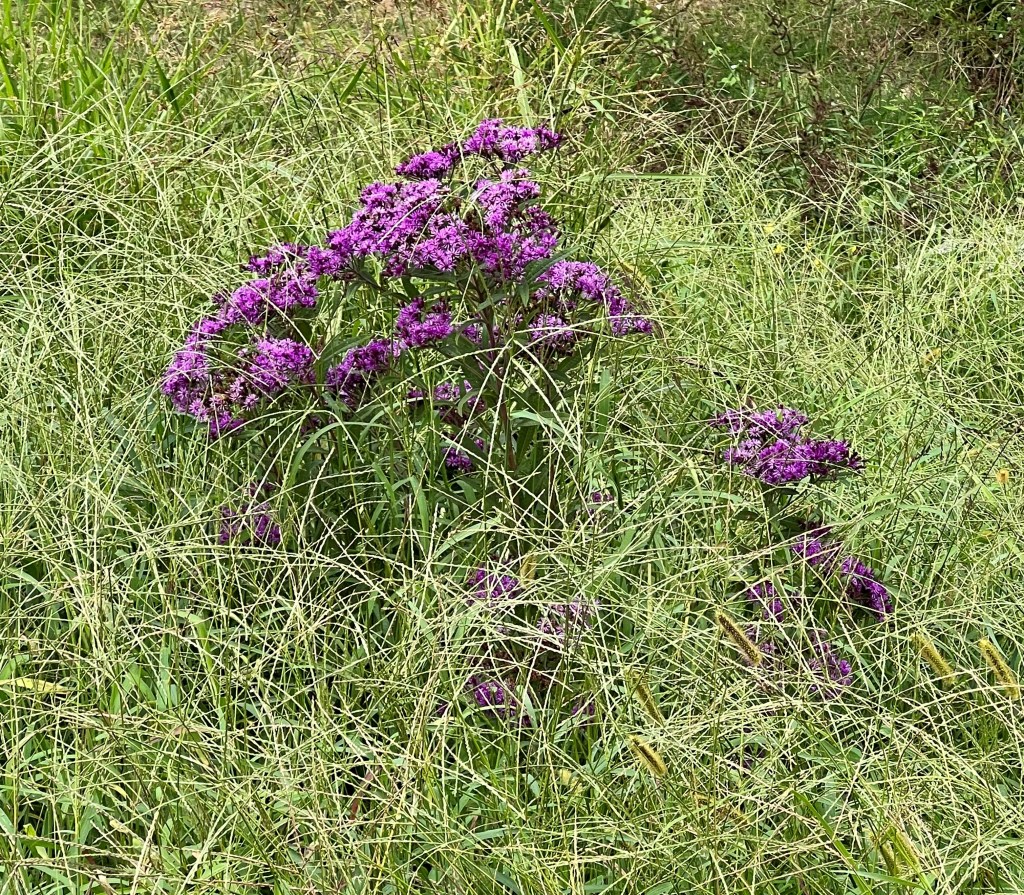
As Melissa and I were leaving town last week we passed a brilliant magenta flower along the side of the road just out of the mow zone.  I gave a shout, but we had already driven past, and I was unable to get a picture.  When I asked her to turn around, Melissa initially balked wanting to get home, but then relented.  We circled back and saw it, making a U-turn so I could get the picture from my side of the car.  Melissa suggested I might want to hurry as there were people standing in the yard watching what we were doing.  I took the photo, waved at the family, and we took off toward home.  When I pulled the plant up on my Google app it was identified as ironweed.

When I looked online, I found Vernonia is a genus of about 350 species of forbs and shrubs in the family Asteraceae (daisy) and those species known as ironweed have intense purple flowers.  The genus is named for the English botanist William Vernon.  There have been numerous distinct subgenera and subsections named in this genus, and some botanists have divided the genus into several distinct genera.  Vernonia arkansana (also known as Arkansas ironweed and great ironweed) is native from Illinois to Kansas south to Arkansas and Oklahoma.  The plant is 4 to 6 feet (1.2 to 1.8 m) high and 3 to 4 feet (0.91 to 1.22 m) wide.  The flowers bloom from August to September and are pink-purple in color.  The plant is pollinated by various insects such as bees, butterflies, and skippers, who also collect nectar.  The species also attracts an aphid (Aphis vernoniae) that prefers to suck on juice of the species, and various moth caterpillars.  Birds avoid the species due to hard seeds, as do mammal herbivores due to the bitterness of its foliage.  Since it was in town, it probably did not have to worry about cows anyway.

Arkansas ironweed is commonly called curlytop ironweed and typically occurs in gravel and sand bars along streams, slough margins, wet meadows, thickets, open woods, prairies, and glades.  This plant is noted for its narrow, willow-like leaves, large flowering heads, and its narrow, twisting, involucral bracts (a modified leaf for reproduction).  The source of the common name for Vernonia has been varyingly attributed to certain “iron-like” plant qualities including tough stems, rusty-tinged fading flowers, and rusty colored seeds.  Except for its brilliant flowers (does it need more?) the plant is a somewhat unremarkable ornamental.  This plant spreads aggressively by rhizomes (bulbs) to form clumps and is often categorized as a pasture weed.  The seeds are wind-dispersed and will readily self-hybridize with other Ironweed species which can make plant ID difficult in the field.  While I could not identify the exact species, the size, date of flowering, and location suggested this was an Arkansas Ironweed.

𝗧𝗛𝗢𝗨𝗚𝗛𝗧𝗦:  When I saw the family in the yard as I took a picture of the Ironweed it reminded me of when I worked for State History of Utah.  One of my jobs was architectural survey and I would drive up and down the streets of small towns taking pictures and recording characteristics of the buildings to be entered into a computer database.  I was stopped several times by the local police asking what I was doing but the best responses were when I caught someone working on their house.  As I snapped the picture I would hear, “I was going to get my permit tomorrow!”  I would wave and drive on.  As we drove off after taking the picture of the ironweed, I realized the man was building a fence for his horse which was standing in the front yard.  I wonder if he had a permit.  Act for all. Change is coming and it starts with you.

Queen

September 09, 2022

Since the news of the death of Queen Elizabeth II (Elizabeth Alexandra Mary; April 21, 1926 – September 8, 2022) was announced yesterday I was surprised to find every website I checked was already updated and speaking of her in the past tense this morning.  Elizabeth had been Queen of the United Kingdom and the Commonwealth realms for over 70 years (6 February 1952 to 8 September 2022).  She was queen regnant of 32 sovereign states during her life and served as monarch of 15 of them at the time of her death.  Her reign (70 years and 214 days) is the longest of any British monarch and the longest recorded of any female head of state in history.  Louis XIV (Louis the Great or the Sun King) was King of France from 14 May 1643 until his death in 1715 (72 years and 110 days) and has the longest recorded reign of any monarch of a sovereign country in history.

When I looked online, I found when her father King George VI died in February 1952, the 25 year old Elizabeth became queen of seven independent Commonwealth countries: the United Kingdom, Canada, Australia, New Zealand, South Africa, Pakistan, and Ceylon (known today as Sri Lanka), and Head of the Commonwealth.  Elizabeth reigned as a constitutional monarch through major political changes such as the Troubles in Northern Ireland, devolution in the United Kingdom, the decolonization of Africa, and the United Kingdom’s accession to the European Communities and withdrawal from the European Union.  The number of her realms varied over time as some territories gained independence and some realms became republics.  Her many historic visits and meetings include state visits to China in 1986, Russia in 1994, the Republic of Ireland in 2011, and visits with five Popes.  Elizabeth was visited by every US president during her reign except for Lyndon Baines Johnson (1963 to 1968).

Significant events of Elizabeth’s reign include her coronation as Queen in 1953 and the celebrations of her Silver, Golden, Diamond, and Platinum Jubilees in 1977, 2002, 2012, and 2022, respectively.  She married Philip Mountbatten, a former prince of Greece and Denmark, in November 1947 and their marriage lasted 73 years until his death in April 2021.  They had four children: Charles III, Anne, Princess Royal; Prince Andrew, Duke of York; and Prince Edward, Earl of Wessex.  She faced occasional republican sentiment and media criticism of her family, particularly after the breakdowns of her children’s marriages, her annus horribilis (horrible year) in 1992, and the death of her former daughter-in-law Diana, Princess of Wales, in 1997.  However, support for the monarchy in the United Kingdom remained high, as did her personal popularity.  Elizabeth died at the age of 96 at Balmoral Castle, Aberdeenshire, and was succeeded by her eldest son, Charles III.  “The Queen is dead, long live the King.”

𝗧𝗛𝗢𝗨𝗚𝗛𝗧𝗦: Queen Elizabeth’s last official act was carried out much like the rest of her life, with dignity and grace despite the changes that swirled around her.  On September 6, 2022, she received Liz Truss for an audience at Balmoral Castle to invite the newly elected leader of the Conservative party to become Prime Minister and form a new government.  American author Louis L’Amour is credited with saying, “The only thing that never changes is that everything changes,” but he was hardly the first.  The Greek philosopher Heraclitus was a theorist who created doctrines about the constant change and flux of life and is quoted saying “change is the only constant in life” around 500 BCE.  Rather than allowing change to happen, we should strive to make it so.  Act for all. Change is coming and it starts with you.
Goats

𝘚𝘦𝘱𝘵𝘦𝘮𝘣𝘦𝘳 08, 2022

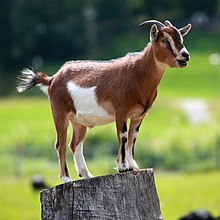
The lead story on the front page of my local newspaper was the herd of goats brought in to clear property in Fort Smith owned by Arkansas Oklahoma Gas (AOG). The goats are owned by another Fort Smith concern and anywhere from 20 to 40 goats are brought in depending on the size of the area to be cleared. The area is surrounded by solar powered electric fencing to contain the goats and the firm checks on them daily to ensure they are alright and have plenty of drinking water. AOG used this method last May and loved it, as did the surrounding residents. A heard of 40 goats can clear an acre of problem vegetation in three of four days. Not only do the goats get fed, but the area is cleared without chemicals, erosion, or burning fossil fuels. The director of operations said this was part of AOG’s commitment to conserving natural resources and lessening the company’s impact on the environment.

When I looked online, I found the domestic goat (Capra hircus) is a domesticated species of goat-antelope kept as livestock. It was domesticated from the wild goat (Capra aegagrus) of Southwest Asia and Eastern Europe. The goat is a member of the family Bovidae and the tribe Caprini, meaning it is closely related to sheep. Goats are one of the oldest domesticated animal species according to archaeological evidence and their earliest domestication occurred in Iran at 10,000 years ago. Raising goats is still important in places like the Middle East. Goats have been used for milk (cheese), meat, fur, and skins across much of the world. Female goats are referred to as does or nannies, intact males are called bucks or Billie’s, and juvenile goats of both sexes are called kids. Castrated males are called wethers. As of 2011 there were more than 924 million goats from over 300 distinct breeds living in the world.

Concerns over emissions, pesticides, herbicides, and other chemical effects on our planet have led many to contemplate earth-friendly options for grooming landscapes. Goats are not only a safe option for weed control but can also keep the lawn trimmed. Goats have been used for centuries as four-legged brush clearing machines and will eat almost any type of vegetation. They have the capacity to digest plants with stickers and thorns, along with poison ivy and other pest plants. Raising goats for weed management requires other knowledge, such as housing, supplemental feeding, and the number of goats you will need for the best outcome. Unless the goats are moved you may find the area so well managed that you will have to give more supplemental food to the animals, but this is recommended anyway to supplement their forage. The animals will need to be fenced carefully as they are adept at leaping, jumping, and climbing. A good fence will keep the goats contained and prevent predators (coyotes) from taking them. This would probably not be a good option for my half acre city lot.

𝗧𝗛𝗢𝗨𝗚𝗛𝗧𝗦: As director of a camp in central Kansas I checked on raising goats to clear the poison ivy from the many wooded areas of the property. I do not recall why we did not proceed, but it probably meant another project that I would have overseen. The goats were also suggested to be part of a small petting zoo for children. At the time I thought I would have required a Billy goat to protect the herd from the coyotes and occasional dog packs that prowled the countryside. Now I know I could have used Zena. Many companies are now looking for alternative practices to reduce their carbon footprint. Whatever the reason (cost, image, real concern), the reduction will help. Act for all. Change is coming and it starts with you.
Shootouts

September 07, 2022

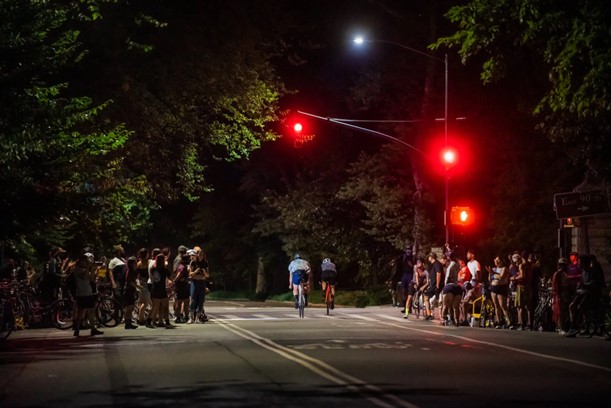
Hidden away at the bottom of my NY Times feed was a line about the raccoons who gather at night in New York City’s Central Park.  What intrigued me was the comment that the raccoons were not only fast, but they road bikes.  As I followed the article it described how as the sun went down a crowd of close to 150 people gathered around two bicyclists near Engineers’ Gate.  The riders clicked into their pedals and when the coast was clear, the starter yelled “Go!”.  The race was a single elimination 300-meter straight shot in the bike lane along the Central Park loop.  After 60 riders went through five elimination rounds the victors were decided.  Enzo Edmonds, a 15-year-old (nine-time national juniors champion) won the men’s bracket.  Camie Kornely, 49, the reigning women’s national and world masters champion who also holds a world track-bike record, took first place for the women.  As quickly as they had assembled, the Central Park Raccoons rode into the night agreeing to return when the next Shootout race is held.  The Shootouts are usually announced just days before the event based on whim and the weather.  Anyone with a bike is welcome to ride.  The racing kicks off at 9 pm when the park is quieter and the bike racers spirit animals (the raccoons) are starting to come out.

When I looked online, I found Chris Salucci and Stevie Valentine founded the Central Park Raccoons several years ago after a summertime “alleycat”, an illegal bicycle scavenger hunt to crown the city’s best bike courier.  The rise of electric delivery bikes has sent the messengers into decline and the alleycats have become less frequent.  Messengers have long favored fixed-gear bikes because their lack of moving parts made them more durable on city streets and easier to repair.  The bikes only have one gear and if the bicycle is moving, the pedals are in motion.  Brakes are famously optional.   Before the pandemic, Salucci and Valentine held regular training sessions in Central Park doing hill repeats, known as the Not So Friendly laps.  When those sessions grew too big for the duo to handle, the Shootouts were born.  It is usually the more traditional road cyclists and fixed-gear racers who move on in the Shootouts races.

Although the Shootouts do not have permits, the Raccoons are careful to observe the park rules and to avoid conflicts with people seeing the biker’s fly past at speeds more than 30 miles per hour (48kph).   They have avoided run-ins with the police by racing within the bounds of the park’s bike lane and starting after the park is emptying out.  While the Shootouts are the Raccoons’ signature event, the aim is to eventually secure permits for more fixed-gear races around the city.  Early in 2022 the Raccoons helped stage the multiday USA Cycling-sanctioned Randalls Island Crit series and hosted a series of track races and clinics at the Kissena Park Velodrome in Queens, considered by the Raccoons to be their home track.  For 15 year old winner Enzo Edmonds, the stripped-down, communal atmosphere of the Shootouts is something he does not get competing in the more traditional ranks of bicycle racing.  “The typical races I do are more — Sanctioned.”

THOUGHTS:  While I have never participated in the shootouts, I have enjoyed quite a bit of road work on my bicycle.  When Melissa and I went to Maui we tried to rent bikes to ride the 24 miles (38.5 km) down the Haleakala Volcano.  I called, left messages, and sent email requests through the website, but the company never responded.  When we arrived, we learned several inexperienced riders had been injured that season when their bikes got out of control and went off the road.  Having crashed my own bike on several occasions, I thought we might have been better off.  The Shootouts are another example of how the pandemic has brought change, only to have the change itself morph again as restrictions are lessened.  Calling something the New Normal implies things have stopped changing.  What we call normal has always been changing, so why should that stop now.  Act for all.  Change is coming and it starts with you.

Attention

September 06, 2022

I was in that deep REM (rapid eye movement) slumber you get right before you wake up in the morning when I felt something nuzzling my hand.  My hand was outside the covers and Zena had decided it was time for me to take her outside.  I had initially been good about hopping up when notified she needed out, but I have become lax now that she is older.  I ignored her hoping she would go lay down.  Rather than laying down I heard her nails click across the floor to the other side of the bed.  While I did not see this, Zena must have used a similar tactic with Melissa as I heard her rouse, but she did not sit up in the bed.  Having been ignored by both her peeps Zena decided to take matters into her own hands (paws?).  With a huge leap Zena landed in the middle of the bed.  This time she made herself clear.  I want some attention.   

When I looked online, I found Ben Parr of the Harvard Business Review had written on the seven best triggers to get someone’s attention.  Automaticity refers to sensory cues to automatically direct our attention.  This is one of our survival mechanisms that helps us react faster than our brains can think.  Framing refers to our view of the world shaped by our biological, social, personal experiences, and biases.  These tell us to pay attention to some ideas and to ignore other.  Disruption means we pay attention to anything that violates our expectations as we figure out whether this is a threat or a positive development.  Reward is provided by the neurotransmitter dopamine which is aligned with anticipation and motivation.  This fuels our desire to “want” and rewards us with self-satisfaction and a sense of purpose.  Reputation causes the decision-making centers of our brains to slow or even shut down while we are receiving advice from an expert, a phenomenon known as “directed deference.”  Mystery or wondering what will happen has a scientific term attached to it, the Zeigarnik effect.  Since we dislike uncertainty, we try and actively reduce it by any means possible.  Finally, acknowledgement is our need for validation and empathy from others and is one of our most vital human needs.  Understanding the science of attention is a prerequisite to success in both your business and personal life.

Most of us have experienced others using inappropriate ways to get our attention (yelling, “Heh.  You!”), but how do we teach children the right way to get another’s attention?  One way to start is by standing close to the person whose attention we seek.  Moving close to another’s personal space will allow them to subconsciously feel your presence, even if they are not looking at you.  If that does not work, you can gently tap them on the shoulder or say their name, and then wait for them to respond.  If all else fails, you can begin a conversation and hope they will participate.  My favorite way to get someone’s attention is to approach the group already in conversation, move just outside their personal zones so they know I am there but not intruding, and listen intently to the conversation.  Most will (at least eventually) accept or acknowledge your presence.  Now that you have their attention, you can ask your question.  Teaching children to politely get attention is a skill that should be taught and practiced keeping it fresh in a child’s mind.  While nuzzling the other person’s hand may be effective, it may not have the desired result.

THOUGHTS:  I recall talking with my sister at her daughter’s outdoor wedding when she noticed the mother of the groom in conversation about 100 yards (30 m) away.  She wanted to talk with her and asked me if I would be willing to get her attention.  I said sure, and loudly called out the woman’s name.  She turned around and looked, so I got her attention, but I am sure that was not my sister’s intention.  There are good and bad ways to get another’s attention.  In social situations it is most often appropriate to be polite.  How you get another’s attention will often determine the tone of the conversation and whether they will even listen to you.  While unity builds, conflict can only divide.  Act for all.  Change is coming and it starts with you.

Day Off

September 05, 2022

Shot of a group of friends having a barbecue in the yard

In my mind I have always seen the weekend as time off, or at least as a day off somewhere over the span of these three or four days.  Like so many workers, that does not mean I do not work, but it does mean I can be more subjective about what I do and when I do it.  Fridays are the day when I usually complete my last preparation for Sunday, but in the back of my mind I know if I do not finish, I still have Saturday.  Sunday afternoon is seen as a time of preparation for Tuesday but lately I have allowed most of this work to slide and wait to prepare on Monday morning.  That means Monday is no longer a full day off and at least the morning is a workday.  Still, the weekend does provide more fluidity and I am able to take a “day off” somewhere over the course of these four days, even if it is not a consecutive 24 hour period.  I mention this because today is a federal day off in the US.  This Monday is Labor Day.

I did not need to look online this year because I had written about Labor Day for last year’s blog.  I found Labor Day is a federal holiday in the US celebrated on the first Monday in September in any given year, and for most it represents a day off.  The date falls anywhere from September 1 through September 7.  The day was created to honor and recognize the American labor movement and the contributions and work of laborers.  Beginning in the late 19th century, trade unionists proposed a day be set aside to celebrate labor.  “Labor Day” was promoted by the Central Labor Union and the Knights of Labor, which organized the first parade in New York City.  In 1887, Oregon was the first state of the US to make it an official public holiday.  By the time it became an official federal holiday in 1894, thirty states in the US officially celebrated Labor Day.  Canada also celebrates Labor Day on the first Monday of September.

Since today is Labor Day and my unofficial day off, you would think I would be able to find time to do other things than work, and that is the case.  My flexibility allows me to work in the morning, take the afternoon to spend time with family, and then finish my preparation for tomorrow later.  While this may not be a full day off, it does provide the pause that gets us all through the work week.  That is why so many celebrate the weekend with the cry, “ThankGodIt’sFriday”. 

THOUGHTS:  When I retired, I assumed that meant everyday would be a day off.  Then the reality of retirement set in, and I found I needed to work to support my lifestyle and to provide a sense of purpose.  What retirement has done is provide the opportunity to be more flexible in finding a day off.  This is a privilege that many in America, and the world, do not have.  Labor Day was not given to the workers as a day off, it was taken as everyone failed to show up.  Now rather than sick days government, office, and manufacturing firms provide “personal days” where the workers do not need to be sick, but just need a day off.  That means Monday can be your TGIF.  Act for all.  Change is coming and it starts with you.
Stare

September 03, 2022

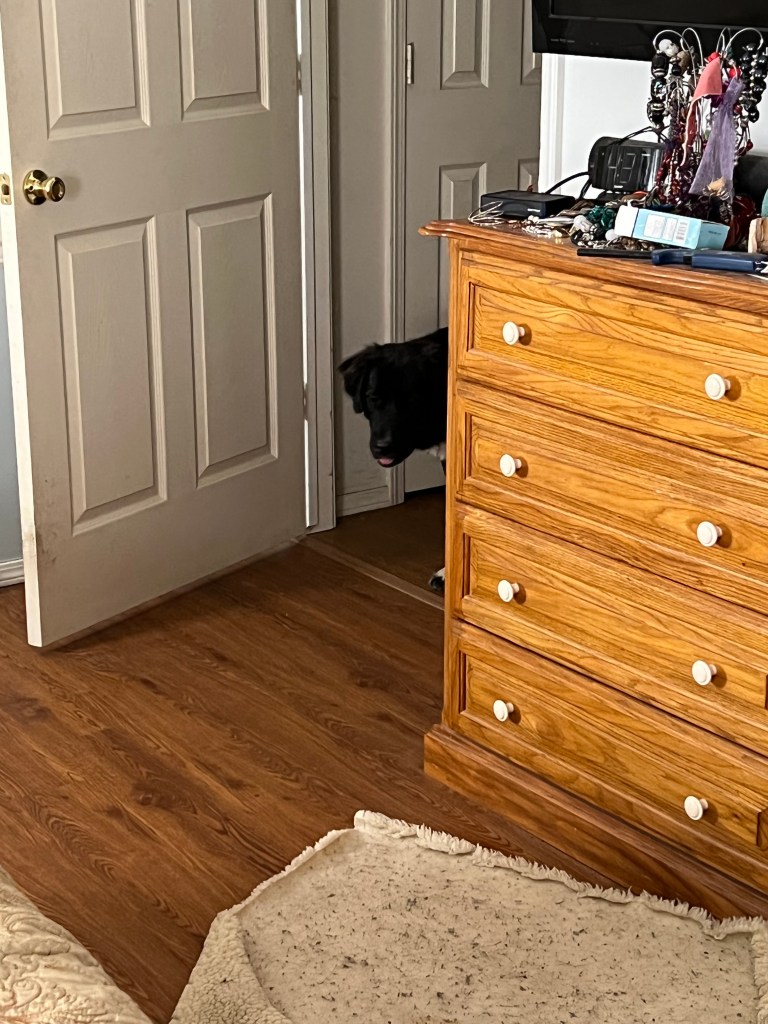
One of the habits Zena has acquired is to stare at either Melissa or myself trying to get our attention.  I have mentioned Melissa gets up earlier than I do and often when Zena thinks I have spent enough time in bed she will sit outside our bedroom and stare at the door.  I am usually awake and messing with my phone and can hear her quietly snuffling outside.  At other times the door will be open but rather than entering the bedroom, Zena will stop at the door and stare around the chest of drawers at me.  When she does, I will call her, and she will immediately come to the bed, followed by her licking my foot.  The other favorite time for Zena to stare is when I am working at my desk.  Zena will come into the office and place her chin on my thigh and stare up at me with those sad eyes.  It is obvious that she wants something.

When I looked online, I found dogs have many reasons to stare at humans, but most of the time they are trying to communicate with us or waiting for us to communicate with them and if you pay you can learn to tell the difference.  You can also teach your dog other ways to communicate that are not so puzzling if the stare bothers you.  One reason dogs stare is because they are reading our cues.  They sense our moods, follow our pointing gestures, and read information about what is going to happen next.  They stare at us waiting for us to do something that will impact them.  That is true for going on walks, meals, play time, car rides, and more.  Dogs also look for clues to perform specific behaviors like “sit” or “down” as these are chances to earn treats, especially if they are trained with positive reinforcement like Zena.  The stare also occurs when your dog is trying to get your attention or tell you something, like it is time to go out.  Some dogs will stare to manipulate their owners and get something they want, and this is common when begging at the table.  The dog will learn that if they stare long enough, their owner will hand over a scrap.  If you are aware of your reaction to your dog’s stare behavior and eliminate any rewards, your dog will eventually try new behaviors to get your attention.

Your pup also uses eye contact to express positive and negative emotions.  A stare for their wolf ancestors is considered threatening and rude, and some dogs retain that trait.  That is why you should never stare down strange dogs or hold dogs still to stare into their eyes.  If a dog gives you a hard stare, with unblinking eyes and a stiff posture, back away and do not make eye contact.  You might even see this in your own dog when there is a bone or other valued treat at stake.  Resource guarding often comes with a hard stare and aggressive body language.  Still, a lot of dog staring is an expression of love.  Just as humans stare into the eyes of someone they adore, dogs will stare at their owners to express affection.  In fact, mutual staring between a human and a dog releases oxytocin, known as the love hormone.  This chemical plays an important role in bonding and boosts feelings of love and trust.  This is the same hormone released when a new mother looks at her baby.  Is it any wonder our dogs like to stare at us?

THOUGHTS:  Dawn Kovell is an animal trainer and behaviorist from Marin Humane Society who says like the stare, interpreting dog nuzzling is also about context.  When your dog meets a stranger, they will sniff at them and if they like the smell, will nuzzle and rub their head against the person as an invitation of friendship.  However, when your dog nuzzles you, they could be establishing ownership.  Dogs have scent glands in their faces so when your dog nudges you with his head, he is marking you with his scent to signal other dogs to keep off.  Much like licking, nuzzling is a pacifying behavior that in dog to dog interaction ensures their survival and wellbeing.  Puppies nuzzle their mothers for comfort and when they grow up, they nuzzle their human owners.  Just like with your dog, it is considered rude for humans to stare at another.  Humans do have the ability to talk to each other to communicate.  That is a skill that needs to be perfected and practiced often.  Act for all.  Change is coming and it starts with you.