EVs

April 02, 2022

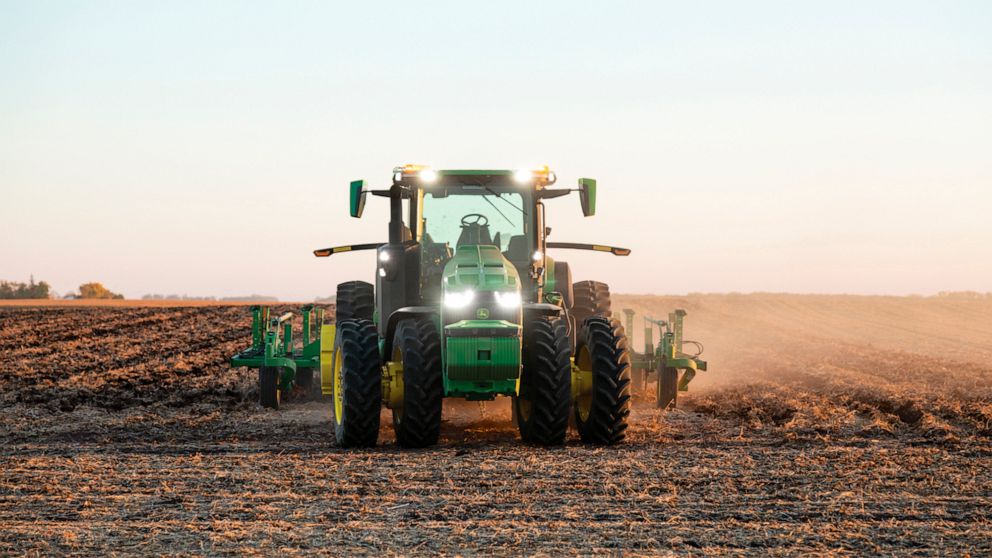
Toward the back of this month’s AAA magazine was an article called “Power Trip”, where Eric Noble reviewed some of the history of the current (no pun intended) EV craze.  While EVs are in the news, they are hardly new.  Ferdinand Porsche worked on an electric automobile in 1898 and steam, electric, and gas-powered vehicles all shared the road in the early 1900’s.  Gasoline cars took over by the late 1920’s because they were quick to refuel and had longer driving ranges, and the EVs dropped from production.  Improvements in battery technology has revived interest in EVs.  There are 29 EV models for 2022 and nearly 100 set to debut by 2025.  These range from the inexpensive (tiny) two seaters all the way to muscle cars and powerful pickup trucks.

When I looked online, I found electric cars, or electric vehicles (EVs), are fully electric and rely on batteries for their power.  There are plug-in hybrids that act like EVs but can also operate like gas-electric hybrids when the charge is depleted.  Automakers often speak of “electrifying” their lineups, but that can mean almost anything.  The EV designation typically means fully or “pure” electric in most references.  Technically, electric motors are more efficient than gasoline or diesel engines and can provide cheaper operation per mile, but it depends on the cost of gasoline (or diesel) and electricity where you live, and EVs tend to cost more up front.  EVs are becoming the technology of choice for eco-friendly car buyers because they have no localized emissions tied to their operation.  They can be powered with clean, renewable energy, and even when charged with power from nonrenewable sources they release less carbon per mile when compared to similar non-EVs.  While fast public chargers are becoming more available (often quite expensive), owners need to have a plan to stay charged.

Several weeks ago, I was in conversation with a fellow Jeep owner, and he mentioned he was considering purchasing of one of the new e series vehicles.  I had never considered an off-road vehicle as EVs because of the range.  When I take extended off-road trips, I am forced to bring extra cans of gas and even then, have had to make trips into town to fill them up.  It would be some feat to find a charger station in the desert or canyonlands.  I was intrigued and checked for prices.  The base price models ran about $20,000 more for a new e series.  Equipped to enhance the off-road capability the grand Wagoneer topped out around $100,000.  I have always said the difference between a standard vehicle and four-wheel drive was you just get stuck in more inaccessible places.  I cannot image leaving $100,000 sitting in a wash at the bottom of a canyon.

THOUGHTS:  Cold is the EVs Achilles’ heel regardless of make or model.  Range plummets as the battery pack cools and is further sacrificed to heat the cabin.  According to AAA, EVs can lose more than 40% of their range at 20F compared with 75F.  Using heated steering wheel, seats, and preheating the cabin while the car is still plugged in helps, but the effect of cold must be factored when determining how much range you need before purchasing.  You will not be able to hitch to the nearest gas station for a refill.  Of the nearly 290 million vehicles on the road in the US, only 2% are EVs.  Noble closed his review saying, “For people with ample budgets, home garages, low electricity rates, and perhaps a daily commute with a carpool lane, an electric vehicle can be a good choice.”  For the planet, it is a good choice regardless.  Follow the science.  Change is coming and it starts with you.

Fools

April 01, 2022

When I was growing up my father had a long-standing joke that seemed to work every year.  We would be seated at the breakfast table and dad would look outside and say, “Look at that big brown dog in our yard!”  My brother and I would run to the window to see the dog, and then my father would shout, “April Fools!”  As we got older the joke changed.  This was not because we caught on, but because we owned a big brown boxer dog named Lucky.  The joke became, “Look at that big black dog in our yard!”  It still worked into our Jr. High years.  I think this was the only joke my father could remember the punch line for.

When I looked online, I found April Fools Day, or April Fool’s Day, is an annual custom on 1 April consisting of practical jokes and hoaxes.  The jokester will often expose their actions by shouting “April Fools!” at the recipient.  Mass media can be involved in these pranks, which may be revealed as a prank the following day.  April 1 is not a public holiday in any country except Cyprus, where it is a national holiday (not April Fools’ Day but instead “Cyprus National Day”) and Odessa, Ukraine where the first of April is an official city holiday.  A disputed association between 1 April and foolishness is in Geoffrey Chaucer’s The Canterbury Tales (1392).  In the “Nun’s Priest’s Tale”, a vain cock Chauntecleer is tricked by a fox on “Since March began thirty days and two”, or 32 days since March began, which is 1 April.  In 1686, John Aubrey referred to the celebration as “Fooles holy day”, which is the first British reference.  On 1 April 1698, several people were tricked into going to the Tower of London to “see the Lions washed”.

Although no biblical scholar mentions a relationship, some expressed the belief that the origins of April Fools’ Day go back to the Genesis flood narrative.  The London Public Advertiser of March 13, 1769, printed: “The mistake of Noah sending the dove out of the ark before the water had abated, on the first day of April, and to perpetuate the memory of this deliverance it was thought proper, whoever forgot so remarkable a circumstance, to punish them by sending them upon some sleeveless errand similar to that ineffectual message upon which the bird was sent by the patriarch”.  Then in a 1908 edition of the Harper’s Weekly cartoonist Bertha R. McDonald wrote: “Authorities gravely back with it to the time of Noah and the ark.”  It seems the origin of the day is just as obtuse as the tricks that are played.

THOUGHTS:  One of my best April Fools jokes happened when I was working for the State of Utah.  I sent a memo to my boss outlining an illegal action taken by one of the companies we were having trouble with.  He read the beginning of the memo and stormed into his boss’s office to declare the atrocity.  His boss took the time to finish the memo, and the last line read, “April Fools!”  While this was a memorable prank, my boss failed to see the humor.  Do the work.  Follow the science.  Change is coming and it starts with you.

btw: Did you happen to see the big black dog that was in your yard today? 

Wiederkehr

March 31, 2022

I previously mentioned I had happened on the town of Altus as I wound my way back to the Interstate on Tuesday.  The attraction signs along I-40 are not for Altus, but for Wiederkehr Village.  Wiederkehr Village is the smallest city in Arkansas with a population of 38.  The town was incorporated in 1975 to prevent annexation by nearby Altus (800+ population).  Wiederkehr Village is renowned as the home of Wiederkehr Wine Cellars.  The incorporated area includes the exit off I-40 and the highway leads directly to the winery.  The winery includes Weinkeller Restaurant, the Weingarten Event Center, a gift shop, and a nearby RV park.  The wine cellar was added to the National Register of Historic Places in 1977.  The Wiederkehr Weinfest is one of the oldest and most popular festivals in western Arkansas. 

When I looked online, I found that the Arkansas River Valley remained sparsely populated until after the Civil War.  The US government initially gave the land to the Cherokee who had been removed from the eastern states.  The Cherokee were later moved farther west to Oklahoma, and the land was opened for European settlement.  The population did not grow until after the coal mines and railroad industry attracted workers in the 1870’s.  Many of these emigrants were from Germany or the German speaking side of Switzerland, including Johann Andreas Wiederkehr.  Wiederkehr and his wife Katherine came to Altus in December 1880, and then built a cabin on St. Mary’s Mountain to the north and east.  Wiederkehr was a shoemaker and leatherworker, but also vinted wine for his family’s use.  The eager miners in the nearby coal-mining towns became customers for his wine, and the Wiederkehr Wine Cellars was born.  The winery survived during Prohibition by gaining permission to produce sacramental wine for the church.

Wiederkehr Village has no post office, no schools, no churches, and no businesses aside from the wine cellar, its restaurant, and gift shop.  In 1980, the village discussed plans to promote the city with a Passion Play, but instead left development to promotion of the wines.  The first Weinfest was held in in 1963 and celebrates the heritage of the Swiss-German immigrants who settled Wiederkehr Village.  The grandson initiated the festival after he returned from a research trip to Europe to study winemaking (oenological) and attending the local festivals.  State law barred the advertisement of alcoholic beverages in dry counties, so the winery owners used Swiss-German (Schweizerdeutsch) spellings on the billboards.  Although the law has changed, the traditional spellings have remained.  The festival grew over the years and guests often exceed 2,500.

THOUGHTS:  The Wiederkehr Weinfest hosts Arkansas’s Championship Grape Stomp.  The winner receives a bronze shoe trophy honoring Steve Little, (former UA field goal kicker) and qualifies to attend the World Championship Grape Stomp in Sonoma County, California.  While I have yet to attend this festival, I have attended many other cultural celebrations.  These tend to be associated with a church or enclave which allowed cohesion in the new land, and as residents were isolated from the community due to language, appearance, or faith.  By joining these celebrations, we can get a glimpse of another perspective.  Do the work.  Change is coming and it starts with you.

Montpelier

March 30, 2022

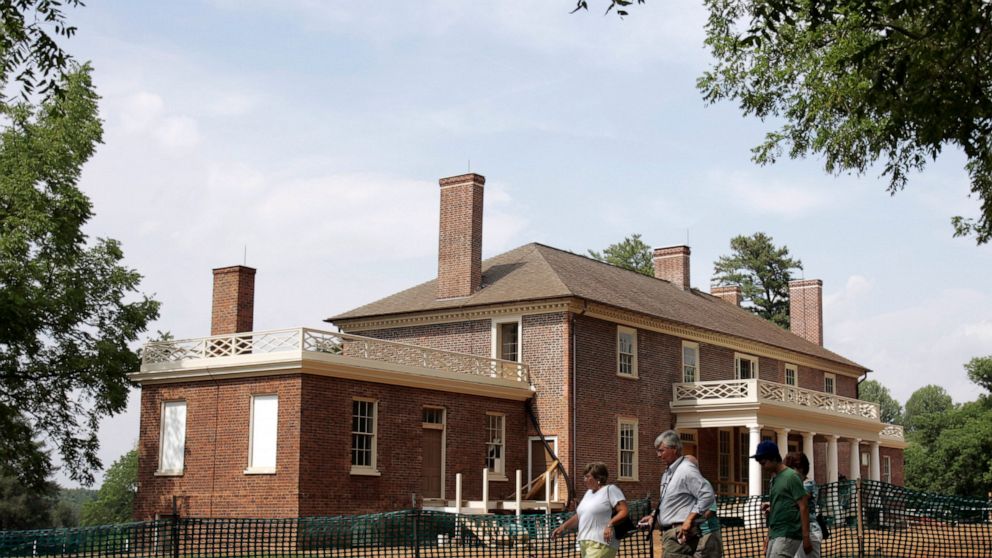
Inside the front section of today’s local newspaper was an article on the James Madison’s Montpelier estate board of managers.  Less than a year after the board that manages Madison’s Montpelier estate in Virginia announced plans to share authority equally with descendants of the people once enslaved there, the board has voted to strip power-sharing status from a group representing African Americans who trace their roots to the historic estate.  This is a reversal of the board’s public commitment made on June 16, 2021, and the committee head, James French, called it “a rejection of the principle of equality of descendant voices”.

When I looked online, I found the Montpelier estate, located in Orange County, Virginia, was the plantation house of the Madison family, including fourth president of the US, James Madison, and his wife Dolley.  The 2,650-acre (10.7 km2) property is (again) open seven days a week with the mission of engaging the public with the legacy of Madison’s most powerful idea: government by the people.  Montpelier became a National Historic Landmark and was listed on the National Register of Historic Places in 1966.  In 1983, the last private owner of Montpelier, Marion duPont Scott, bequeathed the estate to the National Trust for Historic Preservation (NTHP).  The NTHP has owned and operated the estate since 1984.  In 2000, The Montpelier Foundation formed with the goal of transforming James Madison’s historic estate into a dynamic cultural institution.  From 2003–2008 the NTHP carried out a major restoration to return the mansion to its original size (22 rooms) when it was occupied by James and Dolley Madison.

Archeological investigations in the 21st century revealed new information about African American life at the plantation, and a gift from philanthropist David Rubenstein enabled the NTHP to restore the slave quarters in the South Yard and open a slavery exhibition in 2017.  In June 2021, the Montpelier Foundation approved bylaws to share governance of the estate with the Montpelier Descendants Committee, composed of descendants of those enslaved at the estate.  Over the last two years tension has grown between the board and the committee, with the main issue being how to frame Madison’s legacy.  Bettye Kearse, a board member forward by the descendants committee, says, “The board wants to continue telling the public a whitewashed narrative about the Constitution and its chief architect and deciding what should be said about the 300 people Madison owned.”  Foundation chair Gene Hickok said the board is not backing away from its commitment to fully represent descendants on the board but working with the committee has been difficult.  The board now wants to decide which descendants are chosen.

THOUGHTS:  The Montpelier board was justifiably commended for their decision to include the descendant’s committee in governance of the estate.  The difficulty with providing parity is when you include different voices you also receive diverse viewpoints, making it harder for the established elite to control direction.  Slavery was contrary to the radical ideals embraced by the carefully crafted US Preamble and Constitution.  “All men are created equal” means ALL men and ALL women.  If that is not the case, the oppressed merely become the oppressor.  Do the work.  Change is coming and it starts with you.
Altus

March 29, 2022

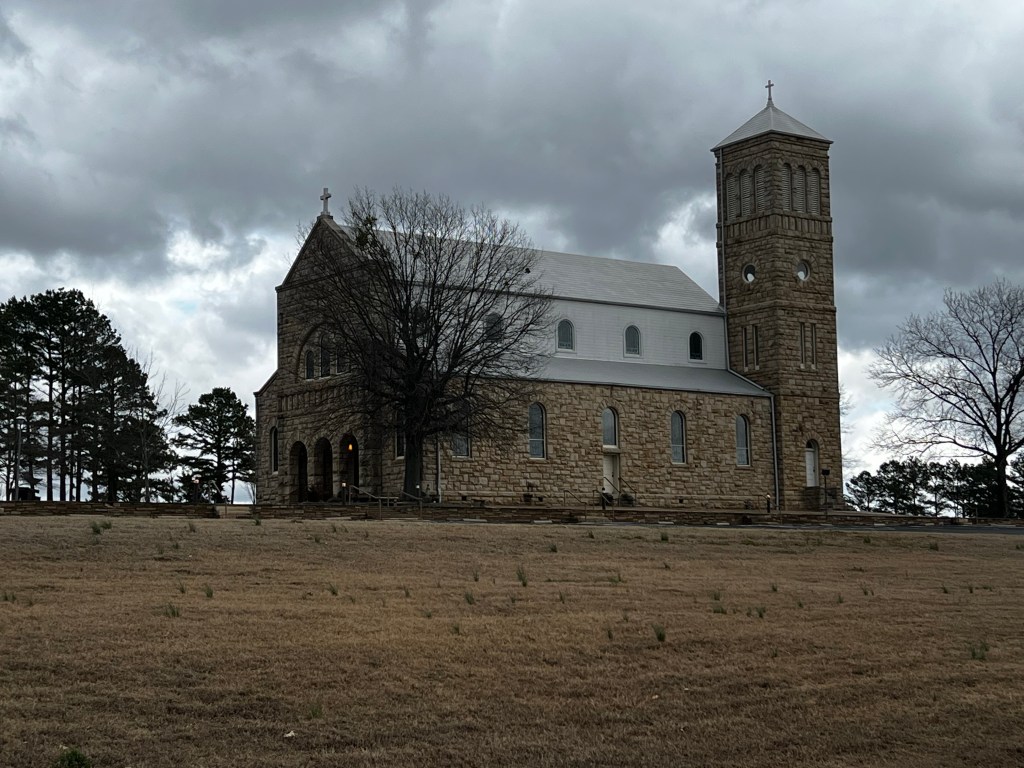
As I was returned home after encountering the nesting pair of bald eagles last week, I came across the city of Altus.  While I have ignored this area while zooming down the interstate, this time I approached the town driving the winding roads coming up from the south.  I have always enjoyed looking at old architecture, and even filled a short tenure as an architectural historian in Utah.  I wound thorough the historic (but small) downtown and then started the climb up the hill toward the wineries.  As I reached the crest of the hill, I saw a large stone church and cemetery that dominated the summit.

When I looked online, I found Altus is the site of Our Lady of Perpetual Help Church (St. Mary’s Catholic Church), which is on the National Register of Historic Places.  St. Mary’s was built in 1902 and is known for its beautiful paintings, ornate gold leaf walls, and Roman Basilica-style architecture.  Father Placidus Oechsle began his tenure as St. Mary’s pastor at the turn of the century, and the stone church was built at that time from sandstone dug from the hillside on which the building sits.  Father Placidus and immigrant painter Fridolin Fuchs extravagantly decorated the church.  Donations from parish members enabled the acquisition of the four large bells that grace the bell tower and the purchase of a first-class organ to fill the interior with music.  Placidus’s 38-year tenure was the longest of any priest at St. Mary’s.

Altus is the epicenter of the Altus American Viticultural Area (AVA) within Arkansas Wine Country.  Although founded as a coal mining community, the wine industry has driven the Altus economy since the first vineyards were planted in 1872.  Altus took off in 1875 when the railroad was extended to that point.  Altus station was the highest elevation point on the track between Little Rock and Fort Smith, so the station was originally known as “Summit”.  The town’s early development was driven by the railroad’s effort to encourage German immigrants to settle lands adjacent to the railroad.  In 1903, the railroad mainline was shifted to a more favorable alignment along the Arkansas River, and the track through Altus was removed in the 1930’s.  Altus is now home to four wineries

THOUGHTS:  The largest flow of German immigration to America occurred between 1820 and World War I, during which time nearly six million Germans immigrated to the US.  From 1840 to 1880 Germans were the largest group of immigrants.  As the railroads expanded west the tide of German immigrants took refuge on the land opened by the rails.  That included my ancestors (Illinois and Kansas) and those who settled in Altus.  Historians credit these German emigrants with invention of the American weekend, as they change the Puritan pious Sunday to the revelry we now appreciate.  Each successive wave of immigrants each added a touch to the celebrations and festivals we celebrate.  Rather than melting pot, America is a stew where new waves of immigrants add to the broth.  That is who we are, and always have been.  Do the work.  Change is coming and it starts with you.

Beanbag

March 28, 2022

Being a child of the 1970’s means I grew up with the beanbag.  I believe my every apartment during the decade was equipped with a beanbag, and that was true for my friends as well.  As we grew older and began to have children, the beanbag shifted from inexpensive furniture for a single male to the go to furniture for a small child. These were great to flop in after work, as an extra chair to watch the ball game, or a way to keep a young son occupied.  The best part was they were inexpensive and light enough to easily move.

When I looked online, I found the Sacco chair (“Sacco” is Italian for “bag, sack”), also called a beanbag chair or simply a beanbag, is a large fabric bag filled with polystyrene beans.  The Sacco was introduced in 1968 by three Italian designers, Piero Gatti, Cesare Paolini and Franco Teodoro, and was created in the Italian Modernism movement.  Italian modernism’s design was inspired by the new available technology.  The idea of mass-produced goods made within an inexpensive price range appealed to consumers and created the need for a revolution in the creative and manufacturing process.  The beanbag was marketed as the ‘shapeless chair’, as the beanbag conformed to whatever user happened to plop down.  The target user of the chair was the laidback hippie community and their non-conformist household.  In an era characterized by the hippie culture, apartment sharing, and student demonstrations, the thirty-something designers were said to have created a nonpoltrona (non-chair) that launched an attack on good bourgeois taste.  Here I only thought it was comfortable.

This week I did something I had never done before and washed a beanbag chair.  I unzipped the bag and poured the contents into two large trash bags.  The beans came out easily enough but were so full of static they flew around the garage.  We popped the cover in the washer, and when it came out the inside of the machine was covered with polystyrene beans.  We put the bag over the patio fence to dry to keep from filling the dryer as well.  Getting the beans back in the bag was not so easy.  I started outside and wound up with beans covering the patio.  I brought the bag inside, but it did not get any better.  The only time the beans easily spilled from the trash bag was when they fell to the floor rather than inside the beanbag.  Between the two of us we were able to refill the beanbag, but probably lost a third of the beans “somewhere”.

THOUGHTS:  The foam polystyrene used in beanbags, and as protective packaging for other products, is not biodegradable.  Previously manufacturers have tried making it environmentally friendly by incorporating cellulose and starch, or by adding light sensitive polymers that degrade in sunlight, but these methods have serious disadvantages.  A team of scientists from China has developed an approach that embeds water-absorbing resin particles throughout the styrene before it is formed into polystyrene.  When the resulting solid encounters water, the polymer particles expand, reducing the polymer structure to a powder that is biodegrade.  By altering the ratio of ingredients, it is possible to control the rate of disintegration.  The foamed polystyrene is cheaper than conventional materials and is readily adoptable by cost-conscious companies that want to be environmentally responsible.  Follow the science.  Change is coming and it starts with you.
Zena

March 26, 2022

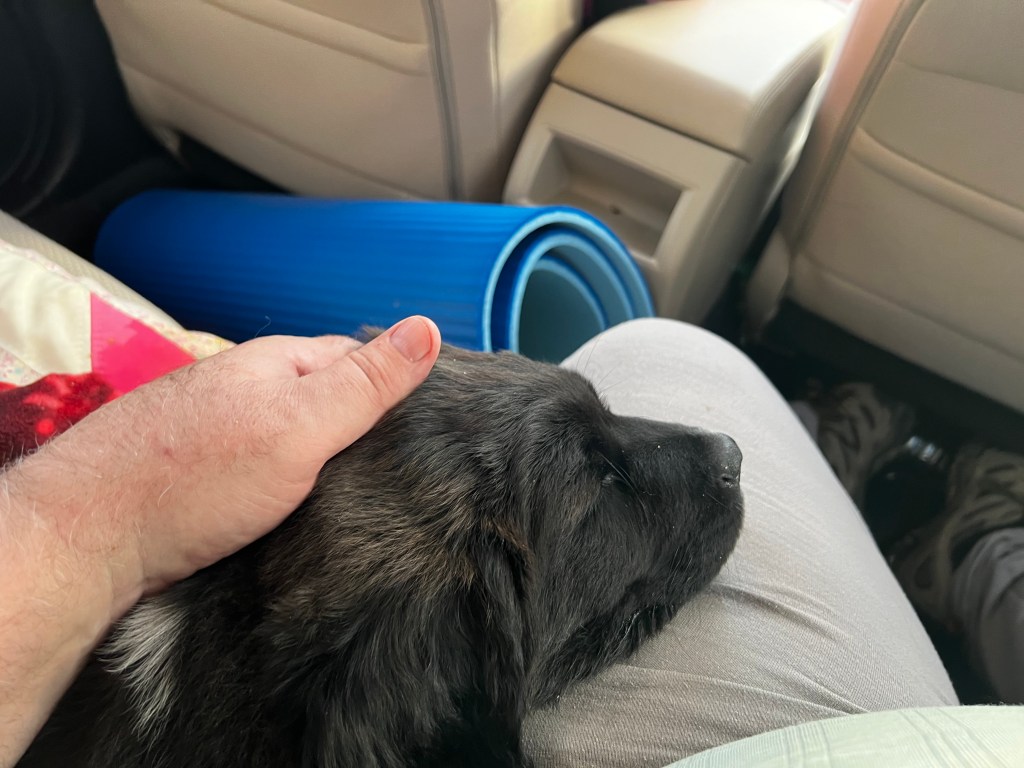
The puppy we picked up yesterday was in Northwest Arkansas in a town about 75 miles away.  Melissa was excited to share our new addition to the family and had made plans to drop by both her sister’s and our friends in Fort Smith.  When we arrived at the puppy’s house the owner told us she had not eaten and wanted to know if we wanted to wait.  There was a huge pan of food which three of the siblings were feeding from.  Melissa declined, even though we still had an hour and a half drive, plus the two stops.  That turned out to be a good decision.  Melissa thought it would be good for me to bond with the puppy by letting it sit in my lap on the way home.  Her sister did not live far so we loaded up and went to see her.  After the oohs and aahs, we loaded again and started the next leg.  The puppy is a black Great Parenesis mix who we decided to name Zena, the Warrior Princess.  As a mix we hope she will be smaller.

When I went online, I found The Pyrenean Mountain Dog (French: Chien de Montagne des Pyrénées) is a breed of livestock guardian dog from France, where it is commonly called the Patou.  The breed comes from the French side of the Pyrenees Mountains that separate France and Spain.  It is recognized as a separate breed from the closely related Pyrenean Mastiff, which is from the Spanish side of the mountains.  The breed is widely used throughout France as a livestock guardian, particularly in the French Alps and Pyrenees, protecting flocks from wolves and bears.  The breed is known as the Great Pyrenees in the United States, where it is also used to protect flocks from various predators.  Hopefully Zena will be able to protect our bird flocks from the “vicious” squirrels.

For millennia dogs like Zena were used by shepherds to protect their flocks and were usually fitted with a heavy iron wolf collar studded with long nails for protection.  They were often used in combination with the smaller Pyrenean Sheepdog, the former guarding the flocks and the latter herding them.  They were also used to smuggle contraband between France and Spain, carrying packs over the Pyrenees on routes impassable to humans to avoid detection by customs officials.  The Pyrenees today is used in its original role as a livestock guardian for shepherds in the French Pyrenees and the French Alps, as well as in the US.  Beginning in the late 1970’s, US sheep farmers began employing guardian dogs to protect their flocks from predators.  Several factors influenced the move to integrate dogs into farming operations, including federal restrictions on poisons to control predators.  A 1986 survey of over 400 farmers employing 763 livestock guardian dogs in the US found 57% of them used Pyrenean Mountain Dogs. 

THOUGHTS:  When we left Melissa’s sister, we did not get two miles before Zena became sick.  The bonding began quickly as she went through several episodes during the ride home.  While the owner said Zena had not eaten, that did not appear to be the case.  Getting sick on a puppy’s first ride is not uncommon, and at least one other puppy from the house had the same.  This is one of many firsts we look forward to over the years.  Bringing new babies (human or pets) into the household cause a shift in “the way we have always done things.”  The pandemic brought a similar shift that we are still trying to work through.  Being different does not mean worse, just different.  Follow the science.  Do the work.  Change is coming and it starts with you.
Scarce

March 25, 2022

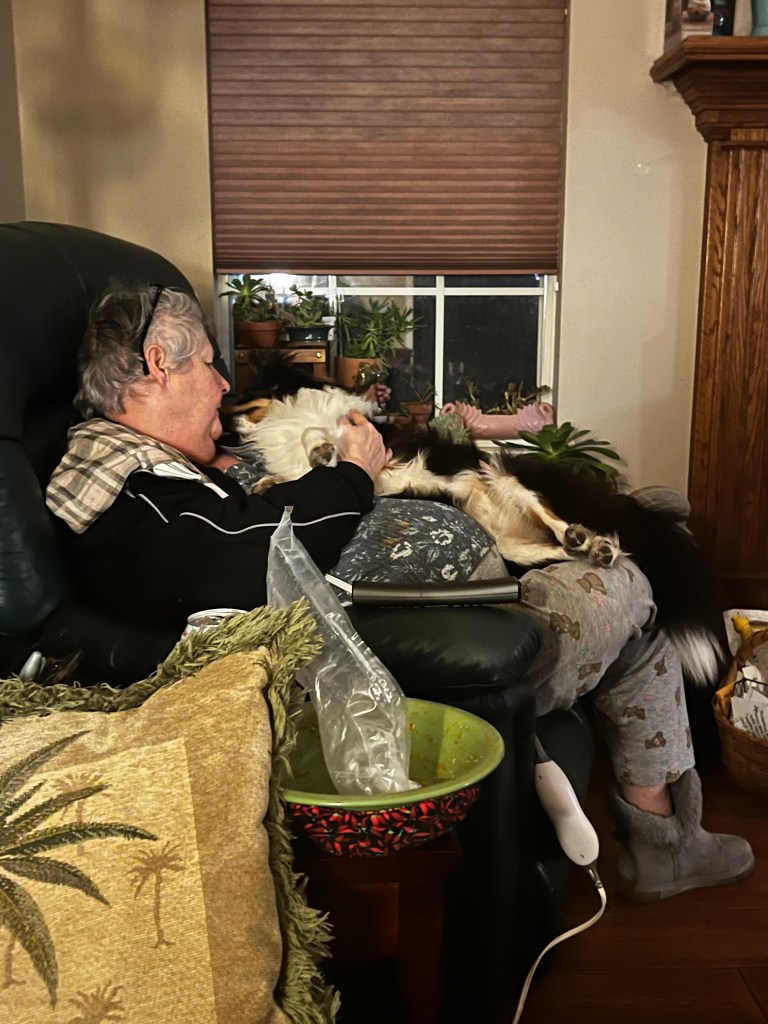
It took a long time after we lost Bella to work through our stages of grief.  I always liked dogs but enjoyed playing with other’s puppies more than the responsibility of raising one myself.  Melissa always had dogs and cats in the house growing up, and usually in multiples.  She has been testing the water for the last year wondering when we (I) might be ready for a puppy.  Melissa has combed the rescue sites and pound notices looking for the “right” dog.  Dogs have been scarce during the pandemic as everyone seemed to be wanting a companion to replace their office mates.  Several weeks ago, she found what she thought might be the dog for us.  We plan to pick up the 8-week-old puppy this evening.

When I went online, I found that animal welfare advocates are warning scarce adoptable pets in some US states corresponds with a break in the supply chain, and that other shelters continue to face floods of stray animals.  While northern states have seen a surge in pet adoptions that have cleared some shelters, southern states face the same annual influx of new animals.  Matthew Bershadker, CEO of the American Society for the Prevention of Cruelty to Animals (ASPCA) told NPR that on average about 45,000 southern animals are transported north each year to states with emptier shelters.  The northern carpetbaggers after the Civil War have been switched to the southern flea-baggers of the pandemic.

The pandemic has led to varying domestic travel restrictions and hindered the transportation networks to move animals to more scarce population shelters.  There has been a decline in donations to shelters as millions of Americans file for unemployment and emptied shelters do not have the resources to obtain more animals.  Jean Shafiroff, an ambassador for the American Humane Society, said she’s happy some shelters have been cleared but she is concerned that once social distancing guidelines are scaled back some will decide to return their pets.  She also worries reports of scarce shelter animals could deter people from adopting animals.  “To say that there is a shortage of adoptable dogs and cats when between one and two million are euthanized every year makes no sense,” Shafiroff said. “A lot of dogs have been adopted now but not that many.  It does not appear that we’ll ever have a shortage.”  Like other supply chain issues, it is just a matter of getting adoptable pets to available owners.

THOUGHTS:  While many consider monetary donations to a local pet rescue shelter, there are other ways to help.  Donating your time is one of the most impactful, as many shelters need help cleaning, caring for the animals, and keeping the facility in good condition.  If you have a talent or hobby like photography or videography you may help by highlighting one of the available pets.  Gently used items from previous pets can be donated to provide extra supplies.  General cleaning supplies are always in need (especially newspapers!).  Always check with your local shelter for their donation needs and how you can best use your time and talents.  Follow the science.  Do the work.  Change is coming and it starts with you.
Anomie

March 24, 2022

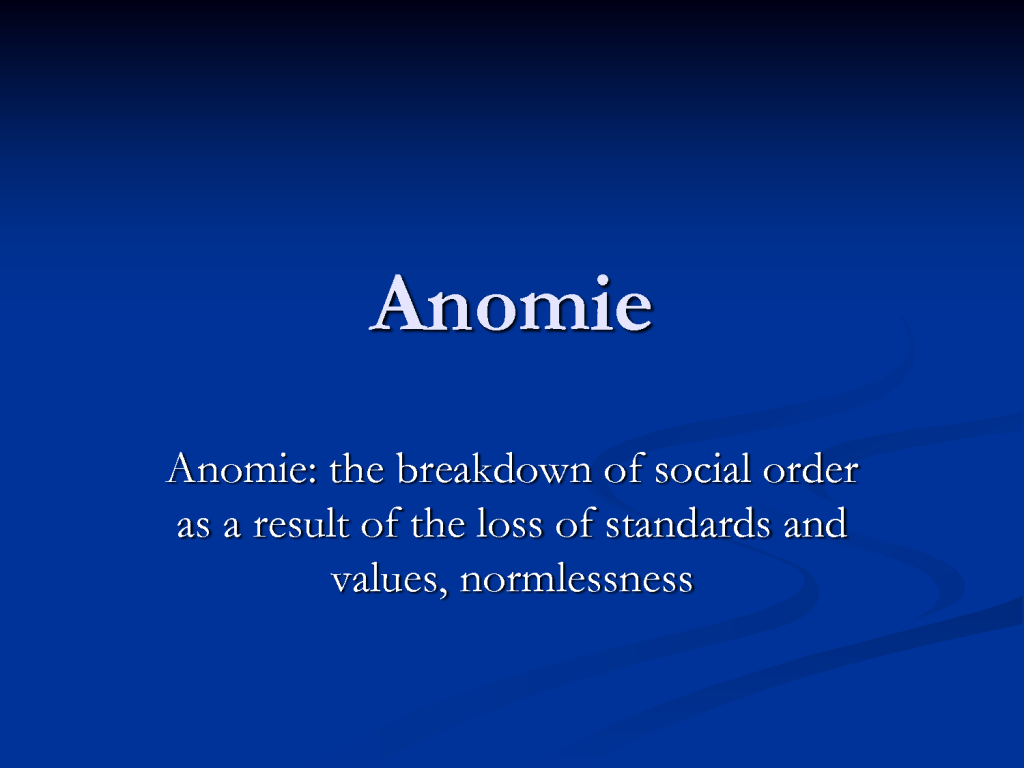
When I pulled up my NY Times feed yesterday it reported the rising number of mass shootings in the US.  Crime experts define a mass shooting as an event where four or more people are shot.  Last weekend, there were at least nine mass shootings across the US, including one in my home state at a car show.  Ironically, the annual car show is held against gun violence.  The burst of weekend crime violence continues a trend that began in the outset of the pandemic and shows no sign of easing.  Reporter David Leonhardt wrote there is no good answer for the crime wave, and it appears to be a distinctly American response to the pandemic.  Historians point out crime waves often occur when people feel frustrated with society, the government, and their fellow citizens.  This frustration can feed a breakdown in societal norms and a rise in what sociologist Émile Durkheim (1893) called “anomie.”

When I went online, I found Anomie is a social condition defined by a breakdown of moral values, standards, or guidance for individuals to follow.  Anomie was thought to evolve from a conflict of belief systems and causes a breakdown of social bonds between an individual and the community.  Personal alienation can progress into an inability to integrate with normal situations of the social world, like finding a job or a successful relationship.  Durkheim used anomie to refer to the effects of industrialization in Europe.  The contemporary understanding of anomie accepts greater flexibility in the “norm”, and some have used the idea of normlessness to reflect a situation like the idea of anarchy.  However, for Durkheim and later theorists’ anomie is a reaction against the social controls of society, while anarchy is a state of disorder due to absence or rejection of authority or other controlling systems.

In the 1950’s Robert Merton extended the theory of anomie to the US and argued anomie is not simply about unregulated goals, but a broken relationship between cultural goals and legitimate means of accessing them.  Merton argued everyone in the US is socialized to believe that their possibilities, regardless of their circumstances, are limitless and that they should desire success on a large scale.  However, society restricts or eliminates access to approved ways of acquiring these symbols of success for a considerable part of the population.  Those in lower economic classes may share the goal of success but are limited by lack of education and job opportunities. The mismatch between goals and opportunity creates anomie and can result in increased crime.

THOUGHTS:  According to Gallup, nearly 80 percent of Americans are dissatisfied with the country’s direction and feel frustrated with the government, the economy, and fellow citizens.  Many consider people with opposing political ideas are so wrong they do not deserve to express their views.  Polls show an alarming degree of skepticism about democracy and an openness to political violence.  Along with alienation, a wide range of behavior has deteriorated.  Alcohol abuse and drug overdoses have increased, blood pressure is up, measures of mental health are down, and vehicle crashes have surged.  The anomie created by the shift to industrialization has been replaced by the anomie brought on by globalization.  This turmoil will continue to rise until society (and individuals) decide to make opportunity available for all.  Do the work.  Change is coming and it starts with you.
Eagle

March 23, 2022

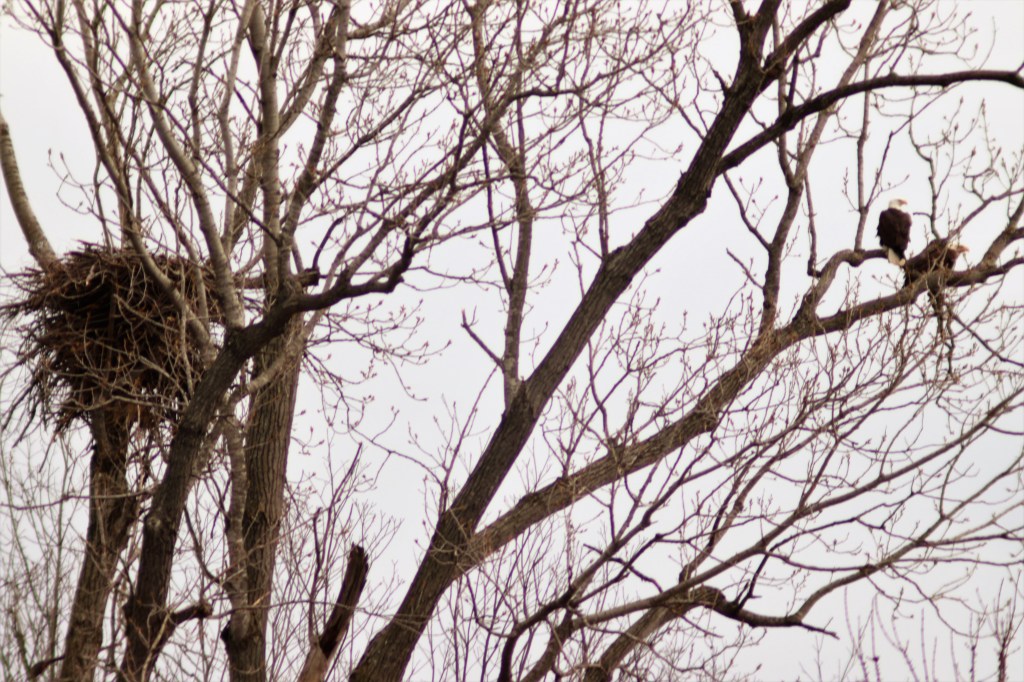
Melissa has a friend who has been texting her about the crappie run along the Arkansas River bottoms.  She sent me the link and suggested I see if this was an accessible location for us to fish.  Many areas along the river have steep banks and others are overgrown with trees which make it difficult for fly fishing.  The location was an hour and a half away, but I decided to check it out.  I followed the directions along a levee road and ultimately to a small boat launch.  This area did not seem accessible for bank fishing.  As I prepared to leave a bald eagle flew across the river.  I waited and moments later it flew back with a fish grasped in its talons.  The eagle circled and then flew to its nest (aerie) located in a tree just 100 yards from me.

When I looked online, I found it takes the bald eagle (Haliaeetus leucocephalus) four feather shedding’s (molt) and almost five years to obtain their white head.  Both the male and female eagle have their distinctive white heads when they reach maturity at five years and will start breeding.  A bald eagle spends most of its juvenile years covered in dark feathers, anywhere between brown and black.  With each yearly molt the eaglet comes closer to its definitive color, but its plumage goes through four different stages during these molts.  The head stays mostly brown before maturity, while the rest of the feathers go from dark to light and back to brown again.  The eagle mates for life and the pair will often return year after year to the same nest.  While nesting, the pair continuously adds to the structure.  After many seasons the nest can assume gargantuan proportions and stands as a symbol of their fidelity.

As I watched the nest, I noticed the eagle sharing the fish with another bird.  I thought it might be a chick, but the bird was too large, and it was too early in the season for eaglets.  It did not look like the second bird had the characteristic white head and I thought it must have been a younger eagle coming into maturity.  While eagle courtship rituals are spectacular displays of aerial acrobatics, it is nest building that cements the bond between male and female.  The male stays with the female to help incubate the eggs and feed the offspring.  According to Wayne Mones, “monogamy is advantageous only when nesting and parenting responsibilities demand an extraordinary investment of energy by both parents.  When the two flew over to a nearby branch I saw they both had white heads.  They were a mated pair reclaiming their nest for the spring.

THOUGHTS:  Contrary to popular legend, there is no evidence that Benjamin Franklin publicly supported the wild turkey (Meleagris gallopavo) rather than the bald eagle as a symbol of the US.  However, in a letter written to his daughter in 1784 he stated his personal distaste for eagle behavior.  “For my own part.  I wish the bald eagle had not been chosen the representative of our country.  He is a bird of bad moral character.”  Franklin believed our founders focused on perception when choosing the national bird.  Human prejudice also relies on perception rather than actions.  Looking the “right” way does not imply good character.  Character is determined by how we treat each other.  Do the work.  Change is coming and it starts with you.