Drilling

October 07, 2021

I woke Monday morning to the news that a major pipeline spill had occurred off the coast of southern California.  The pipeline failure occurred three miles (4.5 kilometers) off the coast of Orange County and involved a failure in a 17.5-mile (26.25 kilometer) pipeline connected to an offshore drilling facility called Elly that is operated by Beta Offshore.  It was not immediately clear what caused at least 126,000 gallons of oil to spill into the Pacific Ocean, creating a 13-square-mile (19.5 square kilometer) oil slick.  Dead fish and birds washed ashore as cleanup crews raced to try to contain the spill.  I am not sure why I was just hearing about the spill two days after it happened.  Perhaps like many others, football had taken precedence over environmental disasters on Sunday.

When I looked online, I found that offshore drilling is a process where a wellbore is drilled to extract petroleum which lies in rock formations beneath the seabed.  There are five main types of offshore drilling facilities.  A rig is an immovable structure of concrete and steel resting on the seabed.  Spars are drilling platforms affixed to giant hollow hulls that can descend over 812 feet (250 meters) and are secured by cables.  Jack ups are mobile platforms raised above the sea on extendable steel legs designed for depths of 1600 feet (500 meters) or less.  Semi-submersibles are usually built on floating pontoons with columns sunk into the water and anchored to the seabed and effectively support drill depths up to 5850 feet (1,800 meters).  A drill ship is a fully mobile drilling vessel for deep-water drilling that use sophisticated sensors, electronic components, and satellite tracking to keep them floating safely while lined up with the well.  Environmentalists claim all five types are accidents waiting to happen.

Offshore drilling presents environmental challenges (offshore and onshore) from the produced hydrocarbons and the materials used during the drilling operation.  This does not include the possibility of spills from the facility or an associated pipeline.  The US Coast Guard said that crews had “recovered” about 3,150 gallons of oil.  Fourteen boats were involved in the cleanup effort on Sunday, and crews had deployed 5,360 feet (1,787 meters) of boom (floating barrier) to contain the oil.  The spill prompted closure of the beaches in Huntington Beach, and cancelation of the third day of the annual Pacific Airshow where an estimated 1.5 million people had gathered on the oceanfront to watch the Blue Angels and Thunderbirds.  Huntington Beach mayor Kim Carr said on Sunday the spill was “one of the most devastating situations our community has dealt with in decades.”  The beaches in Huntington Beach are closed until further notice.

Thoughts:  Rather than a single borehole, the Elly site is a drilling complex with two producing platforms and a processing platform supporting about 70 wells.  All the platforms have now been shut down.  The oil slick appeared to infiltrate the Talbert Marsh, a 25-acre ecological reserve that is home to dozens of species of birds.  An Orange County supervisor said, “The impact to the environment is irreversible.”  When the Deepwater Horizon rig exploded in the Gulf on April 20, 2010, it killed 11 people and injured 17 others.  By the time it was capped three months later it had caused the death of 105,400 sea birds, 7,600 adult and 160,000 juvenile sea turtles, and up to a 51% decrease in dolphins in Louisiana’s Barataria Bay.  We need to rethink the cost (and who profits) of ocean drilling.  Follow the science.  Change is coming and it starts with you.
Patience

October 06, 2021

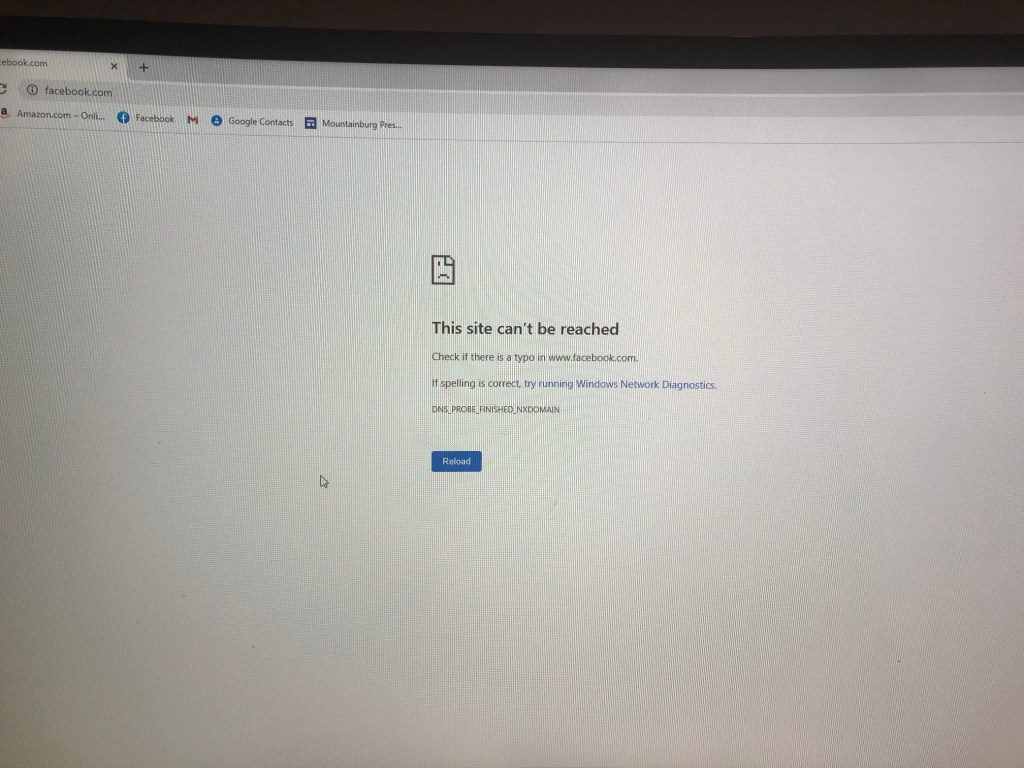
I admit, I do not have much patience with my computer or devices when they are slow.  When I was preparing to post my blog on Monday, I found that I was unable to access my Facebook page.  Like most platforms there have been problems in the past.  I also know there have been times when something has changed on my devices that affect availability.  No problem.  I switched to another browser and got the same response.  This was an unhappy face and, “This site can’t be reached.”  I then ran diagnostics and it told me, “Your DSN Server might be unavailable.”  Ya think?  When I pointed this out to Melissa, she checked her Facebook account, and it was working (we later found out she was already logged on and this was only showing content already downloaded).  I went online and queried “Facebook problems” and found there was a global problem with the site.  That did not improve my patience.

While I was online, I did further research on the problem and found that Facebook Inc. services experienced widespread outages for six hours Monday morning, adding to the social network’s miserable day.  Facebook FB shares dropped as much as 6% to an intraday low of $323, which was their worst single day decline since a 6.3% fall logged on Oct. 30, 2020.  The decline followed a national broadcast of a whistleblower’s allegations that the social media network placed profits before safety.  Late Sunday, ViacomCBS Inc.’s news program “60 Minutes” interviewed former Facebook data scientist Frances Haugen, who alleges that the social-media giant has been deceiving investors about how it has been dealing with hate speech and misinformation on its platform.  Haugen had continued to work with the media giant’s assurance the issues would be resolved.  She finally lost patience and lodged the complaint.  Added to that was the widespread outage of Facebook services, including Instagram and WhatsApp.  A very bad day.

Considering the problems, and the national attention received by Sunday’s 60 Minutes focus, I jokingly wondered whether Facebook had decided to force the world to see what it was like to not be able to use these three platforms.  While I quickly dismissed this as conspiracy theory, apparently, I was not the only one who wondered.  When I checked for the reason for the outage, I found Facebook was having global problems, to which one responder wrote, “Maybe its cuz of that Facebook whistle-blower on 60 min last night…”  Another commented, “60 Minutes might just might have brought FB to it’s knees.”  Realizing I had no more patience, I was forced to find other ways to pass the afternoon (read a book?).

Thoughts:  Late Monday Facebook said the cause of the failure was changes to its underlying internet infrastructure that coordinates the traffic between its data centers.  Facebook eventually restored service after a team got access to its server computers at a data center in Santa Clara, California and were able to reset them.  The company apologized for the outage on Twitter (a non-Facebook platform).  While checking a status dashboard Facebook uses to communicate its availability to developers, I found this statement.  “We’ll be back soon!  Sorry for the inconvenience but we’re performing some maintenance at the moment.  We’ll be back online shortly!”.  It was signed, “The ‘Is The Service Down’ Team”.  I found creating an “Is the Service Down” team telling and ironic.  Apparently, there are others who suffer from my same lack of patience.  Perhaps the machine apocalypse is closer than I thought.  Follow the science.  Do the work.  Change is coming and it starts with you.
Rodents

October 05, 2021

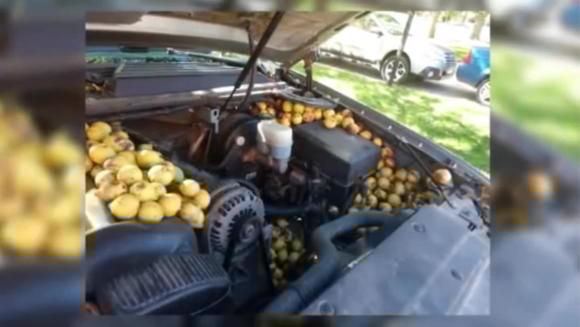
I had mentioned last year about the rodents I battled when I lived at a camp in Kansas.  As winter approached a rat took refuge in my truck and chewed through the distributer wiring.  The next year another (same?) rat again took up refuge and chewed through most of the trucks wiring harness.  I mention this because I came across the story of a man in North Dakota who has similar problems with rodents.  Rather than a rat chewing wires he has a squirrel storing nuts.  Bill Fisher has found gallons of walnuts under the hood of his truck after a red squirrel (Sciurus vulgaris) turned it into its hidden winter nut cache.  Every two years since 2013, Fisher has found the shelled Black Walnuts stuffed in the engine compartment.  This year he found 42 gallons of shelled (gnawed?) walnuts crammed into every corner of his truck.  Fisher was forced to dismantle parts of the truck to remove the walnuts.  It left me asking where the squirrel stores the nuts in the off years.

When I looked online, I found that Rodents (from Latin rodere, ‘to gnaw’) are mammals of the order Rodentia, which are characterized by a single pair of continuously growing incisors in both the upper and lower jaws.  Rodents comprise about 40% of all mammal species and are native to all major land masses except for New Zealand, Antarctica, and several oceanic islands.  They often travel with humans and have now been introduced to most of these land masses as well.  Rodents are extremely diverse and can be found in almost every terrestrial habitat, including human-made environments.  Species can be arboreal (climbing), fossorial (burrowing), saltatorial/richochetal (leaping on their hind legs), or semiaquatic (water).  Rodents include mice, rats, squirrels, prairie dogs, porcupines, beavers, guinea pigs, and hamsters.  Rabbits, hares, and pikas also have incisors that grow continually and were once included as rodents, but are now considered a separate order, the Lagomorpha.  Still, Rodentia and Lagomorpha share a single common ancestor.  They all like to gnaw on almost anything.

Most rodents are small animals, and use their sharp incisors to gnaw food, excavate burrows, and defend themselves.  Most eat seeds or other plant material, but some have varied diets.  They tend to be social animals and many species live in societies with complex ways of communicating with each other.  Mating among rodents can vary from monogamy, to polygyny, to promiscuity.  Many have litters of underdeveloped, altricial young, while others are precocial (well developed) at birth.  The rodent fossil record dates to the Paleocene and greatly diversified in the Eocene, spread across continents, and even crossing oceans.  Rodents reached both South America and Madagascar from Africa and, until the arrival of Homo sapiens, were the only terrestrial placental mammals to reach and colonize Australia.  This is one group that seems to spread even without the aid of human carelessness.

Thoughts:  Rodents have been used as food, for clothing, as pets, and as laboratory research animals. Species like the brown rat (Rattus norvegicus), the black rat (Rattus norvegicus), and the house mouse (Mus musculus), are serious pests, eating and spoiling stored food and spreading diseases.  The Black Death (Bubonic Plague) is thought to have spread to Europe from Crimea by fleas living on black rats that traveled on Genoese slave ships.  There is evidence that once it came ashore, the Black Death was largely spread via aerosols which a pneumonic plague enables.  While this plague transmitted a bacterium (Yersinia pestis), the covid virus uses a similar aerosol spread to move from host to host.  Distancing and masks would have been just as effective in the Middle Ages as it could be today.  Follow the science.  Change is coming and it starts with you.

Ageism

October 04, 2021

When conditions changed at my job several years ago, I decided it was a good time to move back to the state of my birth.  I had lived out of state for the previous 30 years and knew my parents were growing older and wanted to rebuild a connection with them.  Another motivating factor was that I had just turned 50.  While I did not consider this to be OLD, I realized many employers in my field did.  Most seemed to be looking to hire the perfect person, or a young person who had years of experience and a proven track record for growth.  While the perfect balance between age and experience rarely exists, I believed if I did not move soon, my likelihood of finding a good job in a new area of the country was slipping away.  This was an example of the ageism I knew existed in my industry.

I came across a report from LinkedIn that reported the US Census projects adults over age 65 will outnumber people under 18 by 2034.  Despite this population shift, ageism and age bias continue to confront Americans at both work and play.  While the employment rate of workers 55-plus took a hit during the pandemic, it is recovering slowly.   Regardless of the earning and spending power of the 50-plus, media and marketers are focused almost exclusively on Millennials and Generation Z consumers and continuing to ignore those over age 65.  Workers 50-plus make up over a third of the workforce in key sectors like technology, health, and education.  When the 50-plus are looking for work however, they find ageism hurts their chances for finding a job.  LinkedIn’s research showed that 78% of older workers reported seeing or dealing with ageism at work last year, up from 61% in 2018.

The covid-19 pandemic has especially had widespread impact on midcareer and older women workers.  About 40% have experienced at least one job interruption.  Of those still unemployed, 70% were out of work for six months or more.  Even if employed, these workers were concerned about the possibility of future unemployment.  Many are concerned about future job interruptions and one-quarter have seen their financial situation worsen over the course of the pandemic.  While younger women seem to bear the brunt of childcare and remote schooling, older women struggle with ageism.  This is particularly true when trying to find employment.  The Urban Institute reports that once displaced, older workers take about double the time to find a new job as younger workers.  

Thoughts:  The problem with ageism is that sooner or later, we all (hopefully) reach “that certain age.”  When I turned 35, I realized I would never be known as one of the Young Lions of my industry.  When I turned 50, I realized it would be harder to be hired by those who did not already know my reputation.  I skirted the loss of opportunity at 65 by retiring early, even though I now find myself in the workforce.  One reason touted for not hiring 50-plus workers is they require higher salaries.  They also bring the experience that makes them worthwhile.  Research has shown that innovative young workers become innovative older workers.  Ageism is not a reason to be reluctant to hire, it is an excuse.  Do the work.  Change is coming and it starts with you.
Extinct

October 02, 2021

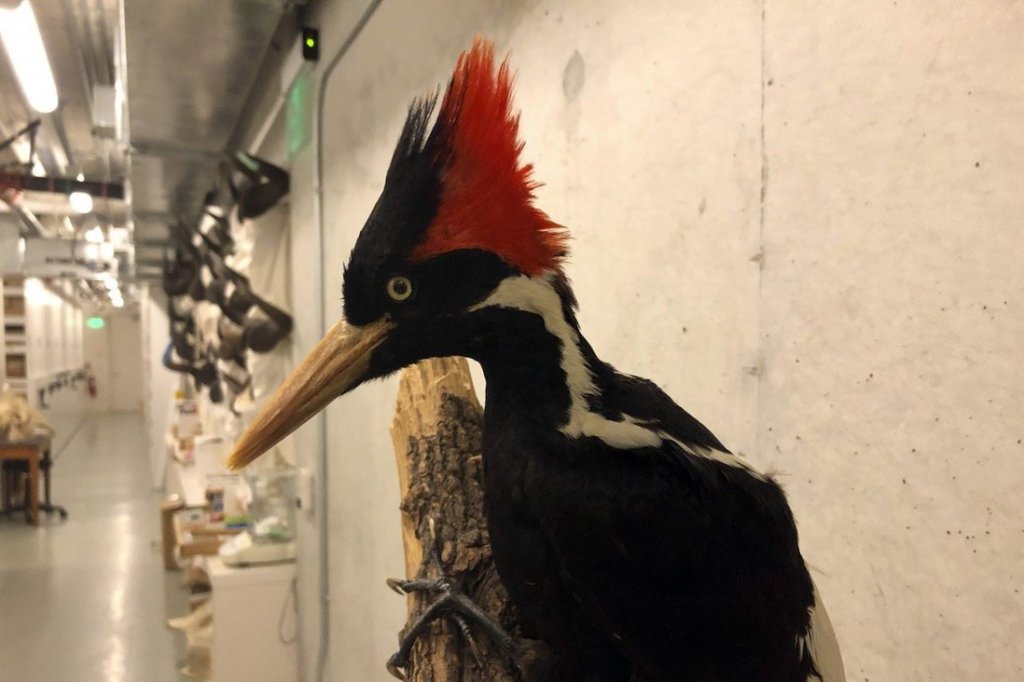
I received a notice to my email this week saying last Wednesday the US Fish and Wildlife Service (FWS) declared 23 species extinct, including one of the world’s largest woodpeckers, dubbed the “Lord God Bird”.  The announcement came via a proposal to remove the birds, mussels, fish, as well as a plant and fruit bat, from Endangered Species Act protections because government scientists have given up on ever finding them again.  “With climate change and natural area loss pushing more and more species to the brink, now is the time to lift up proactive, collaborative, and innovative efforts to save America’s wildlife,” said interior secretary Deb Haaland.  The most iconic species was the Ivory-billed woodpecker, with the last indisputable evidence of existence coming in the 1940’s.  This woodpecker has been the Holy Grail for birders in recent decades, with numerous unconfirmed sightings over the years in the southeastern US.  Sadly, I was not one of them.

When I checked online, I found the Endangered Species Act (ESA) of 1973 is the primary law in the US for protecting imperiled species.  The Act was designed to protect critically imperiled species from becoming extinct as a “consequence of economic growth and development untempered by adequate concern and conservation.”  The ESA was signed into law by President Richard Nixon on December 28, 1973.  The US Supreme Court called it “the most comprehensive legislation for the preservation of endangered species enacted by any nation”.  Since the ESA was enacted, it has prevented the extinction of 99% of plants and animals under its care.  This includes the whooping crane, which numbered as few as 16 birds in the 1940’s but have since recovered to 500 to 600.  Today’s endangered species must also contend with the pressures of climate change, as rising seas and higher temperatures change and destroy habits.

John Fitzpatrick, director emeritus of the Cornell Lab of Ornithology said, “The fundamental thing that drove the woodpecker down to near extinction was the loss of the southeastern first growth forests, which really started taking place after the Civil War.”  Fitzpatrick was part of efforts to search for the bird in Arkansas and other regions in the mid-2000’s.  He still believes there is hope for the Ivory-billed woodpecker.  The species was revered not just by Alexander Wilson and John James Audubon, called the founding fathers of ornithology, but by collectors who hunted them.  Fitzpatrick said the nickname, “Lord God Bird,” was said to be derived from the expression “Lord God, what a bird.”  Now it is extinct.

Thoughts:  Tiera Curry, a senior scientist for the Center for Biological Diversity, praised the current administration for requesting a US$60 million increase in endangered species protections, but criticized the fact a new FWS director had yet to be appointed.  “Extinction is not inevitable.  It is a political choice.  Saving species isn’t rocket science.  As a country we need to stand up and say we aren’t going to lose any more species to extinction.”  Sadly, unless we make immediate changes, critical endangered species will continue to become extinct.  Follow the science.  Change is coming and it starts with you.

Immunization

October 01, 2021

My feed from the NY Times this week led with the story of how the US owes its existence as a nation partly to an immunization mandate.  In 1777, smallpox was a big enough problem for the bedraggled American army that George Washington thought it could jeopardize the Revolution.  An outbreak had already led to one American defeat, at the Battle of Quebec. To prevent more, Washington ordered immunizations for all troops who had not yet had the virus.  This was done quietly so the British would not hear how many Americans were sick.  The number of smallpox cases plummeted, and Washington’s army survived a war of attrition against the world’s most powerful country.  Ron Chernow wrote in his 2010 Pulitzer Prize-winning biography of Washington that the immunization mandate, “was as important as any military measure Washington adopted during the war.”  Mandatory immunizations are still part of the military.

While mandatory immunization for many diseases are common and largely accepted, that was not always the case.  In 1901 a deadly smallpox epidemic tore through the Northeast, prompting the Boston and Cambridge boards of health to order the vaccination of all residents.  Some refused to get the shot, claiming the vaccine order violated their personal liberties under the Constitution.  A Swedish-born pastor named Henning Jacobson took his anti-vaccine crusade all the way to the US Supreme Court.  The justices issued a landmark 1905 ruling that legitimized the government’s authority to “reasonably” infringe upon personal freedoms during a public health crisis by issuing a fine to those who refused vaccination.  While immunization treatments became safer (the Revolutionary War method killed 2 to 3 percent of recipients), and mandates became more common, they also tend to generate hostility from a small minority of Americans.

Federal and local covid-19 vaccine mandates requiring immunization seem to be working.  Tyson Foods now has a 91% vaccination rate among its employees.  New York City school teachers and staff are required to show proof that they have received at least one covid-19 vaccine shot.  A California judge ordered vaccine mandates for prison guards and staff, and Gov. Gavin Newsom says a school vaccine mandate is on the table.  There is also opposition to mandatory immunization.  A New York state mandate that all health care workers be required to be vaccinated has sparked multiple legal challenges and fear of staffing shortages.  Since the current administration announced new federal vaccine mandates affecting roughly two-thirds of the US workforce (100 million people) it has received backlash from congressional Republicans, as well as state and local officials.  Many seem to believe saving people’s lives is an “unreasonable” infringement.

Thoughts:  One of the reasons for the immunization mandates for covid-19 comes from the increased risk with the Delta variant.  Roughly 1 in 500 people in the US have died from covid-19, and vaccination rates have slowed despite the uptick in delta variant cases.  Meanwhile, more than 98% of people hospitalized with a covid-19 diagnosis between June and August 2021 were unvaccinated.  The longer the virus goes unchecked the greater likelihood it will mutate into a variant not controlled by the current vaccines.  Our Republican Lieutenant Governor even says, if you do not like wearing a mask and are sick of going to funerals, get the shot.  Immunization is a faster and safer way to reach herd immunity than spreading the virus.  Follow the science.  Change is coming and it starts with you.
Toxic

September 30, 2021

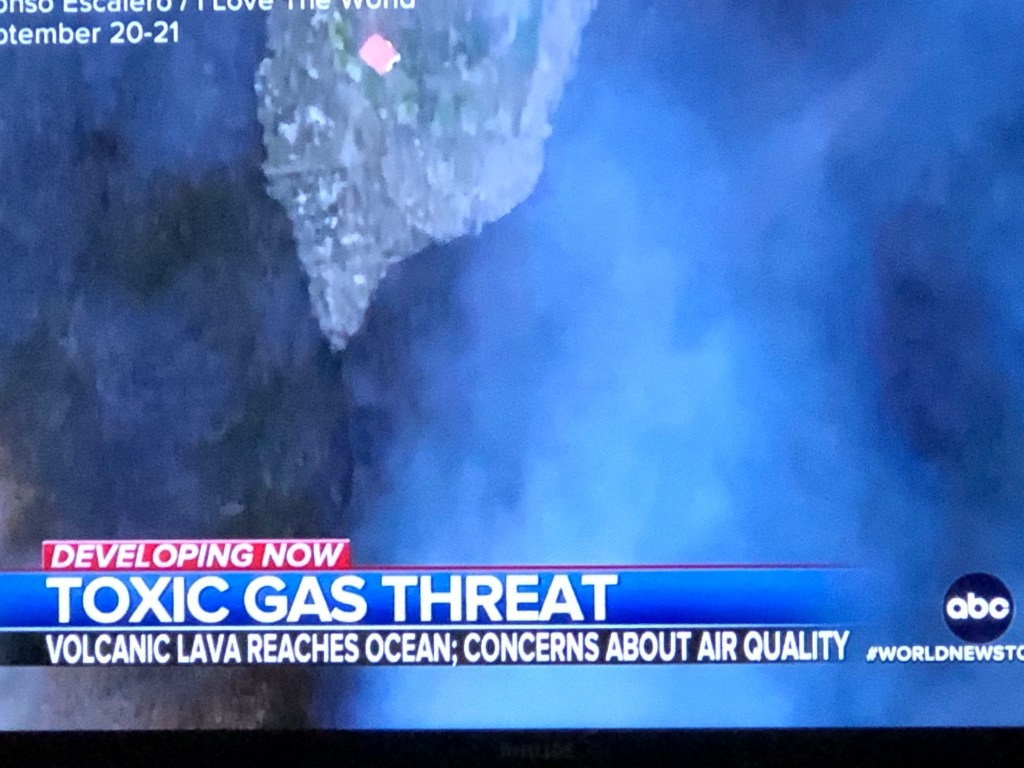
One of the lead stories on last nights national news concerned the toxic fumes that have begun to rise as lava from a volcano on the island of La Palma contacted the Atlantic Ocean.  The lava reached the ocean on Tuesday, raising concerns about the release of toxic gas as the hot rock reacted with the water.  It has been estimated by the EU’s Copernicus service that the magma has covered 267 hectares (2.7 sq km) on its way to the bay.  Clouds of white steam were seen rising from the contact area near Playa Nueva.  The steam carried a mix of sulfur in the lava with the ocean water to create sulfuric acid.  Residents were advised to seal their windows and doors and not go outside.  They might be better advised to leave the island and its toxic mist until the crisis is over.

The initial lead on the volcano was the “miracle house” that managed to survive the initial volcanic eruption.  The property escaped the molten rock flowing from the Cumbre Vieja volcano last Thursday and videos were posted on social media showing the little home standing unscathed on a patch of land, surrounded by a toxic, scorched earth.  The house was owned by a retired Danish couple, Inge Bergedorf and Ranier Cocq.  They used the house as a winter retreat, arriving in October or November to collect the grapes from the vines grown there.  The initial flow had taken the vines but miraculously left the house.  They owner said, “now there is nothing left.  It first swallows the vines.  Now it has also devoured our home.”  For many, this would be a toxic blow.

The lava has flattened hundreds of homes in the region since the volcano erupted on September 19, and more than 6,000 people have been forced to flee.  The Spanish government has since declared the island of La Palma (Canary Islands off north-west Africa) a disaster zone and pledged financial support for all those affected by the volcano.  The president of the Canary Islands, Ángel Víctor Torres, said that an estimated £346 million (US $401.7) of damage had been caused by the eruption and described the people of La Palma as “cowering in fear with a tremendous sense of desolation.”  Those who were not burned out by the lava now face the toxic acid mist.  Apparently, most of the residents are foreigners from central Europe.

Thoughts:  While the sulfuric acid plaguing the residents of La Palma is naturally occurring, I found a similar toxic man-made occurrence when I researched the lead smelters in the Salt Lake Valley at the turn of the 20th century.  While lead was toxic enough, the ore held other elements like mercury, arsenic, and sulfur which all escaped up the smokestack during the smelting process.  The Salt Lake Tribune reported when the wind was right and rain fell, it created a death strip 3 miles (4.5 kilometers) wide and 15 miles (22.5 kilometers) long.  The sulfuric acid that fell with the rain killed both crops and animals who were unlucky enough to be in its path.  The solution was to build taller smokestacks to carry the acid further from the population center.   It still fell somewhere.  We need to protect the planet from ourselves.  Follow the science.  Change is coming and it starts with you.

Sweets

September 29, 2021

One of the myths I believed for most of my adult life was that as a child our family never had much access to candy or sweets.  I never recall this being the case when I was growing up but as I aged, I seemed to splice several different stories together to create this reality.  Two events happened at Christmas that might have been the foundation for this myth.  The first concerned my grandfather.  I have memories of him arriving around Christmas with his pockets filled with sacks of ribbon candy and cut rock hard candy.  The other was the Christmas movie our town showed at the abandoned theater to mark Santa’s arrival.  All the children who attended got a sack of peanuts in the shell, several bonbons, an orange, and hard candy.  Somehow this morphed into a lack of sweets.

I realize this could not have been true when I remember my younger brother and my favorite game, concoction.  This was a game we could only play when mom was out of the house.  Mom often iced cupcakes (sweets?) and kept a supply of the small cake holders available.  These became the container where we placed the concoction.  The purpose was to challenge each other to eat whatever concoction was created.  I recall the base of most of these delicacies was brown sugar.  Then we would comb the cupboards adding different ingredients (chocolate chips, coconut, syrup) to the concoction.  The trick was to make a treat that was disgusting enough to force the other to refuse to eat it.  However, if one brother refused, the one who made the concoction would have to eat it to win.  The game usually ended when we could no longer ingest the generous amount of brown sugar involved (sweets?).   

I also recall that while we may not have eaten a lot of “store bought” sweets, home-made sweets were plentiful.  Every Sunday night was reserved for popcorn, fudge, and divinity.  My mom still relishes popcorn and fudge as her Sunday night meal.  I recall several times where we had marathon taffy pulls, taking up most of the day on Saturday.  Apparently, once you started pulling you could not stop, even when your arms were tired.  I do not ever remember getting it to the soft stage I now buy in the stores.  Then there were the candy apples and popcorn balls we were given by houses for trick or treat at Halloween, and they usually appeared at our house sometime during the fall as well.  While I am not big on sweets now, perhaps it is because I had too many as a child.

Thoughts:  One of my childhood memories is the questions my mom would ask.  I previously touched on her questions about the missing cookie dough (and cookies) from the freezer.  The other was a periodic, “Where is the brown sugar?  I was sure we still had brown sugar.”  My brother and I always feigned innocence.  Despite the copious amounts of sugar ingested as a child, I still held to the myth that we did not have sweets.  As an historian I have been intrigued by how our bias results in a fabricated reality concerning events of the past.  This is true for my memories of sweets when I was a child.  This is also true for the stories being circulated about the vaccine.  What we do know is vaccinated people rarely go to the hospital, let alone die.  Follow the science.  Change is coming and it starts with you.

Web

September 28, 2021

I believe I have mentioned how my sister has been working with my mom to prepare her for a move.  That has meant going through the boxes, clothes, and memorabilia that one can accumulate while living in the same location for the last 30 years.  While they were busy on the inside of the house, they had paid little attention to what was going on outside the front door.  Today I received a text with a photo of the spider that had made a web between the posts on the front patio that was four feet across (just over a meter).  It was black and yellow in color with a one-inch (2.5 centimeters) body and about three inches (7.5 centimeter) of legs.  The web went up in one day.  As mom exclaimed when she saw the web, “She has been busy!”

This time my sister looked online, and then sent me the link.  The Black and Yellow Garden Spider (Aurantia Argiope) belongs to the orb weaver family of spiders.  It is common to parks and gardens in North America and is known for the huge webs it builds in the fall that span several feet.  The black and yellow garden spider is sometimes called the writing spider, due to the elaborate silk web it weaves.  While the garden spider leaves the support strands, it eats the circular interior part of the web and rebuilds it each morning with fresh silk.  The spider may be recycling the chemicals used in web building, or it may be consuming the minuscule insects and organic matter that had attached to the web.  Mature females usually weave a zigzag pattern in the center of their webs, while immature yellow garden spiders tend to fill the centers of their webs with heavy silk patterns to camouflage themselves from predators.  You would think the bright yellow would give them away even in the web.

Black and Yellow Garden spiders breed twice a year. The smaller males roam in search of a female, and then build a small web near or even in the female’s web.  Males court the females by plucking the strands on her web.  Like other spiders, the female is just as apt to eat the male as embrace his advances.  The male will often have a safety drop line to fall from the web should she decide to eat him.  After inserting the second palpal bulb into the female, the male dies.  Then he is sometimes eaten by the female anyway.  The female builds up to four nest sacs that hatch the young spiders the next spring.  While some of the little spiders remain nearby, others exude a strand of silk that gets caught by the breeze, carrying them to more distant areas.

Thoughts:  Black and yellow garden spiders are largely unnoticed for much of the year as they grow and molt toward maturity.  By fall the female spider is huge and the enormous web that is built attracts attention.  As menacing as the spider seems, they are harmless.  The black and yellow is another of the orb weavers (Pholcid) who rarely bite unless under duress.  Instead, they act as a valuable pest control by trapping insects and even small lizards in their web.   My sister told me she accidently bumped the web, and the spider began to shake it vigorously.  While this initially may have scarred her, she had read this was done to trap an insect or scare away predators.  Knowing why it reacted meant it no longer scared her.  When we get to know why people react as they do, it can make their actions less scary as well.  Do the work.  Follow the scienced.  Change is coming and it starts with you.
Break in

September 27, 2021

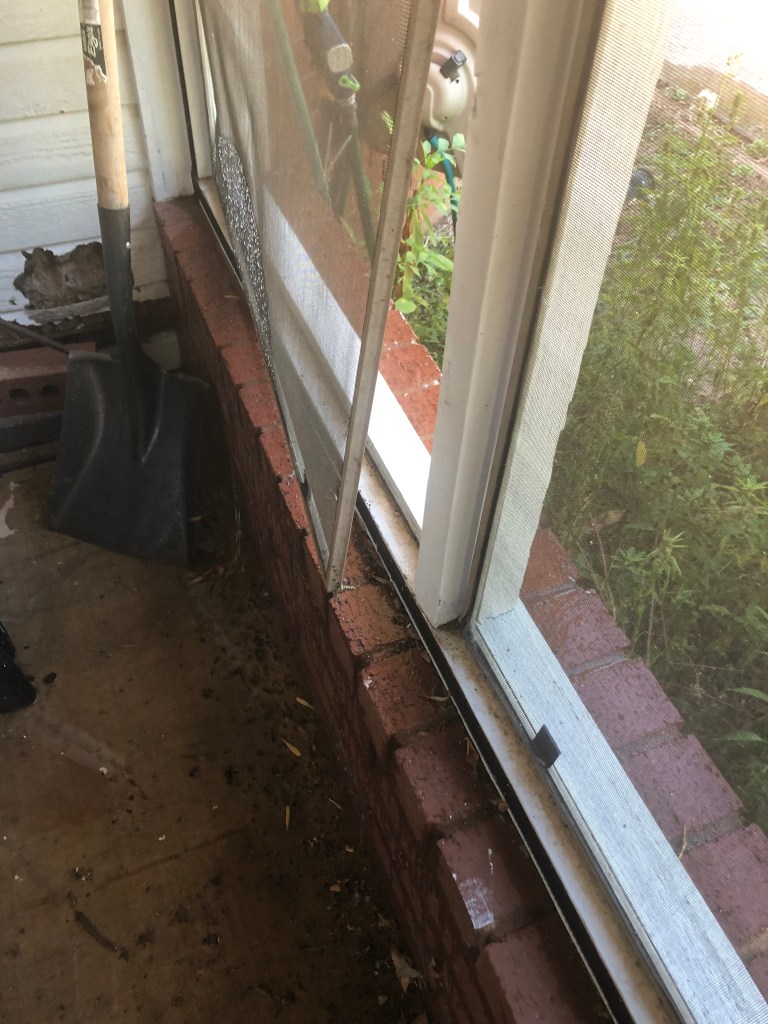
When I entered the sun porch last week, I noticed that an intruder had gotten into the area and had chewed through one of the bags that contained the squirrel mix I had been placing in one of my feeders.  I found it interesting because none of the other plastic bags had been touched.  It seems the corn in the squirrel mix was what had attracted whatever animal it was.  Once more, I defaulted to the usual suspect, a squirrel.  What I did not know is how he managed to break in.  The porch is screened, and the squirrels always scamper away when I go out on the deck.  When I was watering this morning, it became apparent how the break in happened.  One of the window screens behind a succulent rack had been pushed open.  Appropriately, the size was about what would be needed for a squirrel to enter.

Melissa sent me a feed this morning from the NY Times about an intruder break in who then tried to take over a house recently purchased by Shanetta Little in Newark, New Jersey.  Not long after her purchase, she began receiving letters with documents claiming an obscure 18th-century treaty gave the sender rights to claim her new house as his own.  She dismissed the letters as a hoax, until she arrived to find a man in her house. After the break in, he changed the locks and hung a red-and-green flag in its window.  He claimed to be a sovereign citizen of a country that does not exist and for whom the laws of the US do not apply.  The man who entered her house was arrested June 17, and charged with criminal mischief, burglary, criminal trespass, and making terroristic threats.  Prosecutors in New Jersey are preparing to take the case before a grand jury, according to Katherine Carter, a spokeswoman for the Essex County Prosecutor’s Office.  He was released on his own recognizance.

When I looked online, I found the loosely affiliated group called Members of the Moorish sovereigns (Moors), have come into conflict with federal and state authorities over their refusal to obey laws and government regulations.  The events around the break in at Little’s house used a popular ploy known as paper terrorism.  According to government experts. Moorish sovereigns are one of the fastest growing extremist groups in the US.   Also known as the Moorish sovereign citizen movement, they are loosely based around a theory that Black people are foreign citizens bound only by arcane legal systems.  The Moors then encourage followers to violate existent laws in the name of empowerment.  Experts say it lures marginalized people to its ranks with the false promise that they are above the law.  Neither the break in person nor the new owner of the house was impoverished, and both were Black.

Thoughts:  Sovereign citizen ideology was initially adopted by white supremacist groups in America in the 1970’s, according to the Southern Poverty Law Center.  The Moorish permutation gained popularity in the 1990’s.  Present membership in the Moorish sovereign citizen movement has been driven by the internet to include hundreds of thousands of adherents.  Real Estate agent Jordan Fainberg confronted a similar break in during 2013.  “It was the most bizarre thing in the world,” Fainberg said recently. “This was just somebody saying the sky is purple when it’s blue.”  There seems to be a lot of this going around in national politics.  Facts no longer matter, and truth is relative.  If you claim your “rights,” you can do whatever you want.  Do the work.  Follow the science.  Change is coming and it starts with you.