Battery

February 21, 2023

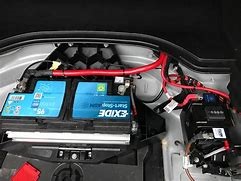
Last weekend my car would not start.  Although I was perturbed, I had prepared for this probability.  When I was younger, I constantly locked my keys in the car, had flat tires or a dead battery, or was getting towed.  While my regular insurance says it will cover these events, I rarely use it and have a tow package from a national carrier, but they seem to take at least an hour to arrive.  I purchased a handheld charger unit just in case.  When I attached the small unit to the car it did not start.  I noticed it was not fully charged and thought that might be the culprit.  I hooked Melissa’s jumper cables to my car, and it fired right up.  I did the safe thing and took the car to our local battery dealer to have it checked.  The shop found the battery was low, but still good.  I remembered the AUX Battery light I had gotten earlier in the week.  The shop told me I needed to take the car to the dealer to have the auxiliary battery replaced.  That was the first time I knew my car had an auxiliary battery.

When I looked online, I found the Jeep Wrangler JL has the Electronic Start Stop System (ESS).  The idea is to save fuel by shutting the engine off automatically to prevent idling when the Jeep is sitting stopped.  The auxiliary battery keeps the accessories and computer alive when ESS stops the engine.  The dimensions for the battery are 5-3/4 inch (14-1/3 cm) x 5-7/8 inch (14-2/3 cm) x 3-7⁄16 inch (9-2/3 cm).  The battery weighs around 11.5 pounds (5.2 kg) and can produce 200 cold cranking amps (CCA).  The auxiliary battery is insufficient to provide cranking power to the starter motor and only keeps systems alive when the alternator is not making current.  While the average 12-volt car battery typically lasts three to five years, the auxiliary battery is smaller and has a lifespan of two to three years.  I guess I should feel lucky as I have had the vehicle for nearly 5 years.

While I did not know my vehicle used an auxiliary battery, I heard hybrid electric vehicles (HEV) and electric vehicles (EV) used an additional battery.  The difference between HEV and EV auxiliary battery systems and conventional vehicle systems is the method used to recharge the battery.  Instead of using an alternator to charge the auxiliary battery, HEVs and EVs are recharged by the HV battery using the inverter/converter.  Many HEVs do not use the 12-volt auxiliary battery for starting the gas powered engine or for the traction motor(s) which is charged by the traction battery.  While the auxiliary battery usually supports all 12-volt electrical systems on the vehicle, exceptions are the air conditioning and heating systems.  An auxiliary battery may also be used as a safety backup to support the main battery when required or to provide constant voltage for specific vehicle systems.  Many vehicles with ESS and ADAS (Advanced Driver-Assistance Systems) systems may also utilize an auxiliary battery alongside the main vehicle starter battery.  That is the case with my car.

THOUGHTS:  As a child I learned dinosaurs had a second brain.  The idea comes from an 1880’s cast of a Stegosaurus’ brain case.  Despite the massive size (5 to 10 tons), its brain was a little bigger than a walnut.  Scientists theorized the large, hollow space near the hip of the spinal cord contained a “second brain” to help control the back half of the animal.  Similar hollow spaces were later found in the rear of other sauropod dinosaurs and the myth of the second brain was born.  While the two brain myth persists, it is incorrect.  Birds are the closest living relatives of dinosaurs and have a similar space at the base of their spinal cord which stores energy-rich glycogen.  We do not know what the space is used for, but it is not a brain.  I was told my vehicle’s auxiliary battery was also in the rear of the vehicle, and that is also a myth.  I found an illustration of the placement showing the battery next to the larger 12-volt battery under the hood.  At least this battery does control the vehicles’ secondary functions.  Just because someone says it, and we all believe it, does not make it true.  Act for all.  Change is coming and it starts with you.
Icefin

February 18, 2023

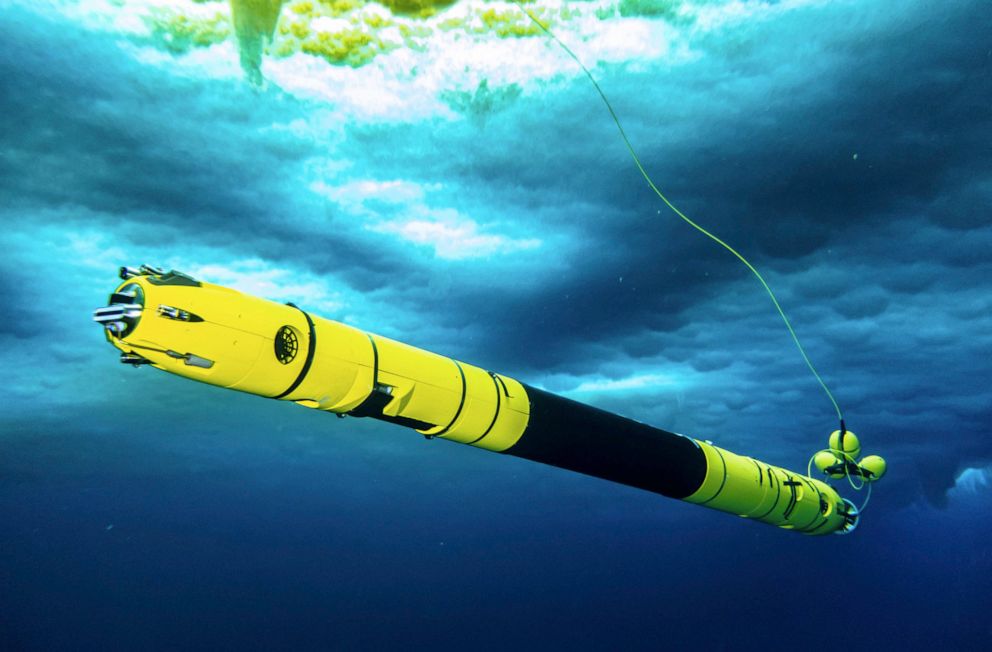
It is appropriate since I mentioned the Doomsday Clock several days ago that the back section of my local newspaper carried an article about the ice melt of the Doomsday Glacier.  Two studies in the journal “Nature” were from scientists from the UK-US International Thwaites Glacier Collaboration (ITGC) who were able to measure the bottom of the Thwaites Glacier by inserting cameras and probes through a borehole to study the ice from underwater.  The images showed that while the glacier is melting slower than projected, the warmer water underneath the ice is creating cracks and crevasses where the ice melts faster than the rest of the glacier.  One group made observations of the grounding line (where the ice first meets the ocean).  Over nine months the ocean became warmer and saltier, but the melt rate only averaged 6.5 to 16.25 feet (2 to 5 m) per year or less than had been modeled.  Oceanographers with the British Antarctic Survey took measurements through a 164 foot (600 m) deep borehole created by a hot water drill in late 2019 that is around 6562 feet (2 km) from the grounding line.  These measurements were compared with melt rate observations taken at five other sites underneath the ice shelf.  All these measurements were taken by a robot called Icefin.

When I looked online, I found Icefin is an 11 foot (3.35 m) tube-like underwater robot used to provide pertinent details regarding the conditions beneath the freezing waters.  Icefin was developed at Georgia Tech and the prototype dates to 2014, but now Icefin has a home at Cornell University. The robot is capable of characterizing below-ice environments using a suite of sensors.  Icefin is equipped with HD cameras, laser ranging systems, sonar, doppler current profilers, single beam altimeters (to measure distance), and instruments for measuring salinity, temperature, dissolved oxygen, pH, and organic matter.  The torpedo like craft can dive to depths of 3,280 feet (1,000 m) and squeeze through narrow cavities in the ice shelf.   The robot is modular and can be broken down, customized, and reassembled according to the needs of the mission.  Researchers can remotely control Icefin’s trajectory, or let it set off on its own. 

Icefin isn’t alone in the cold Antarctic waters.  It is part of ITGC’s fleet that includes other radars, sensors, and vehicles like Boaty McBoatface.  Boaty McBoatface (also known as Boaty) is the British lead boat in a fleet of three robotic autonomous underwater vehicles (AUVs).  Boaty was launched in 2017 and is carried on board the polar research vessel RRS Sir David Attenborough, and is a focal point of the Polar Explorer Program of the UK Government.  The name Boaty McBoatface was originally proposed in a March 2016 #NameOurShip online poll to name the £200 million polar scientific research ship.  James Hand of BBC Radio coined the humorous suggestion for the poll, and the name quickly became the most popular with 124,109 votes.  Although Boaty McBoatface was the popular suggestion with more than ten times the votes for Sir David Attenborough, the suggestion to use the name for the mothership was not followed.  The name was said to be an homage to Hooty McOwlface, an owl named through an “Adopt-a-Bird” event in 2012 that became popular on the Internet.  Who ever thought science is not fun.

THOUGHTS:  In 2020, Icefin ventured out to the critical point where the Thwaites Glacier joins the Amundsen Sea, and the ice starts to float.  The data gathered showed the glacier had retreated up the ocean floor, thinning at the base, and melting outwards quickly.  The Thwaites Glacier is roughly the size of Florida and is nicknamed the Doomsday Glacier as over the last 30 years it accounts for 4% of global sea level rise.  If the glacier collapses it could add 25 inches to sea level rise in the coming centuries.  While this information will improve model predictions, a collapse would inundate our global coastal cities.  Act for all.  Change is coming and it starts with you.
Anticipation

February 17, 2023

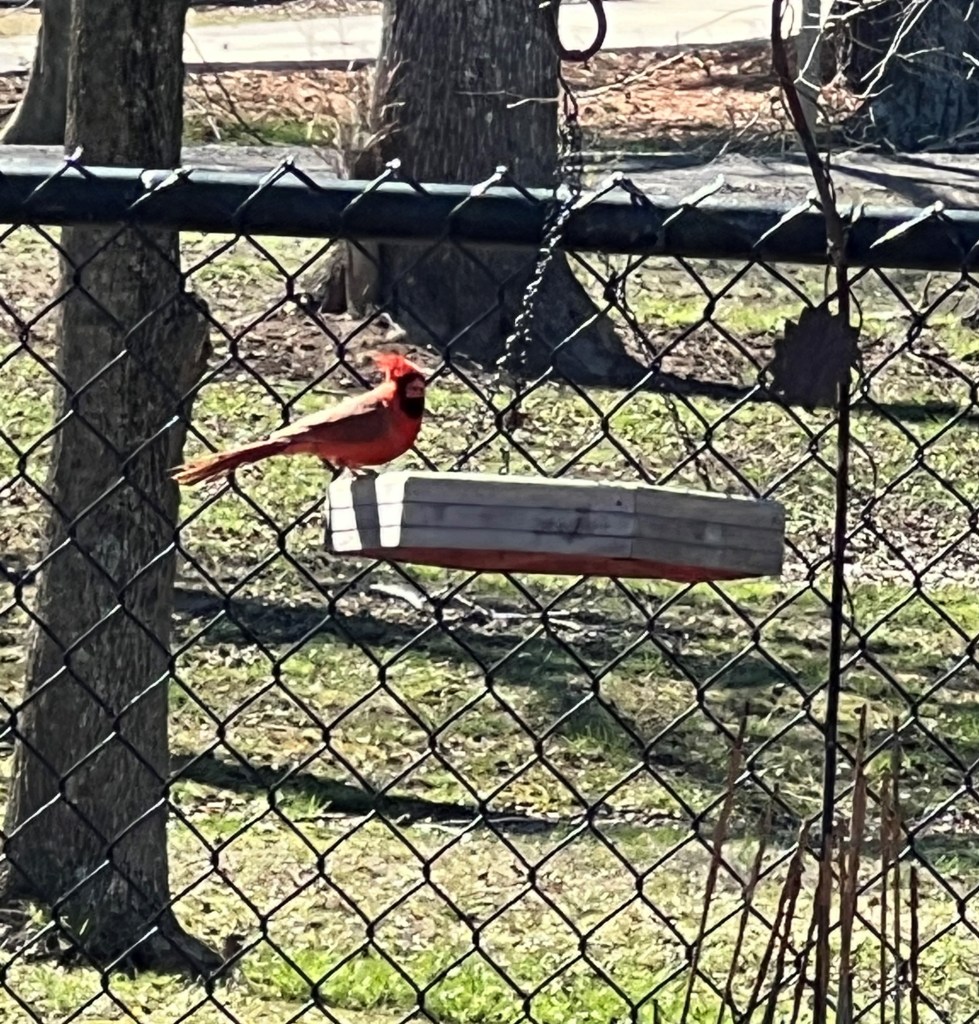
I have been waiting in anticipation for the beginning of the Great Backyard Bird Count (GBBC) for the last two weeks.  Last night I decided rather than filling my feeders I would wait until this morning.  The birds often come for breakfast early and I wanted to make sure I was awake before they arrived.  While that was a good plan, it did not go as expected.  I stayed up later than usual watching a series I follow on one of the streaming services.  Melissa always closes the door and takes Zena with her when she gets up in the morning.  Zena arrives back in about an hour to push the door open with a loud bang and then jumps on the bed to make sure I am awake.  I somehow missed the excitement and slept late.  When I did get up, filled the feeders, grabbed my paper, and sat down to watch the birds arrive.  Apparently I was too late as I sat for an hour without seeing a single bird.

When I looked online, I found anticipation is an emotion involving pleasure or anxiety while considering or waiting for an expected event.  Anticipation is excitement leading to an event as we eagerly wait for what you know is going to happen.  Anticipation can also be described as a nervous expectation.  For most events where we find pleasure, it is not so much the experience as the anticipation that makes the event enjoyable.  Anticipation can be accompanied by other emotions, including fear, anxiety, hope, and trust.  When the event fails to occur, it can result in disappointment (for a positive event) or relief (for a negative event).  Regardless, we wait in anticipation. 

Philosophers have several established schools around the role of anticipation in our psyches.  Robin Skynner (16 August 1922 – 24 September 2000) was a psychiatric pioneer and innovator in treating mental illness.  Skynner considered anticipation as one of “the mature ways of dealing with real stress . . . You reduce the stress of some difficult challenge by anticipating what it will be like and preparing for how you are going to deal with it.”  Anticipation is a mature defense that tends to increase with age.  Edmund Gustav Albrecht Husserl (8 April 1859 – 27 April 1938) was an Austrian-German philosopher and mathematician who established the school of phenomenology.  For Husserl, anticipation is an essential feature of human action. “In every action we know the goal in advance in the form of an anticipation that is ’empty’, in the sense of vague . . . and [we] seek by our action to bring it step by step to concrete realization.”  It is hard to envision any anticipation in sitting through class with either of these philosophers.

THOUGHTS:  When no birds arrived, I felt disappointment that my anticipation had not resulted in the expected event.  This did not cause me stress suggested by Skynner, but last night’s planning and this morning’s preparation seemed to have been for naught.  Then I realized according to Husserl the step by step groundwork for my personal GBBC had been laid for a concrete realization.  The feeders were full, and I was ready to wait in anticipation for the evening feeding.  Doing the work to prepare for a desired result is critical for it to occur.  That is true for the arrival of my birds, and for building diverse relationships that will last.  Act for all.  Change is coming and it starts with you.

Lobster

February 16, 2023

Today’s Nation & World section of my local newspaper reported on the rising temperatures in the Gulf of Maine.  During 2022, the Gulf recorded warming that was faster than most of the world’s oceans.  Last year was the second-warmest year on record with an average sea surface temperature of 53.66F (12C), or more than 3.7F (6.6C) above the 40-year average.  The accelerated warming is changing an ecosystem that is host to numerous important commercial fishing industries, especially the American lobster (Homarus americanus), in addition to the rare North Atlantic right whales (Balaena australis).  Last year fell short of setting the mark for hottest year by less than half a degree Fahrenheit, said scientists with the Gulf of Maine Research Institute, a science center in Portland.  Warming is driving species more associated with southern waters into the Gulf of Maine and altering its food chain.  That includes species like the black sea bass (Centropristis striata) which prey on the Gulf’s lobsters.

When I looked online, I found the Maine Lobstermen’s Association (MLA) and environmental groups have been locked in a fierce debate over lobster regulations for over a decade.  Ecological groups have warned the near-shore vertical fishing lines that connect the seafloor traps to surface buoys can snag whales and call the lines a primary culprit in the devastating collapse of the right whale population.  The National Marine Fisheries Service (NMFS) introduced new rules for catching lobsters last year that limit the number of fishing lines in the right whales’ habitat, requiring knots in the lines that can break free when a whale is entangled, and implementing two seasonal fishing ground closures when the whales migrate to northern waters.  The July ruling by the US District Court judge in Washington D.C. found the 2018 regulations from the NMFS failed to protect the right whale population, and the agency had violated the federal Endangered Species Act and Marine Mammal Protection Act.  Lawmakers in New England have been split on regulations targeting the lobster industry, with Sen. Angus King (I-Maine) accusing Seafood Watch of “literally trying to put these people out of business”.  During 2021 Maine’s lobster fishery took in US$724.9 million, a 75% increase from 2020 and the most profitable year in the state’s history.

Interestingly, Right whales earned their name because they were once considered so abundant they were known as the “right whale to hunt” and because they floated when they were killed, a plus for 18th and 19th century whalers.  Whale numbers plummeted due to overfishing during the 1900’s, and dropped to 268 individuals in 1990, although they slowly rebound to 481 individuals in 2011.  The numbers have subsequently dropped each year.  Scientists have been concerned with low birth rates, with only fifteen calves born this year.  According to the North Atlantic Right Whale Consortium, less than 18 were born last year and only an average of 24 a year in the early 2000’s.  Scientists at National Oceanic and Atmospheric Administration Fisheries estimate 85% of right whales have been entangled in fishing gear at least once and efforts to disentangle whales from the gear can be deadly. 

THOUGHTS:  Protection of any species is a delicate balance between competing resources.  The Gulf of Maine’s ecosystem is being disrupted by warming waters that are allowing black bass to migrate north.  Overfishing of the Right whale went unchecked for centuries.  Now politics and competing lifeways are being used to create a desperate patch to resolve a crisis that had been ignored for too long.  In January 2023, the Doomsday Clock was moved forward to 90 seconds (1 minute, 30 seconds) before midnight.  Ninety seconds is only an eternity when your team is holding a precarious lead in basketball.  Act for all.  Change is coming and it starts with you.
Valentine’s

February 14, 2023

Today’s Nation & World section of my local newspaper reported that Valentine’s Day spending in the US is projected to be US$26 billion, up from a paltry US$24 billion last year.  The study of 7,616 adults found consumers intend to spend most of this money on loved ones, but there would also be a return to the pre-pandemic habit of also acknowledging others.  Overall spending is expected to nearly match the 2020 pre-pandemic peak, making it the second highest level since the National Retail Federation (NRF) and Prosper Insights & Analytics began tracking the day’s spending in 2004.  One of the fastest growing categories is for pet-related items.

When I looked online, I found The National Retail Federation (NRF) said Valentine’s Day spending in America will average US$192.80 per person, making Valentine’s Day the third most expensive holiday in the US, just behind Christmas and Halloween.  Men tend to spend twice as much on average than women ($235 vs. $119).  The top gifts for 2023 are candy (57%), greeting cards (40%), flowers (37%), and providing an evening out (32%).  This comes while the consumer price index shows cards and gift wrap are up 16% from a year ago, candy is up 11%, dining out is up 8%, and jewelry and flowers are up about 6%.  Around 36% of those surveyed said they expect their partner to spend at least US$50 on their Valentine’s Day gift.  With the ease of pandemic concerns, 41% of Americans say they would love to receive an experience as a gift this year, such as an evening out or tickets to a concert or sporting event.

Not all gifts are considered equal, and over $9.5 billion is spent on unwanted gifts each Valentine’s Day.  According to WalletHub, you can consider it a waste of money to give gifts like tools (Honey-Do), gym memberships (you need to shape up), sporting equipment (or be more active), kitchen appliances (so you can cook), cheesy stuffed animals (to put next to the pillows on the bed), or a mixtape (all I could think of).  A recent study from Finder.com shows that over 72.5 million people also spoil their pets on Valentine’s Day.  Dog owners spend around US$31.24 on their canine companions ($1.28 billion total), while cat owners spend around US$27.42, on their feline friends ($863 million total).  Generationally, Millennials spend the most on pet gifts, with around US$37.68 for dogs and US$30.16 for cats.  It sounds like I need to get Zena another pup-cup. 

THOUGHTS:  The reason I gave you the heads up last Saturday is that retailers walk a fine line between overstocking expected gifts to running out of the latest craze.  If your partner asks for something specific and it is not delivered, another expensive gift will not be what is remembered.  Love and paying attention to detail are always a good way to go.  Act for all.  Change is coming and it starts with you.

Puppy

February 13, 2023

After I got home from work yesterday, we finished making the last of the snacks we would nosh prior to (and during) the Super Bowl and put on the ribs for a slow bake.  Melissa already had the pregame shows airing which had started at 9 am.  By 2 pm most of the viewers are fried and know there are still over three hours before the opening kickoff.  That is when they break out the alternative big gun.  While this was Super Bowl LVII, it was also Puppy Bowl XIX.  We tuned to the game and the announcers were providing play by play as the tiny puppies chased and carried a small ball around the field that had been fashioned for them.  Zena is always entranced to see a puppy on TV and she got up close and personal.  See seemed unable to figure out why she could not get a sniff from the puppy standing just in front of her.

When I looked online, I found the Puppy Bowl is an annual television program on Animal Planet that mimics an American football game like the Super Bowl, except using puppies.  The footage shows a group of puppies playing inside a model stadium with commentary on their actions.  The first Puppy Bowl aired on February 6, 2005, at the same time as Super Bowl XXXIX.  This was presented as a novelty show for those not interested (really?) in the actual game.  The puppies featured in the Puppy Bowl are from shelters and the entire program is designed to raise awareness about adopting pets from shelters and rescuing abandoned animals.  This year’s version of puppy Bowl included dogs from one of our local shelters.  Puppy Bowl is shot inside a miniature Plexiglas “stadium” that is 19 feet (5.8 m) long by 10 feet (3.0 m) wide.  Each puppy is between 12 and 21 weeks old and there is a height and weight limit due to the size limitations of the play area.  Yesterday’s Puppy Bowl XIX was the first puppy bowl to go into overtime.  The game includes animal cheerleaders (various species in different years), and a Kitty Halftime show (chasing lasers, etc.).  Like the human game, Puppy Bowl has morphed into a three hour event, with an additional 1 hour pre-game show. 

Puppy Bowl is so popular it has been moved to an earlier timeslot, so it does not compete with the game and is also shown at other times after the human game.  Puppy Bowl is not the only contest centered around the Super Bowl.  Many are known to watch the game for the commercials.  Each year these commercials are graded by Northwestern University’s Kellogg School of Management.  Among this year’s best-ranked ads were those from Google Pixel, T-Mobile, Kia, and PopCorners.  Game commercials also featured some losers that did not win over viewers with their ads.  It cost US$7 million for a 30-second ad during Super Bowl LVII, and advertisers could spend as much as US$10 to US$15 million in total after production costs for a spot, noted Derek Rucker, a Kellogg professor and co-lead of the school’s ad review.  While a great ad can launch a brand’s image and boost sales, a terrible ad can damage the brand.  Rucker believes this year’s ads did not include any huge hits or misses.  Like the reruns of the Puppy Bowl, the ads are available on the net.

THOUGHTS:  For a while I thought the Super Bowl might mirror Puppy Bowl and go into overtime.  After Philadelphia dominated the first half Kansas City scored on every possession in the second half.  The Eagles tied the game and then it ended on a Chief’s field goal with 8 seconds to play (38 – 35).  Being a Kansas son (yes, I know they are from Missouri), I was happy for the Chief’s win but even more for an exciting game.  The game did not appear to start that way and in past years that has not always been the case.  The Gatorade bath tradition for the winning coach goes back 40 years and has been bet on for the last four.  The cameras were said to have missed this iconic moment and it was not shown on TV.  Furious viewers took to Twitter to express their anger.  I learned the bet was won by an outsider (purple).  Act for all.  Change is coming and it starts with you.

Love

February 11, 2023

My NY Times feed this morning mentioned since Valentine’s Day was fast approaching (February 14th if you forgot) that it was a good time to mention the language of love.  This started with the intimate pet names couples use for each other and how they are sometimes dropped in public, giving the hearer a “mixture of alienating and thrilling” feeling.  Apparently, the author thought this was TMI.  On that note, they moved on to the cryptic messages contained on the candy hearts that arrive every year at this time.  These messages are limited to nine letters at most and are often fewer.   I like to eat these early in the season before the candy turns hard and difficult to chew.  This tends to remind me of past relationships that took the same course.  What really intrigued me was an addon note that the Five Love Languages has been around for 30 years.

When I looked online, I found The Five Love Languages: How to Express Heartfelt Commitment to Your Mate is a 1992 book by Gary Chapman.  Chapman outlines five general ways romantic partners express and experience love, which he calls “love languages”.  These are acts of service, gift-giving, physical touch, quality time, and words of affirmation.  Chapman goes on to give examples from his

counseling practice, as well as questions to help determine your own (and your partners) love languages.  According to Chapman’s theory, each person has one primary and one secondary love language.  The implication is if you can discover another person’s love language, you can act toward them in ways that demonstrate you care for them.  The book sold 8,500 copies in its first year, 17,000 the next, and 137,000 two years later.  It was on the New York Times Best Seller list from 2009 to 2013 and a revised edition of The Five Love Languages was released on January 1, 2015.

I came across a product review of The 5 Love Languages on doesitreallywork.org.  This rated the book from a variety of perspectives.  On the expertise of the author, “Gary is a well-recognized speaker and counselor when it comes to relationships . . . he has been on over 400 radio stations.”  The book is not only affordable advice but is applicable to almost every relationship as seen in the spinoffs (5 Love Languages for the Workplace, etc.).  The book is not written for relationships in trouble and much of it pertains to how to prevent discord.  There are 13,135 reviewers for the site that had given feedback on The 5 Love Languages and have given the book a five star rating, notable for the relationship genre.

THOUGHTS:  I noticed another piece of advice in the review that rang true when it said you would need to read the book in its entirety (208 pages) and then put the ideas into practice.  I have found love and relationships can (and should) take a lot of time, as anything does that is worthwhile.  Act for all.  Change is coming and it starts with you.
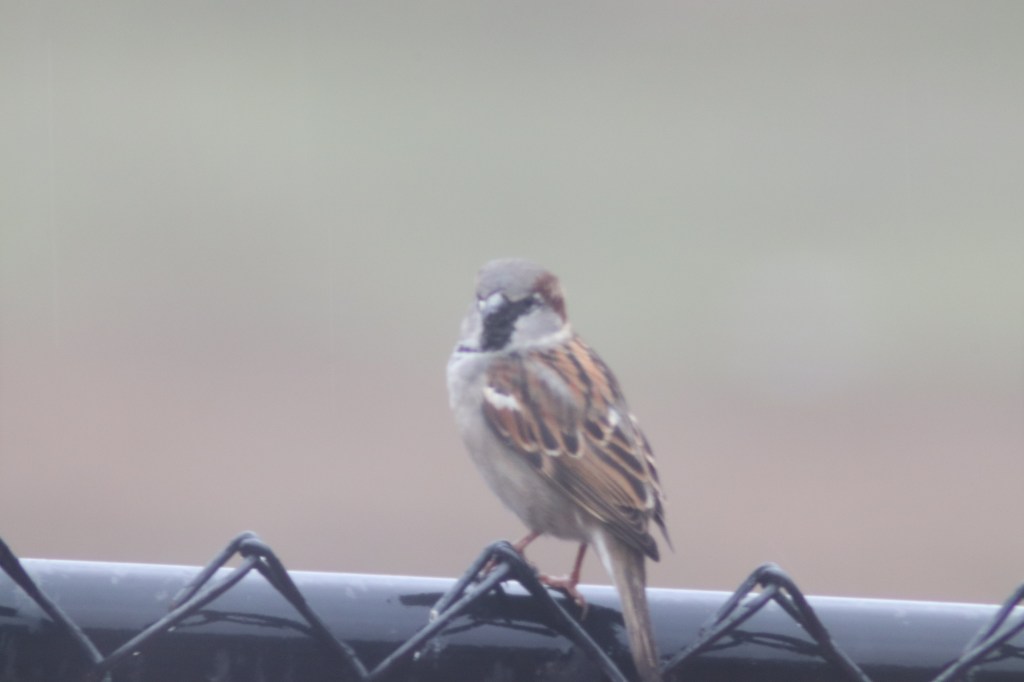
FYI: This information is being provided in advance so you can get ready prior to Valentine’s Day.  While I gave you a week to prepare for the GBBC, you only get four days to prepare for Valentine’s.  Hopefully it will be enough.  A last second bag of last year’s candy hearts may not do the job.

GBBC 23

February 10, 2023

We are only one week away from the Great Backyard Bird Count (GBBC) and my email has been lighting up with information concerning how to be involved (Friday, February 17, through Monday, February 20).  The following is gleaned from the GBBC news release from January.  GBBC is an effort to tally as many of the world’s bird species as possible over the four day weekend.  Combined with other bird counts, GBBC results help create a clearer picture of how birds are faring, and whether individual species are declining, increasing, or holding steady in the face of habitat loss, climate change, and other threats.  David Bonter, co-director of the Center for Engagement in Science and Nature at the Cornell Lab, said “we do know that half the bird species in the United States and Canada are decreasing.” An estimated 385,000 people participated during the 2022 GBBC and reported more than 7,000 species from 192 countries.

When I looked online, I found the GBBC is a community science project in ornithology conducted annually in mid-February. The event is supported by the Cornell Lab of Ornithology and the National Audubon Society.  Data is submitted online via a web interface and compiled for use in scientific research.  The GBBC was the first community science project to collect bird sightings online and display results in near real-time.  The GBBC was launched in the US in 1998.  Since 2013, the event has been observed by international bird watchers, and anyone can now participate in the event.  In 2015 nearly half of known bird species worldwide were reported.  The data collected during the event is subject to verification by experts to overcome potential shortcomings in the abilities of amateur participants.

The GBBC is not the only program that relies on amateurs.  When a bright purple ribbon glowed over Alberta, Canada, in 2016 the scientists who study aurora borealis (northern lights) did not know it was there.  Reports came in from night-sky watchers who had cameras and the skills to document the aurora, which they affectionately named Steve.  What was different is these hobbyists had a way to share their experiences and data with the scientist.  Aurorasaurus is a crowdsourced aurora-reporting tool built by a collaboration that includes members of NASA, Penn State University, The New Mexico Consortium, and a small R&D company called Science Education Solutions.  The aurora watchers who used Aurorasaurus are an example of the growing influence of citizen scientists.  When they are enabled by computing power, apps, and the increasing acceptance from researchers, they are directly contributing across wide areas of research.

THOUGHTS:  When we talk of amateur participation it should be noted that several hundred years ago all scientists were citizen scientists, either funded by patrons or on their own.  It was not until the modern university system that scientists were required to have advanced degrees.  The scientists who oversee the GBBC rely on the 100’s of thousands of amateurs who compile the impressive results.  If you would like to be one of them, step-by-step instructions for entering your bird lists for the GBBC is available at:

* Merlin Bird ID app: https://www.birdcount.org/merlin-bird-id-app

* eBird Mobile app: https://www.birdcount.org/ebird-mobile-app

* eBird on a computer: https://www.birdcount.org/ebird-on-computer

Act for all.  Change is coming and it starts with you.
Dodo

February 09, 2023

The back section of my local newspaper picked up an AP article on an effort begin made to bring the dodo bird back from extinction.  Colossal Biosciences first announced a plan to revive the woolly mammoth two years ago, and recently said also wanted to bring back the dodo.  The Dallas company, which launched in 2021, said it had raised an additional $150 million in funding.  To date, it has raised $225 million from wide-ranging investors that include United States Innovative Technology Fund, Breyer Capital, and In-Q-Tel, the CIA’s venture capital firm which invests in technology.  To bringing the dodo back is not expected to directly make money but the genetic tools and equipment that the company develops to try to do it have other uses, including for human health care.  Colossal is testing tools to tweak several parts of the genome simultaneously and is working on technologies for what has been called an “artificial womb”.

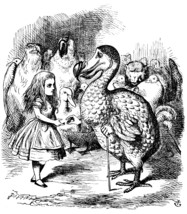
When I looked online, I found the dodo (Raphus cucullatus) was a flightless bird endemic to the island of Mauritius, east of Madagascar in the Indian Ocean.  The dodo’s closest genetic relative was Rodrigues solitaire, and both were hunted to extinction.  The two were part of an extinct subfamily (Raphinae) of flightless birds that were a part of the family which includes pigeons and doves.  The subfossil (partly fossilized) remains show the dodo was about 39 inches (1 m) tall and may have weighed 23 to 39 pounds (10.6 to 17.5 kg).  The dodo’s appearance is only known by drawings, paintings, and written accounts from the 17th century, and these accounts vary considerably so the bird’s exact appearance is unresolved, and little is known about its behavior.  It is often described with brownish-grey plumage, yellow feet, a tuft of tail feathers, a grey, naked head, and a black, yellow, and green beak.  It used gizzard stones to help digest its food (fruits?), and its main habitat is thought to have been the woods in the drier coastal areas of Mauritius.  It is assumed the dodo became flightless due to the readily abundant food sources and an absence of predators on the island.  The last dodo was killed by humans in 1681.

Beth Shapiro, a molecular biologist on Colossal’s scientific advisory board, has been studying the dodo for two decades.  The dodo’s closest living relative is the Nicobar pigeon, and her team plans to study DNA differences between the Nicobar pigeon and the dodo to understand “what are the genes that really make a dodo a dodo.”  The team may then attempt to edit Nicobar pigeon cells to make them resemble dodo cells.  It may be possible to put the tweaked cells into developing eggs of other birds, such as pigeons or chickens, to create offspring that may in turn naturally produce dodo eggs.  The concept to recreate the dodo is still in an early theoretical stage.  The environment that supported the dodo has changed dramatically since the 1600’s and because animals are a product of both their genetics and their environment, Shapiro said, “it’s not possible to recreate a 100% identical copy of something that’s gone.”  Even while a company working on technologies to bring back extinct species has attracted more investors, other scientists are skeptical such feats are possible or a good idea.  While the dodo is not a dinosaur, it does recall the Jurassic Park series.  What could go wrong?

THOUGHTS:  The dodo is one of the best-known extinct animals and became known in popular culture as a symbol of an outdated concept or object.  Calling someone a dodo is slang for a stupid, dull-witted person, as the bird was said to be stupid and easily caught.  Detractors to reviving the dodo say this will diminish attempts to keep endangered species from extinction.  What does it matter if we can just bring it back?  Researchers say it will cost 100’s of millions to revive any species, and the result will not be the same as the original.  This leads to the question, “Who is the real dodo?”  Act for all.  Change is coming and it starts with you.

Cuffing

February 03, 2023

My family gets together for a weekly call to discuss the exciting (or lack thereof) things that are going on in our lives.  This began with the onset of the pandemic lockdowns as we were dutifully trying to stay home.  We also live scattered across 2000 miles (3200 km) in four different cities.  While we had previously tried to stay connected, this became impossible during the pandemic years.  On this week’s call my brother brought up the term throwing shade.  This was used for what I generally called insulting, or disrespecting, or even dissing.  We all laughed when several minutes later he used the word in a sentence.  This is cited by linguists as a proven way to infuse a new word into your vocabulary.  When I looked inside the back pages of what I thought was the sports section of our local newspaper today, I came across an article that referred to “cuffing season,” another phrase which was not familiar.

When I looked online, I found cuffing season refers to a period where single people begin looking for short term partnerships to pass the colder months of the year.  Cuffing season usually begins in October and lasts until just after Valentine’s Day.  The use of the word cuff refers to handcuffs but is slang in the same vein as “hooking up” or “getting hitched.”  The act of seeking out casual romantic relationships is not new, but cuffing season might be original in ascribing that desire to the weather.  The earliest recorded print uses of cuffing season date from college newspapers in 2011, with cuff preceding that as a verb with origins in African-American vernacular as something close in meaning to hook up.  The term saw significant use as college jargon before ever seeing print.  The use of cuff in the title of a 2013 song by the rapper Fabolous may have helped to introduce the phrase to the public at large.  The popularity of dating apps like Tinder gave cuffing season a platform.

When I scanned my newspaper’s USA Today article, I found it was not about cuffing, but referred to a more recent (in name) phenomenon called snow storming.  Snow storming is the opposite of cuffing and involves ending your relationship in favor of a fresh start in the new year.  This could happen because the old relationship was toxic (?), but it often occurs without an obvious reason.  Many people use snow storming rather than choosing to stay in a dissatisfying relationship during the season characterized by loneliness.  Some couples stay in dead-end relationships because it is comfortable and saying goodbye feels too hard.  A new year can prompt a reevaluation to see if your current romance fits your long term goals, or if it is time for snow storming your partner.

THOUGHTS:  The more I read, it seemed cuffing was used to provide a short-term relationship during the cold, lonely nights of winter.  In contrast, snow storming was used to break an old relationship during these same cold, lonely nights to give freedom to prepare for something new.  Relationship coaches warn both approaches should be handled with caution.  Years ago, I read we tend to get in relationships with those who are at the same emotional level as we are, at times a scary thought.  Both cuffing and snow storming can be ways to avoid intimacy and may result in throwing shade (I used it in a sentence).  Emotional maturity is a life-long goal we can never stop working to achieve.  Act for all.  Change is coming and it starts with you.