Train

October 23, 2022

Yesterday marked our third form of travel day on our exploration of Europe.  The trip begun with a long (20-hour) and taxing flight (with two transfers and layovers) to Basel, Switzerland.  The second were the night passages, and one travel day viewing the Rhine castles, by ship.  Although we spent hours on busses to access sites away from the water, we were lucky the recent rains had refilled the Rhine River to a level where we were not forced to disembark and travel around low areas as had some tours just weeks earlier.  After leaving The Hague (and our tour group), we were now on our way to Paris with my sister and brother-in-law.  Rather than taking the short flight we had decided it would be fun to ride the Bullet Train from Amsterdam that was depicted in the movie, The 15:17 to Paris.  Our rapid trip by train morphed into our third long travel day.

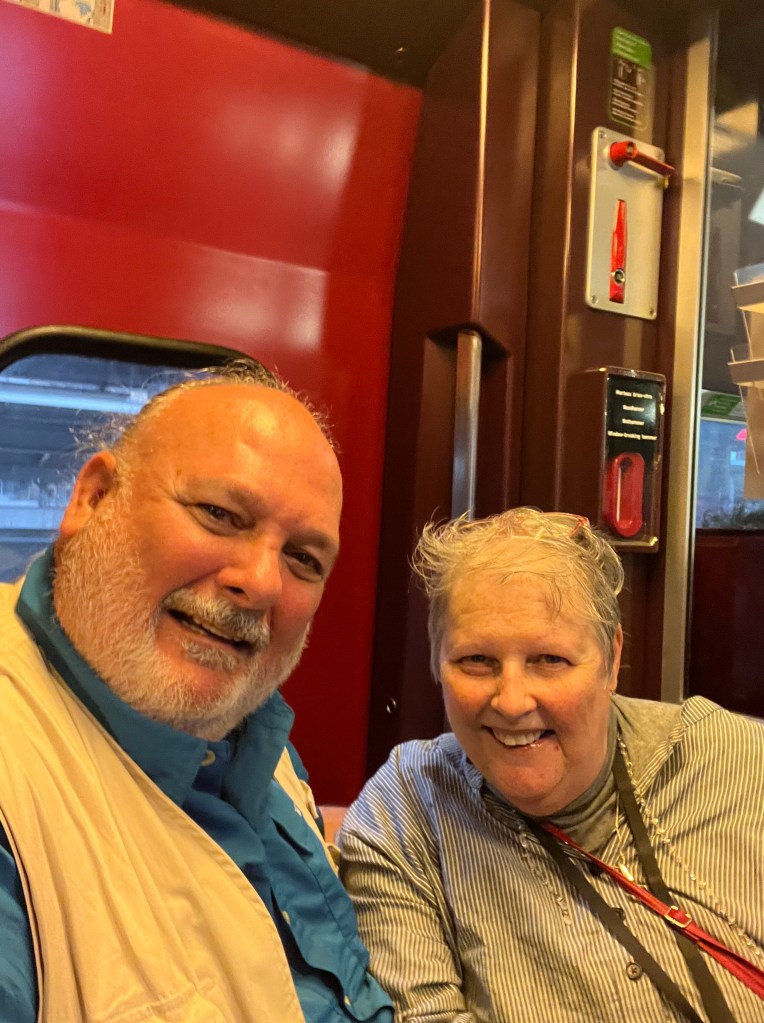
When the trip was booked it appeared an easy passage.  We hop on the train at Schiphol Airport (Amsterdam) and take a direct route to Paris.  As the train was being booked, my sister found out the track was under construction, and we needed to take the direct intercity train to Brussels to catch the Bullet. While Melissa was apprehensive, I had asked several persons and knew we had this down.  It turned out that was not the only track being worked on.  We were scheduled to meet at Schiphol, but you could not get there from where my sister was originating in Amsterdam Central.  We realized this just as the last direct train pulled out of Schiphol Station.  We received alternative routing that involved two transfers and arrived after our scheduled departure for our reserved seats on the Bullet.  After several adventures on the intercity trains (including missing one train), we arrived in Brussels to find that since our train had left, we were not able to have a seat on the sold out bullet that was about to depart.  The agent did suggest we go to the train and ask, but he made not guarantees.  After several tense discussions the train manager (conductor) agreed to let us ride on the fold down seats between two of the cars and we agreed.  Melissa and I affectionately called this “toilet class” travel.

Sitting on the small (1 square foot/0.09 m) fold out seats gave us a different perspective on our 1 ½ hour train ride to Paris.  Not only were we seated next to the toilet, but we were also there with three other passengers (and four seats between the five of us).  One of the passengers kept acting oddly as the train pulled out of the station, seeming to go to the toilet every time the conductor came by.  Then about 15 minutes into the trip, the conductor came to check tickets.  Although our tickets were for another train, we were allowed to ride.  The man and small son next to us on the foldout seats had tickets for another train company (they had also missed their train) but were allowed to purchase tickets for this train.  The hiding man was not so lucky.  When he was questioned, he had no ticket, no passport, and no money.  He had managed to board and was now a stow away on the train.  He was escorted to the front car for an inevitable date with “la Police” in Paris.  We would have missed all this seated in the comfortable second class seats.  Viva le Toilette!

THOUGHTS:  The stressful part of missing the train was the insecurity of not knowing.  When the direct train had left our station that I was tempted to jump on, but I waited to take the journey with other family.  It turned out we never did connect, and they arrived on the next bullet train 1 1/2 hours after we arrived.  They did not get to ride toilet class but had comfortable second class seats.  Even with the stress, I have found Europeans to be gracious and willing to help.  Most people in the cities seem to speak English fluently, and even those that do not had gone out of their way to help using what broken English they knew.  Tourists are generally treated well in the US, especially in urban areas, but the same cannot often be said for Immigrants.  Negative stereotypes are often applied to both.  We should do better.  Act for all.  Change is coming and it starts with you.
The Hague

October 22, 2022

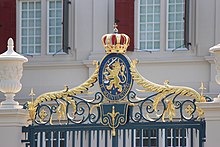
When we final rolled into The Hague last night we had just enough time for a quick visit to the Peace Palace.  Since 1948 the Peace Palace has housed the International Court of Justice (the principal judicial body of the United Nations), the Permanent Court of Arbitration (PCA), The Hague Academy of International Law, and the Peace Palace Library.  The idea of the Palace started with a discussion in 1900 between the Russian diplomat Friedrich Martens and American diplomat Andrew Dickson White over providing a home for the Permanent Court of Arbitration (PCA).  White contacted Andrew Carnegie, but Carnegie was only interested in donating money to establish the library of international law.  White convinced Carnegie to do more and in 1903 Carnegie agreed to donate the US$1.5 million needed (US$50 million adjusted for inflation) to house the court as well as endow the library of international law.  The Palace officially opened on 28 August 1913.  I got “a” picture in the darkening sky and called it good.

When I looked online, I found The Hague is situated on the west coast of the Netherlands.  While the official capital is Amsterdam, The Hague is described as the country’s de facto capital.  The Hague is the seat of the Cabinet, the States General, the Supreme Court, Council of State of the Netherlands, and the Royal Library of the Netherlands.  The Hague is home to King Willem-Alexander and Queen Máxima in the Huis ten Bosch Palace (and gardens) and the king works at the Noordeinde Palace.  The Hague also houses most of the foreign embassies to the Netherlands.  The Hague is also home to the headquarters of many Dutch companies.  The Hague is known as the home of international law and arbitration and the International Court of Justice, the main judicial arm of the UN, as are the International Criminal Court, the Permanent Court of Arbitration, Organization for the Prohibition of Chemical Weapons, Europol, and approximately 200 other international governmental organizations. 

That night we fell to sleep early and woke up late the next morning.  We arrived for the breakfast buffet with 10 minutes to spare before we gathered for The Hague tour.  I was able to get a cup of coffee, but alas it was too hot for me to drink before we had to go.  We started down the street that went in front of the Noordeinde Palace (marked by crowns suspended across the road) and then leads down to the city center.  Over the next two hours we walked among the political and administrative meetings that dominated the city.  These were a mixture of old (15th century) and new (20th century) construction.  The city center is also home to a variety of historical as well as art museums.  The one that caught my eye was the Gevangenpoort (prison gate) museum.  This incorporated part of the 13th century city wall and continued in use until the beginning of the 19th century.  Melissa sat out the three stories and basement traversed by steep narrow stairs, but I laid out 15 Euros to take the tour.

THOUGHTS:  After having our fill of buildings of “der Stadt”, Melissa and I settled into the parks and views around the city center.  Walking the stairs of Gevangenpoort the dichotomy of rich and poor was clearly on display.  The rich were afforded their own cells (the Knight’s Chamber) with its own privy (“secret”).  Adequate food, beer and wine were provided, but these were augmented by donations brought from home.   The poor ended in the Hostage Room, where they slept two or three together and were doomed to await payment of their debt to the wealthy (often years) eating bread and drinking the polluted canal water.  Women were somewhere between, with more room, adequate food, and beer or wine.  Regardless, incarceration often included sentences of lost fingers, limbs, or even torture or execution.  The prison was finally abandoned as the mood changed from punishment to rehabilitation.  This is a debate that still vacillates in most countries of the world.  Act for all.  Change is coming and it starts with you.

Amsterdam

October 21, 2022

During the night we completed the last leg of our ship’s journey and arrived in Amsterdam.  While most of our shipmates (and half our family group) disembarked for the airport, we had an extension that began with a tour of the canals of Amsterdam.  We took a short walk to our tour boat to navigate the canals.  We did pass the Anne Frank house, although it was covered by tarps as it was undergoing restoration.  Frank was a Jewish girl who kept a diary which documented her life in hiding in an Amsterdam attic under Nazi persecution.  Following their arrest, the Franks were transported to concentration camps, and Anne and her sister were transferred to from Auschwitz to Bergen-Belsen concentration camp, where they died (typhus) a few months later.  We wound our way along the three main canals of the city, making intricate turns and passing under bridges hardly big enough to squeeze through.  Our guide informed us there were 65 miles of canals and 1300 bridges.

When I looked online, I found Amsterdam (lit. The Dam on the River Amstel) is the capital and most populous city of the Netherlands and is colloquially referred to as the “Venice of the North” due to the large number of canals (a UNESCO World Heritage Site.  The city originated as a small fishing village in the late 12th century but became one of the most important ports in the world during the Dutch Golden Age of the 17th century.  Amsterdam’s main attractions include its historic canals, the Rijksmuseum and Van Gogh Museum among many others, memorial sites like the Anne Frank House and the Royal Palace of Amsterdam, as well as the red-light district and cannabis coffee shops.  The city is well known for its nightlife and festival activity and several of its nightclubs (Melkweg, Paradiso) are among the world’s most famous.  Cycling is key to the city’s character, and there are numerous biking paths and lanes spread throughout the entire city.  We were warned by my brother and sister (been there previously), to steer clear of the bike lanes as the cyclists’ ride at great speed and with little attention.  We found that to be true.

The bus ride from Amsterdam to The Hague was one of the memorable parts of our tour.  The ride was intended to be around 45 minutes and covers around 35 miles (57 km).  This follows the A4 motorway (Rijksweg 4), that speeds traffic along most of the western portion of the Netherlands.  About 20 minutes into the route the driver was notified an accident had completely shut down the motorway.  Our driver was born in a town along the route, and he confidently swung off onto the sideroads to complete the journey.  We passed along on roads so small I did not think the bus could make it.  When we arrived in his hometown the main throughfare was clogged so we took to even smaller side streets.  We wound our way through the city until we reached another impasse.  The tiny lane was under construction, and we could not pass.  This is where the excitement began as he slowly backed our 50 foot (15 m) bus four blocks until he reached a road large enough to turn around.  Even though he had gotten us into the mess, the driver received a round of applause for getting us out.

THOUGHTS:  Our tour dropped us at the Rijksmuseum to explore several hours on our own.  While my brother and sister-in-law toured the Rijksmuseum, Melissa and I decided to check other available sites.  We found the Van Gough and other museums around the square were sold out.  We decided to eat and found The Burger House, which boasted the “best burger in town”.  On entrance we found a Wizard of OZ theme for both the décor and the burgers (including Munchkin sliders).  Melissa decided on the “Over the Rainbow” because she wanted a chili burger.  It was indeed over the top, including chili, grilled onions, salsa, tortilla chips, guacamole, and cheddar piled on two 180 ounce Angus burgers.  She barely made a dent and the owner insisted we take the rest “to go”.  We did not.  There is too much of a good thing.  Act for all.  Change is coming and it starts with you.
Kinderdijk

October 20, 2022

A late night dancing in the lounge was followed by a late rise just in time for breakfast.  I vowed (again) it would be a light repast, but the sandwich I concocted (toast and bacon) still seemed heavy.  We finished just in time to attend a disembarkation lecture to explain how to get off the ship.  This proved to be far more detailed than I imagined.  That seemed especially so as we were not preparing to leave but will be leaving the ship and moving to the land based stage of our journey.  Luckily, we were able to slide lunch into the agenda (more food) as we settled into our cabin and on deck to pass the three hours until our arrival in Kinderdijk.

The city of Kinderdijk served as our introduction to the canals and windmills of the Netherlands.  This village is in the municipality of Molenlanden, in the province of South Holland, Netherlands and situated in the Alblasserwaard polder at the confluence of the Lek and Noord rivers.  The polder (land reclaimed from a body of water) itself is surrounded by a series of three dikes varying in height from largest (outside) to the smallest (inside).  This ensures each successive dike will hold back the water in an ever widening tract of land.  To drain the polder, a system of 19 windmills was built around 1740.  This group of mills is the largest concentration of old windmills in the Netherlands.  It was the polder and windmills that were the focus of our afternoon tour.  The windmills of Kinderdijk are one of the best-known Dutch tourist sites and have been a UNESCO World Heritage Site since 1997.  Polders are always at risk from flooding, and care is taken to protect the surrounding dikes.

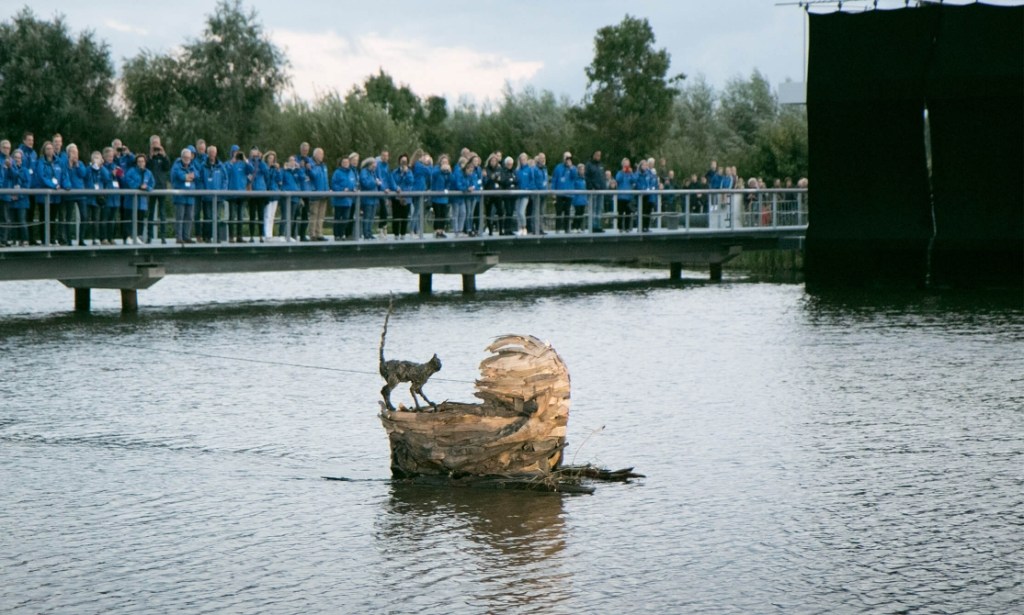
The name Kinderdijk is Dutch for “Children dike”.  During the Saint Elizabeth flood of 1421, the Grote Hollandse Waard flooded, but the Alblasserwaard polder stayed unflooded. It is often said that when the horrendous storm subsided, a villager went to the dike between these two areas to inspect what could be salvaged. In the distance he saw a wooden cradle floating on the water.  As it came nearer, some movement was noted, and upon closer investigation, a cat was found, trying to keep it in balance by leaping back and forth in such a manner that water couldn’t flood the cradle.  As the cradle came close enough to the dike to be picked up by a bystander, he saw that a baby was quietly sleeping inside.  The cat had kept the cradle balanced and afloat.  This folktale and legend have been published in English as “The Cat and the Cradle”.

THOUGHTS:  The Netherlands has a large area of polders, with as much as 20% of the country’s land area having been reclaimed from the sea.  Countries like Bangladesh, Belgium, Canada, and China have also used polders.  After Hurricane Katrin, Dutch engineers were brought in to assist in rebuilding the dikes and levees that protect the city of New Orleans.  As we toured the windmills our Dutch guide commented this will not be effective.  The dikes and levees require maintenance to be effective.  Americans will spend billions of US$ to build but will balk at the millions required annually to maintain the system.  Any endeavor requires the expense or time and money (effort) to build and maintain.  That is true for infrastructure, but also for relationships.  Act for all.  Change is coming and it starts with you.

Cologne

October 19, 2022

Melissa and I concluded our evening last night with an elegant dinner and music at Namedy Castle.  After a short ride by bus, we were greeted by Princess Myra Hohenzollern and ushed into the entry hall.  While the princess gave a short talk, we were entertained by her pug who moved from guest to guest looking for affection.  After the death of her husband the castle had been opened as a meeting place, catering to weddings, formal dances, and cultural events.  The three course meal was served by her personal servants, and then we were escorted upstairs to tour several of the castles’ open rooms.  Then we adjourned to the parlor for desert and to the music room to enjoy a recital by a concert pianist (Melissa’s dream).  With no pace for us to sit, Melissa and I gravitated back to the parlor to enjoy the music.  We were found by one of our tour hosts who informed us everyone else was waiting on the bus.  Princess Myra suggested if we did not hurry, we would have to stay the night.  We would have taken her up on this, but I do not believe she meant it.

During the night the ship cast off for Cologne, our last stop in Germany.  Cologne is the largest city on the German western state of North Rhine-Westphalia (NRW) and the fourth-most populous city of Germany with 1.1 million inhabitants.  Cologne was founded and established in Germanic Ubii (a tribe) territory in the 1st century CE as the Roman Colonia Agrippina, hence its name.  Agrippina was later dropped (except in Latin), and Colonia became the popular name of the city, which developed into modern German as Köln.  Cologne, the French version of the city’s name, has become standard in English.  Cologne functioned as the capital of the Roman province of Germania Inferior and as the headquarters of the Roman military in the region until occupied by the Franks in 462.  During the Middle Ages the city flourished as being located on one of the most important major trade routes between east and western Europe.  Cologne was a free imperial city of the Holy Roman Empire and one of the major members of the trade union Hanseatic League, a medieval commercial and defensive confederation of merchant guilds and market towns in Central and Northern Europe.

Prior to World War II, the city had undergone occupations by the French (1794–1815), became part of Prussia in 1815, and was occupied by the British from 1918–1926.  Cologne was one of the most heavily bombed cities in Germany during World War II.  The bombing reduced the population by 93% (evacuation) and destroyed almost the entire millennia-old city center.  Post-war rebuilding has resulted in a mixed cityscape, restoring only major historic landmarks (city gates and churches).  The city’s medieval Catholic Cologne Cathedral (Kölner Dom) was constructed to house the Shrine of the Three Kings (the bones of the three Magi who visited Jesus).  These relics had been “acquired” by Cologne’s archbishop, Rainald of Dassel, and given to the cathedral in 1164.  A single finger was returned to Milan as an appeasement (a wag in the group asked which finger).  The two spires of the cathedral were spared by the heavy Allied bombing since they served as landmarks to guide their planes.  The cathedral is now under restoration to remove the smog and pollution that has stained the exterior stone.  This is expected to take the next 200 years, then it will begin again.

THOUGHTS:  Cologne gained its independence from the archbishops in 1288 and became a Free City.  In response, the city magistrates constructed a city hall which was the tallest building in the city to indicate their independence over the church.  Later, the local citizenry added a waterspout on the building facing the city hall in the shape of a man’s posterior (rear end) to indicate their attitude toward the city leaders.  The magistrates in turn carved a face below the city clock tower that stuck out its tongue on the hour toward the waterspout.  It seems not appreciating the direction of who is in charge is a universal response.  Act for all.  Change is coming and it starts with you.
Speyer

October 18, 2022

The day began with a brisk walk from the ship up to the overlying banks of the Rhine to the city of Speyer.  Our well versed guide began the walk with a detailed explanation of the founding in 10 BCE as a Roman military camp and over the course of the next hour brought us up through the mid-20th century.  The name evolved from Spira, first mentioned in 614 CE.  In 1294 Seyer became a Free Imperial City, renowned for its Romanesque cathedral, its vibrant Jewish community, its seat of the Imperial Chamber Court, for 50 diets that took place within its walls, most notably 1526 and 1529.  The 1529 Protestation at Speyer came as six princes and representatives of 14 Imperial Free Cities petitioned the Imperial Diet at Speyer against an imperial ban of Martin Luther and his works, signaling the beginning of Protestantism.  Speyer was one of the main centers of the Holy Roman Empire and beneath the high altar of the Cathedral are the tombs of eight Holy Roman Emperors and several German kings.  Speyer was one of the ShUM-cities of Speyer (Sh), Worms (W=U), and Mainz (M), a cluster of three Jewish communities in the 11th century.  These three cities formed the cultural center of Jewish life in Europe during the Middle Ages. 

When I looked online, I found the Speyer Cathedral is officially the Imperial Cathedral Basilica of the Assumption and St. Stephen and is the seat of the Roman Catholic Bishop of Speyer.  The cathedral is dedicated to St. Mary, patron saint of Speyer (“Patrona Spirensis”) and St. Stephen.  Pope Pius XI raised Speyer Cathedral to the rank of a minor basilica of the Roman Catholic Church in 1925.  Construction began in 1030 BCE under Konrad II, with the east end and high vault of 1090–1103, the imposing triple-aisled vaulted basilica of red sandstone was extremely influential in the subsequent development of Romanesque architecture during the 11th and 12th centuries.  As the burial site for emperors and kings the cathedral is regarded as a symbol of imperial power.  Speyer Cathedral remains the largest Romanesque church in the world and is one of the most important architectural monuments of its time.  It was added to the UNESCO World Heritage List in 1981.

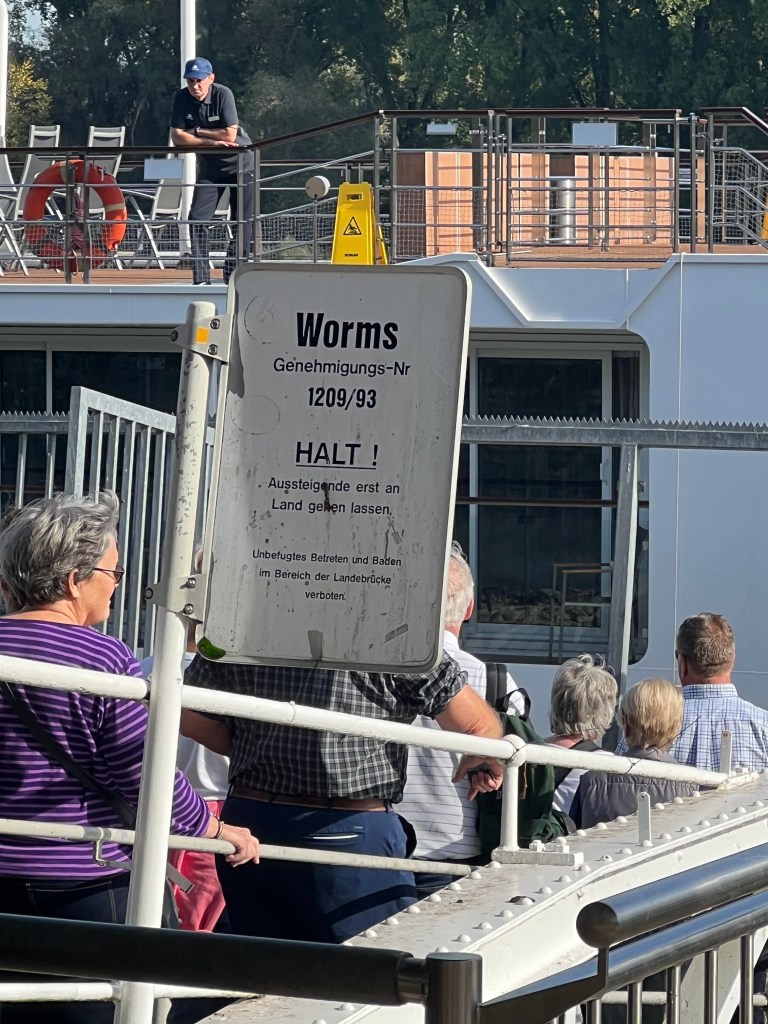
The ship jumped ahead of us along the river, and we picked it up by bus in Worms.  Worms has a pre-Roman foundation and is one of the oldest cities in northern Europe.  As the capital of the Kingdom of the Burgundians in the early fifth century it is the scene of the medieval legends referring to this period.  Worms has been a Roman Catholic bishopric since at least 614 and was an important palatinate (region) of Charlemagne.  Worms Cathedral is one of the imperial cathedrals and among the finest examples of Romanesque architecture in Germany.  Worms prospered in the High Middle Ages as an imperial free city.  Among more than a hundred imperial diets held at Worms, the Diet of 1521 (commonly known as the Diet of Worms) ended with the Edict of Worms, in which Martin Luther was declared a heretic. Worms is also one of the historical ShUM-cities as a cultural center of Jewish life in Europe during the Middle Ages.  

THOUGHTS:  Back at the ship we began an afternoon cruise down the Rhine, which we had been traveling at night.  As we passed along the countryside the names of the towns were displayed in large white letters to assist the many cruise ships which passed this corridor.  When we saw a collection of people along the shore they would wave, in hopes of our waving back, and we obliged them.  It reminded me of our long vacation trips by car and passing a semitrailer truck.  My brothers and I would pump our arms at the driver, hoping for the sound their air horn.  Our waves and the driver’s horns seemed to bring a sense of solidarity among unknown travelers.  It reminded me we are all on the same journey.  Act for all.  Change is coming and it starts with you.

Strasbourg

October 17, 2022

We spent most of our day in Strasbourg (Uckermark), Germany.  Founded as a Celtic village, this became a Roman garrison town called Argentoratum.  Captured by the Franks (5th century) it was called Strateburgum, from which the present name is derived.  In 842 Charles II (the Bald), king of the West Franks, and Louis II (the German), king of the East Franks, took an oath of alliance (the Serment de Strasbourg), which is the oldest written document in Old French.  After a struggle for power between its citizens and the bishops in the Middle Ages, Strasbourg became a free city within the Holy Roman Empire.  In 1681 Louis XIV of France seized the city in peacetime and obtained ratification for his arbitrary action by the Treaty of Rijswijk (1697).  The town retained its privileges until the French Revolution (1787–99).  In the Franco-German War (1870–71) the Germans captured Strasbourg and annexed it.  The city reverted to France after World War I and was occupied by Germany again (1940–44) during World War II.  The result was the city went from Celtic, to Roman, to Frankish, to free, to French, to German, to French, to German.  The city is now an ethnic mixture of French and Germans, with each claiming primacy and most signs sharing both languages.   

Strasbourg is situated between two great rivers, the Rhine which we were cruising and the River Ill which transverses the city.  The Ill divides and surrounds the Grand Île (Big Island) where the old town and most of the city’s famous buildings are situated (and site of our tour).  This island was designated a UNESCO World Heritage site in 1988.  Strasbourg’s 11th–15th-century Cathedral of Notre-Dame (Strasbourg Minster), has considerable parts in Romanesque architecture, but is widely considered among the finest examples of Gothic architecture.  The building was damaged in 1870 and again in World War II but has been carefully restored.  Built of red Vosges sandstone, it has an  asymmetrical facade (13th century) with fine sculptured portals and one tower with a tall (455 feet/139 m) and graceful 15th-century spire.  It was the tallest building in Europe until construction of St. Nikolai’s Church, Hamburg, in 1874.  As we walked the city’s La Petite district, we wound among the well-preserved cobblestone streets and wooden houses, intersected by the canals that brought traffic and water to the people.  It was here that my birder instinct kicked in.

It began the day before when I realized the swans (Cygnus cygnus) that gracefully swam the river were not on my annual list.  I had seen Eurasian tree sparrow (Passer montanus) the day before, but they had been too quick for a picture.  This bird has been introduced to the US where it is known as the German sparrow to differentiate it from the native unrelated American tree sparrow.  As we toured the city, we encountered three differ types of pigeons.  Feral pigeons (Columba livia domestica or Columba livia forma urbana), are descended from the domestic pigeons (Columba livia domestica) that have returned to the wild.  The domestic pigeon (Columba livia domestica, including about 1,000 different breeds) descended from this species.  Escaped domestic pigeons have increased the populations of feral pigeons around the world.  Rock, domestic, and feral pigeons are all the same species and will readily interbreed.  All feral pigeons have adapted to urban life and are abundant in towns and cities throughout much of the world.

THOUGHTS:  Walking the streets of the beautiful city of Strasbourg I found myself fixated on the birds, grounding me in the face of the differences that surrounded me.  Facing change, we often return to the know, calling this the “old ways’, even when our notion of those ways never existed.  Like the variation of the three types of pigeons I identified, we need to adapt with the changes that envelope us.  If we do not, we will be forced to bemoan the past rather than to move into the future.  Act for all.  Change is coming and it starts with you.
Basel

October 16, 2022

After a quick lunch I checked, and our berth was not yet ready (we knew it was not scheduled for another two hours).  Melissa and I decided to sit in the lounge near a window where we could watch the gangway to see when the others of our group arrived.  Since the groups participants had a staggered check-in, the company had set up to run two different walking tours for the two-hour walk around historic Basel.  I somehow got my signals crossed and understood this to be a bonus excursion, rather than the promised Basal excursion.  My brother and sister-in-law took off with the first tour group, but we decided to wait for the second tour.  It was just as well as we both fell asleep in the lounge.  Sometime later I awoke and went to check on something with the tour director.  A steward found Melissa sleeping in the lounge and when he found why she was there, he checked again on our availability.  The room was open, and we went down to unpack.

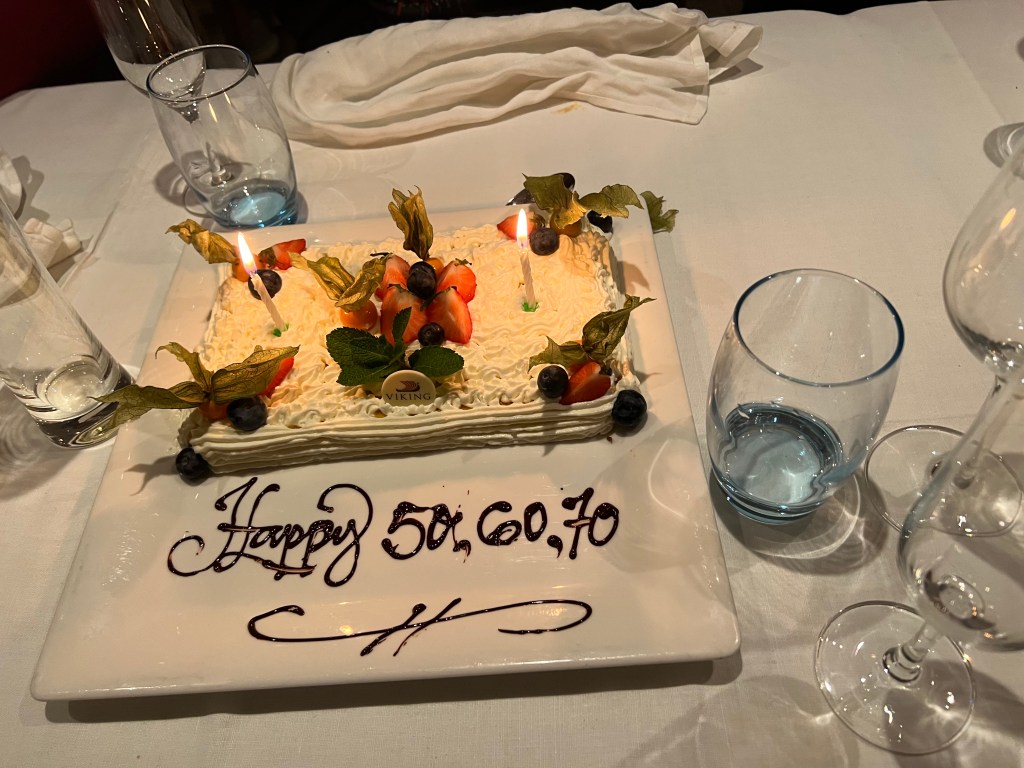
We got some much needed rest until the second excursion was announced.  I languished in my preparations and did not get outside for the bus until after the scheduled departure.  By the time I arrived, the bus was gone.  That was when I learned the first rule of cruising, the departure time is the departure time, not one minute later (or five as the case may be).  Everyone from our cohort arrived safely and we embarked right on time (again, rule one).  I was looking forward to the meal as Melissa and I had both planned a surprise.  We have had a tradition began by my sister-in-law of having celebratory tee shirts to mark the occasions when we get together.  Although we were not all here, there were 10 of our extended clan who had made the trip.  The shirts were passed out and we wore them to the dinner.  I had planned another acknowledgement with the cruise line to also mark the occasion.  As the meal drew to an end, I asked the maître de what was coming, only to find he had not been informed.  He quickly put together a cake and champagne for a family toast.  When Mellissa and I returned to our room we found a bottle of champagne and two congratulatory cards to mark the occasion.  A miss communication, but I guess we can use this to celebrate another night.

Then it was on for a night cruise to Breisach, Germany, and the Black Forrest.  The 50-minute bus ride to the forest went through several older towns and farmsteads.  This forest (and the tales and superstitions) was popularized by the brothers Grimm.  As we entered the forest every farmstead carved out among the vales had its own tiny chapel, crucifix shrines dotted the countryside, and charms were placed above many doorsills as deterrents for the witches said to proliferate (along with their trials) the area.  The winter isolation also became the emphasis for the elaborate cuckoo clocks made to pass the long nights.  On our return to the ship, I took a self-guided tour of Breisach which led me to the Spatromicles Praetorium which towered over the town.  This was originally built as a Roman fortification and later converted to a Catholic church.  It had been bombed during World War II but had been restored.   Time continues to pass. 

THOUGHTS:  Walking back to through the forest darkness gave me a sense of the foreboding and the superstitions that resulted in both the fears and the response.  Seeing the remains (and rebuilding) of the bridges and buildings impacted by wars added another feeling of human horror and resilience.  As I watched the residents go about their daily lives in both village and town, I had to keep telling myself, these people live amid both the splendor and the destruction.  It also reminded me of how young America is as a country.  These are both thoughts residents of the US need to remember as it can give you an entirely different perspective.  Act for all.  Change is coming and it starts with you.
Flight

October 14, 2022

Today was a travel day on our way to our first stop at Basel.  I knew it was going to be a long day but was not prepared for the duration.  In the early evening the night before we left melissa received an email that informed us our 11:45 am flight had been changed to a 7:45 am flight.  That would not have been bad if it were not for the 2-hour drive time to get to the airport.  Melissa contacted her sister and she said we should be able to make it with no difficulty if we left by 4:00 am.  We set our clocks for 3:30, finished packing, and were asleep by 10.  Morning came early but we were fueled by the excitement of the trip.  The 400 yards (365.75 m) from long term lot to the terminal did not include we were in the back of economy long term.

After a quick flight to O’Hare, and a 4 hour layover, we finally boarded the flight to Germany.  This was scheduled as an 8 hour flight, but we were told there was a good tailwind, and we should reach our destination in only 7 1/2 hours.  Still, the thought of being belted into our seats for that long seemed daunting.  I reassured myself that I could get some sleep if I was lucky, as they always turn out the lights.  We took off and were served a meal (of sorts) as we sped eastward at 650 mph (1046 km).  After a long flight (and two movies I had not seen) we arrived in Frankfurt.  We were whisked through customs (it always seems easier to leave the US than to arrive) and wound our way to the disembark gate.  The gate indicated for departure was literally 30 yards (27 m) from our disembark, so we went to find somewhere to eat breakfast and wait out our next 4 hour layover.  During breakfast Melissa received another e-mail saying the departure gate had been change to another terminal.  We started walking (I did not realize Frankfurt had such a large airport) and 1/2 hour later we arrived at the right gate. 

By this time, we thought we were home free, but this was just the beginning of the longest leg.  We passed through the gate and found the gangway led to a set of stairs that took us down to the tarmac.  We boarded a bus for the 20 minute ride to the plane parked in the middle of nowhere.   It was only a short hop to Basel and arriving at the airport we were whisked through the airport to the bus that took us to the boat that would serve as our home for the next several days.  By this time, we had been traveling for 20 hours (and a day change) and were exhausted.  We were just happy to be onboard and looking forward to the excitement to come.  When we got off the bus that took us to the boat we realized my brother and sister-in-law were in the back of the same bus after their own 12 hour journey.  What a coincidence. 

THOUGHTS:  The flight and layovers were exhausting and when we arrived at the boat Melissa, and I fell asleep in the lounge waiting for our room to be ready.  While travel is exciting the time to get to destinations can seem the worst part of the trip.  That is true whether we are driving to the bird sanctuary 1-1/2 hours away or the 20 hours it took to get to Europe.  The trick is to somehow make the transit part of the fun.  That only worked for the first 15 hours (haha).  Act for all.  Change is coming and it starts with you.
Trip

October 13, 2022

Since we are going on a trip, we dropped Zena off at our friend’s house yesterday.  They have a sheltie dog that we had pet sit while they were away and now, they were gracious enough to board Zena for us.  Zena hopped in the back seat, I snapped on her seat restraint, rolled the back windows partially down, and we were on our way for the 20 minute ride to see “Cousin Eddie”.  When we arrived Eddie was at the side gate and started barking excitedly at the “people” who pulled into his yard.   That of course got Zena excited as she tried to get out of the car.  Melissa picked up several parcels we had brought for Zena’s stay and let Zena jump down from the jeep.  I have been walking Zena and know she can lunge against the leash when she gets excited.  Melissa had wrapped the leash around her hand and wrist to make sure she could hold Zena.  It worked.  As Zena took off, she brought Melissa along with her.  Melissa went crashing to the driveway.

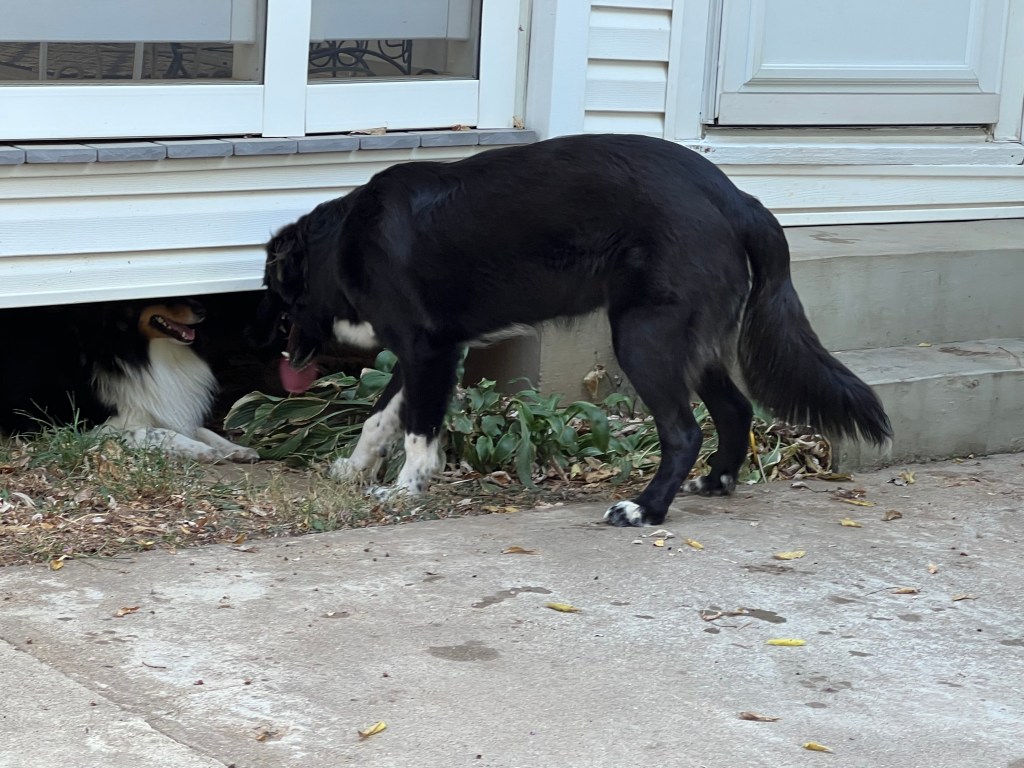
We picked Melissa up and made a cursory check to make sure she was alright, then got everything into the house.  Eddie had come in to see the commotion and then Zena and Eddie went to the back yard to get reacquainted.  Zena was excited and began to chase Eddie around the yard and play fight with him.  When they first met, Zena was half the size of Eddie but now Zena towers over him.  Zena continued her rough and tumble play until Eddie had enough.  When Eddie ran it just egged Zena on, thinking it was still a game.  Then Eddie realized he could run under the porch and Zena was too big to squeeze in after him.  Then Eddie popped out the other side and the case was on again.  This happened several times until Eddie went back under the porch and waited until Zena settled down.  When he did come out, they were fine.  By the time we left they had again gotten used to each other and the rough and tumble was over.  Hopefully it will stay that way during our trip.

When we got home Melissa surveyed her damage.  She not only fell but skid along the cement drive.  She had torn the knee of her pants, had a raspberry on her right knee and elbow, and had what looked like the beginnings of a giant bruise on her left leg and hip.  Her small finger hurt and had a bruise around it which probably meant it was broken.  Melissa was preparing for a trip, but I do not think this was the type of trip she had in mind.  Thank goodness we are going on a vacation so she will have time to heal.

THOUGHTS:  My brother tells the story of the trip he took in college.  This was a semester abroad and he was going to live in southern France.  The day before he left, he fell and broke his hand.  He said when he arrived everyone greeted him with a firm handshake.  If was not a happy time.  First impressions tend to stay with others for a long time.  My brother decided it was better to make a polite first impression than to refuse to shake, despite the pain.  Being polite, or at least civil, is an important first step in creating unity.  Act for all.  Change is coming and it starts with you.