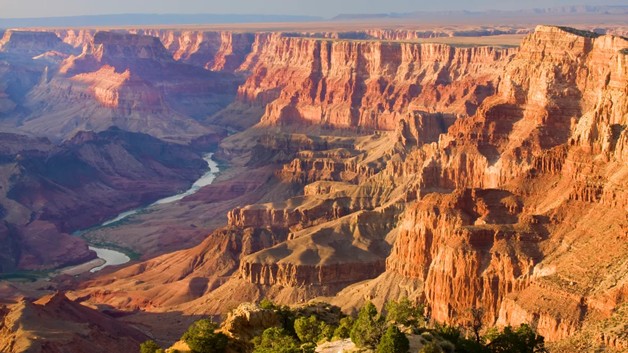
Canyon

May 29, 2026

Getty Image

Melissa and I took two long trips this Spring in the RV.  We took two trips last Fall to begin RVing.  Both trips were less than 100 miles (161 km) and consisted of three days during the middle of the week.  We did not pull a vehicle (“toad”) on the first trip and any missed items we went without.  We towed the Jeep the second time and were able go into town pick up needed items, including a hose extension for water.  We thought we had worked out the kinks and left in February on a 1100-mile (1770 km), 2-1/2 week trip to Florida, but struggled keeping the toad battery charged and had to buy a sewer extension.  We thought we solved the battery issue during the week home before we left in March for a 1200-mile (1931 km), 3-week trip to Arizona.  We did not.  Every time we left the toad attached overnight it still ran down the battery.  To top it off, the city water connection valve stripped and we could not connect to the camp hoses.  We had planned on stopping at the Grand Canyon, but our main sights were set on my old stomping ground in Utah, so we powered on by.

When I went online, I found a canyon forms by a combination of flowing water, tectonic uplift, and weather acting on the earth’s surface over millions of years.  The process of canyon formation often begins with downcutting as rivers and streams carve deep, steep-sided valleys into the earth’s bedrock.  The rushing water uses gravel, sand, and rocks it carries like liquid sandpaper to grind away the rock beneath its flow.  For massive, deep canyons to form, the ground beneath the river must be pushed upward by shifting tectonic plates (tectonic uplift).  This uplift makes the river steeper, increasing its speed and cutting power.  Weathering and erosion are the third force acting to create a canyon.  Rainwater seeps into cracks in the rock, where it freezes, expands, and breaks the rock apart.  Wind, flash floods, and rockslides further widen the canyon walls and wash the debris downstream, preventing the valley from simply becoming a flat slope.  All three processes occur simultaneously, and when you add the dimension of time you get a canyon.

It was appropriate that after missing a tour of the Grand Canyon that an article on how it was formed appeared in a USA Today article in our local newspaper several weeks after we returned.  A study published April 16 in the journal Science provides one answer to the mystery.  According to the study, the Colorado River did not always flow through the canyon and instead began to carve its path around 5.6 million years ago after an ancient lake overflowed.  Ryan Crow, co-author and researcher with the US Geological Survey, said scientists have known the river existed 11 million years ago in western Colorado and that it did not exit through the Grand Canyon until after 5.6 million years ago.  The mystery was where did it go?  Crow said the study tested the idea that the river flowed into the Bidahochi basin in northeastern Arizona.  Sand deposits in the ancient lake showed a clear Colorado River signature, indicating the river flowed into the lake.  As the lake rose, a spillover became the primary process that established the river’s course through the (emerging) canyon.  About two million years later the lake no longer existed and the Colorado River system was fully born. 

THOUGHTS: My son and I went to the south rim of the Grand Canyon when he was a child.  We did not take the day long hike/mule ride to the bottom but were able to peer into its massive depths.  Our takeaway from our two RV trips was that we needed to be more leisurely when we travel.  We missed quite a few historic/archeological features because we felt pressed to reach our reserved campground.  We assumed if we did not reserve sites, we would not have a place to stay.  While that was true for the state parks, every commercial park where we stayed had open spaces.  In Europe we took time to “see stuff”, but at home we did not.  Do not regret taking time to enjoy the wonder of where you are.  Act for all.  Change will come and it starts with you.
Verde Valley

March 18, 2026

After battling the winds across the Panhandle region, we were home free as we climbed into the Ponderosa pine (Pinus ponderosa) forest that surrounds Flagstaff, Arizona.   The Coconino National Forest is located within the world’s largest contiguous Ponderosa pine forest (yes, where the name Ponderosa Ranch comes from on the long-running TV series Bonanza).  These dominant, tall trees are famous for their orange-brown, puzzle-like bark that smells like butterscotch or vanilla.  We also passed three National Monuments along the route that were extant cliff dwellings of the prehistoric Ancestral Puebloans (Anasazi).  Like so many other first-time travelers to Arizona, we were surprised to find the dense forest of the Kaibab Plateau rather than the stark desert we associated with the state.  As we traveled south out of Flagstaff the forests diminished and the saguaro cactus (Carnegiea gigantea) took over as we began to drop in elevation.  The saguaro is the largest cactus in the US and acts as a vital, long-lived (up to 200 years) keystone species in the Sonoran Desert.  While I had anticipated the saguaro, I was not prepared for the Verde Valley descent.    

When I went online, I found the steep grade on Interstate 17 descending from Flagstaff toward Phoenix is often referred to as the Verde Valley grade or simply the I-17 mountain corridor.  This stretch includes a sustained 6% grade for roughly 13 miles (21 km) between Flagstaff and Camp Verde, Arizona that requires runaway truck ramps.  The stretch also includes another steep section for southbound traffic near Black Canyon City.  The route is known for high speeds, steep inclines, and sharp curves and is often cited as one of the most treacherous connections in Arizona.  While Flagstaff sits at 7000 feet (2133 m), Phoenix rests in the Verde Valley at an elevation of 1,086 feet (2133,6 m).  Although only 145 miles (233 km) apart, the great difference in elevation result in drastic climate changes.  Flagstaff is typically 20F to 25F degrees (36 C to 45C) cooler than Phoenix on any given day all year round.  This was a descent we were unprepared for.

Our first indication of the Verde Valley downgrade was a sign saying, “6% grade ahead.  Trucks and vehicles towing trailers use lower gears.”  We were driving the RV and pulling our Jeep behind.  We qualified for the warning.  My first thought was I was glad I was not driving.  Then, I wondered if I should offer to drive.  Neither of us had driven anything close to these conditions, so I was not sure I could do anything better than Melissa.  Instead of pulling over, Melissa asked for suggestions on how to drive.  She slowed down and I clicked on the emergency flashers as we began our descent.  The first thing we tried was shifting into 2nd gear.  That did not last long as the engine RPM climbed close to the red line.  I had just read an article online about the best way to slow your RV when on a steep grade and it suggested to make hard brakes followed by taking your foot off the brake.  Melissa shifted into Drive and periodically punched the brake to slow down.  There were also reprieves on the descent where it would level off or even ascend for short distances.  Melissa did a great job, and we got down without incident.

THOUGHTS: Toward the end of the Verde Valley descent, we passed a truck parked along the side of the road with its brakes smoking.  I was glad the driver was able to stop (and that we had avoided a similar situation).  I was also proud of the way Melissa had handled driving.  It was tense for me, and no doubt more so for Melissa.  I knew we had to retrace this route on our way to Utah, but this time we will be going up, a whole new set of problems.  This last month has been an amazing immersion into the diversity of the US.  We traveled from the Ozarks to the Florida Atlantic coast, then to the high plateau and desert of Arizona.  The people have been just as diverse.  Rather than a detriment, diversity is what defines our nation.  Act for all.  Change is coming and it starts with you.