Inversa

October 28, 2025

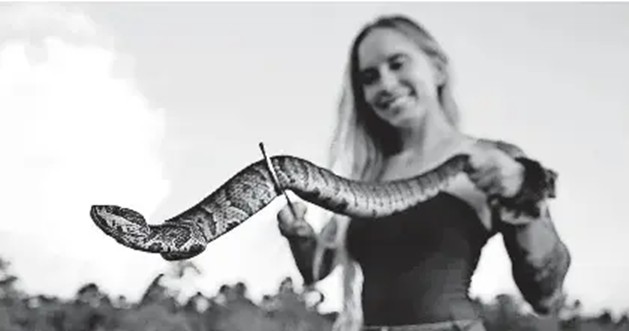
A USA Today article in the middle of the front section of Monday’s local newspaper highlighted a partnership between the state of Florida and a Maimi based leather manufacturer.  Governor Ron DeSantis announced the partnership on the 21st.  The decision to join in partnership was made in 2024 to remove invasive Burmese pythons (Python bivittatus) from the Florida Everglades.  In three months, this summer, 1,022 pythons were removed, compared to 343 during the same period in 2024.  The approximately 50 hunters previously contracted by the Florida Fish and Wildlife Conservation (FWC) now work for the private company, reducing their administrative burden by 89%, increasing python removal, and paying about 60% more for the harvested pythons.  DeSantis said a lot of progress had been made in python removal but “at that pace it was not enough to get where we needed to go”.  The South Florida Water Management District has its own python hunting program separate from the partnership formed between FCW and the leather maker Inversa.

When I went online, I found Inversa is a leather products company that claims to make “ethical exotics that restore nature”.  This is done by “managing” (harvesting) harmful non-native species to help revive natural ecosystems.  Invasive species are a driving force in around 60% of today’s species extinctions and cause US$423B annual damage around the planet.  Management of invasive species restores indigenous species populations by up to 70%, enhances carbon sequestration and water purification, and strengthens global environmental and human health.  Using invasive species to create leather products rather than bovine leather not only removes invasives, it also comparatively uses 99.9% less land, 95% less water, and emits 89% less greenhouse gases.  Inversa partners to create job opportunities in rural and developing economies, empowering communities to protect their ecosystems by creating new jobs in nature restoration and directly increasing local incomes.  According to their website, the company “works closely with our restoration cooperatives to ensure the stable livelihoods and humane labor conditions of all partners in ecosystem management.”

Inversa currently harvests three invasive species for leather production to protect critical habitats.  The Greater Everglades provides critical habitats for hundreds of animal species and coastal protection against flooding for Southeastern America.  Non-native pythons cause a severe decline in animal populations that keep the ecosystem in balance.  The Mississippi River Basin is an ecological lifeline for North America, supporting over 870 species of fish and wildlife.  The overpopulation of the invasive Silverfin carp harms native biodiversity, degrades water quality, and threatens community livelihoods.  The Caribbean coral reefs are biodiversity hotspots that support 42 million livelihoods and, when healthy, protect coastlines from storms and erosion.  The invasive lionfish threatens the health and stability of these already vulnerable ecosystems through its prolific predation.  Inversa produces leather shoes, belts, purses, and accessories from all three invasives.

THOUGHTS: Inversa represents the latest of a series of efforts to remove invasive species from local ecosystems.  I have previously blogged on the use of biological predators, but these are risky and can result in the cure creating their own invasions.  Others are trying to convince diners to adjust their palates to consume the invaders, but this can be a hard sale that often involves reconstituting the product into a more acceptable form.  Turning invasives into high-end leather products is a niche market (what I saw was expensive) but another good approach.  Like most solutions, reduction or removal of invasives takes a long-term concerted cooperative effort.  It is worth the time and cost.  Act for all.  Change is coming and it starts with you.
Invasion

August 22, 2025

@Elijah Nouvelage, Reuters

Inside the back section of my local newspaper was a USA Today article on and invasion taking place in the San Jaquin Valley, California.  This month’s newsletter by the Almond Board of California said the infestation has impacted more than 100,000 acres of almond trees and caused US$109 million to US$311 million in losses from damage to equipment and crops over a year.  The valley is one of the world’s top agricultural regions.  The invasion started last fall and took growers by surprise.  Now they are still scrambling to figure out how to repel the intruders, often turning to Roger Baldwin, a rodent expert with the University of California, Davis, where he is a cooperative extension professor.  Baldwin used to get fewer than one inquiry a year, but he said, “There are inquiries and questions about doing interviews on rat control and giving seminars on rat control, and can I write articles about this.”  His phone buzzes with requests from farmers, journalists, and others seeking expertise on how to control the rat invasion on the state’s US$4.7 billion almond industry.

When I went online, I found the brown rat (Rattus norvegicus), also known as the common rat, street rat, sewer rat, wharf rat, Hanover rat, Norway rat, and Norwegian rat, is a widespread species of common rat known to create periodic invasions in other parts of the world.  The island of Taukihepa (Maori) or Big South Cape Island (European) is an offshore island of New Zealand to the west of the southern tip of Rakiura or Stewart Island.  The island has no permanent inhabitants but is visited by Maori hunters (muttonbirders) in search of sooty shearwaters (Ardenna grisea), known in New Zealand as “muttonbirds”, that came to nest on the island in the spring.  The muttonbirders arrived in March 1964 to find the island devastated by rats.  Previously free of mammalian predators, the ecology of the island was overwhelmed in a matter of years.  Many endemic species of bird (some flightless) were driven to extinction and the surviving insect and bird life heavily reduced.  An eradication program was initiated to rid the island of rats, and the island was rat-free again in 2006.

The exact cause of the California rat invasion is unclear, but it may have been spurred by abandoned fields.  California accounts for more than 75% of the global almond production and exports 70% of its output to 100-plus countries, with India as the leading customer.  Rats have always been a bigger problem at citrus orchards but have now developed a taste for nut trees.  Baldwin and others say the shift comes from three contributing factors.  A protracted drought and diminishing water supplies in the early 2020’s left over half a million acres (202,343 ha) in California unplanted.  That also meant there was no pest control in those fields.  The drought ended in the winter of 2022-23 and began a three-year spell of at least average rainfall bringing vegetation growth and an abundance of food resources.  State restrictions on pesticides have also limited the means growers have for getting rid of rodents.  The rats are joined by five species of squirrels (family, Sciuridae), deer mice (genus, Peromyscus), and others, but rats have by far been the most destructive.  Some farmers say they have spent hundreds and even thousands of US dollars per acre on rat control over the last year.

THOUGHTS: Invasive plants and animals can quickly expand to the level of an invasion if left unchecked.  Humans have tried to control the invasion using biological and pesticide controls.  The biological fixes have a record of resulting in an invasion of their own.  Globalization has brought an influx of goods and services to every corner of the earth.  It has also resulted in the destruction of ecosystems in these same areas.  While we may never reverse these effects, we can be vigilant in choosing what to purposefully spread and curtailing any negative aspects that may result.  Act for all.  Change is coming and it starts with you.

Mite

August 13, 2025

It was only fitting after blogging on the cicada-killer wasp (Sphecius speciosus) that I found another species that attacks the broods as they emerge.  Buried in the back section of my local newspaper was an article about a mite that attacks the periodical egg nests of cicadas.  The species commonly feeds on the larvae of midges (various Suborders of Diptera) or flies and form an abnormal outgrowth (gall) as a reaction to both the insects and the mites feeding on them on the edges of pin oak (Quercus palustris) leaves.  Once their development is complete, they drop from the tree and can land on, and subsequently bite, humans and animals.  According to Penn State Extension, the bite can cause an itchy rash, redness of the skin, and a small, raised pimple-like bump.  They usually bite humans while searching for other food sources. 

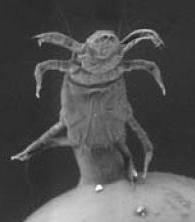
When I went online, I found oak leaf itch mite (Pyemotes herfsi), also known as the oak leaf gall mite, was first identified in Europe and subsequently found in India, Asia, and the US.  The mites live on the surface of the host’s skin (ectoparasitic) feeding on blood or skin cells.  The mite is barely visible, measuring about 0.008 to 0.03 inches (0.2 to 0.8 mm).  Newly emerged and mated females inject a neurotoxin-containing saliva into their hosts, which paralyzes the host and enables the pregnant (gravid) female to feed on the host’s body fluid (hemolymph).  The posterior portion (opisthosoma) of the female enlarges as its young develops inside, and after several days up to 250 adult mites emerge, of which 92% were females.  Males emerge before the females, position themselves around the mother’s genital opening, and mate with emerging females.  The mated females then disperse to find new hosts.  The mites are often dispersed by wind, and when they land on vertebrate hosts, they attempt to feed, resulting in the bites.  Their great reproductive potential, small size, and high capacity for dispersal by wind make them difficult to control or avoid.

Humans are most likely to get bites while doing yard work or outdoor activities under trees that may be infected.  The University of Maryland Extension recommends you avoid scratching the bite as this may lead to a secondary infection.  Instead, use an itch relief product.  If the itchiness or redness persists or signs of infection appear you should consult a doctor.  The best way to avoid bites is to limit time underneath potentially infected trees and to immediately remove and wash clothing once coming inside.  While that may be good advice, it does not seem like I would remember to do either.  The mite is most active for a four-to-six-week period surrounding cicada brood hatches.  Studies have shown in some cases the mite can survive mild winters in protected areas.  A suggested preventive measure is the application of DEET before outdoor activity.  However, anecdotal reports suggest DEET might not provide complete protection.   

THOUGHTS: The oak leaf itch mite was first recognized in the US with an outbreak in Kansas which affected around 19,000 people in 2004.  The mite was also linked to a 2007 outbreak of rashes in Chicago where they were feeding on the eggs of the 17-year cicada.  The double brood hatch in 2025 again brought the mite back in force.  I have noticed a proliferation of YouTube videos depicting humans assisting other animals in removing parasites or other things that have overwhelmed a larger animal (perhaps because I watched one and it is now on my feed radar?).   Even at the top of the food chain it does not keep humans from becoming food themselves.  Being wary of your surroundings can help keep you safe, but living in fear restricts your appreciation of the beauty of nature.  Act for all.  Change is coming and it starts with you.
Smallmouth

June 30, 2025

My MSN browser scroll included an article on the attempts to eradicate an invasive fish from a midsized lake in the Adirondacks.  While the fish are native to North America, they were introduced widely across the Adirondacks in the 1900’s, where they took over many lakes.  Their arrival led to declines of native fish species and stunting of growth rates in prized brook and lake trout, which compete for the same prey.  A study published in the journal Proceedings of the National Academy of Sciences revealed that in response to the annual removal of a quarter of the invasive fish from the lake, the numbers of fish 5 inches (12.7 cm) and under have increased while fish larger than 12 inches (30.5 cm) were mostly eliminated.  The findings have important implications for fish management.  It highlights the importance of preventing non-native species invasions before they happen and illustrates how efforts to suppress a species may backfire, leading to the opposite effect.  The smallmouth bass rapidly evolved to grow faster and invest more in early reproduction, leading to an even larger population of smaller fish.

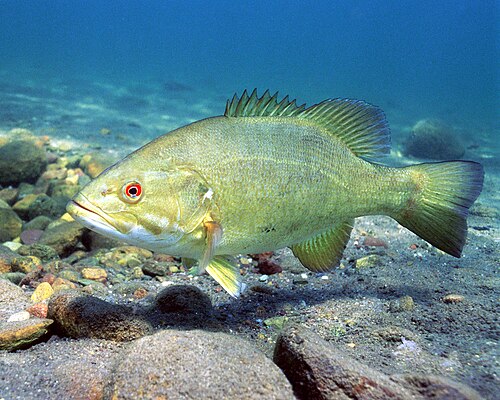
When I went online, I found the smallmouth bass (Micropterus dolomieu), also known as brown bass, bronze bass, and bareback bass, is a freshwater fish in the sunfish family (Centrarchidae).  It is the type species of its genus Micropterus (black basses) and is a popular game fish throughout the temperate zones of North America.  Males are generally smaller than females. The males tend to range around two pounds, while females can range from three to six pounds.  The maximum recorded size is approximately 27 inches (69 cm) and 12 pounds (5.4 kg).  The color of the smallmouth ranges from golden olive to dark brown dorsally which fades to a yellowish white ventrally with dark brown vertical bars or blotches along the body and dark brown horizontal bars on the head.  The combination of muscular fusiform body shape and camouflage like coloring make these fish highly effective ambush predators.  The color varies greatly depending on age, habitat, water quality, diet, and the spawning cycle.  The fish has spread through stocking, along with illegal introductions, to many cool-water tributaries and lakes in Canada and especially the US.  

Peter McIntyre, professor in the departments of Natural Resources and Ecology and Evolutionary Biology and among the senior authors, said, “Twenty-five years ago, Cornell’s Adirondack Fishery Research Program set out to test whether we could functionally eradicate smallmouth bass from a lake.  It took us 25 years to prove why the answer is no: the fish evolved to outmaneuver us.”  Efforts began in 2000 to suppress bass in Little Moose Lake in the Adirondacks by using a generator to electrify the water to temporarily stun fish (electrofishing).  Scientists then scooped them up, released the native species back into the lake, and removed all captured bass.  The removal of 1000’s of fish worked for several years, then the smallmouth began to make a comeback, especially the smaller fish.  Genetic analysis revealed that selection pressures from removing fish resulted in dramatic genetic changes between 2000 and 2019 in the genomic regions associated with increased growth and early maturation.  

THOUGHTS: The introduction of smallmouth bass to the mountain lakes presented a new apex predator.  The brook (Salvelinus fontinalis) and lake (Salvelinus namaycush) trout are threatened by warming surface waters and depleted oxygen levels in cooler deeper water during the summer, and then competition with the smallmouth.  The genetic evolution resulted in a lose-lose for anglers.  The trout are disappearing, and the smallmouth are too small to keep.  Ecosystems are delicate balance and human intervention is rarely positive.  Act for all.  Change is coming and it starts with you.
Crossings

May 27, 2025

My NY Times feed highlighted an article by Catrin Einhorn that told of an attempt to save both motorists and animals from deadly highway collisions.  Aran Johnson, a wildlife biologist for the Southern Ute Indian Tribe in Colorado, has been working for the last 15 years to provide a way for large animals to avoid being hit while maneuvering road crossings.  Now entire herds of mule deer (Odocoileus hemionus) and elk (Cervus canadensis) use the structures, as well as black bears (Ursus americanus), mountain lions (Puma concolor), bobcats (Lynx rufus), coyotes (Canis latrans), and red foxes (Vulpes vulpes).  They are expensive, but research has shown they can save money when installed on stretches of highway with at least an average of three collisions between motorists and deer per mile per year.  For collisions with elk and moose (Alces alces), which are bigger and cause more damage to vehicles and people (let alone the animal), that threshold goes down to less than one collision per mile per year.  Johnson started collaring mule deer to better understand how they moved around the reservation and superimposed his findings on state records of wildlife-vehicle collisions.  “It couldn’t be more perfect,” he said. “These things line up so precisely.”

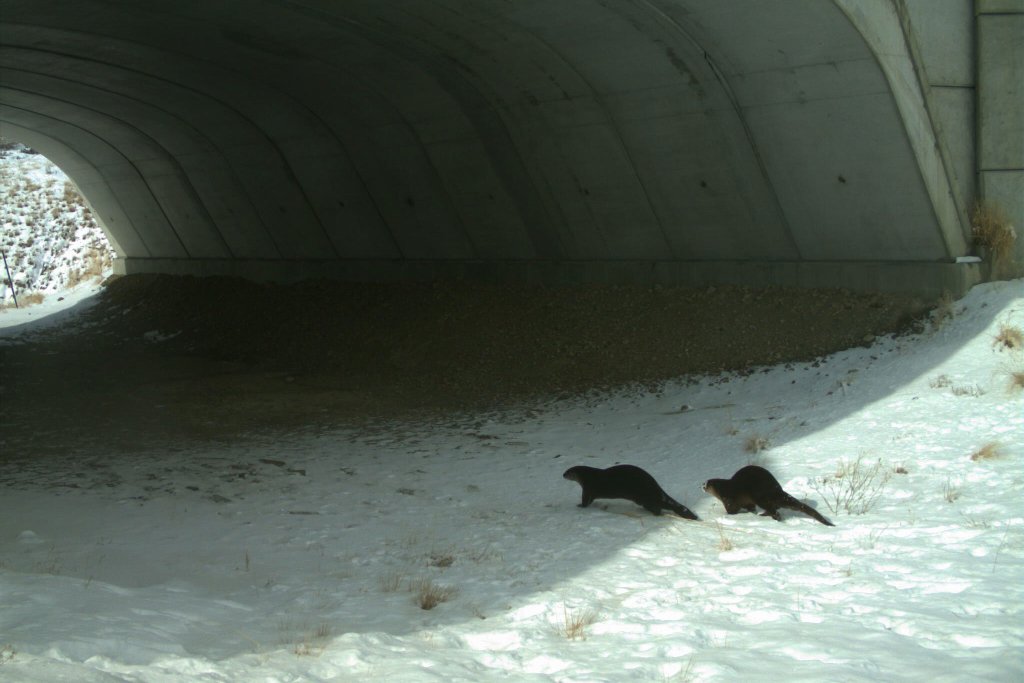
When I went online, I found wildlife crossings are structures that allow animals to cross human-made barriers safely.  Wildlife crossings include underpasses or wildlife tunnels, viaducts, and overpasses or green bridges for large or herd-type animals.  The crossings also provide for smaller animals with amphibian tunnels, fish ladders, canopy bridges (monkeys and squirrels), culverts for otters (Lutra lutra), hedgehogs (subfamily Erinaceinae), and badgers (Taxidea taxus), and green roofs for butterflies and birds.  Wildlife crossings are a practice in habitat conservation, allowing connections or reconnections between habitats to combat habitat fragmentation.  Crossings also assist in avoiding collisions between vehicles and animals, which in addition to killing or injuring wildlife may cause injury or death to humans and property damage.  Similar structures can be used for domesticated animals, such as cattle creeps.

Wildlife crossings are growing in popularity across the country, and Colorado has emerged as a leader building 28 large game crossing structures since 2015, according to the state Transportation Department.  Many of the species which use the structures travel from higher elevations in the summer to lower ones in the winter and are often forced to cross existing highways.  The Colorado General Assembly passed a law in 2022 creating a cash fund for the department to use for animal crossings and the state has evaluated its highways to create a priority list for future projects.  Wildlife crossings are combined with long stretches of fencing to funnel animals to the right location and have been found to reduce vehicle collisions with large animals by more than 80 percent.  The Colorado Department of Transportation covered most of the cost for wildlife crossings.  The tribe came up with US$1.3 million from the Bureau of Indian Affairs and an additional US $12 million for the project came from the state department of wildlife, nonprofit groups, and a private donor.  A bonus of wildlife crossings is the photos from trail cameras which bring attention to the programs.

THOUGHTS: Wildlife crossings transcend political divisions and have bipartisan support.  The crossings also fit in with the cultural importance of being stewards of the land for the Southern Ute.  As the current administration cuts federal spending the grant program that helps states and tribes pay for wildlife crossings in collision hot spots is now in doubt.  A chainsaw is effective if you want to remove the whole tree.  Pruning is effective if you want to save the tree and remove unwanted parts.  Act for all.  Change is coming and it starts with you.
Beavers 3

April 22, 2025

© Pavel Mikoska/Shutterstock

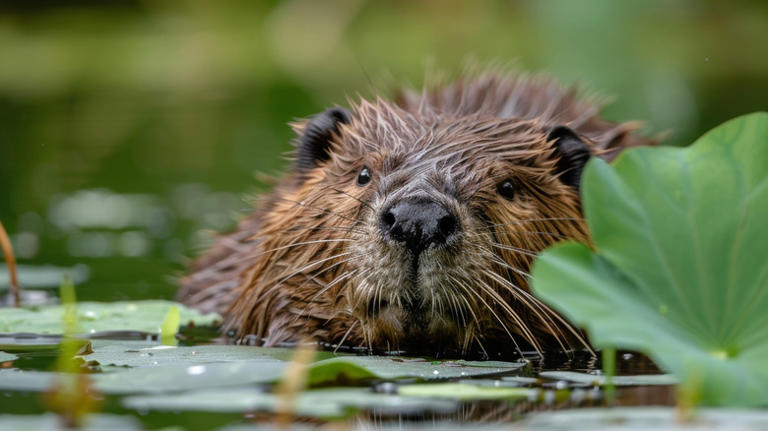
My MSN browser provided an update to the ongoing saga of a family of beavers in Northern California.  On a 2,325-acre valley in Northern California named Tásmam Koyóm, conservation efforts are underway to reintroduce beavers (Castor canadensis) after a nearly 75-year absence.  The result has been an explosion in population.  The beaver family in Tásmam Koyóm is one part of the continued efforts in California.  The state released a family of seven on June 12, 2024, at nearby South Fork Tule River, marking the first time the beaver had homed in the region in over a century.  The Tásmam Koyóm family has had a year and a half to get used to the new environment and are thriving, with two litters of kits and one of the beavers finding a mate in the wild.  The California Department of Fish and Wildlife says population growth offers a chance for beavers to thrive again. The species is endemic to Northern California, but its population was decimated by the fur trade in the 1800’s with numbers dwindling to fewer than a thousand by 1912.  The beaver is not only beginning to make a comeback, but it can also protect the landscape from wildfire threats.

When I went online, I found California has been affected by thousands of wildfires between 1987 and 2023.  The Palisades Fire began burning in the Santa Monica Mountains of Los Angeles County on January 7, 2025, and grew to destroy large areas of Pacific Palisades, Topanga, and Malibu before it was fully contained on January 31, 24 days later.  The fire was driven by hurricane-force Santa Ana winds and burned 23,448 acres (9,489 ha), killed 12 people, and destroyed 6,837 structures.  The fire was the tenth deadliest and third-most destructive California wildfire on record and the most destructive to occur in the history of the city of Los Angeles.  While the wildfire-prone area requires a multifaceted approach to future prevention, the recent reintroduction of beavers across the state could help.

The beavers come into play as they naturally create and maintain wetland environments.  Beaver dams have been mimicked in conservation efforts with volunteers creating Beaver Dam Analogues (BDA) to help bring water to drought-prone areas.  The state’s largest (real) beaver dam was over 320 feet (97.5 m) long before it was consumed in a wildfire in 2021.  One of the groups of the Tule River beavers began building off a BDA, strengthening the man-made dam already there.  Conservation efforts for the beaver help prevent wildfires and benefit the region’s wildlife, from the long-lived Desert Tortoise (Gopherus agassizii) to the state bird, the California quail (Callipepla californica).  The beavers’ explosive growth has given rise to the title of “Swiss army knife” of the animal kingdom for its utility.  The Tásmam Koyóm beaver family should be a rallying cry for more conservation as well as a case study of how important it is to protect ecosystems to the benefit of every living creature.  

THOUGHTS: The International Union for Conservation of Nature lists over 47,000 species as threatened with extinction.  Success stories like the Tule River beavers provide a cause for celebration.  Another family of beavers have taken up living in Alhambra Creek in downtown Martinez, California.  A male and female beaver arrived in Alhambra Creek in 2006 and proceeding to produce 4 kits over the course of the summer.  After the city decided to exterminate the beavers, local conservationists formed an organization called Worth a Dam which got the decision overturned.  Subsequently, wildlife populations have increased in diversity along the Alhambra Creek watershed.  Living in proximity to wildlife can be beneficial, if humans take time to figure out how to create a symbiotic relationship.  Act for all.  Change is coming and it starts with you.
Coexistence

April 20, 2025

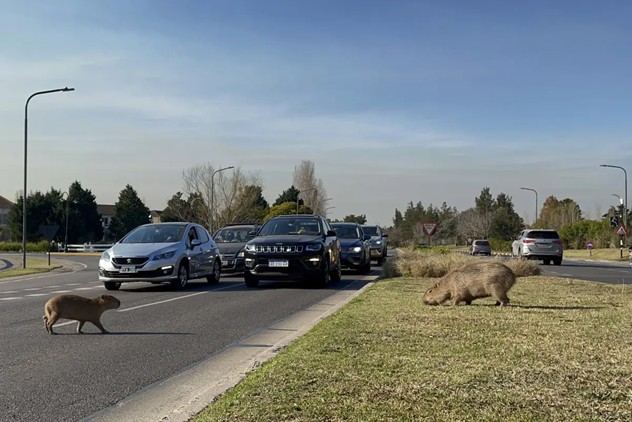
Earlier this week the NY Times carried an article by Jack Nicas about an invasion occurring in Argentina.  Since the pandemic, “carpinchos,” as they are known, have proliferated in Nordelta, a ritzy gated community of 45,000 people north of Buenos Aires.  Over the past two years, biologists estimate the capybara population has tripled to nearly 1,000 in this gated community, posing a test case for the urban coexistence of humans and wildlife.  While most residents find them cute, they also cause traffic accidents, chomp their way through gardens, and have occasionally attacked some of the community’s smallest dogs.  These actions have led to an effort to place controls on the animals.  Veronica Esposito is one of a small group of neighbors leading a rebellion against the controls.  They have protested in the streets, taken legal action against developers, and gathered 25,000 signatures for an online petition to protect the animals.  “I believe their adorableness is a strategy of the species itself to survive.” said Silvia Soto, the most vocal neighbor.   In February, the Nordelta organization told residents in an email that it was moving ahead with a “contraceptive vaccination program,” to sterilize 250 adult capybaras.  It seems some do not want coexistence.

When I looked online, I found the future of wildlife depends on the willingness and capacity of human coexistence.  To coexist means to live in a dynamic state where the needs and interests of both humans and wildlife living in proximity to each other are generally met.  This coexistence may not be entirely free of negative interactions and may still contain some level of impact on both people and wildlife.  Living together is especially dependent on a level of tolerance on the human side.  Humans have lived alongside wildlife for thousands of years, but conflict arises when the presence or behavior of wildlife poses a direct or perceived threat to people’s needs, interests, and safety.  As our planet becomes increasingly crowded, livable space is decreased by accelerated climate change, habitat loss, and competition for resources.  What it means to share space with wildlife differs drastically from place to place and from species to species, which often makes moving toward coexistence a complex and ever-evolving target.  

Thirty years ago, Nordelta was an untouched wetland where capybaras roamed free, hunted by pumas, jaguars, caiman, and sport hunters.  Eduardo Constantini, the real estate developer who controls the Nordelta organization, began transforming the area in the late 1990’s, building housing, infrastructure, a shopping center, and a golf course designed by Jack Nicklaus.  Construction has been nearly nonstop.  Ms. Soto argued that the capybara population is only increasing because developers destroyed the animals’ wild habitat, forcing them out of the forest and into the suburbs.  As capybara grazed on a playground, a married couple walking by held different views of the plight of the animals.  Felipo Contigiani said he used to hunt capybara as a child and had little sympathy, “It’s a wild animal that came to live in the city.”  His wife Lidia Schmidt corrected him, “No, the city came to settle where the wild animal was.”  Coexistence seems a long way off.

THOUGHTS: To achieve some level of coexistence between people and wildlife, various stakeholders must partner together to address the challenges and devise solutions that focus on the benefits of living alongside wildlife.  This is especially true for the local communities who are often directly negatively impacted by living with wildlife.  The town of Churchill in northern Manitoba, Canada is most famous for the many polar bears that move toward the shore from inland in the autumn, leading to the nickname “Polar Bear Capital of the World”.  Coexistence often means a willingness to think outside the box.  Act for all.  Change is coming and it starts with you.
Partula

March 28, 2025

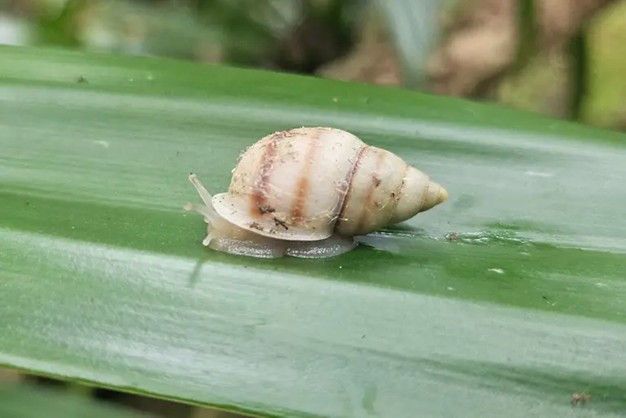
This morning’s MSN browser caught my eye with an article on a creature that has managed to return from extinction.  The International Union for Conservation of Nature (IUCN) Red List of Threatened Species has reclassified a peanut sized snail as critically endangered after being previously declared extinct in the wild, according to a release from the Zoological Society of London (ZSL).  The snail’s comeback is credited to a decades-long conservation program led by ZSL and its global partners.  Paul Pearce-Kelly, leader of the conservation program, said in a news release, “This is a landmark moment for Partula tohiveana and for decades of international conservation work.  Seeing a species return from the brink after years of collaborative effort is exactly why we do what we do.”  The press release states that the reclassification follows the discovery of adult Partula snails born in the wild.

When I looked online, I found Partula tohiveana is one of several species with the common name Moorean viviparous tree snail.  The species is an air-breathing tropical land snail in the family Partulidae endemic to highlands on Moorea, French Polynesia.  The species was reintroduced into the wild in 2024 and by September “born in the wild” snails were observed for the first time in 40 years, meaning the species is officially considered re-established.  While the snail is still critically endangered, it had been extinct in the wild since the 1980’s.  The snail is the first invertebrate species to be successfully re-established following an Extinct in the Wild IUCN status.  ZSL started breeding these snails in the 1980’s after the invasive carnivorous rosy wolf snail (Euglandina rosea) began to threaten the Partula tohiveana’s wild population.  The snails were bred and cared for under carefully controlled conditions and were then marked with UV reflective paint prior to their release back into their forest habitats.  The 2024 reintroduction saw the release of about 6,000 snails from 10 species and sub-species of Partula snails raised at zoos worldwide.

Ali Reynolds, Senior Keeper, Lower Vertebrates & Invertebrates at the Marwell Wildlife Zoo, said: “It was so heartening when I heard the news of tohiveana being downlisted, it makes all our efforts worthwhile, and shows what a difference zoos can make.”  Reynolds has a tattoo on her arm with a picture of a snail along with words, “never give up”.  She went on to say the more you learn about Partula, the more fascinating they become.  The snails show a high level of speciation, and a single species can evolve in very small specific areas, at times even living in only one valley.  They are unusual amongst snails, as they do not lay eggs, but give birth to a single live young.  Their name comes from Partula, the Roman goddess of birth.  “Given the cause of their decline is entirely manmade, we have a responsibly to try to make things right, and this shows that is possible!”

THOUGHTS: One of the global partners that aided the reintroduction of Partula was the Sedgwick County Zoo in Wichita, Kansas.  My parents lived there and always had a season pass to the zoo, so when we held reunions, we would all go.  This was usually in August and turned out to be the hottest day of the year (100+F/37.7+C).  Zoos have always been a subject of interest and debate.  Some say they play a crucial role in conserving endangered species and educating the public.  Others say they represent captivity for profit and do more harm than good.  Zoos do support conservation through breeding and donations that are critical for groups working in areas trying to preserve wildlife.  A critical argument for zoos is that people need to see animals to care about their protection and most urban populations will likely never get the opportunity to experience these animals in the wild.  Direct encounters with animals encourage people to adopt more eco-friendly behaviors and feel more invested in conservation efforts.  Longer life (with ethical treatment) is a tradeoff for freedom.  As with humans, not all feel the cost is worth it.  Act for all.  Change is coming and it starts with you.
Yellow-legged

November 19, 2024

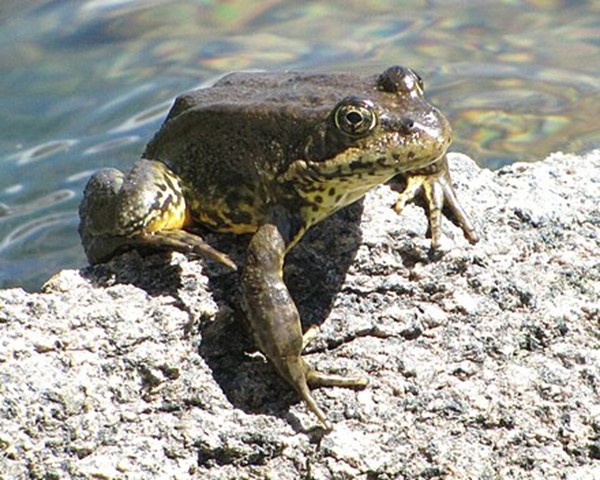
Inside the front section of my local newspaper was a USA Today article on the recovery efforts for a nearly extinct frog. The High Sierra lakes in Yosemite National Park have been biologically upset for over 100 years by the stocking of non-native fish. The rainbow, golden, brown, brook, and cutthroat trout, along with Atlantic salmon and grayling, were originally carried in buckets to these fishless lakes. After World War II, a generation of pilots who were adept in aerial bombing sped up the process in all but 20% of the smallest mountain lakes. While these lakes contained no fish, they were bursting with life. Within a few years of stocking the frog populations that had flourished were gone. The National Park Service ended fish stocking in the 1990’s out of concern for the native species. In 1992, Roland Knapp, a research biologist from the University of California, Santa Barbara, got permission to use gill nets to remove the fish from a small number of lakes. The frogs began to make a comeback, but in the early 2000’s research showed the arrival of amphibian chytrid fungus. The Sierra Nevada yellow-legged frog was added to the endangered species list in 2014.

When I looked online, the Sierra Nevada yellow-legged frog (Rana sierrae), also known as the Sierra Nevada Mountain yellow-legged frog, is a true frog endemic to the Sierra Nevada of California and Nevada in the US. The yellow-legged was formerly considered the southern mountain yellow-legged frog (Rana muscosa) until a 2007 study elevated the more central and northern populations to full species status and restricting the latter to the southern Sierra Nevada and southern California. Both mountain frogs are similar in appearance but are separated by differences in mitochondrial DNA. The yellow-legged grow up to 1.5 to 3.5 inches (3.8 to 8.9 cm) long and females tend to be larger than males. The frogs have brown backs, often with dark spots or bands, and yellow legs and underbellies. Considerable variance exists in species coloration and yellow-legged frogs can also be grey, red, or greenish brown with dark splotches. Tadpoles appear black or brown and require one to four years to fully develop. These frogs hibernate during the winter, staying submerged in the mud and may only be active around three months a year depending on the weather. Studies showed 92.5% of the yellow-legged populations have gone extinct and are estimated to have declined by over 90% over their range. They are considered an endangered and vulnerable species by the IUCN.

In 2006, Yosemite National Park and the Yosemite Conservancy began a project to introduce frogs into lakes without fish. In 2007, a project was started to restore frog habitat by removing non-native fish from remote sites. Once the site is fishless, lakes are inhabited by native species, including the yellow-legged frog. The ecological effects of their loss have been significant as the yellow-legged were a keystone species and important for nutrient and energy cycling in the aquatic and terrestrial ecosystems. A 2016 survey in Yosemite indicated a sevenfold increase in their numbers reported, but recent studies discovered amphibian chytrid fungus is contributing to the decline of the Sierra yellow-legged frog. Chytrid fungus leads to a usually fatal disease (Chytridiomycosis). Chytrid fungus lives on keratin which is found on the external mouthparts of tad poles and the outer skin layer of adults. Fungus growth on adults disrupts the ability to breathe through skin (osmoregulate). The species also suffers from habitat fragmentation as populations have become separated.

THOUGHTS: Stocking fish in the High Sierra’s began as early as the California Gold Rush in 1849. The fishless lakes seemed like a waste to the miners hiking into the backwoods. Stocking fish did provide food, but it nearly destroyed the delicate habitat of the high mountains. While introducing an invasive species may seem like a good idea, it is rarely the case. Life in fragile environments is especially vulnerable. Act for all. Change is coming and it starts with you.
Habitat

October 03, 2024

Melissa and I have been trying to revamp the furniture in our living room since the day we moved into her house in Arkansas.  Knowing we had a house full of furniture in Arkansas, we donated most of our furniture to the Conference Center where I had been working.  While our Kansas furniture was in good shape, it was the first furniture I purchased 20 years earlier and I was ready for a change.  When we moved to Arkansas the furniture was not much newer and was a style neither of us liked.  We tried buying an inexpensive living room set two years ago, but it turned out to be inexpensive.  Over the weekend Melissa visited a friend in northwest Arkansas and was impressed with the style and utility of the furniture she had.  Needless to say, we went shopping over the weekend and came away with a sofa and chair as a replacement.  That left one question, what are we going to do with the items we no longer need?  We decided on repurpose by donating to Habitat for Humanity.

When I looked online, I found Habitat for Humanity International, also referred to as Habitat for Humanity or Habitat, is a US non-governmental, and tax-exempt 501(C)(3) Christian nonprofit which seeks to build affordable housing.  It was founded in 1976 by Millard and Linda Fuller.  The operational headquarters are located in Americus, Georgia, and the administrative headquarters are located in Atlanta.  In 2023, Habitat for Humanity operated in more than 70 countries and works to help build and improve homes for low-income or disadvantaged families.  Homes are built using volunteer labor, including the practice of sweat equity from the future homeowners, along with paid contractors for certain construction or infrastructure activities.  Habitat makes no profit from the home sales and instead operates with financial support from individuals, philanthropic foundations, corporations, government entities, and mass media companies.  While Melissa and I have worked on several houses, it is probably better known that President Jimmy Carter and Rosaland worked many more volunteer hours building Habitat houses.

Along with building houses, Habitat ReStores accept small and large donations of new or gently used furniture, appliances, housewares, and building materials.  The sale proceeds then help Habitat’s work in the local community and around the world.  Items can be donated in person, and many Habitat ReStores offer free pickup of large items.  We were able to donate 2 sofas, 1 recliner, and a love seat to our local ReStore.  I made an appointment, and they picked up the items this morning.  Unfortunately, 1 recliner did not make the cut (worn).  The EPA estimates that 9 million tons of furniture are tossed every single year, or roughly 5% of everything brought to landfills.  Most of the furniture going to the land fill was made within the last 10 to 15 years, according to Ashlee Piper, sustainability expert and author.  Part of the problem is that today’s fast furniture is more challenging to repair because of its materials.  Unlike grandma’s, these pieces are not meant to last a lifetime.

THOUGHTS:  While in Berkeley I was living across the street from the Cal dorms.  The students obviously did not know about Habitat and each spring term as they were kicked out for the summer their fast furniture ended up in my building’s dumpster, allowing me to upgrade every year.  The price or where the item of furniture was made can be a red flag for new items.  Shopping locally can increase your odds of something being made with a thoughtful production process, rather than something where the emphasis is put on producing goods as cheaply as possible.  There are often good finds in secondhand stores (like Habitat) that with some minor repairs or refurbishing will make the piece feel fresh.  We are not all blessed with an overflowing dumpster.  Act for all.  Change is coming and it starts with you.