April 19, 2025

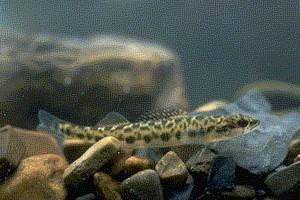
My MSN browser reported on a recent discovery in Australia on the region’s marine life. The research was published in Science Advances and shows how marine dynamics could have far-reaching implications for understanding the resilience of oceanic ecosystems. Research found that the Marine reserves on the Great Barrier Reef outperformed expectations, with fish densities two to three times higher than in zones where fishing is allowed. This is especially true for the leopard coral grouper (Plectropomus leopardus), or coral trout, which is a key species for both biodiversity and commercial fisheries. The sanctuaries serve as critical breeding grounds where the fish grow larger and produce more offspring. The baby fish then migrate to fishing zones, maintaining catch levels without depleting stocks. Researchers found that even though the reserves make up less than a third of the Great Barrier Reef, about 55% of all coral trout reproduction and 47% of the total catch across the reef originates from these protected areas.
When I looked online, I found the Great Barrier Reef is the world’s largest coral reef system. The system is composed of over 2,900 individual reefs and 900 islands stretching for over 1,400 miles (2,300 km) over an area of approximately 133,000 miles2 (344,400 km2). The reef is in the Coral Sea, off the coast of Queensland, Australia, separated from the coast by a channel up to 100 miles (160 km) wide and over 200 feet (61 m) deep. The Great Barrier Reef can be seen from outer space and is the world’s largest single structure made by living organisms. The reef is composed of and built by billions of tiny coral polyps (phylum Cnidaria, subphylum Anthozoa) and supports a wide diversity of life. The reef was selected as a World Heritage Site in 1981, and CNN labelled it one of the Seven Natural Wonders of the World in 1997. Australian World Heritage places included it in its list in 2007 and the Queensland National Trust named it a state icon of Queensland in 2006.
The study used an innovative mix of fish surveys, genetic testing, ocean current modeling, and reef mapping to pull together decades of data. Researchers found the benefits of marine reserves extend far beyond their boundaries. Nearly 95% of reefs receive at least 30% of their baby fish from reserves, and 93% of fished reefs get at least 30% of their catch from protected areas, demonstrating the far-reaching impact of conservation strategies. As fish from protected areas travel and repopulate nearby reefs, the entire ecosystem becomes more resilient. Michael Bode, of the QUT School of Mathematical Sciences, said, “By protecting fish populations within these no-take zones, we not only safeguard biodiversity but also guarantee that there will be a new generation of fish on the reefs that are open to fishing.” Environmental pressures on the Barrier Reef come from runoff of human made pollutants, climate change (mass coral bleaching), dumping of dredging sludge, and cyclic population outbreaks of the crown-of-thorns starfish. The reef has lost more than half its coral cover since 1985.
THOUGHTS: This recent study of the protected areas in the Great Barrier Reef shows the synergy between conservation and economic security. By ensuring that fish populations remain healthy and abundant, marine reserves support sustainable fishing practices, helping local fishers and coastal communities maintain their livelihoods without compromising long-term ocean health. The Australian government is investing millions into reef protection and this study offers evidence that marine conservation is not at odds with economic growth. While some consider such government-funded studies to be frivolous, they can guide better practices to benefit the economy and natural ecosystems. Sticking your head in the sand or ignoring problems has never proven to be viable for long-term growth. Act for all. Change is coming and it starts with you.