
October 23, 2024
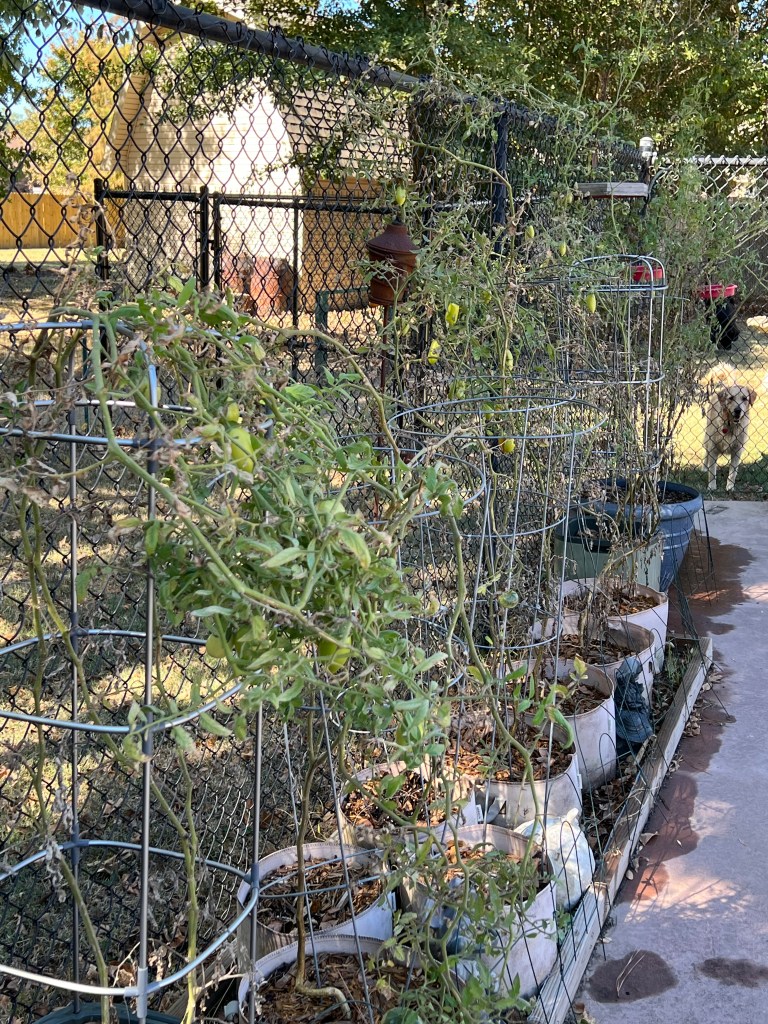
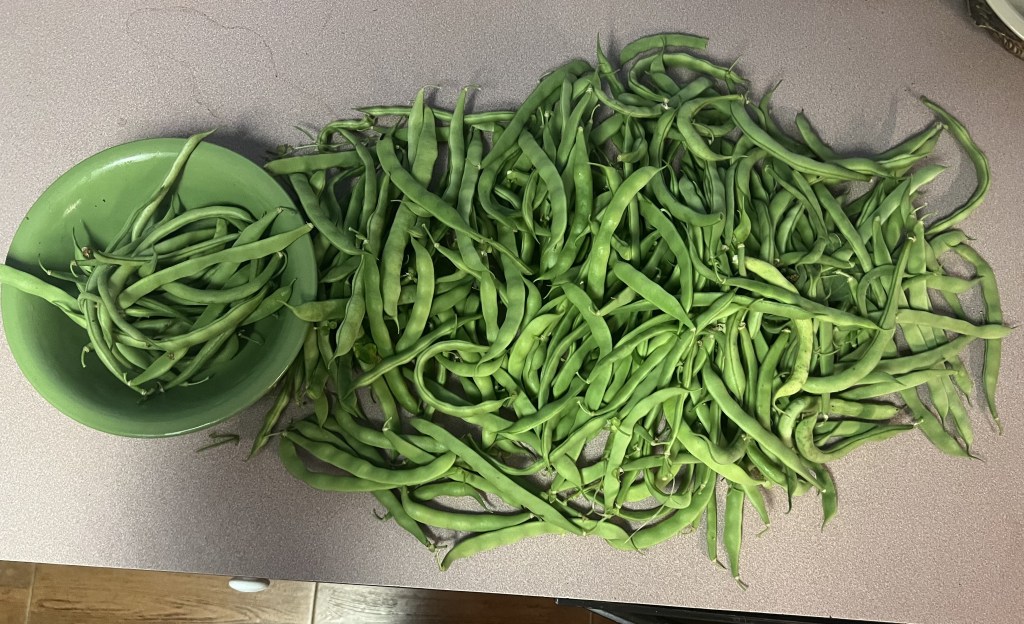
I have mentioned how most of my vegetables have matured and stopped producing. The exceptions are the pole beans (Phaseolus vulgaris) representing the last of my three sisters’ harvest. They started late but now still provide several cups of beans every few days. The raised beds are empty except for the 5 rattlesnake watermelons (Citrullus lanatus) struggling to mature, the 2 late starting green bell peppers (Capsicum annuum), and the 2 red okra (Abelmoschus esculentus) that produce beyond their limit. There are also 8 cabbages that are finally picking up as the temperatures cool. I really did not expect much from my tomatoes as the heat kept them from much production during the summer (I did get 3 jars of pasta sauce). The friend I swap gardening stories with said she tore her tomatoes and peppers out several months ago to avoid having to water them. We are having temperature shifts as the nights get into the 40’s (4.5+C) and the days get to the high 80’s (27+C), causing a resurgence of my San Marzano and plum tomatoes, making me wonder what to expect in long-term production.
When I looked online, I found that depending on their maturation date, “indeterminate” tomato (Lycopersicon lycopersicum) cultivars are the best long-term producers and will yield tomatoes for two to three months. “Determinate” tomatoes, including dwarf and bush cultivars, typically only yield tomatoes for around two weeks after they blossom. Tomatoes are grown as perennials in tropical climates and as annuals in USDA plant hardiness zones 2 through 10. Traditional and heirloom indeterminate tomato cultivars continue to grow taller throughout the growing season and will reach heights of 5 to 8 feet (1.5 to 2.5 m) and typically require support with a wire tomato cage or stakes. They grow flowers and yield tomatoes from shoots or “suckers” that grow on the sides of their main stem from the time they mature and flower until the first autumn frost. The best long-term producing cultivars are those that mature early and grow in an area with a long growing season.
Most cultivated tomatoes in my area (zone 7) are planted soon after the last spring frost (c. April 15) and the fruit is expected sometime between 57 to 100 days after the seedling is planted. If you plant an indeterminate tomato cultivar, you are encouraged to prune the vines regularly to maintain a long harvest of large, quality tomatoes. I have done this in the past, but I have only done this sporadically this year. The University of Arizona horticulturalists recommend pruning all but three or four of the shoots that grow in a tangle inside the cage and allow the foliage to protect the fruit from the sun. If you don’t prune the suckers, these stems consume a lot of a plant’s energy and may result in smaller yields and fewer tomatoes (like I saw). I did use 4 foot (1.2 m) cages but as the season went on the plants far exceeded that height. I found out the San Marzano I planted for pasta sauce are a larger variety of plum tomatoes (I planted both) and are some of the better plants in long-term production.
THOUGHTS: As the temperatures dropped, I quit the daily watering I maintained throughout the summer and removed the dying vegetable plants one by one as they ceased production. A month ago, I was tempted to tear out all of my tomatoes as they had essentially stopped producing fruit but kept them to see what the long-term might bring. Now they are again producing blossoms and fruit. I had little to lose when I took a long-term approach in my vegetable garden. If the plants failed to produce, I would not have been out much in terms of time and water. Since they did produce, I will reap the benefit of fresh tomatoes into the fall. Corporations seem less willing to take a long-term approach toward products or employees. If the product does not make a quick profit, it is dropped. If the employee does not prove productive, they are let go. While moving from one product to the next might make economic sense, employees should not be used as expendable. Act for all. Change is coming and it starts with you.
 A travelers odyssey