Slime Mold

April 14, 2026

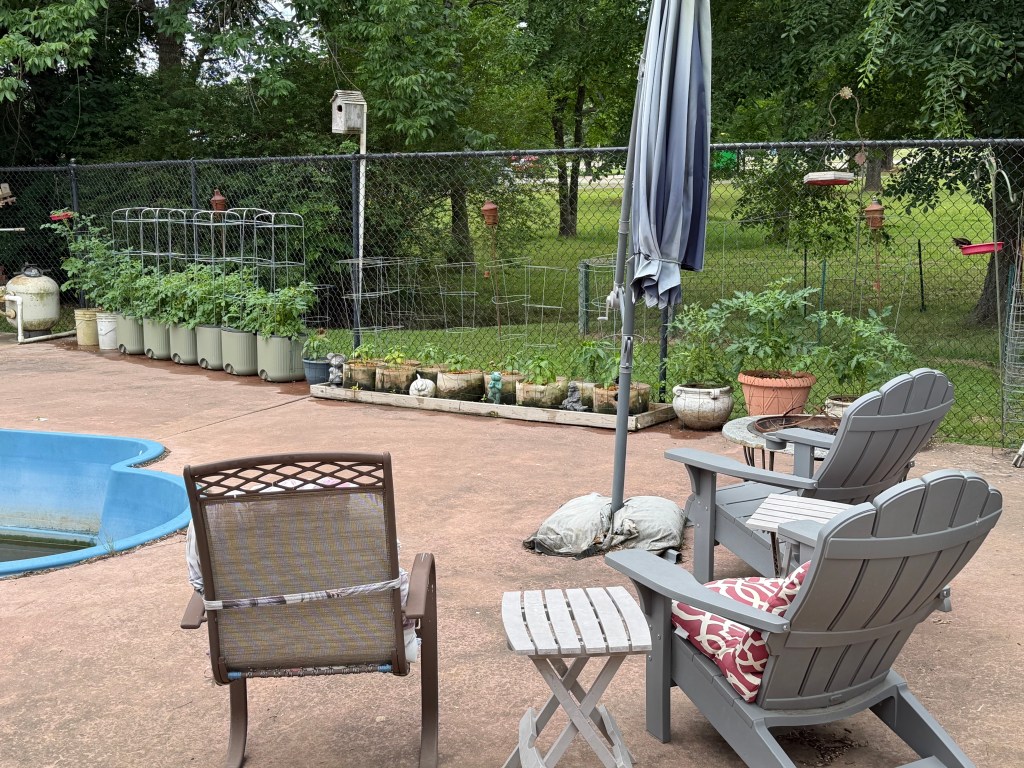
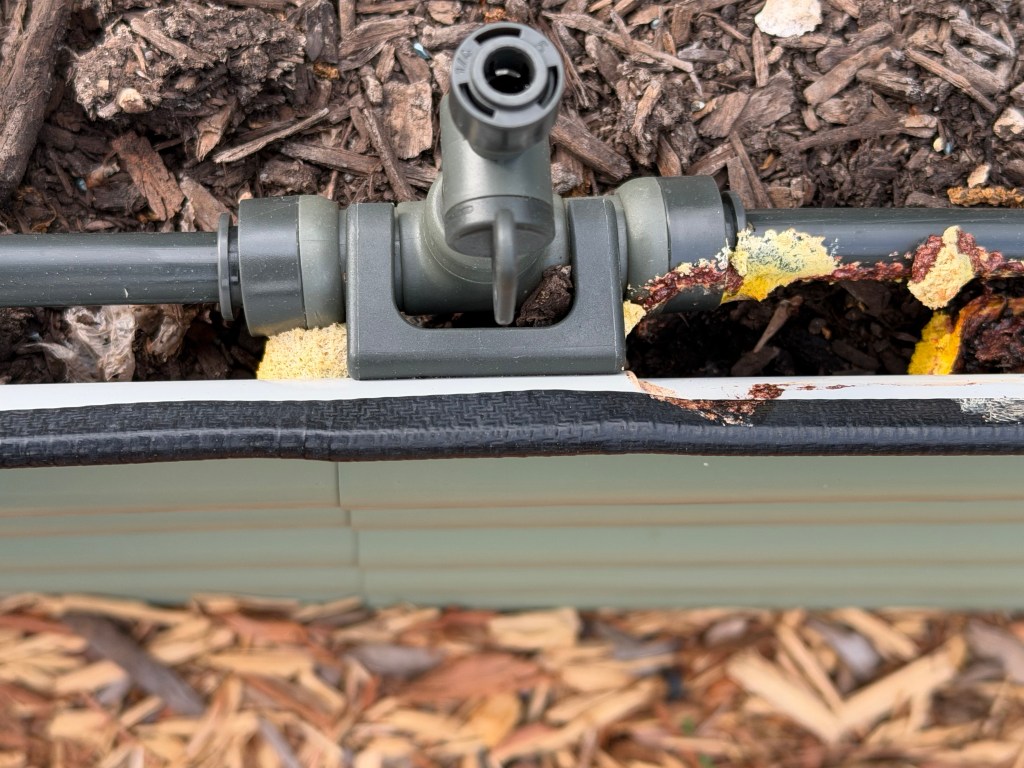
Today was time for a second planting of several vegetables in the raised beds.  The seed package suggested I plant my peas (Pisum sativum) with a second planting two weeks later to ensure I had a continued harvest later during the season.  I thought this was a good idea for my cabbage (Brassica oleracea) and cauliflower (Brassica oleracea var. botrytis) as well.  It was also time to plant the artichoke (Cynara cardunculus var. scolymus) seeds I had placed in the refrigerator (scored) two weeks ago to prepare them for planting.  Scoring is done to “trick” the seeds into thinking they are coming out of Winter and into Spring.  While I was placing the new seeds in the ground I found most of the seeds I had planted had yet to sprout, except for my radishes (Raphanus sativus).  Something should have sprouted in all these seeds.  After planting the new seeds, I watered the raised beds to keep all the unsprouted seed moist.  Then I noticed several spots of bright yellow blobs clinging to the watering hoses in one of the beds.  This appeared to be a form of slime mold.   

When I went online, I found the yellow slime mold (Fuligo septica) in my garden is in the class Myxomycetes.  It is commonly known as scrambled egg slime or flowers of tan because of its peculiar yellowish appearance, or even “dog vomit slime mold”.  This slime mold is relatively common with worldwide distribution and is often found on bark, mulch, lawns, as well as other rotting organic matter in urban areas after heavy rain or excessive watering.  The slime spores are produced on or in aerial spore cases (sporangia) and are spread by wind.  Slime mold is a harmless, amoeba-like organism that is not a fungus, but a type of organism (protist) that feeds on bacteria and decomposes organic matter.  Protists are a diverse group of (mostly) single-celled microorganisms that are not classified as plants, animals, or fungi, with a membrane-bound nucleus and thrive in moist environments.  It is a plasmodial slime mold, meaning it can move (up to several feet in a day) across surfaces.  Slime mold is not harmful to pets, humans, or plants.

I did not know what the slime mold was when I first saw it, although I knew it was not there when I checked the day before.  Being inquisitive, I reached out and touched it (yes, this is how the Blob attached itself to humans before engulfing them).  The blob disintegrated on my touch and left a slimy covering on my finger.  Northern European folk lore attributed slime mold to witches and demons.  In Scandinavia it is identified as the vomit of troll cats.  In Finland, the mold was believed to be used by witches to spoil their neighbors’ milk and is called “paranvoi” (butter of the familiar spirit).  Swedish folklore labels another slime (Tremella mesenterica) as the vomit of a witch’s “carrier” (familiar).  Both are referred to in Dutch as “heksenboter” (witches’ butter), and in Latvian as “ragansviests” (witches’ butter) or “raganu spļāviens” (witches’ spit).  At least “dog vomit” removes the slime from the realm of the supernatural.  Finding the slime safe, I left the other intact.

THOUGHTS: The overcast skies and mild temperatures (70’sF/20’sC) have combined with my watering to grow more than just slime mold.  The mulch in the paths around the raised beds are also growing mushrooms.  This term is applied to two divisions of subkingdom Dikarya (Basidiomycota, Agaricomycetes).  I remove the volunteer mushrooms that appear in my raised beds as they compete for the soil’s nutrients.  I decided to leave the mulch plants as they were not hurting anything.  When I went back outside to determine the species, the sun had come out and they had withered.  Fungi are paradoxically both fragile and incredibly resilient, depending on their visible fruits (mushrooms) or their underlying microscopic network (mycelium).  Humans often have a reverse characteristic, with a rough persona hiding a fragile psyche brought on by our exposure to stress, trauma, and emotional overload.  This should be noted in interactions.  Act for all.  Change is coming and it starts with you.

Rattail

April 12, 2026

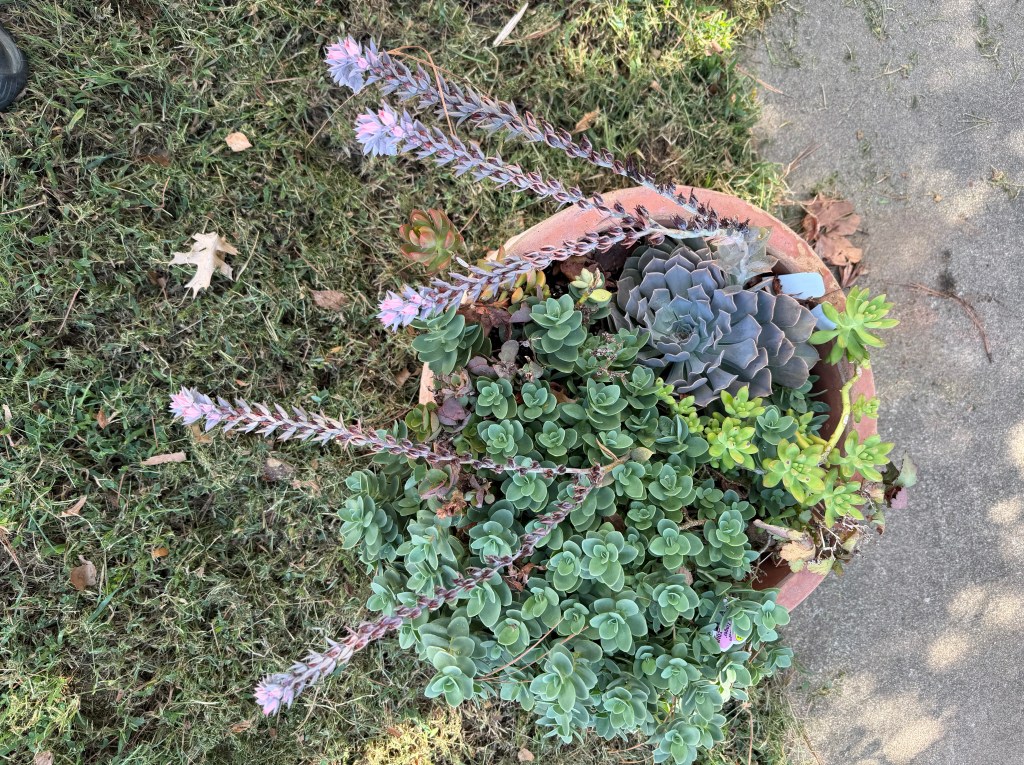
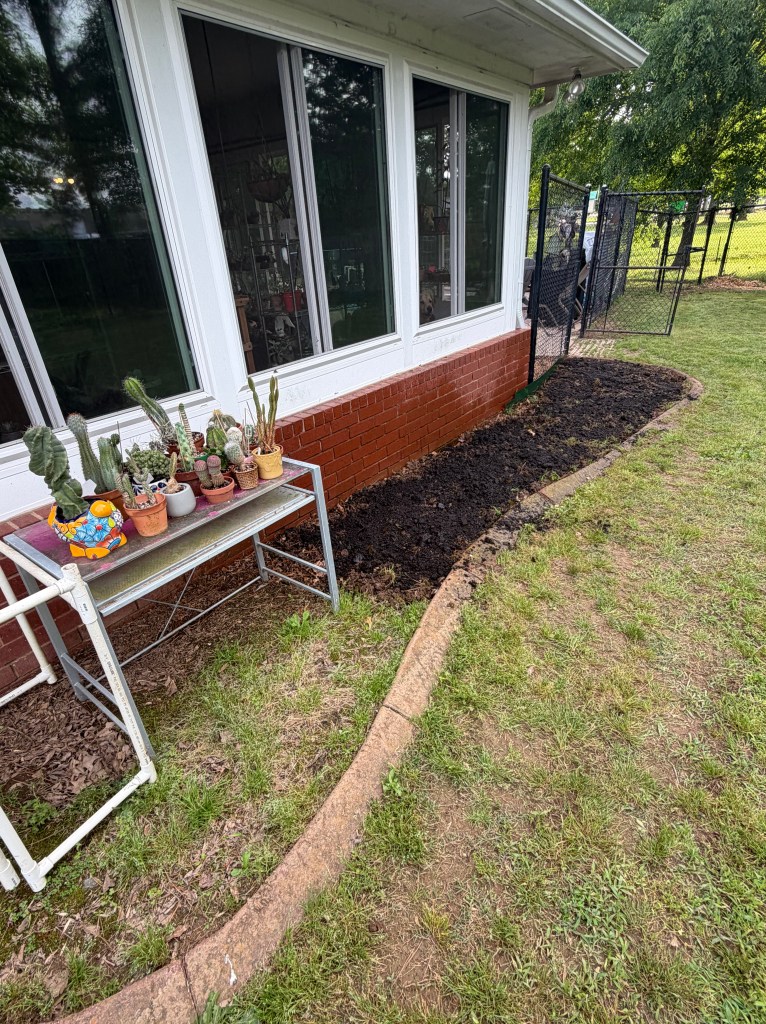
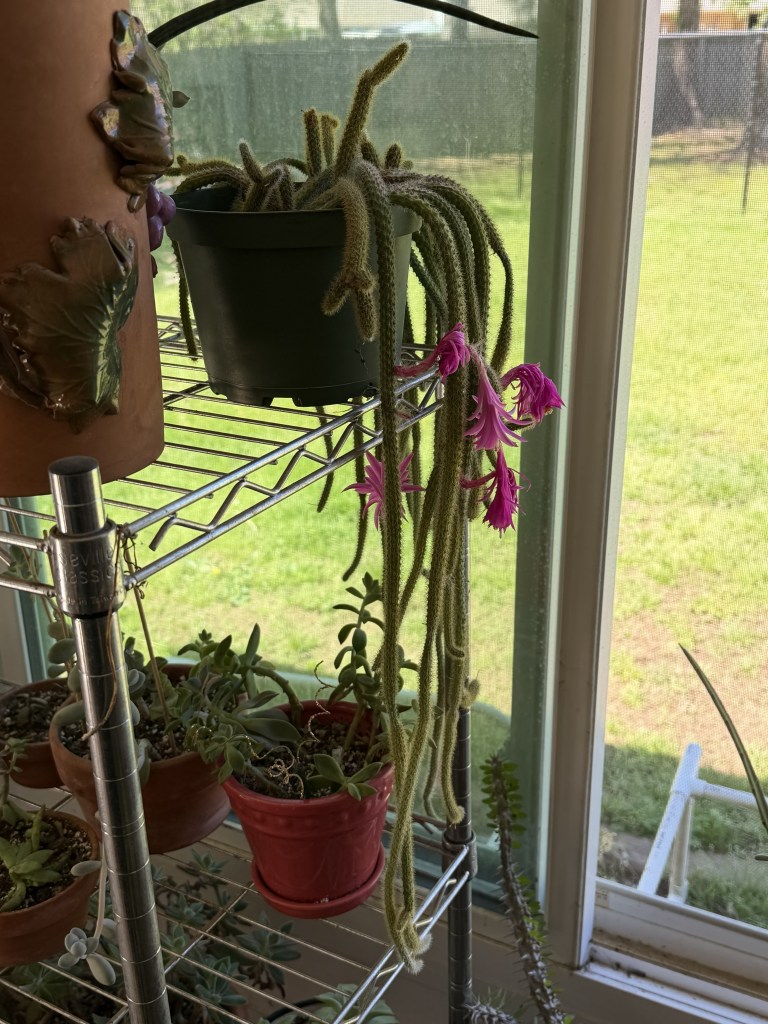
Traveling 5 of 6 weeks in February and March not only got me behind getting my garden in the ground but also in Melissa’s care for her succulents.  The good news is even with the 100’s of plants Melissa tends for she only needs to pay attention to about half of them at a time.  Different succulents grow at different rates within a year depending on the temperature, with some becoming dormant and growing slower when the weather is too hot or too cold and turn active again when the temperatures are ideal for their growth.  That is why succulents are known as “opportunistic growers”.  Succulents can be put into categories as either summer or winter growers.  Summer growers thrive in the hot months of summer (May to August) and are dormant in the winter, while winter growers thrive in the cold of winter (November to February) and are dormant in the summer.  The primary care given to all of Melissa’s succulents is an occasional misting during dormancy and scant watering and careful observation and maintenance during growing season.  When Melissa was able to get back at tending her succulents last week, she called me out to look at the blooms on her rattail cactus.

When I went online, I found the rattail cactus (Aporocactus flagelliformis) is a species of flowering plant in the cactus family Cactaceae.  With its ease of cultivation and attractive floral displays it is often grown as an ornamental potted plant.  The Latin specific epithet (flagelliformis) means “shaped like a whip”, in reference to the plant’s long stems.  The common name “rattail” refers to the same feature.  The species was one of the first cacti to be introduced into European culture.  Watson (1898) offers the year 1690 but it was probably earlier.  The species is native to the dry forests of the central Mexican state of Hidalgo north of Mexico City where it can grow naturally on rocks (lithophytic) or as rootless air plants (epiphytic) in the trees.  Specimens are rare in nature and are seldom collected in the field.  While rattail has always been one of the most popular cacti in cultivation, almost nothing is known about its natural habit.  The rattail cactus is a recipient of the Royal Horticultural Society’s Award of Garden Merit.

Rattail cacti are easy to grow and are suitable for either a greenhouse or container, indoors or out.  Plants need a minimum temperature of 43F (6C).  They should be grown in bright, indirect light, in a rich potting mix.  The best compost consists of 4 parts of sandy loam and 1 part of equal quantities of sand and crushed brick.  Rattail should be repotted every other year because their soil tends to sour.  However, that does not mean they will need a larger pot.  Once the plants are established, compost should be kept moist from April to October, with less water required from November until March, or just enough to keep stems from dying back.  In the winter, old or discolored stems may be cut out at the base to encourage new growth.  The rattail on our sunporch obviously made it through the dormancy of winter and greeted us with cascading blooms upon our return. 

THOUGHTS: Rattail cactus, like most cacti, are summer growers and settle into dormancy during the winter.  There are nine species of the Schlumbergera genus of cacti native to the coastal mountains of southeastern Brazil which reverse this rhythm.  These species are collectively called “Holliday” cactus, with annual blooms arriving between November and April (i.e., Thanksgiving cactus, Christmas cactus, or Easter cactus).  This illustrates the diversity that exists in nature as plants and animals adapt to the specific conditions of different regions.  Humans did the same, although less markedly so.  We are (at least now) all the same species, only differentiated by the tools, clothes, and culture we use to adapt to our region.   The main difference between all humanity is how we choose to differentiate ourselves from each other.  Act for all.  Change is coming and it starts with you.
Starts

April 08, 2026

After I posted my last blog (Hardiness) I was informed (by Melissa) that the Hardiness Zones had indeed changed and we were no longer in 7b.  The update that I had mentioned had reclassified the Arkansas River Valley as zone 8.  According to the updated 2023 US Department of Agriculture map, Greenwood is now in Zone 8a.  This indicates a moderate climate where average annual extreme minimum winter temperatures range from 10F to 15F (-12C to -9.5C) and the last spring frost typically occurs around March 25th to April 3rd.  There is still 10% chance of a later frost lasting until April.  That means my thinking I was testing the envelope by planting two weeks early was instead getting my seeds (and young plants) in the ground right on time.  That worked out well as when I went to the local hardware store for several bags of potting soil I saw they had a big sale on both flowers and a variety of vegetables.  Having already planted my seeds, I decided to go ahead and buy my plant starts as well.

When I went online, I found choosing between seeds and plants (starts) depends on your budget, time, and the plant type.  Seeds are often better for fast-growing crops (better value and more variety) like lettuce (Lactuca sativa) and spinach (Spinacia oleracea), beans, and herbs.  Starter plants are best for high-maintenance, slow-growing, or long-season crops like tomatoes (Solanum lycopersicum) and peppers (Capsicum annuum) to guarantee a harvest.  Seeds have the advantage of inexpensive, offer a variety of heirloom choices, and have healthier root systems.  They require more patience and specialized equipment (lights/trays) to start them indoors to have them ready for the growing season.  Starts can provide immediate gratification, save time, and have a higher success rate for beginners.  They are more expensive and have limited variety.  Small gardens benefit from buying plants to maximize production, while large gardens can save money using seeds.  A mix of both seems best.

Last year I bought starts early and did not get them in the ground for a week.  Even though I tried to keep them watered, they looked sickly by the time they were planted and several died forcing me to buy new starts to replace the ones I previously bought.  This year I ended up buying my starts early in the afternoon but knew I needed to get them in the ground.  I worked into the evening remixing potting soil, planting six jalapeño peppers, five bell peppers, and three varieties of tomatoes.  Melissa likes the Sweet 100’s for salads (2 starts), I like Roma (6 starts) for canning pasta sauce, and then Arkansas Travelers (3 starts) for slicing.  That left 3 Traveler starts (pack of 6) that I did not have pots for.  There was a major rain forecast for the evening, so I pushed on to plant three rows of sweet corn (Zea mays convar) in the bed I had used last year for my Three Sisters (corn, beans, squash).  Everything was done in time for the three inches (7.5 cm) of rain to set everything into the soil.           

THOUGHTS: Having planted my starts I was ready for the growing season, but still had several starts not in the ground.  Monday Melissa and I cleared last year’s potato beds for watermelon (Citrullus lanatus) and honeydew melon (Cucumis melo) starts.  I planted the zucchini and spaghetti squash (Cucurbita pepo) in large pots and found three grow bags for the leftover Travelers.  In total we have three soil beds, four raised beds, and 27 containers with a variety of seeds and starts.  I also believe a mix seems to work best.  That is true with my small garden, but also with our nation and world.  Every dystopian society depicted in sci-fi movies is the result of a controlled lack of diversity.  While that may just be perception, it is also borne out with historic civilization examples.  Diversity is our strength, not a weakness.  Act for all.  Change is coming and it starts with you.
Hardiness

April 06, 2026

The six weeks Melissa and I were traveling occurred when I normally prepare my seeds for planting.  I began last year in January planting seeds under “grow lights”.  While most of the seeds sprouted, I struggled to transplant them into 3-inch (7.5 cm) pots for the next growing stage.  The pots were still under the lights, but only around half of the plants developed their first double set of leaves.  Even these struggled when I hardened them off (set outside for a few hours a day) to prepare them for planting in the ground.  Those that made it were spindly and slow to mature compared to the other store-bought plants.  I had a dilemma.  My absence meant I could not take care of any indoor seeds, and my return was two weeks before the last predicted frost.  We are in the central Arkansas River Valley in planting zone 7b with an average annual minimum winter temperature of 5F to 10F (-12.3C to -14.9C).  This zone is generally characterized by a last frost date around April 15 and a first frost date around November 15.  I have tried to use this hardiness scale when determining what and how to plant, but this year I got excited and planted early.

When I went online, I found gardeners rely on the plant-care tags affixed to the plants they buy and one of the items listed is the hardiness zone.  A hardiness zone is a geographic area defined as having a certain average annual minimum temperature which is critical to the survival of most plants.  The first hardiness zone map was published in Alfred Rehder’s 1927 book Manual of Cultivated Trees and Shrubs. Rehder and Donald Wyman, of Boston’s Arnold Arboretum, did not have the reach of the US Department of Agriculture (USDA), which published its first Hardiness Zone Map in 1965.  The USDA system provides a rough guide for landscaping and gardening and defines 13 zones by long-term average annual extreme minimum temperatures.  Unless otherwise specified, plants in American context have a “hardiness zone” which refers to the USDA scale.  The USDA-ARS, along with climate scientists at Oregon State University, has just released a new plant-hardiness map updating its 1990 Plant Hardiness Zone Map to bring it into conformity with the warming trends that have become so apparent to gardeners.

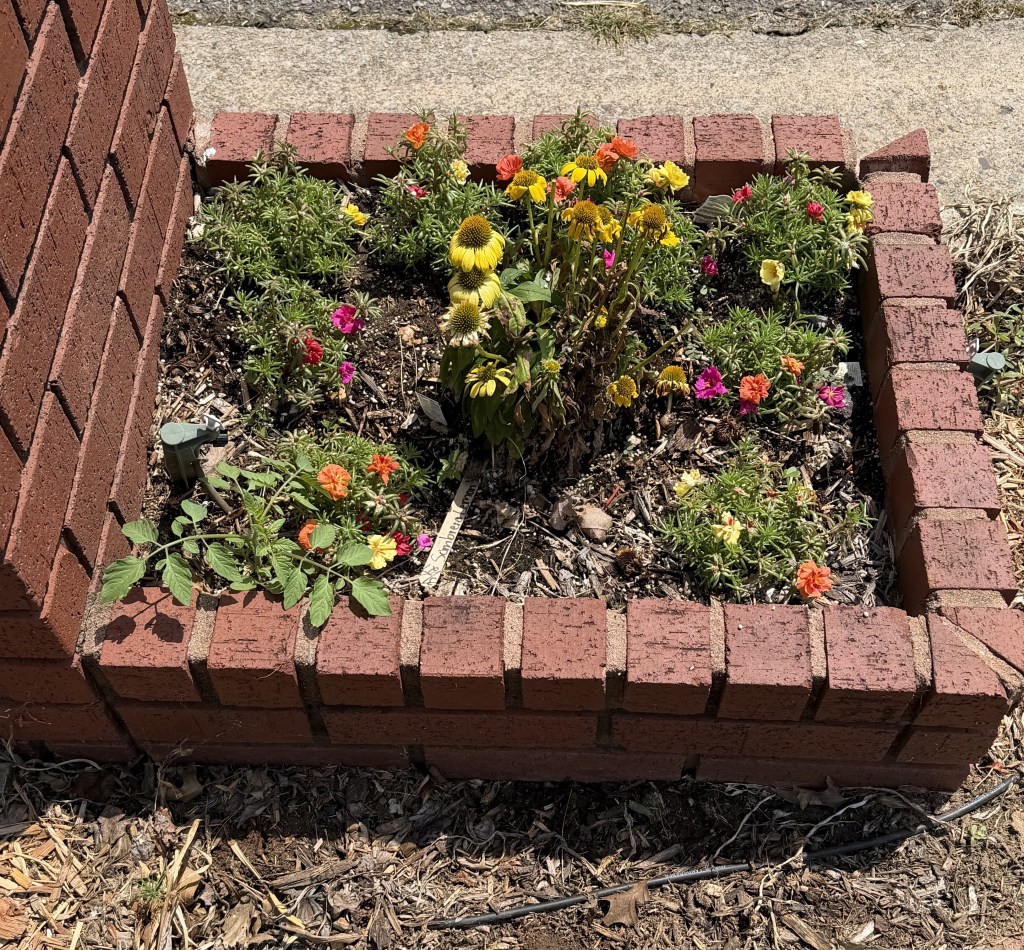
After deciding to push the hardiness scale, I began last Tuesday determining what seeds needed to go into my raised beds.  These were a mix of leafy vegetables like varieties of lettuce (Lactuca sativa) and spinach (Spinacia oleracea).  Then I planted the first rows of beets (Beta vulgaris, artichokes (Cynara cardunculus). radishes (Raphanus sativus), peas (Pisum sativum), cauliflower (Brassica oleracea), and cabbage (Brassica oleracea).  I saved space for a smaller second planting of those vegetables to prolong their production season into the early summer.  After Melissa’s success with onions (Allium cepa), I decided to give them another try, planting 50 sets of red onions in the bed I had used for watermelon (Citrullus lanatus).  I plan to plant cantaloupe (Cucumis melo) in this bed after I harvest the onions to let it mature in the warmth of the summer.  With my seeds in the ground, I need to decide what store-bought vegetables I am going to plant this year.

THOUGHTS: While the hardiness scale warned against planting prior to April 15, my weather app provided a 10-day forecast that predicted the temps would not fall below the 40’sF (4.5+C).  Last year we did have a late cold snap where the temps dropped to 30F (-1.1C) on several nights but warmed to 50’sF (10+C) during the day.  I protected my plants with ground cloth and uncovered them during the warmer day.  They all made it, so I felt confident I could do the same this year if needed.  As in life, part of gardening involves using tools (hardiness scales and weather apps) and combining them with intuition and preventative measures.  Most innovation comes when we push the boundaries and failure comes from giving up.  Act for all.  Change is coming and it starts with you.

Last Fruits

December 27, 2025

Back in August I blogged about my first attempt to grow a second yield in my raised beds (2nd Crop).  I replanted several of the vegetables that had done well in the spring (and that I liked).  For some reason, few of the vegetables sprouted.  What sprouted were the cabbages, cauliflower (both Brassica oleracea), and about half of the peas (Pisum sativum).  When it looked like we were going to get our first freeze in November I had covered the plants with bed sheets held above the plants with garden hoops.  I had done this in previous years and found it to be effective (and reusable).  The peas were harvested and eaten in salads prior to our trip, but I just let the brassica go to see if they would ever mature.  The cabbage never did head and the cauliflower never balled.  I thought about tearing them out, but the plants still had robust leaves.  Last week I finally gave up and pulled the plants.  I did not know what I would do with them, but cabbage leaves were the garden’s last fruits.

When I went online, I found cabbage leaves are completely edible, including the outer ones.  The texture and flavor will vary from the inner leaves.  Both types of leaves can be used raw in salads, cooked in soups, sautéed, or even used as wraps for other fillings.  The outer leaves are tougher but also more nutritious due to their exposure to the sun and can be blanched or used as wraps or stuffed as rolls.   The inner leaves are more tender and sweeter and are good for raw applications.  All the leaves should be washed to remove dirt and checked for insects and bad spots before preparation.  I ended with a large pile of outer leaves and a smaller pile of inner (sorta) leaves that I decided to make into sauerkraut anyway.  I washed the leaves, cut out the woody stems, and sliced the outer leaves for over an hour before the amount of work made me rethink processing the entire pile.  Instead, I went with what I had and then processed the smaller pile of inner leaves in the same way.  Sauerkraut was still a long way off, so I put the bowls of last fruits in the refrigerator

Two days later (today) I decided to finish processing my last fruits.  I added salt to the bowls of leaves and kneaded it for 5 minutes to break the leaves down and then packed them into quart jars, one for the outer leaves and another for the inner.  Working with my last fruits got me motivated to work the tomatoes frozen tomatoes (Solanum lycopersicum) and sweet peppers (Capsicum annuum) from August into more canned pasta sauce.  I added two red onions (Allium cepa) and three cans of diced tomatoes from the pantry along with spices and simmered it for four hours to render it down and meld the flavors.  While the sauce was finishing up, I brought the water bath to boil to sterilize four 1-quart jars and lids.  While I only used three, I have found it is easier to not use a jar than try and prepare another jar while everything else is ready.   I transferred the sauce into the jars, added lemon juice (for acidity), and let them boil for 45 minutes.  My last fruits were finished.

THOUGHTS: When we went to dinner with our gardening friends just before Christmas, I told her I had harvested my last fruits and planned to make sauerkraut.  That was when she asked if I had started planning what to grow in my beds and containers next year.  While I have begun to think about next year, there is hardly a plan.  That is the thing about gardening (or farming), you can never stop planning, or you will quickly get behind.  The same can be said for reaching out to those who need help.  If you do not plan and then act to make a difference, you will be overcome by apathy.  Act for all.  Change is coming and it starts with you.
Citrus

November 19, 2025

I have been winterizing my garden for the last several weeks.  That means taking down the trellises for storage and removing what is left of the plants.  I mentioned how I tore out the tomato (Solanum lycopersicum) vines in mid-October, resulting in 14 jars of salsa verde.   I did keep three vines on the off chance the fruit would ripen but gave up on them last week.  While I did have several fruits that had begun to ripen, most were solid green.  I was surprised as several more of the green tomatoes have ripened on the counter.  I harvested one head lettuce (Lactuca sativa) that grew, and we ate it as a salad last night.  The one spinach (Spinacia oleracea) that grew will become a wilted spinach salad for tonight along with fried green tomatoes.  I blanched the ripe/partially ripe tomatoes and froze them to make pasta sauce later.  I still have six cabbage (Brassica oleracea) I am holding out for sauerkraut.  They have yet to form a head so they will probably not make it before the frost.  Only about a third of the second crop peas (Pisum sativum) grew and are now producing pods.  We will finish them this week.  This year I am also trying another tact to preserve my citrus trees.

When I went online, I found Citrus is a genus of flowering trees and shrubs in the family Rutaceae that produce fruits.  Citrus is native to South Asia, East Asia, Southeast Asia, Melanesia, and Australia where indigenous people have used and domesticated various species since ancient times.  Citrus cultivation first spread into Micronesia and Polynesia through the Austronesian expansion (3000 to 1500 BCE), later spread to the Middle East and the Mediterranean (1200 BCE) via the incense trade route, and then from Europe to the Americas.  Citrus fruits are renowned for their fragrant aromas and complex flavor and are among the most popular fruits in cultivation.  The plants tend to hybridize between species making their taxonomy complicated.  The numerous varieties cover a wide range of appearance and fruit flavors.  Many important citrus crops have been developed through extensive hybridization, including oranges (Citrus macroptera), lemons (Citrus limon), grapefruits (Citrus paradisi), and limes (Citrus aurantiifolia) which all have many cultivars.

Two years ago, I purchased two citrus trees (limon and lime) hoping to grow my own fruit.  These were 4 feet (1.3 m) tall, and the seller suggested I might even get a few fruits that first year.  While the lime never fruited, the limon did have one fruit that I used for zest.  I had placed them in pots seated on rolling carriers to move them inside as I did not think they would survive the winter.  It proved impractical to move them indoors, so I bought protective covers to keep out the frost.  Citrus trees are evergreen and keep their foliage year-round, but stress from sudden temperature drops, low light (especially indoors), or lack of humidity can cause them to shed leaves.  When I removed the covers in late winter the leaves and most of the branches were dead.  I thought they had completely died, but they both began to sprout new stems by the spring.  This year I am putting them in the garage to protect them from the bitter cold.  Now to get them some light (grow lamps?).

THOUGHTS: It made more sense why my citrus trees died when I found out they were evergreen.  While some leaves may fall, they still need sunlight, water, and moderate temperatures.  Covering them deprived them of sunlight and never watering them dried them out.  Melissa told me when we return from our trip, she will make room on the sunporch so they can winter with the succulents.  I am hopeful they will continue to thrive under these conditions.  Much like my citrus trees, humans also need the right conditions to survive.  That includes adequate food, safe water, and protection from the elements (clothing and shelter).  A study focusing on low- and middle-income countries suggests 4.4 billion people lack safe drinking water and the WHO found 1 in 4 lack safe access to water.  We need to find another tact.  Act for all.  Change is coming and it starts with you.
Freeze

November 08, 2025

The front page of yesterday’s local newspaper ran a USA Today article telling gardeners how to prepare for the impending cold snap.  The first frost in Arkansas’ River Valley usually takes place around November 5.  Scot Covert, chief meteorologist at KFSM-TV, said we will be a little late this year, “we’re looking at Monday the 10th.”  Even before temperatures dip to 32 F (0C), frost can form in low lying areas like gardens (raised beds?) as plants cool faster than the surrounding air.  Randy Forst, extension educator with the University of Arkansas Division of Agriculture, said, “All indoor tropical plants and house plants should be moved into an area that does not go below 35 degrees.”   If you do not take this precaution, it is likely they will freeze.

When I went online, I found that a freeze will damage vegetables by causing ice crystals to form and expand inside the plant which ruptures the cell walls.  A freeze can cause visible damage like wilting, blackening, or water-soaked areas in the leaves.  While most vegetables are negatively affected by freezing (while in the ground), root vegetables and cabbages (brassicas) can become sweeter after a light frost as the cold converts their starches to sugars.  After they thaw, freeze-damaged vegetables are often softer and mushier than their fresh counterparts.  A hard freeze (28F/-2C for several hours) can kill plants outright.  That is particularly true for warm season crops like tomatoes (Solanum lycopersicum) and peppers (Capsicum annuum).  Freezing halts the growth of microorganisms but does not stop all enzymatic activity, which can lead to a loss of quality over time.  That is one reason to blanche your fresh vegetables before placing them in the freezer.

Forst went on the say cool-season vegetables that can tolerate a freeze should be covered to prevent leaf-tip burn.  A bigger concern during this time of year is drought.  Arkansas does not tend to get the moisture needed to keep outdoor plants hydrated.  You need to water outside plants if it does not rain at least once a week.  Outdoor perennials can also use extra care.  Once a frost happens you should clip back the dead foliage and then cover the crown with a biodegradable mulch.  Annuals that bloom during the cool season should continue to receive a water-soluble fertilizer once a month.  Four types of action should be taken to aid your garden and outdoor plants.   Once the temps fall below 40F (4.4C) houseplants should be moved inside.  On clear, calm nights vegetables should be covered if the temps will get into the mid-30’sF (1.6C), then be sure to uncover them when temps rise back into the 40’s+F (4.4+C).  Outdoor plants should be watered weekly if there is low rainfall.  Finally, mulch any perennials after the frost kills the top growth.  These actions will aid your plants’ regrowth the following spring.  I had better cover my plants tomorrow.

THOUGHTS: My vegetables are not the only thing I need to protect against a freeze.  We purchased a used C class RV and it is now approaching our first winter.  Everything I have read extolls the virtue of winterizing the unit if you are going to store it during the cold months.  Part of the process involves draining and pouring food grade antifreeze into the lines and tanks.  Once I do this, I cannot use the RV until I again drain and flush the lines.  While I should just bite the bullet and shut the unit down, I have wavered to the point where it is almost too late.  Our repair person told me the lines are enclosed within the vehicle so I should be fine turning on the water tank heaters and the furnace set low to keep everything warm.  The freeze is set to only last two nights and then it will warm up to the 70’sF again.  I hope I do not regret this decision.  We often delay action until it is too late.  We must address our environmental and communal issues/disagreements now rather than later.  Act for all.  Change is coming and it starts with you.
Pickle de Gallo

November 04, 2025

I was surprised when I walked through my local grocery store last week to see how many shelves were either light or empty.  We have had several runs on food over the last several years between covid, supply chain shortages, and tariffs.  The government shutdown is the latest (presumed) cause of the shortage.  Food subsidies like the US Department of Agriculture’s Supplemental Nutrition Assistance Program (SNAP) and the Women’s, Infants, Children (WIC) program were slated to lose funding on November 1.  Apparently, some were using the last of their monthly paychecks to purchase food while it was still available (affordable?).  You can imagine my surprise when I walked by the cheese and deli meat cold case to find new stocked items.  The cold case displayed Pickle de Gallo in mild, medium, and hot.

When I went online, I found the Pickle de Gallo, also known as pickle salsa, is packaged by Grillo’s Pickles who is owned by King’s Hawaiian (as of April 2021).  The company was founded by Travis Grillo in 2008 and developed the idea from a pickle cart on the Boston Common using a 100-year-old family recipe.  The biggest difference between fresh and non-refrigerated shelf pickles (Cucumis sativus) is pasteurization.  Grillo’s are made through a “fresh pickling” process using vinegar as the main active agent and are neither fermented nor pasteurized.  This means they need to be kept at refrigerated temperatures to ensure both quality and freshness are maintained.  Eddie Andre, director of brand experience at Grillo’s Pickles says, “If you see the top of the lid domed up or bubbled, this typically means the product has fermented and gone bad.”  Jarred pickles can remain unopened in the fridge for years.  Even after they are opened, they are still good for up to two years in the refrigerator.  Since fresh pickles aren’t pasteurized, they should be eaten within 75 days.

The Pickle de Gallo recipes I found were almost identical to the Pico de Gallo I have made every year since I started my garden five years ago.  This is usually made from early tomatoes (Solanum lycopersicum) and jalapeño peppers (Capsicum annuum).  This year I did not get an early crop, with almost no peppers and only enough tomatoes to make my pasta sauce (along with the green tomato Salsa Verde).  The difference between Pico and Pickle de Gallo is substituting pickles for tomatoes.  Chop the pickles jalapenos and onion (Allium cepa) into small pieces and mix in cilantro paste (Coriandrum sativum) and lime (Citrus aurantiifolia) juice.  I did not use spices as my canned dill pickles already had spices and garlic (Allium sativum).  The directions said to refrigerate the Gallo for at least 30 minutes to let the flavors mix.  I tried some with a chip and it was good (but different). 

THOUGHTS: Melissa is not a pickle fan and was not thrilled with the Pickle de Gallo.  I used an entire pint jar from my canning pantry (11 jars left).  The dills are good, but the storebought spice mixture is too salty for me and I wash the pickles before I eat them.  The advantage of making your own pickling mixture is you know what is in the brine.  I will probably make at least one more jar of the Pickle this year.  Even canned, pickles do not last forever once they are opened.  I enjoy trying new dishes made from the produce from my garden and the Pickle de Gallo is another way to use my crop.  Some of the dishes were excellent, and all were edible.  Approximately 40% of the food produced in the US is wasted, occurring at every stage of the food supply chain (from farm to home).  A large portion ends up in landfills and generates powerful greenhouse gas (methane).  The waste is compounded by the fact that 41 million Americans face food insecurity.  It reminds me of the sign at a buffet, “Take all you want, but eat all you take”.  We need to find ways to avoid wasting food and getting it to those in need.  Act for all.  Change is coming and it starts with you.
Holes

October 28, 2025

Yesterday Melissa and I were ripped awake at 4:30 am by the sound of Loki’s frantic barking.  Something outside had obviously set him off and he was sounding the alarm.  Melissa was able to quiet him down and I was able to immediately fall asleep.  Melissa was not so lucky.  Even though he was no longer sounding his alarm, both Loki and Zena continued to grumble and give little chirp barks.  Zena got up in my living room chair (her comfort zone in thunderstorms), but Loki kept running back and forth between the dining room window and the front hall for the next hour.  When I got up in the morning, I was wondering what set Loki off.  I went outside to check on my vegetables and make sure nothing had gotten into the few remaining plants in the raised beds.  I had removed the cantaloupe (Cucumis melo) vines after they had stopped producing but there are still one mature and two small watermelons (Citrullus lanatus) in the tall bed.  The tall bed is 30 inches (76 cm) and has not been targeted (yet), but raccoons (Procyon lotor) have eaten several cantaloupes in the shorter 18-inch (45.7 cm) bed in the past.  My watermelons were intact but as I walked back to the house, I noticed several dozen small holes in the lawn between the rose bush (genus, Rosa hybrid) and the wildflower (family, Primulaceae) beds.  

When I went online, I found that raccoons are one of the main animals that dig holes in your yard.  The holes are usually cone-shaped and three to four inches (7.5 to 10 cm) wide, but larger areas up to ten inches (25 cm) may occur.  The holes are created when raccoons are foraging for grubs and other insects. According to Clemson University, raccoons will peel back newly laid sod while searching for food.  Raccoons are omnivorous and eat a variety of plants and animals.  In cities and suburban areas, they dig for grubs and larval insects, eat vegetables and fruit grown in backyards, root through compost piles, steal picnic and pet food that has been left outdoors, and turn over garbage cans in search of food.  According to the University of California, these night creatures can live unnoticed for quite some time as they make their homes in hollow trees, outbuildings, brush piles, rock crevices, a raccoon burrow, crawl spaces, culverts, storm drains, attics, chimneys, or under decks.  Raccoons dig holes in lawns in search of grubs (uperfamily, Scarabaeoidea), earthworms (Lumbricus terrestris), and other insects.

Raccoons have a keen sense of smell which allows them to dig holes to find insect larvae under the grass.  The best way to keep raccoons from digging holes in your yard is to address the grub problem or using deterrents.  Treat your lawn for grubs, especially in late summer and fall, and use methods like motion-activated sprinklers or lights to scare them away.  You can also cover the lawn with netting or chicken wire to create a physical barrier and prevent digging.  You need to maintain proper lawn care, as poor watering practices can make your lawn more attractive to grubs.  If your lawn is damaged, repair it promptly.  If sod has been flipped, reposition it, water it, and consider using a root-building fertilizer to help it re-establish.  I guess it is time for my fall bug-be-gone dusting.

THOUGHTS: I was able to flip the sod on the larger holes that had been made in our yard, but I did not get the bug-be-gone down.  I told myself this would give me something to do today.  Most adult beetles in Arkansas are active in the summer and lay their eggs in the grassy areas.  The eggs hatch and the larva begin to feed on the surface of the soil for several weeks before moving deeper as the fall temps cool.  Arkansas winters are relatively mild, and summers are hot and humid, so the two treatment windows are late summer to early fall (preventive and biological control) and late spring to early summer (curative for spring-feeding pests).  Otherwise, I have holes in my yard.  Act for all.  Change is coming and it starts with you.
Indeterminant

September 26, 2025

I toyed with the idea of tearing out my tomato (Solanum lycopersicum) plants since the beginning of August.  They quit producing and while I was getting scattered flowers, they did not result in fruit.  The exception was my super sweet 100’s which were doggedly producing, but the size of the cherry tomatoes had dropped from over a nickel (US) to less than a centavo (Mexico).  My gardener friend went on an extended trip during this time and when she returned many of the plants had died and she tore them out.  What stopped me was the weather began to cool, and we had a period of rain, so I did not feel the need to water.  Since all I was doing was monitoring the plants, I decided to leave them.  I still needed another gallon (3.8 liters) of tomatoes to augment the gallon I had frozen in June in hopes of more pasta sauce.  I had only given a quick scan to the plants along the back of the house for several days.  These Arkansas travelers are an indeterminant (keep growing) variety that had spent the summer producing vines without any fruit.  You can imagine my surprise when I gave them a more thorough inspection and found dozens of healthy green tomatoes up to a US half dollar size.

When I went online, I found in biology and botany, indeterminate growth refers to growth that is not limited (terminated) but continues to grow.  In contrast, determinate growth stops once a genetically predetermined structure has completely formed.  That means any plant that grows and produces flowers and fruit until killed by frost or some other external factor is called indeterminate.  Many tomato varieties (especially heirloom) tend to grow in a rangy fashion and produce fruit throughout the growing season.  A determinate tomato plant grows in more of a bushy shape and is most productive for a single, larger harvest.  It then either tapers off with minimal new growth or fruit or dies.  The Arkansas Traveler is an open-pollinated heirloom variety bred by the University of Arkansas in 1968.  The plant is indeterminate and produces round red fruits weighing approximately 6 ounces (170 grams).

When I told Melissa about the green tomatoes flourishing on these indeterminant plants she suggested if they did not ripen (for my pasta sauce or salsa), we could use them for green tomato relish.  Coming from the North I have never eaten this relish, although I have heard of it, but this is a popular and traditional staple in Southern cuisine.  This sweet and tangy relish is often referred to as “chow-chow” and is especially common towards the end of the summer harvest season to use up unripe tomatoes.  Green tomato relish is traditionally made when the season’s last tomatoes fail to ripen on the vine and as a way of preserving the harvest to enjoy throughout the winter.  The unripe tomatoes are mixed with peppers, onions, and pickling spices.  The relish can be preserved through water bath canning for long-term storage.  Another (Southern) use of green tomatoes is to cut them into 1/4-inch (0.6 cm) slices, season with salt and pepper, coated with plain, coarse cornmeal, and shallow-fry slices in bacon fat.  We had tried this (and green tomato pie) earlier in the year.

THOUGHTS: I am interested in trying the unripe fruit of my indeterminant tomatoes as both relish and again fried.  The relish is a traditional topper or side dish that provides a savory accent to meats, fish, or potatoes (Solanum tuberosum).  It is suggested to use bacon fat when frying, which is called “liquid gold” in traditional Southern cooking, as it adds a smokey, salty, and savory depth of flavor that is difficult to replicate with other fats.  While we did not fry tomatoes, my mom always had a can of bacon dripping beside the stove to supplement the can of lard in the cupboard and I still save bacon fat the same way today.  The practice is rooted in the practicality and “no waste” philosophy of southern cuisine as well as my rural Midwestern roots.  “You can take the boy out of . . .” Act for all.  Change is coming and it starts with you.