
April 30, 2026
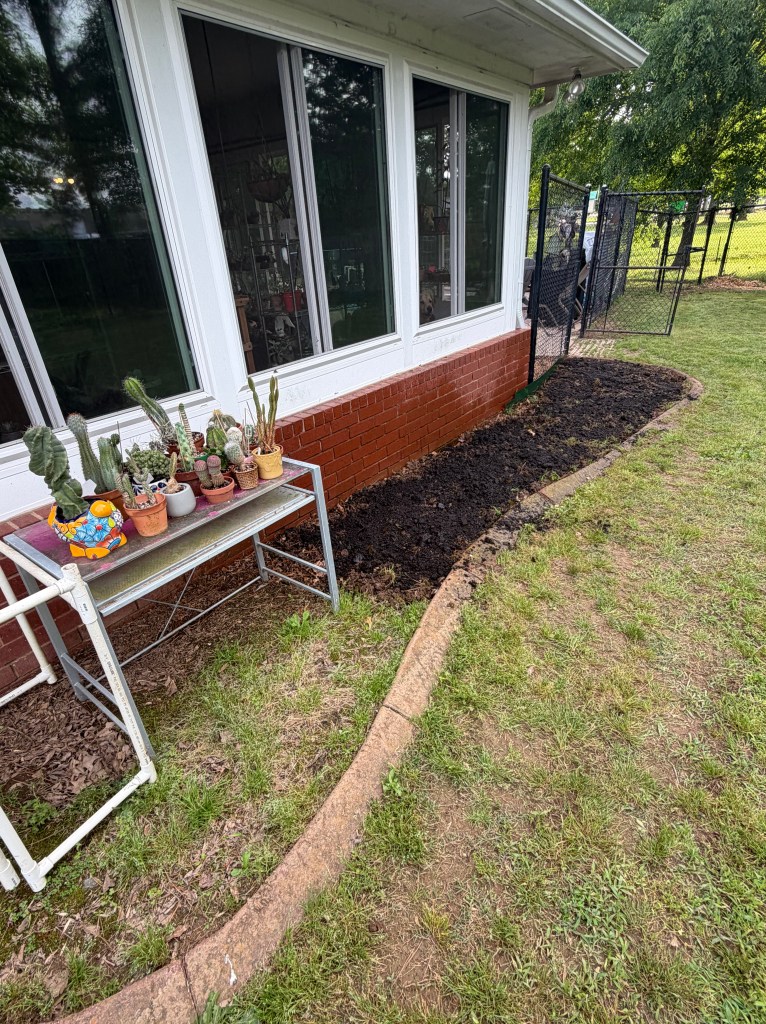
I have been having difficulty with the viability of some of the seeds I planted for my garden this year. I received the seeds at Christmas 2023 along with the raised beds I placed along the south side of our house. The box had 100 different packets of heirloom vegetables and flowers. Heirloom seeds are open-pollinated, non-GMO (Genetically Modified Organism) plant varieties passed down through generations, and often for over 50 years. These varieties are valued for unique flavor, regional adaptation, and historical significance. Unlike hybrids, they “come true to seed,” allowing savers to harvest and replant identical offspring. I had no problem with the seeds that first years and few problems the second, so I was surprised I was having difficulty growing this year. When I read the packages carefully, I saw any saved seed from a year would be viable for another 3 to 5 years based on the species. I also found while I had been gifted the seeds in 2023, the packages indicated they had been harvested in 2021. That meant all my seeds were going on five years old, or toward the end of their viability. That meant I either needed to plant the seeds this year (and hope they sprouted) or at least plant them by next year and again hope for the best. I decided to go ahead and plant three varieties of sunflowers in two of the beds along the house.
When I went online, I found common sunflowers (Helianthus annuus) are a species of large annual forb of the daisy family Asteraceae that is harvested for its edible oily seeds often eaten as a snack food. They are also used in the production of cooking oil, food for livestock, bird food, and as plantings in domestic gardens for aesthetics. Wild plants are known for their multiple flower heads, whereas the domestic sunflower often possess a single large flower head atop an unbranched stem. The plant has an erect rough-hairy stem and reaches heights of 10 feet (3 m), but the tallest sunflower on record achieved 35 feet 9 inches (10.9 m). Sunflowers bloom in summer with the flower being a “flower head” (pseudanthium) of numerous small individual five-petaled flowers (“florets”). The outer flowers are sexually sterile and resemble petals (ray flowers) with each “petal” consisting of a ligule composed of fused petals of an asymmetrical ray flower and may be yellow, red, orange, or other colors. The spirally arranged flowers in the center of the head (disk flowers) mature into seeds.
I planted Mammoth sunflowers next to the house in the wildflower bed. I figured if the plants grew, they would not block the sun from the perineal flowers that had been established in the bed the previous year. For good measure I planted some common milkweed (Asclepias syriaca), another perennial, between the bed and the Shirley Temple Peony (Paeonia lactiflora) along the front. We had planted Canna lily flower (Canna indica) and several bulbs in the bed on the side yard, but they had never produced. I thought I would give the bed a try with two other varieties of sunflowers (Lemon Queen and Autumn Beauty) this year and added a few more milkweed to boot. If any of these grow it will be a bonus. They were going to expire this year anyway.
THOUGHTS: While I was disappointed with the dwindling production from my seeds, I figured it could not hurt to plant things like the sunflowers and see if they might grow. The vegetables and all but a few of the flowers were identified as annual. Being heirloom, I could harvest the seed and have viable seed for years to come. Now, they have expired and production is tenuous. This is another hard lesson to learn, but better than that when you are in a sustainable situation. I can allow whatever does grow to go to seed and start the process again. As in life, it seems much is learned as a “2 steps forward, 3 steps back”. Samuel Smiles is credited with the quote, “We learn wisdom from failure much more than from success.” Keep trying. Act for all. Change is coming and it starts with you.

