Cocklebur

October 02, 2026

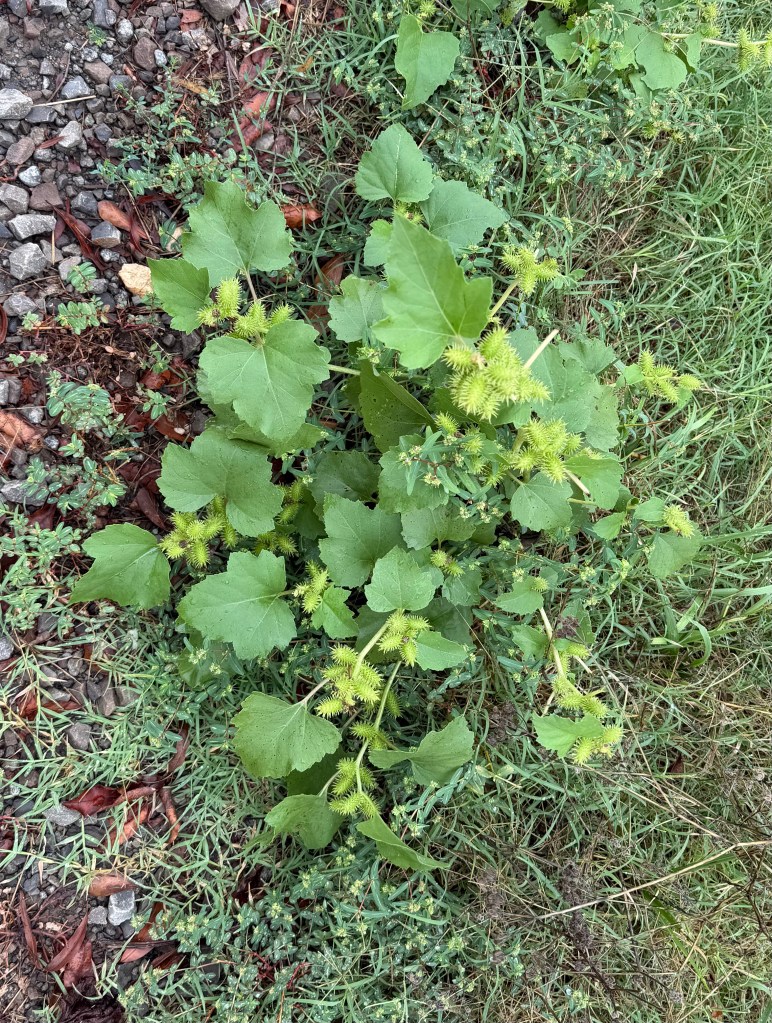
The year 2026 in the River Valley ranks as the second hottest on record behind the infamous Dust Bowl summer of 1936.  August ranked as one of the hottest and driest and September officially broke records as the warmest on record.  This created havoc with my Fall garden planting as few of the seeds were able to germinate.  It has finally gotten back around average temperatures (80.6F/27C) and my third planting of root vegetables are sprouting, and the tomatoes (Solanum lycopersicum) are again beginning to flower.  Yesterday it was threatening to rain (and even sprinkled) so I decided to take the kids to the park rather than the lake for their walk.  The park has trees along part of the route, and I figured they could provide some shelter if it rained.  While it sprinkled, the rain held off until we stopped our walk and began to drive home.  It rained again last night and then was threatening rain as we climbed into the Jeep this morning.  This time we did go to the Lake, and I was amazed by the wildflowers that had sprung up since our last outing on Saturday.  As we walked along the first spit, I noticed something I had not seen since leaving Kansas, a cocklebur in full bloom.

When I went online, I found the rough or common cocklebur (Xanthium strumarium) is a species of annual plant in the flowering plant family Asteraceae.  Some sources claim the species originated in southern Europe and Asia but has been extensively naturalized elsewhere.  Other sources, such as the Flora of China and Flora of North America, state it originated in the Americas but was an early introduction to Eurasia.  The species has flowers borne in separate unisexual heads (monoecious) with the staminate (male) heads situated above the pistillate (female) heads in the flower (inflorescence).  The pistillate heads consist of two pistillate flowers surrounded by a spiny leaf or bract (involucre).  These two flowers ripen into two brown to black simple dry fruits (achenes) that are completely enveloped by the bract.  This is what becomes a bur.  The bur is buoyant and easily disperses in the water if the plants grow along waterways.  The bur also has hooked projections and is adapted to dispersal via mammals by becoming entangled in their hair.  When the bur is dispersed and deposited on the ground one of the seeds germinates and a new plant grows out of the bur.

The cocklebur plant may have some medicinal properties and has been used in traditional medicine in South Asia and traditional Chinese medicine.  In language of southeast India (Telugu) this plant is called Marula Matangi.  While small quantities of parts of the mature plants may be consumed, the seeds and seedlings should not be eaten in large quantities because they contain large concentrations of the extremely toxic chemical carboxyatractyloside, along with at least four other toxins.  Animals have been known to die after eating the plants.  The cocklebur plant was responsible for at least 19 deaths and 76 illnesses in Sylhet District, Bangladesh, in 2007 after people ate large amounts of the plants (called ghagra shak) during a monsoon flood when no other plants were available.  The symptoms included vomiting and altered mental states, followed by unconsciousness.  I just always thought the bur was a problem as it tangled in my shoestrings and clothes walking in the tall grass.

Thoughts: When I stopped to admire the green cocklebur, I found Loki was also interested.  By the time we got to the end of the spit he had stopped several times and chewed at his side and one paw.  Both kids have encountered the lawn burweed (Soliva sessilis) with its tiny, sharp, spine-tipped burs that emerge in the spring on our lake walks.  When I checked I found three green cocklebur pods stuck to his side and while his foot was a little bloody, a good rubbing fixed him.  In the US, rough cocklebur is a major weed in cotton and soybean fields and can cause severe crop losses of up to 60 to 75% but can be controlled by commonly used herbicides.  Organic control is by hand-pulling or burning.  I do not always understand nature.  Act for all.  Change is coming and it starts with you.
Echeveria

September 25, 2026

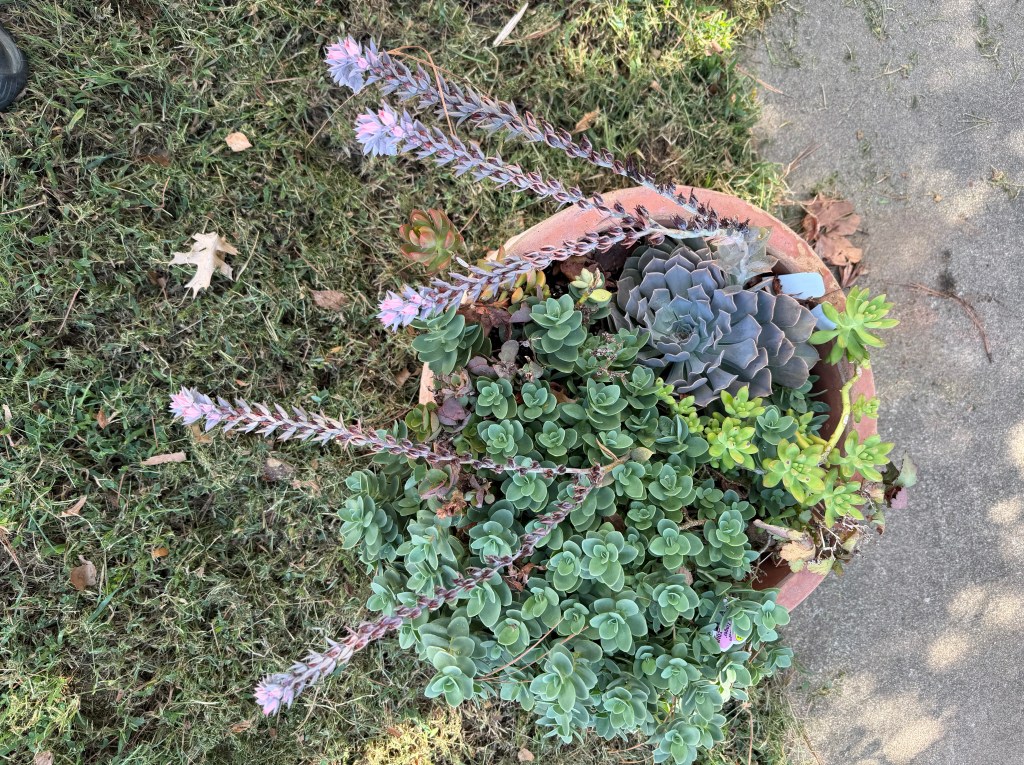
Melissa has tried to cultivate several varieties of succulents in the front flower bed under the Japanese Maple (Acer palmatum).  Melissa’s mom had grown flowers in the bed, but we tried to transition it into a succulent garden.  That meant placing around 8 square yards (6.7 sq m) of landscape pebbles to provide better drainage.  Not one of the succulents survived beyond their first winter.  Her mom’s flowers are still coming up so we gave up and turned the area back into a flower bed.  This year Melissa took another tact.  Instead of planting in the bed, she planted arraignments of various succulents in containers, and I dug in pavers for them to sit on.  The thought is we will move the pots to the porch during the winter so they will continue to stay alive.  These arraignments are in full sun most of the day and the plants seem to be thriving.  One large pot has a mixture of October daphne stonecrop (Sedum sieboldii) along with a hen and chicks’ variety.  Melissa has had this plant for several years and its new location has triggered the ghost echeveria to produce its first bloom.

When I went online, I found the ghost echeveria (Echeveria lilacina), or Mexican hens and chicks, is a species of succulent plants in the genus Echeveria belonging to the family Crassulaceae.  The genus name Echeveria was given in honor of the 18th century Mexican botanist and painter Atanasio Echeverría y Godoy who is famous for his paintings of plants, many of which were included in Flora Mexicana.  Lilacina means ‘lilac-colored’.  The species is native to Nuevo Leon, in northern Mexico and thrives on rocky areas at quite high elevations.  The center (rosette) can reach a height of about 6 inches (15 cm).  The leaves are silvery-grey, spoon shaped, fleshy and arranged in a symmetrical rosette 5 to 10 inches (12 to 25 cm) in diameter.  This is a slow growing plant that is drought tolerant.  The flowers are pale pink or coral colored and emerge on small, short arching clusters (racemes) on the top of reddish stems about 6 inches (15 cm) long.  The normal flowering period extends from later winter to early spring. 

Melissa also added a dash of Palmer’s stonecrop (Sedum palmeri) to the pot of October daphne stonecrop and ghost echeveria.  This adds a height difference to the low daphne and the rounded ghost.  Sedum palmeri is another species of stonecrop from Mexico.  It is a highly variable species with multiple branching stems and rosettes of thick, spoon-shaped, grey-green leaves with pointed tips.  Sedum palmeri typically grows in the northeastern region of Mexico, particularly in the Sierra Madre Oriental, north of the Guayalejo River, spanning areas of Tamaulipas, Nuevo León, and Coahuila.  By contrast, the daphne is native to Japan.  All three species are widely grown as ornamental plants.

Thoughts: Part of the enjoyment of growing plants from around the world is being able to mix and match difference species that would never have been associated in the wild.  The Ghost and the Palmer’s are both native to the Nuevo Leon area, but the daphne is from Japan, but together they produce an esthetic compliment.  The ghost is slow-growing and slow blooming plant but seems to be doing well in their sunny container pot.  The US has long been called the melting pot of the world.  While each new nationality was initially seen with distrust (Irish, Germans, Asians, Southern Europeans, Africans, Latins), They are said to have melted into the uniqueness that is the country.  This is not a bad thing.  It is our strength.  Act for all.  Change is coming and it starts with you.

Planting

August 10, 2026

I blogged several weeks ago about tearing the last of the plants out of my raised beds to prepare them for fall planting.  I purchased the seeds after cleaning the beds but was hesitant to plant them in the ground with the searing 100’s+F (37.8+C) heat.  Yesterday I decided to move ahead.  Like most things I do, the beginning of one project cannot happen until others get done.  The raised beds use the hügelkultur (logs and brush) and while I do not have any collapsed holes, the beds all sank since I refilled them in April.  That meant I needed to get a load of potting mix from the mulch yard.  By the time I got ready it was too hot to work on Saturday, and the yard is closed on Sunday.  The onion sets (Allium cepa) were starting to go bad, and I did not want to wait another week.  I calculated what it would cost for a half cubic yard (third cubic m) and found it would not be much more to purchase 40-pound (18 kg) bags of mix.  I knuckled down and bought 15 bags to refill the beds, and the six new potato grow bags.  I needed to know when I should be planting the various seeds.

When I went online, I found The Farmer’s Almanac provides a Fall planting calendar for my zone (7b).   The 9th and 10th were the most favorable days for planting beets (Beta vulgaris subsp. vulgaris), onions, turnips (Brassica rapa subsp. rapa), and other root crops so I was good there.  I am also planting radishes but with their short growing period (30 days) I decided to wait and try to harvest everything together.  The 18th and 19th were recommended for my peas (Pisum sativum), so I guess I jumped the gun on those.  The broccoli (Brassica oleracea var. italica) recommended I plant seed starters and replant them in 2 weeks.  I instead planted them directly in the ground now (we will see how that goes).  The 25th to 27th are barren days, and a good time for killing plant pests.  If the squash vine borer (Melittia cucurbitae) comes back, I will be ready.  The 28th and 29th are excellent for any vine crops like my squash.  Again, I already planted zucchini and straightneck squash (both Cucurbita pepo).  Hopefully, this will work intuitively rather than by the Almanac (it could happen).

When I was clearing my beds for planting, I mentioned I had five (really) small heads of cabbage (Brassica oleracea) that I cleaned and put in the vegetable bin.  All I needed was inspiration for what to do with them.  With my other crops in the ground, I decided to try another batch of sauerkraut.  I made one quart (0.9 l) a month ago and it is fermenting well on the pantry shelf.  I sliced the cabbage last night, then got distracted.  I had put salt on the sliced cabbage, and it sat on the cabinet all day yesterday.  I was too tired to deal with it last night, so I placed it in the refrigerator.  That proved to be a mistake.  When I took it out this morning the cut leaves needed to be kneaded for 5 or 6 minutes to break them down and bring the water out.  While I could have let it raise to room temperature, I had already procrastinated enough, and I moved ahead.  The cold nearly froze my fingers.

THOUGHTS: I seem to treat planting the same way I do cooking.  There are recipes out there, but what is the fun of that?  There are planting guides out there, but what could it hurt?  Both the recipes and planting guides follow proven methods.  While chefs often improvise for new tastes and cuisines, unless you are trying for a new cultivar, gardeners rarely do.  There is also wiggle room built into the planting suggestions.  If my unorthodox schedule works, there will be plenty of vegetables for the food bank.  If it does not, we already support them monetarily.  You always need a backup plan.  In graduate school I was frowned upon because I did not support a specific theory, instead preferring to be eclectic.  Eclectic is harder because you need to understand multiple theories and be willing to see what works in each situation.  While this may not be the safest approach, it can produce a better result.  Being open can also be valuable in life.  Act for all.  Change will come and it starts with you.

Triceratops Beetle

July 27, 2026

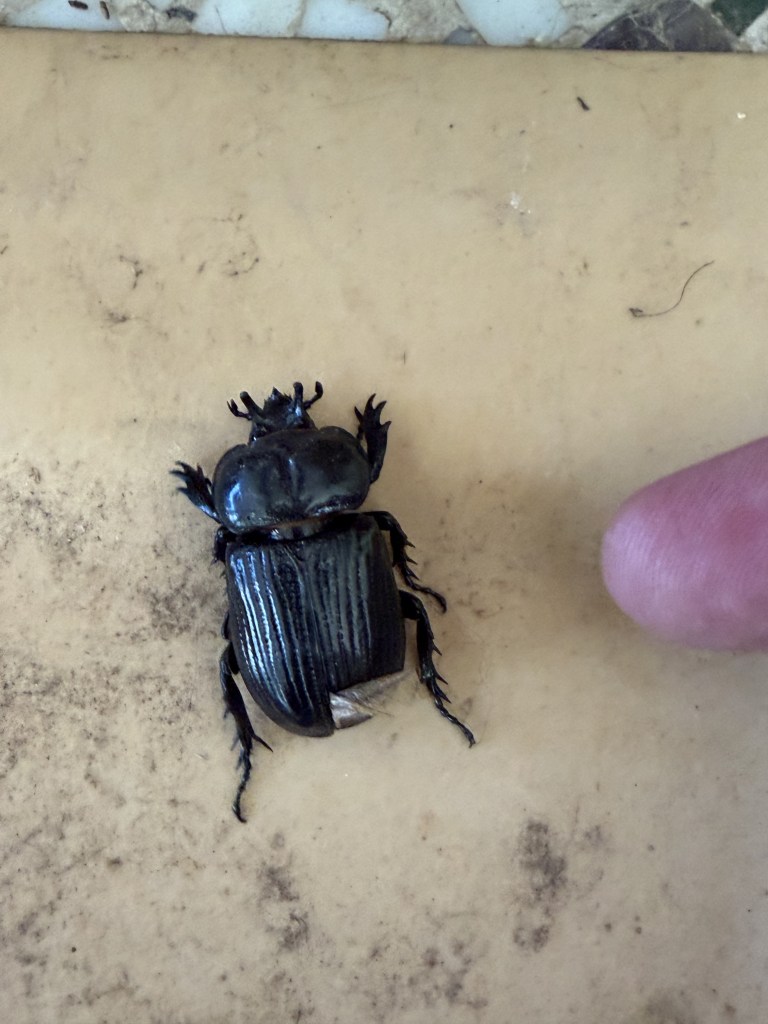
When I go out the back door it is always a mad scramble for the kids to race out into the yard.  Sometimes I will stop at the door and hold up my hand (command to sit).  Loki is usually reluctant but will slowly obey my command.  Zena often instead crouches down a bit and whines in protest but will then sit.  I did not require them to sit as I walked out to water the back garden today.  When I opened the door there was the immediate scramble as each tear through the door, through the sun porch, and out into the yard, hoping to catch a slow gray squirrel (Sciurus carolinensis) on the bird feeders.  As I walked out after them, I noticed they had both run over a large black bug lying on its back.  It appeared to be in distress as its legs were flailing in an apparent attempt to right itself.  As I was watching the bug the kids noticed me looking and came back to investigate.  First Zena and then Loki came in through the door, and I had to shoo them away.  I was reluctant to pick the bug up as I did not know what it was, so I swept it into a dustpan and turned it back onto its feet.  After turning the bug over I recognized it as a triceratops beetle.

When I went online, I found the triceratops beetle (Phileurus truncatus) is a species of beetle of the family Scarabaeidae (scarab beetles).  The beetle ranges across much of southern North America, up to the central south.  It is known for its three horns present on both sexes.  The name is a reference to the triceratops dinosaur (Ceratops horridus) that lived in the Late Cretaceous period (68 to 66 million years ago) on the island continent of Laramidia, now forming western North America.  Adult beetles range from 1.25 to 1.5 inches (32 to 38 mm).  Males have thicker, more blunt horns that curve more aggressively towards its body, while females have thinner, straighter, pointier horns.  The horns have a divot running down the center of their prothorax dividing both sides, with a very small bump just before the divot.  When they beetles are disturbed that produce sound (stridulations) by rapidly rubbing their hardened forewings against their abdomen.

The triceratops beetle is considered good for your yard and garden.  As grubs, these beetles live inside rotting tree trunks (oak preferred) and consume the wood.  After pupating into adults, they consume the grubs of other beetles.  Hopefully this one has been feasting on the squash bugs that invaded earlier.  I set the dustpan down and took a picture of the beetle.  I had planned to safely release the triceratops back into the garden (and out of my house), but when I turned back to look, it was nowhere to be found.  Our porch stores my bird and garden supplies, along with several hundred of Melissa’s succulents, and it apparently flew off and hid somewhere in the room.  We keep the outside door open most of the time for circulation and we do have the occasional house sparrow (Passer domesticus) or paper wasp (Polistes dominula) that attempt to make this area their home.  The triceratops might have done the same thing.   

THOUGHTS: Having a triceratops beetle on our sun porch is not a bad thing, but I hope she (smaller horns) finds her way back outside.  To my knowledge there are no beetle grubs living on the concrete floor.  The ancient Egyptians revered another scarab beetle (Scarabaeus sacer) as a powerful symbol of rebirth, the morning sun, and creation.  They connected the dung beetle’s habit of rolling a ball of dung across the sand to the sun moving across the sky.  When young beetles hatched from the buried dung, the Egyptians saw it as a sign of life coming from nothing.  When I visited the great pyramid at Giza there were several people selling terra cotta beetles with a bright blue glaze (faience).  One gave a free beetle to each of the three ladies I was traveling with.  After they walked off, he turned to me and said, “As you will.”  They were gone and “free” beetles cost me US$1 (EGP51.37 Pounds) each.  Another cultural lesson learned.  Act for all.  Change will come and it starts with you.

Nativars

June 09, 2026

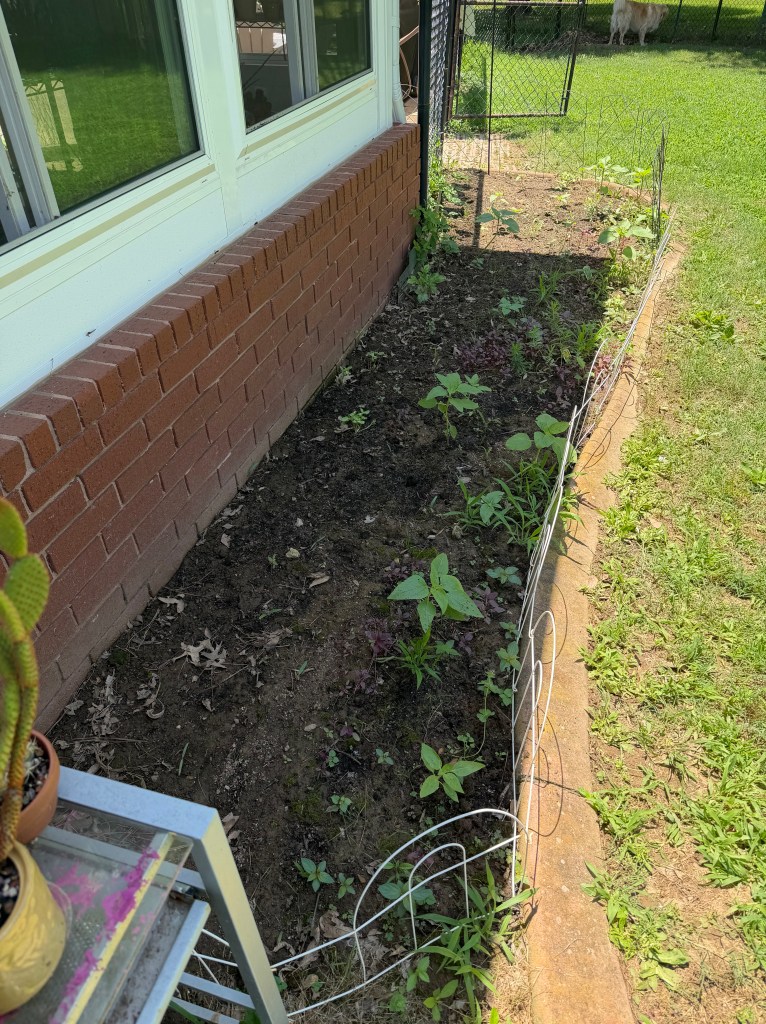
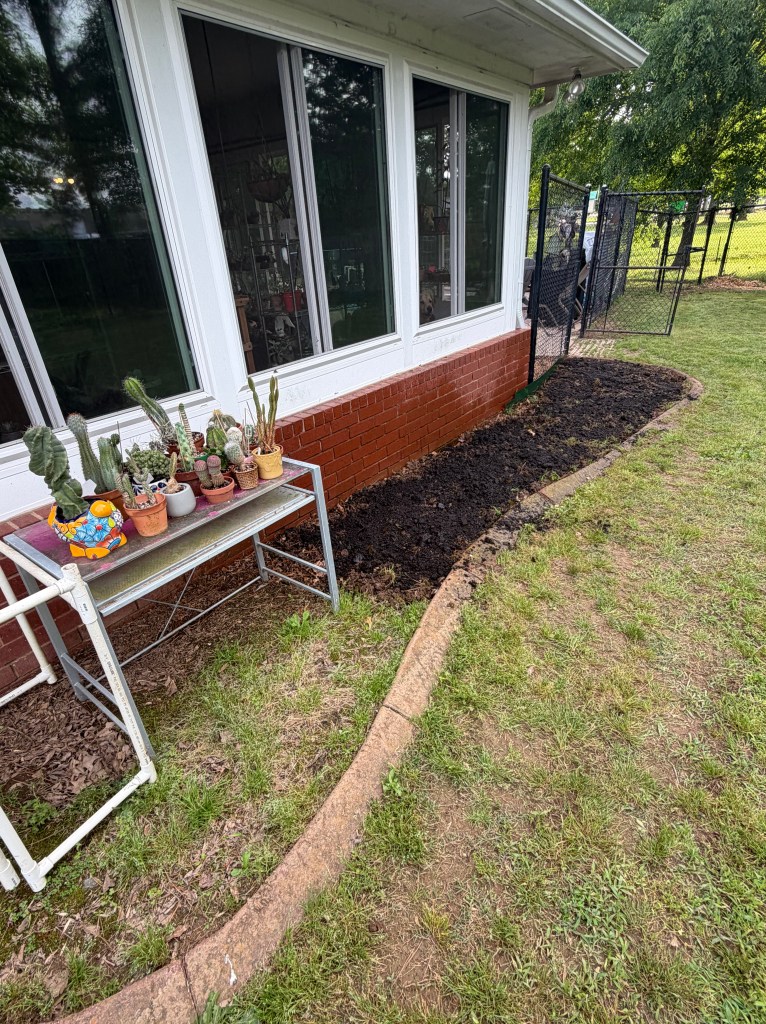
Toward the back of my local Sunday newspaper was a USA Today article on the need to plant native plants to help pollinator insects.  This caught my eye as I have dedicated two of our flower beds        to growing native wildflower mixes and Melissa has increased the number of potted plants around both the front and back of our house.  The bed in front was planted last year with perennials, and it reproduced this year.  The bed to the north (not full sun) contains two small tables with succulents but I added sunflowers (Helianthus annuus), crimson clover (Trifolium incarnatum), and red amaranth (Amaranthus cruentus) to the rest of the bed.  All the seeds in the north bed were past their expiration, but I prepared the ground and sowed the seed on the off chance they would grow.  While not all the seeds sprouted, I was pleasantly surprised by the number and variety of plants that are now growing.  While the newspaper article stressed how native pollinators prefer native plants, it also mentioned how recent plant breeding has created hybrid plants known as nativars.

When I went online, I found nativar is a blend (portmanteau) of the words ‘native’ and ‘cultivar’.  A nativar is a horticulturally bred strain of a plant species which distinguishes them from their native counterparts.  These plants may have different genetic traits from those formerly prevalent in the wild.  The difference between a ‘nativar’ and a ‘cultivar’ is if the species is grown within its native historic range.  The goal of using nativars within their historic species range is to reintroduce their ecological benefit into the local ecology.  The ecological consequences and benefits of nativars are a widely discussed concept within gardening and horticultural communities, as the capacity of nativar plants to fit the ecological niche of their native counterpart may be manipulated during the breeding process.  Nativars are developed for a variety of reasons, including disease resistance, pest resistance, and drought tolerance.  Within the horticulture industry, nativars are often developed for aesthetic reasons, such as improving bloom and foliage size, shape, form or scent, along with improved growth habits for a garden setting.  Nativars are developed within the agriculture and forestry industries for improved yield, flavor and quality.  Finally, nativars have been developed for restoration purposes in hopes of re-establishing native populations.

One of the ways nativars can be manipulated during the breeding and cultivation process is the capacity for a plant species to fit the needs of pollinator species that coevolved to rely on them.  Pollinator visitation rates of nativar plants may be increased, decreased, or unchanged relative to their wild native counterparts depending on altered factors such as bloom time, color, and shape. Nativars that dramatically change the bloom color of the species compared to wild populations can disrupt the ability of native pollinators to recognize the flowers as a food source.  The ecological benefit of nativars for pollinators can also be reduced by diminished nectar, pollen production, and flower form.  Not all cultivars that alter the bloom color from the most abundant naturally occurring flowers result in decreased ecological relationships.  It depends on the resulting hybrid and the selectivity of the pollinator.

THOUGHTS: Nativars are hybrids created for humans and not native pollinators.  They increase the bloom size or even result in double blooms, but they can also cause the plant to be sterile or reduce the amount of pollen or nectar produced.  Since our purpose for planting wildflowers is to attract (and feed) native bees (genus, Apis) and butterflies (order, Lepidoptera) I do not plan on sowing nativars.  Why and how humans act depends on the desired outcome.  If we are not purposeful, we cannot complain about an undesirable outcome.  Act for all.  Change will come and it starts with you.

Sunflowers

April 30, 2026

I have been having difficulty with the viability of some of the seeds I planted for my garden this year.  I received the seeds at Christmas 2023 along with the raised beds I placed along the south side of our house.  The box had 100 different packets of heirloom vegetables and flowers.  Heirloom seeds are open-pollinated, non-GMO (Genetically Modified Organism) plant varieties passed down through generations, and often for over 50 years.  These varieties are valued for unique flavor, regional adaptation, and historical significance.  Unlike hybrids, they “come true to seed,” allowing savers to harvest and replant identical offspring.  I had no problem with the seeds that first years and few problems the second, so I was surprised I was having difficulty growing this year.  When I read the packages carefully, I saw any saved seed from a year would be viable for another 3 to 5 years based on the species.  I also found while I had been gifted the seeds in 2023, the packages indicated they had been harvested in 2021.  That meant all my seeds were going on five years old, or toward the end of their viability.  That meant I either needed to plant the seeds this year (and hope they sprouted) or at least plant them by next year and again hope for the best.  I decided to go ahead and plant three varieties of sunflowers in two of the beds along the house.    

When I went online, I found common sunflowers (Helianthus annuus) are a species of large annual forb of the daisy family Asteraceae that is harvested for its edible oily seeds often eaten as a snack food.  They are also used in the production of cooking oil, food for livestock, bird food, and as plantings in domestic gardens for aesthetics.  Wild plants are known for their multiple flower heads, whereas the domestic sunflower often possess a single large flower head atop an unbranched stem.  The plant has an erect rough-hairy stem and reaches heights of 10 feet (3 m), but the tallest sunflower on record achieved 35 feet 9 inches (10.9 m).  Sunflowers bloom in summer with the flower being a “flower head” (pseudanthium) of numerous small individual five-petaled flowers (“florets”).  The outer flowers are sexually sterile and resemble petals (ray flowers) with each “petal” consisting of a ligule composed of fused petals of an asymmetrical ray flower and may be yellow, red, orange, or other colors.  The spirally arranged flowers in the center of the head (disk flowers) mature into seeds.

I planted Mammoth sunflowers next to the house in the wildflower bed.  I figured if the plants grew, they would not block the sun from the perineal flowers that had been established in the bed the previous year.  For good measure I planted some common milkweed (Asclepias syriaca), another perennial, between the bed and the Shirley Temple Peony (Paeonia lactiflora) along the front.  We had planted Canna lily flower (Canna indica) and several bulbs in the bed on the side yard, but they had never produced.  I thought I would give the bed a try with two other varieties of sunflowers (Lemon Queen and Autumn Beauty) this year and added a few more milkweed to boot.  If any of these grow it will be a bonus.  They were going to expire this year anyway.     

THOUGHTS: While I was disappointed with the dwindling production from my seeds, I figured it could not hurt to plant things like the sunflowers and see if they might grow.  The vegetables and all but a few of the flowers were identified as annual.  Being heirloom, I could harvest the seed and have viable seed for years to come.  Now, they have expired and production is tenuous.  This is another hard lesson to learn, but better than that when you are in a sustainable situation.  I can allow whatever does grow to go to seed and start the process again.  As in life, it seems much is learned as a “2 steps forward, 3 steps back”.  Samuel Smiles is credited with the quote, “We learn wisdom from failure much more than from success.”  Keep trying.  Act for all.  Change is coming and it starts with you.
Rattail

April 12, 2026

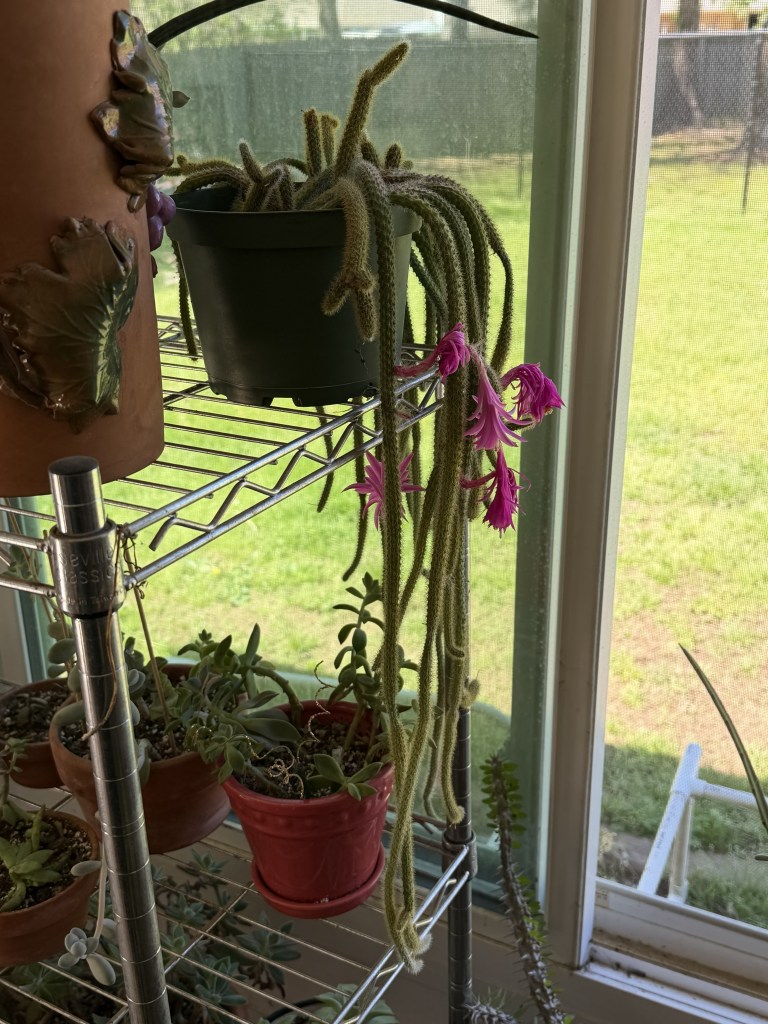
Traveling 5 of 6 weeks in February and March not only got me behind getting my garden in the ground but also in Melissa’s care for her succulents.  The good news is even with the 100’s of plants Melissa tends for she only needs to pay attention to about half of them at a time.  Different succulents grow at different rates within a year depending on the temperature, with some becoming dormant and growing slower when the weather is too hot or too cold and turn active again when the temperatures are ideal for their growth.  That is why succulents are known as “opportunistic growers”.  Succulents can be put into categories as either summer or winter growers.  Summer growers thrive in the hot months of summer (May to August) and are dormant in the winter, while winter growers thrive in the cold of winter (November to February) and are dormant in the summer.  The primary care given to all of Melissa’s succulents is an occasional misting during dormancy and scant watering and careful observation and maintenance during growing season.  When Melissa was able to get back at tending her succulents last week, she called me out to look at the blooms on her rattail cactus.

When I went online, I found the rattail cactus (Aporocactus flagelliformis) is a species of flowering plant in the cactus family Cactaceae.  With its ease of cultivation and attractive floral displays it is often grown as an ornamental potted plant.  The Latin specific epithet (flagelliformis) means “shaped like a whip”, in reference to the plant’s long stems.  The common name “rattail” refers to the same feature.  The species was one of the first cacti to be introduced into European culture.  Watson (1898) offers the year 1690 but it was probably earlier.  The species is native to the dry forests of the central Mexican state of Hidalgo north of Mexico City where it can grow naturally on rocks (lithophytic) or as rootless air plants (epiphytic) in the trees.  Specimens are rare in nature and are seldom collected in the field.  While rattail has always been one of the most popular cacti in cultivation, almost nothing is known about its natural habit.  The rattail cactus is a recipient of the Royal Horticultural Society’s Award of Garden Merit.

Rattail cacti are easy to grow and are suitable for either a greenhouse or container, indoors or out.  Plants need a minimum temperature of 43F (6C).  They should be grown in bright, indirect light, in a rich potting mix.  The best compost consists of 4 parts of sandy loam and 1 part of equal quantities of sand and crushed brick.  Rattail should be repotted every other year because their soil tends to sour.  However, that does not mean they will need a larger pot.  Once the plants are established, compost should be kept moist from April to October, with less water required from November until March, or just enough to keep stems from dying back.  In the winter, old or discolored stems may be cut out at the base to encourage new growth.  The rattail on our sunporch obviously made it through the dormancy of winter and greeted us with cascading blooms upon our return. 

THOUGHTS: Rattail cactus, like most cacti, are summer growers and settle into dormancy during the winter.  There are nine species of the Schlumbergera genus of cacti native to the coastal mountains of southeastern Brazil which reverse this rhythm.  These species are collectively called “Holliday” cactus, with annual blooms arriving between November and April (i.e., Thanksgiving cactus, Christmas cactus, or Easter cactus).  This illustrates the diversity that exists in nature as plants and animals adapt to the specific conditions of different regions.  Humans did the same, although less markedly so.  We are (at least now) all the same species, only differentiated by the tools, clothes, and culture we use to adapt to our region.   The main difference between all humanity is how we choose to differentiate ourselves from each other.  Act for all.  Change is coming and it starts with you.
Freeze

November 08, 2025

The front page of yesterday’s local newspaper ran a USA Today article telling gardeners how to prepare for the impending cold snap.  The first frost in Arkansas’ River Valley usually takes place around November 5.  Scot Covert, chief meteorologist at KFSM-TV, said we will be a little late this year, “we’re looking at Monday the 10th.”  Even before temperatures dip to 32 F (0C), frost can form in low lying areas like gardens (raised beds?) as plants cool faster than the surrounding air.  Randy Forst, extension educator with the University of Arkansas Division of Agriculture, said, “All indoor tropical plants and house plants should be moved into an area that does not go below 35 degrees.”   If you do not take this precaution, it is likely they will freeze.

When I went online, I found that a freeze will damage vegetables by causing ice crystals to form and expand inside the plant which ruptures the cell walls.  A freeze can cause visible damage like wilting, blackening, or water-soaked areas in the leaves.  While most vegetables are negatively affected by freezing (while in the ground), root vegetables and cabbages (brassicas) can become sweeter after a light frost as the cold converts their starches to sugars.  After they thaw, freeze-damaged vegetables are often softer and mushier than their fresh counterparts.  A hard freeze (28F/-2C for several hours) can kill plants outright.  That is particularly true for warm season crops like tomatoes (Solanum lycopersicum) and peppers (Capsicum annuum).  Freezing halts the growth of microorganisms but does not stop all enzymatic activity, which can lead to a loss of quality over time.  That is one reason to blanche your fresh vegetables before placing them in the freezer.

Forst went on the say cool-season vegetables that can tolerate a freeze should be covered to prevent leaf-tip burn.  A bigger concern during this time of year is drought.  Arkansas does not tend to get the moisture needed to keep outdoor plants hydrated.  You need to water outside plants if it does not rain at least once a week.  Outdoor perennials can also use extra care.  Once a frost happens you should clip back the dead foliage and then cover the crown with a biodegradable mulch.  Annuals that bloom during the cool season should continue to receive a water-soluble fertilizer once a month.  Four types of action should be taken to aid your garden and outdoor plants.   Once the temps fall below 40F (4.4C) houseplants should be moved inside.  On clear, calm nights vegetables should be covered if the temps will get into the mid-30’sF (1.6C), then be sure to uncover them when temps rise back into the 40’s+F (4.4+C).  Outdoor plants should be watered weekly if there is low rainfall.  Finally, mulch any perennials after the frost kills the top growth.  These actions will aid your plants’ regrowth the following spring.  I had better cover my plants tomorrow.

THOUGHTS: My vegetables are not the only thing I need to protect against a freeze.  We purchased a used C class RV and it is now approaching our first winter.  Everything I have read extolls the virtue of winterizing the unit if you are going to store it during the cold months.  Part of the process involves draining and pouring food grade antifreeze into the lines and tanks.  Once I do this, I cannot use the RV until I again drain and flush the lines.  While I should just bite the bullet and shut the unit down, I have wavered to the point where it is almost too late.  Our repair person told me the lines are enclosed within the vehicle so I should be fine turning on the water tank heaters and the furnace set low to keep everything warm.  The freeze is set to only last two nights and then it will warm up to the 70’sF again.  I hope I do not regret this decision.  We often delay action until it is too late.  We must address our environmental and communal issues/disagreements now rather than later.  Act for all.  Change is coming and it starts with you.
Cactus Barrel

June 24, 2025

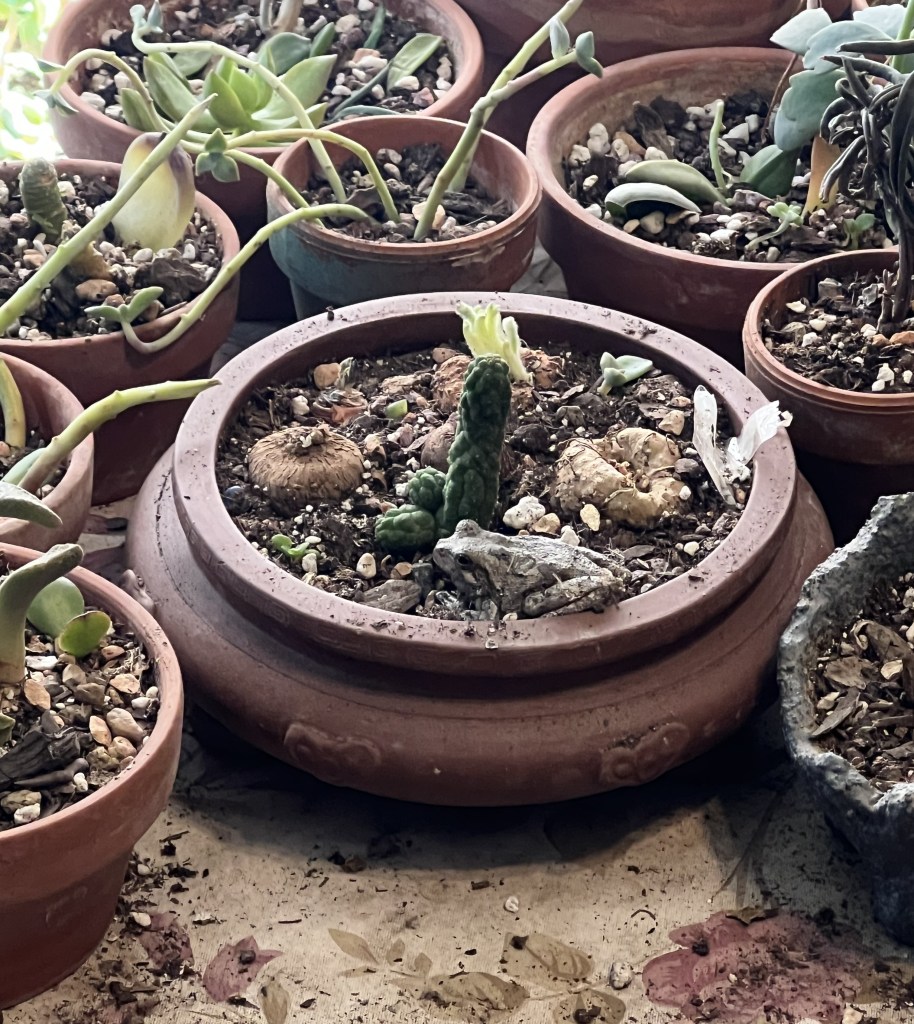
Earlier this week Melissa called me into the kitchen to take care of a “problem” she had found while working on her succulents.  Our pool/pond on the back patio has been teeming with grey tree frogs (Dryophytes versicolor) caught in the height of mating season.  This has resulted in successive scores of tadpoles that grow up to be adults.  I often see one of the small frogs hopping across the straw mulch that covers the potato plants as I am watering.  The frogs also like to hide behind the cushions on the Adirondack chairs on the patio.   It appeared one of the larger adult frogs was not content hiding on the patio or in the American elm (Ulmus americana) trees that line the back property line and had decided to take up residence in the “jungle” of succulents Melissa was working with on the kitchen table.  Melissa does not like hoppy things and called on me to remove it.  I thought it was interesting and snapped a photo before grabbing the frog and releasing it over our back fence (away from the kids).  It was not until I later looked at the photo that I realized the frog had been hiding next to a cactus barrel that appeared to have a bloom on its top.

When I went online, I found Cactus Barrel Milkweed (Larryleachia cactiformis), is a small perennial stem succulent with a globular body displaying a pattern of repeated shapes or polygons (tessellate) with either five pointed (pentangular), flat, or depressed projections (tubercles) on the surface.  The species can vary greatly, particularly in the color of flowers, which open in the summer.  The cactus barrel is native to South Africa and Namibia and grows at an altitude of a half to one mile (800 to 1600 m) above sea level.  It is found amongst a belt of natural shrubland (Fynbos) and desert (Succulent Karoo) vegetation on the quartz hills of the Kamiesberge mountain range.  The species is highly succulent (juicy) and adapted to the very harsh and bright habitats of the desert.  The plant is an excellent example of convergent evolution and is easily mistaken for a cactus.  It is widespread and the Red List of Threatened Species from the International Union for Conservation of Nature says it is common and not threatened.

One of my apps first misidentified my photo of the cactus barrel as a candelabra cactus (Euphorbia lactea).  This made sense as when I looked at the photo there appeared to be a yellow flame coming out of the top of the succulent.  When I mentioned this to Melissa, she pointed out the yellow bloom was on a low-lying elephant’s foot (Dioscorea elephantipes) succulent behind the cactus barrel.  Melissa had placed four different types of elephant’s foot in the bowl, and said the only way to tell the difference (even for most botanists) was by the color and shape of the bloom.  My flaming candelabra was an optical illusion formed by the angle from which I took the photo.  I obviously have a long way to go when it comes to succulent identification.

THOUGHTS: The cactus barrel milkweed succulent is like other members of the Apocynaceae genus in its difficulty for cultivation.  Propagation is a problem as the plant does not offset or seed readily and grows difficultly and slowly from seedling.  Melissa has had this small specimen for two years and it has yet to flower (despite my declaration).  Humans can also find it hard to propagate (spread) and are easy to be misidentified.  When we say other newcomers “all look alike” we lump individuals into categories that may not define their true nature.  We need to wait and take time to see what flowers (fruits) they produce to understand and accept them.  Act for all.  Change is coming and it starts with you.
Domino

June 05, 2025

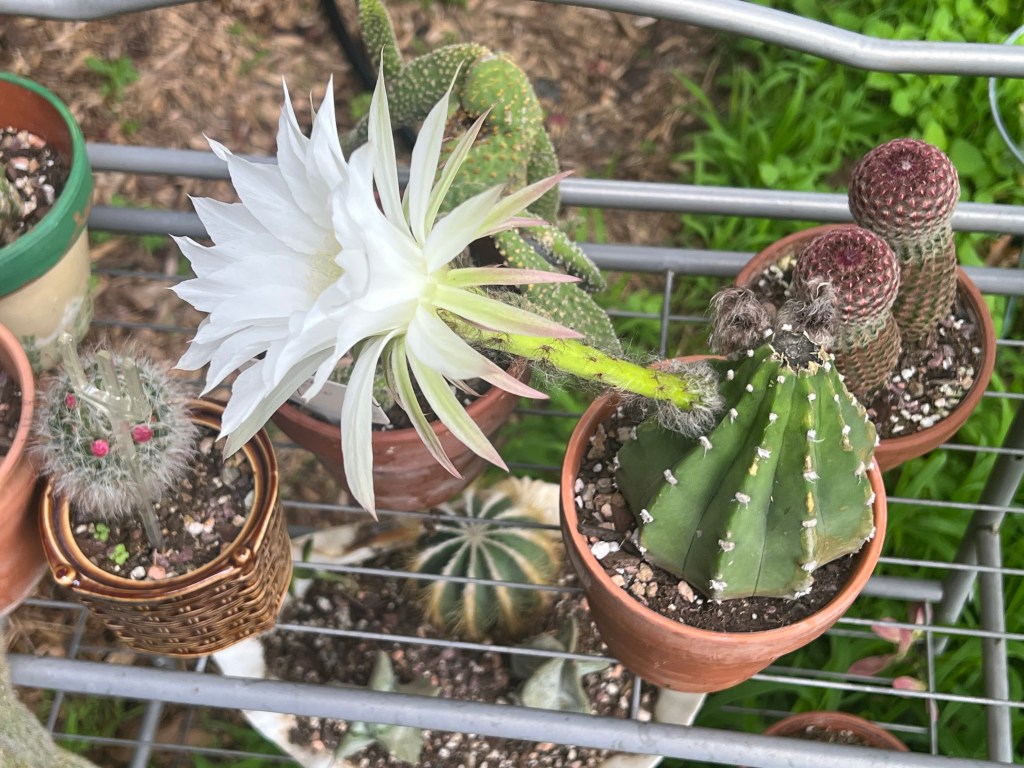
Yesterday morning Melissa asked me to come to the front porch and look at the beautiful flower that had sprung up overnight on one of her cacti.  With warmer weather she has placed many of her summer growing cacti on shelves along the front entryway.  This allows them to catch the early rays of sun and protects them from the rain we have been getting.  I have mentioned how Melissa says one of the worst things you can do for a cactus is to water it.  While they need moisture, if you over water it will cause root rot and kill the plant.  This is one of melissa’s newer cactus and the first time it has bloomed.  The domino cactus flower dwarfed the small globe of cactus it sprouted from.

When I went online, I found the domino cactus (Lobivia ancistrophora) has a globular shape, few spines, with large, white flowers attached to long, green tubes.  The domiono is endemic (native) to Bolivia at altitudes of 1,968.5 to 5,905.5 feet (600 to 1800 m).  It has gained the Royal Horticultural Society’s Award of Garden Merit under the synonym Echinopsis ancistrophora.  The domino has a single spherical shaped grey-green body, slightly depressed at the top.  The plant grows to heights of 2 to 3 inches (5 to 8 cm) with diameters of 2.7 to 4.7 inches (7 to 12 cm).  It has 10 to 12 straight, sharp ribs with small, cream-colored, elongated-elliptical bumps (areoles) that are 1/2 inch (1.5 cm) apart.  The small thorns are grayish brown and often hidden in the areole wool.  The upright central spine is again small (2 mm) with 3 to 7 tiny 1.5 mm) thorns at the base.  The narrow funnel shaped flowers are white to light pink and slightly curved above the ovary, are 6.5 to 7.8 inches (17 to 20 cm) long.  They appear on the side near the top of the shoot and open at night. The pale green flower tube is up to 5 inches (15 cm) long.  Its purple scales are pointed with long white and black hairs.  The flower blooms at night and then closes during the day.

The domino cactus is one of the many cacti that are night bloomers.  The night bloom is primarily to facilitate pollination by nocturnal creatures and to conserve water.  These cacti have evolved to attract pollinators which are active at night, like bats and moths.  Since the habitat where they thrive is cooler and more humid at night, a night bloom reduces water loss through evaporation from the plant’s leaves and flowers (transpiration).  The timing of cactus blooms is also part of a broader adaptation known as a pollination syndrome, where plants co-evolve with their primary pollinators to maximize pollination efficiency.  Melissa’s domino cactus is continuing its genetic predisposition.  While we do not have a lot of bats swooshing through our front porch, there are a lot of moths which could facilitate pollination.

THOUGHTS: The domino cactus is not native to the desert of Southeast Utah, but pollinating bats are plentiful.  My son and I used to camp by rolling our bedrolls out on the slickrock above the wadi beds.  Although the sand may have been softer, the rock got you above any possible flash flood from a rain 20 miles upstream.  One of my memories was listening to the swishing sound as the bats zipped through the air in search of insects.  I never saw a bat in the dark, but the sound of their wings was unmistakable.  Many desert plants have adapted to produce bright showy flowers, and a number of those produce a strong aroma, to attract pollinators.  Different environments have created selective ecosystems that have adapted to their conditions.  When humans interject new species or radically change the environment it can have devastating effects.  Some species will survive by adapting to the new environmental conditions, but many will either lose out to competition from the invasive species or die from lack of suitable habitat.  While change itself is inevitable, forcing change from artificially created human conditions is rarely good for an existing ecosystem.  Eventually however, mother nature wins, and often in surprising ways.  Act for all.  Change is coming and it starts with you.