
October 02, 2026
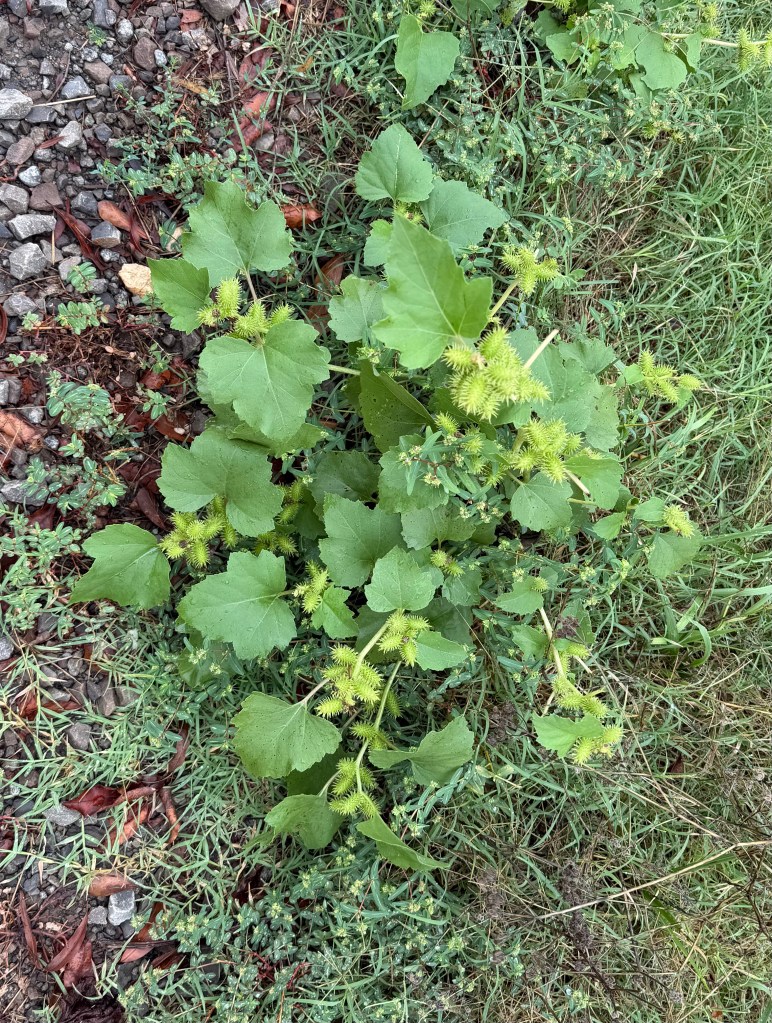
The year 2026 in the River Valley ranks as the second hottest on record behind the infamous Dust Bowl summer of 1936. August ranked as one of the hottest and driest and September officially broke records as the warmest on record. This created havoc with my Fall garden planting as few of the seeds were able to germinate. It has finally gotten back around average temperatures (80.6F/27C) and my third planting of root vegetables are sprouting, and the tomatoes (Solanum lycopersicum) are again beginning to flower. Yesterday it was threatening to rain (and even sprinkled) so I decided to take the kids to the park rather than the lake for their walk. The park has trees along part of the route, and I figured they could provide some shelter if it rained. While it sprinkled, the rain held off until we stopped our walk and began to drive home. It rained again last night and then was threatening rain as we climbed into the Jeep this morning. This time we did go to the Lake, and I was amazed by the wildflowers that had sprung up since our last outing on Saturday. As we walked along the first spit, I noticed something I had not seen since leaving Kansas, a cocklebur in full bloom.
When I went online, I found the rough or common cocklebur (Xanthium strumarium) is a species of annual plant in the flowering plant family Asteraceae. Some sources claim the species originated in southern Europe and Asia but has been extensively naturalized elsewhere. Other sources, such as the Flora of China and Flora of North America, state it originated in the Americas but was an early introduction to Eurasia. The species has flowers borne in separate unisexual heads (monoecious) with the staminate (male) heads situated above the pistillate (female) heads in the flower (inflorescence). The pistillate heads consist of two pistillate flowers surrounded by a spiny leaf or bract (involucre). These two flowers ripen into two brown to black simple dry fruits (achenes) that are completely enveloped by the bract. This is what becomes a bur. The bur is buoyant and easily disperses in the water if the plants grow along waterways. The bur also has hooked projections and is adapted to dispersal via mammals by becoming entangled in their hair. When the bur is dispersed and deposited on the ground one of the seeds germinates and a new plant grows out of the bur.
The cocklebur plant may have some medicinal properties and has been used in traditional medicine in South Asia and traditional Chinese medicine. In language of southeast India (Telugu) this plant is called Marula Matangi. While small quantities of parts of the mature plants may be consumed, the seeds and seedlings should not be eaten in large quantities because they contain large concentrations of the extremely toxic chemical carboxyatractyloside, along with at least four other toxins. Animals have been known to die after eating the plants. The cocklebur plant was responsible for at least 19 deaths and 76 illnesses in Sylhet District, Bangladesh, in 2007 after people ate large amounts of the plants (called ghagra shak) during a monsoon flood when no other plants were available. The symptoms included vomiting and altered mental states, followed by unconsciousness. I just always thought the bur was a problem as it tangled in my shoestrings and clothes walking in the tall grass.
Thoughts: When I stopped to admire the green cocklebur, I found Loki was also interested. By the time we got to the end of the spit he had stopped several times and chewed at his side and one paw. Both kids have encountered the lawn burweed (Soliva sessilis) with its tiny, sharp, spine-tipped burs that emerge in the spring on our lake walks. When I checked I found three green cocklebur pods stuck to his side and while his foot was a little bloody, a good rubbing fixed him. In the US, rough cocklebur is a major weed in cotton and soybean fields and can cause severe crop losses of up to 60 to 75% but can be controlled by commonly used herbicides. Organic control is by hand-pulling or burning. I do not always understand nature. Act for all. Change is coming and it starts with you.

