Freeze

November 08, 2025

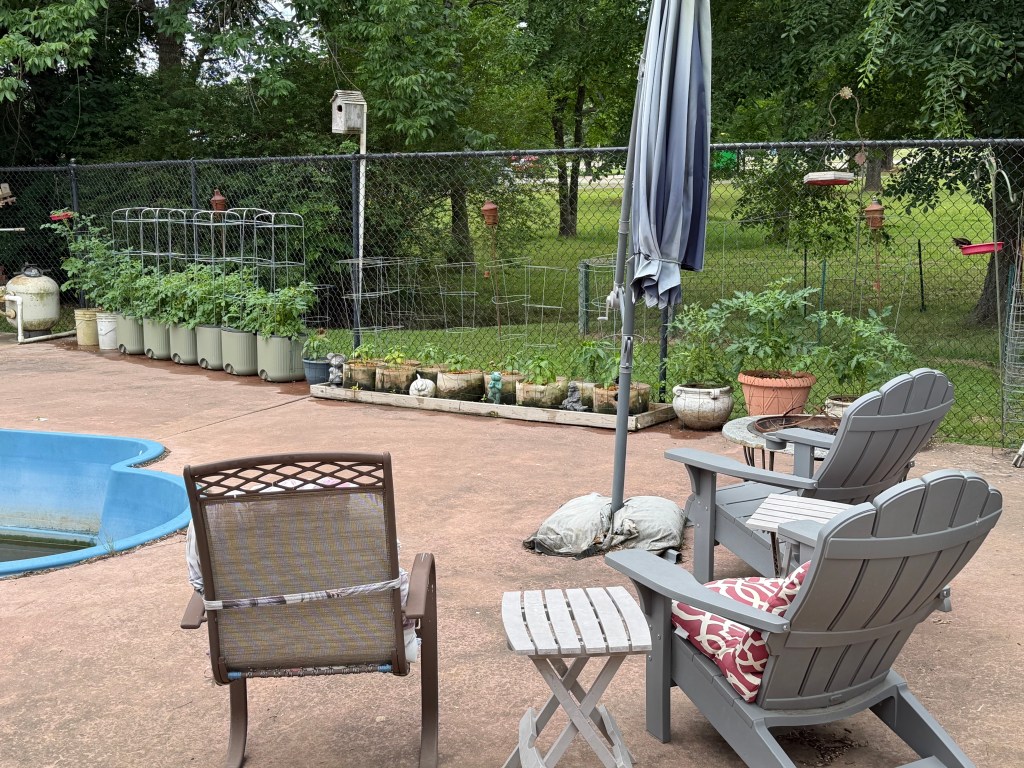
The front page of yesterday’s local newspaper ran a USA Today article telling gardeners how to prepare for the impending cold snap.  The first frost in Arkansas’ River Valley usually takes place around November 5.  Scot Covert, chief meteorologist at KFSM-TV, said we will be a little late this year, “we’re looking at Monday the 10th.”  Even before temperatures dip to 32 F (0C), frost can form in low lying areas like gardens (raised beds?) as plants cool faster than the surrounding air.  Randy Forst, extension educator with the University of Arkansas Division of Agriculture, said, “All indoor tropical plants and house plants should be moved into an area that does not go below 35 degrees.”   If you do not take this precaution, it is likely they will freeze.

When I went online, I found that a freeze will damage vegetables by causing ice crystals to form and expand inside the plant which ruptures the cell walls.  A freeze can cause visible damage like wilting, blackening, or water-soaked areas in the leaves.  While most vegetables are negatively affected by freezing (while in the ground), root vegetables and cabbages (brassicas) can become sweeter after a light frost as the cold converts their starches to sugars.  After they thaw, freeze-damaged vegetables are often softer and mushier than their fresh counterparts.  A hard freeze (28F/-2C for several hours) can kill plants outright.  That is particularly true for warm season crops like tomatoes (Solanum lycopersicum) and peppers (Capsicum annuum).  Freezing halts the growth of microorganisms but does not stop all enzymatic activity, which can lead to a loss of quality over time.  That is one reason to blanche your fresh vegetables before placing them in the freezer.

Forst went on the say cool-season vegetables that can tolerate a freeze should be covered to prevent leaf-tip burn.  A bigger concern during this time of year is drought.  Arkansas does not tend to get the moisture needed to keep outdoor plants hydrated.  You need to water outside plants if it does not rain at least once a week.  Outdoor perennials can also use extra care.  Once a frost happens you should clip back the dead foliage and then cover the crown with a biodegradable mulch.  Annuals that bloom during the cool season should continue to receive a water-soluble fertilizer once a month.  Four types of action should be taken to aid your garden and outdoor plants.   Once the temps fall below 40F (4.4C) houseplants should be moved inside.  On clear, calm nights vegetables should be covered if the temps will get into the mid-30’sF (1.6C), then be sure to uncover them when temps rise back into the 40’s+F (4.4+C).  Outdoor plants should be watered weekly if there is low rainfall.  Finally, mulch any perennials after the frost kills the top growth.  These actions will aid your plants’ regrowth the following spring.  I had better cover my plants tomorrow.

THOUGHTS: My vegetables are not the only thing I need to protect against a freeze.  We purchased a used C class RV and it is now approaching our first winter.  Everything I have read extolls the virtue of winterizing the unit if you are going to store it during the cold months.  Part of the process involves draining and pouring food grade antifreeze into the lines and tanks.  Once I do this, I cannot use the RV until I again drain and flush the lines.  While I should just bite the bullet and shut the unit down, I have wavered to the point where it is almost too late.  Our repair person told me the lines are enclosed within the vehicle so I should be fine turning on the water tank heaters and the furnace set low to keep everything warm.  The freeze is set to only last two nights and then it will warm up to the 70’sF again.  I hope I do not regret this decision.  We often delay action until it is too late.  We must address our environmental and communal issues/disagreements now rather than later.  Act for all.  Change is coming and it starts with you.

Variegated

November 05, 2025

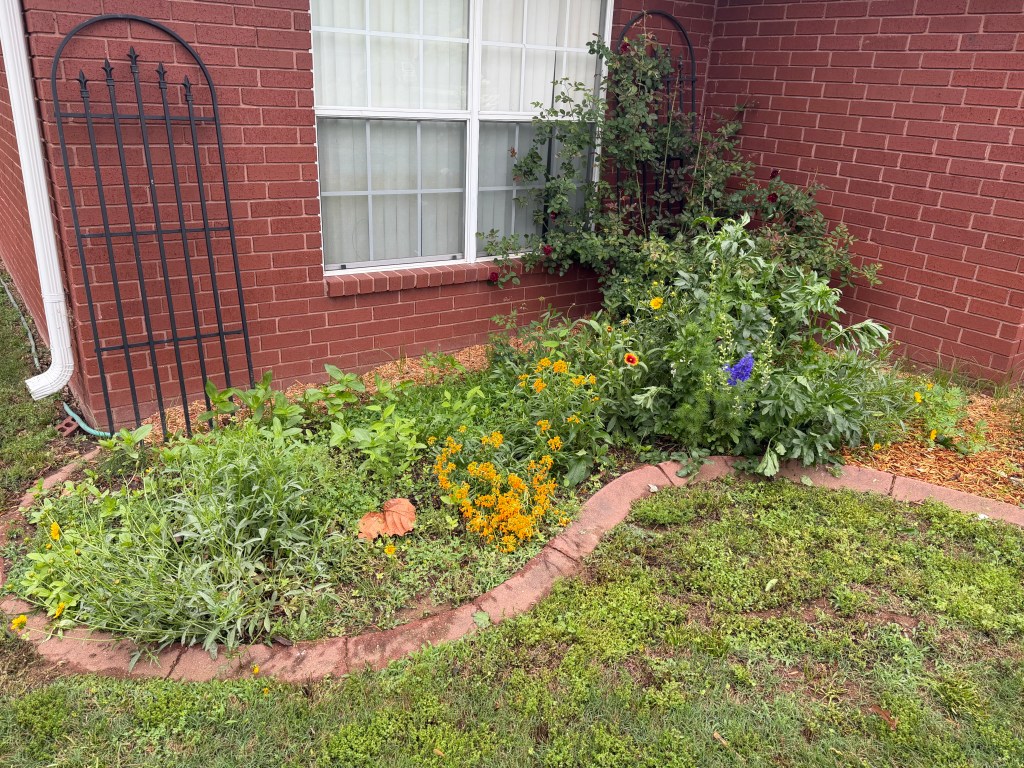
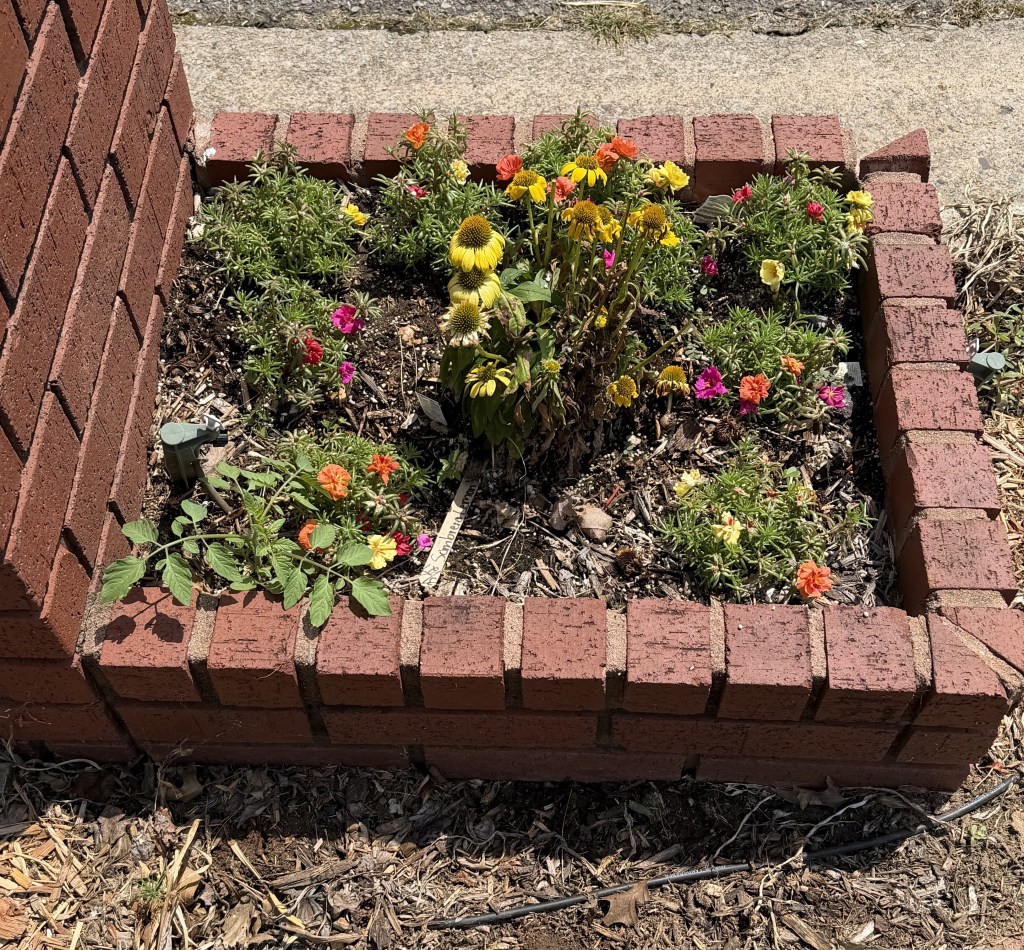
As Fall stretched into late October, I was amazed by the dozens of pollinators which still flocked to the wildflower bed in front of our house.  My guess is they are still stocking up for a flight south or survival during the long winter.  We have several coneflowers (family, Asteraceae) along with a proliferation of orange sulfur cosmos (Cosmos sulphureus).  Yesterday afternoon was bright, sunny, and in the mid-70 F’s (24 C’s) and they were still out in full force.  There were several late traveling monarch butterflies (Danaus plexippus) along with dozens of bumblebees (Genus, Bombus) flitting from flower to flower.  There was also a new arrival (at least I had not noticed) with several smaller brightly colored butterflies.  Two characteristics struck me about these Lepidoptera.  First was the speed they were traveling as they drew nectar from around the bed, the second was variegated wings.

When I went online, I found the variegated fritillary (Euptoieta claudia) is a North and South American butterfly in the family Nymphalidae.  The variegated flight is low and swift and even when collecting nectar, the species is extremely difficult to approach.  This has earned the genus name which taken from the Greek “euptoietos” meaning “easily scared”.  The wingspan of the adult variegated measures 1.75 to 2.25 inches (44 to 57 mm).  The upper side of the wings is checkered with orange and black, and both the fore and hind wings have a row of submarginal black spots and black median lines running across them.  The underside of the forewing is orange with a pale orange spot rimmed in black in the forewing cell.  The underside of the hindwing is mottled with browns and grays with a pale postmedian band.  The variegated fritillary has three very different characteristics that distinguish them from the genus of greater fritillaries (Speyeria fritillaries), but it is still closely related to them.  Variegated fritillaries have two or three broods per year (Speyeria one), are nomadic (Speyeria sedentary), and use a wide variety of host plants (Speyeria only violets). 

While the variegated fritillary is nomadic, it is not (officially) migratory like the monarch.  Instead, it overwinters in its caterpillar stage in the leaf litter, seeking shelter and entering a dormant state (diapause).  In warmer climates, adult butterflies may also overwinter.  In Arkansas the adults need to either migrate south or they will die (freeze).  Caterpillars can survive Arkansas’ winter temperatures and will emerge from their hibernation to form cocoons (pupate) in the spring.  The survival of the caterpillars (or adults farther South) depends on factors like predation, temperature, and the amount of insulation provided by leaf litter.  When weather conditions improve in the Spring the caterpillars emerge from their winter hibernation to continue their life cycle.  While I was planning on clearing the bed and scattering the seed, perhaps I should wait until new life emerges in Spring.

THOUGHTS: I can attest to the “euptoietos” nature of the variegated fritillary.  It took me 10 minutes for one to wait long enough on a flower to get a picture.  The butterflies would fly up to 30 feet (10 m) away and then dart back to seek out another flower or two before repeating the maneuver.  I find it interesting how different species have adapted to survival during the cold months of winter.  This also explains how a warm day can bring out a swam of flying insects as they emerge from their sheltered refuge.  Humans do not naturally go dormant (hibernate) because our bodies lack the necessary biological adaptations to enter a state of deep sleep with a significantly lower body temperature and metabolic rate.  The earliest evidence of controlled use of fire dates back at least 1.8 million years ago, but evidence for habitual or widespread use of fire does not become clear until around 400,000 years ago.  We rely on protective structure, clothes, or sources of heat to achieve what nature has given other species.  Act for all.  Change is coming and it starts with you.

Pickle de Gallo

November 04, 2025

I was surprised when I walked through my local grocery store last week to see how many shelves were either light or empty.  We have had several runs on food over the last several years between covid, supply chain shortages, and tariffs.  The government shutdown is the latest (presumed) cause of the shortage.  Food subsidies like the US Department of Agriculture’s Supplemental Nutrition Assistance Program (SNAP) and the Women’s, Infants, Children (WIC) program were slated to lose funding on November 1.  Apparently, some were using the last of their monthly paychecks to purchase food while it was still available (affordable?).  You can imagine my surprise when I walked by the cheese and deli meat cold case to find new stocked items.  The cold case displayed Pickle de Gallo in mild, medium, and hot.

When I went online, I found the Pickle de Gallo, also known as pickle salsa, is packaged by Grillo’s Pickles who is owned by King’s Hawaiian (as of April 2021).  The company was founded by Travis Grillo in 2008 and developed the idea from a pickle cart on the Boston Common using a 100-year-old family recipe.  The biggest difference between fresh and non-refrigerated shelf pickles (Cucumis sativus) is pasteurization.  Grillo’s are made through a “fresh pickling” process using vinegar as the main active agent and are neither fermented nor pasteurized.  This means they need to be kept at refrigerated temperatures to ensure both quality and freshness are maintained.  Eddie Andre, director of brand experience at Grillo’s Pickles says, “If you see the top of the lid domed up or bubbled, this typically means the product has fermented and gone bad.”  Jarred pickles can remain unopened in the fridge for years.  Even after they are opened, they are still good for up to two years in the refrigerator.  Since fresh pickles aren’t pasteurized, they should be eaten within 75 days.

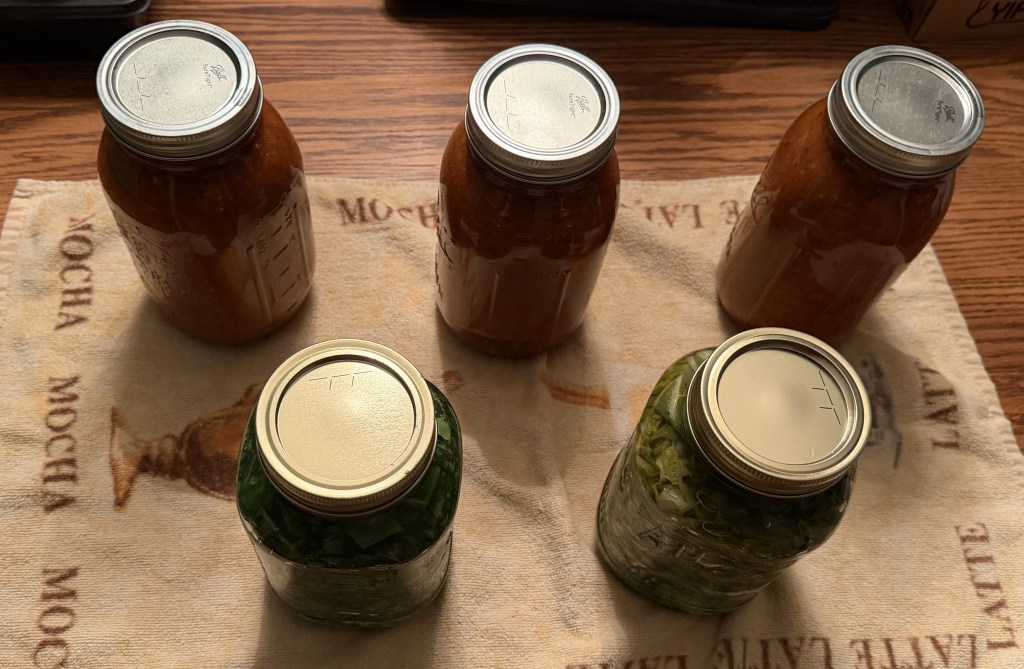
The Pickle de Gallo recipes I found were almost identical to the Pico de Gallo I have made every year since I started my garden five years ago.  This is usually made from early tomatoes (Solanum lycopersicum) and jalapeño peppers (Capsicum annuum).  This year I did not get an early crop, with almost no peppers and only enough tomatoes to make my pasta sauce (along with the green tomato Salsa Verde).  The difference between Pico and Pickle de Gallo is substituting pickles for tomatoes.  Chop the pickles jalapenos and onion (Allium cepa) into small pieces and mix in cilantro paste (Coriandrum sativum) and lime (Citrus aurantiifolia) juice.  I did not use spices as my canned dill pickles already had spices and garlic (Allium sativum).  The directions said to refrigerate the Gallo for at least 30 minutes to let the flavors mix.  I tried some with a chip and it was good (but different). 

THOUGHTS: Melissa is not a pickle fan and was not thrilled with the Pickle de Gallo.  I used an entire pint jar from my canning pantry (11 jars left).  The dills are good, but the storebought spice mixture is too salty for me and I wash the pickles before I eat them.  The advantage of making your own pickling mixture is you know what is in the brine.  I will probably make at least one more jar of the Pickle this year.  Even canned, pickles do not last forever once they are opened.  I enjoy trying new dishes made from the produce from my garden and the Pickle de Gallo is another way to use my crop.  Some of the dishes were excellent, and all were edible.  Approximately 40% of the food produced in the US is wasted, occurring at every stage of the food supply chain (from farm to home).  A large portion ends up in landfills and generates powerful greenhouse gas (methane).  The waste is compounded by the fact that 41 million Americans face food insecurity.  It reminds me of the sign at a buffet, “Take all you want, but eat all you take”.  We need to find ways to avoid wasting food and getting it to those in need.  Act for all.  Change is coming and it starts with you.

Holes

October 28, 2025

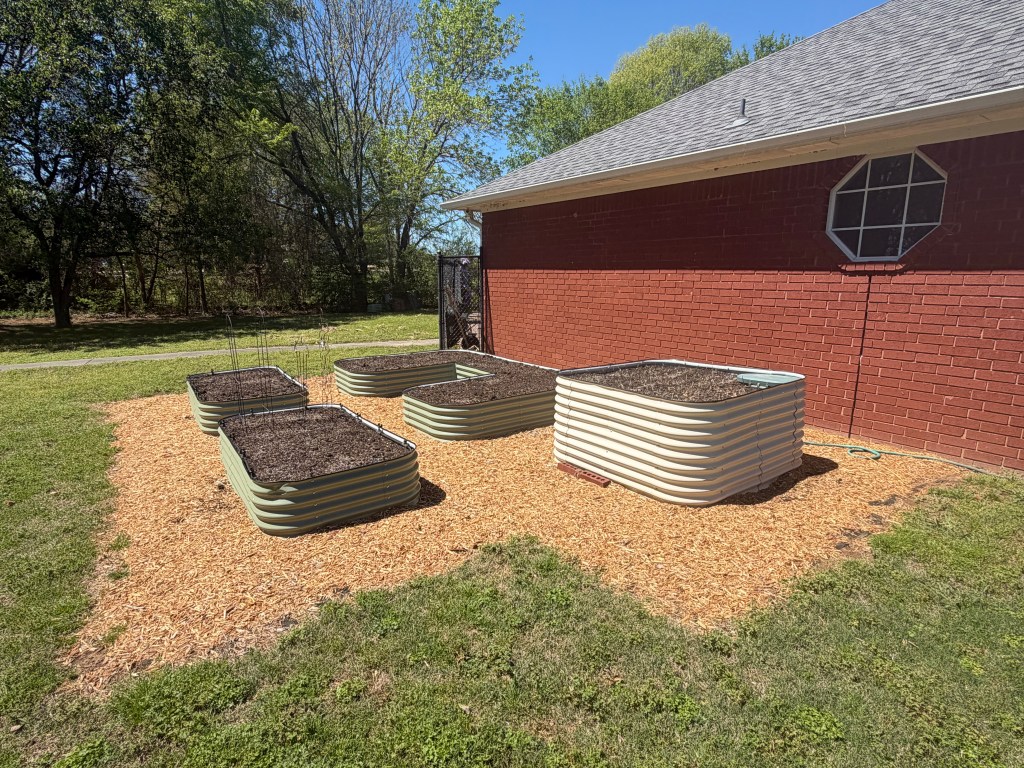
Yesterday Melissa and I were ripped awake at 4:30 am by the sound of Loki’s frantic barking.  Something outside had obviously set him off and he was sounding the alarm.  Melissa was able to quiet him down and I was able to immediately fall asleep.  Melissa was not so lucky.  Even though he was no longer sounding his alarm, both Loki and Zena continued to grumble and give little chirp barks.  Zena got up in my living room chair (her comfort zone in thunderstorms), but Loki kept running back and forth between the dining room window and the front hall for the next hour.  When I got up in the morning, I was wondering what set Loki off.  I went outside to check on my vegetables and make sure nothing had gotten into the few remaining plants in the raised beds.  I had removed the cantaloupe (Cucumis melo) vines after they had stopped producing but there are still one mature and two small watermelons (Citrullus lanatus) in the tall bed.  The tall bed is 30 inches (76 cm) and has not been targeted (yet), but raccoons (Procyon lotor) have eaten several cantaloupes in the shorter 18-inch (45.7 cm) bed in the past.  My watermelons were intact but as I walked back to the house, I noticed several dozen small holes in the lawn between the rose bush (genus, Rosa hybrid) and the wildflower (family, Primulaceae) beds.  

When I went online, I found that raccoons are one of the main animals that dig holes in your yard.  The holes are usually cone-shaped and three to four inches (7.5 to 10 cm) wide, but larger areas up to ten inches (25 cm) may occur.  The holes are created when raccoons are foraging for grubs and other insects. According to Clemson University, raccoons will peel back newly laid sod while searching for food.  Raccoons are omnivorous and eat a variety of plants and animals.  In cities and suburban areas, they dig for grubs and larval insects, eat vegetables and fruit grown in backyards, root through compost piles, steal picnic and pet food that has been left outdoors, and turn over garbage cans in search of food.  According to the University of California, these night creatures can live unnoticed for quite some time as they make their homes in hollow trees, outbuildings, brush piles, rock crevices, a raccoon burrow, crawl spaces, culverts, storm drains, attics, chimneys, or under decks.  Raccoons dig holes in lawns in search of grubs (uperfamily, Scarabaeoidea), earthworms (Lumbricus terrestris), and other insects.

Raccoons have a keen sense of smell which allows them to dig holes to find insect larvae under the grass.  The best way to keep raccoons from digging holes in your yard is to address the grub problem or using deterrents.  Treat your lawn for grubs, especially in late summer and fall, and use methods like motion-activated sprinklers or lights to scare them away.  You can also cover the lawn with netting or chicken wire to create a physical barrier and prevent digging.  You need to maintain proper lawn care, as poor watering practices can make your lawn more attractive to grubs.  If your lawn is damaged, repair it promptly.  If sod has been flipped, reposition it, water it, and consider using a root-building fertilizer to help it re-establish.  I guess it is time for my fall bug-be-gone dusting.

THOUGHTS: I was able to flip the sod on the larger holes that had been made in our yard, but I did not get the bug-be-gone down.  I told myself this would give me something to do today.  Most adult beetles in Arkansas are active in the summer and lay their eggs in the grassy areas.  The eggs hatch and the larva begin to feed on the surface of the soil for several weeks before moving deeper as the fall temps cool.  Arkansas winters are relatively mild, and summers are hot and humid, so the two treatment windows are late summer to early fall (preventive and biological control) and late spring to early summer (curative for spring-feeding pests).  Otherwise, I have holes in my yard.  Act for all.  Change is coming and it starts with you.

Wavy-lined

October 14, 20254

Melissa tends to keep the back door to the porch open to help provide a breeze and keep down the humidity for the succulents.  If the air conditioner is not running, she will often keep the house door open as well.  This provides a breeze for us and allows the kids to roam freely in and out of the house without having to get up every time they hear a noise or want to go outside.  While this is convenient, it allows house flies (Musca domestica), moths (order, Lepidoptera), and other flying insects (and occasional birds) to fly enter both the porch and the main house.  I have tried to combat this by placing a bug-zapper next to the doorway.  The blue light is not visible during the day but does attract moths at night.  When it is time for a final constitutional, Loki will wait at the door for Melissa or I to go first to “protect” him from the sounds of the moths hitting the zapper.  When I got up yesterday, I noticed one of the moths had avoided the zapper and was attached to the wall above the kitchen sink.  When I looked closer the moth’s coloration was “wavy-lined”.

When I went online, I found the wavy-lined emerald moth (Synchlora aerate), or camouflaged looper, is a species of moth of the family Geometridae.  The species is found in the US and Canada and was described by Johan Christian Fabricius in 1798.  There are dozens of species in the subfamily of emeralds in North America.  Most look incredibly similar, being green (sometimes tan) and typically resting with their wide wings spread out to the sides.  The key identifying features for the species are the mildly wavy white lines that run across the wings, a pale green fringe on the wings, and a long, thin white stripe running the whole length of the abdomen.  The adult wingspan is about 0.67 inches (17 mm).  The caterpillar of this species is an inchworm (looper) that camouflages itself from predators with small clippings from flower petals they are feeding on.  The wavy-lined is a common moth that has two or three broods a year and overwinters as a partially grown larva. 

The wavy-lined emerald moth is an important food for birds and other predators.  While some insects use camouflage or mimicry to outwit predators, the wavy-lined caterpillar blends these two defenses.  Insect camouflage often refers to creatures like stick bugs (order, Phasmatodea) that have evolved to look like their surroundings.  Mimicry means looking like a completely different creature, like the less toxic Viceroy Butterfly (Limenitis archippus) which looks like the toxic Monarch (Danaus plexippus).  The wavy-lined larva will attach bits of the plant material on which it is feeding to its back with bits of silk to blend into its host plant and avoid detection.  When it feeds on a different plant it will “wear” the appropriate foliage.  These fragments start off colorful (to blend in with the flower) and then dry out to look like a chunk of debris.  It also seems to detach and replace the parts as they wilt, keeping the larvae covered in fresh adornments that match its meal.  While it is essentially using camouflage, the insect is an active participant in the process, mimicking whatever flower it feeds on. 

THOUGHTS: While I have no problem swatting the flies and mosquitoes (family, Culicidae) that invade my house, I did not feel threatened or bothered by the wavy-lined emerald moth.  It spent the entire day resting on the wall as Melissa and I came and went around the sink, allowing me to admire its delicate lines many times.  When I got up this morning the moth was gone.  Hopefully it made it past the bug zapper on its way outside.  Most insects tend to go about their business and do not seek out humans.  Flies and mosquitoes are an exception and use humans as a source of food (dead skin, blood), water (sweat), and salt.  The fact that the moths are aesthetically pleasing is another plus.  Sometimes I need to remind myself that every creature has a role to play in the larger biome.  Act for all.  Change is coming and it starts with you.

Jumper

October 01, 2025

When I opened my mailbox this morning to retrieve my newspaper, I was surprised by something jumping out of the mail.  The mail itself was covered by a fine gauze-like webbing.  I figured this was some sort of spider that had decided to take up residence in the dark confines of my closed mailbox.  This did not strike me as unusual as many spiders are on the move at this time of year seeking a place to overwinter.  I was surprised by the distance the spider had jumped.  It had shot off my paper and onto the ground several feet away.  When I Goggled a picture of the spider, I found it was aptly named a Bold jumper.

When I went online, I found the bold jumper (Phidippus audax), also known as the daring jumping spider, is a common species of spider belonging to the genus Phidippus.  This group of jumping spiders easily identified by their large eyes and their iridescent mouth parts (chelicerae).  They are typically black with a distinct white triangle on their abdomen.  Like all jumping spiders, they have excellent stereoscopic vision that aids them in stalking prey and facilitates visual communication with potential mates during courting.  The species are native to North America and have been introduced to Hawaii, Nicobar Islands, Azores, and the Netherlands.  The Bold jumper is a solitary carnivore that uses their highly specialized eyesight to actively hunt and stalk a variety of insects and non-insect terrestrial arthropods such as caterpillars (order Lepidoptera), dragonflies (infraorder Anisoptera), grasshoppers (suborder Caelifera), and other spiders (order Araneae).  They are one of the most common spiders found in agricultural areas and have been studied to determine their impact on crop pest populations.  New Hampshire Governor Chris Sununu signed the HB 318 bill on June 11, 2021, designating the bold jumper as the state spider following a campaign by a class in Hollis, New Hampshire.

The bold jumper is often found living near humans.  Bites are rare but may occur if they feel threatened or are mishandled.  Bites are often described as mildly painful and are not considered dangerous.  Symptoms often include localized redness, itching, and swelling for one to two days, if at all.  Medical attention is only advised if symptoms worsen or abnormal symptoms arise.  If bitten, you should wash the area with water and a mild soap.  A cold compress may be used to treat swelling and aspirin, and acetaminophen may be used for pain.  As a major predator of crop pests, they have been studied to determine their impact on pest insect populations.  However, in addition to eating pests, they also eat beneficial insects such as pollinators.  My jumper went to the ground and then calmly stayed in place as I maneuvered my camera to take a photo.  It obviously did not consider me a threat and having been around them frequently I did not consider it a threat either.  Unlike most spiders, the bold jumper does not build webs to catch prey.

THOUGHTS: I found it curious that the bold jumper does not build a web to catch prey, yet there was an obvious webbing on my newspaper.  This was the start of the thin sheet of silk that would become the nest for an egg-sac.  This is usually built in hidden areas under rocks, bark, or leaves, but the inside of my mailbox seemed to serve.  The jumper was preparing to create a secluded nest to provide for the next generation in the spring, but my mailbox was not the secluded location she sought.  Humans find similar radical shifts in environment.  A site along the ocean seems perfect, until the storm surge from a hurricane washes out the foundation and sweeps the house into the sea.  Building needs to take potential environmental shifts into account.  Both for weather impact and the impact of encroaching on fragile ecosystems.  Act for all.  Change is coming and it starts with you.

Indeterminant

September 26, 2025

I toyed with the idea of tearing out my tomato (Solanum lycopersicum) plants since the beginning of August.  They quit producing and while I was getting scattered flowers, they did not result in fruit.  The exception was my super sweet 100’s which were doggedly producing, but the size of the cherry tomatoes had dropped from over a nickel (US) to less than a centavo (Mexico).  My gardener friend went on an extended trip during this time and when she returned many of the plants had died and she tore them out.  What stopped me was the weather began to cool, and we had a period of rain, so I did not feel the need to water.  Since all I was doing was monitoring the plants, I decided to leave them.  I still needed another gallon (3.8 liters) of tomatoes to augment the gallon I had frozen in June in hopes of more pasta sauce.  I had only given a quick scan to the plants along the back of the house for several days.  These Arkansas travelers are an indeterminant (keep growing) variety that had spent the summer producing vines without any fruit.  You can imagine my surprise when I gave them a more thorough inspection and found dozens of healthy green tomatoes up to a US half dollar size.

When I went online, I found in biology and botany, indeterminate growth refers to growth that is not limited (terminated) but continues to grow.  In contrast, determinate growth stops once a genetically predetermined structure has completely formed.  That means any plant that grows and produces flowers and fruit until killed by frost or some other external factor is called indeterminate.  Many tomato varieties (especially heirloom) tend to grow in a rangy fashion and produce fruit throughout the growing season.  A determinate tomato plant grows in more of a bushy shape and is most productive for a single, larger harvest.  It then either tapers off with minimal new growth or fruit or dies.  The Arkansas Traveler is an open-pollinated heirloom variety bred by the University of Arkansas in 1968.  The plant is indeterminate and produces round red fruits weighing approximately 6 ounces (170 grams).

When I told Melissa about the green tomatoes flourishing on these indeterminant plants she suggested if they did not ripen (for my pasta sauce or salsa), we could use them for green tomato relish.  Coming from the North I have never eaten this relish, although I have heard of it, but this is a popular and traditional staple in Southern cuisine.  This sweet and tangy relish is often referred to as “chow-chow” and is especially common towards the end of the summer harvest season to use up unripe tomatoes.  Green tomato relish is traditionally made when the season’s last tomatoes fail to ripen on the vine and as a way of preserving the harvest to enjoy throughout the winter.  The unripe tomatoes are mixed with peppers, onions, and pickling spices.  The relish can be preserved through water bath canning for long-term storage.  Another (Southern) use of green tomatoes is to cut them into 1/4-inch (0.6 cm) slices, season with salt and pepper, coated with plain, coarse cornmeal, and shallow-fry slices in bacon fat.  We had tried this (and green tomato pie) earlier in the year.

THOUGHTS: I am interested in trying the unripe fruit of my indeterminant tomatoes as both relish and again fried.  The relish is a traditional topper or side dish that provides a savory accent to meats, fish, or potatoes (Solanum tuberosum).  It is suggested to use bacon fat when frying, which is called “liquid gold” in traditional Southern cooking, as it adds a smokey, salty, and savory depth of flavor that is difficult to replicate with other fats.  While we did not fry tomatoes, my mom always had a can of bacon dripping beside the stove to supplement the can of lard in the cupboard and I still save bacon fat the same way today.  The practice is rooted in the practicality and “no waste” philosophy of southern cuisine as well as my rural Midwestern roots.  “You can take the boy out of . . .” Act for all.  Change is coming and it starts with you.

Hornet

September 22, 2025

I found an article on yahoo!news about an innovative approach toward eradicating an invasive species in England.  British scientists are attaching miniature tracking devices to the invasive insects which allow teams to locate and destroy their hidden nests within an hour instead of several days.  Time is critical as the nest can reproduce within seven days.  Inspectors capture individuals near bait stations, secure hair-thin transmitters around their bodies, and follow them straight to their colonies.  According to The Guardian, Britain’s Animal and Plant Health Agency found 64 nests through August 2025, setting a seasonal record.  Public participation drives much of the success for the eradication program.  Citizens use the Asian Hornet Watch app to submit thousands of sightings and enabling rapid response teams to investigate reports near ports where the species often arrive hidden in shipments of wine, produce, or building materials.  The invasion started when a single Asian Hornet female likely arrived in France aboard a pottery shipment from China back in 2004.

When I went online, I found the Asian hornet (Vespa velutina), also known as the yellow-legged hornet, Asian predatory wasp, or murder hornet, is a species indigenous to Southeast Asia.  This is significantly smaller than the European hornet, with queens 1.2 inches (30 mm), males about 0.94 inches (24 mm), and workers about 0.79 inches (20 mm) in length.  The species has distinctive yellow legs (tarsi), a velvety brown or black mid-section (thorax), and a brown abdomen.  Each abdominal segment has a narrow posterior yellow border, except for an orange fourth segment.  The hornet has a black head and a yellow face.  The coloration of the species can vary regionally which causes difficulty in classification and resulted in several subspecies to have been identified and later rejected.  The most recent taxonomic revision of the genus treats all subspecific names in the genus Vespa as synonyms, effectively relegating them to no more than informal names for regional color forms.  The Asian hornet is an invasive species of concern in most of Europe.

The Guardian reported the Asian hornet feasts on honeybees (genus, Apis) and other pollinators that enable the production of approximately one-third of the crop humans consume.  A single colony of hornets consumes about 24 pounds (10.9 kg) of insects during one season, putting pressure on the bee populations already struggling with habitat loss.  Testing shows Britain has prevented permanent colonies from establishing, with only three of 24 nests last year originating from females that survived winter in England.  While government teams fight Asian hornets with high-tech solutions, homeowners can help in their own yards with intelligent landscaping choices.  Replacing portions of traditional lawns with native plants can create a refuge for local pollinators.  Native plants also demand less water and maintenance than non-native species, which cuts both utility bills and maintenance.  These plants support local bee populations naturally by providing the nectar and pollen sources these insects evolved to use.

THOUGHTS: The Asian hornet was declared eradicated by the US Department of Agriculture in December of 2024.  Eradicated means there has not been a sighting in three years.  Even without the threat of this hornet, we have taken two steps to assist pollinators in our yard.  The wildflower bed in the front draws both bees and butterflies while also providing cover from any predators.  The side yard has a bird bath that I fill every time I water the vegetables.  This has a half brick in the middle to allow bees to cling to the brick and take a drink.  It took little effort for either of these features and the result has provided food and water for countless pollinators.  Act for all.  Change is coming and it starts with you.

2nd Crop

August 27, 2025

While I considered replanting my raised beds last year, I never got around to doing it.  When I planted my vegetables in April I noted when (and if) I could replant another round of the same vegetables.  After the initial harvest I also considered which vegetables I wanted more of.  I already had way too many pickles (Cucumis sativus) with 12 pints (5.7 liters) than I could use over the next year, and the same was true for the six pints (2.8 liters) of canned carrots (Daucus carota).  I had eaten through the radishes (Raphanus sativus) and only had 2 pints of beets (Beta vulgaris) left, so these were a good choice.  I also decided to replant cauliflower (Brassica oleracea) and cabbage (Brassica oleracea).  We enjoyed the two quarts (1.9 liters) of sauerkraut last year and I had not planted a new crop this year.  I rounded out the raised beds with a few vegetables that had not grown well along the patio; lettuce (Lactuca sativa), spinach (Spinacia oleracea), and peas (Pisum sativum).  Now that my 2nd crop is planted, I just need to wait and see what will produce.

When I went online, I found a second crop is either the second growth of a crop that regrows after an initial harvest, or, more commonly, a different crop planted on the same land within the same year after a previous crop has been harvested.  This is known as double cropping and allows farmers to maximize land use and harvest two yields from the same acreage in a single growing season.  This requires sufficient time for the crop to mature and resources like water to support the second planting.  There are two main types of second crop.  The first is a regrowth after the initial harvest where the stump/roots of a crop resprouts after it has been cut for its first harvest (example, broomcorn).  The second is to plant a follow-on crop of a new and different crop on the same piece of land within the same year after the first has been harvested.  This utilizes land that might otherwise lay idle or unproductive.  Double cropping requires adequate time for the second crop to mature and sufficient moisture from rainfall or irrigation to support both plantings.  This process can boost the overall farm revenue and potentially improve ecological services.

There are several benefits to succession planting or planting a 2nd crop in your vegetable garden.  First is that it allows you to enjoy the vegetables you love for a longer period.  This also allows for more yield in the same amount of space.  This is especially so for smaller gardens with limited space.  If you plant a 2nd crop from a different plant family, it can improve the soil structure and replenish nutrients depleted by the 1st crop.  Finally, rotating different types of plants helps disrupt the life cycles of pests that had fed on the 1st crop and reduce the spread of diseases.  Critical considerations for a 2nd crop are the first frost date in your growing area (mine is 7b).  That means planting fast maturing varieties and vegetables that thrive in cool weather.  You will also need to amend your soil with new compost or fertilizer to ensure a good result.  I did not fertilize when I planted yesterday.  This just gives me something to do today (ha ha).

THOUGHTS: Planting a 2nd crop is the next step toward my goal of sustainability.  Admittedly, I should have allowed several plants to go to seed and then replanted those.  Instead, I used what was left in the heirloom seed packages I had left.  Maybe next year.  As the weather cools, I am looking forward to finally getting some production from the tomatoes (Solanum lycopersicum) and bell (Capsicum annuum) and jalapeno (Capsicum annuum) peppers I planted last April along with the new produce from my 2nd crop.  While the time and expense of growing my garden may not cover the costs, the crispness of the produce makes it worthwhile.  Sustainability is a process that is its own reward.  Act for all.  Change is coming and it starts with you.

Arborist

August 12, 2025

I came across another example of how one decision leads to the necessity of making others this week.  We have been checking out buying a motorhome for the last eight years.  We began when we still lived in Kansas, but after the move to Arkansas the concept fell off our radar.  This last year my sister and brother-in-law purchased a small teardrop trailer with their son and then a larger trailer for their use.  They camped most of their married life, so this was not a surprise.  She told us that while it was cheaper to stay in a hotel than buy and maintain a trailer, they enjoyed the outdoor freedom.  One reason I (and now Melissa) retired was to travel.  Now that we have the kids, this has become problematic (for me).  It is more difficult to find a hotel that allows pets (not impossible) and even more so now that we have 175 pounds (75 kg) of dogs.  Boarding is a possibility but adds another US$1,000 to the vacation.  That moved us to buy a Class C motor home.  These vehicles are smaller than the Class A motorhomes and have slide-outs for maximum square footage.  The purchase meant we also needed to decide where to keep the vehicle.  The fenced side yard was an obvious choice, but that meant we needed to enlarge the gate and cut down a tree for access.  While I could have taken days to cut the tree and haul it to the dump, we decided to call an arborist. 

When I went online, I found arboriculture is the cultivation, management, and study of individual trees, and other perennial woody plants, and a person who practices or studies arboriculture is called an arborist.  The science of arboriculture studies how these plants grow and respond to their environment.  The practice of arboriculture includes techniques for selection, planting, training, fertilization, pest and pathogen control, pruning, shaping, and removal.  A tree surgeon is more typically someone who is trained in the physical maintenance and manipulation of trees and more a part of the arboriculture process rather than an arborist.  Risk management, legal issues, and aesthetic considerations have come to play prominent roles in the practice of arboriculture.  Businesses often hire arboriculturists to complete “tree hazard surveys” and generally manage the trees on-site to fulfill occupational safety and health obligations.  Arboricultural matters are also considered to be within the practice of urban forestry, yet the clear and separate divisions are not distinct or discreet.

Both the arborist and the fence man showed up at the same time today.  While they were working in the same area of the yard, they did not seem to interfere with each other.  The tree came down in a matter of hours (not my days) and the limbs were either ground or stacked in 15-inch (38cm) lengths to be used as firewood when we go camping.  The fence took a little longer.  It needed two posts removed and another set.  This shortened the total area but allows for a 12.5-foot (3.8 m) entrance.  That is enough to safely drive my 10 foot (3 m) wide motor home through the gate and park it in an enclosed area.  As I said, one decision often leads to several others. 

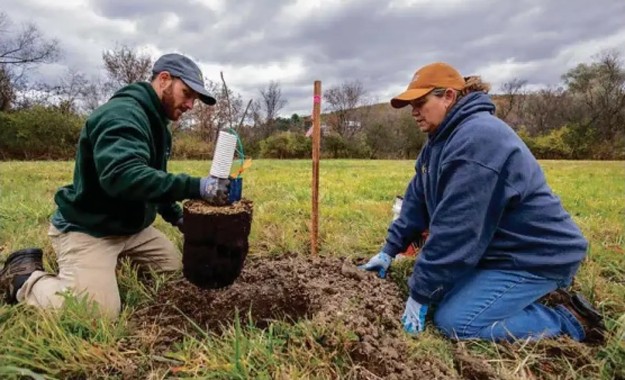
THOUGHTS: One of the reasons people call an arborist is the perceived risk of death by falling trees.  This is influenced by media and often hyped, and the risk has been reported to be close to 1:10,000,000, or almost as low as death by lightning.  Trees in urban green spaces and their careful conservation are sometimes in conflict with aggressive urban development, despite how urban trees contribute to livability of suburbs and cities objectively (reduction of urban heat island effect, etc.) and subjectively.  Tree planting programs implemented by a growing number of organizations and cities are mitigating the losses and often increasing the number of trees in suburbia.  This includes planting 2 trees for every 1 tree removed or paying landowners to keep trees instead of removing them.  Each tree absorbs about 55 pounds (25 kg) of C02 annually.  My two fruit trees help replace the one Bradford pear (Pyrus calleryana).  Act for all.  Change is coming and it starts with you.