Sea Lion

August 17, 2025

One of the joys of visiting family is being able to spend time on the ocean coast.  My sister lives in Maine and we always take time to visit the ocean for at least one day during the trip.  My son’s family lives near Seattle and has a beach house near the Tulalip Tribe’s reservation.  This weekend we were able to go to Seattle and spend two days on the coast.  The first day my young grandson took me fishing on the rock beach behind their house.  He made two casts and immediately caught a 6-inch (15 cm) sculpin (Hemilepidotus spinosus).  After two more casts, he offered the pole to me.  I took several casts and did not get a bite.  My grandson seemed to get bored and went back to play at the house.  I kept casting for another 10 minutes and did not get a bite the entire time.  I gave up and went to sit on the deck and watch the beautiful sunset.  After several minutes my daughter-in-law noticed a sea lion had ventured into our part of the bay and was bobbing up and down in the channel.

When I went online, I found the California sea lion (Zalophus californianus) is a coastal eared seal native to western North America.  It is one of six species of sea lions.  It has a natural habitat range from southeast Alaska to central Mexico, including the Gulf of California.  California sea lions are sexually dimorphic with the males being larger than females. Males have a thicker neck and a protruding ridge of bone lengthwise along the top of the skull (sagittal crest).  The animals will mainly haul out on sandy or rocky beaches, but they also frequent manmade environments such as marinas and wharves.  Sea lions feed on several species of fish and squid and are preyed on by orcas and great white sharks.  The sea lions have a polygynous (multiple partners) breeding pattern.  Males establish territories from May to August and try to attract females to mate.  Females are free to move between territories and are not coerced by males.  Mothers nurse their pups in between foraging trips.  California sea lions use many vocalizations, but most notably barks and mother-pup contact calls.  Outside breeding season, California sea lions spend much of their time at sea but come to shore to molt.  The International Union for Conservation of Nature (IUCN) lists the species as Least Concern due to its abundance.  Oregon and Washington states engage in annual kill quota to protect the fish.

When I woke up the following morning, I decided I would try my luck with fishing again.  When I fished yesterday it had been high tide (the best time to catch fish on this beach).  Now it was low tide.  Undeterred, I took the poll and strode to the water’s edge and began to cast once more.  I found out why it is best to fish at high tide almost immediately.  On nearly every cast I fouled my hook in the lush beds of eel grass (Zostera marina) that covered the bottom of the channel.  Besides providing excellent forage for the California sea lions, the sea grass meadows provide food and shelter for juvenile fish, Dungeness crabs (Metacarcinus magister), the Pink (Chlamys rubida) and Spiny Scallops (Chlamys hastata). and other marine life.  They serve as a food source for herbivores during the growing season and for things that feed on the decomposing grass (detritivores).  The seagrasses absorb carbon dioxide, filter polluted runoff, absorb excess nutrients (nitrogen and phosphorus), stabilize sediments, and improve water flow. 

THOUGHTS: One of the questions I was frequently asked after moving from California’s Bay Area to southcentral Kansas was if it was any different where I used to live.  I rented a house at a marina on the bay with a boat slip out my back door.  My stock answer was, “well, I have not been greeted by the sound of a sea lion when I wake up in the morning.”  While not getting any bites the second day, I spotted a sea lion pup and mother foraging nearby.  It was good to know I was in a healthy ecosystem.  We need to do what we can to keep them that way.  Act for all.  Change is coming and it starts with you.

Outburst

August 16, 2025

A USA Today article reported how water from a melting glacier has caused a river near Alaska’s capital city of Juneau to swell to historic levels.  As of August 13th, emergency barriers protecting Juneau appear are holding.  The risk from summer glacial flooding is on the rise as climate change increases temperatures, causing more ice to melt.  Lakes form behind the unsteady dams made of ice and when these dams fail, the water rushes out, often resulting in catastrophic downstream flooding.  The ice dam lake near Juneau ice is called Suicide Basin, which is part of the Mendenhall Glacier.  If it collapses from summer heat it will release the water in a short period of time.  Aaron Jacobs, a hydrologist at the National Weather Service office in Juneau, said as these events continue to unfold, scientists need to continue to improve their understanding of these glacial systems, especially as the climate continues to change and warm throughout Alaska.  Glacial lake outburst flooding is produced by the quick, unexpected release of water from a glacial lake.

When I went online, I found a glacial lake outburst flood (GLOF) is a type of outburst flood caused by the failure of a dam containing a glacial lake. A similar event where the ice melts and overflows the glacier is called a jökulhlaup.  The dam can consist of glacier ice or previous glacial deposits (moraine).  Failure can happen due to erosion, buildup of water pressure, an avalanche of rock or heavy snow, an earthquake, or by a sudden cracking action in frozen soil or rock saturated with water or ice (cryoseism), volcanic eruptions under the ice, or massive displacement of water in a glacial lake when a large portion of an adjacent glacier collapses into it.  Increasing glacial melting because of climate change along with melting of the permafrost means regions with glaciers are likely to see increased flooding risks from GLOFs.  This is especially true in the Himalayas where geologies are more active.  A 2023 study found 15 million people at risk from this hazard, mostly in China, India, Nepal, Pakistan, and Peru.

Glacial lake volumes vary but may hold millions (35,314,666+ cubic feet) to hundreds of millions of cubic meters (3,531,466,600+ cubic feet) of water.  Catastrophic failure of the ice or glacial sediment containing the water can be released over periods of minutes to days.  Peak flows as high as 529,720 cubic feet (15,000 cubic meters) per second have been recorded in such events.  This suggests the v-shaped canyon of a normally small mountain stream could suddenly develop an extremely turbulent and fast-moving torrent of water some 160 feet (50 m) deep.  Glacial Lake Outburst Floods are often compounded by a massive riverbed erosion in the steep moraine valleys resulting in flood peaks increasing as they flow downstream until the sediment deposits.  On a downstream floodplain, it suggests a somewhat slower inundation spreading as much as 10 kilometers (6.2 mi) wide.  Both scenarios are significant threats to life, property and infrastructure.

THOUGHTS: The glacial outburst in Alaska is not a new phenomenon and has occurred annually in Suicide Basin since 2011.  What is new in the last few years is the amount of water being released all at once during these events.  According to the National Centers for Environmental Information Alaska has warmed twice as fast over the last several decades Information compared to the rest of the US.  Its average annual temperature has risen 3.1F (-16.0C) in the past century.  Since 1990, humans have been the primary cause of melting glaciers worldwide due to rising temperatures from the burning of greenhouse gases and land-use changes.  Such an outburst can be prevented.  Act for all.  Change is coming and it starts with you.
Mite

August 13, 2025

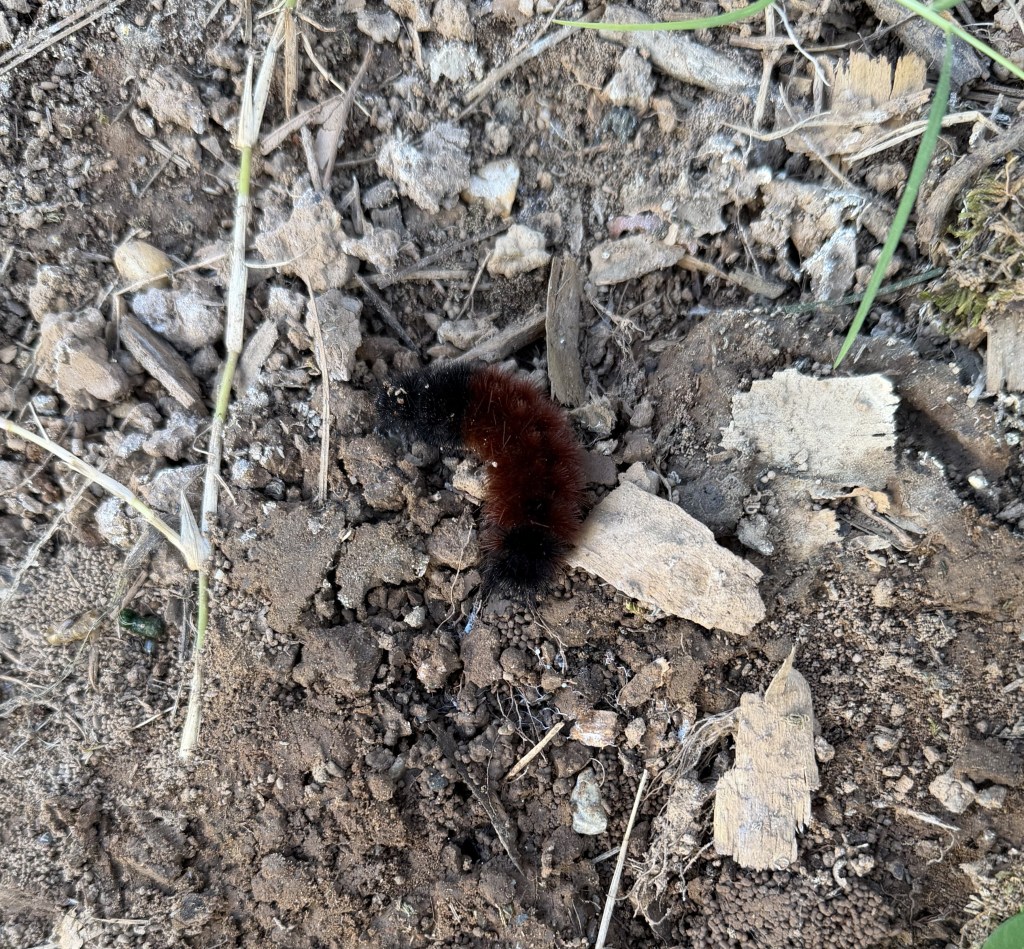
It was only fitting after blogging on the cicada-killer wasp (Sphecius speciosus) that I found another species that attacks the broods as they emerge.  Buried in the back section of my local newspaper was an article about a mite that attacks the periodical egg nests of cicadas.  The species commonly feeds on the larvae of midges (various Suborders of Diptera) or flies and form an abnormal outgrowth (gall) as a reaction to both the insects and the mites feeding on them on the edges of pin oak (Quercus palustris) leaves.  Once their development is complete, they drop from the tree and can land on, and subsequently bite, humans and animals.  According to Penn State Extension, the bite can cause an itchy rash, redness of the skin, and a small, raised pimple-like bump.  They usually bite humans while searching for other food sources. 

When I went online, I found oak leaf itch mite (Pyemotes herfsi), also known as the oak leaf gall mite, was first identified in Europe and subsequently found in India, Asia, and the US.  The mites live on the surface of the host’s skin (ectoparasitic) feeding on blood or skin cells.  The mite is barely visible, measuring about 0.008 to 0.03 inches (0.2 to 0.8 mm).  Newly emerged and mated females inject a neurotoxin-containing saliva into their hosts, which paralyzes the host and enables the pregnant (gravid) female to feed on the host’s body fluid (hemolymph).  The posterior portion (opisthosoma) of the female enlarges as its young develops inside, and after several days up to 250 adult mites emerge, of which 92% were females.  Males emerge before the females, position themselves around the mother’s genital opening, and mate with emerging females.  The mated females then disperse to find new hosts.  The mites are often dispersed by wind, and when they land on vertebrate hosts, they attempt to feed, resulting in the bites.  Their great reproductive potential, small size, and high capacity for dispersal by wind make them difficult to control or avoid.

Humans are most likely to get bites while doing yard work or outdoor activities under trees that may be infected.  The University of Maryland Extension recommends you avoid scratching the bite as this may lead to a secondary infection.  Instead, use an itch relief product.  If the itchiness or redness persists or signs of infection appear you should consult a doctor.  The best way to avoid bites is to limit time underneath potentially infected trees and to immediately remove and wash clothing once coming inside.  While that may be good advice, it does not seem like I would remember to do either.  The mite is most active for a four-to-six-week period surrounding cicada brood hatches.  Studies have shown in some cases the mite can survive mild winters in protected areas.  A suggested preventive measure is the application of DEET before outdoor activity.  However, anecdotal reports suggest DEET might not provide complete protection.   

THOUGHTS: The oak leaf itch mite was first recognized in the US with an outbreak in Kansas which affected around 19,000 people in 2004.  The mite was also linked to a 2007 outbreak of rashes in Chicago where they were feeding on the eggs of the 17-year cicada.  The double brood hatch in 2025 again brought the mite back in force.  I have noticed a proliferation of YouTube videos depicting humans assisting other animals in removing parasites or other things that have overwhelmed a larger animal (perhaps because I watched one and it is now on my feed radar?).   Even at the top of the food chain it does not keep humans from becoming food themselves.  Being wary of your surroundings can help keep you safe, but living in fear restricts your appreciation of the beauty of nature.  Act for all.  Change is coming and it starts with you.
Arborist

August 12, 2025

I came across another example of how one decision leads to the necessity of making others this week.  We have been checking out buying a motorhome for the last eight years.  We began when we still lived in Kansas, but after the move to Arkansas the concept fell off our radar.  This last year my sister and brother-in-law purchased a small teardrop trailer with their son and then a larger trailer for their use.  They camped most of their married life, so this was not a surprise.  She told us that while it was cheaper to stay in a hotel than buy and maintain a trailer, they enjoyed the outdoor freedom.  One reason I (and now Melissa) retired was to travel.  Now that we have the kids, this has become problematic (for me).  It is more difficult to find a hotel that allows pets (not impossible) and even more so now that we have 175 pounds (75 kg) of dogs.  Boarding is a possibility but adds another US$1,000 to the vacation.  That moved us to buy a Class C motor home.  These vehicles are smaller than the Class A motorhomes and have slide-outs for maximum square footage.  The purchase meant we also needed to decide where to keep the vehicle.  The fenced side yard was an obvious choice, but that meant we needed to enlarge the gate and cut down a tree for access.  While I could have taken days to cut the tree and haul it to the dump, we decided to call an arborist. 

When I went online, I found arboriculture is the cultivation, management, and study of individual trees, and other perennial woody plants, and a person who practices or studies arboriculture is called an arborist.  The science of arboriculture studies how these plants grow and respond to their environment.  The practice of arboriculture includes techniques for selection, planting, training, fertilization, pest and pathogen control, pruning, shaping, and removal.  A tree surgeon is more typically someone who is trained in the physical maintenance and manipulation of trees and more a part of the arboriculture process rather than an arborist.  Risk management, legal issues, and aesthetic considerations have come to play prominent roles in the practice of arboriculture.  Businesses often hire arboriculturists to complete “tree hazard surveys” and generally manage the trees on-site to fulfill occupational safety and health obligations.  Arboricultural matters are also considered to be within the practice of urban forestry, yet the clear and separate divisions are not distinct or discreet.

Both the arborist and the fence man showed up at the same time today.  While they were working in the same area of the yard, they did not seem to interfere with each other.  The tree came down in a matter of hours (not my days) and the limbs were either ground or stacked in 15-inch (38cm) lengths to be used as firewood when we go camping.  The fence took a little longer.  It needed two posts removed and another set.  This shortened the total area but allows for a 12.5-foot (3.8 m) entrance.  That is enough to safely drive my 10 foot (3 m) wide motor home through the gate and park it in an enclosed area.  As I said, one decision often leads to several others. 

THOUGHTS: One of the reasons people call an arborist is the perceived risk of death by falling trees.  This is influenced by media and often hyped, and the risk has been reported to be close to 1:10,000,000, or almost as low as death by lightning.  Trees in urban green spaces and their careful conservation are sometimes in conflict with aggressive urban development, despite how urban trees contribute to livability of suburbs and cities objectively (reduction of urban heat island effect, etc.) and subjectively.  Tree planting programs implemented by a growing number of organizations and cities are mitigating the losses and often increasing the number of trees in suburbia.  This includes planting 2 trees for every 1 tree removed or paying landowners to keep trees instead of removing them.  Each tree absorbs about 55 pounds (25 kg) of C02 annually.  My two fruit trees help replace the one Bradford pear (Pyrus calleryana).  Act for all.  Change is coming and it starts with you.

Cicada-killer

August 11, 2025

I have been seeing the scattered exoskeletons of the cicada (superfamily, Cicadoidea) brood hatch that is occurring in Arkansas this summer.  Brood XIX emerges every 13 years, and its last emergence was in 2011.  It is a large brood that encompasses 15 states.  Although they are not in Arkansas, Brood XIII is also emerging in other parts of the country.  Although the cicadas are large and a brood hatch can become messy when great numbers emerge at the same time, they are not agricultural pests or a threat to humans.  Trees may be overwhelmed by the sheer number of females laying their eggs in their shoots and small branches.  Yesterday while watering my garden, I noticed what looked like a large wasp trapped between the screen and window on the porch.  When I find wasps on our porch, I shoo them away or if they persist, I will spray them.  I have been stung too many times to allow these pests to establish close to our house.  The insect looked like a yellow jacket but was over twice the normal size.  What I found out was this was an eastern cicada-killer.

When I went online, I found the eastern cicada-killer wasp (Sphecius speciosus) is a large, solitary digger wasp species in the family Bembicidae.  They are also erroneously called sand hornets, although they are not true hornets, which belong to the family Vespidae.  Their name comes as they hunt cicadas and provision their nests with them.  The species is found in the Eastern and Midwest US and south into Mexico and Central America.  Adult eastern cicada wasps are 0.6 to 2.0 inches (1.5 to 5.0 cm) long.  They have hairy, reddish, and black areas on their middles (thoraces), and black to reddish brown rear (abdominal) segments that are marked with light yellow stripes.  The wings are brownish.  The females are slightly larger than the males, and both are among the largest wasps in the Eastern US.  European hornets (Vespa crabro) are often mistaken for eastern cicada killers, although they are smaller at 1.4 inches (3.5 cm) long.  The males are smaller than the females because they are not given as much larval food.  The females benefit from being larger as they must carry the cicadas they have killed to a burrow for nesting.  Cicada killers exert a measure of natural control on cicada populations which may directly benefit the deciduous trees the cicadas feed on.  

Despite their fearsome appearance, female cicada-killers are not aggressive and rarely sting unless they are mistreated.  Their sting is not much more than a “pinprick”.  Males aggressively defend their perching areas on nesting sites against rival males, but they have no stinger.  Although they appear to attack anything that moves near their territories, male cicada killers are just investigating anything that might be a female cicada killer ready to mate.  Their close inspection may appear to be an attack, but male and female cicada killers do not land on people with the intent to sting.  If handled roughly, females will sting, and males will jab with a sharp spine on the tip of their abdomen.  They are generally not aggressive towards humans and usually fly away rather than attacking.  I initially tried to swat the wasp but its size and being behind the screen protected it.  I finally gave up and decided if it could get out of the screen on its own it would go away.  Since it was not there this morning, I assume it had done so. 

THOUGHTS: The size of the cicada-killer and its resemblance to a yellow jacket made me fearful when I first encountered it.  It seemed docile rather than the aggression I have seen from other wasps.  Still, I wanted it to go.  After I found out what it was, I was glad I left it alone.  We do not have a cicadae problem, but this was nature’s way of providing control.  One benefit of my garden is taking time to observe the interaction between the flora and fauna (plants and animals) that thrive there.  Identifying the different species and their place in my sub-ecosystem has been enlightening.  We are all part of the same planet.  Act for all.  Change is coming and it starts with you.
Hadal

August 04, 2025

Inside the front section of Friday’s newspaper was a Reuters article about a new discovery in the northwest Pacific.  Thriving communities of marine creatures turn chemicals into energy rather than eating organic matter.  These chemosynthesis-based animal communities were dominated by tube worms (Riftia pachyptila) and clams (genus, Spisula) and were found during a series of dives aboard a crewed submersible to the bottom of the Kuril-Kamchatka and Aleutian trenches.  The creatures are beyond the reach of sunlight and are nourished by fluids rich in hydrogen sulfide and methane seeping from the seafloor.  These ecosystems were discovered at depths greater than Mount Everest (29,032 feet/8849 meters).  The deepest ecosystem was 31,276 feet (9,533 m) below the ocean surface in the Kuril-Kamchatka Trench, or 25% deeper than such animals had previously been documented.  The research was published on Wednesday in the journal Nature.  Marine geochemist Mengran Du of the Institute of Deep-sea Science and Engineering, said, “What makes our discovery groundbreaking is not just its greater depth – it’s the astonishing abundance and diversity of chemosynthetic life we observed.”  The discovered ecosystems exist in the hadal zone.

When I went online, I found the hadal zone, or hadopelagic zone, is the deepest region of the ocean found only within the oceanic trenches.  The hadal zone ranges from around 3.7 to 6.8 miles (6 to 11 km) or 20,000 to 36,000 feet below sea level, in the long, narrow, topographic V-shaped depressions.  The cumulative area occupied by the 46 individual hadal habitats worldwide is less than 0.25% of the world’s seafloor, but the trenches account for over 40% of the ocean’s depth range.  Most hadal habitat is found in the Pacific Ocean, the deepest of the conventional oceanic divisions.  The deepest ocean trenches are considered the least explored and most extreme marine ecosystems and are characterized by a complete lack of sunlight, low temperatures, scarce nutrients, and extremely high pressure exerted on an immersed body (hydrostatic pressures).  The major sources of nutrients and carbon are fallout from upper layers, drifts of fine sediment, and landslides.  Most organisms are scavengers and animals that subsist on decomposing plants and animal parts (detrivores).  As of 2020, over 400 species are known from hadal ecosystems, many of which possess physiological adaptations to the extreme environmental conditions.  There are high levels of a species being found in a single defined area (endemism).

While some marine animals have been documented at even greater depths, (36,000feet/11,000 m) below the surface in the Pacific’s Mariana Trench, those were not chemical eaters.  In the new research, scientists used their submersible (the Fendouzhe) to journey down to the hadal zone.  The hadal zone is where one of the continent-sized plates that make up Earth’s crust slides under a neighboring plate in a process called subduction.  Marine geologist and study co-author Xiaotong Peng, said this environment harbored “the deepest and the most extensive chemosynthetic communities known to exist on our planet.”  The newly observed ecosystems were dominated by two types of chemical-eating animals.  Tube worms that were red, gray or white in color and around 8 to 12 inches (20-30 cm) long and clams that were white in color and up to 9 inches (23 cm) long.  Some of these appear to be previously unknown species.

THOUGHTS: Even in the harsh environment of the hadal zone life has found a way of surviving and thriving.  Some non-chemical-eating animals were also found living in these ecosystems.  The study illustrates how life can flourish in the most extreme conditions on Earth (and beyond?).  This makes it possible (even probable) that exploration will find life on Earth is not alone.  The question will be how we handle the discovery.  Act for all.  Change is coming and it starts with you.
Red-bellied

July 14, 2025

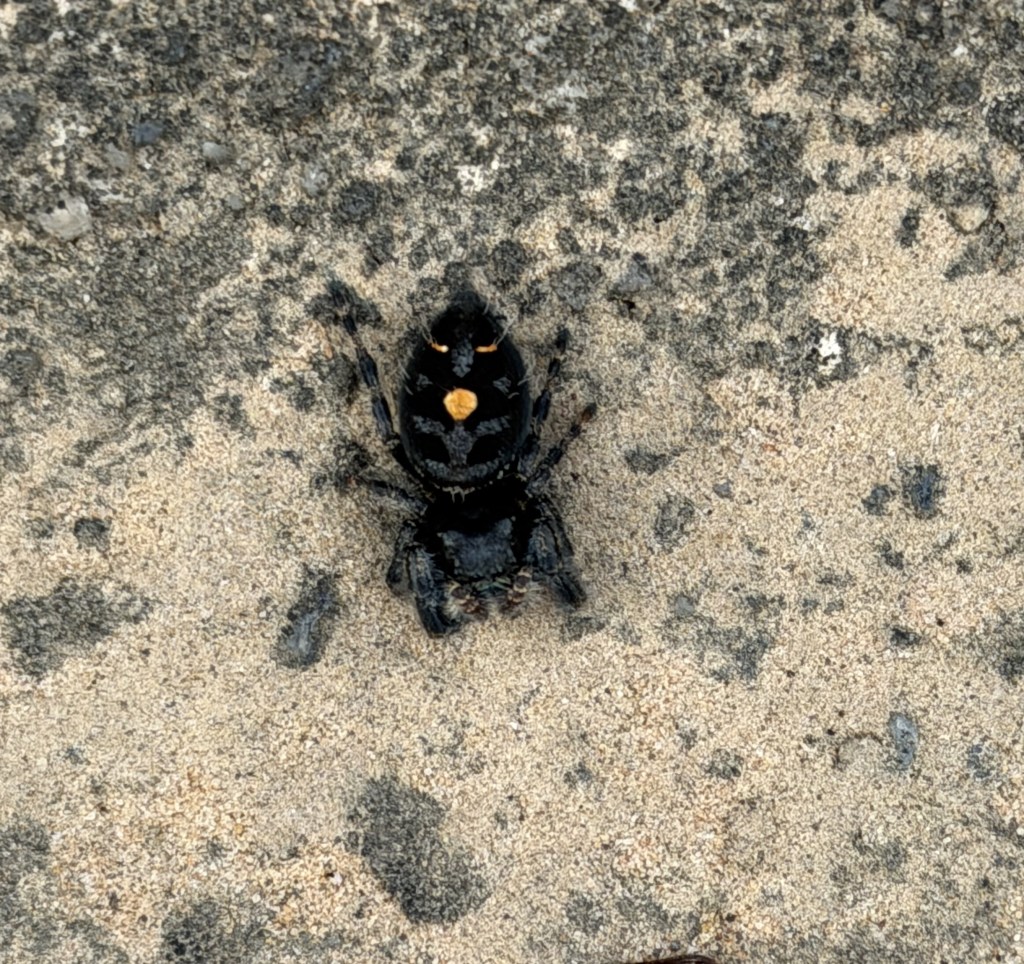
Last weekend Melissa called me into the kitchen to watch the large bird that had been battling two squirrels over “rights” to what was left in my soot feeder.  I grabbed my camera and by the time I arrived the squirrels had been driven off, but the bird was still there.  Melissa said she had watched the bird attack the two eastern gray squirrels (Sciurus carolinensis) for about 20 minutes.  The bird alternately flew at both squirrels keeping them at bay.  This was a new species identification for Melissa, and the bright red head led her to believe this was a red headed woodpecker (Melanerpes erythrocephalus).  I occasionally see one of these birds at my feeders and had even identified one early in January (although without a photo).  At first, I also thought it might be a red-headed woodpecker.  My apps instead identified this as a red-bellied woodpecker.

When I went online, I found the red-bellied woodpecker (Melanerpes carolinus) is a medium-sized woodpecker of the family Picidae.  While the species breeds mainly in the eastern US, it ranges as far south as Florida and as far north as Canada.  The most prominent feature is a vivid orange-red crown and nape, but this is not to be confused with a separate species in the same genus, the red-headed woodpecker.  The red-headed woodpecker has an entirely red head and neck, a solid black back, and white belly.  Red-bellied woodpeckers are 9 to 10.5 inches (22.85 to 26.7 cm) long, have a wingspan of 15 to 18 inches (38 to 46 cm), and weigh 2 to 3 ounces (57 to 91 g).  The red-bellied earns its name from the pale reddish tint on its lower underside.  Adults are mainly light gray on their face and underparts and have black and white barred patterns on their back, wings, and tail.  Adult males have a red cap going from the bill to the nape while females have a red patch on the nape and another above the bill.  White patches become visible on the wings in flight.  The reddish tinge on the belly is difficult to see in field identification.

I have never noticed the red spot on a red-bellied woodpecker and have instead identified them by the black and white barred pattern on their backs.  I always wondered why they were called red-bellied, and now I know.  Predators of adult, red-bellied woodpeckers include birds of prey such as sharp-shinned hawks (Accipiter striatus), Cooper’s hawks (Astur cooperii), black rat snake (Pantherophis alleghaniensis), and house cats (Felis catus).  Known predators of nestlings and eggs include red-headed woodpeckers, owls (Order, Strigiformes), pileated woodpeckers (Dryocopus pileatus), black rat snakes, and eastern gray squirrels.  When approached by a predator, the birds either hide from or harass the threat with alarm calls.  They will defend their nests and young aggressively and may directly attack predators that come near.  While this bird did not have a nest, it was aggressively defending its food supply.

THOUGHTS: By driving off the gray squirrels the red-bellied woodpecker was it was exerting its territorial rights.  A defended territory is typical of songbirds but is also found in many other orders of birds.  Territory may be held by one bird, a pair, or a flock and can be held for all or only part of a year.  It may be very large (eagles) and provide all the resources the bird needs or be very small such as nesting territories.  It may be vigorously defended or loosely guarded.  Typically, territories are defended against others of the same species but may also be defended against other species.  Humans also claim both small and large areas we define as ours and actively defend.  These are also shared, but generally only with those we define as “us”.  Globalization is forcing humans to make new choices on us and them.  Cooperation and sharing resources may provide for all.  Hoarding resources has and will always lead to conflict.  Act for all.  Change is coming and it starts with you.
Wildflower Bed

July 07, 2025

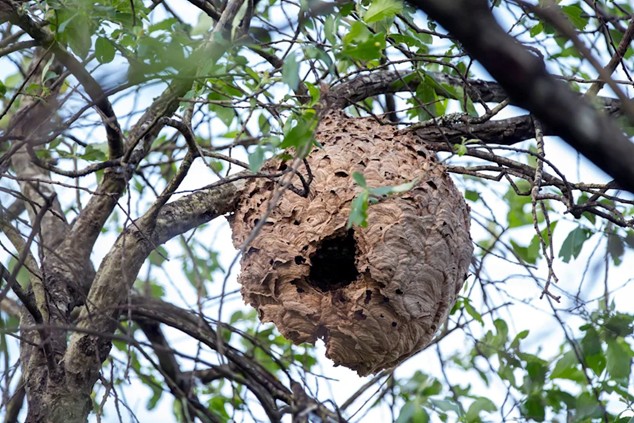
Five years ago, I blogged about my stint as director of a conference center in Kansas.  The camp was located on 63 acres (25.5 ha) of mixed trees and (originally) prairie grass that was now mostly seeded with Bermuda grass (Cynodon dactylon) for lawns.  During the summer we spent 5 to 6 days a week on the mower cutting grass.  Part of our mission was to provide opportunities for education, so I decided to let the prairie grass return.  The first year we let most of the camp return to natural grass to evaluate where the prairie grass was still abundant.  The second year we selected about 12 acres (4.5 ha) to return to native prairie.  We also reseeded those acres with the Big Five grasses prominent in the Tall Grass Prairie that used to dominate Kansas.  This provided lawn for camp activities and nature trails with identification signage for eco-visitors.  To complete the prairie’s restoration, we seeded a variety of prairie wildflowers in prominent locations along the roads.  Being on the flyway of the Monarch butterfly, I transplanted 20 milkweeds (Asclepias syriacaplants) from the lawns into a wildflower bed near the entrance of the camp.

When I went online, I found a wildflower is a flower that grows in the wild, rather than being intentionally seeded or planted.  The term implies that the plant is neither a hybrid nor a selected cultivar that is any different from the native plant, even if it is growing where it would not naturally be found.  This can refer to the whole plant, even when not in bloom, and not just the flower.  The term “Wildflower” is imprecise, and more exact terms refer to specific types of flowers including native species naturally occurring in the area, exotic or introduced species not native to the area, invasive species that outcompete other plants (introduced deliberately or accidentally), and plants that have become naturalized (imported but considered native by the public).  Wildflowers can be annual (germinates from seed, live one year), perennial (live multiple years, return each growing season), or biennial (two-year life cycle, blooming in the second year).  In recent years, wildflower gardening has gained popularity.  A planted wildflower bed not only looks attractive but has the advantage of supporting pollinators, reducing maintenance, and conserving water. 

I wanted to duplicate my conference center experience when we moved to Arkansas, but I could never decide where to plant the wildflowers.  Melissa’s mom established several flower beds that I thought Melissa wanted me to maintain.  Melissa likes the look of a green lawn and symmetrical flower beds more than the asymmetrical look of a wildflower bed.  I was also interested in expanding my garden into the front beds to replace the roses neither of us liked.  Indecision meant we did nothing for five years.  Last year we did decide to place wildflowers in one of the beds in front of the house but never got around to doing so.  When Melissa retired this year, she decided she would plant a wildflower bed.  We sprayed to kill all the grass that had taken over the beds, spaded the soil and weeded the bed to prepare it, Melissa sowed the seed, and then we waited.  The first thing that grew was more grass and weeds, so I weeded the bed again.  The wildflowers finally began to grow.  Now we have a wildflower bed in the front of the house.

THOUGHTS: One of the problems with weeding the wildflower bed was knowing what to pull and what to leave.  Removing the grass was obvious, but how do you tell the difference between the wildflowers Melissa planted and the weeds that grew naturally?  In essence, all wildflowers are weeds if they are intruding in the vegetables or “planted” flowers.  I decided to leave any plants I could not identify.  If it grew a flower it was supposed to be there, whether Melissa sowed the seed or not.  The same could be said for people.  If they flourish in a new location they are meant to be there, no matter how they arrive.  Act for all.  Change is coming and it starts with you.
Smallmouth

June 30, 2025

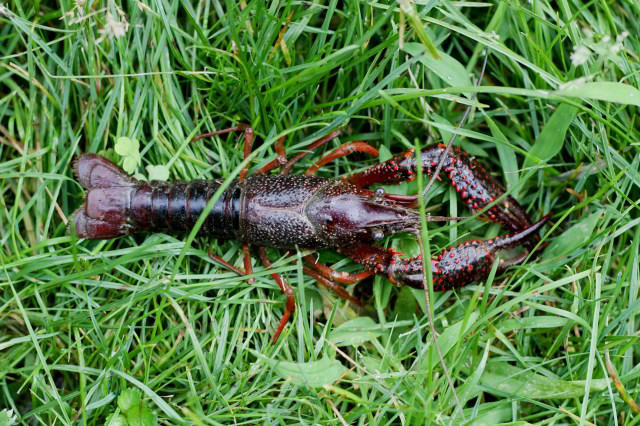
My MSN browser scroll included an article on the attempts to eradicate an invasive fish from a midsized lake in the Adirondacks.  While the fish are native to North America, they were introduced widely across the Adirondacks in the 1900’s, where they took over many lakes.  Their arrival led to declines of native fish species and stunting of growth rates in prized brook and lake trout, which compete for the same prey.  A study published in the journal Proceedings of the National Academy of Sciences revealed that in response to the annual removal of a quarter of the invasive fish from the lake, the numbers of fish 5 inches (12.7 cm) and under have increased while fish larger than 12 inches (30.5 cm) were mostly eliminated.  The findings have important implications for fish management.  It highlights the importance of preventing non-native species invasions before they happen and illustrates how efforts to suppress a species may backfire, leading to the opposite effect.  The smallmouth bass rapidly evolved to grow faster and invest more in early reproduction, leading to an even larger population of smaller fish.

When I went online, I found the smallmouth bass (Micropterus dolomieu), also known as brown bass, bronze bass, and bareback bass, is a freshwater fish in the sunfish family (Centrarchidae).  It is the type species of its genus Micropterus (black basses) and is a popular game fish throughout the temperate zones of North America.  Males are generally smaller than females. The males tend to range around two pounds, while females can range from three to six pounds.  The maximum recorded size is approximately 27 inches (69 cm) and 12 pounds (5.4 kg).  The color of the smallmouth ranges from golden olive to dark brown dorsally which fades to a yellowish white ventrally with dark brown vertical bars or blotches along the body and dark brown horizontal bars on the head.  The combination of muscular fusiform body shape and camouflage like coloring make these fish highly effective ambush predators.  The color varies greatly depending on age, habitat, water quality, diet, and the spawning cycle.  The fish has spread through stocking, along with illegal introductions, to many cool-water tributaries and lakes in Canada and especially the US.  

Peter McIntyre, professor in the departments of Natural Resources and Ecology and Evolutionary Biology and among the senior authors, said, “Twenty-five years ago, Cornell’s Adirondack Fishery Research Program set out to test whether we could functionally eradicate smallmouth bass from a lake.  It took us 25 years to prove why the answer is no: the fish evolved to outmaneuver us.”  Efforts began in 2000 to suppress bass in Little Moose Lake in the Adirondacks by using a generator to electrify the water to temporarily stun fish (electrofishing).  Scientists then scooped them up, released the native species back into the lake, and removed all captured bass.  The removal of 1000’s of fish worked for several years, then the smallmouth began to make a comeback, especially the smaller fish.  Genetic analysis revealed that selection pressures from removing fish resulted in dramatic genetic changes between 2000 and 2019 in the genomic regions associated with increased growth and early maturation.  

THOUGHTS: The introduction of smallmouth bass to the mountain lakes presented a new apex predator.  The brook (Salvelinus fontinalis) and lake (Salvelinus namaycush) trout are threatened by warming surface waters and depleted oxygen levels in cooler deeper water during the summer, and then competition with the smallmouth.  The genetic evolution resulted in a lose-lose for anglers.  The trout are disappearing, and the smallmouth are too small to keep.  Ecosystems are delicate balance and human intervention is rarely positive.  Act for all.  Change is coming and it starts with you.

Leafcutter

June 29, 2025

Melissa went shopping with me yesterday to get out of the house.  I needed to get some roasted peanut chips for the birds and Melissa wanted to look at the succulents.  She was surprised by the large number of inexpensive arraignments, and by their state of disrepair.  They were all soaked in water (causes root rot) and the leaves were starting to fall off.  Melissa bought a large arraignment to divide into separate plants and try and save them.  As we were checking out, I mentioned to the attendant that the plants were getting too much water.  She agreed and said she had also bought several to save them from dying.  When we got home Melissa began dividing the arraignment and repotting them into a cactus medium.  The plants were in potting soil (retains water) rather than cactus medium and the bright containers were made of plastic (retains heat).  Each of the plants were root-bound from their previous pots and the soil had not been broken up.  As Melissa dug through the potting soil she came across what looked like a leaf tube buried deep in the soil.  When she googled the odd structure, she found it was the egg nest of a leafcutter.

When I went online, I found leafcutter bees (Megachilidae), are part of a widespread (cosmopolitan) family of mostly solitary bees.  Characteristic traits of this family are the restriction of their pollen-carrying structure (scopa) to the ventral surface of the abdomen, rather than on the hind legs as in other bee families, and their typically elongated flap-like structure immediately in front of the mouth (labrum).  The scientific name Megachilidae refers to the genus Megachile, translating roughly as large lipped (Ancient Greek mégas – “big” and kheîlos – “lip”).  Their “large lips” and strong jaws are well-suited for collection of building materials for the nest.  These bees get their names from the materials they use to build their nest cells.  Leafcutter bees use leaves while mason bees use soil.  A few species collect plant or animal hairs and fibers (carder bees) while others use plant resins in nest construction (resin bees).  All species feed on nectar and pollen, but a few are kleptoparasites, which feed on the pollen collected by other megachilid bees.  The parasitic species do not possess scopae.  North America has an estimated 630 different megachilid species.  Most are native but a few are introduced, accidentally and intentionally.  Globally the number of species identified exceeds 4,000 and represents 15% to 20% of named species of bees.

The Nonparasitic Megachilidae divide their nests into cells with each cell receiving a supply of food and an egg.  The larva hatches from the egg and consumes the food supply.  After molting a few times, it spins a cocoon and pupates, then emerges from the nest as an adult.  Males die shortly after mating, but females survive for another few weeks, during which they build new nests.  Nest cavities are often linear, like the one found by Melissa, but not always.  Above ground megachilid bees are more commonly cultivated than ground nesting bees.  They accept nesting materials made from hollow stems, tubes, and blocks with preformed holes (“nest blocks”), and several megachilids have become important species for agricultural or horticultural pollination.  In North America these cultivated bees include the introduced alfalfa leafcutter bees (Megachile rotundata), used extensively in alfalfa pollination, and the orchard mason bee or blue orchard bee (Osmia lignaria), used in orchard pollination.  Other species are also in commercial use in North America, Europe and Asia.

THOUGHTS: Arkansas is home to at least 40 species of bees and the genus Megachile, has an estimated 15 to 20 species, including many leafcutter species.  Finding the nest tube of a leafcutter bee shows how easy it is to transport a species to another area.  While the leafcutter is beneficial, not all invaders are.  People criticize states like California which have tight controls on agricultural products.  Perhaps we should all be vigilant.  Act for all.  Change is coming and it starts with you.