Mason

June 21, 2026

I have mentioned our two flower beds dedicated to wildflowers.  The one on the north side of the house has sunflowers (Helianthus annuus) and cone flowers (Family, Asteraceae), while the east bed has a self-propagating mix of wildflowers (the package literally said, “wildflower mix”).  These beds attract a variety of bees (Clade, Anthophila) and butterflies (Family, lepidopteran).  Attached to one of my browsers was an ad asking for my support for local pollinators.  The ad described how honeybees do little of the pollination for gardens and orchards.  Honeybees (genus, Apis) produce honey, which along with their brightly colored yellow and black bodies make them attractive.  They also form colonies (hives) that are often located around orchards or even transported as rentals for pollination.  What I did not know until I opened this ad was that 90% of pollination is performed by a solitary bee known collectively as mason bees.

When I went online, I found a mason bee refers to bees in the genus Osmia (Family, Megachilidae) who derive their name from the habit of using mud or other “masonry” products in constructing their nests.  These nests are made in naturally occurring gaps such as cracks in stones or other small dark cavities.  Some species preferentially use hollow stems or holes in wood made by wood-boring insects.  Over 300 species are found across the Northern Hemisphere, but most occur in temperate habitats of Europe and Asia (Palearctic) and North America (Nearctic) and are active from spring through late summer.  Osmia species are frequently metallic green or blue, although many are blackish and at least one is rust-red.  Most have black ventral masses of black hairs on their hind legs (scopae) which are difficult to notice unless laden with pollen.  Two species of the genus, the orchard mason bee (Osmia lignaria) and the blueberry bee (Osmia ribifloris), are native to the Americas, although the orchard mason have been moved from their native ranges for commercial purposes.

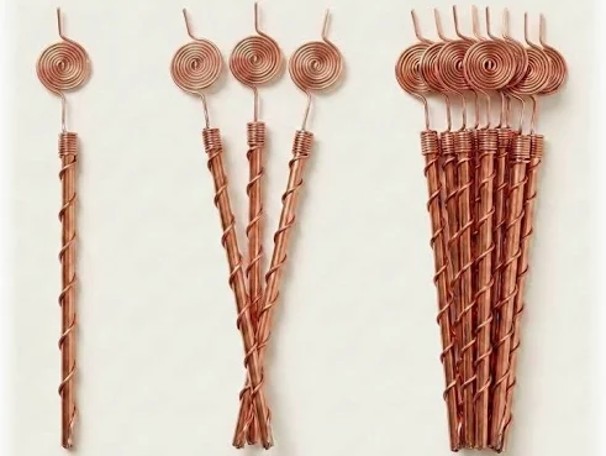
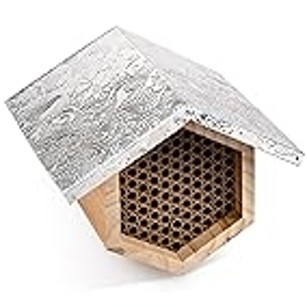
If you want to make your garden an inviting and safe space for the mason and other solitary bees, avoid cute, shallow decorative models.  Instead look for removable paper or cardboard tubes or wood laminate trays.  If bees nest in drilled in solid blocks, the house becomes a trap for diseases and mites after a single season.  The holes should be exactly 5/16-inch (8 mm) in diameter and at least 6 inches (15 cm) deep.  If the holes are too wide, bees cannot build secure mud partitions.  If the hole is too shallow, the female bees may only produce male eggs.  Solitary bees are sensitive to chemicals, so choose natural, untreated, or wood like cedar or pine.  Choose a sloped or overhanging roof (metal) to prevent rain from rotting the tubes, and a wire mesh on the front to deter woodpeckers.  The house should face southeast or east to receive early morning sun to warm the bees, encouraging them to start pollinating.  The house should be attached to a solid surface about 5 feet (1.5 m) above the ground.  I ordered one and got another for my grandchildren to enjoy, as well as the bees.

THOUGHTS: The mason bee house in the ad told of a 70-year-old man retiring after 50 years and this would be his last bee houses.  The ad pointed out the advantages of purchasing this house and its superiority over the commercial houses online or in stores.  It also said there were only 200 houses left.  I generally look elsewhere online to see if the “steals” offered by such sites are real and how they compare with other prices.  I had a red flag at “200 remaining” at a cost of “only US$69”.  My search pulled up a reference to possible scams.  When I looked, my ad fit the criteria.  The price was twice as much as other houses and did not meet the criteria listed among the “10 best”.  There are times we see a great idea that fits a criterion and we buy impulsively.  Even if this is the best deal, it should be checked.  Otherwise, we set ourselves up to be scammed.  That is true regardless of age.  Act for all.  Change will come and it starts with you.
False Parasol

June 15, 2026

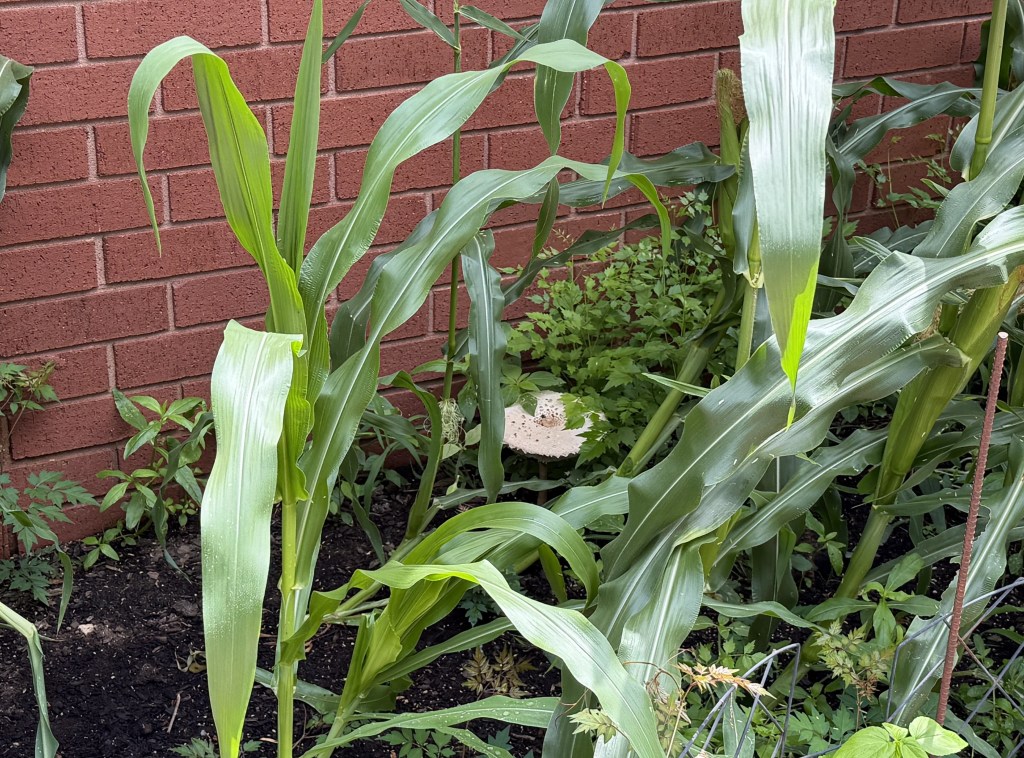
I have grown corn (Zea mays) in the bed along the back of my house for the last three years.  The first year I grew corn as part of the “three sisters”, an indigenous method that allows the corn stalks to support the climbing pole beans (Phaseolus vulgaris) with winter squash (genus, Cucurbita) providing ground cover to keep down the weeds.  While the corn grew, the cobs had spotty kernels that hardened before I harvested (oops!).  The entire crop also suffered “laydown” (common for corn in wind) just after I returned from vacation and I had to stake the stalks to get them to stand.  This year I learned about seed expiration (many did not sprout).  If you read the packets, it tells the planting year and how long it should remain viable.  I bought new seeds to plant this year.  The three rows were going well until the kids were “play fighting” and to my horror Loki jumped the fence and landed on top of the small stalks.  I added to the height of my fence, reset the plants I could, and replanted the ones that had been snapped, as well as several that had not sprouted.  The corn was growing well and began producing tassels (male) and silks (female ears).  Then two weekends ago a tornado cell passed over town and the winds caused another “laydown”.  I again staked what I could and hoped for the best.  When I checked the corn last week there was a large mushroom (false parasol) growing among the stalks.

When I went online, I found the false parasol (Chlorophyllum molybdites), commonly known as the green-spored or green-gill parasol, and vomiter, is a common species of mushroom found in temperate and subtropical meadows and lawns.  The species is poisonous and causes serious vomiting and diarrhea.  The cap (pileus) ranges from 3.1 to 12 inches (8 to 30 cm) in diameter and is hemispherical with a flattened top.  The cap is whitish in color with coarse brownish scales, with white gills that turn dark and green with maturity.  The stem (stipe) ranges from 2.0 to 12 inches (5 to 30 cm) tall and bears a double-edged ring and lacks the snakeskin pattern generally present on the edible parasol mushroom (Macrolepiota procera).  The flesh is thick and initially firm, although it softens with age.  The false parasol is the most consumed poisonous mushroom in North America as it is often misidentified as an edible species like the shaggy parasol (Chlorophyllum rhacodes) and parasol mushroom.  Fruiting bodies generally appear after summer and autumn rain.

The summer rains did bring out the large mushroom among my corn, as well as another in my next-door neighbor’s yard.  When I used Google identification it said the mushroom was a giant puffball (Calvatia gigantea) which is said to be very tasty.  I love mushrooms and I had visions of sauteing the firm flesh in butter and garlic.  As the round cap matured it flattened and the edible giant puffball morphed into a poisonous false parasol.  The large white puffball mushrooms are edible when young, as are all true puffballs, but even they can cause digestive issues if the spores have begun to form, as indicated when the pure white flesh begins to turn yellowish or greenish-brown.  An overripe puffball will fall apart and release spores when touched or if cut open and should be discarded.  I was glad I waited or I may have been another victim of mistaken identity. 

THOUGHTS: False parasol mushrooms are sometimes called fairy ring mushrooms as they often form fairy rings, a naturally occurring ring or arc of mushrooms.  Fairy rings are the subject of much folklore and myth worldwide, particularly in Western Europe, and are alternately seen as hazardous or dangerous places linked with witches or the Devil, or as a sign of good fortune.  Mine was a single mushroom so I will have neither good nor bad luck.  I am two days out from the maturation date on the package suggested for my corn.  Since I already had the laydown (bad luck), I am hoping for a good harvest (good luck).  Farming is not easy.  Act for all.  Change will come and it starts with you.
Goliath

June 13, 2026

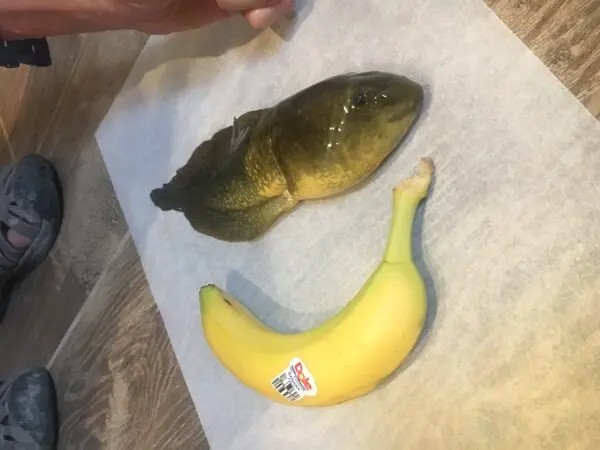
I came across an article on my MSN browser on a gigantic tadpole discovered in 2018.  The Chiricahua Mountains on the Arizona-Mexico border is famous for the Chiricahua leopard frog (Lithobates chiricahuensis).  This leopard frog is listed as a federally threatened species that is on the decline due to habitat loss and invasive bullfrogs.  A research team was draining a pond when they discovered a massive tadpole in their nets.  This was a bullfrog (Lithobates catesbeianus) tadpole that never metamorphosed.  Herpetologists are unsure why Goliath was stuck in tadpole limbo but believe it is due to a hormone imbalance, specifically a deficiency of a hormone essential for metamorphosis (thyroxine) combined with an excess of growth hormones.  The beast was taken to the Southwestern Research Station before dying in 2019.  The tadpole will be preserved by scientists so they can better understand what caused his mysterious condition.  Researchers had appropriately named the tadpole Goliath.

When I went online, I found there is a species of frog named the goliath frog (Conraua goliath), also known as the giant slippery frog and the goliath bullfrog, in the family Conrauidae.  The goliath frog is the largest living frog.  Specimens can reach up to about 18 inches (45 cm) in snout to vent length and 9.9 pounds (4.5 kg) in weight.  The species has a relatively small habitat range in Cameroon and Equatorial Guinea.  The goliath can live up to 15 years in the wild and up to 21 years in captivity.  The primary threat to the goliath frog is hunting, as it is considered a food source in its native range, although other predators are possible. The frog is also threatened by habitat loss and degradation, and they have been extensively exported to zoos and pet trade but have proven shy and nervous in captivity.  Although captives may live longer than their wild counterparts, the species has not been bred in captivity.

Goliath, the tadpole, did not undergo the normal metamorphosis where their tails are transformed into legs and development of adult frog features.  Despite remaining a tadpole, Goliath continued to grow, making it one of the largest tadpoles ever documented.  Its condition is considered extremely rare and provides insight into how hormonal imbalances can affect amphibian development.  The case highlights the delicate balance required for normal amphibian growth and metamorphosis. Researchers studied Goliath to understand the effects of endocrine disorders on development.  Cases like Goliath also raise questions about environmental impacts like pollution and habitat changes and their effect on the hormonal processes in wildlife.  Goliath was preserved by scientists to allow further study of its unique condition.  Its story serves as a compelling example of the extraordinary variations that can occur in nature and underscores the importance of monitoring environmental and hormonal factors in amphibian populations.

THOUGHTS: When I found that Goliath had died in 2019, I began to wonder why this popped up on my browser today.  A Copilot search gave me three possible answers.  It could have been as it was recently linked to a news or science article about unusual wildlife or amphibian biology.  Another explanation is a website or blog discussing rare animal cases or environmental science featuring the story.  Finally, it might have occurred via a browser ad or redirect or if my browser had been hijacked or exposed to unwanted ads, then it could have shown the page as part of a pop-up or search result.  Personally, I think it appeared as I seem to gravitate toward such article in my searches.  We are all being tracked for preferences.  This can make my searches more effective, if I do not care where this information is shared.  Hmm.  Act for all.  Change will come and it starts with you.

Cigarette Snail

June 10, 2026

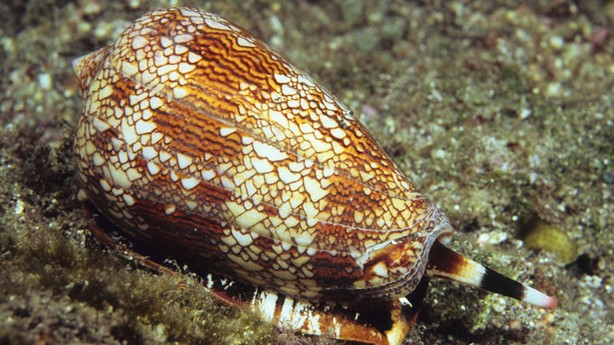
While perusing my MSN browser I came across a post from the journal Sciencing addressing one of the worst ways to die.  During the summer people are drawn to the beach for the nice sea breeze and warm sand.  Rather than relaxing and trying to get a suntan (harder now with my SPF 50 sunscreen) I like to spend time walking along the shore looking for shells.  Melissa and her family did the same and we have several snail-shaped glass vases filled with some of the shells rescued and brought home as souvenirs.  The best time of day to collect is after high tide as the water recedes and the shells are deposited on the beach.  An even better time is after a storm has passed and more shells and creatures have been deposited along the shore.  The article cautioned to avoid picking up one particularly pretty, cone shaped shell.  The occupant resting inside this beautiful relic is equipped with enough venom to kill 700 people.  It is said that if you were stung by this snail, you would perish before you had time to smoke one last cigarette.

When I went online, I found the geography cone (Conus geographus), also called the cigarette snail, is a species of predatory cone snail that lives in reefs of the tropical Indo-Pacific and hunts small fish.  While all cone snails hunt and kill prey using venom, the venom of this species is potent enough to kill humans.  Individuals grow to about 4 to 6 inches (10 to 15 cm) in length, with the size of an adult shell between 1.7 to 6.5 inches (43 and 166 mm).  The color of the shell is pink or violaceous white, but occasionally reddish and has a mottled appearance with two irregular chestnut or chocolate bands.  This intricate brown-and-white pattern is highly prized by shell collectors.  Geography cones are common and occur in the Red Sea, off the coast in the Indian Ocean, and are indigenous to the reefs of the Indo-Pacific (except Hawaii), and off northern Australia.  The snail’s distribution is largely explained by the temperature of its habitat and alterations due to climate change are predicted to impact its distribution in the following decades.

There are over 600 species of cone snails that are not equally dangerous to humans.  Only two species, the geographic cone and the textile cone (Conus textile), have reportedly resulted in human death.  There is also rich diversity in the venom that these snails produce.  Their venom is generally characterized by peptides known as conotoxins. Each snail produces over 100 of these conotoxins, and only 5% of them are estimated to overlap among species.  Only a few of these toxins have been characterized fully, which makes development of an antidote a challenge. The complexity of the conotoxins makes it difficult to understand exactly how death occurs in humans.  While scary, there have not been a lot of human fatalities recorded.  A review from 2016 showed that there have been a total of 36 recorded cone snail deaths and researchers are unsure whether these deaths have been a result of cardiovascular damage or damage to the respiratory system.  Humans are fortunate not to be a target species for the cigarette snail, leading to relatively rare toxic encounters.

THOUGHTS: While a sting by a cigarette snail may be one of the worst ways to die, their toxins may lead to medical innovation that could save lives.  Researchers have identified a drug based on cone snail venom that was approved in 2004 to treat chronic pain.  Another potential benefit might be derived from the cone snail insulin, which takes effect more quickly than human insulin.  There are currently about 11 to 12 FDA-approved medications derived directly from animal toxins, with 100’s more in clinical trials and research, adapted to treat everything from high blood pressure to chronic pain and diabetes.  If you do not provoke (pick up) the pretty shell, the snail cannot kill you.  Act for all.  Change will come and it starts with you.
Nativars

June 09, 2026

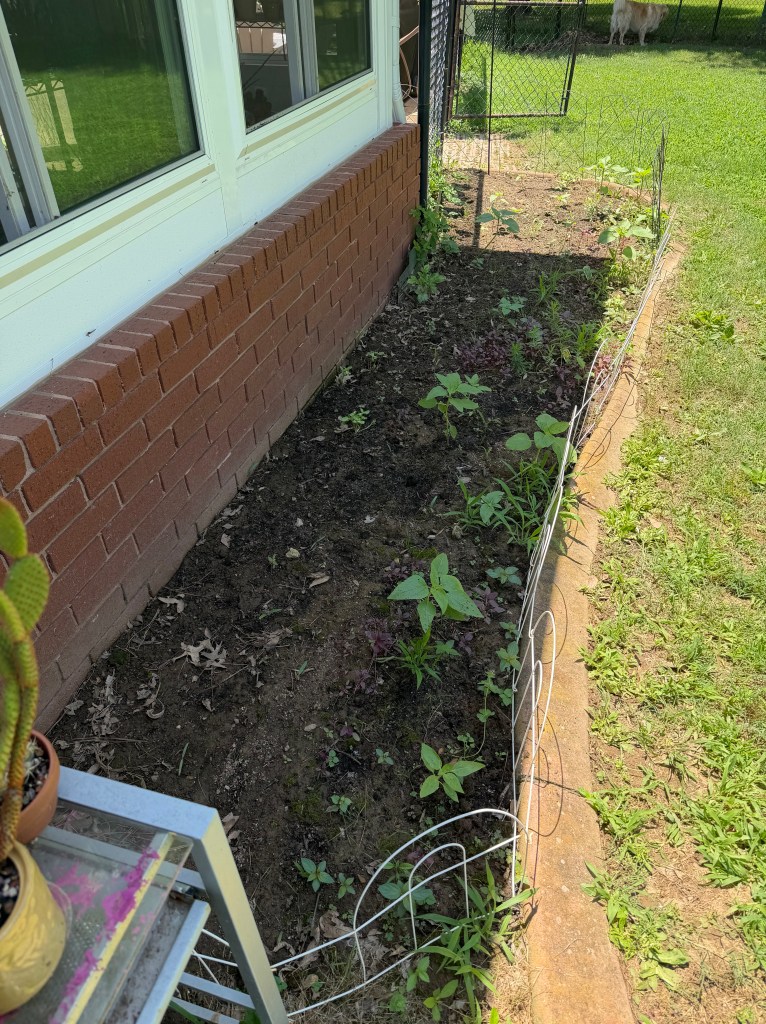
Toward the back of my local Sunday newspaper was a USA Today article on the need to plant native plants to help pollinator insects.  This caught my eye as I have dedicated two of our flower beds        to growing native wildflower mixes and Melissa has increased the number of potted plants around both the front and back of our house.  The bed in front was planted last year with perennials, and it reproduced this year.  The bed to the north (not full sun) contains two small tables with succulents but I added sunflowers (Helianthus annuus), crimson clover (Trifolium incarnatum), and red amaranth (Amaranthus cruentus) to the rest of the bed.  All the seeds in the north bed were past their expiration, but I prepared the ground and sowed the seed on the off chance they would grow.  While not all the seeds sprouted, I was pleasantly surprised by the number and variety of plants that are now growing.  While the newspaper article stressed how native pollinators prefer native plants, it also mentioned how recent plant breeding has created hybrid plants known as nativars.

When I went online, I found nativar is a blend (portmanteau) of the words ‘native’ and ‘cultivar’.  A nativar is a horticulturally bred strain of a plant species which distinguishes them from their native counterparts.  These plants may have different genetic traits from those formerly prevalent in the wild.  The difference between a ‘nativar’ and a ‘cultivar’ is if the species is grown within its native historic range.  The goal of using nativars within their historic species range is to reintroduce their ecological benefit into the local ecology.  The ecological consequences and benefits of nativars are a widely discussed concept within gardening and horticultural communities, as the capacity of nativar plants to fit the ecological niche of their native counterpart may be manipulated during the breeding process.  Nativars are developed for a variety of reasons, including disease resistance, pest resistance, and drought tolerance.  Within the horticulture industry, nativars are often developed for aesthetic reasons, such as improving bloom and foliage size, shape, form or scent, along with improved growth habits for a garden setting.  Nativars are developed within the agriculture and forestry industries for improved yield, flavor and quality.  Finally, nativars have been developed for restoration purposes in hopes of re-establishing native populations.

One of the ways nativars can be manipulated during the breeding and cultivation process is the capacity for a plant species to fit the needs of pollinator species that coevolved to rely on them.  Pollinator visitation rates of nativar plants may be increased, decreased, or unchanged relative to their wild native counterparts depending on altered factors such as bloom time, color, and shape. Nativars that dramatically change the bloom color of the species compared to wild populations can disrupt the ability of native pollinators to recognize the flowers as a food source.  The ecological benefit of nativars for pollinators can also be reduced by diminished nectar, pollen production, and flower form.  Not all cultivars that alter the bloom color from the most abundant naturally occurring flowers result in decreased ecological relationships.  It depends on the resulting hybrid and the selectivity of the pollinator.

THOUGHTS: Nativars are hybrids created for humans and not native pollinators.  They increase the bloom size or even result in double blooms, but they can also cause the plant to be sterile or reduce the amount of pollen or nectar produced.  Since our purpose for planting wildflowers is to attract (and feed) native bees (genus, Apis) and butterflies (order, Lepidoptera) I do not plan on sowing nativars.  Why and how humans act depends on the desired outcome.  If we are not purposeful, we cannot complain about an undesirable outcome.  Act for all.  Change will come and it starts with you.
Vulture

June 08, 2026

Researchers at the University of Florida (UF) say invasive Burmese pythons (Python bivittatus) in the Everglades are facing an unexpected new threat.  A newly published UF study found that Black vultures and Turkey vultures have become significant predators of python eggs.  Motion-activated cameras are capturing the birds digging into nests and consuming eggs while mother pythons temporarily left to bask in the sun.  Scientists said the findings could help explain why the rapidly growing python population has not expanded even faster across South Florida despite the reptiles having few natural predators in the region.  The study documented vultures destroying nearly half the eggs in monitored nests, raising hopes that native scavengers may be adapting to help naturally suppress the invasive species.  Researchers said Burmese pythons have devastated native wildlife populations in the Everglades by preying on mammals, birds and reptiles since becoming established in Florida decades ago.  The findings, published in the journal Reptiles & Amphibians, suggest that native wildlife may be adapting to exploiting the destructive, invasive python as a food source.

When I went online, I found vulture refers to a bird of prey that scavenges on carrion. There are 23 extant species of vulture (including condors).  Old World vultures include 16 living species native to Europe, Africa, and Asia while New World vultures have 7 species and are restricted to North and South America.  Old and New World vultures are not closely related, and their resemblances in similar form or function are not present in the last common ancestor of those groups (convergent evolution).  A characteristic of many vultures is a bald, unfeathered head believed to keep the head clean when feeding.  North America has three species of vulture.  The Turkey Vulture (Cathartes aura) is across the US and South America and is moving north into Canada.  The Black Vulture (Coragyps atratus) lives in southeastern US states and into Mexico.  California condor (Gymnogyps californianus) is the largest North American land bird.  The species became extinct in the wild in 1987 when all remaining wild birds were captured but has been reintroduced to northern Arizona and southern Utah, the coastal mountains of California, and northern Baja California in Mexico.

Researchers stumbled on four vultures eating python eggs in the dense underbrush of the Francis S. Taylor Wildlife Management Area in Broward County, Florida.  This is the first documented case of a native Florida bird preying on an invasive python nest.  The event occurred in 2023 but was not published until this year.  The researchers used a “scout snake” with a radio transmitter to locate the nest and were coming to collect the eggs.  The vultures fled the nest when approached and could not be identified as Black or Turkey vultures.  The only other documented case of predation on python eggs was in 2021 when a trail camera captured a bobcat eating python eggs in Florida’s Big Cypress National Preserve.  There is a precedent for native animals learning to consume invasive species.  The Everglades snail kite (Rostrhamus sociabilis) was near extinction when it started eating an invasive snail that is larger than the native snail the birds typically ate, resulting in a rapid microevolution to have larger beaks to be more adept at digging into the larger snail. 

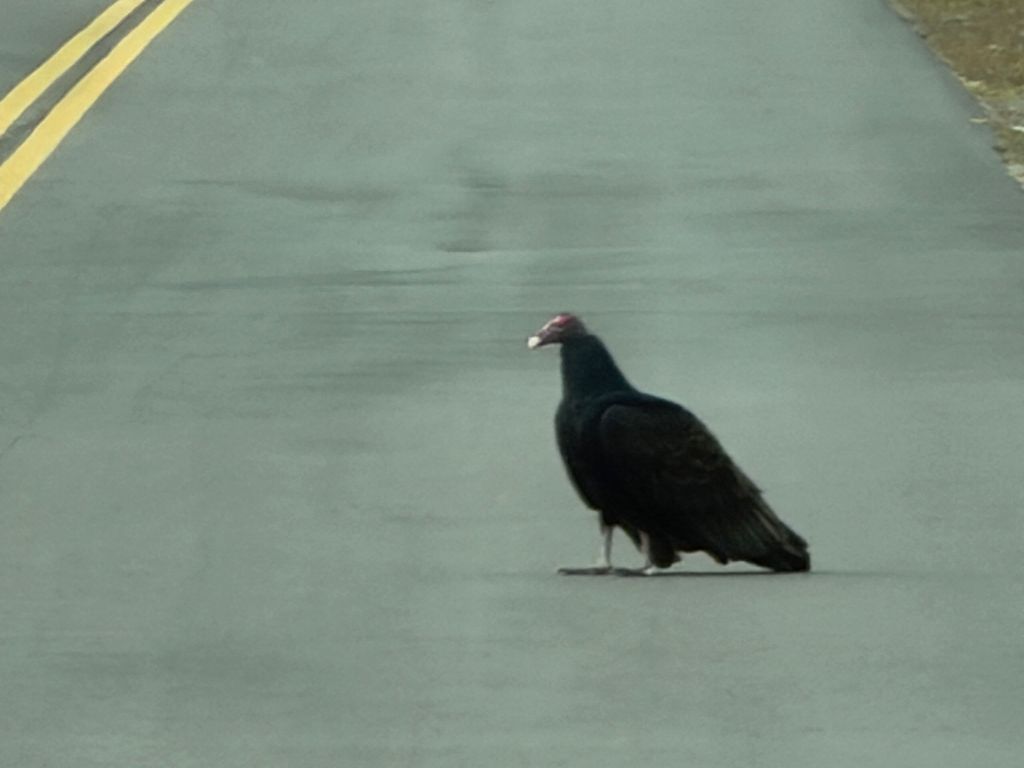
THOUGHTS: Growing up in Kansas I saw many a Turkey Vulture, but it was not until we moved to Arkansas that I became aware of the Black Vulture.  The two species are often together fighting over carrion or swarming the skies.  The Turkey Vulture has a smaller red head and can find carrion with its excellent eyesight or with its sense of smell, while the Black Vulture has a black head and can only find its food visually.  While humans may appear divergent, we are all the same species.  We need to try and behave like it.  Act for all.  Change will come and it starts with you.
Canyon

May 29, 2026

Getty Image

Melissa and I took two long trips this Spring in the RV.  We took two trips last Fall to begin RVing.  Both trips were less than 100 miles (161 km) and consisted of three days during the middle of the week.  We did not pull a vehicle (“toad”) on the first trip and any missed items we went without.  We towed the Jeep the second time and were able go into town pick up needed items, including a hose extension for water.  We thought we had worked out the kinks and left in February on a 1100-mile (1770 km), 2-1/2 week trip to Florida, but struggled keeping the toad battery charged and had to buy a sewer extension.  We thought we solved the battery issue during the week home before we left in March for a 1200-mile (1931 km), 3-week trip to Arizona.  We did not.  Every time we left the toad attached overnight it still ran down the battery.  To top it off, the city water connection valve stripped and we could not connect to the camp hoses.  We had planned on stopping at the Grand Canyon, but our main sights were set on my old stomping ground in Utah, so we powered on by.

When I went online, I found a canyon forms by a combination of flowing water, tectonic uplift, and weather acting on the earth’s surface over millions of years.  The process of canyon formation often begins with downcutting as rivers and streams carve deep, steep-sided valleys into the earth’s bedrock.  The rushing water uses gravel, sand, and rocks it carries like liquid sandpaper to grind away the rock beneath its flow.  For massive, deep canyons to form, the ground beneath the river must be pushed upward by shifting tectonic plates (tectonic uplift).  This uplift makes the river steeper, increasing its speed and cutting power.  Weathering and erosion are the third force acting to create a canyon.  Rainwater seeps into cracks in the rock, where it freezes, expands, and breaks the rock apart.  Wind, flash floods, and rockslides further widen the canyon walls and wash the debris downstream, preventing the valley from simply becoming a flat slope.  All three processes occur simultaneously, and when you add the dimension of time you get a canyon.

It was appropriate that after missing a tour of the Grand Canyon that an article on how it was formed appeared in a USA Today article in our local newspaper several weeks after we returned.  A study published April 16 in the journal Science provides one answer to the mystery.  According to the study, the Colorado River did not always flow through the canyon and instead began to carve its path around 5.6 million years ago after an ancient lake overflowed.  Ryan Crow, co-author and researcher with the US Geological Survey, said scientists have known the river existed 11 million years ago in western Colorado and that it did not exit through the Grand Canyon until after 5.6 million years ago.  The mystery was where did it go?  Crow said the study tested the idea that the river flowed into the Bidahochi basin in northeastern Arizona.  Sand deposits in the ancient lake showed a clear Colorado River signature, indicating the river flowed into the lake.  As the lake rose, a spillover became the primary process that established the river’s course through the (emerging) canyon.  About two million years later the lake no longer existed and the Colorado River system was fully born. 

THOUGHTS: My son and I went to the south rim of the Grand Canyon when he was a child.  We did not take the day long hike/mule ride to the bottom but were able to peer into its massive depths.  Our takeaway from our two RV trips was that we needed to be more leisurely when we travel.  We missed quite a few historic/archeological features because we felt pressed to reach our reserved campground.  We assumed if we did not reserve sites, we would not have a place to stay.  While that was true for the state parks, every commercial park where we stayed had open spaces.  In Europe we took time to “see stuff”, but at home we did not.  Do not regret taking time to enjoy the wonder of where you are.  Act for all.  Change will come and it starts with you.
Snakehead

May 26, 2026

Last Friday Melissa and I decided to treat ourselves to a visit to a Wildlife Management Area (WMA) along the Arkansas River that has been getting constant sightings on the Arkansas Birders group.  The area is not too far from our house, and I had even visited once before while looking for a place to fish.  We did several errands on our way out of town and by the time we were leaving rain had started to fall.  By the time we reached the WMA the rain was light but steady.  The last section of the road was dirt but well maintained.  This area in an old oxbow (curve) that has formed a lake apart from the main channel of the river.  The WMA now has 2,180 acres (882 ha) and is primarily managed for migratory waterfowl and wetland restoration by the Arkansas Game and Fish (AG&F) Commission and Ducks Unlimited.  This makes the site popular destination for local hunters and bird watchers.  Despite all the amazing bird photos we had seen, we saw very few birds.  The waterfowl that had been present when I last visited were non-existent (afraid to get wet?) and there were no birds fliting in the trees.  As we drove slowly through the area we crossed over a bridge on a backwater section of the lake.  I stopped because there were dozens of 1-pound (0.92-l) gas canisters floating in the water.  Next to a sunken log in the bayou was a 30-inch (76 cm) snakehead.

When I went online, I found the northern snakehead (Channa argus) is a species of snakehead fish native to temperate East Asia, in China, Russia, North Korea, and South Korea.  Their natural range goes from the Amur River watershed in Siberia and Manchuria down to Hainan, China.  Snakeheads are an important food fish and one of the most cultivated in its native region, with 562,179 tons (510,000 tonnes) annual production worldwide.  This has led to the fish being exported throughout the world and has resulted in established non-native populations in Central Asia and North America.  The species has a long dorsal fin with 49 to 50 rays, an anal fin with 31 to 32 rays, a small, anteriorly depressed head, eyes above the middle part of the upper jaw, and a large mouth extending well beyond the eye.  The small, slender teeth form velvety bands (villiform) with large canines on the lower jaw and upper mouth plate (palatines).  It is generally reported to reach up to 3 feet 3 inches (100 cm) in length, but specimens approaching 4 feet 11 inches (150 cm) are known according to Russian ichthyologists (fish scientists).  The largest specimen registered by the International Game Fish Association weighs 21 pounds 0 ounces (9.53 kg).  In the US, it is found in Pennsylvania, Virginia, West Virginia, Delaware, Maryland, North Carolina, Arkansas, Missouri, and Mississippi.

The northern snakehead first appeared in US news when a fisherman discovered one in a Maryland pond in 2002.  In 2008, the fish was found in drainage ditches in Arkansas because of a commercial fish-farming accident, and flooding may have allowed the species to spread into the nearby White River which would allow an eventual population in the Arkansas and Mississippi Rivers.  Arkansas is the birthplace of warmwater aquaculture in the US and currently ranks as the second-largest aquaculture-producing state.  It is also the epicenter for the four species of invasive Asian Carp (Hypophthalmichthys molitrix, Hypophthalmichthys nobilis, Ctenopharyngodon Idella, and Mylopharyngodon piceus).  The invasive snakehead can now be added to the list.  All five species are said to be quite edible, but getting the American palate to try the fish is a harder sell. 

THOUGHTS: AG&F says if you encounter the northern snakehead, silver, bighead, or black carp, kill it (humanely) and report your encounter to the Arkansas Game and Fish Commission Aquatic Nuisance Species coordinator by email (reportans@agfc.ar.gov).  It is illegal to transport these fish species alive.  While I did not catch the snakehead, I did report it.  Invasive species may never be eradicated, but with help they can be managed.  Act for all.  Change will come and it starts with you.
Oriole

May 17, 2026

I try to put a variety of seeds in the 11 feeders we have on our pool deck.  I purposefully dedicated the two farthest feeders under the trees to the eastern gray squirrels (Sciurus carolinensis).  I put shelled peanuts (Arachis hypogaea) and a corn (Aea mays) log in one and cracked corn in the other.  I did this as it was a losing battle to try and keep the squirrels out of all the feeders.  I found the northern cardinals (Cardinalis cardinalis) and common grackles (Quiscalus quiscula) prefer these feeders, while the squirrels run along the fence to feast on the two feeders with common sunflower (Helianthus annuus) seed on the other side of the deck.  I have also stocked meal worms (larva of Tenebrio molitor), two feeders with roasted peanut chips, and a wild bird seed mix (cereal grains of Family, Poaceae).  I currently stock the two window feeders with safflower (Carthamus tinctorius) seed, but this is messy and I am considering switching back to sunflower chips.  The last feeder is a suet corn cake.  While most of the birds which visit are the same every day, we do get an occasional new species.  Last week the new arrival was a Baltimore oriole.    

When I went online, I found The Baltimore oriole (Icterus galbula) is a small blackbird of the icterus family common in eastern North America as a migratory breeding bird.  The species was formally described in 1758 by the Swedish naturalist Carl Linnaeus in the tenth edition of his Systema Naturae under the binomial name Coracias galbula.  The bird received its name from the resemblance of the male’s colors to those on the coat-of-arms of 17th-century English Baron Lord Baltimore.  There have been observations of interbreeding between the Baltimore oriole and the western Bullock’s oriole (Icterus bullockii) which led to both being classified as a single species, called the northern oriole, from 1973 to 1995.  Research by James Rising, a professor of zoology at the University of Toronto, and others showed that the two birds did not interbreed significantly and they are again classified as different species.  The Baltimore Oriole is the state bird of Maryland, and the namesake and mascot for the Baltimore Orioles baseball team.

Melissa has a friend who has been texting her pictures of an oriole who has been visiting her feeder.  She put out a tray with orange (Citrus sinensis) slices and grape jelly, and they clean her out several times a day.  We have only seen the oriole twice on the suet cake, but I figured we might get more activity with orange slices and grape jelly.  A number of other birds (and squirrels) are fond of oranges so this may bring other birds as well.  I followed the friend’s example and initially set the feeder next to the suet cake, but the grackles pounced on the feeder looking for the peanut chips and knocked it to the ground.  This afternoon I set the oriole feeder back up and moved it farther away from the others.  Hopefully this will work and attract an oriole before they migrate through our area. 

THOUGHTS: When I was growing up in north central Kansas there was a Baltimore oriole that would nest in the branches of a tree outside my second story window.  This was a massive American elm tree (Ulmus americana) that stretched over the enclosed side porch.  I was fascinated by the bird and its flashy orange and black body.  I was also into collecting baseball cards and listening to my older brother’s radio playing baseball as we fell asleep at night.  I became a huge fan of the Orioles (team) in part because of my connection to the bird outside my window, along with the fact they became an American League powerhouse in the 1960’s, wining two pennants and their first World Series.  Although I now (mostly) follow the Kansas City Royals baseball team, I still have a fond spot for the Orioles.  Most of our traditions and habits were ingrained in us during our youth.  That is why it is important to train a child to be willing to reach out and embrace others.  Act for all.  Change is coming and it starts with you.

Transition

May 14, 2026

Several days ago, I saw what I thought to be a new bird species in my feeders.  This grey bird was about the size of a robin but was busy feeding on the suet cake I had placed on the back fence.  I was able to snap a photo and then checked the picture against my Google identification app (I find it easier than either my Audubon or Nat Geo birding apps).  I was surprised to learn this was an immature Eastern Starling.  This morning Melissa called my attention to this same strange bird she had seen feeding on the suet.  She was surprised as an adult starling was collecting seed from the suet cake and feeding it to the larger brown bird.  She sent me a picture of the two and I recognized the speckled white feathers of the (springtime) adult and the brown feathers of the immature offspring.  Both the parent and young were in different stages of plumage transition.  

When I went online, I found the European starling (Sturnus vulgaris), also known as the Eastern Starling, undergoes dramatic feather color changes annually.  They transition from a spotted winter plumage to glossy, iridescent black in spring.  Juveniles are drab brown, transitioning to speckled, then glossy adult plumage over their first year.  Juveniles transition from Summer to Early Fall.  Freshly fledged (kicked out of the nest) juveniles are plain grayish-brown or dusky brown with a dark bill.  From late Fall to Winter the immature birds undergo a post-juvenile molt and then gain iridescent black feathers that are heavily speckled with white and cream-colored spots.  Breeding or adult have the same speckled winter colors and during Spring to Summer experience “wear,” as the white, brittle tips of the winter feathers break off, leaving a glossy, iridescent dark plumage (green, purple, and blue) with a yellow bill.  This unique “wear molt” allows the starling to change its appearance completely without the high energy cost of growing new feathers in the spring.

After rousing, I came outside to sit and watch the feeders with Melissa.  She has been sending me interesting pictures of a variety of birds in the last several days.  It appears Melissa has been coming outside around 8:30 am for her morning coffee and has seen a flurry of activity on the feeders.  This morning the female eastern bluebird (Sialia sialis) was bringing newly procured bugs to the bird house on the pool deck.  Her arrival was met with the raucous sound of several young vying for a meal.  There was also a second sighting of an orange bird about the size of an American robin (Turdus migratorius) feeding on the suet.  This time she was able to take a photo before the bird quickly flew away.  Although the bird was partially blocked by a starling fighting for the same cake, it appears to have been a Baltimore oriole (Icterus galbula).  Melissa said she goes inside around 11:00 am as the “cool” birds are gone by then and it becomes a fight between the northern mockingbird (Mimus polyglottos) and the common grackles (Quiscalus quiscula).  It is only recently the starlings have been present at the 11:00 am transition.  I need to get up earlier to see the show.

THOUGHTS: After the 11:00 am transition Melissa went back inside.  Lately, the temps are warming up, and the sun has been breaking through the overcast sky by this time. I had re-stocked the feeders when I came out and even knowing I had missed the real show, I decided to stick around and see what might transpire.  The mockingbird was making a back-and-forth trip to the meal worms, and I wondered if it was also feeding young.  The suet cake was descended upon by a group of six starlings, including two pairs of adult and young feeding at the cake together.  This is the time of year where birds transition from the nest to fledgling on the ground to joining parents to learn to feed themselves.  Humans go through a similar transition, but it takes a dozen or more years and it literally takes a village to do it right.  We need support and not criticism.  Act for all.  Change is coming and it starts with you.