
September 28, 2024
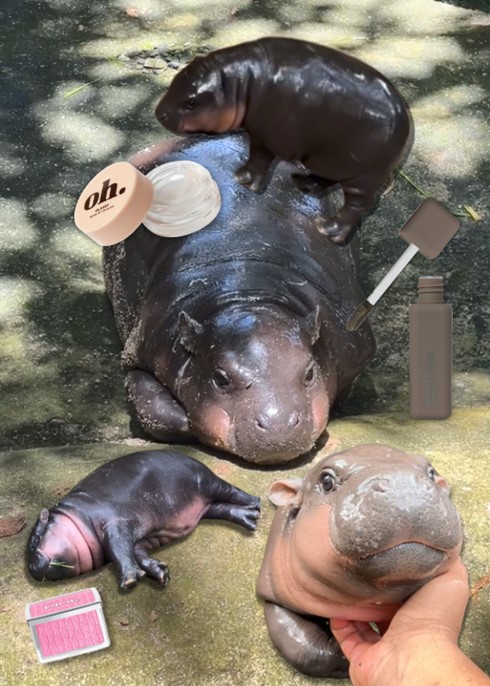
Moo Deng is a pygmy hippopotamus living in Khao Kheow Open Zoo in Si Racha, Chonburi province, Thailand, born on 10 July 2024. Her name was chosen through a public poll with over 20,000 people voting for “Moo Deng”, translating to “bouncy pig”. The zoo posted images of her on its Facebook page and Moo Deng quickly became a fan favorite for her playful and energetic romps. Her popularity led the zoo to sell clothing and other merchandise featuring designs based on her likeness. Other companies produced merchandise, including a cake shop (Vetmon Café) which created a realistic cake shaped like her. Moo Deng’s viral popularity resulted in a doubling of daily visitors in early September. The zoo is in the process of copyrighting and trademarking “Moo Deng the hippo” to raise funds for the zoo and plans to launch a livestream to allow fans to watch Moo Deng over the Internet.
When I looked online, I found Moo Deng is a pygmy hippopotamus (Choeropsis liberiensis) or pygmy hippo, a small hippopotamid native to the forests and swamps of West Africa. The pygmy is one of only two extant species in the family Hippopotamidae, the other being the larger common or Nile hippopotamus (Hippopotamus amphibius). The pygmy hippo was unknown outside West Africa until the 19th century and is a reclusive and nocturnal forest creature difficult to study in the wild. Like the common hippo, the pygmy hippo displays terrestrial adaptations but is semiaquatic and relies on water to keep its skin moist and its body temperature cool. Mating and birth may occur in water or on land. The pygmy is herbivorous and feeds on ferns, broad-leaved plants, grasses, and fruits it finds in the forests. Current pygmy populations are primarily in Liberia, with small groups in Sierra Leone, Guinea, and Ivory Coast. It has been extirpated (eradicated) from Nigeria. Pygmy hippos are primarily threatened by loss of habitat, as forests are logged and converted to farmland. The Pygmy are also vulnerable to poaching, hunting for bushmeat, natural predators, war, and are illegally hunted for food in Liberia. The species breed well in captivity and the vast majority of research is derived from zoo specimens. A 2015 assessment by the International Union for Conservation of Nature estimated that fewer than 2,500 pygmy hippos remain in the wild.
As a viral sensation Moo Deng has prompted a makeup trend popular with beauty influencers. Moo Deng makeup is in line with what beauty enthusiasts look for, super dewy skin and lots of blush. The trend is perfect for fall as the skin will be hydrated and glass-like as the drier months approach. The trend started with influencers trying to recreate her iconic look by achieving the baby pygmy’s glass-like skin with the prettiest shade of blush. Before applying makeup, you need to ensure the base is nice and dewy to capture the baby hippo’s glistening skin. The trend incorporates lots of grey hues to represent Moo Deng’s skin color. An element common among influencers’ is the heavily flushed cheeks. Any blush shade will do, as long as it has a great color payoff. Grey eyeshadow or lip gloss, followed by a particular shade of blush create the final makeup look.
THOUGHTS: While Moo Deng may create viral views, sales, and makeup, she is at risk. Some visitors harassed Moo Deng by splashing her with water and throwing objects to wake her up, forcing the zoo to install security cameras around her enclosure. The zoo also implemented a 5-minute time limit for visitors to accommodate the high volume of visitors. While most marvel at the wonder of nature, there are others who find pleasure in destruction. Whether it is throwing objects at Moo Deng or toppling 100,000 year old rock formations the seconds of fame being sought are not worth the cost. “Influence” comes with responsibility. Act for all. Change is coming and it starts with you.
 A travelers odyssey