
December 04, 2024
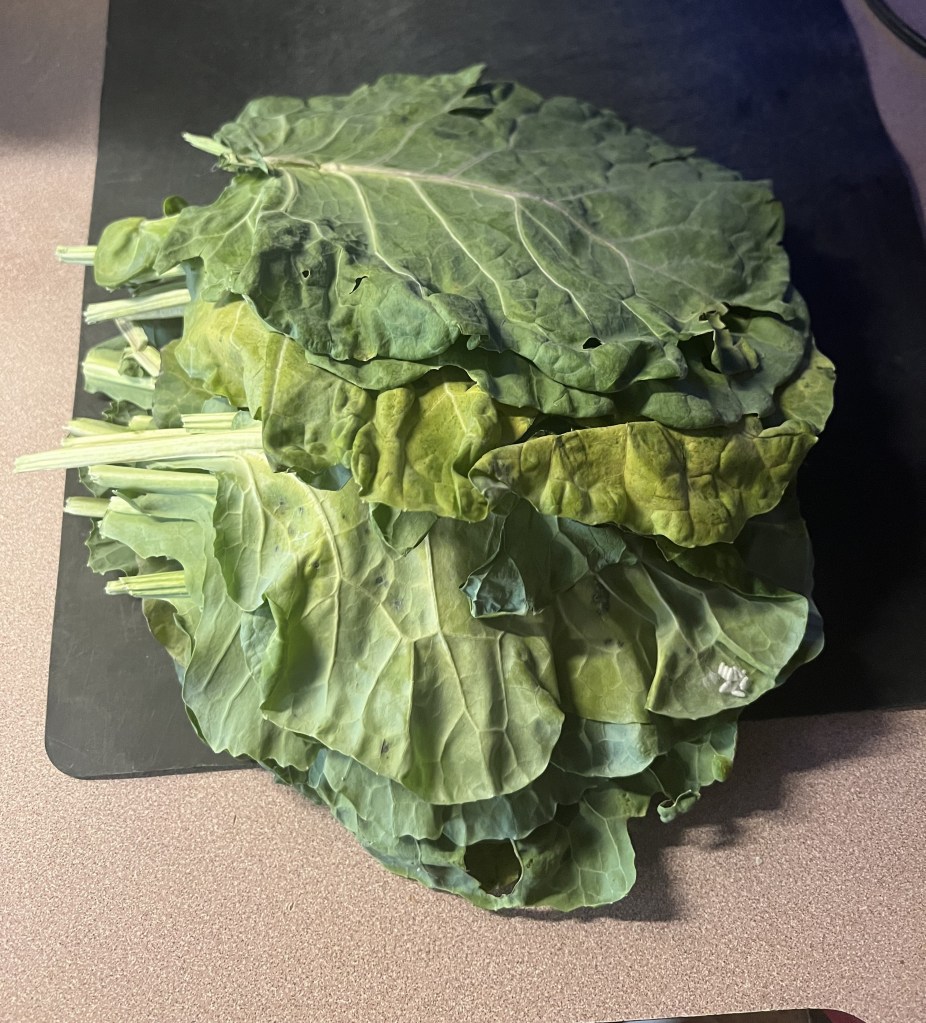
Last week I gave in and disbanded the remaining sections of my garden. That meant picking (hardly enough to qualify as a harvest) the last green tomatoes (Solanum lycopersicum) and removing the vines from their containers. I am looking for a green tomato recipe (other than fried) as Melissa said she will not allow the last of the lot to go into more salsa/Pico. I picked the remaining pole beans (Phaseolus vulgaris) and removed the final hill of plants. The beans had been bitten by the mornings of frost and had gone mushy and I ended up throwing them away. The only thing left was the three cabbage (Brassica oleracea) plants that had not matured enough to form a head. After I pulled them from the ground, I wondered what I could do with the leaves, as it seemed a waste to just throw them away. I made sauerkraut and Cole slaw from the four cabbages I harvested several weeks ago but wanted to do something different with this batch. That is when I hit on the idea of a cabbage roll.
When I looked online, I found a cabbage roll is a dish consisting of cooked cabbage leaves wrapped around a variety of fillings. This dish is common to the cuisines of Central, Northern, Eastern, and Southeastern Europe, as well as much of Western Asia, Northern China, and parts of North Africa (i.e., most anywhere except the Americas). Meat fillings are traditional in Europe, and include beef, lamb, or pork seasoned with garlic, onion, and spices. Grains such as rice and barley, mushrooms, and vegetables are often included in the roll. Fermented cabbage leaves are often used for wrapping in southeastern Europe. In Asia, seafoods, tofu, and shiitake mushrooms may be used, and Chinese cabbage (Brassica rapa) is often used as the wrapping. The cabbage leaves are stuffed with the filling and then baked, simmered, or steamed in a covered pot and generally eaten warm, often accompanied with a sauce. The cabbage roll can serve as the main course (often with mashed potatoes in Europe) or as a side dish. The recipe varies depending on the region.
I found a recipe on the Pioneer Woman website for cabbage rolls that said to start by boiling a large head of cabbage to remove the outer leaves. The small print indicated you could also use the large leaves that flaked off of the cabbage during preparation by boiling them in water for 2 minutes to soften. Since I only had leaves, I thought this might be worth a try. I made the stuffing combining hamburger, sausage, rice, and spices. Next, I boiled the leaves and laid them out on a towel to dry. A 1/3 cup of stuffing was placed in the leaf and tightly wrapped. The sauce consisted of crushed tomatoes, juice, garlic, and Italian spices. The recipe made enough (32) rolls for two batches for Melissa and me. I followed the advice and froze half prior to cooking and baked the rest (with all the sauce) at 350 F (176.6 C) for 90 minutes. I was unsure how the leaves were going to turn out (bitter) since they had not matured into a head. It made a delicious meal, even without the mash potatoes.
THOUGHTS: While I have tried my hand with stuffed grape leaves on several occasions, I have never made cabbage rolls. The cabbage leaves were actually easier to handle as they were stiffer than the grape leaves. Now that my garden is gone, I have reflected on the different ways I processed the fruits of my labor. This includes canning, freezing, and fresh produce in a variety of dishes. I would have never tried many of these dishes if I had not already grown the vegetables. I was pleasantly surprised how they all turned out. This reminded me to keep trying something new rather than being locked into what is known and comfortable. The same is true regarding the cultures and traditions different to your own. Until you participate, you will never know what you might be missing. Act for all. Change is coming and it starts with you.
 A travelers odyssey