
May 17, 2025
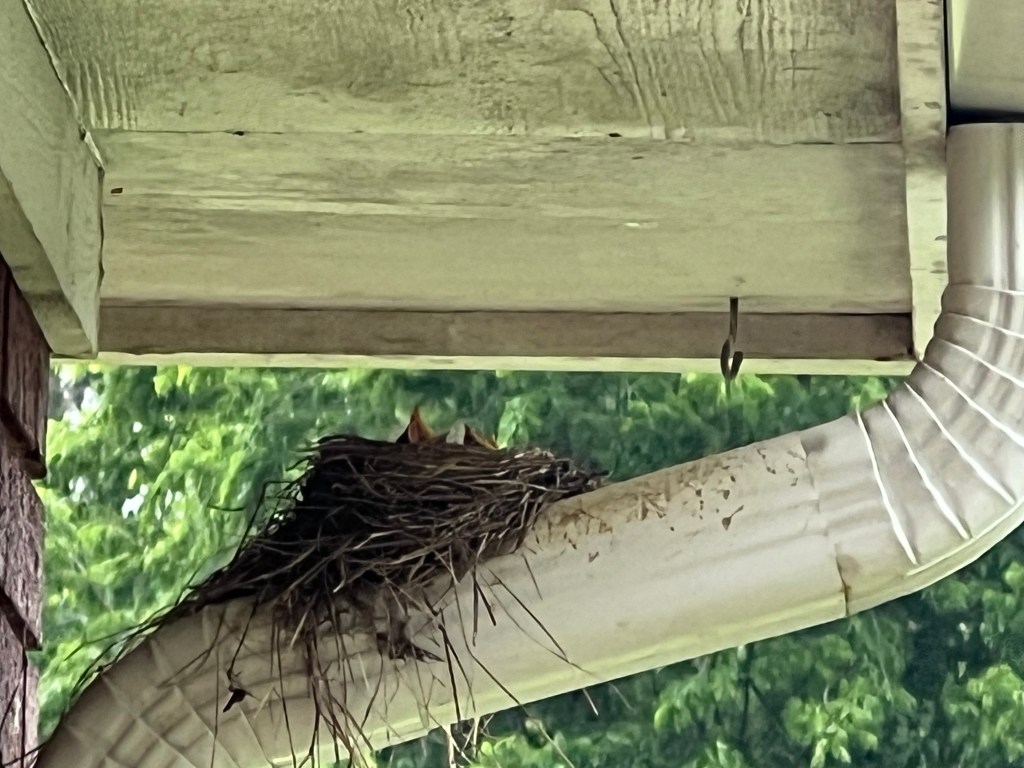
Last May I blogged about the nest an American Robin (Turdus migratorius) had made on top of the curve in the downspout on the side of our house. While this stuck me as amusing, it prompted an exploration into what I could (and could not) do with the nest. I was not too keen about having a bird nest attached to my house (neighbors: how unsightly!). The nest was just above my raised vegetable beds, so I wondered about being attacked every time I came out to water or pick new fruit. The birds were not overly territorial but would always make a scene of flying to the fence along the yard in an apparent effort to divert my attention from the nest. Since I did not want this to become a permanent nesting site, I checked Arkansas law and found the nest was protected by the Migratory Bird Treaty Act (1918) if the nest was active (eggs or chicks present). If the nest has been abandoned or has no eggs it can be removed. I waited until late September before I removed the nest. This year another pair of robins built a nest in the exact same location. That got me wondering if the pair returned or if this was just a great place to build a nest and raise a family.
When I looked online, I found the American robin has an extremely high rate of return to the same breeding site each season (nest fidelity). Why birds returned to nest was not really understood until the early part of the last century when Oliver Austin, with the Wellfleet Bay Wildlife Sanctuary in Massachusetts, started banding the Common tern (Sterna hirundo) which nested there. Austin found that the same terns returned to Wellfleet each spring and often laid their eggs in the exact spot on the ground as they did the year before. While robins return to old nesting sites, they typically do not reuse nests. They might repair or build on top of an old nest, but they generally build a new nest for each brood they raise. Old nests can harbor parasites and diseases, so building a new nest helps keep the nestlings healthy. Robins return to a previous nesting site if they had a successful hatch. They may instead prefer a new nest site, especially if they have found a more protected location or have discovered a potential predator eyeing their old nest.
A bird building a nest in your house is often seen as a positive omen, symbolizing new beginnings, a safe and peaceful environment, and a connection to higher powers. The nest can also represent the presence of loved ones (living or dead), and a message of love and care. Birds are often seen as messengers of hope and faith, and their presence can be a reminder of your spiritual connection to the universe. Birds are drawn to places with positive vibrations and a sense of peace so the nest in your home suggests your house is a harmonious and safe space. The act of building a nest symbolizes new beginnings and a sense of starting anew. A nest in your home can be seen as a message from loved ones who recently died and a reminder of their continued presence and love. The nest itself is a symbol of home and the importance of creating a safe and nurturing environment. Finally, in Buddhist traditions the bird’s nest symbolizes a nurturing environment and the importance of caring for new life. I guess that means when they return you have been doubly blessed.
THOUGHTS: Last year’s arrival of the robins met with concern over what the nest said about me as a homeowner. When they returned to the down spout it was met with a sense of joy at the wonder of life on display (including the two chicks in the photo). I work hard to keep the feeders full and water on hand. The nesting pair acknowledges our yard is a safe haven. Safe havens need to be available for both birds and humans. These places usually take hard work to ensure they are not lost. Act for all. Change is coming and it starts with you.
 A travelers odyssey