Snakehead

May 26, 2026

Last Friday Melissa and I decided to treat ourselves to a visit to a Wildlife Management Area (WMA) along the Arkansas River that has been getting constant sightings on the Arkansas Birders group.  The area is not too far from our house, and I had even visited once before while looking for a place to fish.  We did several errands on our way out of town and by the time we were leaving rain had started to fall.  By the time we reached the WMA the rain was light but steady.  The last section of the road was dirt but well maintained.  This area in an old oxbow (curve) that has formed a lake apart from the main channel of the river.  The WMA now has 2,180 acres (882 ha) and is primarily managed for migratory waterfowl and wetland restoration by the Arkansas Game and Fish (AG&F) Commission and Ducks Unlimited.  This makes the site popular destination for local hunters and bird watchers.  Despite all the amazing bird photos we had seen, we saw very few birds.  The waterfowl that had been present when I last visited were non-existent (afraid to get wet?) and there were no birds fliting in the trees.  As we drove slowly through the area we crossed over a bridge on a backwater section of the lake.  I stopped because there were dozens of 1-pound (0.92-l) gas canisters floating in the water.  Next to a sunken log in the bayou was a 30-inch (76 cm) snakehead.

When I went online, I found the northern snakehead (Channa argus) is a species of snakehead fish native to temperate East Asia, in China, Russia, North Korea, and South Korea.  Their natural range goes from the Amur River watershed in Siberia and Manchuria down to Hainan, China.  Snakeheads are an important food fish and one of the most cultivated in its native region, with 562,179 tons (510,000 tonnes) annual production worldwide.  This has led to the fish being exported throughout the world and has resulted in established non-native populations in Central Asia and North America.  The species has a long dorsal fin with 49 to 50 rays, an anal fin with 31 to 32 rays, a small, anteriorly depressed head, eyes above the middle part of the upper jaw, and a large mouth extending well beyond the eye.  The small, slender teeth form velvety bands (villiform) with large canines on the lower jaw and upper mouth plate (palatines).  It is generally reported to reach up to 3 feet 3 inches (100 cm) in length, but specimens approaching 4 feet 11 inches (150 cm) are known according to Russian ichthyologists (fish scientists).  The largest specimen registered by the International Game Fish Association weighs 21 pounds 0 ounces (9.53 kg).  In the US, it is found in Pennsylvania, Virginia, West Virginia, Delaware, Maryland, North Carolina, Arkansas, Missouri, and Mississippi.

The northern snakehead first appeared in US news when a fisherman discovered one in a Maryland pond in 2002.  In 2008, the fish was found in drainage ditches in Arkansas because of a commercial fish-farming accident, and flooding may have allowed the species to spread into the nearby White River which would allow an eventual population in the Arkansas and Mississippi Rivers.  Arkansas is the birthplace of warmwater aquaculture in the US and currently ranks as the second-largest aquaculture-producing state.  It is also the epicenter for the four species of invasive Asian Carp (Hypophthalmichthys molitrix, Hypophthalmichthys nobilis, Ctenopharyngodon Idella, and Mylopharyngodon piceus).  The invasive snakehead can now be added to the list.  All five species are said to be quite edible, but getting the American palate to try the fish is a harder sell. 

THOUGHTS: AG&F says if you encounter the northern snakehead, silver, bighead, or black carp, kill it (humanely) and report your encounter to the Arkansas Game and Fish Commission Aquatic Nuisance Species coordinator by email (reportans@agfc.ar.gov).  It is illegal to transport these fish species alive.  While I did not catch the snakehead, I did report it.  Invasive species may never be eradicated, but with help they can be managed.  Act for all.  Change will come and it starts with you.

Oriole

May 17, 2026

I try to put a variety of seeds in the 11 feeders we have on our pool deck.  I purposefully dedicated the two farthest feeders under the trees to the eastern gray squirrels (Sciurus carolinensis).  I put shelled peanuts (Arachis hypogaea) and a corn (Aea mays) log in one and cracked corn in the other.  I did this as it was a losing battle to try and keep the squirrels out of all the feeders.  I found the northern cardinals (Cardinalis cardinalis) and common grackles (Quiscalus quiscula) prefer these feeders, while the squirrels run along the fence to feast on the two feeders with common sunflower (Helianthus annuus) seed on the other side of the deck.  I have also stocked meal worms (larva of Tenebrio molitor), two feeders with roasted peanut chips, and a wild bird seed mix (cereal grains of Family, Poaceae).  I currently stock the two window feeders with safflower (Carthamus tinctorius) seed, but this is messy and I am considering switching back to sunflower chips.  The last feeder is a suet corn cake.  While most of the birds which visit are the same every day, we do get an occasional new species.  Last week the new arrival was a Baltimore oriole.    

When I went online, I found The Baltimore oriole (Icterus galbula) is a small blackbird of the icterus family common in eastern North America as a migratory breeding bird.  The species was formally described in 1758 by the Swedish naturalist Carl Linnaeus in the tenth edition of his Systema Naturae under the binomial name Coracias galbula.  The bird received its name from the resemblance of the male’s colors to those on the coat-of-arms of 17th-century English Baron Lord Baltimore.  There have been observations of interbreeding between the Baltimore oriole and the western Bullock’s oriole (Icterus bullockii) which led to both being classified as a single species, called the northern oriole, from 1973 to 1995.  Research by James Rising, a professor of zoology at the University of Toronto, and others showed that the two birds did not interbreed significantly and they are again classified as different species.  The Baltimore Oriole is the state bird of Maryland, and the namesake and mascot for the Baltimore Orioles baseball team.

Melissa has a friend who has been texting her pictures of an oriole who has been visiting her feeder.  She put out a tray with orange (Citrus sinensis) slices and grape jelly, and they clean her out several times a day.  We have only seen the oriole twice on the suet cake, but I figured we might get more activity with orange slices and grape jelly.  A number of other birds (and squirrels) are fond of oranges so this may bring other birds as well.  I followed the friend’s example and initially set the feeder next to the suet cake, but the grackles pounced on the feeder looking for the peanut chips and knocked it to the ground.  This afternoon I set the oriole feeder back up and moved it farther away from the others.  Hopefully this will work and attract an oriole before they migrate through our area. 

THOUGHTS: When I was growing up in north central Kansas there was a Baltimore oriole that would nest in the branches of a tree outside my second story window.  This was a massive American elm tree (Ulmus americana) that stretched over the enclosed side porch.  I was fascinated by the bird and its flashy orange and black body.  I was also into collecting baseball cards and listening to my older brother’s radio playing baseball as we fell asleep at night.  I became a huge fan of the Orioles (team) in part because of my connection to the bird outside my window, along with the fact they became an American League powerhouse in the 1960’s, wining two pennants and their first World Series.  Although I now (mostly) follow the Kansas City Royals baseball team, I still have a fond spot for the Orioles.  Most of our traditions and habits were ingrained in us during our youth.  That is why it is important to train a child to be willing to reach out and embrace others.  Act for all.  Change is coming and it starts with you.
Transition

May 14, 2026

Several days ago, I saw what I thought to be a new bird species in my feeders.  This grey bird was about the size of a robin but was busy feeding on the suet cake I had placed on the back fence.  I was able to snap a photo and then checked the picture against my Google identification app (I find it easier than either my Audubon or Nat Geo birding apps).  I was surprised to learn this was an immature Eastern Starling.  This morning Melissa called my attention to this same strange bird she had seen feeding on the suet.  She was surprised as an adult starling was collecting seed from the suet cake and feeding it to the larger brown bird.  She sent me a picture of the two and I recognized the speckled white feathers of the (springtime) adult and the brown feathers of the immature offspring.  Both the parent and young were in different stages of plumage transition.  

When I went online, I found the European starling (Sturnus vulgaris), also known as the Eastern Starling, undergoes dramatic feather color changes annually.  They transition from a spotted winter plumage to glossy, iridescent black in spring.  Juveniles are drab brown, transitioning to speckled, then glossy adult plumage over their first year.  Juveniles transition from Summer to Early Fall.  Freshly fledged (kicked out of the nest) juveniles are plain grayish-brown or dusky brown with a dark bill.  From late Fall to Winter the immature birds undergo a post-juvenile molt and then gain iridescent black feathers that are heavily speckled with white and cream-colored spots.  Breeding or adult have the same speckled winter colors and during Spring to Summer experience “wear,” as the white, brittle tips of the winter feathers break off, leaving a glossy, iridescent dark plumage (green, purple, and blue) with a yellow bill.  This unique “wear molt” allows the starling to change its appearance completely without the high energy cost of growing new feathers in the spring.

After rousing, I came outside to sit and watch the feeders with Melissa.  She has been sending me interesting pictures of a variety of birds in the last several days.  It appears Melissa has been coming outside around 8:30 am for her morning coffee and has seen a flurry of activity on the feeders.  This morning the female eastern bluebird (Sialia sialis) was bringing newly procured bugs to the bird house on the pool deck.  Her arrival was met with the raucous sound of several young vying for a meal.  There was also a second sighting of an orange bird about the size of an American robin (Turdus migratorius) feeding on the suet.  This time she was able to take a photo before the bird quickly flew away.  Although the bird was partially blocked by a starling fighting for the same cake, it appears to have been a Baltimore oriole (Icterus galbula).  Melissa said she goes inside around 11:00 am as the “cool” birds are gone by then and it becomes a fight between the northern mockingbird (Mimus polyglottos) and the common grackles (Quiscalus quiscula).  It is only recently the starlings have been present at the 11:00 am transition.  I need to get up earlier to see the show.

THOUGHTS: After the 11:00 am transition Melissa went back inside.  Lately, the temps are warming up, and the sun has been breaking through the overcast sky by this time. I had re-stocked the feeders when I came out and even knowing I had missed the real show, I decided to stick around and see what might transpire.  The mockingbird was making a back-and-forth trip to the meal worms, and I wondered if it was also feeding young.  The suet cake was descended upon by a group of six starlings, including two pairs of adult and young feeding at the cake together.  This is the time of year where birds transition from the nest to fledgling on the ground to joining parents to learn to feed themselves.  Humans go through a similar transition, but it takes a dozen or more years and it literally takes a village to do it right.  We need support and not criticism.  Act for all.  Change is coming and it starts with you.
Velella

May 12, 2026

Monday’s local newspaper carried a USA Today article on hundreds of thousands of small sea creatures were washing up along the Pacific coast in the US.  These jelly-like creatures can be found around the globe but are most often in large accumulations off the US Pacific coast and in the Mediterranean.  According to Steven Haddock, a senior scientist at the Monterey Bay Aquarium Research Institute, while several miles-long stretches may float in the open ocean, it is when the winds pile them up along the shore that people really notice.  Rebecca Helm, Georgetown University Earth Commons Institute has been studying the creatures and says that although velella have been documented for decades, scientists do not yet fully understand them.

When I went online, I found Velella velella is the only known species in the genus of hydrozoa in the family Porpitidae.  Other common names are sea raft, by-the-wind sailors, purple sail, little sail, or simply Velella.  By-the-wind sailors are a widely distributed free-floating colonial animal that lives on the surface of the open ocean in a specialized ocean surface community collectively called Cnidarians.  Specialized predatory mollusks such as sea slugs (nudibranchs) in the genus Glaucus and purple snails (genus Janthina) prey on these cnidarians.  Each apparent individual is a hydroid colony, and most are less than about 2.8 inches (7 cm) long.  Like other cnidarians, velella are carnivorous and catch their prey (mostly plankton) by tentacles that hang down in the water and bear stinging nematocysts (or cnidocysts).  The toxins in their nematocysts are effective against their prey but are relatively benign to humans, although irritation may occur to skin. Some scientists describe velella as floating colonies, but Haddock said it is easier to understand each raft as a single individual with a central mouth that looks like a volcano surrounded by a field of 100’s of squirming noodles, which are also a mouth.  Each velella can produce 1000’s of free-swimming, sesame-seed sized offspring that drop off and sink to the seafloor where they produce another single cell that eventually returns to the surface as a new floating colony.  They are usually indigo blue in color and have a small stiff sail that catches the wind and propels them over the surface of the sea. 

Helm has been looking at how the velella survive in the wind and waves without getting turned around as they pop up right every time as well as their adaptation to use the wind for propulsion.  Scientists would also like to be able to predict when the velella armadas are going to appear.  One study suggests large concentrations may be found after particularly warm winters, but more research is needed.  The winter of 2025-2026 was a record breaker in California with intense marine heat waves observed in the ocean.  Scientists are encouraging people to report velella sightings and to take photos with GPS activated readings so they can track their exact locations.  Sightings can be reported through the iNaturalist app.

THOUGHTS: Like many unique creatures, the velella are being examined for military reasons.  A group of scientists in China have studied mimicking the velella as a prototype for unmanned surface vehicles, while a group at John Hopkins are working with the military on modeling them to create low-cost ocean sensors.  Heaven forbid, we take the time to study the uniqueness of nature without trying to adapt it for a military advantage.  Act for all.  Change is coming and it starts with you.
Astoria

February 16, 2026

Scrolling the NY Times Headlines feed, I came across a bird who has captured the attention of New Yorkers.  The bird arrived in Manhattan’s Battery Park and eventually settled in the area near the Sea Glass Carousel, just north of the Staten Island Ferry terminal. Three human women have become her self-appointed caretakers and visit her daily.  New Yorker’s regularly fall in love with celebrity wildlife, including unusual ducks, a pair of coyotes, and Flaco the escaped owl in Central Park.  Sunny Corrao, the deputy director of the city parks department’s wildlife unit, said, “She’s the only known turkey in Manhattan, “but this is not unusual.”  A turkey was known to hang out in Inwood Hill Park in Upper Manhattan in the past and there are large flocks in the Bronx and on Staten Island.  Smaller groups come and go to Queens and Brooklyn.  Astoria got her name because she was first spotted in Astoria, Queens, before making her way to Roosevelt Island and, finally, Manhattan.

When I went online, I found Astoria is a descendant of the wild turkey (Meleagris gallopavo) first domesticated in Pre-Columbian Mexico.  The Classical Nahuatl word for the turkey (huehxōlō-tl) and the Spanish guajolote are still used in modern Mexico.  Mayan aristocrats and priests had a special connection to turkeys, with ideograms of the birds appearing in Mayan manuscripts.  Spanish chroniclers Bernal Díaz del Castillo and Father Bernardino de Sahagún describe the multitude of food (both raw fruits and vegetables and prepared dishes) offered in the vast markets (tianguis) of Tenochtitlán, noting there were tamales made of turkeys, iguanas, chocolate, vegetables, and fruits.  Turkeys were first exported to Europe via Spain around 1519 and gained immediate popularity among the aristocratic classes.  English settlers brought turkeys to North America during the 17th century.  There were an estimated 10 million turkeys in the US during the 17th century, but by the 1930’s only 30,000 remained.  In the 1960’s and 1970’s, biologists started trapping wild turkeys and re-introducing them into other states. 

The three self-appointed caretakers of Astoria coordinate their schedules in group chats and text messages, sharing photos and updates on Astoria’s location and condition.  Keiko Komiya visits the turkey in the morning, and Stella Hamilton and Anke Frohlich are generally there in the afternoon, and for bedtime.  Astoria spends her days strutting around on the ground, then every evening (at 20 minutes after sunset) she flies up into a tree to spend the night.   Hamilton is a retired nurse and birder who was previously a big fan of Flaco, the Eurasian eagle owl set free from Central Park Zoo.  Komiya is an English student and avid birder whose first New York City celebrity bird was the mandarin duck she photographed daily in 2018.  Frohlich started photographing birds during the covid-19 pandemic and runs an alternative healing practice in Greenwich Village which allows her to give the birds priority.  The women do not worry about Astoria, but everything and everyone else.  Young kids chase her, dogs scare her, and people press on her for selfies.  Astoria also crosses State Street to bask in the warmth emanating from the Starbucks on the corner and the friends fear she will be hit by a vehicle.  Their fears are not unfounded.

THOUGHTS: While Astoria has grown a devoted fan club, she is not the only wild Turkey residing in New York.  “New York City is actually great habitat for a wild turkey,” Jessica Wilson, the executive director of NYC Bird Alliance, said. She noted that the birds are native to the area, have plenty to eat here and do not necessarily need turkey friends.  “They often join flocks, but they also are fine on their own — and in general, we try not to interfere with their social life.”  Perhaps we should treat people with the same respect.  Act for all.  Change is coming and it starts with you.
DET

February 14, 2026

I found it appropriate that in the middle of the Great Backyard Bird Count 2026 (February 13 to 16, 2026) that my Sunday paper (delivered on Saturday) would have a USA Today article on an annual lottery for the bald eagle tour in Monroe, Michigan.  There were approximately 1,200 entries for this year’s 30 lottery winners and their guests.  “It’s the largest number since the event began in 2008.  It shattered our previous record,” said Maddie Drury, park ranger with the US Fish & Wildlife Service who sponsors the tour.  Winners were driven out to the wooded area on the south end of the power plant, where Plum Creek and the power plant’s warm water discharge meets Lake Erie.  In winter the warm water draws fish, and the fish draw predators.  Amanda Schaub, communications strategist for the plant said, “Consistent with our Michigan Public Service Commission approved plan, the plant is scheduled to retire in 2032.”  DET Energy is committed to working closely with the community as they plan for the site’s future.

When I went online, I found several endangered or rare species have a home at the Detroit Edison (DTE) power plant facility.  Since the mid-1990’s, DTE Energy has supported peregrine falcon (Falco peregrinus) reintroduction and breeding programs in southeastern Michigan and near their power plants.  Employees assist with banding, tracking and rescuing at-risk chicks. Peregrines have been recorded nesting on the Monroe Power Plant grounds since 1994.  Over 100 adult and juvenile bald eagles (Haliaeetus leucocephalus) have been counted near the shoreline at the Monroe Power Plant and nest regularly at the Fermi 2 Power Plant.  Apprentice linemen install utility poles in various bird projects, such as eagle habitat at the Lake Erie Metropark and Humbug Island within the Detroit River International Wildlife Refuge, as well as a great blue heron rookery at Lyon Oaks County Park.  These projects foster the bird population while giving apprentice linemen experience in installing tall poles without energized lines or power transmission equipment.

The DET Monroe Power Plant is home to other endangered species.  The American lotus (Nelumbo lutea) is listed as a threatened species in Michigan.  The plant naturally cleans the water in which it lives, which is important for the native fish and wildlife.  In partnership with the Lotus Garden Club of Monroe, DTE Energy opens the Monroe Power Plant property for guided tours of the flowerbeds.  Lake Sturgeon (Huso fulvescens) are the longest-living fish species in Michigan, with a lifespan of up to 100 years.  They can be over eight feet (2.5 m) in length and weigh 800 pounds (363 kg).  Sturgeons are listed as threatened or endangered by 19 of the 20 states within their original range in the US.  DTE deposited 765 tons (694 mt) of coal cinders (a byproduct of coal combustion), cobble and broken limestone in the Detroit River off Belle Isle to create spawning beds.  Common Terns (Sterna hirundo) once numbered in the thousands along the Detroit River but now only 250 breeding pairs can be found there.  DTE Energy partnered with others to create an artificial nesting island and nesting habitat.

THOUGHTS: Drury, who is based at the Detroit River International Wildlife Refuge in Trenton, calls bald eagles the “most successful conservation story of the US”.  For decades the insecticide DDT was widely used to kill insects.  Fish ate treated vegetation, birds ate the fish, and affected bald eagles laid fewer viable eggs.  In 1963, the continental US had just 417 mating pairs of bald eagles.  DDT was banned in 1972, and the eagles have bounced back.  In 2007, the US had 9,700 bald eagle mating pairs, and the bald eagle was removed from the endangered list.  By 2020, there were 71,000 breeding pairs.  The lottery for the DET Monroe Power Plant eagle tour typically opens right after Thanksgiving.  Act for all.  Change is coming and it starts with you.
Birds 2025

January 31, 2026

Today’s local newspaper (“Sunday”) ran a front-page story on how the cold weather is prime birding season around back yards and feeders.  This reminded me that I am even later this year in reporting my annual birding totals.  Once again, I saw several red-tailed hawks (Buteo jamaicensis) on the power lines going to and from town but was unable to get a picture, so they were not added to my count.  While I was able to take my usual trip to the wildlife area this year and did record five different species (long range).  However, the lighting was so bad I was unable to identify any but the wild turkey (Meleagris gallopavo) flock I noticed while trying to capture several deer (again long range) in a filed.  Another miss.  The end-of-year presence on my feeders was good as the cold weather brought the sparrows (genus, Passer), along with house (Haemorhous mexicanus) and purple (Haemorhous purpureus) finches.  The northern cardinals (Cardinalis cardinalis) did come back in mass but I saw only one or two blue jays (Cyanocitta cristata).  I have yet to clean out the bluebird (Sialia sialis) house but have seen the sparrows nosing around the entrance so I will need to get rid of the old debris for this year’s nesting.

All that said leads to my “great reveal” concerning my birder totals for 2025.  The number of feeders has fluctuated throughout the year as I began with 12 feeders offering different types of food.  The squirrels (Sciurus carolinensis) and grackles (Quiscalas quiscula) managed to take out my camera feeder, and the finches have all but abandoned the thistle seed feeder for some reason.  I also switched to safflower kernels rather than black oil sunflower in my two window feeders hoping to discourage the squirrels (it sort of works).  That leaves me with 9 active seed feeders to go along with the 9 hummingbird feeders.  Now, on to the results.  You may recall I recorded 26 species in my first year (2020), ended with a high of 52 species in 2021, dropped to 44 species in 2022, a low of 30 species in 2023, and then rebounded to 39 species in 2024.  During 2025 I was able to rise a little higher and recorded 44 different species.  My European sightings happened again as we took two trips, one to the Greek Isles (9 birds) and another up the Danube River (8 birds).  The bus ride to the Neuschwanstein Castle (Disney’s type site for his princess castles) also yielded 4 different species of raptors, but I was unable to document them.

Most of my sightings have been limited to the immediate area, but we are planning to expand that during 2026.  We are taking the RV along the interior to the Atlantic side of Florida and then back along the Gulf of Mexico as our return.  This will hopefully produce some new shore bird sightings.  We are then driving across Oklahoma to Arizona with a return through Utah.  This should record a few species of desert birds.  Then we are scheduled for an Alaskan cruise in June which should score some Pacific birds.  I am hoping between our trips I can raise my totals (and overall species count) to new levels this year.  We will see.

THOUGHTS: I am looking forward to participating in the Great Backyard Bird Count 2026 again this year.  The 2025 count had hundreds or thousands of people from all over the world and found 8,078 species of the world’s known species, or 158 more than in 2024.  Be sure to mark your calendars for the Great Backyard Bird Count 2026 (February 13 to February 16, 2026).  You can sign up and find how to participate at https://www.birdcount.org/participate.  Once again, birds are the (literal) canary in the mine shaft (earth) when it comes to gauging the health of our ecosystems.  Act for all.  Change is coming and it starts with you.
Ash Borer

January 12, 2026

Yesterday’s local newspaper carried a USA Today article on a project designed to restore native ash populations to the state of New York.  The ash saplings planted at Cornell Botanic Gardens as part of the Nature Conservancy’s Trees in Peril project are part of an effort to restore the disappearing species.  Ash has long been valued for its lumber and is used in baseball bats, tool handles, flooring, and fireplaces.  The invasive species attacking the trees was first discovered by entomologist Mike Griggs on Cornell University’s campus, as tree canopy dieback, yellowing and browning of leaves.  The condition had spread farther west in the state in 2009, and quarantine zones were established in 2015 to block the spread.  Accord­ing to the NY State Department of Environmental Conservation, the emerald ash borer has killed millions of trees across the US, caused billions of dollars in damage and loss, and overtaken virtually all of New York state.

When I went online, I found the emerald ash borer (Agrilus planipennis), or EAB, is a green jewel beetle (buprestid) native to north-eastern Asia that feeds on ash species (Fraxinus spp.).  Adult beetles are typically bright metallic green and about 0.33 inches (8.5 mm) long and 0.063 inches (1.6 mm) wide.  Emerald ash borer is the only North American species of Agrilus with a bright red upper abdomen when its wings are spread.  The species has a small spine at the tip of the abdomen, and saw-like (serrate) antennae that begins at the fourth antennal segment.  Females lay eggs in bark crevices on ash trees and the larvae feed underneath the bark to emerge as adults in one to two years.  The ash borer is typically found at low densities in its native range and does not cause significant damage to trees but is a highly destructive invasive species to the ash trees of Europe and North America.  Adults prefer to lay eggs in stressed ash but readily lay eggs in healthy trees among other tree species.  Little was known of the ash borer before it was found in North America. 

Local governments are attempting to control the ash borer by monitoring its spread, diversifying tree species, and using insecticides and biological control.  A significant discovery was made by the US Forest Service when they found relatively healthy trees amidst a forest of dead trees.  The surviving trees, called lingering ash, could serve as a catalyst for repopulating ash populations across the US.  The ash borer larvae tunnel through the living tissue and with 100’s of 1000’s of insects in each tree can essential girdle the tree making it impossible to transport resources between the canopy and roots.  Researchers found some lingering ash can “wall off” the larvae and prevent the insects from girdling the tree.  A second possible defense is related to the organic compounds emitted by ash trees during photosynthesis and used by the ash borer to detect the trees.  If an individual tree does not produce those chemicals or does so at low levels, the tree becomes “invisible” to the insects.  The goal of the project is to propagate 50 to 60 genotypes of trees of each of the three ash species (white, green, and black).  In 5 to 6 years cuttings (scions) will be collected and the process repeated.  The lingering ash will then be planted among susceptible trees to restore ash to the forest environment.

THOUGHTS: The Emerald Ash Borer likely arrived in North America from Asia in the 1990’s hidden in solid wood packing materials (crates and pallets) used in cargo ships.  Detection in the US was in Michigan in 2002.  This accidental introduction allowed the invasive beetle to spread rapidly, killing millions of ash trees.  Movement of infested firewood by humans accelerated its spread across the continent.  The predators and diseases that naturally keep the ash borer in check do not exist in North America.  Developing the lingering ash would be a significant check on yet another invasive species.  Otherwise, Major League Baseball will be forced to use aluminum bats.  Act for all.  Change is coming and it starts with you.
Snake-tail

December 30, 2025

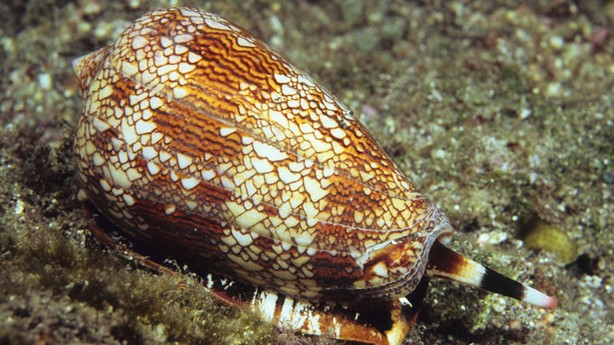
It seems fitting that just before New Years I come across an article on ending relationships.  Female praying mantises are notorious for eating their mates during or after sex.  According to Christopher Oufiero, head of the Towson University Mantis Lab, mantis has some of the most diverse camouflage strategies in the animal kingdom and much of mantis behavior, especially mating, remains a mystery.  “Mantises are good at not being found.  It’s kind of what they do,” says Lohitashwa Garikipati, a doctoral student at the American Museum of Natural History in New York.  However, Oufiero and Garikipati were part of a study that found a dwarf mantis species in which males avoid this fate with an elaborate dance where it moves its abdomen.  Sometimes this is sinuously like the coils of a serpent and sometimes jerkily like the tail of a rattlesnake.  Their behavior inspires its name, the snake-tail mantis.

When I went online, I found the snake-tail mantises (Ameles serpentiscauda) are in an order of insects (Mantodea) that contain over 2,400 species in about 460 genera in 33 families.  The discovery of the snake-tail mantis began with a chance encounter in the summer of 2024 when on a remote beach in Sardinia, an Italian island in the Mediterranean Sea.  Battiston’s colleague Oscar Maioglio spotted some dwarf mantises on shrubs along the shoreline he thought resembled a known species of dwarf mantis (Ameles andreae), except that their wings were smaller than expected. He collected a few individuals to rear back in his lab.  When he and Maioglio saw the specimens mating they knew these mantises did not belong to any other known species.  The small wings and serpentine courtship dance of the collected specimens strongly suggested they belonged to a unique, never-before-documented species, and genetic analyses confirmed it.

One major open question is the function of these courtship displays.  Whatever the deeper meaning, scientists theorize that performing a courtship dance reduces the male’s risk of the female eating him after mating.  It seems to succeed as the researchers observed no sexual cannibalism among the lab-reared snake-tail mantises.  “Why or how selection for this mating display may have occurred remains to be seen,” says Garikipati. “But I think it is an interesting clue that tells us that these little animals are probably a lot more complicated than we give them credit for.”  There is some urgency behind Battiston’s eagerness to learn more about the snake-tail mantis. As far as he and his colleagues can tell, the new species is only found in a restricted area of a few hundred yards along the Sardinian coastline.  While most of this habitat lies inside a protected area, increasing tourism and overgrazing by sheep and goats could threaten the entire species’ existence.  To ensure the future of the snake-tail mantis, Battiston and his colleagues have proposed that the IUCN categorize it as Critically Endangered and recommended stricter measures to preserve its habitat.

THOUGHTS: While the male snake-tail mantis avoids the female abruptly ending the relationship, many human pairings end around Christmas and New Year’s.  Psychology Today says the holidays highlight how reality may not match one’s ideal.  The gift-giving, travel and parties also increase stress around money, a top area of conflict.  Meeting parents or navigating whose family to visit creates further tension and pressure, along with a perceived pressure to “define” the relationship.  The New Year acts as a natural reset point for evaluating life choices and can lead to a post-holiday breakup surge, causing January to become “breakup month”.  While breaking up may seem like getting your head bitten off, at least you are not a (male) mantis.  Relationships require work.  Act for all.  Change is coming and it starts with you.
Lady Beetle

November 20, 2025

Last week Melissa and I were in a wooded area along the Arkansas River when we were inundated by flying insects.  Many species overwinter as adults sheltering in culverts, under bridges, or cavities in trees.  In the spring they will wake up and get along with starting the next generation.  Other than the short cold snap last week, we have been having nice weather this fall so these fliers may not have even begun the process.  Hibernating adults are also known to come out on unseasonably warm days.  The temperature was uncommonly warm (high 70’sF/25+C) so it would not have surprised me to find some insects buzzing around, these were literally everywhere.  I do not believe I have ever seen so many Asian lady beetle in one place.

When I went online, I found a lady beetle or ladybird (Harmonia axyridis) is a species commonly known as the harlequin, Asian, or multicolored Asian lady beetle.  This is one of the most variable lady beetle species in the world with a wide range of color forms.  The species is native to eastern Asia and has been artificially introduced to North America and Europe to control aphids (family Aphididae) and scale insects (Superfamily, Coccoidea).  It is now common and spreading in those regions and has also been established in Africa and across South America.  Individuals are beetles in shape and structure, being domed and having a “smooth” transition between their wing coverings (elytra), thorax (pronotum), and head.  It ranges from 0.22 to 0.34 inches (5.5 to 8.5 mm) in size.  The common color form is orange or red with 0 to 22 black spots of variable size.  The bright color makes the species conspicuous in North America and may be known locally as the Halloween beetle as they often invade homes during October to overwinter.

The Asian lady beetle is considered one of the world’s most invasive insects, due in part to their tendency to overwinter indoors.  They have an unpleasant odor and stain left by their bodily fluids when frightened or crushed, along with a tendency to bite humans.  In Europe they are increasing to the detriment of indigenous species as its voracious appetite enables it to outcompete (and consume) other ladybugs.  The Asian is highly resistant to diseases and carries a microsporidian parasite (it is immune) that can kill other lady beetle species.  Native ladybug species often experience dramatic declines from the invaders.  They were declared the fastest-invading species in the UK in 2015, spreading throughout the country after the first confirmed sighting in 2004.  The Asian lady beetle has been reported to be a minor agricultural pest that has been inadvertently harvested with crops in Iowa, Ohio, New York State, and Ontario.  This causes a detectable and distinctly unpleasant taste known as “lady beetle taint”.  The contamination of grapes by the beetle has also been found to alter the taste of wine.

THOUGHTS: Various methods of control have been tried where the Asian lady beetle has been introduced, causing a threat to native species, biodiversity, and to the grape industry.  These include insecticides, trapping, removal of beetles, and mechanically preventing entry to buildings.  The best methods for dealing with the Asian lady beetle in private homes involve sealing openings they enter and sweeping or vacuuming if they are inside.  Placing a nylon stocking inside the vacuum cleaner’s hose and securing it with a rubber band keeps the beetles from collecting (and being crushed) inside the machine.  Despite the dozens of beetles that landed on Melissa and me we were not bitten.  I have been bitten before and it was a sharp (but not lasting) pain.  Once again importing a species to get rid of another caused more problems than it solved.  Act for all.  Change is coming and it starts with you.