
May 27, 2025
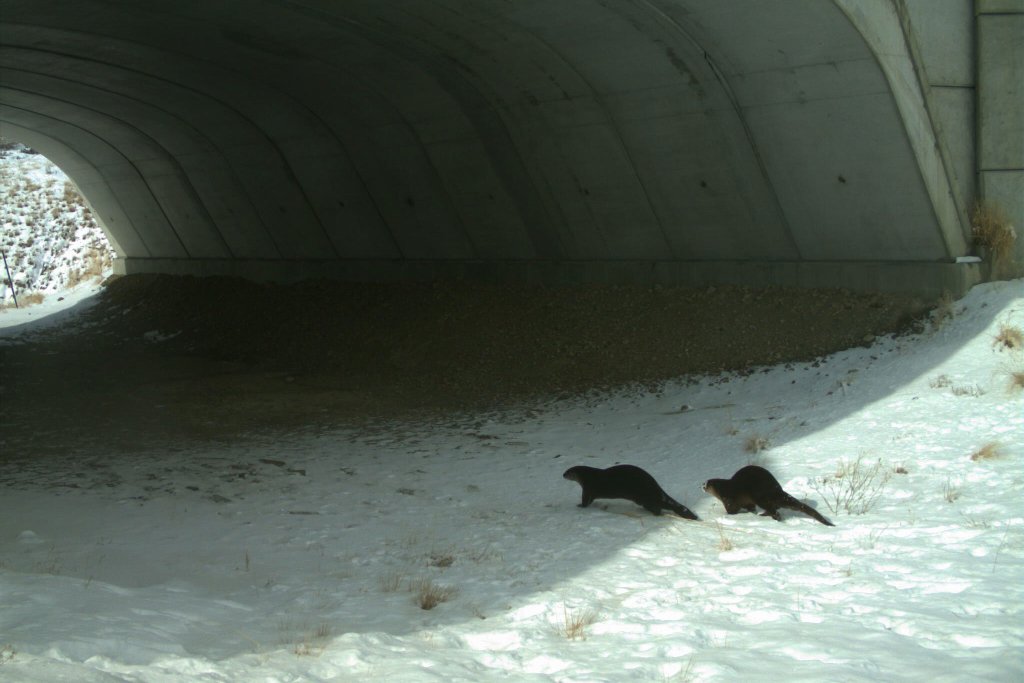
My NY Times feed highlighted an article by Catrin Einhorn that told of an attempt to save both motorists and animals from deadly highway collisions. Aran Johnson, a wildlife biologist for the Southern Ute Indian Tribe in Colorado, has been working for the last 15 years to provide a way for large animals to avoid being hit while maneuvering road crossings. Now entire herds of mule deer (Odocoileus hemionus) and elk (Cervus canadensis) use the structures, as well as black bears (Ursus americanus), mountain lions (Puma concolor), bobcats (Lynx rufus), coyotes (Canis latrans), and red foxes (Vulpes vulpes). They are expensive, but research has shown they can save money when installed on stretches of highway with at least an average of three collisions between motorists and deer per mile per year. For collisions with elk and moose (Alces alces), which are bigger and cause more damage to vehicles and people (let alone the animal), that threshold goes down to less than one collision per mile per year. Johnson started collaring mule deer to better understand how they moved around the reservation and superimposed his findings on state records of wildlife-vehicle collisions. “It couldn’t be more perfect,” he said. “These things line up so precisely.”
When I went online, I found wildlife crossings are structures that allow animals to cross human-made barriers safely. Wildlife crossings include underpasses or wildlife tunnels, viaducts, and overpasses or green bridges for large or herd-type animals. The crossings also provide for smaller animals with amphibian tunnels, fish ladders, canopy bridges (monkeys and squirrels), culverts for otters (Lutra lutra), hedgehogs (subfamily Erinaceinae), and badgers (Taxidea taxus), and green roofs for butterflies and birds. Wildlife crossings are a practice in habitat conservation, allowing connections or reconnections between habitats to combat habitat fragmentation. Crossings also assist in avoiding collisions between vehicles and animals, which in addition to killing or injuring wildlife may cause injury or death to humans and property damage. Similar structures can be used for domesticated animals, such as cattle creeps.
Wildlife crossings are growing in popularity across the country, and Colorado has emerged as a leader building 28 large game crossing structures since 2015, according to the state Transportation Department. Many of the species which use the structures travel from higher elevations in the summer to lower ones in the winter and are often forced to cross existing highways. The Colorado General Assembly passed a law in 2022 creating a cash fund for the department to use for animal crossings and the state has evaluated its highways to create a priority list for future projects. Wildlife crossings are combined with long stretches of fencing to funnel animals to the right location and have been found to reduce vehicle collisions with large animals by more than 80 percent. The Colorado Department of Transportation covered most of the cost for wildlife crossings. The tribe came up with US$1.3 million from the Bureau of Indian Affairs and an additional US $12 million for the project came from the state department of wildlife, nonprofit groups, and a private donor. A bonus of wildlife crossings is the photos from trail cameras which bring attention to the programs.
THOUGHTS: Wildlife crossings transcend political divisions and have bipartisan support. The crossings also fit in with the cultural importance of being stewards of the land for the Southern Ute. As the current administration cuts federal spending the grant program that helps states and tribes pay for wildlife crossings in collision hot spots is now in doubt. A chainsaw is effective if you want to remove the whole tree. Pruning is effective if you want to save the tree and remove unwanted parts. Act for all. Change is coming and it starts with you.
 A travelers odyssey