
June 14
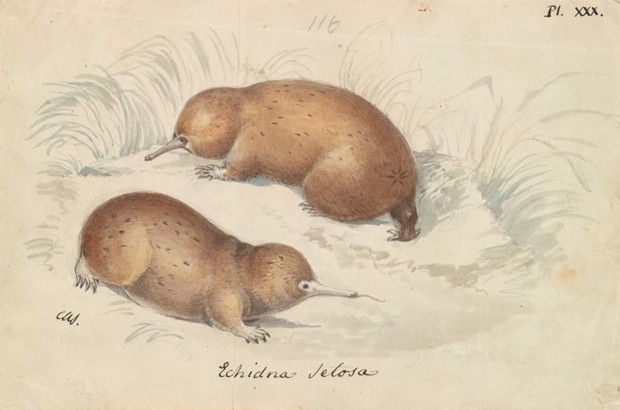
Charles Hamilton Smith circa 1837.
Biologists have confirmed the existence of a 200-million-year-old species of egg-laying mammal thought to be extinct. Footage was captured in 2023 by Oxford University during an expedition to the Cyclops Mountains in Indonesia. Researchers said the species had not been recorded in the region for more than 60 years (a dead specimen), but evidence of the animal’s existence was found in recent decades. In 2007, researchers found “nose pokes” in the Cyclops, or the trace signs made when they forage underground for invertebrates. Indigenous groups also reported sightings of the species in the past two decades. In 2017 and 2018, researchers combined participatory mapping with indigenous and other knowledge to assess the probability the animals still existed. Camera traps deployed in the Cyclops in 2022 and 2023 garnered 110 photos from 26 individual events. In a paper published in the journal NPJ Biodiversity in May 2025, by combining modern technology with indigenous knowledge researchers confirmed the long-beaked echidna had been found,
When I went online, I found the Attenborough’s long-beaked echidna (Zaglossus attenboroughi), also known locally as Payangko, is one of three species from the genus Zaglossus that inhabits the island of New Guinea. The species lives in the Cyclops Mountains near the cities of Sentani and Jayapura in the Indonesian province of Papua in Western New Guinea. It is named in honor of naturalist Sir David Attenborough. The long-beaked is the smallest member of the genus Zaglossus, being closer in size to the short-beaked echidna (Tachyglossus aculeatus). The weight of the type specimen when it was alive was estimated to be 4.4 to 6.6 pounds (2 to 3 kg). The male is larger than the female and is further differentiated by the spurs on its hind legs. The species has five claws on each foot like the eastern long-beaked echidna, and has short, very fine and dense fur. The diet of the long-beaked echidna consists primarily of earthworms, in contrast to the termites and ants preferred by the short-beaked echidna. The long-beaked is listed as critically endangered by the IUCN, and there had been no confirmed sightings between its collection in 1961 and November 2023, when the first video footage of a living individual was recorded.
The long-beaked echidna is not a social animal and only comes together once a year, in July, to mate. The female then lays the eggs after about eight days, with the offspring staying in their mother’s pouch for around eight weeks. The long-beaked is nocturnal and rolls up into a spiky ball like a hedgehog (family Erinaceidae) when it feels threatened. According to the research paper, these are the “sole living representatives” of egg-laying (monotreme) lineage that diverged from marsupials and placental mammals (therians) more than 200 million years ago. The long-beaked echidna also once lived in the Oenaka Range of Papua New Guinea, but the Cyclops Mountains are the only location where the long-beaked has been recorded in modern times. The long-beaked echidna is one of just five egg-laying mammals in existence today, including the platypus and two modern echidnas.
THOUGHTS: The long beaked echidna were one of more than 2,000 “so-called lost species”, or species that have gone undocumented for sustained periods of time. The research paper said, “Rediscoveries offer hope that others survive, especially in places where biological research has been limited.” Only 3% of the earth’s land mass is unexplored, but over 80% of the ocean remains unexplored. It is estimated that between 15,000 and 18,000 new species are discovered annually, in addition to lost species rediscovery. While all types of species are discovered every year, insects are by far the most common. There is still a lot that humans do not know about the earth and new discoveries are always possible. Act for all. Change is coming and it starts with you.
 A travelers odyssey