
June 17
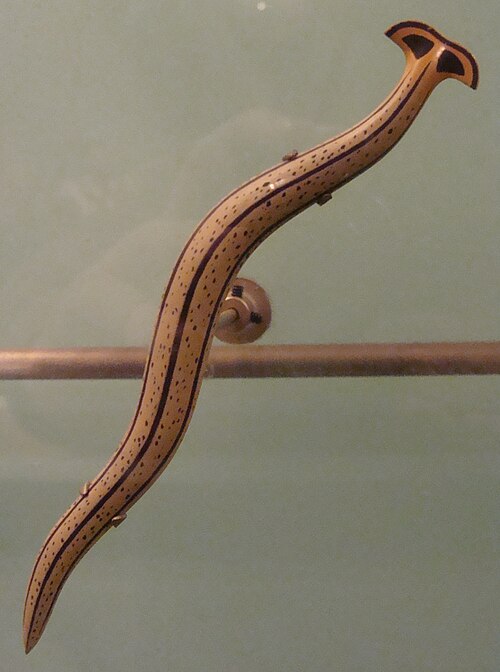
Inside the back section of my local newspaper was an article on an invasive species that has been reported in Texas. The worms have been reported throughout Texas for decades but several weeks of excessive rainfall have literally flushed the creatures into the open. Usually, during the day the worms can be found under leaves, rocks, or logs. The rain has brought them out to driveways, patios, and sidewalks. Ashley Morgan-Olvera, director of the Texas Invasive Species Institute, said while the worms are not a direct threat to humans or household pets, they do have a lasting effect on the ecosystem as they prey on the earthworms that are responsible for distributing oxygen, draining water, and creating space for plant roots. This genus is collectively known as hammerhead worms.
When I went online, I found hammerhead worms (Bipalium) are a genus of large predatory land flatworms (planarians), also known as broadhead planarians. The name Bipalium comes from Latin bi- (two) and pala (shovel or spade), because species in this genus resemble a pickaxe. Hammerhead worms are unique in that they possess a highly ciliated (hair-like) region on the ventral epidermis (a creeping sole) that helps them to creep over the substrate. The worm is typically light honey colored with a darker collar and one to five strips on its body. The worm can grow up to 15 inches (38 cm) in length. Bipalium species are predatory and some species prey on earthworms while others also feed on mollusks. These flatworms can track their prey. To feed on their prey, the hammerhead often turns the pharynges out of their mouths (evert), which are located on the midventral portion of their bodies and secrete enzymes that begin the digestion of the prey. The liquefied tissues are sucked into the branching gut of the flatworms by ciliary action. Hammerhead worms are native to Asia, but several species are invasive to the US, Canada, and Europe.
The hammerhead does not bite but they do secrete a poisonous chemical for protection from predators which can cause skin irritation. If a cat or dog eats a hammerhead it will likely get nauseated and throw it up, but there is no long-term threat. Morgan-Olvera said if you see a hammerhead do not try to kill it or cut it up. The worm can reproduce asexually and if you cut it up and leave it in the yard a new head could form within about ten days. To dispose of the worm, place the whole worm in a resealable bag with salt or vinegar and put it in the trash. The worms can also be sprayed with a combination of citrus oil (orange essence) and vinegar. You should always wear gloves when handling the worms to avoid irritation and wash your hands thoroughly with soap and water followed by hand sanitizer. The Texas Invasive Species Institute is asking if you spot a hammerhead that you contact your local extension agent to let them know
THOUGHTS: Four invasive species of hammerhead worms have been found in the US which are thought to have come via infected plants and soil. The worms are veracious predators and have been identified as a nuisance in the earthworm raising beds of the southern US. In 2019, the worms were found as far north as Montreal, Canada. The worms have few natural enemies due to their toxic surface secretions and control is difficult. However, because of their cannibalistic tendencies they may be their own worst enemy. While humans are rarely cannibalistic, we are also considered our own worst enemy. Rather than following an innate need to survive, the danger comes from a conscious choice to harm each other. The choice can also provide compassion and aid. Act for all. Change is coming and it starts with you.
 A travelers odyssey