
July 07, 2025
Five years ago, I blogged about my stint as director of a conference center in Kansas. The camp was located on 63 acres (25.5 ha) of mixed trees and (originally) prairie grass that was now mostly seeded with Bermuda grass (Cynodon dactylon) for lawns. During the summer we spent 5 to 6 days a week on the mower cutting grass. Part of our mission was to provide opportunities for education, so I decided to let the prairie grass return. The first year we let most of the camp return to natural grass to evaluate where the prairie grass was still abundant. The second year we selected about 12 acres (4.5 ha) to return to native prairie. We also reseeded those acres with the Big Five grasses prominent in the Tall Grass Prairie that used to dominate Kansas. This provided lawn for camp activities and nature trails with identification signage for eco-visitors. To complete the prairie’s restoration, we seeded a variety of prairie wildflowers in prominent locations along the roads. Being on the flyway of the Monarch butterfly, I transplanted 20 milkweeds (Asclepias syriacaplants) from the lawns into a wildflower bed near the entrance of the camp.
When I went online, I found a wildflower is a flower that grows in the wild, rather than being intentionally seeded or planted. The term implies that the plant is neither a hybrid nor a selected cultivar that is any different from the native plant, even if it is growing where it would not naturally be found. This can refer to the whole plant, even when not in bloom, and not just the flower. The term “Wildflower” is imprecise, and more exact terms refer to specific types of flowers including native species naturally occurring in the area, exotic or introduced species not native to the area, invasive species that outcompete other plants (introduced deliberately or accidentally), and plants that have become naturalized (imported but considered native by the public). Wildflowers can be annual (germinates from seed, live one year), perennial (live multiple years, return each growing season), or biennial (two-year life cycle, blooming in the second year). In recent years, wildflower gardening has gained popularity. A planted wildflower bed not only looks attractive but has the advantage of supporting pollinators, reducing maintenance, and conserving water.
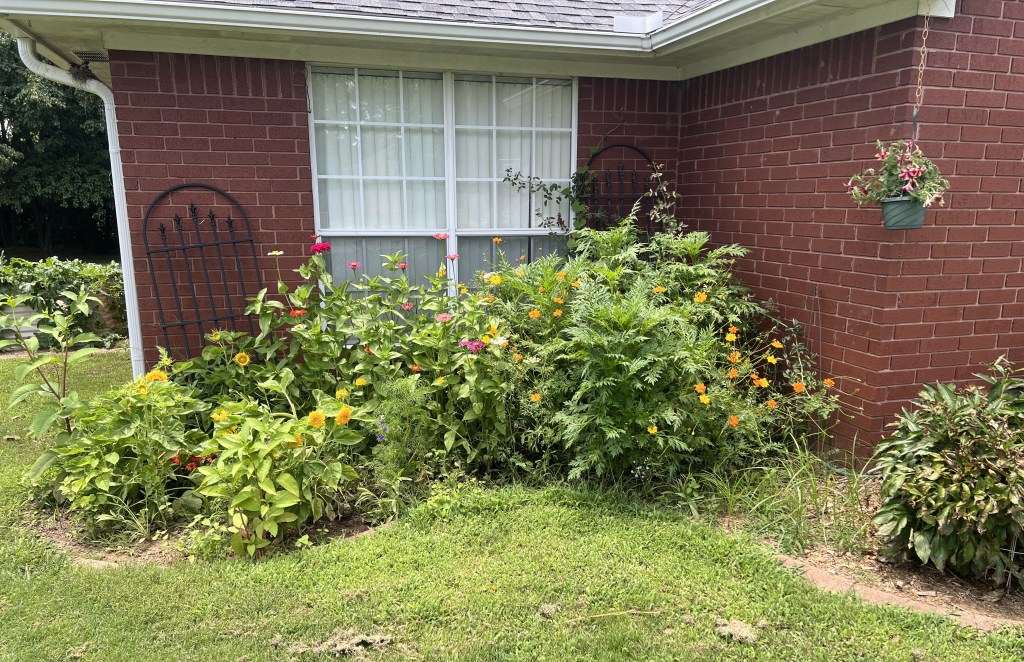
I wanted to duplicate my conference center experience when we moved to Arkansas, but I could never decide where to plant the wildflowers. Melissa’s mom established several flower beds that I thought Melissa wanted me to maintain. Melissa likes the look of a green lawn and symmetrical flower beds more than the asymmetrical look of a wildflower bed. I was also interested in expanding my garden into the front beds to replace the roses neither of us liked. Indecision meant we did nothing for five years. Last year we did decide to place wildflowers in one of the beds in front of the house but never got around to doing so. When Melissa retired this year, she decided she would plant a wildflower bed. We sprayed to kill all the grass that had taken over the beds, spaded the soil and weeded the bed to prepare it, Melissa sowed the seed, and then we waited. The first thing that grew was more grass and weeds, so I weeded the bed again. The wildflowers finally began to grow. Now we have a wildflower bed in the front of the house.
THOUGHTS: One of the problems with weeding the wildflower bed was knowing what to pull and what to leave. Removing the grass was obvious, but how do you tell the difference between the wildflowers Melissa planted and the weeds that grew naturally? In essence, all wildflowers are weeds if they are intruding in the vegetables or “planted” flowers. I decided to leave any plants I could not identify. If it grew a flower it was supposed to be there, whether Melissa sowed the seed or not. The same could be said for people. If they flourish in a new location they are meant to be there, no matter how they arrive. Act for all. Change is coming and it starts with you.
 A travelers odyssey