
August 03, 2025
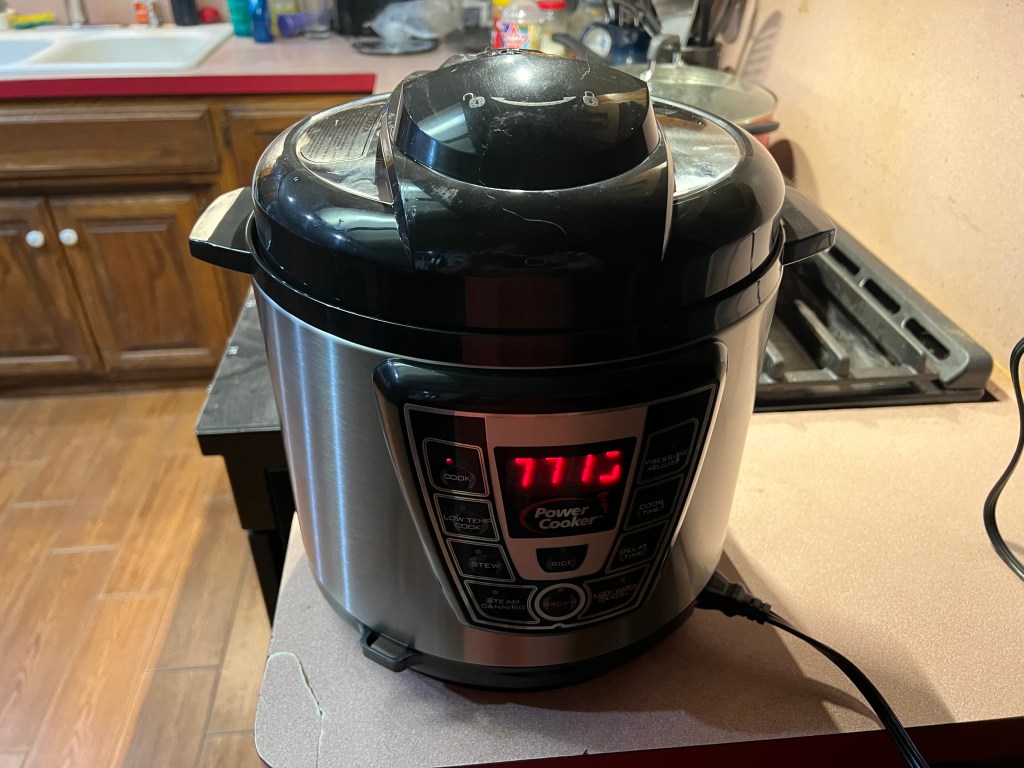
I decided I had enough tomatoes (Solanum lycopersicum) to make another batch of pasta sauce. We used the last 2024 jar during January and have been using “store-bought” sauce. I like the store brand, but it never seems as good as my home canned sauce. The recipe calls for 25 pounds (11.3 kg) of tomatoes and makes around 10 quarts (9.5 liters) of sauce. I never have that many tomatoes at one time, but I had prepped and frozen a gallon (3.8 liters) from a previous harvest and the cool(er) spell last week produced another burst of fruit. This would give me 4 or 5 jars of sauce, so I adjusted the recipe accordingly. I have been able to make my sauce using a water bath (boiling water) due to the higher acidity of the tomatoes. Last week I had also prepared the carrots from my garden and the slices were sitting in the refrigerator. I had been reluctant to can them because of their low acidity. To can the carrots, I would need to do something I had never done before, use a pressure cooker.
When I went online, I found a pressure cooker is a sealed vessel for cooking food (pressure cooking) with the use of high-pressure steam and water or a water-based liquid. The high-pressure limits the water from boiling and creates higher temperatures not possible at lower pressures. This allows the food to be cooked faster than at normal pressure. The prototype of the modern pressure cooker was the steam digester invented in the 17th century by the physicist Denis Papin. The cooker worked by expelling air from the vessel and trapping steam produced from the boiling liquid. The steam is used to raise the internal pressure up to one atmosphere above normal (ambient) and gives higher cooking temperatures between 212 F to 250F (100C to 121C). Together with high thermal heat transfer from steam it permits cooking in between a half and a quarter of the time of conventional boiling while saving a considerable amount of energy. Almost any food that can be cooked in steam or water-based liquids can be cooked in a pressure cooker.
Modern pressure cookers have many safety features to prevent the pressure cooker from reaching a pressure that could cause an explosion. After cooking, the steam pressure is lowered back to ambient atmospheric pressure so the vessel can be opened. All modern devices also have a safety lock to prevent opening while the cooker is still under pressure. According to the NY Times Magazine, 37% of US households owned at least one pressure cooker in 1950, but by 2011 that dropped to 20%. This decline was attributed to a fear of explosion (rare with modern pressure cookers) and from competition by other fast cooking devices such as the microwave oven. Today’s third-generation pressure cookers have many more safety features and digital temperature control, do not vent steam during cooking, and are quieter and more efficient. These conveniences have helped make pressure cooking more popular. I bought Melissa a third-generation electric pressure cooker (an odd gift?) before we were married. I later found out she never used it.
THOUGHTS: As I was making the carrots Melissa told me of her experience with an early pressure cooker. She loved to watch her granny canning in the kitchen when she was a small girl. Then one afternoon when she was three, the old-style first-generation pressure cooker exploded, sending hot water and glass everywhere. Both her granny and mom wore glasses, but she did not, and glass got in her eyes. A quick trip to the doctor removed all the glass, but neither she nor her mom ever watched granny using the pressure cooker again. Even with the modern versions, her dad was the only one in the house who used one. It took me a week to build up the nerve to use the pressure cooker. I had never used one and had “heard the stories”. I went online to learn how to operate it and found it easy to use. I now have a new cooking method to add to my resume. New things are generally only daunting if never tried. Act for all. Change is coming and it starts with you.
 A travelers odyssey