
September 10, 2025
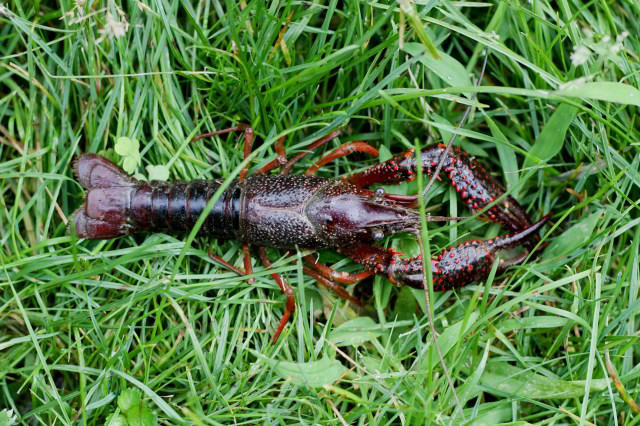
An article in my MSN browser referenced a report published by the Michigan State University Extension by Michigan Sea Grant (MSG). MSG is a cooperative program focused on conservation and use of resources in the Great Lakes. The Grant makes the case that foraging could help reduce the negative impact of invasive species on the environment and perhaps prevent the need for harmful chemical methods of pest control. Plants and animals introduced to new areas often become problems to the ecosystem by outcompeting native species that keep things balanced. One study found invasives cause nearly US$20 billion in damage in the US every year, with agriculture being the most severely impacted sector. One solution comes from programs to bring these species to our menus. Some restaurants have been introducing wild boar to Americans with the help of their providers and with the inspection facilities of the Department of Agriculture to ensure the safety of the product. MSG calls out red swamp crayfish for their aggressiveness and role in potentially spreading disease and parasites to other creatures but also notes they are a delicious component in recipes such as gumbo and bisque.
When I went online, I found the red swamp crayfish (Procambarus clarkii), also called the Louisiana crawfish or mudbug, is a species of the cambarid family of crayfish native to freshwater bodies of northern Mexico, and southern and southeastern US. It has also been introduced elsewhere in both North America and other continents where it is often an invasive pest. The red swamp is typically dark red, with long claws and head, small or no spines on the sides of its upper section of the shell (carapace) just below the head, and rows of bright red bumps on the front and side of the first leg. The native range is from northern Mexico and far southeastern New Mexico, through the Gulf States to the Florida Panhandle, as well as inland north through the Mississippi Basin to southern Illinois. It has also been introduced outside its natural range to countries in Asia, Africa, Europe, and the Americas. Individuals are reported to cross many miles of relatively dry ground, especially in wet seasons, although the aquarium trade and anglers may have hastened the spread in some areas.
The red swamp crayfish is eaten in China, Cambodia, Thailand, Europe, Africa, the US, Canada, Australia, New Zealand, and the Caribbean. In the US, crayfish are particularly popular in Louisiana, where crawfish boils are popular social gatherings centered around eating the crustaceans. Louisiana crawfish are usually boiled in a large pot with heavy seasoning (salt, cayenne pepper, lemon, garlic, bay leaf, etc. – I usually use Old Bay Crawfish Boil) along with items such as potatoes and corn on the cob. In 1990, Louisiana produced 90% of the crayfish in the world and consumed 70% locally. As early as 2003, Asian fish farms and fisheries produced more and continued to outpace production in any other part of the world. By 2018, crayfish production in the Americas represented just 4% of total global supply and 93% of the US crayfish farms were in Louisiana.
THOUGHTS: As a boy in Kansas, I would use a seine to catch the abundant crayfish to use as an inexpensive fish bait. I never considered these crustaceans more than bait until I went to the Crawdad Festival in Isleton, California. The red swamp crayfish has invaded the California waters and the three native species of crayfish (sooty crayfish – Pacifastacus nigrescens, Pilose crayfish – Pacufastacys gambelii, and Shasta crayfish – Pacifastacus fortis) have nearly disappeared. Isleton is in the Sacramento delta and was forced to fly in mudbugs from Louisiana. Crayfish is an acquired taste but once I got beyond the bait aspect, I found I loved them. “Pinch the tail and suck the heads!” Act for all. Change is coming and it starts with you.
 A travelers odyssey