
October 28, 2025
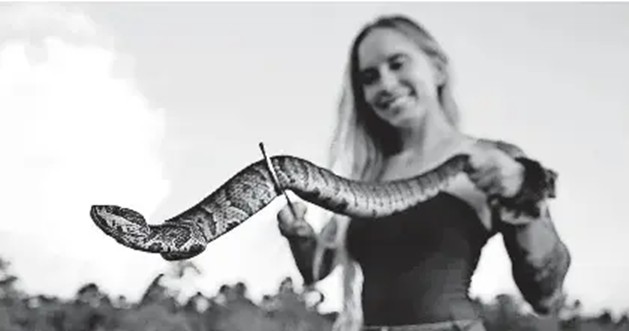
A USA Today article in the middle of the front section of Monday’s local newspaper highlighted a partnership between the state of Florida and a Maimi based leather manufacturer. Governor Ron DeSantis announced the partnership on the 21st. The decision to join in partnership was made in 2024 to remove invasive Burmese pythons (Python bivittatus) from the Florida Everglades. In three months, this summer, 1,022 pythons were removed, compared to 343 during the same period in 2024. The approximately 50 hunters previously contracted by the Florida Fish and Wildlife Conservation (FWC) now work for the private company, reducing their administrative burden by 89%, increasing python removal, and paying about 60% more for the harvested pythons. DeSantis said a lot of progress had been made in python removal but “at that pace it was not enough to get where we needed to go”. The South Florida Water Management District has its own python hunting program separate from the partnership formed between FCW and the leather maker Inversa.
When I went online, I found Inversa is a leather products company that claims to make “ethical exotics that restore nature”. This is done by “managing” (harvesting) harmful non-native species to help revive natural ecosystems. Invasive species are a driving force in around 60% of today’s species extinctions and cause US$423B annual damage around the planet. Management of invasive species restores indigenous species populations by up to 70%, enhances carbon sequestration and water purification, and strengthens global environmental and human health. Using invasive species to create leather products rather than bovine leather not only removes invasives, it also comparatively uses 99.9% less land, 95% less water, and emits 89% less greenhouse gases. Inversa partners to create job opportunities in rural and developing economies, empowering communities to protect their ecosystems by creating new jobs in nature restoration and directly increasing local incomes. According to their website, the company “works closely with our restoration cooperatives to ensure the stable livelihoods and humane labor conditions of all partners in ecosystem management.”
Inversa currently harvests three invasive species for leather production to protect critical habitats. The Greater Everglades provides critical habitats for hundreds of animal species and coastal protection against flooding for Southeastern America. Non-native pythons cause a severe decline in animal populations that keep the ecosystem in balance. The Mississippi River Basin is an ecological lifeline for North America, supporting over 870 species of fish and wildlife. The overpopulation of the invasive Silverfin carp harms native biodiversity, degrades water quality, and threatens community livelihoods. The Caribbean coral reefs are biodiversity hotspots that support 42 million livelihoods and, when healthy, protect coastlines from storms and erosion. The invasive lionfish threatens the health and stability of these already vulnerable ecosystems through its prolific predation. Inversa produces leather shoes, belts, purses, and accessories from all three invasives.
THOUGHTS: Inversa represents the latest of a series of efforts to remove invasive species from local ecosystems. I have previously blogged on the use of biological predators, but these are risky and can result in the cure creating their own invasions. Others are trying to convince diners to adjust their palates to consume the invaders, but this can be a hard sale that often involves reconstituting the product into a more acceptable form. Turning invasives into high-end leather products is a niche market (what I saw was expensive) but another good approach. Like most solutions, reduction or removal of invasives takes a long-term concerted cooperative effort. It is worth the time and cost. Act for all. Change is coming and it starts with you.
 A travelers odyssey