Goliath

June 13, 2026

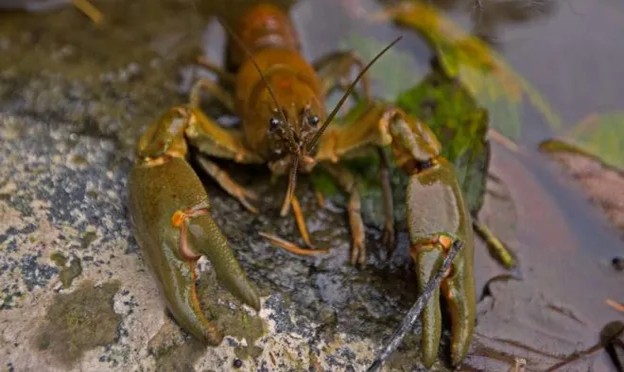
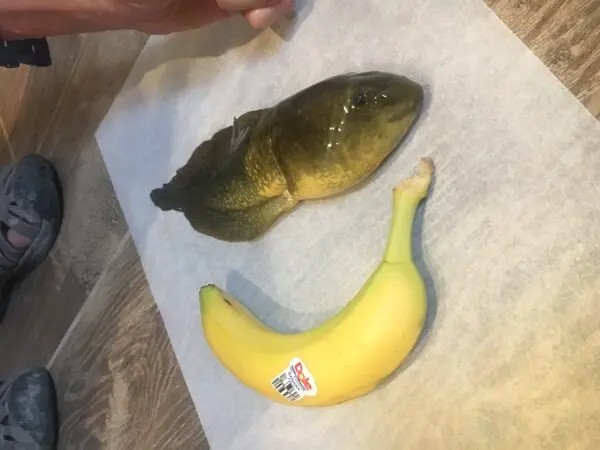
I came across an article on my MSN browser on a gigantic tadpole discovered in 2018.  The Chiricahua Mountains on the Arizona-Mexico border is famous for the Chiricahua leopard frog (Lithobates chiricahuensis).  This leopard frog is listed as a federally threatened species that is on the decline due to habitat loss and invasive bullfrogs.  A research team was draining a pond when they discovered a massive tadpole in their nets.  This was a bullfrog (Lithobates catesbeianus) tadpole that never metamorphosed.  Herpetologists are unsure why Goliath was stuck in tadpole limbo but believe it is due to a hormone imbalance, specifically a deficiency of a hormone essential for metamorphosis (thyroxine) combined with an excess of growth hormones.  The beast was taken to the Southwestern Research Station before dying in 2019.  The tadpole will be preserved by scientists so they can better understand what caused his mysterious condition.  Researchers had appropriately named the tadpole Goliath.

When I went online, I found there is a species of frog named the goliath frog (Conraua goliath), also known as the giant slippery frog and the goliath bullfrog, in the family Conrauidae.  The goliath frog is the largest living frog.  Specimens can reach up to about 18 inches (45 cm) in snout to vent length and 9.9 pounds (4.5 kg) in weight.  The species has a relatively small habitat range in Cameroon and Equatorial Guinea.  The goliath can live up to 15 years in the wild and up to 21 years in captivity.  The primary threat to the goliath frog is hunting, as it is considered a food source in its native range, although other predators are possible. The frog is also threatened by habitat loss and degradation, and they have been extensively exported to zoos and pet trade but have proven shy and nervous in captivity.  Although captives may live longer than their wild counterparts, the species has not been bred in captivity.

Goliath, the tadpole, did not undergo the normal metamorphosis where their tails are transformed into legs and development of adult frog features.  Despite remaining a tadpole, Goliath continued to grow, making it one of the largest tadpoles ever documented.  Its condition is considered extremely rare and provides insight into how hormonal imbalances can affect amphibian development.  The case highlights the delicate balance required for normal amphibian growth and metamorphosis. Researchers studied Goliath to understand the effects of endocrine disorders on development.  Cases like Goliath also raise questions about environmental impacts like pollution and habitat changes and their effect on the hormonal processes in wildlife.  Goliath was preserved by scientists to allow further study of its unique condition.  Its story serves as a compelling example of the extraordinary variations that can occur in nature and underscores the importance of monitoring environmental and hormonal factors in amphibian populations.

THOUGHTS: When I found that Goliath had died in 2019, I began to wonder why this popped up on my browser today.  A Copilot search gave me three possible answers.  It could have been as it was recently linked to a news or science article about unusual wildlife or amphibian biology.  Another explanation is a website or blog discussing rare animal cases or environmental science featuring the story.  Finally, it might have occurred via a browser ad or redirect or if my browser had been hijacked or exposed to unwanted ads, then it could have shown the page as part of a pop-up or search result.  Personally, I think it appeared as I seem to gravitate toward such article in my searches.  We are all being tracked for preferences.  This can make my searches more effective, if I do not care where this information is shared.  Hmm.  Act for all.  Change will come and it starts with you.

CattleTracker

June 11, 2026

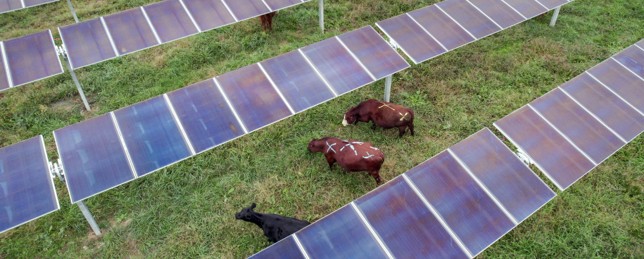
Last week’s Sunday newspaper carried a USA Today article on an innovative integration of ranching and energy production.  A herd of ten cows and their calves are residents of a Christiana, Tennessee, solar farm.  The 40-acre (16 ha) farm is the world’s only commercial scale solar energy plant co-located with cattle production.  The farm is owned by Silicon Ranch, a 15-year-old company based in Nashville.  The group has big plans to foster the integration of cattle and solar energy production thanks to a patented technology they are case testing in Tennessee.  The company, and its team of interdisciplinary researchers who built the technology, believes the co-location of the two land uses is a win-win for the agriculture and energy sectors.  This promise comes as both sectors have been forced to navigate unpredictable and sometimes volatile market conditions over the past few years. The software is called CattleTracker and offers a simple yet scalable solution to the venture.

When I went online, I found that CattleTracker “is a field-tested, evidence-based solution built to scale across America’s agricultural landscape that won the 2026 SEAL Sustainable Innovation Award.”  The innovation is the culmination of research and development by a multidisciplinary team of experts in the practice of using the same land for both solar energy and agriculture (agrivoltaics), animal welfare scientists, regenerative ranchers, and soil and ecosystem scientists from across the country and around the world.  The ranch builds and expands on Silicon Ranch’s nationally recognized work in sheep grazing, but the process needed innovation to adapt as solar panels can be vulnerable to damage from the greater weight and height of grazing cows versus compact sheep.  The living laboratory at Christiana will enable researchers to study cattle behavior, welfare, and ecological impacts while simultaneously testing solar installation structures.  According to Silicon Ranch’s website, “Christiana Solar is the latest proof that energy production and farming don’t have to compete—they actually work hand in hand, thriving together.”

Silicon Ranch launched its Regenerative Energy platform in 2018, introducing sheep grazing to its solar farms first in Tennessee and then in other locations.  Now, the company owns the largest flock of sheep in Georgia.  However, sheep are small and docile and easily coexist with solar modules.  Cattle are large and heavy and do not fit under standard solar modules, and they tend to bump into things which could damage the expensive equipment.  The advantage of making the cattle and solar modules work together is that the animals benefit from plentiful shade and grass to freely graze while the power companies have an easier time maintaining their solar farm.  Solar modules work by rotating, tilting the panels to follow the sun’s movements throughout the day and can be almost vertical.  Prohibitive costs of materials keep from just raising the modules above the cattle.  The CattleTracker software is designed to prevent modules from tracking the sun if cattle are nearby.  Nick de Vries, of Silicon Ranch, said ”We needed a design that would be good for agriculture, good for solar, good for the ecology, good for the community.”  Silicon plans to continue to improve the CattleTracker technology to show how it could be used in communities across the U.S.

THOUGHTS: The locally produced CattleTracker technology carries over to all the solar equipment at the facility.  The solar modules were made in Ohio by American company First Solar, while other parts were made in Alabama, Wisconsin and Virginia.  The Nextpower tracker parts were made in Memphis, and the Shoals combiner boxes were made in Portland, Tennessee.  The project illustrates that with innovation you can shop locally and focus on both the economy and ecology.  Who knew.  Act for all.  Change will come and it starts with you.

FPV

May 13, 2026

@Mike Popp/TIMES RECORD

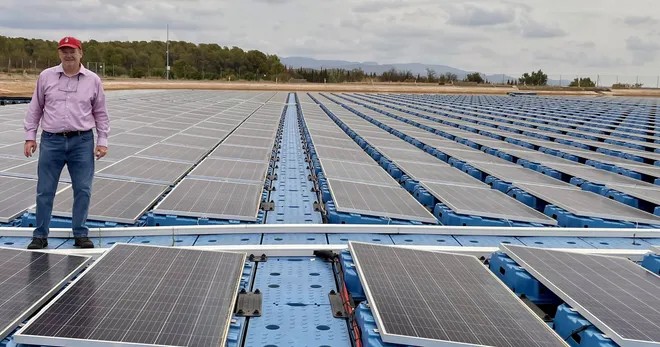
Several weeks ago, a front-page article in my local newspaper wrote about a study to save Arkansas farmlands. The study comes as solar leasing has become an increasingly attractive option.  Michael Popp, agricultural economist with the Arkansas Agricultural Experiment Station, said Utility-scale solar installations are projected to occupy about 0.2% of Arkansas’s 13.7 million acres (5,544,193 ha) of agricultural land, with some counties expected to see 1.7% of cropland converted.  Solar leases bring between US$450 and US$2,500 an acre, far outpacing traditional agricultural rental rates of US$50 an acre for non-irrigated cropland, US$150 for irrigated land, and US$20 for pasture.  Solar developers typically seek flat, well-drained land near transmission infrastructure, which tend to be the same characteristics that make productive farmland.  As solar competes with farmland across Arkansas, University of Arkansas researchers are testing whether a different approach could meet energy demands without taking acreage out of production.  A new project at the Rice Research and Extension Center is examining the feasibility of floating solar arrays (FPV) installed on irrigation reservoirs and waterways to reduce pressure to convert cropland while adding benefits for farmers.

When I went online, I found floating solar or floating photovoltaics (FPV) are solar panels mounted on a floating structure usually consisting of plastic buoys and cables placed on a body of water.  The systems can have advantages over land photovoltaics (PV) as water surfaces may be less expensive than land and there are fewer regulations for structures built on water not used for recreation.  Life cycle analysis indicates that foam-based FPV have some of the shortest energy payback times (1.3 years) and the lowest greenhouse gas emissions to energy ratio (11 kg CO2 eq/MWh) in crystalline silicon solar photovoltaic technologies reported.  FPV can be used to generate electricity for any application as well as to make green hydrogen via electrolysis on the same water they are floating on. Floating arrays also achieve higher efficiencies than PV panels because the water cools them.  The panels can have a special coating to prevent rust or corrosion while providing shade, slowing evaporation, and inhibiting the growth of algae in the water where they are installed.

Popp said the research is focused on balancing competing interests as solar expansion accelerates.  “The goals are to not convert agricultural land to solar panel use, save irrigation water and create a synergy between utility companies, solar investors, farmers and policymakers.”  Researchers say floating solar could offer a path forward in a debate that has increasingly pitted energy development against agricultural preservation, providing a way to do both without forcing farmers to choose.  Along with physical installation of FPVs, researchers are surveying Mid-South residents and farmers to gauge attitudes toward floating solar and willingness to pay to avoid converting farmland.  The project is a collaboration between agricultural economists, engineers and students with the University of Arkansas Division of Agriculture.  The survey is open through May 15, 2026.

THOUGHTS: Constructing FPV on waterways is one of several innovative ways being researched to provide increased use of land under a solar array.  Growing native wildflowers under and around PV (ecovoltaics) restore ecosystems and supports pollinators like bees and butterflies.  This boosts insect diversity, reduces long-term maintenance costs (vs turfgrass), and can increase crop yields on surrounding farms.  Growing crops or grazing livestock under and around solar arrays (Agrivoltaics) combines agriculture with energy production to boost land-use efficiency.  This symbiotic approach improves crop yields for certain plants by providing shade and reducing water loss, while the transpiration from plants cools the panels, increasing electricity generation.  Innovation is not “one or the other”, but can be both/and.  Act for all.  Change is coming and it starts with you.

Garbage Patch

December 17, 2025

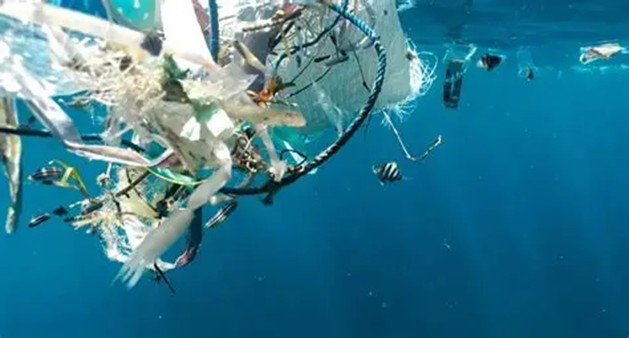
When I opened my MSN browser this morning I found an article on life flourishing in the open ocean.  This is a mix of natural, surface-dwelling ocean creatures and resilient coastal species that use floating plastic as rafts to colonize the open sea, forming new (artificial) ecosystems even as they face dangers from entanglement, plastic ingestion, and toxic contamination.  This biological hotspot is also an ecological nightmare as the plastics disrupt feeding, growth, and development of other marine animals.  Life on the plastics includes coastal species like barnacles (subphylum Crustacea), bryozoans (Phylum Bryozoa), anemones (class Anthozoa), and crustaceans (Subphylum Crustacea) that were carried from home by currents from the 2011 Japan tsunami.  Open-Ocean species like violet snails (Janthina exigua) and blue button jellies (Phylum Ctenophora) also thrive using floating plastic for shelter and feeding.  The non-biodegradable plastics allow these diverse communities to form and even reproduce, bringing life to the Great Pacific Garbage Patch

When I went online, I found the Great Pacific Garbage Patch, or Pacific trash vortex, is a spiral (gyre) of marine debris particles in the central North Pacific Ocean.  The patch is located roughly from 135°W to 155°W and 35°N to 42°N and originates from the Pacific Rim, including countries in Asia, North America, and South America.  Despite the common perception of the patch as giant islands of floating garbage, it is of low density (4 particles per 3.1 yd2 or 1 m2) which prevents its detection by satellite imagery or boaters or divers in the area.  The patch is a widely dispersed area consisting primarily of suspended “fingernail-sized or smaller” (often microscopic) particles (microplastics) in the upper water column.  Researchers from The Ocean Cleanup project claimed the patch covers 620,000 square miles (1.6 million km2) and consists of 50,000 to 142,000 tons (45,000 to129,000 metric tons) of plastic as of 2018 and has grown to twice the size of Texas.  By 2024, the group had removed more than 1 million pounds (453592 kg) of trash from the Patch.

Rehabilitating the Garbage Patch poses a significant challenge due to its immense size and location far from any country’s coastline, making it difficult for any nation to bear the financial responsibility for cleanup.  Various international organizations have pledged to stop the growth of the Garbage Patch.  Charles Moore (who initially uncovered the patch in 1997) is actively involved in raising awareness through the Algalita Marine Research Foundation.  The Ocean Cleanup, led by Boyan Slat, aims to eliminate 90% of ocean plastic pollution by 2040.  The organization is developing technology to extract plastic from the oceans and intercept it in rivers before it reaches the sea.  Their approach is to concentrate the plastic in “artificial coastlines” before collecting and removing it with a long U-shaped barrier that directs the plastic towards a retention zone.  The group’s collection exceeds hundreds of tons (90+ metric tons) and continues to grow.  While microplastics dominate the patch, 92% of the mass consists of larger objects like plastic lighters, toothbrushes, water bottles, pens, baby bottles, cell phones, and plastic bags.  The patch contains around 6 pounds (2.7 kg) of plastic for every pound (0.45 kg) of plankton.  A similar patch of floating plastic is found in the Atlantic called the North Atlantic garbage patch.

THOUGHTS: As plastics are being removed from the Garbage Patch the question remains about the life that exists there.  A team of scientists found almost every piece of plastic removed was carrying (mostly invertebrate) life.  On average, each plastic item carried about 4 to 5 different species and nets and ropes tended to have especially dense communities.  Nature seems to adapt to humans’ worst levels of pollution.  Act for all.  Change is coming and it starts with you.
PFAS

December 09, 2025

While perusing the newspapers which had been held in my mail while I was gone (yes, I have gone paperless, but they send hardcopy), I came across a USA Today article on a new bill to allow fire departments across Wisconsin to have access to new technology to fight forest fires.  The bill would make firefighting foam derived from ground-up soybeans eligible for a Department of Natural Resources grant up to 50% of the cost of acquiring supplies, equipment, and training related to forest fires.  Dave Garlie, the chief technology officer for Cross Plains Solutions, has been working on creating foam using organic materials for years.  In a November 4th hearing of the Senate Committee on Agriculture and Revenue, Garlie said using soybeans is not a new idea as the substance was used before the 1960’s.  When PFAS was introduced, it took over the market as the foam was easier to handle because it did not go rancid and it was not as thick of a solution as the soybean paste.

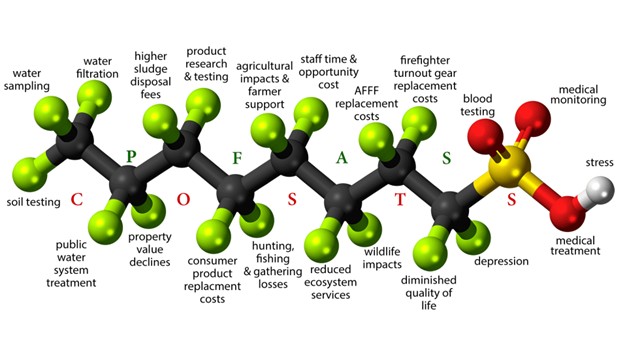
When I went online, I found PFAS, or per- and polyfluoroalkyl substances, are a family of man-made chemicals used for their water and stain resistant qualities in products like clothing, carpet, nonstick cookware, packaging, and firefighting foam.  PFAS are a group of synthetic organofluoride chemical compounds that have multiple fluorine atoms attached to an alkyl chain.  Different organizations use different definitions for PFAS, leading to estimates of between 8,000 and 7 million chemicals within the group.  The family includes 5,000 compounds which remain in both the environment and human body over time (persistent).  The chemicals have been linked to types of kidney and testicular cancers, lower birth weights, harm to immune and reproductive systems, altered hormone regulation, and altered thyroid hormones.  The US Environmental Protection Agency (EPA) toxicity database (DSSTox) lists 14,735 unique PFAS chemical compounds while 7 million are listed in PubChem.

Garlie started to hear from firefighters who were afraid of using PFAS, and he started looking into using soybeans again.  It is safer for firefighters to use, as well as community members nearby.  When soybean foam is deployed, it breaks down naturally, so there’s no need for a pricey cleanup, or for water filtration.  During the hearing, Garlie told lawmakers testing at Chippewa Valley Technical College has shown that the foam is just as successful at putting out fires as PFAS-containing foam.  The soybean product could also lessen firefighters’ exposure to toxic PFAS in an occupation that already exposes them to numerous toxins every fire.  According to the National Institute for Occupational Safety and Health, firefighters have a 9% higher risk of being diagnosed with cancer and a 14% higher risk of dying from cancer than the general population.  The use of soybean-based foam could also help drive up domestic sales of soybeans.  While it will not make up for the loss of trade with China, it will help in the long run.  Senator Howard Marklein, listed as a co-author on the bill, said, “This is good for farmers, good for our fire departments and good for the environment.”

THOUGHTS: Several companies have ended or plan to end the sale of PFAS or products that contain them as PFAS producers have paid billions to settle litigation claims.  Studies have shown that companies have known of health dangers from ingestion of PFAS since the 1970’s.  The PFAS market includes the chemical production side (US$28 billion in sales globally pre-2023) and rapidly growing related markets like treatment, testing, and waste management, (from regulations) with projections reaching tens of billions.  According to ChemSec, external costs for remediation of contamination, treatment of related diseases, and monitoring of pollution, may be as high as US$17.5 trillion annually.  While health concerns were not enough to end production and sales, it seems the cost of remediation may.  Act for all.  Change is coming and it starts with you.
Seed Bank

November 21, 2025

Today’s NYT The Morning scroll included a link to photos and an article from Times photographer Ruth Fremson about an island used to gather seeds to replace parts of the deforested Amazon forest.  The Brazilian government built a hydroelectric dam fifty years ago and flooded 100s of 1,000s of acres of rainforest along the Tocantins River and transforming a mountainous peak into an island.  That island now supplies seeds to replenish deforested areas and preserve native species throughout the Amazon.  Workers arrive by boat and scale towering trees to reach the fruit that contains the seeds which are then donated to schools, government agencies, and farmers.  The owner of the dam, AXIA Energia, said it compensated the 32,000 people displaced by the project and uses the seed bank to replenish areas throughout the Amazon.  Workers gathered almost nine million seeds last year and are on pace to far exceed that amount this year.  Their seed bank stores about 30 million seeds in one of three chambers (cold, humid, and dry).

When I went online, I found the worlds’ largest seed bank is the Svalbard Global Seed Vault, a secure backup facility for the world’s crop diversity on the Norwegian island of Spitsbergen in the remote Arctic Svalbard archipelago.  The vault provides long-term storage for duplicates of seeds from around the world, conserved in gene banks.  This provides security of the world’s food supply against the loss of seeds in gene banks due to mismanagement, accident, equipment failures, funding cuts, war, sabotage, disease, and natural disasters.  The vault is managed under terms spelled out in a tripartite agreement among the Norwegian government, the Crop Trust, and the Nordic Genetic Resource Center (NordGen).  The Norwegian government entirely funded the Seed Vault’s KR$45 million (US$8.8 million in 2008) construction cost.  Norway and the Crop Trust pay for operational costs and storing seeds in the vault is free to depositors.  As of June 2025, the seed bank conserves 1,355,591 accessions, representing more than 13,000 years of agricultural history.

Another Amazon Basin living seed bank is located at Camino Verde in the richly biodiverse region of Madre de Dios in Peru.  This resource grows over 400 species of native trees and plants, and some with often incredible properties little-known to science.  Camino Verde sits alongside the Tambopata River, whose basin is one of the richest ecological areas on the planet.  It is home to native (endemic) species of birds, reptiles, and mammals, along with at least 1,255 plant species.  However, the unique biodiversity of this region has been disappearing over the past decades.  In 2020, Peru recorded its highest levels of deforestation in history, with a total of 502,296 acres (203,272 ha) of Amazonian forest lost due largely to logging and mining.  Since 2001, almost 741,3161 acres (3 million ha) have been deforested.  Similar deforestation is taking place across the tropics both legally and illegally.

THOUGHTS: I do not have a seed bank, but Melissa did buy me several 100 packets of seed two Christmases ago.  I used several varieties that first year and then replanted some of the leftover seeds again this year.  Most seed packets state the year of intended use and many also list minimum germination standards and usual seed life.  Seeds that have been stored in a cool, dry place are generally viable for at least a year past the season for which they were packaged and may be good for up to five years.  I realize I do not have the perfect conditions required for a seed bank, but I was surprised by how many of the seeds were not viable.  My “survival seed packets” are still sealed in airtight packaging intended to keep them viable for longer periods.  The oldest viable seed ever planted and successfully grown is a 32,000-year-old narrow-leafed campion (Silene stenophylla) found in the Siberian permafrost. Preserving seeds for the next year is another step toward being sustainable.  Act for all.  Change is coming and it starts with you.
Volatile

November 17, 2025

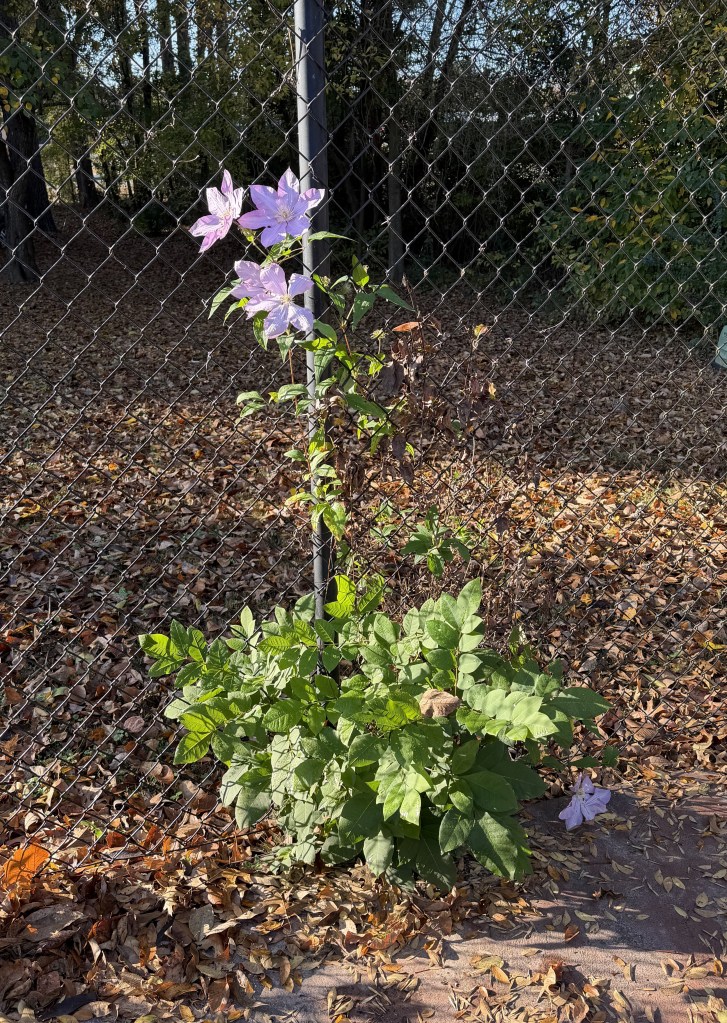
It seems hard to believe that last week I was protecting the pipes in our RV from a hard freeze.  The temps dropped to 28F (-2C) on consecutive nights.  While it did warm up to the mid 40’sF (7C) on both afternoons it was still a cause for concern.  I did not winterize the water lines and tanks since we are still hoping to take a trip around Christmas.  Our mechanic told us the lines in our Sunseeker are contained inside the compartment and there are water heaters to keep the tanks warm.  I turned on the water heater, set the tanks to Arctic mode, and turned the inside furnace to 60F (15.5C), its lowest setting.  After a brief spell, the temperatures warmed again.  Two days later it climbed back to 80F (26.6C) and our unit had survived its first test.  The temps have stayed in the 70’s+F (21+C) this week, although they will dip just as we leave for another extended trip at the end of the week.  While the wildflowers in the front bed did not survive the chill, the clematis (Clematis var. “The President”) on the back fence decided to burst into bloom.  Is it just me or does the weather seem more volatile?

When I went online, I found the weather is becoming more volatile.  This includes rapid temperature swings and increases in atmospheric instability due to a warmer, moister atmosphere.  According to climate scientists and studies global warming is a primary driver, making the atmosphere more unstable and extreme events more common.  Studies show the frequency and intensity of extreme weather are increasing, and this trend is expected to continue.  An increase in low-level moisture content and warmer air temperatures have significantly increased atmospheric instability over the past 40 years.  This makes the weather volatile with more frequent and intense “climate whiplash” or rapid temperature changes, which give little time for adaptation.  This volatility contributes to a rise in extreme events such as record-breaking heatwaves, more intense rainfall, and more powerful storms.  The world’s oceans are at the highest temperatures recorded in the last 1,000 to 2,000 years, which can fuel more extreme weather.  A study in Nature noted rapid intensification rates in the Atlantic have resulted in an increase for hurricanes since 1971.

While most changes to address the volatile nature of the weather require systemic shifts, there are some things individuals can do to prepare.  Pay attention to local weather forecasts and heed warnings for extreme events like flash floods.  Encourage your community to plan for volatility by designing resilient infrastructure will be better equipped to handle extreme events.  Understand your local flood risk and take steps to prepare, as weather patterns are changing.  Lori Peek, director of the Natural Hazards Center at the University of Colorado, said, “Infrastructure is aging in our country and is more vulnerable given the fact that there are just simply . . . more people living in harm’s way.”  This is true for the wildfires of California, the floods of the Midwest, and the hurricanes of the east coast.  None are going to go away on their own.

THOUGHTS: The US is responding to this volatile weather with mass layoffs and cuts to the agencies that study climate and help warn and deal with disasters.  Workers at the Federal Emergency Management Agency, the National Weather Service, and research labs at the National Oceanic Atmospheric Administration and the US Geological Survey are also leaving and taking their expertise with them.  It could take years to make up for this brain drain.  The country needs to plan for worst case scenarios and build infrastructure to lessen the effect.  The dinosaurs did not know the comet was going to strike.  We know but need to act.  Act for all.  Change is coming and it starts with you.
Erosion

November 07, 2025

I have been going to a coffee shop to visit a friend every month or so.  I always enter from the rear of the building into the semi-outdoor seating area.  This is enclosed with glass doors that can be raised when the weather is appropriate, although I have never seen them raised.  Several years ago, they did some remodeling on the exterior to replace the concrete that backed up to the mini-mall parking lot where it was located.  The shop has an AC unit on top of the building and a downspout that channels the water off the roof and out to the street.  Over the years this has resulted in the water cutting a path from the spout to the parking lot.  When I arrived this last week, it impressed me with the power of water to cause erosion.  

When I went online, I found water erosion is the process of soil and rock being moved by water.  This erosion can be categorized into types.  Splash erosion comes from the impact of raindrops detaching soil particles.  Sheet erosion is the removal of a thin, uniform layer of soil across a slope.  Rill erosion is the small, channel-like cuts formed by runoff water.  Gully erosion is the larger, more-defined channels that develop from rills.  Stream-bank erosion is the wearing away of the banks of a stream or river.  Coastal erosion is the wearing away of land along the coastline, often caused by wave action.  This natural process shapes landscapes by carving out valleys and canyons, but human activities like deforestation and farming can accelerate it, impacting soil quality and water resources.  Techniques to control water erosion include keeping soil covered with vegetation, practicing conservation tillage, and building structures like terraces and grassed waterways.  The erosion at the coffee shop appears to be rill erosion.  I suppose if left long enough it would become gully erosion.

While erosion is a natural process, human activities have increased by 10 to 40 times the rate at which soil erosion is occurring globally.  At agriculture sites in the Appalachian Mountains, intensive farming practices have caused erosion up to 100 times the natural rate of erosion in the region.  Excessive (or accelerated) erosion causes both “onsite” and “offsite” problems.  Onsite impacts include decreases in agricultural productivity and even ecological collapse from the loss of the nutrient-rich upper soil layers and in extreme cases this can lead to desertification.  Offsite effects include sedimentation of waterways and an accumulation of nutrients (eutrophication) in a body of water.  Both can result in an increased growth of organisms that may deplete the oxygen in the water.  Intensive agriculture, deforestation, roads, anthropogenic climate change (global warming), and urban sprawl are among the most significant human activities regarding their effect on stimulating erosion.  There are also prevention and remediation practices that can curtail or limit erosion of vulnerable soils.

THOUGHTS: I recall being amazed when they had to shut down the 20-year-old spillway outlet at the reservoir where I fished in high school.  The outlet Shannel had two massive rows of 20-foot-high (6 m) concrete blocks that had suffered erosion from the water being released and were needing to be replaced.  Famous examples of water erosion include the Grand Canyon, formed by the Colorado River; the Mississippi River Delta, a large fan-shaped deposit of sediment; and Niagara Falls, which is slowly receding upstream due to erosion.  Water and wind erosion are the two primary causes of land degradation and are responsible for about 84% of degraded land globally, making excessive erosion one of the most significant environmental problems worldwide.  While erosion is a natural process, humans can choose to lessen (or increase) the effect by our actions.  It takes eons for the landscape to recover, if it does at all.  Act for all.  Change is coming and it starts with you.
Inversa

October 28, 2025

A USA Today article in the middle of the front section of Monday’s local newspaper highlighted a partnership between the state of Florida and a Maimi based leather manufacturer.  Governor Ron DeSantis announced the partnership on the 21st.  The decision to join in partnership was made in 2024 to remove invasive Burmese pythons (Python bivittatus) from the Florida Everglades.  In three months, this summer, 1,022 pythons were removed, compared to 343 during the same period in 2024.  The approximately 50 hunters previously contracted by the Florida Fish and Wildlife Conservation (FWC) now work for the private company, reducing their administrative burden by 89%, increasing python removal, and paying about 60% more for the harvested pythons.  DeSantis said a lot of progress had been made in python removal but “at that pace it was not enough to get where we needed to go”.  The South Florida Water Management District has its own python hunting program separate from the partnership formed between FCW and the leather maker Inversa.

When I went online, I found Inversa is a leather products company that claims to make “ethical exotics that restore nature”.  This is done by “managing” (harvesting) harmful non-native species to help revive natural ecosystems.  Invasive species are a driving force in around 60% of today’s species extinctions and cause US$423B annual damage around the planet.  Management of invasive species restores indigenous species populations by up to 70%, enhances carbon sequestration and water purification, and strengthens global environmental and human health.  Using invasive species to create leather products rather than bovine leather not only removes invasives, it also comparatively uses 99.9% less land, 95% less water, and emits 89% less greenhouse gases.  Inversa partners to create job opportunities in rural and developing economies, empowering communities to protect their ecosystems by creating new jobs in nature restoration and directly increasing local incomes.  According to their website, the company “works closely with our restoration cooperatives to ensure the stable livelihoods and humane labor conditions of all partners in ecosystem management.”

Inversa currently harvests three invasive species for leather production to protect critical habitats.  The Greater Everglades provides critical habitats for hundreds of animal species and coastal protection against flooding for Southeastern America.  Non-native pythons cause a severe decline in animal populations that keep the ecosystem in balance.  The Mississippi River Basin is an ecological lifeline for North America, supporting over 870 species of fish and wildlife.  The overpopulation of the invasive Silverfin carp harms native biodiversity, degrades water quality, and threatens community livelihoods.  The Caribbean coral reefs are biodiversity hotspots that support 42 million livelihoods and, when healthy, protect coastlines from storms and erosion.  The invasive lionfish threatens the health and stability of these already vulnerable ecosystems through its prolific predation.  Inversa produces leather shoes, belts, purses, and accessories from all three invasives.

THOUGHTS: Inversa represents the latest of a series of efforts to remove invasive species from local ecosystems.  I have previously blogged on the use of biological predators, but these are risky and can result in the cure creating their own invasions.  Others are trying to convince diners to adjust their palates to consume the invaders, but this can be a hard sale that often involves reconstituting the product into a more acceptable form.  Turning invasives into high-end leather products is a niche market (what I saw was expensive) but another good approach.  Like most solutions, reduction or removal of invasives takes a long-term concerted cooperative effort.  It is worth the time and cost.  Act for all.  Change is coming and it starts with you.
Prevention

October 17, 2025

Browsing my NY Times app, I came across an illustrated article that explained what New York City will need to do to survive the predicted flooding over the next 50 years.  New York’s coastal location allowed it to thrive but has now become a threat.  Future models predict tidal flooding will mainly hit Southern Brooklyn, Queens, and Lower Manhattan.  By 2080, many areas will face an increased risk of tidal flooding because of rising sea levels.  At the same time, more neighborhoods will become vulnerable to extreme rainfall and wide swaths of the city face increasing risk from storm surge from a hurricane.  Nearly 30 % of the city’s land mass could be at risk of significant flooding by 2080, and 17% of the city’s population (1.4 million) currently live in these areas.  Climate experts recommend three strategies for the city to adapt.  The city could increase its ability to absorb water by converting 5areas of asphalt and concrete to green space.  It could be fortified by building barriers along its shores, and possibly a gate around the harbor.  Or it could retreat, relocating people out of the most hazardous regions.  Flood prevention will likely have to embrace all three approaches.

When I went online, I found New York’s flood prevention strategies include large-scale infrastructure projects along the East and Hudson Rivers to protect against storm surges and rising sea levels.  New York is installing continuous flood protection systems along its coastlines, including flood walls, elevated landscapes, and discreet barriers like flip-up gates and stop logs.  The Big U is a series of interconnected flood resilience projects to create a 5.5-mile (8.9 km) protective system around lower Manhattan to shield against sea level rise and storm surges.  Projects like Battery Park have improved drainage infrastructure with systems of tide gate chambers to manage water during coastal surge events.  Other initiatives include creating “cloudburst” sunken public spaces to temporarily hold water and providing residents with flood protection resources like sandbags, dams, and flood-resistant materials to help protect individual properties.  FloodHelpNY provides information and connects eligible homeowners with engineers to help reduce flood risk.  Finally, residents are encouraged to install features like sump pumps and drain plugs to protect their homes.

A 2024 study in Nature emphasizes how New York needs prevention measures to combat extreme rainfall events.  Since 1970, the city’s stormwater system has been built to handle up to 1.75 inches (4.5 cm) of rain per hour.  Hourly precipitation recorded in Central Park did not exceed this limit until 1995, but it has been eclipsed in three of the last five years.  Little of that rainfall is absorbed or stored before reaching the stormwater system.  Today, only about 30% of the city’s surface area is composed of absorbent surfaces.  The remaining 70% is covered by impervious surfaces that replaced the original porous landscapes.  The contemporary city was built atop wetlands and ponds that absorbed and stored water and the original shoreline was artificially expanded with landfill over the course of centuries.  The areas at risk of flooding in the modern city overlap to a striking degree with the city’s historical wetlands.  Understanding New York’s historical environment is crucial to imagining a more resilient urban future based on the city’s past topography. 

THOUGHTS: In “Mannahatta: A Natural History of New York City,” author Eric Sanderson, a landscape ecologist at the New York Botanical Garden, addressed the prevention measures needed.  “I was trying to imagine a configuration of the landscape . . . restoring streams, wetlands and agricultural lands, connecting the urbanized parts of the city, and depaving a lot of what we have.”  Islands and coastal cities around the globe are struggling to keep up with the rising oceans caused by climate change.  Sounds like sink or swim is more than an adage.  We can no longer wait.  Act for all.  Change is coming and it starts with you.