
May 13, 2026
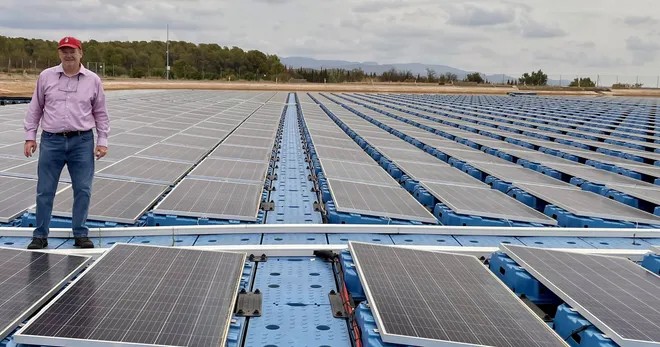
@Mike Popp/TIMES RECORD
Several weeks ago, a front-page article in my local newspaper wrote about a study to save Arkansas farmlands. The study comes as solar leasing has become an increasingly attractive option. Michael Popp, agricultural economist with the Arkansas Agricultural Experiment Station, said Utility-scale solar installations are projected to occupy about 0.2% of Arkansas’s 13.7 million acres (5,544,193 ha) of agricultural land, with some counties expected to see 1.7% of cropland converted. Solar leases bring between US$450 and US$2,500 an acre, far outpacing traditional agricultural rental rates of US$50 an acre for non-irrigated cropland, US$150 for irrigated land, and US$20 for pasture. Solar developers typically seek flat, well-drained land near transmission infrastructure, which tend to be the same characteristics that make productive farmland. As solar competes with farmland across Arkansas, University of Arkansas researchers are testing whether a different approach could meet energy demands without taking acreage out of production. A new project at the Rice Research and Extension Center is examining the feasibility of floating solar arrays (FPV) installed on irrigation reservoirs and waterways to reduce pressure to convert cropland while adding benefits for farmers.
When I went online, I found floating solar or floating photovoltaics (FPV) are solar panels mounted on a floating structure usually consisting of plastic buoys and cables placed on a body of water. The systems can have advantages over land photovoltaics (PV) as water surfaces may be less expensive than land and there are fewer regulations for structures built on water not used for recreation. Life cycle analysis indicates that foam-based FPV have some of the shortest energy payback times (1.3 years) and the lowest greenhouse gas emissions to energy ratio (11 kg CO2 eq/MWh) in crystalline silicon solar photovoltaic technologies reported. FPV can be used to generate electricity for any application as well as to make green hydrogen via electrolysis on the same water they are floating on. Floating arrays also achieve higher efficiencies than PV panels because the water cools them. The panels can have a special coating to prevent rust or corrosion while providing shade, slowing evaporation, and inhibiting the growth of algae in the water where they are installed.
Popp said the research is focused on balancing competing interests as solar expansion accelerates. “The goals are to not convert agricultural land to solar panel use, save irrigation water and create a synergy between utility companies, solar investors, farmers and policymakers.” Researchers say floating solar could offer a path forward in a debate that has increasingly pitted energy development against agricultural preservation, providing a way to do both without forcing farmers to choose. Along with physical installation of FPVs, researchers are surveying Mid-South residents and farmers to gauge attitudes toward floating solar and willingness to pay to avoid converting farmland. The project is a collaboration between agricultural economists, engineers and students with the University of Arkansas Division of Agriculture. The survey is open through May 15, 2026.
THOUGHTS: Constructing FPV on waterways is one of several innovative ways being researched to provide increased use of land under a solar array. Growing native wildflowers under and around PV (ecovoltaics) restore ecosystems and supports pollinators like bees and butterflies. This boosts insect diversity, reduces long-term maintenance costs (vs turfgrass), and can increase crop yields on surrounding farms. Growing crops or grazing livestock under and around solar arrays (Agrivoltaics) combines agriculture with energy production to boost land-use efficiency. This symbiotic approach improves crop yields for certain plants by providing shade and reducing water loss, while the transpiration from plants cools the panels, increasing electricity generation. Innovation is not “one or the other”, but can be both/and. Act for all. Change is coming and it starts with you.

