
December 09, 2025
While perusing the newspapers which had been held in my mail while I was gone (yes, I have gone paperless, but they send hardcopy), I came across a USA Today article on a new bill to allow fire departments across Wisconsin to have access to new technology to fight forest fires. The bill would make firefighting foam derived from ground-up soybeans eligible for a Department of Natural Resources grant up to 50% of the cost of acquiring supplies, equipment, and training related to forest fires. Dave Garlie, the chief technology officer for Cross Plains Solutions, has been working on creating foam using organic materials for years. In a November 4th hearing of the Senate Committee on Agriculture and Revenue, Garlie said using soybeans is not a new idea as the substance was used before the 1960’s. When PFAS was introduced, it took over the market as the foam was easier to handle because it did not go rancid and it was not as thick of a solution as the soybean paste.
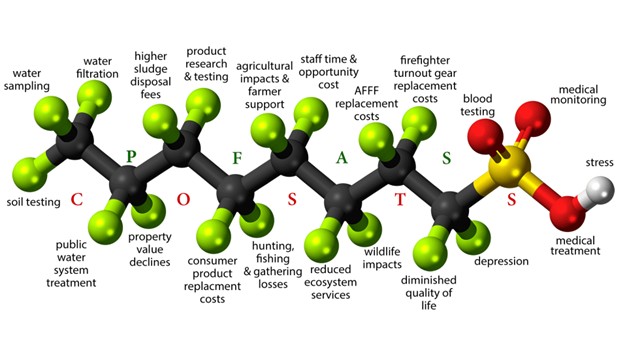
When I went online, I found PFAS, or per- and polyfluoroalkyl substances, are a family of man-made chemicals used for their water and stain resistant qualities in products like clothing, carpet, nonstick cookware, packaging, and firefighting foam. PFAS are a group of synthetic organofluoride chemical compounds that have multiple fluorine atoms attached to an alkyl chain. Different organizations use different definitions for PFAS, leading to estimates of between 8,000 and 7 million chemicals within the group. The family includes 5,000 compounds which remain in both the environment and human body over time (persistent). The chemicals have been linked to types of kidney and testicular cancers, lower birth weights, harm to immune and reproductive systems, altered hormone regulation, and altered thyroid hormones. The US Environmental Protection Agency (EPA) toxicity database (DSSTox) lists 14,735 unique PFAS chemical compounds while 7 million are listed in PubChem.
Garlie started to hear from firefighters who were afraid of using PFAS, and he started looking into using soybeans again. It is safer for firefighters to use, as well as community members nearby. When soybean foam is deployed, it breaks down naturally, so there’s no need for a pricey cleanup, or for water filtration. During the hearing, Garlie told lawmakers testing at Chippewa Valley Technical College has shown that the foam is just as successful at putting out fires as PFAS-containing foam. The soybean product could also lessen firefighters’ exposure to toxic PFAS in an occupation that already exposes them to numerous toxins every fire. According to the National Institute for Occupational Safety and Health, firefighters have a 9% higher risk of being diagnosed with cancer and a 14% higher risk of dying from cancer than the general population. The use of soybean-based foam could also help drive up domestic sales of soybeans. While it will not make up for the loss of trade with China, it will help in the long run. Senator Howard Marklein, listed as a co-author on the bill, said, “This is good for farmers, good for our fire departments and good for the environment.”
THOUGHTS: Several companies have ended or plan to end the sale of PFAS or products that contain them as PFAS producers have paid billions to settle litigation claims. Studies have shown that companies have known of health dangers from ingestion of PFAS since the 1970’s. The PFAS market includes the chemical production side (US$28 billion in sales globally pre-2023) and rapidly growing related markets like treatment, testing, and waste management, (from regulations) with projections reaching tens of billions. According to ChemSec, external costs for remediation of contamination, treatment of related diseases, and monitoring of pollution, may be as high as US$17.5 trillion annually. While health concerns were not enough to end production and sales, it seems the cost of remediation may. Act for all. Change is coming and it starts with you.
 A travelers odyssey