
April 06, 2026
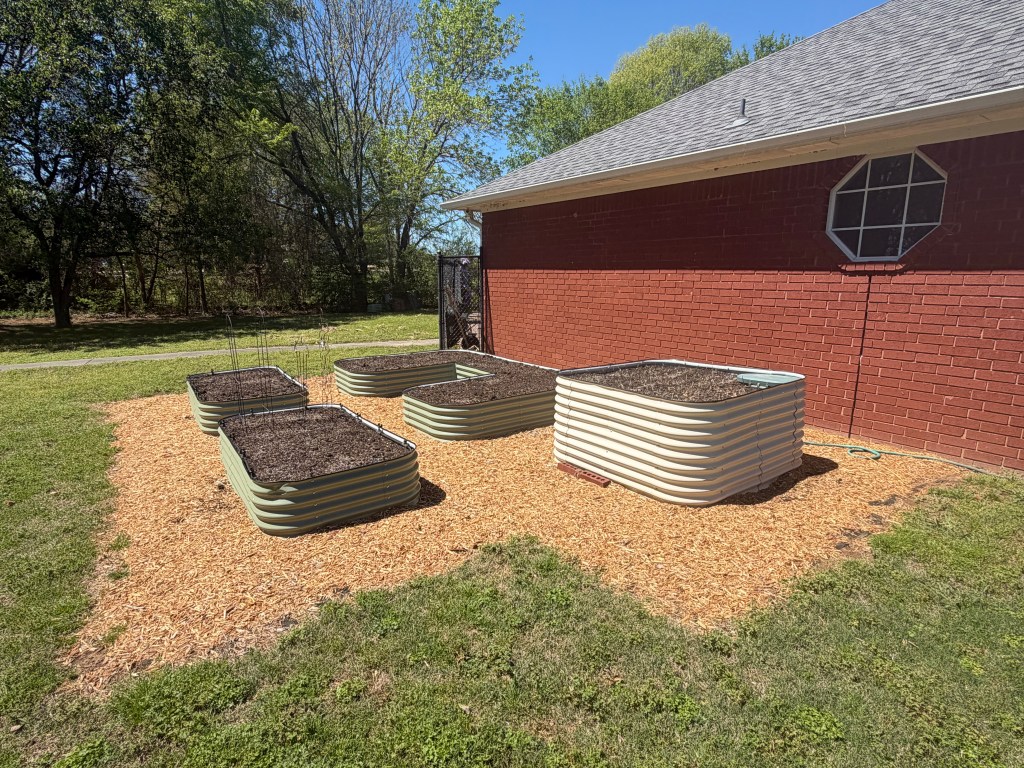
The six weeks Melissa and I were traveling occurred when I normally prepare my seeds for planting. I began last year in January planting seeds under “grow lights”. While most of the seeds sprouted, I struggled to transplant them into 3-inch (7.5 cm) pots for the next growing stage. The pots were still under the lights, but only around half of the plants developed their first double set of leaves. Even these struggled when I hardened them off (set outside for a few hours a day) to prepare them for planting in the ground. Those that made it were spindly and slow to mature compared to the other store-bought plants. I had a dilemma. My absence meant I could not take care of any indoor seeds, and my return was two weeks before the last predicted frost. We are in the central Arkansas River Valley in planting zone 7b with an average annual minimum winter temperature of 5F to 10F (-12.3C to -14.9C). This zone is generally characterized by a last frost date around April 15 and a first frost date around November 15. I have tried to use this hardiness scale when determining what and how to plant, but this year I got excited and planted early.
When I went online, I found gardeners rely on the plant-care tags affixed to the plants they buy and one of the items listed is the hardiness zone. A hardiness zone is a geographic area defined as having a certain average annual minimum temperature which is critical to the survival of most plants. The first hardiness zone map was published in Alfred Rehder’s 1927 book Manual of Cultivated Trees and Shrubs. Rehder and Donald Wyman, of Boston’s Arnold Arboretum, did not have the reach of the US Department of Agriculture (USDA), which published its first Hardiness Zone Map in 1965. The USDA system provides a rough guide for landscaping and gardening and defines 13 zones by long-term average annual extreme minimum temperatures. Unless otherwise specified, plants in American context have a “hardiness zone” which refers to the USDA scale. The USDA-ARS, along with climate scientists at Oregon State University, has just released a new plant-hardiness map updating its 1990 Plant Hardiness Zone Map to bring it into conformity with the warming trends that have become so apparent to gardeners.
After deciding to push the hardiness scale, I began last Tuesday determining what seeds needed to go into my raised beds. These were a mix of leafy vegetables like varieties of lettuce (Lactuca sativa) and spinach (Spinacia oleracea). Then I planted the first rows of beets (Beta vulgaris, artichokes (Cynara cardunculus). radishes (Raphanus sativus), peas (Pisum sativum), cauliflower (Brassica oleracea), and cabbage (Brassica oleracea). I saved space for a smaller second planting of those vegetables to prolong their production season into the early summer. After Melissa’s success with onions (Allium cepa), I decided to give them another try, planting 50 sets of red onions in the bed I had used for watermelon (Citrullus lanatus). I plan to plant cantaloupe (Cucumis melo) in this bed after I harvest the onions to let it mature in the warmth of the summer. With my seeds in the ground, I need to decide what store-bought vegetables I am going to plant this year.
THOUGHTS: While the hardiness scale warned against planting prior to April 15, my weather app provided a 10-day forecast that predicted the temps would not fall below the 40’sF (4.5+C). Last year we did have a late cold snap where the temps dropped to 30F (-1.1C) on several nights but warmed to 50’sF (10+C) during the day. I protected my plants with ground cloth and uncovered them during the warmer day. They all made it, so I felt confident I could do the same this year if needed. As in life, part of gardening involves using tools (hardiness scales and weather apps) and combining them with intuition and preventative measures. Most innovation comes when we push the boundaries and failure comes from giving up. Act for all. Change is coming and it starts with you.
 A travelers odyssey