Dollar

Dollar

July 2, 2020

I used to love going back east thirty years ago and enjoy the different feel of the city from that of western communities.  The established neighborhoods were built in a time before cars and everything tended to happen local.  At that time there were different enclaves of shops, markets, and hardware.  I would go inside the small groceries and pour over the shelves of tightly packed goods.  When I moved to the west coast, I found a similar situation in communities like China Town in San Francisco.  Most of the area in between seemed filled with either large malls, commercial markets, or the corner minimart.

I was directed to an article published in ProPublica and co-published with The New Yorker.  It opened with a man speaking about his St. Louis neighborhood.  In the 1970’s and early 80’s it had been thriving with plenty of merchants and grocery stores.  As the population dropped from 850,000 to 300,00 due to suburban flight and deindustrialization, these stores were replaced by discount chains sporting some form of the name Dollar.  The chains allow people to remain in their neighbor and get a wide variety of goods for an exceptionally low price.  The popularity of these stores has forced many of the mom and pop stores out of business.

The problem the story addressed was the violence often associated with the stores.  They are typically staffed by 1-3 minimally paid workers with no security.  The aisles are stacked with boxes and the front windows are blocked by stacks of boxes and ads touting “everything a dollar.”  As other venues have left this makes the stores the only place with available cash.  These conditions combine to make the stores open to armed robberies.  In 2017 there were 38 armed robberies and three murders in the 18 stores in the city of Dayton, Ohio, and more in the surrounding communities.  This comes with an average of over 1000 calls for assistance from the police to stores annually.  The numbers only go up.

THOUGHTS:  I live in a community of less than 10,000 and we have two, one on either side of town.  Over 75% of these stores are in rural areas or communities under 20,000 people.  While a record 25,000 retail stores are expected to close this year, just one of the big three plans to open 1000 new locations.  These were part of the stores considered “essential” since they sold minimal amounts of food.  These essential workers put their lives on the line daily, in more ways than one.  If you can, work to keep the conversation going.

Semi

Semi

July 1, 2020

I have mentioned that Melissa drives the Interstate an hour and twenty minutes each way to get to work.  She goes in and leaves an hour before the rushes to try and miss the worst of the crush.   She still comes home several times a week and tells me stories about the traffic and the crazy drivers on the road.  Several days ago, she told me of the driver who decided it would be a good idea to use bungee cords to attach two kayaks to the top of his small sedan.  The kayaks were already bouncing as he blew around her and sped for the exit.  Melissa backed off expecting the worst.  Sure enough, he took the exit too fast just as the wind caught and propelled both boats off his roof.  Luckily, they blew toward the side of the road rather than into traffic.

Having lived in the Bay Area for 15 years I can relate to what she says.  There is always someone who thinks you are in their way and is willing to drive recklessly to get around.  This attitude has taught me to back off when someone thinks they need to challenge me on the road.  I recall talking to a friend who said earlier in the day he had been at the entrance to the bridge and a truck carrying flammable fuel hit the center divider head on.  The resulting fireball scorched the paint on his car.  My friend and the driver somehow survived.

I am writing this because I went to work in Mountainburg yesterday traveling the same highway Melissa travels daily.  On my way home I got caught behind two trucks with one trying to pass.  I knew it would take him a while to get up to speed on the mountain but backed off anyway.  Another driver sped up and cut in front of the passing semi, causing him to slow.  Then a man pulling a trailer decided to do the same thing.  When he finally got up to speed the trucks had closed distance and there was not enough room to make it through.  Rather than backing off, the trailer driver stayed put, making it impossible for the semi to pull out of the passing lane.  We got down to 45 in the 70 mile per hour zone before a gap opened and the trailer cut on through.

THOUGHTS:  I am amazed by the trash found along the side of the road.  I have seen coolers and mattresses and today saw a sofa crumpled in the ditch.  I am never sure whether these they are lost or left.  I have also seen tires fly off cars and cut across my path on two different occasions.  I cannot image how vigilant you would need to be to drive a semi.  We have an ad on TV with a lawyer who boasts about being able to go after the drivers of these vehicles.  From what I saw yesterday, and Melissa sees daily, it is rarely the semi driver’s lack of attention.  We all need to drive defensively.  If you can, work to keep the conversation going.

Blood

Blood

June 30, 2020

We received a notice several weeks ago that there was going to be a blood drive at a local church.  Melissa brought it to my attention and asked if I would be willing to go with her.  I have been hearing about the shortage of blood not just in our area but across the nation.  The local news has also mentioned a number of drives that were forced to cancel.  They were going to require masks and to disperse the donation stations around a large fellowship hall.  I agreed and we made an appoint for after Melissa’s work.

I arrived early and sat in my car waiting for Melissa to get there.  I noticed several people come and go over the 20 minutes I waited.  They were all putting on masks to go in and taking them off as soon as they got outside.  We went in together and signed in.  We were given several laminated sheets of instructions and then asked to take one of the socially distanced chairs.  After a quick screening history, I was asked to take any of the dispersed tables to give blood.  A nurse then came over and set up the equipment.

During the 5-10 minutes it took to prep me, I carried on a casual conversation with the nurse.  I mentioned what I had heard about the drive cancelations and asked if they were just starting up again.  She told me they have been doing blood drives all through the crisis.  The problem is they are finding it hard to get donors.  The canceled drives have happened because the locations have closed or canceled a drive already scheduled.  When I learned this, I was glad the church decided to schedule a drive.

THOUGHTS:  One of the reasons we decided to give blood was the promise of an antibody test.  One successful treatment has been giving the “yellow gold” plasma from people who have had covid-19 and developed antibodies.  We have not had symptoms, but the news talks a lot about the high number of asymptomatic cases.  I used to give blood several times a year while I was in college, then I moved and got out of the habit.  My information says you can give every 56 days, or eight weeks.  Perhaps I will find another drive in two months.  If you can, work to keep the conversation going.

Harvest

Harvest

June 29, 2020

Saturday the due dates for my beans and peas came.  They have been looking close for several days and most of the beans were at a pick-able length.  The pea plants are covered in snow pods and still have a few flowers, but the plants are starting to sag, and the lower leaves are getting yellow.  I harvested Saturday and then cut the rest of the smaller growth on Sunday.  I have been looking forward to a pot of fresh beans since I planted them a couple of months ago.  This was not a huge harvest, but enough beans to make a meal for Melissa and me.

I have been saving what I thought was a ham hock in the freezer for a while.  It was in the bottom of the bin for I am not sure how long.  I got it out and put it in the refrigerator to thaw last week in anticipation of cooking the beans.  Several weeks ago, I had made beans and potatoes and had added bacon to the boil.  This was ok, but not like adding a ham hock.  Somehow the extra bone adds to the flavor of the dish.  This is what I had been anticipating.

I examined the hock closer after it had thawed and realized it was not a hock at all.  It was three large pieces of ham left over from something.  I was both disappointed and elated.  While I would not have the bone to flavor the beans, I would have enough ham for several more sandwiches.  I sliced the ham into sandwich sized pieces and then cut half of it up into smaller cubes.  The small cubes went into the pot with the beans, new potatoes, and half an onion and I put them on to boil.  Twenty minutes later we had the satisfaction of our first home grown, home cooked meal.  I have read I should be able to get another harvest if I plant again in mid-September.  I am already looking forward to another pot of beans.  Now for the snow peas.

THOUGHTS:  There are times when the anticipation is at least as much fun as the event.  This was true when I was a child.  I would wait for Christmas and anticipate what might be under the tree.  Both Dan and I would sit and hold our “big” presents from our parents at night wondering what they might be.  While I was expecting the production from the plants, the ham came as a surprising bounty.  I have found that life can hold the same expectation and even the surprise of unexpected bounty.  I have also found that you will only reap what you sow.  I hope during this time of unrest you are making sure to sow seeds of hope and reconciliation.  If you can, work to keep the conversation going.

Black

Black

June 27, 2020

I have been watching several fishing posts on YouTube about monster bass and catfish noodling.  When I wake up, I usually pick up my phone and spend a few minutes seeing what has popped up on my recommends before I get up.  I realize this is a frivolous waste of time, but it does get me awake in the morning.  After all, the old saying is, “Man does not live by gardening alone.”

You can imagine my surprise when out of nowhere I got a recommend for “Uncomfortable Conversations with a Black Man,” hosted by Emmanuel Acho.  Acho is a former linebacker in the NFL and now works as an analyst for Fox Sports 1.  His weekly posting features white celebrities and Acho having a conversation.  As the site states, “Emmanuel Acho sits down to have an “uncomfortable conversation” with white America, in order to educate and inform on racism, system racism, social injustice, rioting & the hurt African Americans are feeling today.”

There have been three of these weekly posts to date.  The first was a monologue by Acho but the intent was always to have a dialogue between Acho and a white guest.  Acho began the second episode addressing terminology and said it is best to say Black.  Not all people consider themself African and many others feel they have had their African heritage stripped away by slavery.  “Black is the most accurate but also the least offensive.”  I have not even followed my fishing video sites, but I subscribed to these future posts.

THOUGHTS:  I have seen this terminology shift several times between African American and Black during my lifetime.  This is not unusual for any of us as we struggle to find our identity.  Our world is constantly changing, but the one thing that seems to remain the same is the powerful imagery created by words.  What we say and how we say it does matter.  We can use words to tear each other down or to lift each other up.  I hope you choose the latter.  If you can, work to keep the conversation going.


Sand

Sand

June 26, 2020

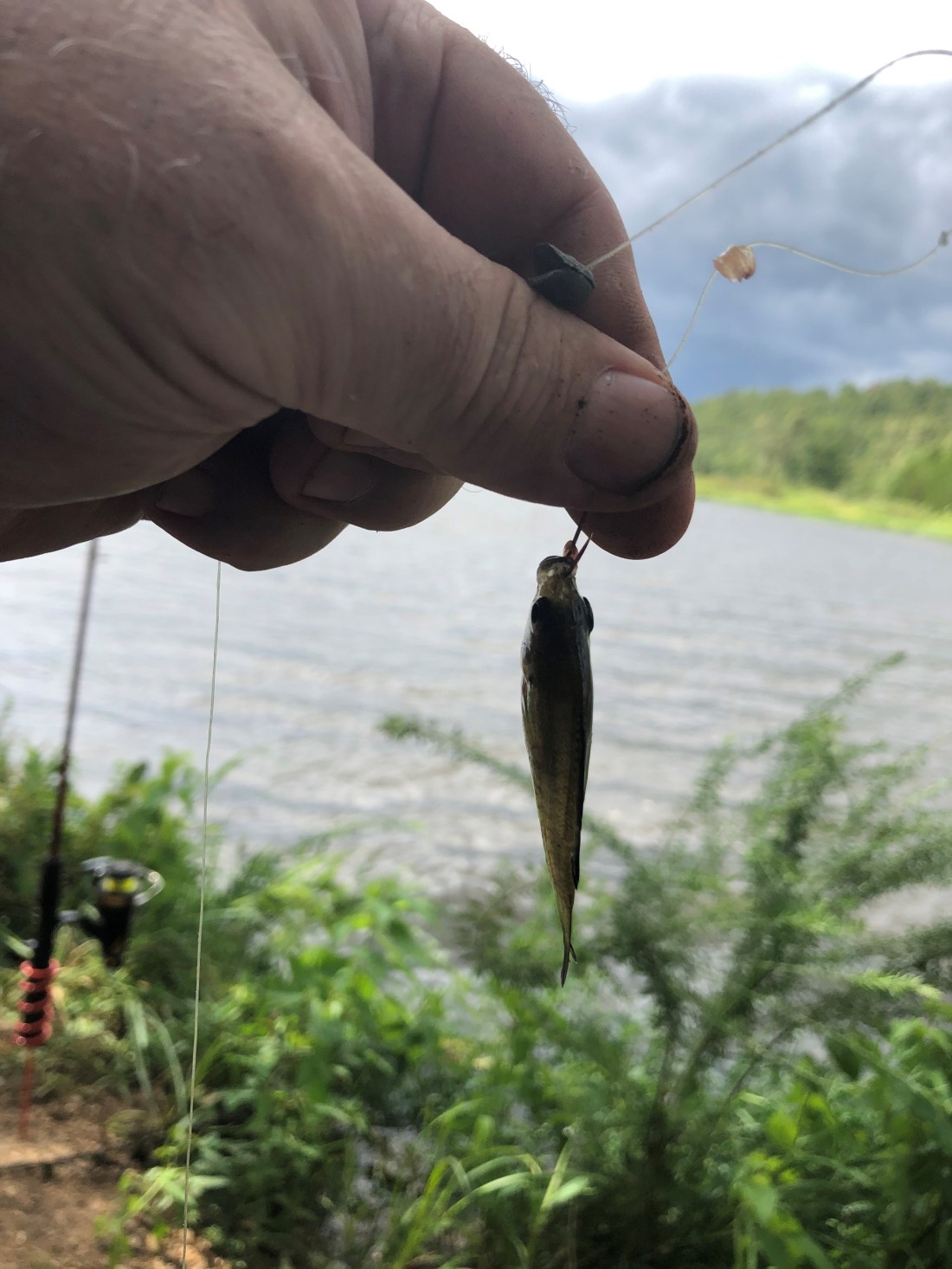
I went fishing yesterday after I got my work finished.  I had planned on going to one of my usual spots on a side relief of the Arkansas River.  As I drove through town, I realized I would only have a short amount of time to fish, as I needed to drive back to meet Melissa early in the evening.  I noticed a sign to a park along a creek emptying into the Arkansas.  We had driven down the road to this park several months ago and it had some promising spots to fish.  I decided to take a chance and see if I could get some cats.

I arrived and chose what looked like a promising site with a worn path down to the river.  I opened my worms hoping to catch something small I could use as bait for the big ones.  Apparently, the survivability of the green worms was not up to speed as they were all dead.  At least they were not completely fetid, and I was able to thread one onto my hook and bobber and tossed in.  The rest had already molded together, and I threw them out.  I was using my Carolina rig again and I gouged my hook through a nice slice of Spam. Today I was going to make this work.

I had a similar experience as fishing the Tubes.  My rig caught on the bottom immediately and I lost the hook.  I next tried a bobber and when I cast the Spam flew off the hook.  The thin slices clearly did not work.  I switched bait again and realized I needed to go to meet Melissa.  We met up and decided to go home.  On the way we passed a restaurant that we had wanted to try on Sunday, but the lot was full.  Tonight, there were only two or three cars.  When we got home, I could not figure out why I kept rubbing sand out of my hair and forehead.  Then Melissa told me of the sand cloud she had seen coming down the mountain into Fort Smith.

THOUGHTS:  I had heard the sand carried by the wind was coming for Arkansas and would get here today.  While it looked a little hazy, I did not think about it being sand.  Melissa kept wondering where the fire was and why the smoke seemed to move as see drove home.  The Saharan winds blowing sand across the Atlantic is not new.  Scientists suggest the lush Amazon Basin is the result of wind-blown nutrients from Africa.  This storm is of historic proportions with dense concentrations of dust.  They also think this might mitigate the horrific hurricane seasons we have been having lately.  Once more the earth is showing its amazing resilience.  If you can, work to keep the conversation going.


History

History

June 25, 2020

Our family has been staying connected through an Instagram feed.  This happened prior to the lock down but our conversations now seem longer and more varied as we virtually share our stories.  Lately we have been sharing about our little granddaughters and their displays of dance.  Three of them are involved in dance studios which have continued virtually.  Now they are holding virtual recitals and we have been able to watch them on our phones.  These are complete with flashy outfits and “all the latest steps.”  I guess it is true, the show must go on!

We got a wonderful picture and an amazing background story to go with it from my sister-in-law on our feed today.  She has an Orchid Cactus (called Queen of the Night; scientific name: Epiphyllum oxypetalum) she keeps in her backyard and it bloomed last night.  This type of night bloomer happens extremely fast and if you do not pay attention you will miss it.  First, they send up an asparagus like shoot. Then two or three days later they bloom, and always at night.  This variety is native to the desert and blooming loses a lot of water.  The large flowers only last one night to conserve as much water as it can and still attract the pollinating insects that help it propagate.

As beautiful as the flower is the story behind the plant is more so.  The original cactus comes from her grandmother’s house in Denmark.  During the war in 1945 a bomb exploded in her backyard, creating a tremendous hole, and blowing out all the windows in the house.   Her grandfather rebuilt the house himself and added a window box/greenhouse in the kitchen where she kept the cactus. When the cactus was ready to bloom, she would stay up all night so she would not miss any of its display.  Karen’s cactus is taken from her mother who got it from her grandmothers’ original plant.  The cactus and the story have been passed down from one generation to the next.

THOUGHTS:  I used to listen to Paul Harvey at lunch when I worked at the lake.  His specialty was telling stories in parts, and always with a twist.  His daily closing was, “This is Paul Harvey, and now you know the rest of the story.”  Knowing the rest of the story is often what makes it meaningful.  That is true with the cactus.  I wonder what stories we will generate amid our current unrest.  We can create things of beauty and lasting memories to be passed down to later generations.  We just need to work together to make it happen.  If you can, work to keep the conversation going.

Stress

Stress

June 24, 2020

When I watched the video on pruning my tomatoes it talked about determinate and indeterminate varieties.  I understood why they were different but could never find information on how to tell the difference.  I received a link today that made it clearer.  Roma varieties are determinate, and you should never prune them.  In fact, it was suggested you not even cage or stake them.  No matter what you do they will never get more than two or three feet high, and the fruit will grow from the ends of the foliage rather than the stem as on the indeterminate.  Just like hearing about pruning too late, now I found out I should not have pruned at all.

When I prune my indeterminate, it was suggested I save one of the smaller clippings and put it in a cup of water to allow it to root.  I had the extra pot left from the cilantro I harvested earlier so I decided to try.  I put the clipping in a cup and basically forgot about it sitting amid the succulents on the counter.  The other day I noticed it sitting there and checked, and sure enough the small stem had rooted.  After my watering problems I decided I should get this into the ground before it died.

I had not been watering the cilantro pot since it did not have anything in it, and the ground appeared hard and impenetrable. When I stuck my trowel in the dirt, I was surprised how easily it went in and what a nice hole it made.  I pushed some of the soil back in the hole to give just enough room for the stem to easily support itself.  I did water this plant to help with the rooting process.  I will probably only water the other plants when they look like they are starting to wilt.  My friend says the stress makes them hardy.  I hope she is right.

THOUGHTS:  It seems stress makes plants flourish.  That is true for the flowers in my front yard.  They produced blossoms early and then the hot weather came, and they died back.  I figured they were done for the year.  We got a lot of rain and a cooler spell, and then it warmed up again.  Sure enough, they started producing flowers.  I am not sure if stress makes us stronger as it seems to do for plants.  Stress can make me want to shut down rather than buckle down.  Maybe the key for both plants and people is the right amount of stress.  Too little and we become complacent, too much and we are overwhelmed.  Finding a balance is hard to do.  If you can, work to keep the conversation going.

Together

Together

June 23, 2020

Things have changed around our yard since last year.  When we initially designed the layout for the different beds it involved flowers and mulching.  This was particularly true for the two beds covered by shade trees.  The one next to the house we just weeded and mulched.  The bed along the driveway we added to the ornamental grasses that seem to be the only thing we could get to grow and again, mulched.  As the year began it was my intent to do the same. That was before the succulents began to arrive.

I have mentioned how Melissa has spent a lot of time researching how and where she could grow different types of succulents.  Many of the species are not hardy enough to make it through even the mild Arkansas winters and others would struggle to survive in the oppressive summer heat.  There are a few species that can overcome both the heat and cold, if they are shaded a good part of the day.  You also need to make sure they are in a well-drained substratum.  Mulch is designed to retain water and could cause root rot, so we needed to use pea gravel.  That is where our two tree covered beds come into play.

What we have done in the bed near the house is to use a mixture of mulch and pea gravel.  The mulch helps keep the grass and weeds out of the back half of the bed while the succulents planted in the morning sun of the front half of the bed are surrounded by pea gravel.  This was also done to cut the cost of buying enough bags of gravel for an area that will never have succulents.  We took a different approach for the bed along the driveway, choosing to cover it entirely in pea gravel.  Sometimes it is worth the extra cost.

THOUGHTS:  Our succulent beds represent different approaches to the same problem, and as usual, our approach was dictated by the past.  I planted bulbs along the walk to the house, but they had not done well.  We decided to cover them over and plant succulents.  For the driveway we decided to put the grasses and succulents together.  The grasses had established last year and now the pea gravel over the entire bed will help the succulents do the same.  Past decisions are what is causing the unrest we now face.  Like our driveway there are ways to exist together if we are willing to make different choices.  Change will likely be more expensive but providing economic dignity for everyone should be a right and not a privilege.  If you can, work to keep the conversation going.

Envy

Envy

June 20, 2020

I have been feeling pride in my container garden.  It seems the plants are flourishing, except for the cantaloupes which died and the onions which refuse to grow.  Melissa took some of her succulents over to our friend’s house today and she asked if I wanted to see her garden.  I knew Toni and John had spent a lot of time earlier rebuilding the six beds that take up about a quarter of their back yard.  When I walked out the door, I was amazed by the tomato plants that were at least twice as tall as mine and loaded with unripe tomatoes.  I was envious of the garden and the beds, including the soaker hose watering system.

The 7 Deadly Sins, or the Cardinal Sins or a classification of vices within Christian teachings but are not explicitly outlined in the Bible.  These seven behaviors are classified as deadly because they spawn other types of immorality.  In 590 CE Pope Gregory I revised an earlier list of eight sins to form this more common list. Gregory combined tristitia (sorrow or despair) with acedia (sloth), and vanagloria (vainity) with superbia (pride) and added invidia (envy).  Gregory’s list became the standard list of sins and was defended by Thomas Aquinas in his Summa Theologica.  According to the standard list, these are pride, greed, wrath, envy, lust, gluttony, and sloth.  Just think, until 590 CE my envy would not have even made the cut.

Earlier in the day I had texted my friend about the rot I was getting on the ends of some of my Roma tomatoes.  When I described it, she returned that it sounded like blossom-end rot and sent a link to a grower’s site.  I have been watering every day, except when it rains, and this is a common disease caused by over watering.  I have mentioned how I killed a cactus from lack of water and now I was over watering my tomatoes.  There seems to be a lot more to this gardening thing that I thought.  And yes, I realize my opening started with pride and ended with envy.

THOUGHTS:  Most activities we participate in naturally lead to other forms of behavior.  My gardening has spilled over into a higher level of lawn and flower care.  This idea is behind the formation of the sin lists first by the Greeks and Romans and later by the early Christian Church.  Where we choose to place our priorities and thoughts guide and direct everything we do.  This is true consciously and subconsciously, and our thoughts form the behaviors in our life.  That is why it is so important to do the work needed to heal the divide we face.  We need to change our thoughts to change our actions.  If you can, work to keep the conversation going.