History

History

June 25, 2020

Our family has been staying connected through an Instagram feed.  This happened prior to the lock down but our conversations now seem longer and more varied as we virtually share our stories.  Lately we have been sharing about our little granddaughters and their displays of dance.  Three of them are involved in dance studios which have continued virtually.  Now they are holding virtual recitals and we have been able to watch them on our phones.  These are complete with flashy outfits and “all the latest steps.”  I guess it is true, the show must go on!

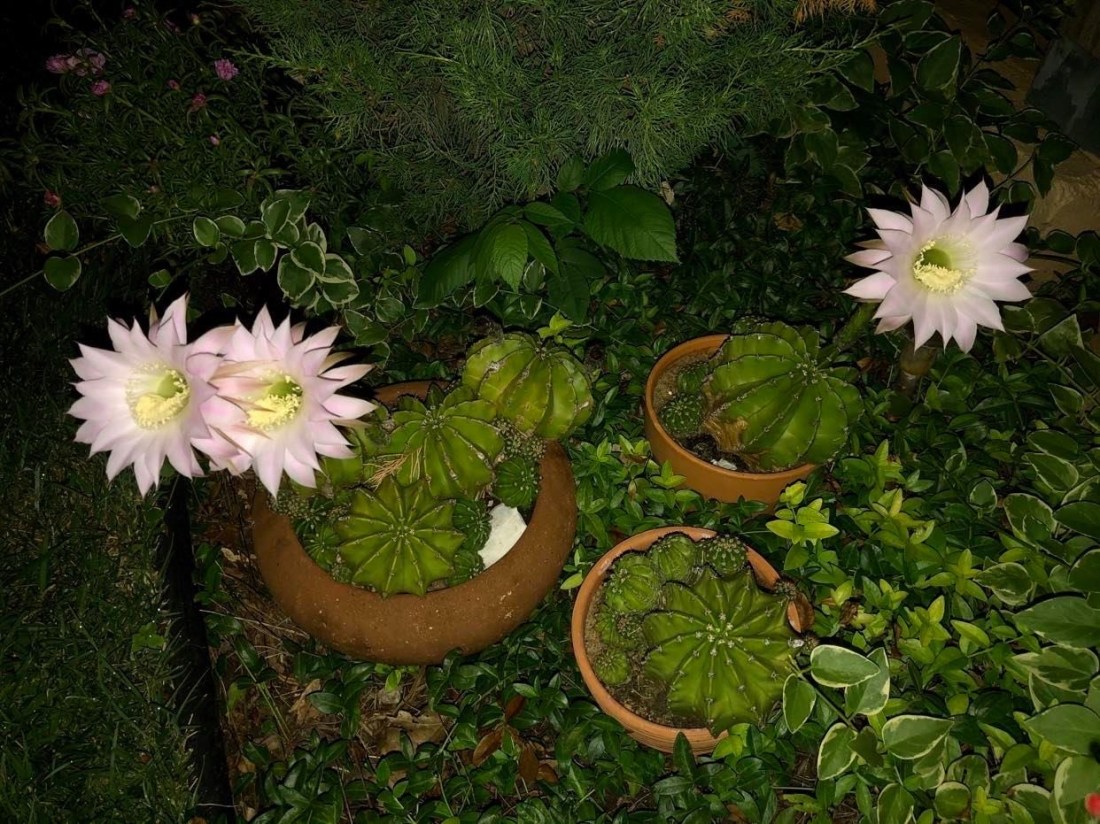
We got a wonderful picture and an amazing background story to go with it from my sister-in-law on our feed today.  She has an Orchid Cactus (called Queen of the Night; scientific name: Epiphyllum oxypetalum) she keeps in her backyard and it bloomed last night.  This type of night bloomer happens extremely fast and if you do not pay attention you will miss it.  First, they send up an asparagus like shoot. Then two or three days later they bloom, and always at night.  This variety is native to the desert and blooming loses a lot of water.  The large flowers only last one night to conserve as much water as it can and still attract the pollinating insects that help it propagate.

As beautiful as the flower is the story behind the plant is more so.  The original cactus comes from her grandmother’s house in Denmark.  During the war in 1945 a bomb exploded in her backyard, creating a tremendous hole, and blowing out all the windows in the house.   Her grandfather rebuilt the house himself and added a window box/greenhouse in the kitchen where she kept the cactus. When the cactus was ready to bloom, she would stay up all night so she would not miss any of its display.  Karen’s cactus is taken from her mother who got it from her grandmothers’ original plant.  The cactus and the story have been passed down from one generation to the next.

THOUGHTS:  I used to listen to Paul Harvey at lunch when I worked at the lake.  His specialty was telling stories in parts, and always with a twist.  His daily closing was, “This is Paul Harvey, and now you know the rest of the story.”  Knowing the rest of the story is often what makes it meaningful.  That is true with the cactus.  I wonder what stories we will generate amid our current unrest.  We can create things of beauty and lasting memories to be passed down to later generations.  We just need to work together to make it happen.  If you can, work to keep the conversation going.
Stress

Stress

June 24, 2020

When I watched the video on pruning my tomatoes it talked about determinate and indeterminate varieties.  I understood why they were different but could never find information on how to tell the difference.  I received a link today that made it clearer.  Roma varieties are determinate, and you should never prune them.  In fact, it was suggested you not even cage or stake them.  No matter what you do they will never get more than two or three feet high, and the fruit will grow from the ends of the foliage rather than the stem as on the indeterminate.  Just like hearing about pruning too late, now I found out I should not have pruned at all.

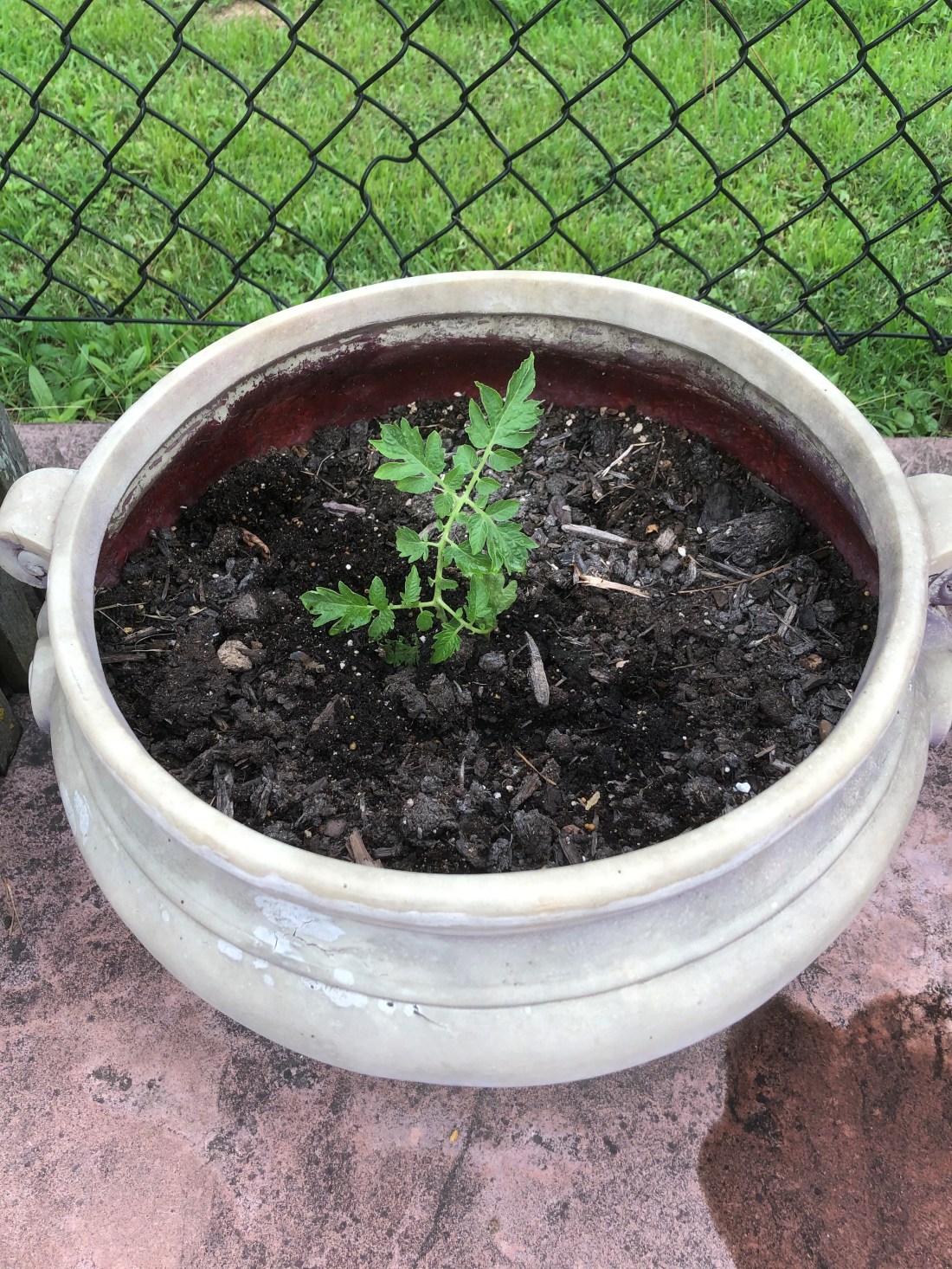
When I prune my indeterminate, it was suggested I save one of the smaller clippings and put it in a cup of water to allow it to root.  I had the extra pot left from the cilantro I harvested earlier so I decided to try.  I put the clipping in a cup and basically forgot about it sitting amid the succulents on the counter.  The other day I noticed it sitting there and checked, and sure enough the small stem had rooted.  After my watering problems I decided I should get this into the ground before it died.

I had not been watering the cilantro pot since it did not have anything in it, and the ground appeared hard and impenetrable. When I stuck my trowel in the dirt, I was surprised how easily it went in and what a nice hole it made.  I pushed some of the soil back in the hole to give just enough room for the stem to easily support itself.  I did water this plant to help with the rooting process.  I will probably only water the other plants when they look like they are starting to wilt.  My friend says the stress makes them hardy.  I hope she is right.

THOUGHTS:  It seems stress makes plants flourish.  That is true for the flowers in my front yard.  They produced blossoms early and then the hot weather came, and they died back.  I figured they were done for the year.  We got a lot of rain and a cooler spell, and then it warmed up again.  Sure enough, they started producing flowers.  I am not sure if stress makes us stronger as it seems to do for plants.  Stress can make me want to shut down rather than buckle down.  Maybe the key for both plants and people is the right amount of stress.  Too little and we become complacent, too much and we are overwhelmed.  Finding a balance is hard to do.  If you can, work to keep the conversation going.
Together

Together

June 23, 2020

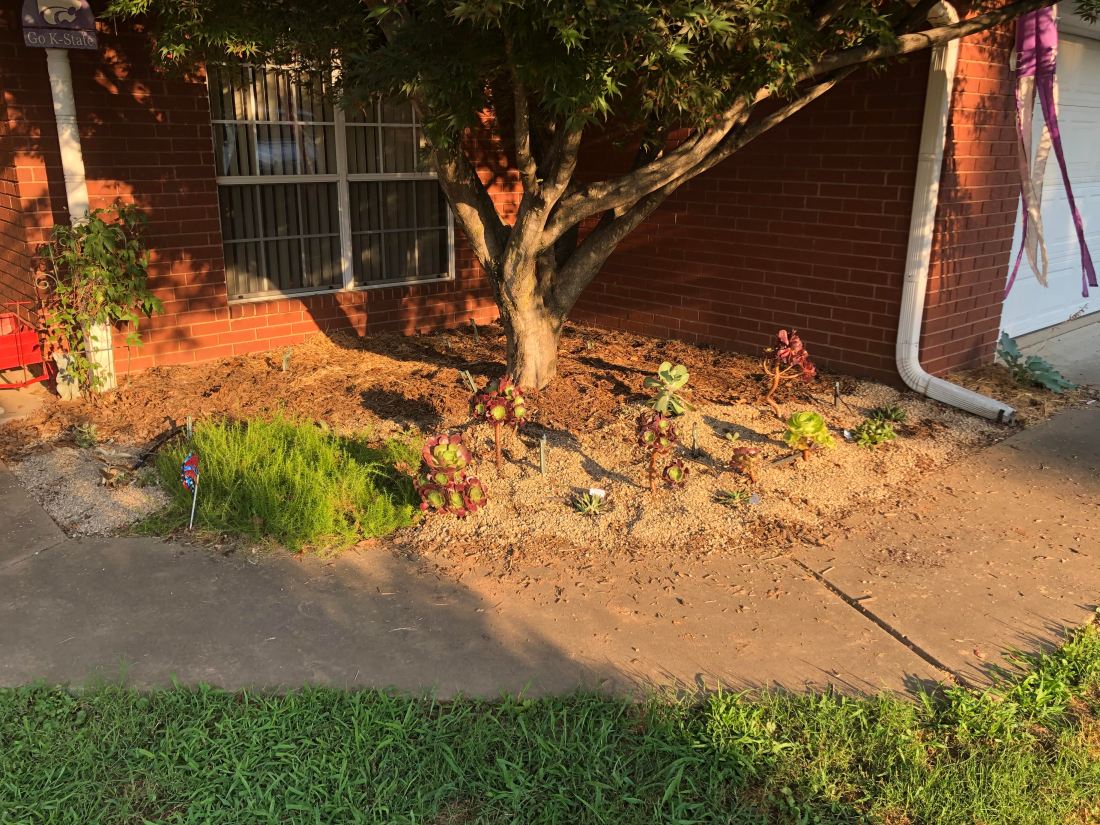
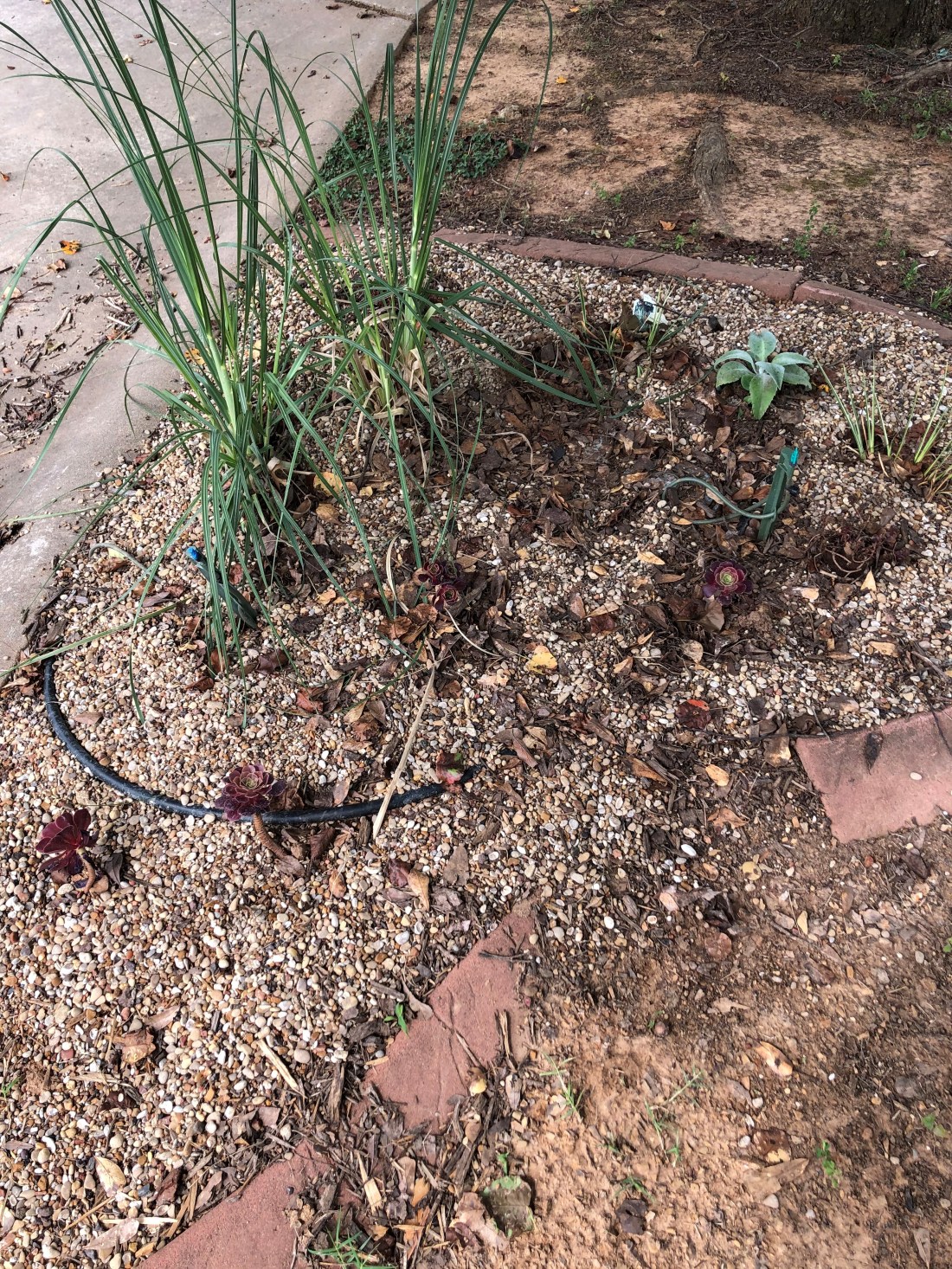
Things have changed around our yard since last year.  When we initially designed the layout for the different beds it involved flowers and mulching.  This was particularly true for the two beds covered by shade trees.  The one next to the house we just weeded and mulched.  The bed along the driveway we added to the ornamental grasses that seem to be the only thing we could get to grow and again, mulched.  As the year began it was my intent to do the same. That was before the succulents began to arrive.

I have mentioned how Melissa has spent a lot of time researching how and where she could grow different types of succulents.  Many of the species are not hardy enough to make it through even the mild Arkansas winters and others would struggle to survive in the oppressive summer heat.  There are a few species that can overcome both the heat and cold, if they are shaded a good part of the day.  You also need to make sure they are in a well-drained substratum.  Mulch is designed to retain water and could cause root rot, so we needed to use pea gravel.  That is where our two tree covered beds come into play.

What we have done in the bed near the house is to use a mixture of mulch and pea gravel.  The mulch helps keep the grass and weeds out of the back half of the bed while the succulents planted in the morning sun of the front half of the bed are surrounded by pea gravel.  This was also done to cut the cost of buying enough bags of gravel for an area that will never have succulents.  We took a different approach for the bed along the driveway, choosing to cover it entirely in pea gravel.  Sometimes it is worth the extra cost.

THOUGHTS:  Our succulent beds represent different approaches to the same problem, and as usual, our approach was dictated by the past.  I planted bulbs along the walk to the house, but they had not done well.  We decided to cover them over and plant succulents.  For the driveway we decided to put the grasses and succulents together.  The grasses had established last year and now the pea gravel over the entire bed will help the succulents do the same.  Past decisions are what is causing the unrest we now face.  Like our driveway there are ways to exist together if we are willing to make different choices.  Change will likely be more expensive but providing economic dignity for everyone should be a right and not a privilege.  If you can, work to keep the conversation going.
Envy

Envy

June 20, 2020

I have been feeling pride in my container garden.  It seems the plants are flourishing, except for the cantaloupes which died and the onions which refuse to grow.  Melissa took some of her succulents over to our friend’s house today and she asked if I wanted to see her garden.  I knew Toni and John had spent a lot of time earlier rebuilding the six beds that take up about a quarter of their back yard.  When I walked out the door, I was amazed by the tomato plants that were at least twice as tall as mine and loaded with unripe tomatoes.  I was envious of the garden and the beds, including the soaker hose watering system.

The 7 Deadly Sins, or the Cardinal Sins or a classification of vices within Christian teachings but are not explicitly outlined in the Bible.  These seven behaviors are classified as deadly because they spawn other types of immorality.  In 590 CE Pope Gregory I revised an earlier list of eight sins to form this more common list. Gregory combined tristitia (sorrow or despair) with acedia (sloth), and vanagloria (vainity) with superbia (pride) and added invidia (envy).  Gregory’s list became the standard list of sins and was defended by Thomas Aquinas in his Summa Theologica.  According to the standard list, these are pride, greed, wrath, envy, lust, gluttony, and sloth.  Just think, until 590 CE my envy would not have even made the cut.

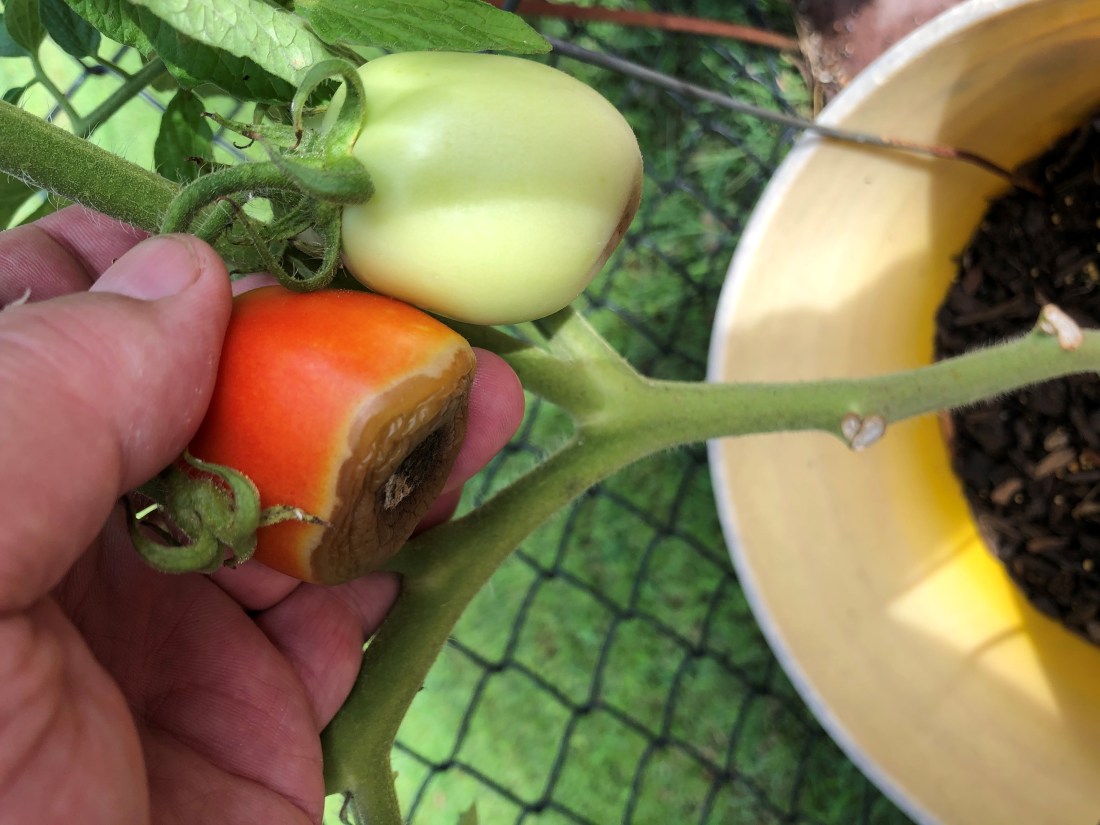
Earlier in the day I had texted my friend about the rot I was getting on the ends of some of my Roma tomatoes.  When I described it, she returned that it sounded like blossom-end rot and sent a link to a grower’s site.  I have been watering every day, except when it rains, and this is a common disease caused by over watering.  I have mentioned how I killed a cactus from lack of water and now I was over watering my tomatoes.  There seems to be a lot more to this gardening thing that I thought.  And yes, I realize my opening started with pride and ended with envy.

THOUGHTS:  Most activities we participate in naturally lead to other forms of behavior.  My gardening has spilled over into a higher level of lawn and flower care.  This idea is behind the formation of the sin lists first by the Greeks and Romans and later by the early Christian Church.  Where we choose to place our priorities and thoughts guide and direct everything we do.  This is true consciously and subconsciously, and our thoughts form the behaviors in our life.  That is why it is so important to do the work needed to heal the divide we face.  We need to change our thoughts to change our actions.  If you can, work to keep the conversation going.
Juneteenth

Juneteenth

June 20, 2020

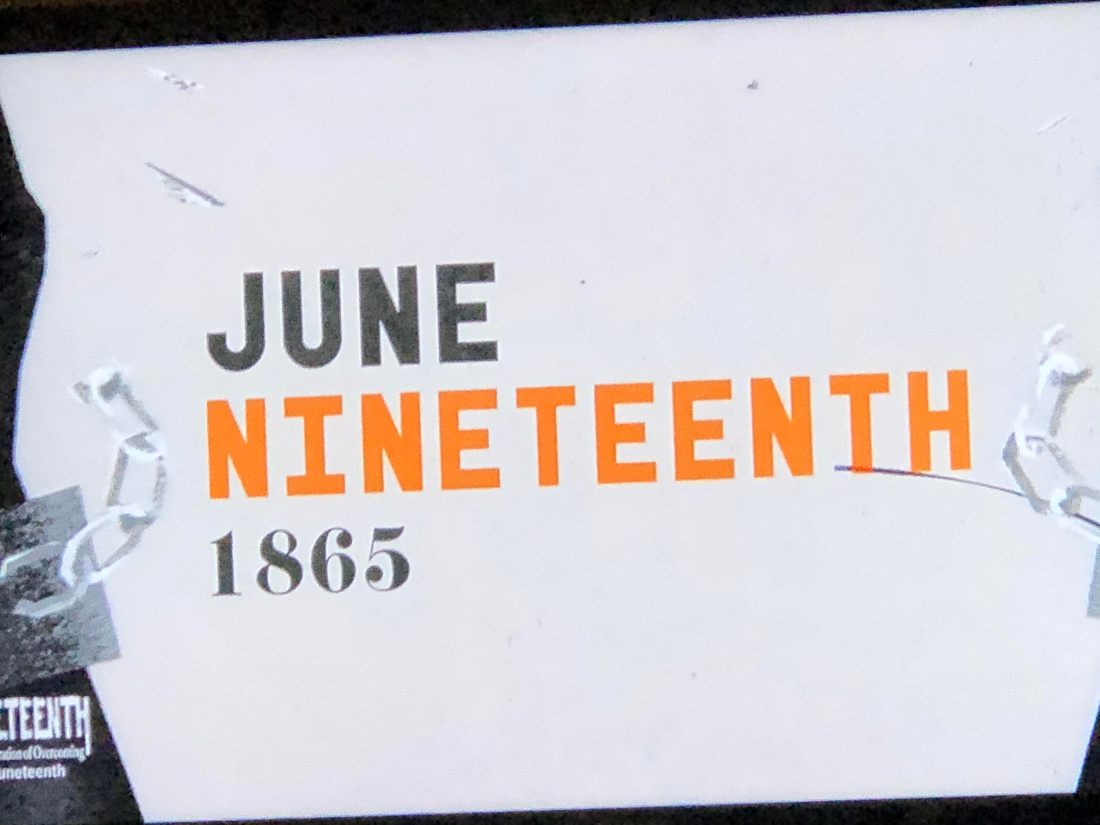
Yesterday was Juneteenth.  This national celebration marks the commemoration of the end of slavery in America.  The Emancipation Proclamation was an executive order issued by Abraham Lincoln on January 1, 1863.  It proclaimed the freedom of slaves in the ten Confederate states still in rebellion.  It also decreed that freed slaves could be enlisted in the Union Army, increasing the Union’s available manpower.  What is rarely discussed is it did not apply to the rest of the states, including those in the North.  However, it did change the focus of the struggle from preserving the union, to a dual aim of union and freeing the slaves.

Even after the War, Texas continued to be a haven for slave holders, as there were few Federal troops to enforce the law and slave owners were not prone to tell their slaves of their freedom.  It was not until June 19, 1865 and the arrival of General Gordon Granger in Galveston, Texas with 2000 troops that news of the end of the war and freedom for slaves was announced.  While there were earlier celebrations, Juneteenth became a state holiday in Texas in 1980.  To date 46 states and the District of Columbia celebrate this holiday.  This has become a day to recognize the end of slavery and to celebrate the culture and achievements of African Americans.

During the nightly news, the celebrations around the country were highlighted.  Then at the 7 o’clock hour CBS had the first ever coverage of the history, purpose, and stories of African American’s 155-year fight against racism.  Much of what I saw I was already aware of, but like so many things we think we understand, there were new insights.  In college I learned two specifics about history: that it is written by the winners, and that three witnesses will provide three different stories.  That is why joining the conversation is so important, everyone brings a different reality.

THOUGHTS:  The first I heard of the Black Wall Street massacre in Tulsa was earlier this year.  I received a graduate degree in the history of the four decades around the turn of the twentieth century and this was never a topic of conversation.  I got an inkling of this riot from the series, The Watchmen, that was set in a stylized version of Tulsa.  I have later learned most of the information about these two days and the 300 lives lost was covered up and suppressed.  Pushing something underground usually results in a resurface at the most inopportune time.  If you can, work to keep the conversation going.
Carolina

Carolina

June 19, 2020

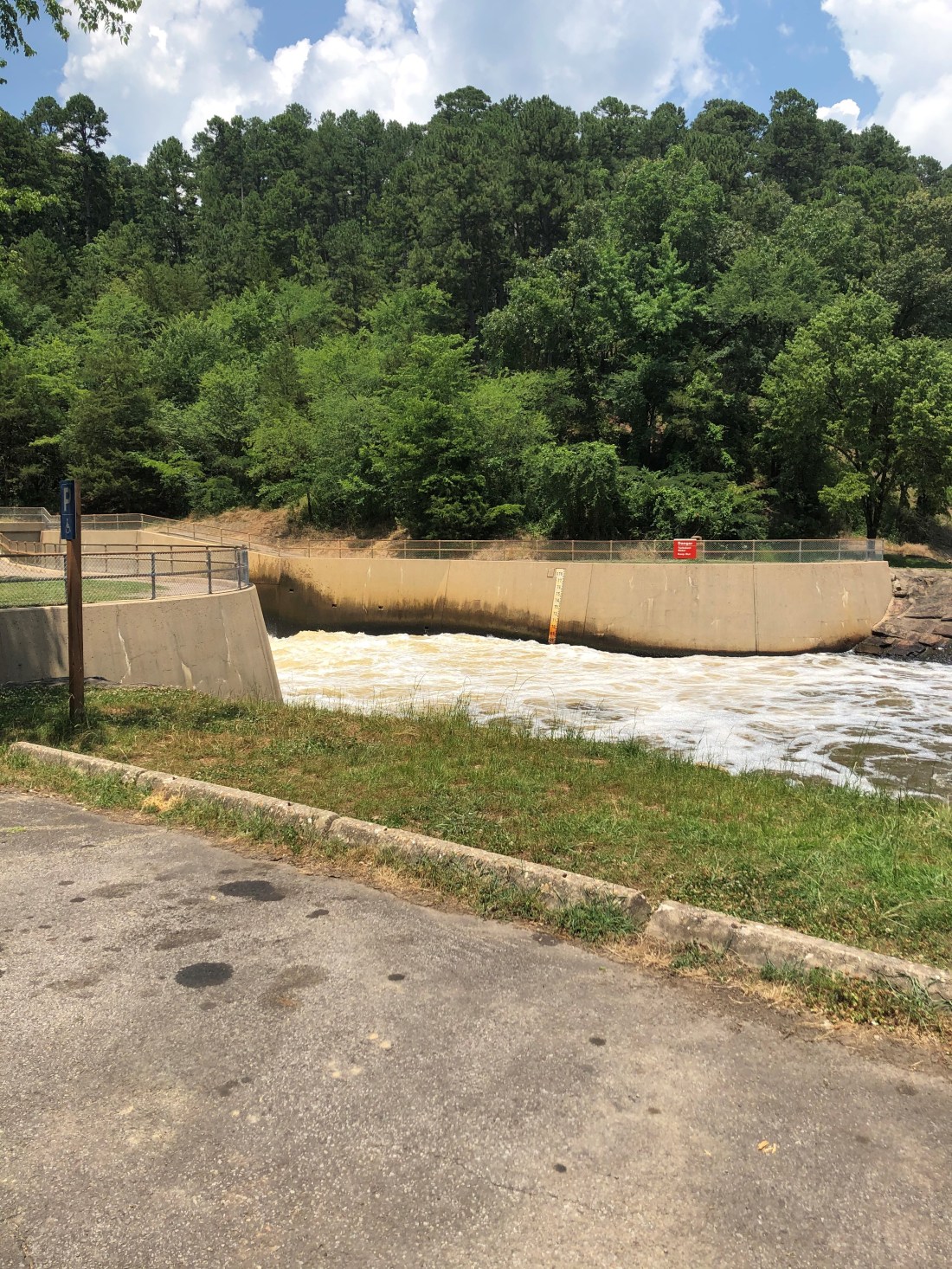
Today I was finally able to get up to the Lake.  I like to fish outlet tubes and I have fond memories of the one below the dam at Blue Mountain.  Last year I was catching bass that literally jumped out of the water to attack my fly.  The difficulty with fishing tubes is I never know what the water level will be.  They are kind enough to blare and alarm horn before they open the gates.  This lets you get to higher ground before getting washed away by the surge of water.  We have not had rain in a few days so I hoped the level would be low and I could catch some big fish.

One reason I have been itching to get up is because of the YouTube videos I have watched in the last week.  These have been about monster fish this and monster fish that.  I was wanting to try my two new techniques.  I mentioned fishing with Spam (already purchased) and the other was using a Carolina Rig.  I kept hearing this was the best setup, so I finally watched a video yesterday showing how to make the rig and another on how to fish for bass with plastics.  The last time I was at this site I watched another fisherperson pull 3-4 good sized bass out of the tube.  This time I was going to get mine.

I did some work at home and when I got on the road, I saw on my maps app I would get there at noon.   This was a little later than I had hoped but still gave plenty of time before Melissa got home from work,  There were some road closures in the park but I figured they were due to being shut down until recently.  As I pulled up next to the tube my heart sank.  The water was at full surge and there was no way I could try either of my techniques today.  I went farther downstream and came across a section with a nice eddy and back flow.  I rigged up, tossed out, and immediately hung up on the rocks.  I retied and tried again, reeling in rather than letting it sink.  Rocks again.  I did finally catch a fish by putting a huge bobber on my line and letting it swirl in the current.  Even with the disappointment, I was fishing.

THOUGHTS:  I could not believe how excited I was to try the two new techniques I had learned about online.  I had spent the last several days thinking about pulling in big fish and had literally dreamed about fishing this rig.  While I was disappointed by today’s results, I knew they would work when the conditions were right.  There have been several times in America’s history when the conditions have been right to make advances against the systemic racism the founders left in our constitution.  Among these, the Civil War, the 1960s, and now.  We cannot let the disappointment of the past keep us from working to achieve the goal of equality for all, neither can we become complacent with the gap that still exists.  If you venture out, stay safe.

Grounded

Grounded

June 18, 2020

Grounded always had negative connotations when I lived at home with my parents.  It generally implied I had done something wrong and now I was being punished.  I grew up in the Dr. Spock era, so punishment was rarely punitive.  Dr. Spock was an American pediatrician who wrote the book Baby and Child Care in 1946.  His ideas about childcare influenced several generations of parents to be more flexible and affectionate with their children, and to treat them as individuals.  This was a huge contrast to the Biblical mandate of the “spare the rod, spoil the child” in Proverbs 13:24, or the Victorian concept of children being “little Adults.”  For me, it just meant I was not going to have any fun.

Fifty years later “grounded” has taken on a different meaning.  Now when I think of grounded, I think of my garden.   My plants need to be well grounded; they need to have good soil and deep roots to thrive.  I have found this is the same with Melissa’s succulents.  Many of Melissa’s plants are not hardy enough to survive outside even in the mild winters of Arkansas.  There are some however, who will survive and even thrive from the stress the colder temperatures put them through.  Each plant seems to have its own level of tolerance.

Today Melissa decided it was time to get some of the hardier plants into the ground.  She sent a text around noon suggesting “if I had no other plans, perhaps I could weed the front bed and get it ready to plant the succulents.”  I had other plans, but I know how much Melissa wants her succulents to thrive.  After I finished some of my work, I weeded the bed and then waited to help put the plants into the ground after she came home from her work.  It was a pleasant night and the hardy succulents were put in the ground, surrounded by pea gravel, and the rest of the bed was mulched.  It was good to work together on this project she loves.

THOUGHTS:  I took a course in linguistics in college.  I was fascinated by how the same words took on different connotations given their context.  Being a “newbie” gardener, I have also been fascinated by how similar the needs are of remarkably diverse plants, and how fragile similar plants can be to slight variations.  The unrest we face is forcing us to reevaluate whether we face similar words with different meanings or similar concerns with fragile variations.  This is a time to decide where you stand, and then find common ground as you share your views with others.  If you venture out, stay safe.

SPAM

SPAM

June 17, 2020

My father loved Spam.  SPAM is an acronym for Special Processed American Meat.  I personally do not recall ever eating it, but I am sure we must have when mom was away, and dad had to do the cooking.  This combination of pork, water, salt, potato starch, sugar, and sodium nitrate come out of the can covered in a gelatinous mass.  I have never gotten beyond opening the can.  My dad even found a SPAM tee shirt at the state fair and bought it.  I have seen several photographs with him proudly wearing his shirt.  I used to do odd things when my own son was in school.  When asked if I was not afraid of embarrassing him, I replied, “That is what dads do.”   I guess I am just like my father.

It was not until Melissa and I went to Hawaii on our honeymoon that I learned the glory of Spam.  The Hormel Corporation unleashed the product in 1937, and it took off during World War II.  According to the Spam website, that is when the island’s love affair with Spam began, when GIs were served the salty luncheon meat because it did not require refrigeration and had a long shelf life.  Hawaii consumes seven million cans of Spam a year.  Spam musubi – a slice of Spam perched atop a block of rice and wrapped in seaweed – is perhaps the most popular Spam dish in Hawaii, and it is available almost everywhere.  I did not try this delicacy, although it did look good.

We have been looking for alternative ways to air our Facebook posts and one is on YouTube.  I signed up for an account but have yet to get any farther.  What I do get is daily suggestions on fishing videos posted.  I watched one today about catching monsters in a city pond.  They started using plastic frogs but then switched to their secret bait, Spam. They opened the can and it looked just as I remembered.  They put it on the hook and began to catch huge fish.  There were Bluegill bigger than your hand and Grass Carp over thirty inches long.  On my way to work I stopped at the local store and found they also carried Spam in a single serving pouch, perfect for fishing bait.  I hope the fish like this more than me.

THOUGHTS:  When I bought the Spam, I was skeptical, but the vision of catching huge fish after fish stuck in the back of my mind.  My hope is that the single serving packets will not come with the added gelatin that keeps the canned meat fresh.  Sometimes we need to try new things “even though we have never done it that way before.”    Other times we need to revisit old ways and, if they appear worthwhile, reinvent them to suit today’s ethos.  Some things we just need to stop doing entirely.  Everything you do in life should be reexamined periodically to see which category the action falls into.  If you venture out, stay safe.

Action

Action

June 16, 2020

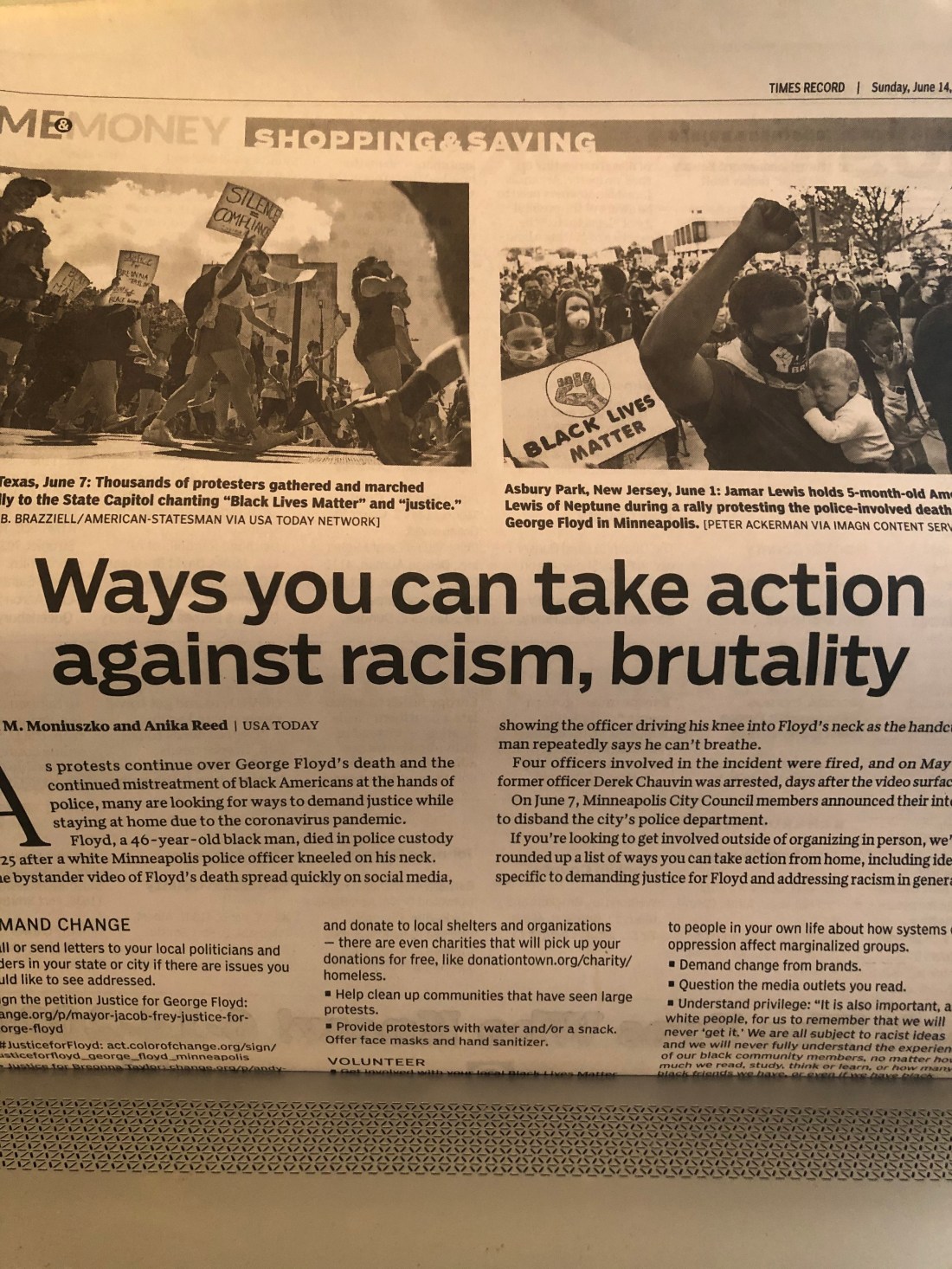
When I finally got around to reading the Sunday edition of my local paper, I came across an article taken from the USA Today about how to take action against racism in this time of staying at home.  The essence was:  donate and support activist groups, provide resources to aid protesters, and vote.  The ideas and organizations the article provided allowed someone to make an impact from home.  The suggestion which really sparked my interest concerned becoming actively anti-racist.  This included ideas like urging schools to include diversity in curriculum, bringing diverse voices to schools, reading about race, and others.

The reason this resonated with me was from my experience during the early 70’s at my high school.  Following the unrest of the late 60s, the school board instituted social consciousness events during the year.  I do not recall the name of the speaker, but her message has stayed with me.  We had an assembly for everyone followed by an open discussion in another large setting.  During the assembly she challenged the audience by making one claim after another concerning the role of African Americans in the formation of our country.  In the discussion time she fielded questions.  Even as a Sophomore I was not shy about speaking up.  I asked if the real purpose of what she said was to challenge us to research the past written from a different perspective.  Apparently, I got it because she asked if she could give me a hug.  I went forward and we did just that.

The next day I was surprised by the openly racial slurs and comments I received.  I lived in a medium sized college town with an army base nearby in a Northern state.   Although there were not a lot of African American students, they did comprise 10-15% of the school.  My brother has told me of a similar feel when he learned of the racism against Hispanics at his school in another small town where we lived in the same state.  I realized this was not a Mason-Dixon Line problem, even in “Bleeding Kansas.”

THOUGHTS:  Melissa and I completed one of our “bucket list” events several years ago when we attended Mardi Gras in New Orleans.  We sat in the grandstands for three of the big parades on Sunday and Monday and watched the Tuesday parades from the side (already sold out).  We planed the trip to spend the Wednesday and Thursday after touring “Nola” and the surrounding countryside.  I was amazed how fast the crowds left after Tuesday.   Two museums stood out, the Presbytere, with an exhibit on Katrina and the Cabildo, with an exhibit on the slave trade.  Both showed in graphic detail the plight of the marginalized.  We both left wondering how it was allowed to happen.  I appreciate the challenge I was given by an unknown woman 45 years ago.  I realized it is not enough to be anti-racist, we need to be active.  If you venture out, stay safe.


Discussion

Discusion

June 15, 2020

I have found myself talking to my plants.  It is not because they are such great conversationalist, it is more a thought that perhaps if I give them enough encouragement they will thrive.  I have read and heard several biologist and psychologists who say talking to your plants can be good for both of you.  The plants seem to thrive off the emotions we put into caring for them and our words can be soothing.  At the same time, airing thoughts and getting things off your chest is recommended for humans.  I will give you one hint, do not yell at them.  That does not seem to work.

When I was in seminary, I attended a discussion on Martin Luther King, Jr. during Black History Month.  I recall 25–30 people there and I was the only Caucasian.   As this was a student led discussion the content varied widely.  I do not recall what was specifically being discussed, but the realization I received has stayed with me.  The group had been going back and forth with everyone offering their understanding.  I sat quietly and listened, until the answer to our discussion became obvious.  I spoke my peace and outlined what I believed to be a well thought out solution.  Everyone listened politely, and then after I had spoken, went back to the previous discussion.  What I gained from this experience is conversation is not always about finding a solution, it is often more about being heard.

Even while I am being a bit tongue in cheek about talking to my plants, it may go a long way to keep them happy.  My garden is facing the toughest time of the year.  The rains and cool weather that set my plants on their path have given way to the warm and dry afternoons they will face for the rest of the summer.  It is during these times of stress that I need to be the most compassionate.  I will offer them a little more food, keep them well watered, and tell them how well they are doing.  After all, it cannot hurt.

THOUGHTS:  Melissa turned me on to a post this last week called Encouraging Meaningful Conversations.  This is an ongoing blog by a group called Mindful.  In this episode, Jenee Johnson encouraged hearers to have meaningful conversations about race and trauma.  This implies “the historical trauma, the microaggressions, the white fragility that often is a barrier to conversation.”  Just as I needed to realize discussion is about more than finding a solution, I know our unity will never happen without the conversation.  If you venture out, stay safe.