Watering

June 2, 2020

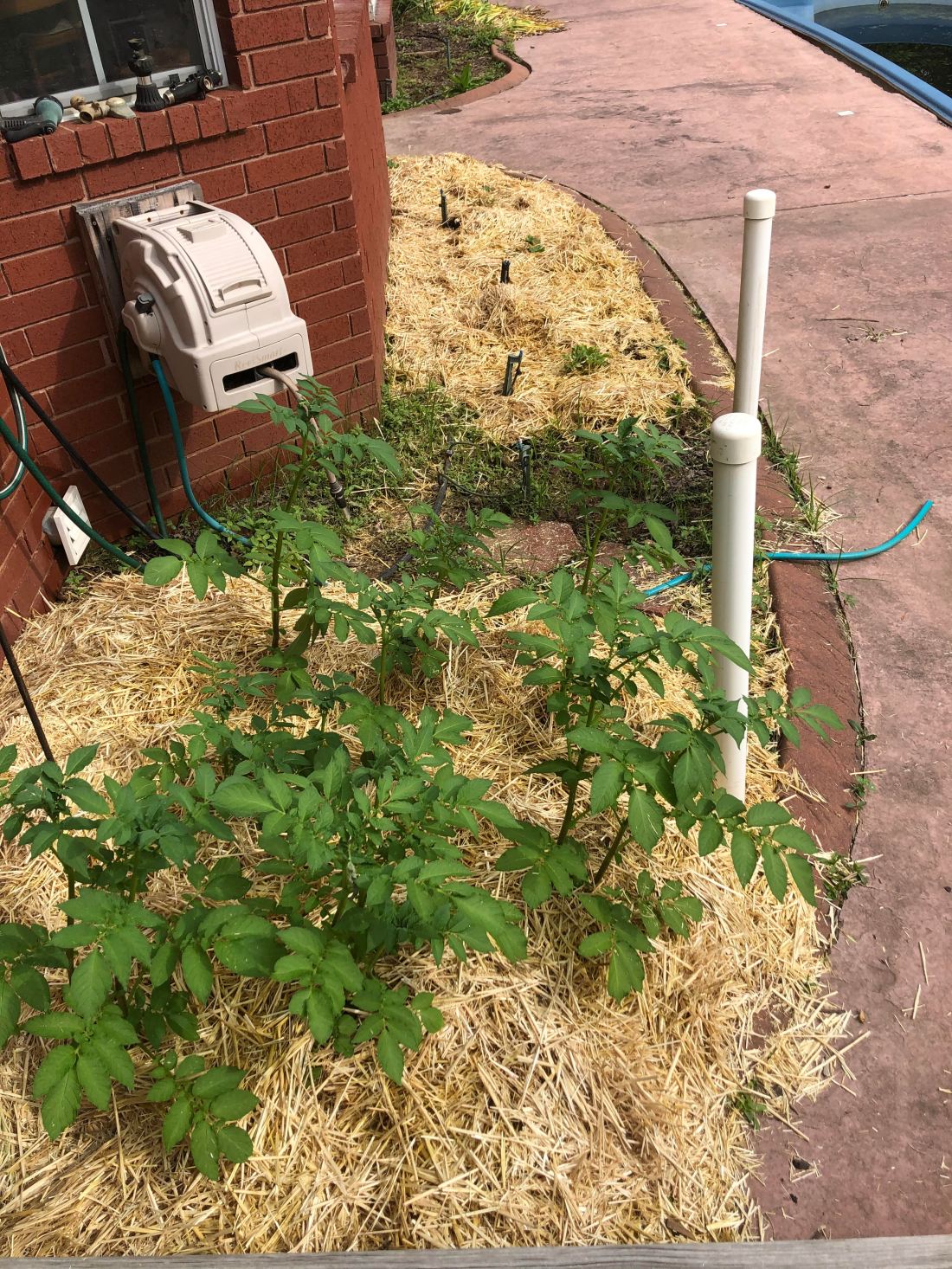
We are moving into the warm season and I will have to check my vegetables more often.  Warmth brings pests, but it also dries the plant soil more rapidly.  This is especially true with containers.  I had checked my containers yesterday morning but got busy and had not checked them later.  The result was obvious when I checked them this morning as several of the plants had droopy leaves.  I recall when I worked at a nursery in college we watered early in the morning and before we left at night.  Both watering’s were enough to soak the soil but not enough to leave standing water in the pots.  This kept the soil moist but avoided over watering.

We have had a couple of watering incidents during the last month.  We had purchased two hibiscus and put them on the porch until we could get them into the ground, then we sort of forgot about them.  We do not use our front door very often (except to accept shipments of succulents of course) and instead go out through the garage.  By the time I noticed them again they were wilted, and the leaves were falling off the plants.  I put them in the planter anyway hoping they might survive.  I watered them and set them in the sun to see what would happen.  They are thriving again and making new leaves to replace the ones lost.

The other incident was over watering.  I am not sure how it happened but the plant we received from the veterinarian’s office for Bella was dying.  Melissa checked and found the pan beneath it was full and the pot itself had standing water.  I took it outside to the front porch to dry out in the sun and see if it could be saved.  It has been two weeks and it does not seem any better.  I guess there is more of an art to watering than I realized.

THOUGHTS:  With gardening and with life we need to pay attention to the details. There are times when even a few days of neglect can lead to serious harm.  I found this true with my plants.  Our country is finding this true as well.  We have developed a culture of neglecting the plight of the poor and minorities.  During the pandemic, these are the people hit hardest.  They have lost jobs, wages, and dignity while being forced to bear much of the burden for our wanting to “open up.”  The death of George Floyd may have been the spark, but there were centuries of neglected embers lying beneath the surface. Throwing water on the fire will not put it out, but merely reduce it too embers again.  We need to address the underlying systemic problems now rather than later.  If you venture out, stay safe.


Potato Flowers

Potato Flowers

June 1, 2020

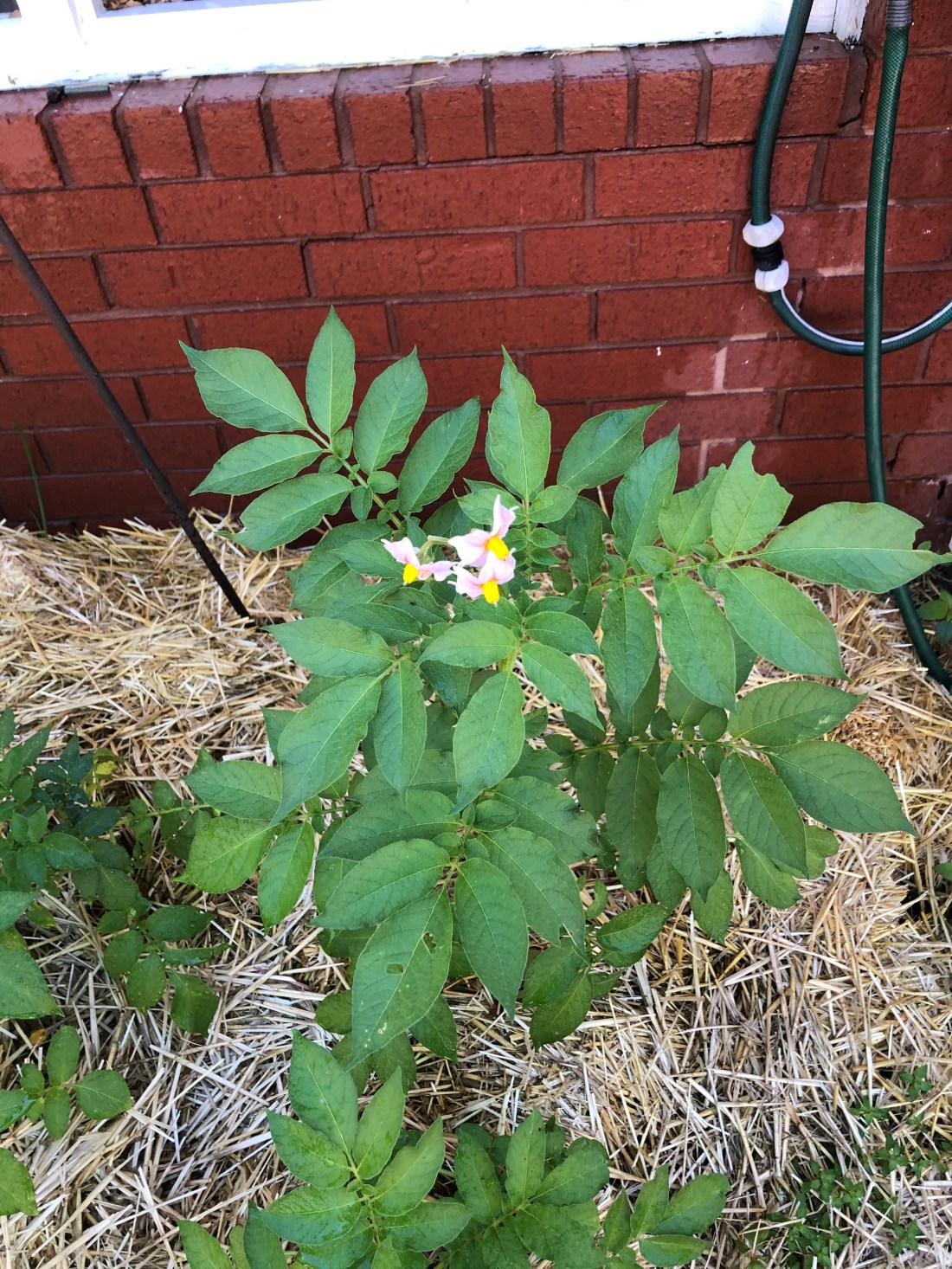
I had no idea potato plants produced flowers.   I probably should not be surprised, as most plants that bear fruit produce flowers during the process.  Still, I was surprised to be watering my garden and see these beautiful purple flowers with what looked like yellow stamen on the biggest of the eight plants.  The potato is a tuber and not a fruit on the vine.  I know, technically the potatoes are not a fruit either, but the online resource I checked says what can be produced by the flower is a fruit that resembles a small green tomato.  While potatoes flowering is normal, the flowers usually dry up and fall off without producing fruit.  I hope I get some tiny “green tomatoes.”

My resource went on to say the flowering is a sign of nearing maturity and harvest.   This part surprises me even more as the projected harvest is around the 25th of July and it is only the first of June.  This plant did grow fastest and is tallest and it might be I just put an older plant in the ground to begin with.  Whatever the reason, I will need to keep a close eye on it to make sure it is acting “normally.”

One of the fun things about raising a garden is seeing new things I have never paid attention to before.  I have never tried to grow potatoes, and now I am watching and learning how they go from an eye in the side of a shriveled-up spud to a plant reaching over 30” tall.  None of the plants are the same height.  The smallest are only about two feet and two of the larger ones are pushing past 30”.  The other four vary somewhere in between.  I have mentioned the expectation of harvest, but even with my flowers I am determined to let them run the course of their life.  I guess if the plant begins to die, I will have to change my approach.

THOUGHTS:  The longer I live the more I find life continues to bring unexpected wonder.  When I was in High School, I thought I knew everything that needed to be known.   When I went to college, I found a breadth to the world I never knew existed.  Then in graduate School I realized it was no longer about knowing, it was about knowing where to “look it up.”  Too often we find people stuck in the first stage of understanding.  We know everything we need to know.  I am glad I was able to get to the point where I realized I did not know it all.  I hope you find yourself at that stage as well.  If you venture out, stay safe.


Mulch

Mulch

May 30, 2020

After letting the bags of mulch sit in my front yard for over a week, I decided it was time to spread it on my flower beds.  I do have a disclaimer.  I put down the first bag of mulch when I brought it home.  Then Melissa asked me to wait for her to decide which of two beds she was going to use for the outdoor succulent garden.   She made the decision last week and it still did not spur me into action.  I mentioned earlier how much easier it was to weed when I prepared the garden plots this year.  Melissa and I even weeded the flower beds several weeks ago, but I did not put down the mulch and I will have to do it all over again.  To be honest, it is a lot of work.

Weeding the beds would be a lot easier if it were only weeds that infested them.  Weeds tend to put down shallow root systems.  This allows the weeds to put all their energy into growth, and ultimately seed production, to propagate a new series of plants.  By growing quickly, they can spread seeds several times a growing season and maximize their chance of survival.  The bigger problem is the invasive grass.  Grass takes the opposite approach and first puts down deep root systems.  The deeper the roots the more likely the plant will survive both drought and cold.  This makes the grass much harder to pull from the flower bed.

I spent the morning on various work task but after lunch I was ready to tackle the yard.  I weeded the front planter and about half of the flower bed in the front of the house.  I always throw the weeds in the yard to keep from having to figure out what to do with them.  I dutifully used my weed eater to trim around the yard features and then jumped on the mower to finish the job.  I was pleased to note the lawn had dried out from the rains and I was able to cut the entire lawn for the first time in weeks.  With this preparation I was ready to lay down the mulch.  The good thing about only mulching half the beds, is that I get to finish the job on another day.

THOUGHTS:  Grass and weeds take two different approaches to insure survival.  This difference comes from the weeds being an annual and the grass being a perennial.  Basically, the weeds quickly grow, shed their seeds, and die.  The same grass grows every year, and rather than dying, it goes dormant in the hot and cold months of the year.  Both approaches work as evidenced by each type of invasive plant returning annually.  There does not seem to be a “better way,” they are simply different approaches.  Countries have tried different approaches to combat the virus.  Some have tried to “slow the curve” and others to quickly develop “herd immunity.”  It is yet unclear whether one approach will be better than the other.  Hopefully, we will learn from these experiences and be better prepared next year.  If you venture out, stay safe.

Worms

Worms

May 29, 2020

I have mentioned one of my go to baits for fishing is worms.  They are relatively inexpensive and last a long time if you put them in the refrigerator.  I mostly used Canadian Night Crawlers which are stocked at several local stores.  Last summer I began to have problems with these worms.  The hot days beside the pond would kill most of my crawlers no matter how hard I tried to keep them out of the sun.  That is when I switch to red worms.  Red worms survive in temperatures up to 90 degrees, but these tend to be small, skinny worms that are hard to get on the hook.  I finally hit on the chartreuse worms, which are heat resistant but grow to be a fatter worm, and easier to hook.  They are a greenish color due to the fluid inside of their bodies.  The fish love them.

During the last several months I have noticed the presence of long tubes in our pool/pond.  This surprised me because we did not have this problem last year.  At first, I thought the tubes might be old stocks from the Naked Lady Lilies that proliferate along the back of the house.  The problem is these stocks do not appear until mid-August and are gone by winter.  My other thought were the Hibiscus stocks (no, I have not cut them down yet), but again this did not seem to be right either.  My suspicions grew that I had somehow created a breeding ground for some sort of nasty tube worm.  If so, this could be a problem I need to tend to immediately.

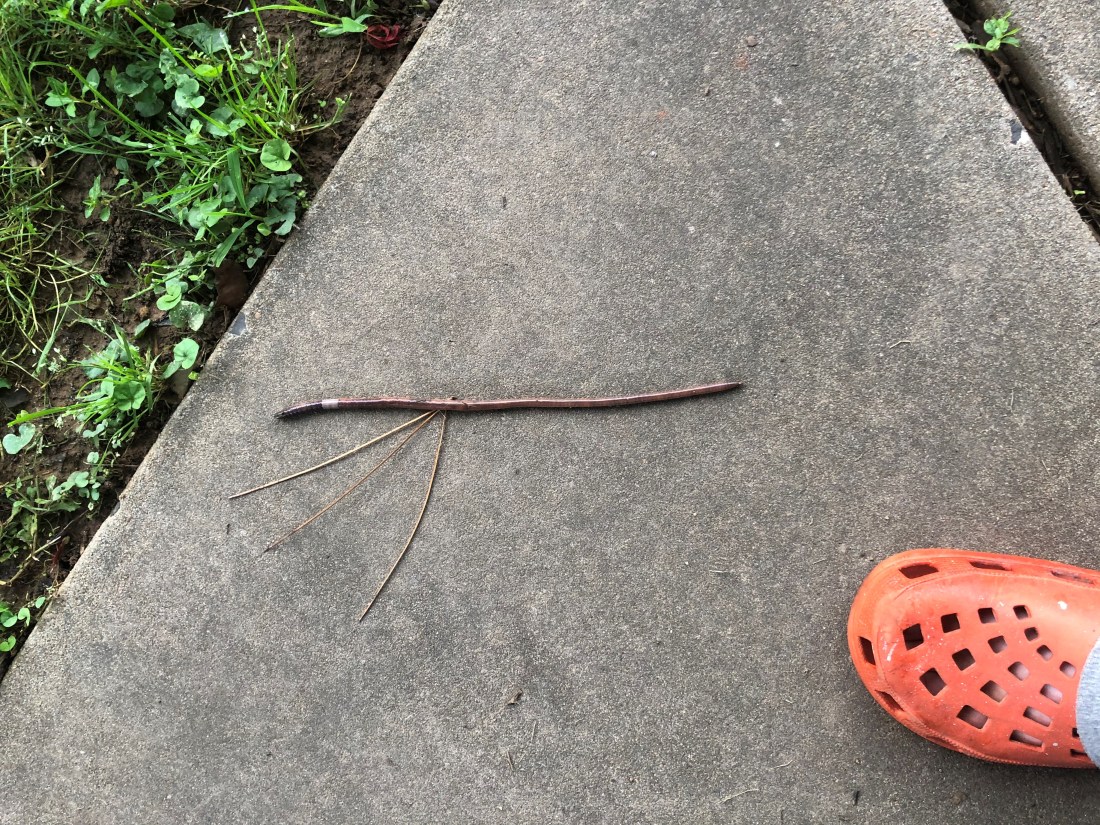
As I was leaving the house this morning, I discovered what was causing the problem.  On the walk leading to the driveway was an earth worm that was over one foot long and very fat.  It even had the lighter heart line detail I could make out on the tubes floating in the pool.  Apparently, the wetter weather has been driving the worms out of the ground and some are falling into the pool and drowning.  I have noticed the Robins and Jays have also been feasting on these worms before they make it to the pool.  I was happy to know it was not a serious problem for me, but I doubt the worms would say the same.

THOUGHTS:  What we see as a problem in our life is often dependent on our perspective.  Melissa found one of these large worms under the trash can and assumed it was one of the small snakes that live in the garden beds.  She had me remove it even after I explained it was a worm.  I was afraid we had a tuber worm problem in the pool that I did not know how to take care of.  Both instances caused alarm and even some fear because we did not know what it was.  When I saw the worm on the sidewalk, I knew exactly what it was and even watched as it crawled into the grass.  The fear that arises during our pandemic is similar.  The aggressiveness of the virus is real, but our anxiety is raised from not knowing what the virus is or having a treatment protocol.  We already know some practices that work, we should continue to use them.  If you venture out, stay safe.


Water

Water

May 28, 2020

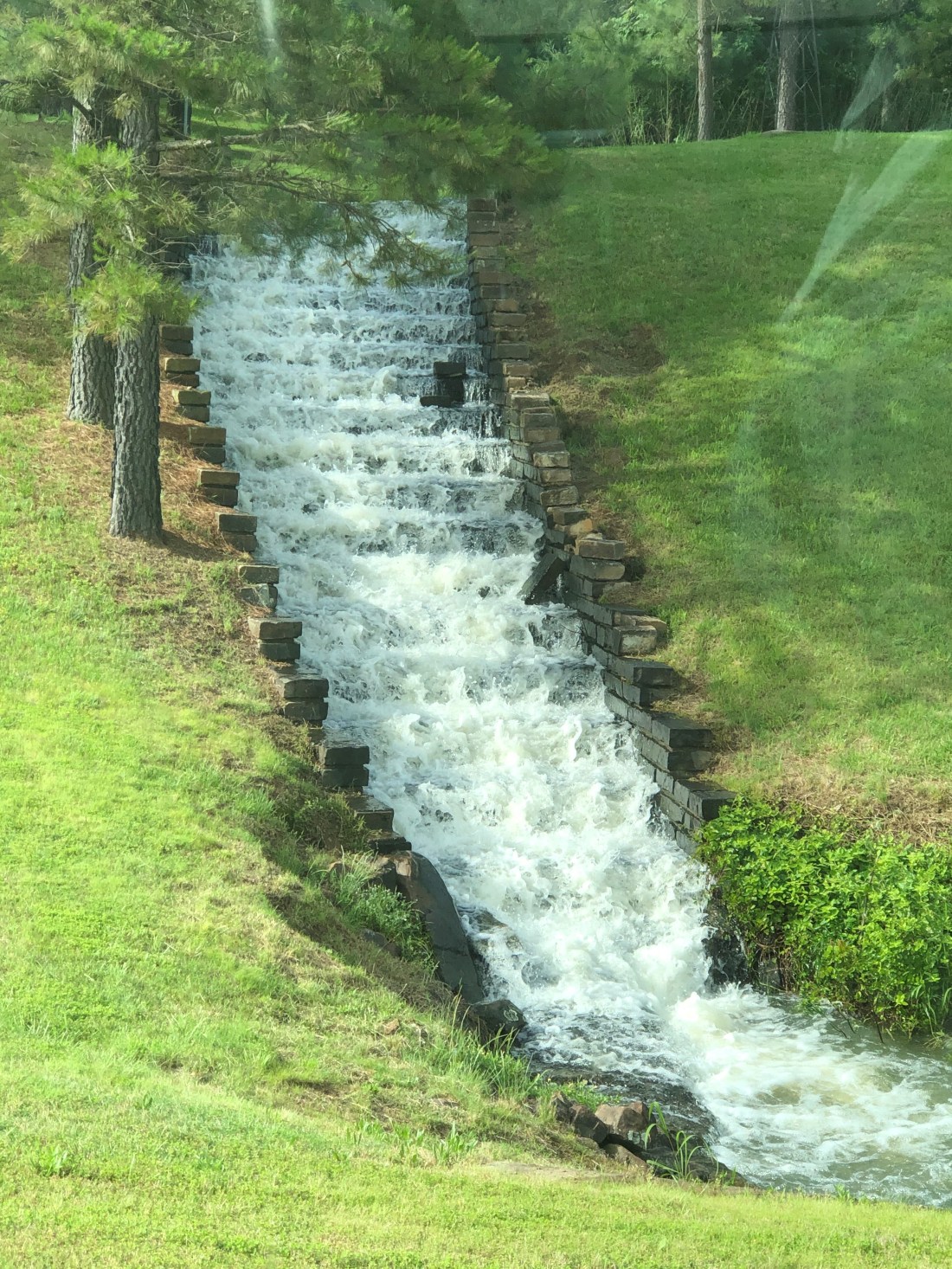
I have always been awed by the power of water.  When I was in California, I would go to the beach and watch the waves crashing during storms.  A single storm could either deposit or erode the sands of the entire beach with its power.  When I lived in Kansas, I would go to the dam outlet tubes and watch the rushing water crash and boil as it was released.  One summer they shut the tubes down.  The force of the water had eaten the concrete blockades away and they were forced to replace them.  That was the first time I realized why the water was so turbulent.  Then there is the Grand Canyon.  Knowing that water’s power source is gravity makes the whole process seem more amazing.

The other power in water is its ability to makes things grow.  I was in the desert for an excavation and we had drinking water delivered to the site and put in a canvas bag.  The water would seep through the bag and as the wind blew, evaporation cooled the water.  The water that did not evaporate dripped onto the ground.  Over the course of the month on site the area below the bag became a lush patch of green grass, in contrast to the surrounding barren desert.   The early inhabitants had built cisterns and aqueducts to channel and flow the rain which fell sparsely.  They used the stored water to grow crops and quench thirst for over 5000 people.  They used water to give life.

This spring has been one of the wettest years in a long time here in Arkansas.  The cooler temperatures and rainy conditions have been a boom for my flowers and vegetables (except for my cantaloupes).  The pansies and daisy in the front planter had died earlier but are now being given a second growth.  One Cardinal feeder was filled with black oil sunflower seeds.  It was self-made and I had not put holes in the pan.  This filled with water and soaked the seeds until I noticed and cut three slits in the bottom.  I now have shoots sprouting from most of the seeds.  The birds do not seem to care.  The water provided them with extra nutrition.

THOUGHTS:  Water is an essential for life as we know it.  The human body is comprised of roughly 60% water, and even our bones are made up of 31% water.  Scientists say a person could go anywhere from one to two months without food but would only last from four to seven days without water.  Nearly 70% of the earth is covered with water, but only about 2.5% of the water is fresh and drinkable.  With so much dependent on clean water you would think we would do more to ensure there is enough of this vital resource for everyone.  We should all be awed by the power of water.  If you venture out, stay safe.


Cactus

Cactus

May 27, 2020

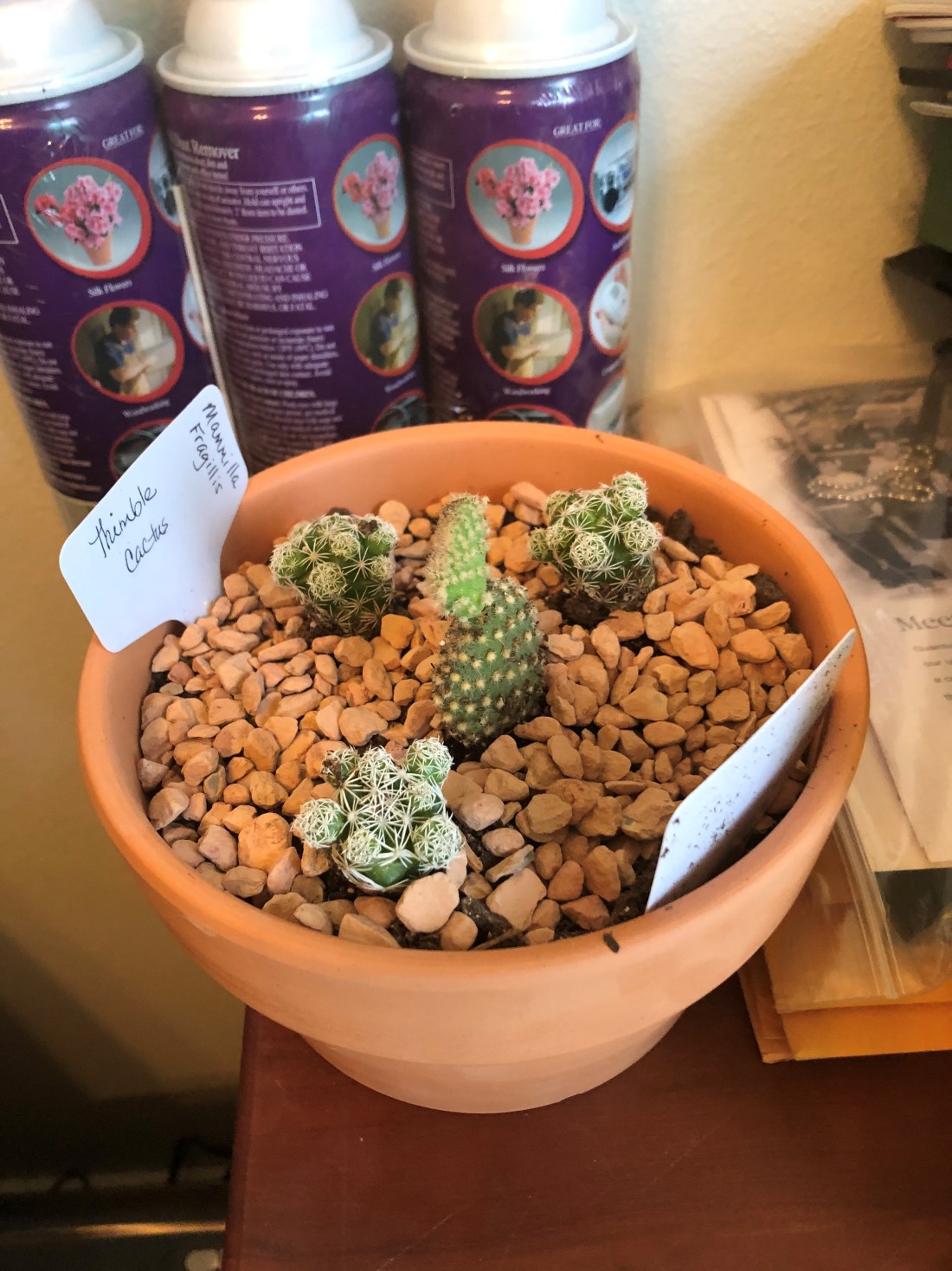
Melissa surprised me last night with the sweetest gift.  She has been working feverishly in the living room trying to get all the succulents into pots while I have been just as dedicated in my office working on blogs and meditations and ways to provide leadership.  We used to spend time together watching Royals baseball but that is not happening, and the shows are now reruns.  Even the “Movies” they are bringing back are exactly that.  Reruns of blockbusters I have already seen dozens of times and do not care to see again.  Amid our separation Melissa brought me a gift.  Four small cacti in a pot of their own to brighten my office.

I recall buying a small barrel cactus for my office when I worked for the state of Utah.  I figured this was the perfect plant for me because I could enjoy it without being bothered by constantly watering and caring for its needs.  It sat on my desk for over a year and never seemed to change.  One day I took a closer look at the cactus and realized it was dead.  Even though it still looked the same, it had died from lack of water.  I could not remember the last time I had watered it, but for a cactus to dry out it must have been an awfully long time.

I am determined to not let the same fate happen to the cacti Melissa gave me.   I have placed them in a nice spot next to my desk where I can be reminded.  Reminded to both water the plants and to nourish the one who gave them to me.  Since there is a hole in the bottom of the pot, I need to get a plate for it to sit on.

THOUGHTS:  The reason I was touched by Melissa’s gift was because it meant she was thinking of me.  I doubt she had purchased these cacti knowing they would find a place in my office, but amid her toil she realized I could use a lift.  We received a Thank You card from a friend that made us both feel the same way.  Saying thanks or dropping a line do not have to be labor intensive, yet they can make a world of difference to the one who knows you are trying to stay connected.  Friendships are like my office cactus, if you are not purposeful in tending to them you may one day realize they are dead.  If you venture out, stay safe.


Cilantro

Celantro

May 26, 2020

I am proud of how well my garden is growing.  My tomatoes and peppers are all over the first rung of their cages and my cilantro filled the entire pot.   We have a friend who has a large garden with raised beds rather than containers.  They came by over the weekend and I was excited to show them how well my containers were working.  I mentioned I had already harvested some of my cilantro and was expecting to continue to do so.  She looked at the plants and told me they were about to bolt.

I had assumed cilantro was like other herbs and I could continue to harvest off and on throughout the year, even bringing it inside to last over the winter.  Apparently, that is not the case.  When the plants flower or bolt they shift all their energy from growing leaves to producing seeds.  Worse yet, once this happens the rest of the plant becomes bitter.  There are ways to delay the bolt by harvesting the outer leaves and pinching back the stems, but when the weather gets warm, they will bolt none the less.

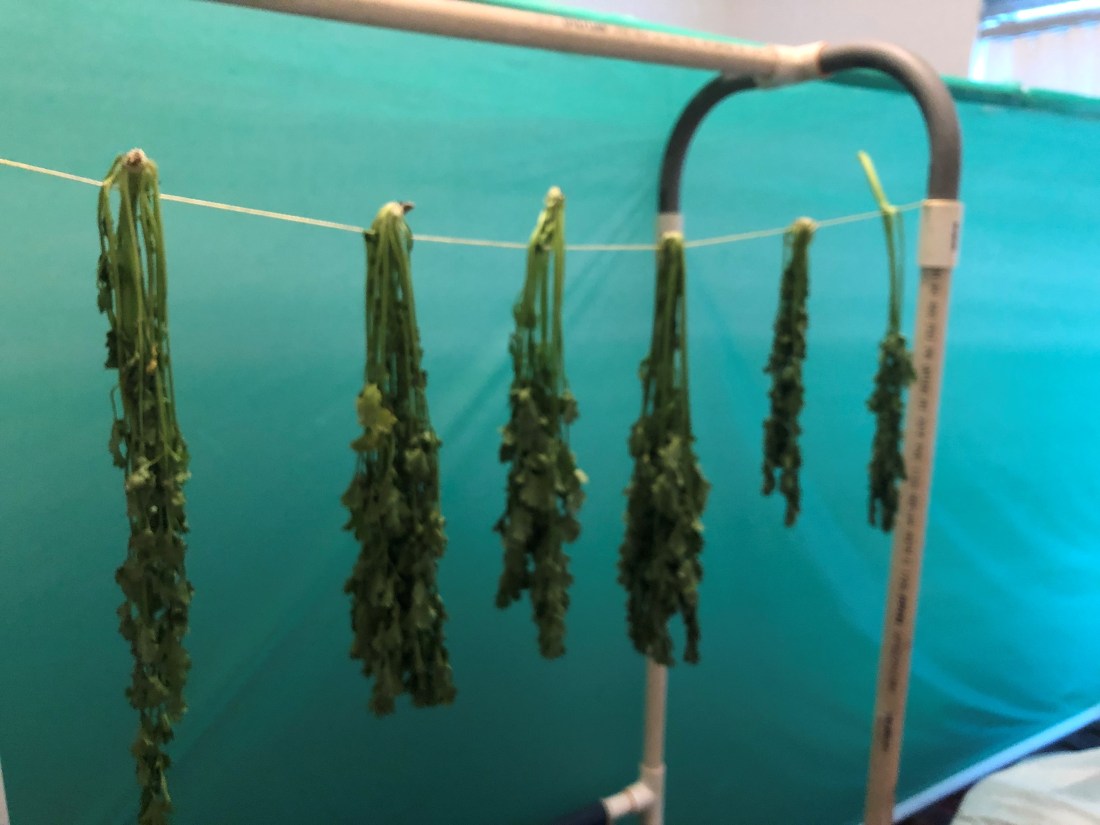
I looked online for what to do when cilantro bolts.  The answer, “Get Coriander!”  I also looked up what to do with the large amount of the leafy herb I was soon going to lose.  The suggestions ranged from freezing it, to canning it in a variety of ways (like the salsa I planned on making), to drying the plants.  Drying seemed the most practical.  I could do this in the oven or find a cool, non-humid (in Arkansas?) location to hang it until It was processed.  I decided to hang it on the back of my green screen in my office.  At least next year I will know what to expect.

THOUGHTS:  Anytime we face a new challenge there is a huge learning curve to find out what we need to know.  I am finding this to be true for my garden, and it will also be true for the pandemic.  No one knows what to expect concerning corona virus, but it is assumed it will behave like viruses of a similar class.  That means like the flu, we will be caught seasonally facing a slightly mutated strain that may or may not be affected by the vaccine we ultimately create.  The virus is world-wide and has nearly every country working on a vaccine and protocols for how to treat those who contract it.  We have already learned much, and when it returns, we will been in a better position to know what to expect.  If you venture out, stay safe.


Straw

Straw

May 25, 2020

I helped my grandfather during the hay baling harvest several different times.  This was a good thing for him because it was labor intensive, but it was also a good thing for me because as a minor it as one of the few ways I could earn money.  My role in the process was to walk along behind the baler and throw the bales up to the person stacking on the trailer.  The stacker was an uncle who knew how to stack the bales so they did not tip over.  After the trailer was filled to the right height, we would go back to the barn and unload the hay into the loft.

While I understood the need for hay to feed the cattle, baling the straw was more of a mystery to me.  The straw generally came from the wheat fields after the grain had been harvested.  The dead stocks that were left in the field after the heads had been cut off were collected and bailed up into straw.  This straw was seen by my grandfather as a precious commodity, although as a teenager I found it of little worth.  I knew it was used as bedding for calving cows, but frankly I never saw a cow calve on the farm.

Jump forward fifty years and I have found a new reverence for the maligned straw of my youth.  I went to the supply store and picked up a bag of straw on Saturday.  I learned online that once my potatoes were about 18” high I should mulch them with straw.  The straw would not only protect them from folding over from the weight of the plants, it also provided the mulch that retained water during the hotter months of summer.  Just to be safe I mulched the melon and strawberries with the straw as well.

THOUGHTS:  There are many awareness’s as we transition into our new reality.  We are finding that some of the things we used to do are no longer relevant.  At the same time, there are some of the things we now do that are deemed essential.  It seems much of what we deem essential depends on our perspective.  I hope you can decide what is important is your life, and then whether or not anyone else thinks it is important, you make sure to do it.  If you venture out, stay safe.


Cutting

May 23, 2020

I have owned one of these cutting tools for most of my adult life.  I am not sure when I got my first one, but I have transferred them through each of the various moves I made.  I am sure the one we own now is not my original.  More likely it came with the house.  When we moved into the house it was fully equipped with most of the cooking utensils, as well as sets of pots, pans and small cooking appliances.  When Melissa moved to Kansas to be with me she left all of her cooking items at the house.  Clearing out the duplicates in the Arkansas house was a full time job as I prepared for Melissa’s arrival.

When we moved we brought a whole new set of cookware from our Kansas house and we got to make decisions about what to keep all over again.  Melissa’s mom and dad had lived with her for seventeen years before she married me.  Both liked to cook and had their own specialties.  Ann liked to make talrina (ground beef and noodles) and key lime pie.   Jerry made pinto beans and biscuits and gravy.  I do not recall every coming to visit when we were not served all four of these dishes.

Even though I have owned one of these tools, I had never used one until today.  I was not even sure what it was or why to use it.  I have mentioned I rarely use recipes, and this item was not in my list of “go to” utensils.   I decided to make an apple crisp for dinner tonight.   I love apple crisp and have been craving one for months.  As much as I like this desert, I cannot recall ever making one.  I usually get it at the big buffet restaurants.  I read the directions and got to the point where it said to cut the butter, flour and brown sugar together.  So that is what this is!

THOUGHTS:   I tend to keep items I own just in case.  When we moved from Kansas I donated 42 boxes of books valued at over $17,000 to the local library (I only moved 15 boxes).    Most of these were stored and I had not unpacked them since the last move.  This move I decided to downsize and spent a month going through our clothes and belongings and donating things to Goodwill.  Most of these items had seemed essential at some point in my life, but after I retired they no longer were.  When life and circumstances change what we define as essential change as well.  I hope you can find what is essential in your life during these trying times and hold onto it.  You might want to get rid of the rest.  If you venture out, stay safe.


Rocks

Rock

May 22, 2020

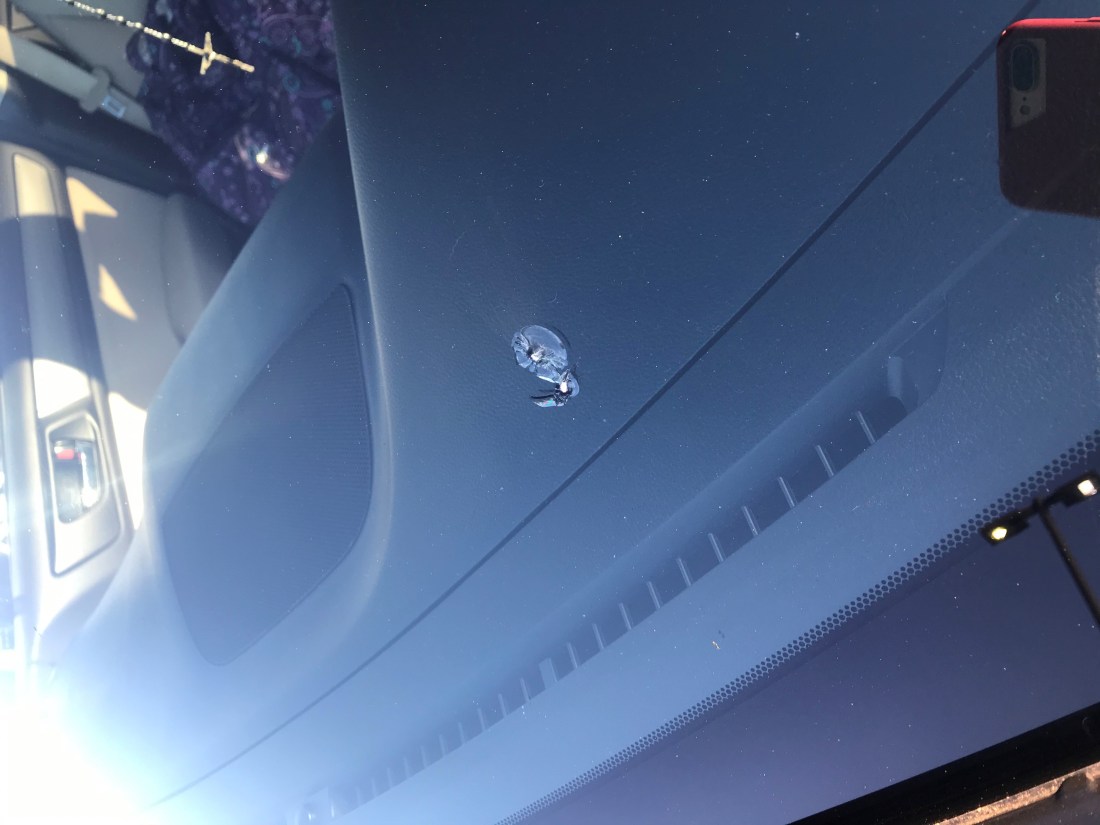
One of the advantages of driving interstate three hours a day is being able to pass and be passed by the big trucks.  If you have ever had this opportunity you will relate to the wind and debris created as they pass.  That was the main reasons Melissa went for a larger car.  Along with other items the trucks also throw rocks.  While a larger car makes it safer, it does not stop the rocks from flying.  On Wednesday it happened.  A large rock hit the windshield right in front of Melissa and scared her to death.  Three days of driving and already a divot.  I told Melissa not to worry.

I took the car to the local repair shop yesterday and was told the chip was too large to fix.  I called my insurance and they walked me through contacting another shop to have the window replaced.  Our car has directional features and I was told the new windshield needed to be calibrated.  That meant I needed to take the car to their shop, and it would be a minimum of three hours to get the repair done.  I made an appointment for this morning.  When I arrived, I was told they could repair rather than replace the divot.  This would save me both time and money.  I agreed and was out in half an hour.

“Since I was already in town,” Melissa asked if I could pick up some items from the garden center.  She had found theses online and was assured they were in stock at our local location.  I arrived and went to the area they were supposed to be and only one of the three items were there.  When I asked the clerk and showed them the ad, he informed me they were “online only,” and they did not even stock these.  I bought similar items (without the price break) and then went to find my final purchase.  I laughed to myself at the four bags of Pea Gravel.  The rock that hit Melissa was obviously larger.

THOUGHTS:  We had a rock pile in our side yard when I was a boy and one of our neighborhood games was throwing rocks.  Capturing and defending the pile was key as this was the greatest resource.  When I think back, this was one more stupid things we did as children.  It resulted in many crying trips to mom and a cracked tooth for my brother.  As adults our games may change, but we still participate in stupid activities.  As the stay in orders are being lifted that does not mean we are still not at risk.  It means we need to be smart about how we behave and what we do.  Otherwise we might find ourselves hitting the windshield.  If you venture out, stay safe.