
June 29, 2025
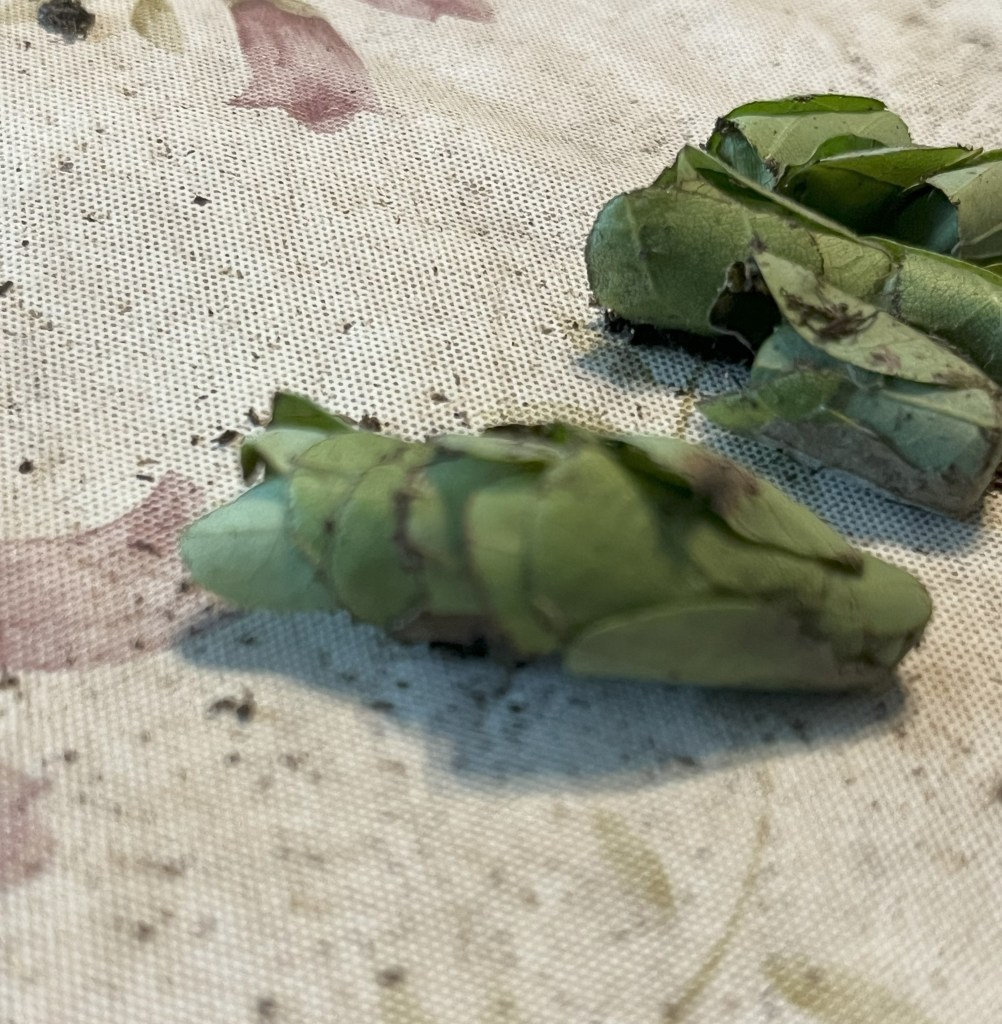
Melissa went shopping with me yesterday to get out of the house. I needed to get some roasted peanut chips for the birds and Melissa wanted to look at the succulents. She was surprised by the large number of inexpensive arraignments, and by their state of disrepair. They were all soaked in water (causes root rot) and the leaves were starting to fall off. Melissa bought a large arraignment to divide into separate plants and try and save them. As we were checking out, I mentioned to the attendant that the plants were getting too much water. She agreed and said she had also bought several to save them from dying. When we got home Melissa began dividing the arraignment and repotting them into a cactus medium. The plants were in potting soil (retains water) rather than cactus medium and the bright containers were made of plastic (retains heat). Each of the plants were root-bound from their previous pots and the soil had not been broken up. As Melissa dug through the potting soil she came across what looked like a leaf tube buried deep in the soil. When she googled the odd structure, she found it was the egg nest of a leafcutter.
When I went online, I found leafcutter bees (Megachilidae), are part of a widespread (cosmopolitan) family of mostly solitary bees. Characteristic traits of this family are the restriction of their pollen-carrying structure (scopa) to the ventral surface of the abdomen, rather than on the hind legs as in other bee families, and their typically elongated flap-like structure immediately in front of the mouth (labrum). The scientific name Megachilidae refers to the genus Megachile, translating roughly as large lipped (Ancient Greek mégas – “big” and kheîlos – “lip”). Their “large lips” and strong jaws are well-suited for collection of building materials for the nest. These bees get their names from the materials they use to build their nest cells. Leafcutter bees use leaves while mason bees use soil. A few species collect plant or animal hairs and fibers (carder bees) while others use plant resins in nest construction (resin bees). All species feed on nectar and pollen, but a few are kleptoparasites, which feed on the pollen collected by other megachilid bees. The parasitic species do not possess scopae. North America has an estimated 630 different megachilid species. Most are native but a few are introduced, accidentally and intentionally. Globally the number of species identified exceeds 4,000 and represents 15% to 20% of named species of bees.
The Nonparasitic Megachilidae divide their nests into cells with each cell receiving a supply of food and an egg. The larva hatches from the egg and consumes the food supply. After molting a few times, it spins a cocoon and pupates, then emerges from the nest as an adult. Males die shortly after mating, but females survive for another few weeks, during which they build new nests. Nest cavities are often linear, like the one found by Melissa, but not always. Above ground megachilid bees are more commonly cultivated than ground nesting bees. They accept nesting materials made from hollow stems, tubes, and blocks with preformed holes (“nest blocks”), and several megachilids have become important species for agricultural or horticultural pollination. In North America these cultivated bees include the introduced alfalfa leafcutter bees (Megachile rotundata), used extensively in alfalfa pollination, and the orchard mason bee or blue orchard bee (Osmia lignaria), used in orchard pollination. Other species are also in commercial use in North America, Europe and Asia.
THOUGHTS: Arkansas is home to at least 40 species of bees and the genus Megachile, has an estimated 15 to 20 species, including many leafcutter species. Finding the nest tube of a leafcutter bee shows how easy it is to transport a species to another area. While the leafcutter is beneficial, not all invaders are. People criticize states like California which have tight controls on agricultural products. Perhaps we should all be vigilant. Act for all. Change is coming and it starts with you.
 A travelers odyssey